
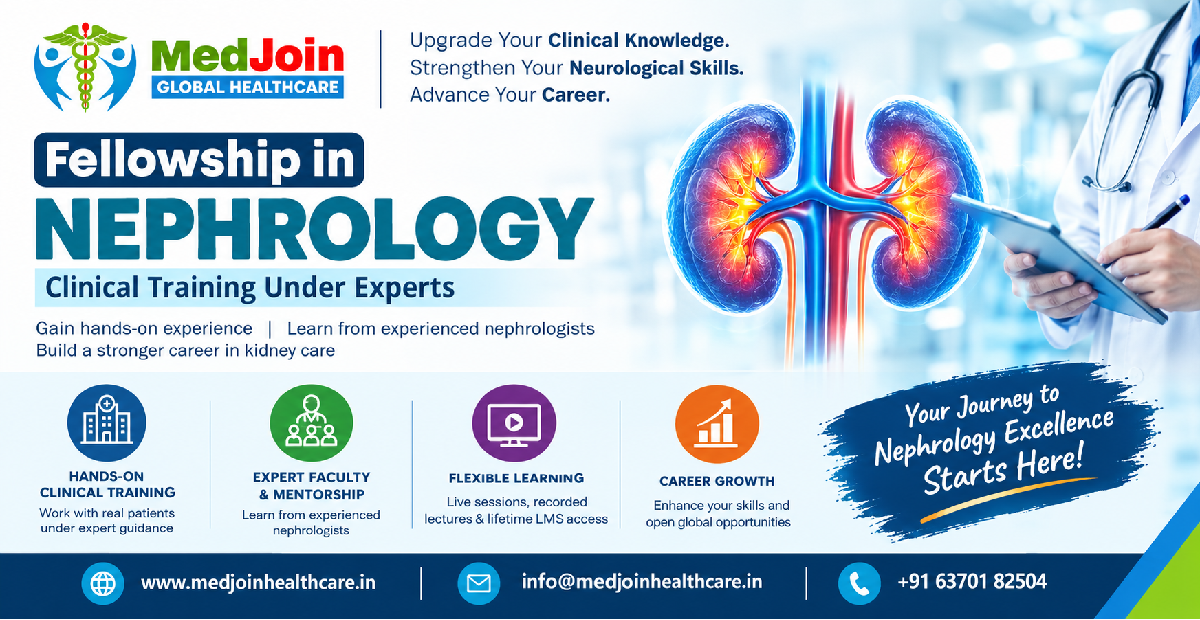
Advancing Your Medical Career with a Fellowship in Nephrology
The field of nephrology plays a vital role in modern healthcare, focusing on the diagnosis, evaluation, treatment, and long-term management of kidney diseases. With the increasing burden of diabetes, hypertension, chronic kidney disease (CKD), acute kidney injury (AKI), and other renal disorders, the need for well-trained healthcare professionals with strong nephrology knowledge continues to grow.
For doctors seeking to enhance their clinical understanding of kidney-related diseases, a Fellowship in Nephrology can provide a structured learning opportunity to develop relevant knowledge, strengthen clinical reasoning, and gain exposure to renal medicine under experienced medical professionals.
Nephrology is a dynamic specialty that involves much more than treating kidney failure. It includes the early identification of renal dysfunction, interpretation of kidney function tests, electrolyte and acid-base management, evaluation of glomerular diseases, dialysis-related care, kidney transplantation, and the prevention of disease progression.
A well-structured fellowship can help doctors understand these clinical areas through academic sessions, case-based discussions, supervised clinical exposure, and practical learning opportunities, depending on the program's design.
At MedJoin Global Healthcare, doctors can explore further medical education opportunities intended to support professional development and specialized clinical learning. Choosing the right fellowship requires careful consideration of the curriculum, eligibility requirements, faculty experience, clinical training arrangements, assessment methods, and the recognition or certification status of the program.
This comprehensive guide explores the scope of nephrology, the importance of clinical training under experienced doctors, fellowship curriculum, potential career pathways, eligibility, and the long-term value of continuing medical education in renal medicine.
What Is a Fellowship in Nephrology?
A Fellowship in Nephrology is a structured educational program designed to deepen a doctor's understanding of kidney diseases and their clinical management. Depending on the institution and the type of fellowship, the program may emphasize theoretical learning, clinical case discussions, supervised hospital exposure, dialysis-related education, or a combination of these approaches.
Nephrology requires a strong understanding of internal medicine because kidney disorders frequently occur alongside cardiovascular disease, diabetes, hypertension, autoimmune conditions, infections, and other systemic illnesses.
Doctors studying nephrology learn to recognize renal dysfunction, interpret laboratory findings, evaluate fluid and electrolyte imbalances, understand the progression of chronic kidney disease, and become familiar with treatment approaches used in renal care.
A fellowship may cover areas such as:
- Anatomy and physiology of the kidneys.
- Evaluation of acute and chronic kidney diseases.
- Interpretation of renal function tests.
- Fluid, electrolyte, and acid-base disorders.
- Diabetic kidney disease and hypertensive nephropathy.
- Glomerular and tubulointerstitial diseases.
- Dialysis principles and complications.
- Vascular access fundamentals.
- Renal emergencies and acute kidney injury.
- Kidney transplantation principles and post-transplant care.
- Prevention of kidney disease progression.
- Patient education and long-term renal disease management.
The depth of each subject depends on the program's duration, intended audience, faculty, and clinical facilities.
A fellowship should not be confused with a recognized postgraduate specialty qualification. In India, independent specialist practice as a nephrologist generally requires the relevant recognized postgraduate and super-specialty qualifications, such as DM Nephrology or DrNB Nephrology, in accordance with applicable regulations. A private or academic fellowship does not automatically confer equivalent specialist recognition.
Why Is Nephrology an Important Field in Modern Medicine?
Kidneys perform several essential functions that maintain the body's internal balance. They remove metabolic waste, regulate fluid levels, maintain electrolyte balance, support acid-base homeostasis, contribute to blood pressure regulation, and participate in red blood cell production and bone-mineral metabolism.
When kidney function deteriorates, its effects can extend across multiple organ systems.
Patients with kidney disease may experience fatigue, swelling, altered urine output, hypertension, electrolyte abnormalities, anemia, cardiovascular complications, and progressive loss of renal function. Some patients remain asymptomatic during the early stages, making appropriate screening and timely investigation especially important.
The growing prevalence of diabetes and hypertension has increased the importance of identifying kidney disease early. Many patients require long-term monitoring, medication review, dietary counseling, risk-factor control, and coordination between primary care doctors, physicians, nephrologists, dialysis teams, and other specialists.
Nephrology education therefore has relevance for several categories of doctors, particularly those involved in internal medicine, emergency care, critical care, diabetes management, and the treatment of patients with complex chronic illnesses.
The Increasing Importance of Early Kidney Disease Detection
Chronic kidney disease may progress silently. Patients can have reduced kidney function or evidence of kidney damage before they develop obvious symptoms.
Doctors need to understand the significance of serum creatinine, estimated glomerular filtration rate (eGFR), urine albumin-to-creatinine ratio, urinalysis, and other relevant investigations.
Early identification can support timely intervention, appropriate referral, and measures intended to slow disease progression.
The Connection Between Diabetes and Kidney Disease
Diabetes is an important cause of chronic kidney disease. Prolonged elevated blood glucose can damage the kidney's filtering structures, leading to albuminuria and declining renal function.
Doctors caring for people with diabetes benefit from understanding renal screening, blood pressure control, medication selection and dose adjustment, and the coordination of care when kidney disease develops.
Hypertension and Renal Dysfunction
Hypertension can contribute to progressive kidney damage, while kidney disease can also worsen blood pressure control. Understanding this two-way relationship is important when evaluating patients with resistant hypertension, proteinuria, declining eGFR, or suspected secondary causes of hypertension.
Acute Kidney Injury in Hospital Settings
Acute kidney injury may develop due to dehydration, sepsis, shock, medication-related toxicity, obstruction, or other acute illnesses.
Early recognition, evaluation of the underlying cause, appropriate monitoring, and timely specialist involvement are central to patient care. Doctors working in emergency departments, intensive care units, and general medical wards may encounter these situations regularly.
A nephrology fellowship can help strengthen the theoretical foundation needed to understand these complex clinical presentations.
Why Choose a Fellowship in Nephrology?
Doctors may consider nephrology education for different professional reasons. Some want to strengthen their existing medical practice, while others want to explore renal medicine as an area of academic interest or pursue a formal specialty training pathway.
A structured fellowship can provide a learning framework that connects medical theory with clinical decision-making.
Strengthen Clinical Knowledge
Nephrology involves a wide range of interrelated conditions. Doctors need to understand laboratory findings, clinical symptoms, underlying mechanisms, treatment principles, and possible complications.
A structured program helps organize this knowledge into clinically relevant topics.
Improve Clinical Reasoning
Case-based learning allows doctors to explore how different findings contribute to a diagnostic assessment.
For example, a patient with edema, hypertension, proteinuria, and rising serum creatinine may require a systematic assessment of kidney function, fluid status, medication history, underlying disease, and possible complications.
Discussing such cases with experienced clinicians can help learners understand the reasoning process behind investigation and referral decisions.
Understand Dialysis and Renal Replacement Therapy
Dialysis is an important treatment option for selected patients with kidney failure and certain acute complications.
Nephrology education may introduce hemodialysis, peritoneal dialysis, dialysis adequacy, vascular access, common complications, and the principles used to assess whether a patient requires renal replacement therapy.
The opportunity to observe dialysis services depends on the clinical component and facilities available in the specific program.
Learn Through Clinical Case Discussions
Clinical case discussions can connect textbook knowledge with real-world medical scenarios.
Examples include acute kidney injury in sepsis, diabetic kidney disease, severe hyperkalemia, nephrotic syndrome, rapidly declining renal function, and complications associated with advanced CKD.
The objective is to help learners organize clinical information, understand differential diagnoses, and appreciate when specialist intervention is necessary.
Build a Foundation for Further Professional Development
For eligible doctors, nephrology education may complement existing clinical experience and inform future academic or specialty training decisions.
A fellowship can also help doctors identify areas in which they need additional supervised experience, formal qualifications, or advanced training.
Clinical Training Under Experts: Why It Matters in Nephrology
Clinical training is an important component of medical education because the management of kidney disease involves interpreting complex findings, evaluating individual patient circumstances, and recognizing when urgent intervention is required.
Textbooks and recorded lectures can explain renal physiology, disease mechanisms, and treatment guidelines. However, clinical exposure can help doctors understand how these concepts are applied in hospital settings.
The quality and depth of clinical learning depend on the faculty, patient exposure, available facilities, supervision arrangements, and the learner's responsibilities.
Learning Under Experienced Medical Professionals
Learning under experienced physicians and nephrologists can help doctors understand how clinical assessments are structured and how treatment decisions are evaluated.
During appropriate supervised educational activities, learners may discuss patient histories, laboratory results, imaging findings, treatment plans, and follow-up strategies.
An experienced clinician can explain why a particular investigation is relevant, which differential diagnoses should be considered, and when a patient needs additional evaluation.
Such discussions are particularly valuable in nephrology because similar symptoms may arise from different underlying conditions.
For example, reduced urine output can occur in dehydration, acute tubular injury, urinary obstruction, and other clinical situations. Understanding the patient's history, physical examination, laboratory results, and overall condition helps clinicians distinguish between possible causes.
Hospital-Based Clinical Exposure
Hospital-based training may introduce doctors to the practical organization of renal care.
Depending on the program and the institution, educational activities may include:
- Observing nephrology outpatient consultations.
- Attending ward rounds and case presentations.
- Discussing renal function tests and urinalysis.
- Reviewing the evaluation of acute kidney injury.
- Observing dialysis unit workflows.
- Learning about vascular access and dialysis safety.
- Understanding fluid balance and electrolyte monitoring.
- Discussing renal emergencies with the supervising team.
- Reviewing patient education and chronic disease follow-up.
- Understanding coordination between nephrology, intensive care, and other departments.
These activities should be described accurately in the program brochure. Observing a procedure is not equivalent to performing it, and neither observation nor attendance alone establishes independent procedural competence.
Case-Based Learning and Clinical Reasoning
Case-based learning allows doctors to explore clinical scenarios in a structured manner.
A case discussion might involve a patient with long-standing diabetes, hypertension, proteinuria, and declining kidney function.
The discussion could examine:
- Relevant medical history and risk factors.
- Interpretation of serum creatinine and eGFR.
- Assessment of urine albumin and protein.
- Review of medications and potential nephrotoxic exposures.
- Evaluation of blood pressure and cardiovascular risk.
- Consideration of investigations and referral requirements.
- Long-term monitoring and prevention of complications.
This approach encourages a systematic assessment rather than relying on isolated laboratory values.
Understanding Dialysis Unit Operations
Dialysis services require coordinated work among nephrologists, nurses, dialysis technologists, and other healthcare professionals.
Clinical education may introduce learners to patient assessment before dialysis, treatment monitoring, fluid removal principles, vascular access care, infection prevention, and the recognition of complications.
Doctors can also learn about dialysis adequacy, intradialytic hypotension, access dysfunction, bleeding risks, and the importance of monitoring patients with advanced kidney disease.
Hands-on activities involving patients, dialysis equipment, or procedures must take place only where permitted, with appropriate supervision, patient consent, institutional authorization, and compliance with applicable professional regulations.
Learning About Renal Emergencies
Some kidney-related conditions require rapid assessment because they can cause life-threatening complications.
These include severe electrolyte disturbances, acute kidney injury with serious complications, pulmonary edema associated with renal dysfunction, and selected cases of poisoning or metabolic disturbances in which dialysis may be indicated.
A fellowship curriculum may introduce doctors to the principles of recognizing these situations, initiating appropriate initial assessment within their scope of practice, and escalating care promptly.
Feedback and Mentorship
Mentorship can help learners identify knowledge gaps and improve their approach to clinical problems.
Structured feedback may address case presentation, interpretation of investigations, differential diagnosis, communication, and understanding of treatment principles.
Programs that include clearly defined learning objectives, regular faculty interaction, and meaningful assessments may offer a more organized educational experience than programs that rely exclusively on passive content consumption.
What Does a Fellowship in Nephrology Curriculum Include?
A comprehensive curriculum should cover the basic science, clinical evaluation, common diseases, complications, and treatment principles relevant to renal medicine.
The exact syllabus varies between institutions and programs. The following topics provide a framework for understanding the subject areas that a nephrology fellowship may include.
Renal Anatomy and Physiology
The kidneys regulate water and electrolyte balance, remove metabolic waste, and maintain important aspects of the body's internal environment.
Learners study the structure of the nephron, glomerular filtration, tubular reabsorption, tubular secretion, renal blood flow, and the mechanisms responsible for concentrating and diluting urine.
The curriculum may also explain how the kidneys participate in blood pressure regulation, erythropoietin production, vitamin D metabolism, and acid-base homeostasis.
A strong foundation in renal physiology is essential for understanding why kidney disease affects multiple organ systems.
Evaluation of Kidney Function
Doctors need to understand the investigations used to assess renal function and identify kidney damage.
Relevant topics include serum creatinine, eGFR, blood urea nitrogen, urinalysis, urine albumin-to-creatinine ratio, urine protein measurements, and renal imaging.
Learners should understand the limitations of individual tests. For example, serum creatinine can be influenced by muscle mass and other factors, while a single abnormal result may not establish chronic kidney disease.
Clinical interpretation must consider the patient's baseline values, symptoms, medical history, and the trend in laboratory findings.
Acute Kidney Injury
Acute kidney injury refers to a sudden decline in kidney function identified through established clinical and laboratory criteria.
Potential causes include reduced kidney perfusion, intrinsic renal disease, and urinary tract obstruction.
The curriculum may cover:
- Recognition and classification of acute kidney injury.
- Assessment of volume status and hemodynamic factors.
- Medication review and nephrotoxic exposures.
- Evaluation for obstruction.
- Interpretation of urine findings.
- Electrolyte and acid-base abnormalities.
- Monitoring of renal function and urine output.
- Prevention of further kidney injury.
- Indications for urgent specialist assessment.
- Principles of renal replacement therapy when indicated.
Case discussions can help doctors understand how acute kidney injury develops in patients with sepsis, dehydration, major surgery, or critical illness.
Chronic Kidney Disease
Chronic kidney disease is characterized by abnormalities of kidney structure or function that persist for at least three months and have implications for health.
Its evaluation includes determining the underlying cause, assessing eGFR and albuminuria, evaluating progression risk, and identifying associated complications.
Important learning areas include CKD staging, blood pressure management, diabetes control, cardiovascular risk reduction, anemia, mineral and bone disorders, metabolic acidosis, medication review, and preparation for advanced kidney care.
Doctors also need to understand when referral to a nephrologist is appropriate and how patients can be supported through long-term monitoring.
Diabetic Kidney Disease
Diabetic kidney disease is a major area of nephrology because of the close relationship between diabetes and declining renal function.
A curriculum may examine albuminuria screening, eGFR monitoring, blood pressure control, glycemic management, cardiovascular risk, and the role of appropriate kidney-protective therapies.
It should also address medication safety and the need to individualize treatment according to kidney function, comorbidities, contraindications, and current clinical guidance.
Hypertensive Kidney Disease
Hypertension may damage renal blood vessels and contribute to progressive kidney dysfunction.
Conversely, kidney disease can cause or aggravate hypertension.
Doctors studying this topic may learn about blood pressure assessment, albuminuria, renal function monitoring, secondary hypertension, medication selection, and referral for suspected complex renal disease.
Glomerular Diseases
Glomerular diseases affect the kidney's filtering structures and can present with proteinuria, hematuria, edema, hypertension, or reduced kidney function.
The curriculum may introduce nephritic and nephrotic syndromes, immunological mechanisms, relevant laboratory investigations, renal biopsy principles, and the importance of distinguishing between different causes of glomerular injury.
Because some glomerular conditions require specialized treatment, learners should understand the indications for specialist assessment and the limitations of managing such diseases without appropriate expertise.
Tubulointerstitial and Hereditary Kidney Disorders
Tubulointerstitial disorders may develop in association with medications, infections, systemic diseases, or other causes.
Hereditary kidney diseases may include conditions that affect renal structure, filtration, or tubular function.
Educational discussions can help doctors recognize relevant clinical patterns, take an appropriate family history, understand selected diagnostic investigations, and identify situations requiring specialist referral.
Fluid, Electrolyte, and Acid-Base Disorders
Fluid and electrolyte disturbances are common in patients with kidney disease and may also occur in emergency and intensive care settings.
Important subjects include sodium disorders, potassium abnormalities, calcium and phosphate disturbances, magnesium imbalance, metabolic acidosis, metabolic alkalosis, and the interpretation of acid-base investigations.
The educational objective is to understand the mechanisms, clinical significance, investigation, and general management principles of these disorders.
Severe abnormalities can require urgent hospital management and specialist involvement.
Dialysis and Renal Replacement Therapy
Dialysis supports the removal of selected waste products and excess fluid when kidney function is insufficient or in certain acute clinical circumstances.
A nephrology curriculum may introduce hemodialysis, peritoneal dialysis, dialysis prescriptions, treatment monitoring, vascular access, dialysis adequacy, and complications.
Learners may explore the principles behind choosing an appropriate renal replacement therapy and how decisions are influenced by the patient's condition, clinical needs, preferences, and available services.
Kidney Transplantation
Kidney transplantation is an important treatment option for selected patients with kidney failure.
A fellowship may cover patient evaluation, donor and recipient principles, immunosuppressive therapy, post-transplant monitoring, rejection, infection risk, and common complications.
The extent of transplant-related clinical exposure depends on the institution and the program's design.
Renal Pharmacology and Medication Safety
Kidney dysfunction affects the handling of many medications and may increase the risk of adverse effects.
Doctors should understand renal dose adjustment, drug interactions, nephrotoxic medications, and the importance of reviewing medication lists as kidney function changes.
Educational sessions may discuss antibiotics, diuretics, antihypertensives, diabetes medicines, anticoagulants, and other commonly encountered drug classes.
Treatment decisions must be individualized using current prescribing information and appropriate clinical guidance.
Dialysis Adequacy and Troubleshooting
Dialysis adequacy education examines whether a dialysis prescription is delivering the intended treatment and whether clinical or technical problems are compromising effectiveness.
Topics may include treatment duration, blood flow, dialysate flow, access function, missed sessions, recirculation, and relevant adequacy measurements.
Learners may also study the evaluation of persistently elevated symptoms or biochemical abnormalities despite dialysis.
Infection Prevention and Dialysis Safety
Patients receiving dialysis can be vulnerable to infections, particularly when vascular access devices are involved.
A curriculum may cover hand hygiene, aseptic technique, access care, infection surveillance, recognition of possible bloodstream infections, and institutional infection-control protocols.
Training should emphasize that suspected serious infection requires timely assessment and management by the responsible clinical team.
Vascular Access and Interventional Nephrology Fundamentals
Vascular access is essential for hemodialysis, making access preservation and complication recognition important aspects of renal care.
The curriculum may introduce arteriovenous fistulas, grafts, central venous catheters, access assessment, thrombosis, stenosis, bleeding, and infection.
Interventional nephrology may include specialized procedures, but procedural competence requires appropriate dedicated training, supervised practice, and assessment beyond theoretical instruction alone.
Who Should Consider a Fellowship in Nephrology?
Eligibility depends on the specific program, its academic level, and applicable regulations.
A fellowship may be designed for MBBS-qualified doctors, postgraduate physicians, or other eligible healthcare professionals, depending on the curriculum and the intended learning outcomes.
Before applying, candidates should verify the precise entry requirements, program duration, delivery mode, clinical training arrangements, and certificate awarded.
MBBS Doctors
MBBS doctors may consider foundational nephrology education to improve their understanding of renal diseases encountered in general medical practice.
Relevant topics include renal function testing, acute kidney injury, electrolyte abnormalities, diabetic kidney disease, hypertension, and appropriate referral pathways.
However, a short course or private fellowship should not be presented as a substitute for the recognized qualifications required to practice independently as a nephrologist.
MD or DNB in General Medicine
Doctors with postgraduate training in internal medicine may find advanced nephrology education useful for strengthening their understanding of renal complications and complex medical conditions.
Such education may complement existing practice and support preparation for further formal specialty training.
Doctors Working in Critical Care
Critical care physicians frequently manage patients with acute kidney injury, severe electrolyte disturbances, sepsis, fluid overload, and complex acid-base disorders.
Nephrology education may help them understand renal assessment and collaborate more effectively with specialist teams.
Emergency Medicine Doctors
Emergency medicine doctors may encounter patients with acute renal dysfunction, urinary obstruction, electrolyte abnormalities, and complications of advanced kidney disease.
A structured educational program can reinforce the principles of initial assessment, recognition of red flags, and timely escalation.
Diabetes and Hypertension Care Providers
Doctors who manage diabetes and hypertension may benefit from a stronger understanding of kidney disease screening, progression risk, medication safety, and referral criteria.
This knowledge is relevant to the early identification and long-term management of renal complications.
Doctors Seeking Further Academic Development
Doctors interested in renal medicine may use a fellowship to evaluate their interest in the subject, build foundational knowledge, and identify areas for further training.
Candidates seeking specialist nephrology practice should investigate the recognized postgraduate and super-specialty pathway applicable to their qualifications and jurisdiction.
How to Choose the Right Fellowship in Nephrology
Selecting a fellowship requires more than comparing course titles or advertised discounts. Doctors should assess whether the program's educational objectives match their professional needs.
Review the Curriculum
Look for a syllabus that explains the topics covered, learning outcomes, assessment methods, and expected level of knowledge.
A program should clearly state whether it focuses on foundational education, advanced academic learning, clinical observation, or supervised practical training.
Check Faculty Experience
Review the qualifications and relevant experience of the faculty members responsible for teaching and clinical supervision.
Ask whether the program includes live academic sessions, case discussions, mentorship, and opportunities to clarify clinical questions.
Verify Clinical Training Arrangements
If hospital-based training is advertised, confirm the hospital location, duration, departments involved, supervision arrangements, and activities learners are permitted to undertake.
Ask whether clinical exposure is observational or includes defined supervised practical activities.
Understand Assessment Methods
Assessment may include multiple-choice questions, case presentations, assignments, written examinations, or other methods.
Candidates should understand how assessments are conducted, whether attempts are limited, and what is required to complete the program successfully.
Verify Certification and Recognition
Check which institution awards the certificate, what the certificate represents, and whether any claimed recognition can be independently verified.
A certificate of completion does not automatically confer a specialist title, a license to practice in a new capacity, or eligibility for a regulated specialty position.
Compare Online, Hybrid, and Hospital-Based Options
Online education may offer flexibility for doctors who cannot relocate or take extended time away from clinical work.
Hybrid formats may combine remote academic learning with scheduled clinical exposure.
Hospital-based programs may offer greater opportunities to observe clinical workflows, depending on the facilities and supervision available.
The appropriate format depends on the learner's goals and the actual content of the program rather than the delivery label alone.
Career Scope After a Fellowship in Nephrology
The career scope associated with nephrology education depends on a doctor's existing qualifications, professional registration, clinical experience, and the type of fellowship completed.
A fellowship in nephrology may strengthen subject knowledge and support continuing professional development. It does not, by itself, guarantee employment, specialist recognition, or eligibility for independent nephrology practice.
Doctors should distinguish between career opportunities that require recognized specialist qualifications and roles in which additional renal medicine education may complement existing credentials.
General Medical Practice
Doctors working in general medical practice may encounter patients with diabetes, hypertension, urinary abnormalities, edema, and reduced kidney function.
Additional nephrology education can help them better understand renal investigations, recognize concerning findings, monitor appropriate patients, and identify when referral is necessary.
For example, a patient with persistent albuminuria and declining eGFR may require further evaluation even when symptoms are limited. Understanding the significance of these findings can support earlier referral and coordinated care.
Internal Medicine
Internal medicine involves the management of patients with multiple interacting conditions. Kidney disease often complicates diabetes, cardiovascular disease, infections, autoimmune disorders, and medication management.
Doctors with appropriate internal medicine qualifications may use nephrology education to strengthen their approach to these clinical challenges.
More advanced specialist responsibilities remain dependent on the qualifications and credentials required for the particular role.
Emergency and Critical Care
Acute kidney injury and electrolyte abnormalities are common concerns in emergency and intensive care settings.
Doctors working in these departments may benefit from a better understanding of fluid balance, renal function trends, metabolic disturbances, medication-related kidney injury, and the clinical circumstances in which urgent nephrology consultation is needed.
A fellowship can provide additional academic preparation, although it does not replace the formal qualifications or supervised clinical experience required for emergency medicine, intensive care, or specialist nephrology positions.
Dialysis Services
Dialysis units rely on multidisciplinary teams, including nephrologists, nursing professionals, dialysis technologists, and other trained staff.
Doctors may explore opportunities related to renal patient assessment, dialysis coordination, patient education, or other responsibilities consistent with their qualifications and local regulations.
Positions involving independent dialysis prescriptions, specialist decision-making, or procedural responsibility may require specific recognized qualifications and clinical competencies.
Clinical Research
Nephrology research covers chronic kidney disease, acute kidney injury, dialysis outcomes, transplantation, renal pharmacology, and the prevention of kidney disease progression.
Doctors with an interest in research may pursue additional education in clinical research methods, biostatistics, evidence appraisal, and research ethics.
Depending on their experience and the requirements of a research project, they may explore clinical research coordination, investigator support, medical writing, or related academic roles.
A fellowship alone does not automatically qualify someone to lead clinical trials or undertake regulated research responsibilities.
Medical Education
Doctors interested in teaching may use their nephrology knowledge to support educational activities in settings where they are appropriately qualified.
Possible activities include case discussions, academic presentations, continuing medical education, and teaching foundational renal medicine.
Formal faculty appointments and specialist teaching positions may require additional qualifications, institutional eligibility, and relevant experience.
Hospital Administration and Clinical Coordination
Understanding renal services can also be useful in healthcare operations, particularly in settings involving dialysis facilities, chronic kidney disease programs, and multidisciplinary patient care.
Doctors with appropriate experience may contribute to clinical coordination, quality improvement, patient safety initiatives, or service development within their professional scope.
These roles may also require training in healthcare management, quality systems, or hospital administration.
Further Specialist Training
For doctors whose long-term goal is to become nephrologists in India, a fellowship may help them explore the subject before pursuing the appropriate recognized qualification pathway.
Candidates should review the applicable eligibility criteria for DM Nephrology or DrNB Nephrology, including prerequisite qualifications, admission requirements, and current regulatory rules.
The key principle is that a fellowship can support learning, but the qualifications required for a regulated specialist role must be obtained separately.
Online vs Hybrid vs Hospital-Based Fellowship in Nephrology
The learning format is an important consideration for working doctors. Different formats offer different combinations of flexibility, academic instruction, and clinical exposure.
Online Fellowship in Nephrology
Online programs generally deliver education through digital learning platforms.
Depending on the provider, the curriculum may include recorded lectures, reading material, live webinars, online assessments, case discussions, and access to learning resources.
Advantages may include:
- Flexible access to educational content.
- The ability to study alongside existing clinical responsibilities.
- Reduced travel and accommodation requirements.
- Opportunities to revisit recorded material.
- Structured learning across multiple renal medicine topics.
Online learning can be particularly useful for doctors seeking theoretical knowledge without relocating.
However, online education cannot independently provide direct hospital exposure, supervised procedural practice, or the same experience as participating in a clinical environment.
Hybrid Fellowship in Nephrology
A hybrid program combines online education with a defined period of in-person clinical exposure, where offered.
Doctors may complete theoretical modules remotely and attend scheduled clinical activities at an approved or designated training location.
A hybrid format may be suitable for learners who want academic flexibility alongside exposure to hospital workflows.
Before enrolling, candidates should confirm the exact duration of each component, the institution providing the clinical placement, the nature of the activities, and the assessment requirements.
The presence of an offline component should not automatically be interpreted as authorization to perform procedures independently.
Hospital-Based Fellowship in Nephrology
Hospital-based education places greater emphasis on learning within a clinical environment.
Depending on the program, learners may attend academic rounds, observe consultations, participate in case discussions, and become familiar with renal care services.
The quality of the experience depends on patient availability, faculty involvement, supervision, the structure of the placement, and the permitted scope of activity.
Candidates should verify whether a program is a formal recognized training position, a clinical observership, or a private educational fellowship. These categories are not interchangeable.
Which Format Is Best for You?
The best format is the one that matches the learner's goals, available time, existing qualifications, and need for clinical exposure.
A doctor seeking foundational knowledge may prefer online learning. A doctor interested in understanding hospital workflows may prefer a hybrid or hospital-based format. Someone pursuing a recognized specialist career must prioritize the appropriate formal training pathway.
Clinical Observership in Nephrology: What Doctors Should Know
A clinical observership is an educational arrangement in which a learner observes clinical activities within a healthcare institution.
In nephrology, an observership may provide insight into outpatient consultations, dialysis services, renal ward management, multidisciplinary discussions, and the coordination of care for patients with kidney disease.
The precise activities permitted vary by institution and applicable regulations.
Potential Learning Opportunities
During an appropriately arranged observership, a doctor may have opportunities to:
- Observe clinical history-taking and examination.
- Discuss diagnostic approaches with supervising clinicians.
- Review selected laboratory investigations and imaging.
- Observe dialysis unit workflows.
- Understand vascular access assessment.
- Attend relevant academic meetings.
- Learn about patient safety and infection control.
- Discuss follow-up strategies for chronic kidney disease.
Observership Is Not the Same as Hands-On Training
This distinction is important when comparing fellowship programs.
An observership generally emphasizes observation and discussion. Hands-on clinical training involves practical activities that must be specifically authorized, appropriately supervised, and permitted by institutional policies and professional regulations.
Candidates should ask for a written description of the training activities rather than relying on general promotional language.
Important Clinical Skills in Nephrology
A structured nephrology curriculum may help doctors develop several areas of clinical understanding. The level of competence achieved depends on the training format, prior experience, supervision, and assessment.
Interpreting Renal Function Tests
Doctors need to understand the relationship between serum creatinine, eGFR, urine albumin, urinalysis, and the clinical presentation.
Trends over time are often more informative than a single result. Changes in renal function should be interpreted in context, including volume status, medications, acute illness, and baseline kidney function.
Assessing Fluid Status
Fluid assessment is important in patients with kidney disease because both dehydration and fluid overload can have serious consequences.
Educational topics may include weight changes, edema, blood pressure, urine output, clinical examination, and the interpretation of relevant investigations.
Recognizing Electrolyte Disturbances
Potassium and sodium abnormalities can affect neurological and cardiovascular function. Doctors need to understand their potential causes, severity, clinical significance, and the need for urgent evaluation.
Understanding Medication Safety
Reduced kidney function may alter medication clearance and increase adverse-effect risk.
A sound educational foundation includes recognizing potentially nephrotoxic drugs, understanding renal dose adjustment, and appreciating the need for medication review when kidney function changes.
Communicating With Patients
Kidney disease often requires long-term follow-up and significant lifestyle adjustments.
Doctors benefit from learning how to explain investigations, discuss treatment options within their professional role, encourage adherence, and support patients in understanding the importance of monitoring.
Identifying the Need for Specialist Referral
Recognizing the limits of one's own expertise is a key clinical skill.
Persistent albuminuria, progressive loss of kidney function, suspected glomerular disease, difficult-to-control hypertension associated with renal abnormalities, and complex electrolyte disturbances may require specialist assessment.
The precise referral threshold depends on the clinical context and current guidelines.
Challenges in Nephrology and How Structured Education Can Help
Renal medicine can be challenging because kidney disorders frequently coexist with other diseases and may produce nonspecific symptoms.
A structured educational program can help doctors organize their knowledge, understand common diagnostic pathways, and recognize the complexity of renal management.
Interpreting Complex Clinical Findings
Patients may have several abnormal laboratory values at the same time. For example, a person with advanced CKD may also have anemia, hypertension, metabolic acidosis, and mineral-bone abnormalities.
Understanding how these conditions relate to one another helps doctors develop a more systematic approach to assessment.
Managing Long-Term Conditions
Chronic kidney disease often requires sustained follow-up rather than a single treatment episode.
Doctors need to understand disease progression, risk-factor modification, medication review, patient adherence, and the transition to advanced kidney care when required.
Understanding Multidisciplinary Care
Kidney disease management may involve primary care physicians, internists, nephrologists, dietitians, nurses, dialysis teams, pharmacists, and transplant specialists.
Learning how these professionals coordinate care can help doctors appreciate the importance of communication and appropriate referral.
Keeping Up With Changing Evidence
Nephrology recommendations evolve as new evidence emerges concerning kidney-protective therapies, dialysis, transplantation, and chronic disease management.
Doctors should develop the habit of reviewing current clinical guidelines, interpreting research critically, and distinguishing established recommendations from emerging evidence.
A fellowship should encourage evidence-based learning rather than reliance on outdated or unverified treatment practices.
The Importance of Evidence-Based Nephrology Education
Evidence-based medicine combines the best available research, clinical expertise, and the patient's circumstances and preferences.
In nephrology, evidence-based decision-making is important because treatment depends on disease severity, comorbidities, laboratory results, medication risks, and patient goals.
A good curriculum should help learners understand why recommendations exist and how clinical evidence informs care.
Learning to Interpret Medical Literature
Doctors may study clinical guidelines, systematic reviews, observational studies, and randomized controlled trials relevant to kidney disease.
Important concepts include study design, patient selection, clinical outcomes, limitations, and the difference between statistical significance and clinical importance.
Understanding Clinical Guidelines
Guidelines provide structured recommendations for evaluating and managing common conditions.
Examples include guidance on chronic kidney disease assessment, acute kidney injury, diabetes-related kidney disease, hypertension, and dialysis care.
Learners should use current versions of relevant guidelines and understand that recommendations may need individualization.
Patient-Centred Care
Evidence-based practice also requires consideration of the patient's preferences, clinical circumstances, treatment burden, and overall health.
For example, decisions about long-term kidney replacement therapy require careful discussion of medical suitability, practical considerations, and patient goals within the appropriate specialist-led care pathway.
How to Build a Career Pathway in Nephrology
Doctors interested in renal medicine should first identify their intended professional outcome.
The pathway for a doctor seeking better general medical knowledge is different from that of a doctor aiming to become a recognized nephrology specialist.
Step One: Assess Your Current Qualifications
Review your medical degree, postgraduate qualifications, professional registration, clinical experience, and long-term career objectives.
Confirm whether the fellowship is designed for your qualification level.
Step Two: Define Your Learning Objectives
Decide whether you want to improve your understanding of renal investigations, learn about dialysis services, strengthen your management of patients with CKD, or prepare for further formal training.
Clear objectives make it easier to evaluate the relevance of a program.
Step Three: Compare Educational Programs
Review the curriculum, teaching faculty, duration, learning format, assessment, clinical facilities, and certification arrangements.
Verify the provider's claims before making a financial commitment.
Step Four: Prioritize Supervised Clinical Exposure Where Appropriate
If your objective involves clinical learning, ask whether the program offers a defined hospital placement and what activities are permitted.
Determine whether the arrangement involves observation, supervised practice, or another educational model.
Step Five: Continue Professional Development
Nephrology knowledge should be updated throughout a medical career.
Doctors can continue learning through recognized courses, conferences, journal reviews, case discussions, professional education, and appropriate formal training.
Step Six: Pursue Recognized Specialist Training if Required
If you intend to practice independently as a nephrologist, investigate the recognized specialist qualification route and its current entry requirements.
Do not assume that completion of a private fellowship automatically establishes eligibility for specialist registration or consultant employment.
Fellowship in Nephrology at MedJoin Global Healthcare
MedJoin Global Healthcare supports medical education and professional development through fellowship-oriented learning opportunities.
Doctors interested in nephrology education should review the specific program information to determine whether the available curriculum matches their experience and professional objectives.
When evaluating a Fellowship in Nephrology, prospective learners should seek clear information about the following areas:
Academic curriculum: Subjects covered, teaching methodology, learning resources, and assessment structure.
Faculty guidance: Information about the teaching professionals, their qualifications, and the nature of academic mentorship.
Clinical exposure: Whether hospital-based learning is available, its location and duration, and whether activities are observational or involve authorized supervised practice.
Program format: Whether the course is delivered online, through a hybrid model, or in a hospital-based setting.
Eligibility: The qualifications and experience required to enrol.
Certification: The awarding institution, completion criteria, and precise status of the certificate.
Fees and duration: The current program fee, payment terms, course length, and any additional travel or accommodation costs.
These details should be verified against the actual offering before registration. Availability of a nephrology-specific program, clinical placement, faculty, or hospital partner should not be assumed without confirmation.
Frequently Asked Questions About Fellowship in Nephrology
What is a Fellowship in Nephrology?
A Fellowship in Nephrology is an educational program designed to deepen knowledge of kidney diseases, renal investigations, dialysis principles, and related clinical topics. The exact learning outcomes depend on the curriculum, training format, and institution.
Can MBBS doctors pursue a Fellowship in Nephrology?
Eligibility depends on the individual program. Some educational courses may accept MBBS-qualified doctors, while others may require postgraduate medical qualifications or relevant experience.
Candidates should verify the stated eligibility criteria before applying.
Is a Fellowship in Nephrology equivalent to DM Nephrology?
No. A private or academic fellowship is not automatically equivalent to a recognized super-specialty qualification such as DM Nephrology. Doctors seeking specialist recognition must follow the applicable formal training and regulatory pathway.
Does a nephrology fellowship include hospital-based clinical training?
Some programs may offer hospital-based exposure, while others are entirely online. The availability, duration, and nature of clinical training should be confirmed directly with the provider.
Can doctors learn about dialysis during a nephrology fellowship?
A nephrology curriculum may cover hemodialysis, peritoneal dialysis, dialysis adequacy, vascular access, complications, and patient monitoring. Practical exposure depends on the program and its clinical arrangements.
Does an observership allow doctors to perform procedures?
Not automatically. Observerships generally focus on observation and educational discussion. Practical activities require specific authorization, appropriate supervision, and compliance with institutional policies and professional regulations.
What is the career scope after a Fellowship in Nephrology?
The educational benefits may support doctors working in general medicine, internal medicine, emergency care, critical care, renal research, or medical education, subject to their existing qualifications and role requirements.
Independent practice as a nephrologist requires the appropriate recognized specialist qualifications.
Is an online Fellowship in Nephrology useful?
Online learning can provide structured theoretical education, recorded lectures, academic discussions, and assessments. It is less suitable as a standalone method for acquiring practical procedural competence or direct hospital experience.
What is the difference between online and hybrid nephrology education?
Online programs primarily deliver learning remotely. Hybrid programs combine remote education with scheduled in-person activities when those are part of the offering. The actual curriculum and training arrangements matter more than the label.
How long does a Fellowship in Nephrology take?
The duration varies by institution and program design. Prospective learners should confirm the course length, study schedule, clinical component, assessment dates, and completion requirements.
Is clinical training under experts important?
Supervised clinical exposure can help doctors connect theoretical knowledge with clinical workflows, investigations, and case discussions. Its value depends on the quality of supervision, relevance of the cases, and the activities permitted.
How should doctors select a nephrology fellowship?
Doctors should review the curriculum, faculty credentials, eligibility, training facilities, assessment, fees, and certificate status. Those seeking specialist practice should separately verify the requirements of the recognized qualification pathway.
Conclusion: Strengthen Your Nephrology Knowledge Through Structured Learning
Nephrology is an important field of medicine that addresses acute kidney injury, chronic kidney disease, electrolyte abnormalities, dialysis, kidney transplantation, and numerous conditions affecting renal function.
For doctors who want to expand their understanding of kidney-related diseases, a structured Fellowship in Nephrology may offer an opportunity to deepen theoretical knowledge, explore clinical case discussions, and understand the principles of renal care.
Clinical exposure under experienced medical professionals can add educational value by helping learners understand how renal investigations are interpreted, how complications are recognized, and how multidisciplinary teams coordinate patient management.
The most suitable program will depend on the doctor's existing qualifications, career goals, available time, and desired level of clinical exposure.
Before enrolling, doctors should verify the curriculum, faculty, training arrangements, assessment methods, and certification status. They should also distinguish clearly between continuing medical education and the recognized specialist qualifications required for independent nephrology practice.
With appropriate educational planning, evidence-based learning, and ongoing professional development, doctors can strengthen their knowledge of renal medicine and make more informed decisions about their future career pathways.
Explore medical education opportunities with MedJoin Global Healthcare.