
Completing a Bachelor of Medicine and Bachelor of Surgery (MBBS) is a significant achievement. It provides doctors with a foundation in medical sciences, clinical assessment, diagnosis, and patient management. However, the transition from medical education to confident clinical practice requires continuous learning, practical exposure, and the development of focused clinical interests.
For doctors who enjoy working with infants, children, and adolescents, pediatrics can be a rewarding field to explore. Children have unique physiological, developmental, nutritional, and healthcare needs. Their symptoms may differ from those of adults, and their assessment often requires careful attention to age-specific clinical findings, growth patterns, vaccination history, and developmental milestones.
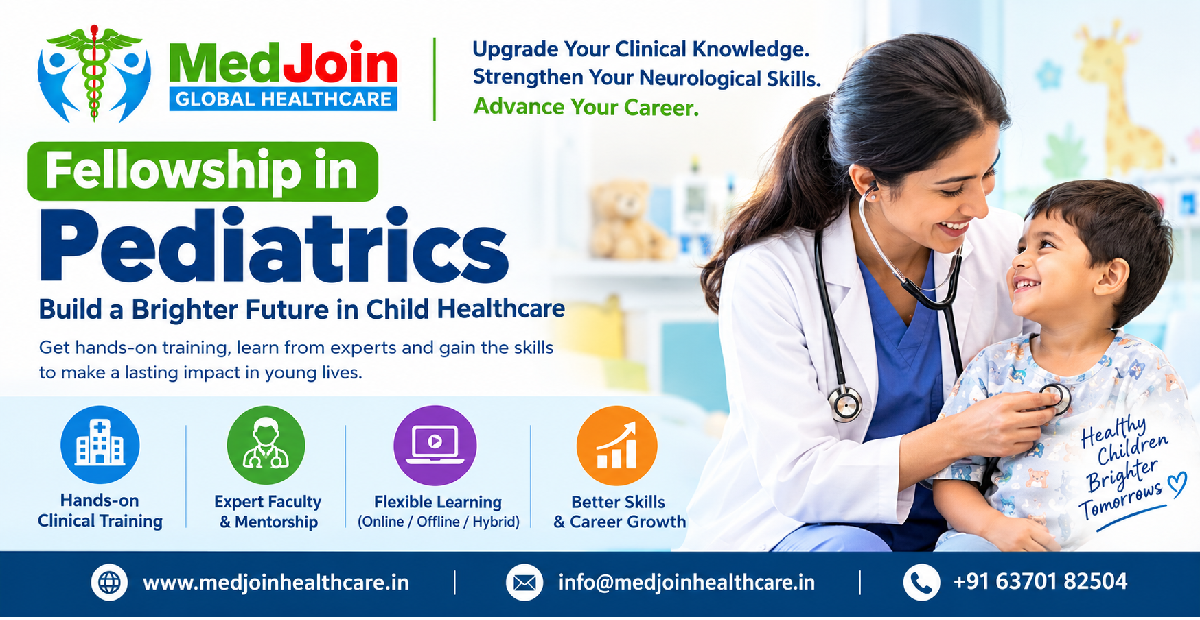
A Fellowship in Pediatrics after MBBS can provide an opportunity to strengthen pediatric knowledge, explore common childhood conditions, and develop a more structured approach to clinical assessment and patient care.
If you want to advance your knowledge of child healthcare, you can explore two broad learning pathways: hands-on hospital-based training or online fellowship learning. Each offers different benefits depending on your clinical experience, professional responsibilities, availability, and career objectives.
Through MedJoin Global Healthcare, doctors can explore fellowship learning opportunities designed to support continuing medical education and professional development.
Go ahead and invest in your professional growth. Choose hospital-based clinical exposure or online learning to strengthen your pediatric knowledge and work toward your long-term career goals.
1. What Is a Fellowship in Pediatrics?
A Fellowship in Pediatrics is a structured educational program intended to help doctors develop further knowledge of pediatric medicine beyond their foundational medical education.
Depending on the curriculum and training format, the program may cover childhood diseases, newborn assessment, growth and development, pediatric nutrition, immunization, common infections, emergency recognition, and the principles of age-appropriate patient management.
The purpose of pediatric-focused education is to help doctors understand the particular healthcare needs of younger patients and improve their ability to evaluate clinical information systematically.
A fellowship may include:
- Structured online learning modules.
- Recorded lectures and educational resources.
- Live academic sessions, where included in the program.
- Clinical case discussions.
- Assessments and knowledge checks.
- Supervised clinical exposure in a hospital-based format, where offered.
- Completion requirements and certificates, as specified by the program.
The exact duration, curriculum, eligibility criteria, assessment process, clinical exposure, and certificate arrangements depend on the individual fellowship.
It is important to distinguish a fellowship certificate from a recognized postgraduate medical qualification. A private or continuing medical education fellowship does not automatically confer specialist status, independent practice privileges, or recognition equivalent to an MD or DNB in Pediatrics. Doctors should verify the program's recognition, scope, and eligibility requirements before enrolling.
2. Why Consider a Fellowship in Pediatrics After MBBS?
After MBBS, doctors may consider several professional pathways, including postgraduate education, hospital employment, general medical practice where permitted, research, public health, and further clinical training.
A pediatric fellowship can be an additional educational pathway for doctors interested in child health.
Develop focused pediatric knowledge
General medical education introduces students to pediatric medicine, but further study can help them revisit important topics in greater depth. A structured program can organize learning around common childhood illnesses, age-specific symptoms, developmental considerations, and appropriate clinical investigations.
Strengthen clinical reasoning
Pediatric presentations can be challenging because children may not describe their symptoms clearly. Infants may communicate discomfort through feeding difficulties, changes in activity, irritability, or altered behavior.
Case-based learning can help doctors practice organizing clinical information, identifying warning signs, considering differential diagnoses, and understanding when escalation or specialist referral is required.
Improve understanding of preventive healthcare
Preventive medicine is a major component of pediatrics. Doctors need to understand growth monitoring, nutrition, vaccination, developmental surveillance, parental education, and early identification of health concerns.
Additional learning in these areas can support a more comprehensive understanding of child healthcare.
Explore a professional interest
Not every MBBS graduate immediately knows which clinical field they want to pursue. A pediatric fellowship may help doctors explore their interest in child health while building foundational knowledge relevant to their future educational and professional decisions.
Support continuing professional development
Medicine continues to evolve through updated guidelines, research, and improvements in clinical practice. Structured learning can help doctors revisit established principles and remain engaged in ongoing professional development.
3. How Does a Fellowship in Pediatrics Boost Your Career?
A pediatric fellowship may contribute to career development in several ways. Its value depends on the quality of the curriculum, the learner's participation, practical exposure, existing qualifications, and the recognition applicable to the program.
3.1 Builds a stronger foundation in child healthcare
Pediatrics involves more than identifying childhood illnesses. It includes understanding how children grow, how diseases present at different ages, and how treatment decisions must account for age, weight, development, and clinical condition.
A structured educational program may help doctors review these principles and develop a more organized approach to common pediatric presentations.
3.2 Supports clinical confidence through structured learning
Confidence in medicine should be based on knowledge, supervised experience, and appropriate clinical judgment.
Case discussions, clinical scenarios, and practical demonstrations can help doctors become more familiar with the steps involved in pediatric assessment. Hospital-based learning, where available, may provide opportunities to observe how experienced clinicians examine children, communicate with caregivers, and plan patient management.
Online learning can also support confidence by allowing doctors to revisit lectures, study clinical scenarios, and review educational materials at a manageable pace.
Neither format replaces the supervised clinical experience, competence assessment, or professional qualifications required for independent specialist practice.
3.3 Enhances understanding of common pediatric conditions
A pediatric-focused curriculum may help doctors study conditions such as:
- Acute respiratory infections.
- Childhood diarrhea and dehydration.
- Fever and common infectious illnesses.
- Nutritional deficiencies and growth concerns.
- Childhood anemia.
- Allergic conditions.
- Common gastrointestinal disorders.
- Pediatric respiratory conditions.
- Developmental concerns.
- Childhood vaccination and preventive care.
The curriculum should also emphasize identifying serious illness, recognizing clinical deterioration, understanding referral criteria, and following current evidence-based guidance.
3.4 Improves communication with parents and caregivers
Communication is central to pediatric healthcare because parents and caregivers often provide the patient's history and participate in treatment decisions.
Doctors need to explain diagnoses, investigations, treatment plans, warning signs, medication instructions, and follow-up requirements in language that families can understand.
Pediatric learning can help doctors appreciate the importance of compassionate communication, shared decision-making, and caregiver education.
3.5 Encourages a systematic approach to patient assessment
A structured pediatric assessment considers the child's age, presenting complaint, medical history, feeding patterns, hydration, growth, developmental progress, physical examination, and relevant investigations.
Learning through case studies and supervised clinical observation can help doctors understand how these elements contribute to clinical decision-making.
3.6 Adds relevant educational development to your professional profile
Completing a suitable fellowship may demonstrate a doctor's commitment to further learning in pediatric medicine.
Doctors can include relevant education and training in their CV in an accurate and transparent manner, specifying the awarding organization, program title, duration, learning format, and clinical exposure completed.
The qualification should not be represented as an MD, DNB, or recognized pediatric specialist qualification unless it genuinely holds that status.
3.7 Helps clarify long-term career goals
A fellowship may help doctors determine whether they want to pursue postgraduate pediatrics, additional clinical training, academic activities, child-health research, or other healthcare roles.
It can be one part of a broader career development plan rather than a substitute for formal postgraduate training.
4. Who Should Consider a Fellowship in Pediatrics?
The suitability of a pediatric fellowship depends on its stated eligibility criteria and the learner's career objectives.
Potential participants may include:
MBBS graduates: Doctors who want to strengthen their understanding of pediatric medicine after completing their basic medical degree.
Early-career doctors: Medical graduates seeking structured learning while gaining experience in appropriate clinical settings.
Practicing doctors: Eligible doctors who want to refresh their knowledge of childhood conditions and preventive healthcare.
Doctors preparing for further specialization: Learners who want to consolidate foundational pediatric concepts alongside preparation for recognized postgraduate training.
Doctors with busy schedules: Professionals who may benefit from online educational resources that allow them to organize study around work commitments.
Before enrolling, confirm whether the specific program accepts MBBS graduates, interns, registered practitioners, or doctors with other qualifications. Admission eligibility should never be assumed from the word “fellowship” alone.
5. Hands-On Hospital-Based Fellowship in Pediatrics: Learn Through Clinical Exposure
For doctors who prefer practical learning, hospital-based training can be an important part of their professional development.
Pediatric medicine requires doctors to connect theoretical knowledge with real clinical findings. Understanding how to assess a child, interpret symptoms, recognize danger signs, and communicate with caregivers becomes more meaningful when supported by appropriate supervised clinical exposure.
A hands-on hospital-based fellowship may offer opportunities to observe pediatric workflows, participate in educational discussions, and learn from experienced clinicians. The exact activities depend on the hospital, program design, supervision arrangements, and the doctor's permitted scope of practice.
Why choose hospital-based pediatric training?
1. Exposure to real clinical environments
A hospital provides an opportunity to observe how pediatric departments organize patient assessment, investigations, treatment planning, monitoring, documentation, and follow-up.
Doctors can gain insight into the coordination required among pediatricians, nurses, laboratory teams, pharmacists, and other healthcare professionals.
2. Learning through clinical cases
Clinical cases help connect textbook concepts with patient presentations. Under appropriate supervision, doctors may discuss presenting complaints, relevant history, examination findings, differential diagnoses, investigation choices, and management principles.
Such discussions can encourage systematic reasoning and help learners recognize the importance of patient-specific decisions.
3. Understanding pediatric examination
Pediatric examination requires techniques adapted to the child's age, comfort, developmental stage, and ability to cooperate.
Educational exposure may cover general appearance, vital signs, respiratory assessment, cardiovascular examination, abdominal examination, hydration status, growth measurements, and recognition of warning signs.
Actual examination and patient interaction must follow the hospital's supervision, consent, infection-control, privacy, and clinical governance requirements.
4. Observing newborn and infant care
Depending on the placement, doctors may learn about newborn assessment, feeding concerns, temperature regulation, neonatal warning signs, jaundice assessment, and the principles of neonatal monitoring.
Neonatal intensive care activities require additional training, competency verification, and authorization. Observation should not be confused with independent procedural competence.
5. Understanding pediatric emergency assessment
Recognizing a seriously ill child is an essential clinical skill. Hospital-based education may include the recognition of respiratory distress, shock, severe dehydration, altered consciousness, seizures, and other emergency presentations.
Training can emphasize early recognition, initial assessment, appropriate escalation, and adherence to emergency protocols. Any practical participation must be supervised and authorized.
6. Learning professional communication
Hospital exposure may provide opportunities to observe how clinicians explain medical information to parents, obtain relevant histories, discuss treatment plans, document clinical decisions, and arrange follow-up.
These communication skills are important in both inpatient and outpatient pediatric care.
What might a hospital-based pediatric training program include?
Depending on the approved curriculum and available facilities, educational activities may include:
- Pediatric outpatient department observation.
- Ward-based clinical discussions.
- Growth and developmental assessment demonstrations.
- Pediatric history-taking and examination teaching.
- Case presentations and case-based discussions.
- Observation of newborn assessment and care.
- Pediatric nutrition and feeding education.
- Recognition of common childhood illnesses.
- Pediatric emergency assessment discussions.
- Clinical documentation and referral principles.
- Patient safety, infection prevention, and ethical practice.
These are examples of potential learning activities, not a guarantee that every fellowship includes all of them. Before joining, request a written curriculum specifying the clinical departments, supervision, duration, learning objectives, permitted activities, and assessment methods.
Who should choose hands-on training?
Hospital-based training may suit doctors who:
- Prefer face-to-face clinical learning.
- Want to observe pediatric clinical workflows.
- Learn effectively through supervised demonstrations and case discussions.
- Can travel to and attend the designated hospital.
- Have the time to meet attendance and clinical placement requirements.
- Want to supplement theoretical learning with an appropriate clinical environment.
For doctors seeking recognized specialist status, it is also important to understand that a short fellowship or hospital observership does not replace the required recognized postgraduate qualification.
6. Online Fellowship in Pediatrics: Flexible Learning for Busy Doctors
Not every doctor can attend a hospital-based program for an extended period. Professional responsibilities, location, financial considerations, family commitments, and work schedules may make regular hospital attendance difficult.
An online fellowship offers an alternative way to study pediatric medicine through digital educational resources.
A well-structured online program can provide flexibility while allowing learners to revisit important concepts and organize their studies around other responsibilities.
Benefits of online pediatric fellowship learning
1. Learn from your preferred location
Online education allows eligible learners to access educational materials without relocating for routine academic sessions. This may be particularly helpful for doctors working in different cities or countries.
2. Study around professional commitments
Doctors balancing clinical duties, employment, or other responsibilities may find online learning easier to schedule than a full-time hospital placement.
3. Review difficult topics repeatedly
Recorded lectures and digital resources, when included, allow learners to revisit complex subjects such as pediatric respiratory conditions, childhood nutrition, growth assessment, and developmental milestones.
4. Develop theoretical knowledge systematically
Online modules can organize pediatric medicine into manageable learning units, enabling doctors to study one subject at a time and reinforce their understanding through assessments.
5. Participate in academic discussions
Programs that offer live online sessions may allow learners to discuss clinical scenarios, ask faculty questions, and review important concepts with other participants.
6. Reduce the need for relocation
Online learning can reduce travel and accommodation requirements associated with regular hospital attendance. Learners should still consider tuition fees, internet access, time commitments, and any required in-person assessments.
What can an online Fellowship in Pediatrics cover?
Depending on the curriculum, the program may address:
- Introduction to pediatric medicine.
- Growth and developmental milestones.
- Pediatric history-taking principles.
- Common childhood infections.
- Pediatric respiratory disorders.
- Gastrointestinal conditions in children.
- Pediatric nutrition and feeding.
- Immunization principles.
- Childhood anemia and nutritional deficiencies.
- Common pediatric dermatological conditions.
- Recognition of pediatric danger signs.
- Principles of pediatric emergency care.
- Communication with parents and caregivers.
- Case-based learning and clinical reasoning.
The precise topics and depth of coverage must be confirmed with the training provider.
Can online training replace hands-on pediatric experience?
No. Online training can support theoretical learning, but it cannot fully reproduce direct patient assessment, supervised examination, procedural demonstrations, or the experience of working within a clinical team.
Doctors should select their learning format according to their objectives. If practical clinical exposure is important, investigate a suitable supervised hospital-based placement. If the main objective is structured academic learning, an online format may be more convenient.
An online certificate should not be interpreted as evidence of practical clinical competence unless the relevant competencies have been properly assessed through appropriate methods.
7. Online vs. Hands-On Hospital-Based Fellowship in Pediatrics
Both formats can contribute to medical education, but they serve different learning needs.
| Feature | Online fellowship | Hands-on hospital-based fellowship |
|---|---|---|
| Learning environment | Digital educational platform | Hospital or designated clinical setting |
| Flexibility | Generally higher | Depends on attendance and placement schedule |
| Location | Can often be accessed remotely | Requires attendance at the designated site |
| Recorded lectures | May be included | May be supplemented by online resources |
| Clinical case discussions | Virtual, where offered | May include in-person discussions |
| Patient observation | Not inherent to online learning | May be available under approved arrangements |
| Practical exposure | Limited to the methods provided online | Depends on supervised placement activities |
| Travel and accommodation | Usually not required for routine online study | May be required |
| Best suited for | Flexible academic learning | Learners seeking supervised clinical exposure |
| Professional recognition | Depends on the awarding organization | Depends on the awarding organization and program |
Which format should you choose?
Choose online learning if flexibility and access to educational resources are your main priorities.
Choose hospital-based learning if you can attend a suitable clinical placement and want structured exposure to pediatric practice.
If your goals require both theoretical understanding and practical exposure, ask whether the provider offers a combined or hybrid format. Confirm exactly how much time is spent online, how much is spent in the hospital, and what activities and assessments are included.
8. Important Subjects Covered in Pediatric Fellowship Education
A comprehensive pediatric learning pathway should help doctors understand the health needs of children from birth through adolescence. The following subjects illustrate areas that may be included in a pediatric fellowship curriculum.
8.1 Growth and development
Growth and development are central to pediatric medicine. Children undergo continuous changes in physical size, neurological function, language, behavior, and social interaction.
Doctors need to understand age-appropriate developmental expectations and how to interpret growth measurements using appropriate standards.
Educational topics may include:
- Weight, length, height, and head circumference.
- Growth charts and growth trends.
- Developmental milestones.
- Feeding and nutritional history.
- Developmental surveillance.
- Identification of possible developmental delays.
- The role of early assessment and referral.
Doctors should understand that an individual measurement is not always sufficient to identify a problem. Clinical interpretation depends on age, growth trajectory, medical history, and other relevant findings.
8.2 Neonatal care
The neonatal period requires particular attention because newborns can deteriorate quickly and may present with subtle signs of illness.
Relevant educational subjects may include:
- Initial newborn assessment.
- Normal neonatal transition.
- Newborn feeding and temperature regulation.
- Recognition of neonatal jaundice.
- Assessment of feeding difficulties.
- Signs of neonatal infection.
- Prematurity and low birth weight.
- Neonatal danger signs and referral.
- Principles of neonatal monitoring.
Advanced neonatal procedures and neonatal intensive care require appropriately supervised training, verified competence, and relevant clinical authorization.
8.3 Pediatric infectious diseases
Infections are among the common reasons children require medical attention. Symptoms may vary with age, the organism involved, the child's immune status, and the severity of illness.
Learning topics may include respiratory infections, gastroenteritis, urinary tract infections, common viral illnesses, fever assessment, and the principles of antimicrobial stewardship.
An important learning objective is recognizing children who may have serious infections and understanding when urgent investigation, escalation, or referral is required.
Antibiotic selection and dosing must be based on appropriate clinical assessment, current guidance, patient-specific factors, and local protocols.
8.4 Pediatric respiratory medicine
Respiratory conditions can range from mild upper respiratory infections to serious breathing difficulties.
A pediatric respiratory module may cover:
- Age-appropriate respiratory assessment.
- Recognition of respiratory distress.
- Common upper and lower respiratory infections.
- Wheezing and asthma principles.
- Oxygen saturation assessment.
- Respiratory warning signs.
- Indications for escalation and referral.
Doctors should understand that a child's work of breathing, general appearance, oxygenation, hydration, and level of consciousness can all influence the urgency of assessment.
8.5 Pediatric gastrointestinal disorders
Gastrointestinal complaints are common in children and may involve feeding, digestion, hydration, and nutrition.
Potential learning topics include vomiting, diarrhea, constipation, abdominal pain, gastroenteritis, dehydration, and feeding difficulties.
A key objective is learning how to assess hydration, identify warning signs, understand age-specific risks, and determine when further evaluation is necessary.
8.6 Pediatric nutrition
Nutrition influences growth, immunity, development, and long-term health.
Pediatric education may address breastfeeding support principles, complementary feeding, age-appropriate nutrition, protein and micronutrient requirements, nutritional deficiencies, childhood obesity, and nutrition-related growth concerns.
Doctors can also study how cultural practices, family circumstances, feeding difficulties, and underlying illness may affect a child's nutritional status.
8.7 Immunization and preventive healthcare
Vaccination is an important component of preventive child health.
Relevant subjects may include the principles of immunization, vaccine schedules applicable to the relevant jurisdiction, contraindications and precautions, vaccine storage principles, catch-up vaccination concepts, and communication with parents.
Vaccination advice should follow current national recommendations and the child's medical circumstances.
8.8 Pediatric hematology
Childhood anemia and other blood disorders may affect growth, energy, development, and overall health.
A foundational educational module may introduce common causes of anemia, interpretation of basic hematological investigations, nutritional deficiencies, warning signs, and the circumstances requiring specialist evaluation.
8.9 Pediatric neurology
Pediatric neurological assessment involves age-specific considerations related to development, behavior, movement, consciousness, and seizure presentations.
Potential topics include developmental concerns, febrile seizures, seizure recognition, neurological warning signs, and referral principles.
Complex neurological conditions require appropriate specialist assessment and should not be managed solely on the basis of a short educational course.
8.10 Pediatric emergency medicine
Children with emergencies require timely recognition and an organized initial assessment.
Relevant learning areas may include pediatric assessment principles, airway and breathing concerns, shock recognition, seizures, severe dehydration, altered consciousness, poisoning recognition, and emergency escalation.
Practical emergency skills require appropriate supervised training and competency assessment. An online module alone does not establish proficiency in resuscitation or emergency procedures.
8.11 Pediatric dermatology
Skin conditions are common during childhood and can arise from infections, inflammation, allergies, or other causes.
A pediatric curriculum may introduce common childhood rashes, eczema, skin infections, allergic presentations, and warning signs that warrant urgent evaluation.
8.12 Adolescent health
Adolescents experience physical, psychological, and social changes that influence their healthcare needs.
Relevant topics may include puberty, nutrition, preventive care, mental well-being, confidentiality principles, risk assessment, and age-appropriate communication.
Doctors should approach adolescent consultations with sensitivity, respect for privacy, and compliance with applicable legal and professional requirements.
9. Clinical Case-Based Learning: Turning Knowledge Into Better Reasoning
Clinical case-based learning helps doctors apply theoretical knowledge to realistic patient scenarios.
For example, a learning case may involve a young child presenting with fever, reduced feeding, and decreased activity. The educational discussion could explore the importance of age, duration of symptoms, hydration, vital signs, general appearance, warning signs, and the need for appropriate clinical assessment.
Another case might examine a child with persistent cough and breathing difficulty. The discussion could focus on respiratory assessment, oxygenation, signs of distress, possible causes, and criteria for urgent escalation.
Case-based learning can help doctors practice asking relevant questions, organizing information, identifying uncertainty, and understanding why different clinical presentations may require different approaches.
However, educational cases are not substitutes for examining an actual patient. Real-world decisions require clinical judgment, appropriate supervision where necessary, current guidelines, and consideration of the patient's individual circumstances.
A useful fellowship should explain not only what clinicians may do, but also why they do it, what limitations apply, and when specialist referral is necessary.
10. Career Opportunities After MBBS With Additional Training in Pediatrics
One of the main reasons doctors explore additional medical education is to understand their professional options and prepare for future opportunities.
A Fellowship in Pediatrics may support a doctor's learning journey, but career eligibility depends on recognized qualifications, registration, experience, employer requirements, and applicable regulations. A fellowship certificate alone does not guarantee employment, promotion, specialist status, or permission to practice independently as a pediatrician.
Here are some professional directions that MBBS graduates may explore.
10.1 General medical practice involving child health
Doctors who meet the applicable registration and practice requirements may encounter children in general medical settings. Additional pediatric education can help them strengthen their understanding of common childhood presentations, preventive care, and indications for referral.
A fellowship can supplement foundational knowledge, but doctors must remain within their authorized scope of practice and seek specialist input when required.
10.2 Hospital-based medical roles
Hospitals employ doctors in a range of positions according to their qualifications, registration, experience, and the requirements of the role.
Additional pediatric education may demonstrate an interest in child health. However, hospital-based pediatrician positions commonly require recognized postgraduate qualifications or other specific credentials. Applicants should verify the eligibility criteria for each position.
10.3 Child-health and community healthcare programs
Community healthcare involves preventive health education, growth monitoring initiatives, vaccination awareness, nutrition education, and the early identification of health concerns.
Doctors interested in public health or community medicine may find pediatric knowledge relevant to these activities. Specific positions may require additional qualifications, public health training, or experience.
10.4 Medical education and academic activities
Doctors interested in education may use their additional learning to contribute to appropriate health-awareness activities, educational discussions, or peer-learning initiatives, depending on their qualifications and the requirements of the organization.
Formal academic appointments and teaching positions are subject to applicable eligibility and qualification rules.
10.5 Research and clinical documentation
Pediatric research covers childhood diseases, nutrition, growth, vaccination, developmental health, and healthcare delivery.
Doctors interested in research may explore research coordination, literature reviews, clinical documentation, or other roles for which they meet the relevant requirements. Research work involving patients must follow appropriate ethics approvals, consent requirements, and institutional procedures.
10.6 Further postgraduate medical education
For doctors who want to specialize in pediatrics, recognized postgraduate training remains an important pathway.
In India, doctors should investigate the applicable MD, DNB, or other recognized postgraduate routes, their entrance requirements, and their eligibility criteria.
A fellowship may help reinforce selected academic concepts, but it does not replace the formal training and assessment required for a recognized postgraduate qualification.
11. Fellowship in Pediatrics vs. MD Pediatrics: Understanding the Difference
Doctors should carefully distinguish between a fellowship offered as a continuing education program and a recognized postgraduate medical qualification.
| Aspect | Educational fellowship | Recognized postgraduate qualification |
|---|---|---|
| Primary purpose | Additional learning in a defined subject | Formal postgraduate medical education and qualification |
| Curriculum | Depends on the provider | Governed by the relevant regulatory and academic framework |
| Clinical exposure | Varies by program | Defined by the approved training requirements |
| Eligibility | Depends on the program | Depends on the applicable admission rules |
| Specialist recognition | Not automatic | Depends on the recognition and validity of the qualification |
| Career impact | May support learning and professional development | May establish eligibility for roles requiring that qualification |
| Independent specialist practice | Not conferred merely by a certificate | Subject to applicable qualification, registration, and professional rules |
A responsible doctor should evaluate a fellowship based on its actual educational value, not simply the title printed on its certificate.
Before joining any program, ask who awards the certificate, whether the qualification is formally recognized, what practical training is included, and what professional claims can legitimately be made after completion.
12. Why Consider MedJoin Global Healthcare for Pediatric Fellowship Learning?
MedJoin Global Healthcare provides medical education and fellowship learning opportunities for healthcare professionals seeking to develop their knowledge and explore focused areas of clinical learning.
For doctors interested in pediatrics, the most suitable program depends on their eligibility, learning preferences, clinical experience, and professional goals.
When exploring a pediatric fellowship with MedJoin Global Healthcare, prospective learners should request the current program details and confirm the available format, curriculum, clinical training arrangements, fees, and certification requirements before enrollment.
Learning pathways to explore
Online learning
An online pathway may suit doctors who want structured educational content and flexibility in organizing their study schedules.
Depending on the specific program, online learning may include digital modules, recorded lectures, live academic discussions, assessments, and case-based educational activities.
Hands-on hospital-based learning
Doctors seeking practical exposure should inquire about the availability of a suitable pediatric placement, the participating hospital, the duration of training, and the supervision arrangements.
The precise clinical activities must be confirmed in advance. Hospital-based training should take place under appropriate supervision and in accordance with patient safety, consent, privacy, and institutional policies.
A learning pathway aligned with your goals
Some doctors prioritize flexibility, while others want supervised clinical exposure. Discussing your objectives with the program team can help you determine which available format is appropriate for you.
Do not assume that every format, hospital placement, clinical procedure, or certification option is available in every batch. Request written confirmation of the specific program you intend to join.
13. What Should You Expect During Your Pediatric Fellowship Journey?
Your experience will depend on the program structure, but the following stages provide a useful framework for planning your learning.
Stage 1: Identify your learning objectives
Start by identifying the areas in which you want to improve.
You may want to strengthen your knowledge of common childhood illnesses, growth and development, newborn assessment, pediatric nutrition, preventive care, or emergency recognition.
Clear objectives make it easier to evaluate whether the program is appropriate.
Stage 2: Complete the foundational learning
Work through the assigned modules, lectures, and educational resources. Build a consistent study schedule and maintain notes on important concepts.
Use current, credible medical references to reinforce your learning and identify areas requiring further clarification.
Stage 3: Participate in case discussions
Case discussions can help you connect clinical presentations with relevant history, examination findings, differential diagnoses, investigations, and management principles.
Ask questions and use feedback to identify gaps in your understanding.
Stage 4: Attend clinical training if included
If your program includes a hospital placement, follow the required attendance schedule and clinical policies.
Observe carefully, respect patient confidentiality, and seek clarification from supervisors. Only undertake clinical activities for which you have appropriate supervision, authorization, and verified competence.
Stage 5: Complete assessments
Complete the required assignments, examinations, case presentations, or other assessments specified by the program.
Assessment should help identify what you understand well and which subjects require revision.
Stage 6: Apply your learning responsibly
Continue learning after the course and use your knowledge within the boundaries of your qualifications and professional responsibilities.
For clinical decisions, follow current guidelines, local protocols, and appropriate referral pathways.
14. Essential Skills Doctors Can Develop Through Pediatric Learning
Pediatric education can contribute to several important professional skills.
Clinical observation: Recognizing relevant changes in a child's appearance, behavior, breathing, feeding, hydration, and activity.
History-taking: Collecting age-appropriate information about presenting complaints, birth history where relevant, feeding, immunization, development, and previous illnesses.
Clinical reasoning: Organizing findings, considering possible causes, identifying warning signs, and understanding when investigations or referrals may be needed.
Preventive healthcare knowledge: Understanding growth monitoring, vaccination, nutrition, developmental surveillance, and caregiver education.
Communication: Explaining health information clearly, listening to parents, addressing concerns, and communicating the need for follow-up or urgent assessment.
Documentation: Understanding the importance of accurate clinical records, confidentiality, and clear communication between healthcare professionals.
Teamwork: Appreciating how doctors, nurses, allied health professionals, and other team members contribute to pediatric care.
Professional judgment: Recognizing the limits of personal competence, seeking supervision when needed, and escalating concerns appropriately.
These skills develop through continuing study, feedback, clinical experience, and ongoing assessment. Completing a course is one step in that process, not the end of professional learning.
15. Challenges in Pediatric Medicine and the Importance of Continuous Learning
Pediatric care can be rewarding, but it also involves distinctive clinical and communication challenges.
Children may be unable to describe their symptoms accurately. The same symptom may have different implications depending on age. Parents may be anxious about a child's condition, and doctors may need to explain complex information in a reassuring but clinically accurate manner.
Treatment decisions also require attention to weight, age, developmental stage, allergies, medical history, and other patient-specific factors.
A child who appears mildly unwell can sometimes deteriorate quickly. Recognizing serious illness and knowing when to escalate care are therefore essential components of pediatric education.
Continuous learning helps doctors revisit these challenges, review updated recommendations, and understand the limitations of their existing knowledge.
A fellowship can provide a structured opportunity to study selected subjects, but maintaining clinical competence requires ongoing education, appropriate supervision, practical experience where necessary, and adherence to current professional standards.
16. Is a Fellowship in Pediatrics Worth It After MBBS?
Whether a pediatric fellowship is worthwhile depends on what you want to achieve.
It may be valuable if you want to:
- Develop a deeper understanding of childhood health conditions.
- Revisit pediatric concepts in a structured format.
- Explore a professional interest in child health.
- Participate in case-based learning.
- Supplement your existing clinical education.
- Access flexible online educational resources.
- Seek supervised clinical exposure where an appropriate placement is available.
- Prepare for further learning and professional development.
However, a fellowship may not meet your needs if you require a recognized specialist qualification, a guaranteed hospital appointment, or a credential that authorizes independent specialist practice.
Before investing in any program, compare the educational benefits with the cost, time commitment, recognition, and relevance to your intended career pathway.
The best decision is one based on clear learning objectives and realistic expectations.
17. Frequently Asked Questions About Fellowship in Pediatrics After MBBS
Q1. Can I pursue a Fellowship in Pediatrics after MBBS?
Eligibility depends on the individual program. Some educational fellowships accept eligible MBBS graduates, while others may require internship completion, medical registration, or additional experience. Confirm the requirements before applying.
Q2. What is the duration of a Fellowship in Pediatrics?
There is no single duration applicable to all pediatric fellowships. Program length varies according to the provider, curriculum, and training format. Check the current program documentation for the exact duration.
Q3. Is an online Fellowship in Pediatrics useful?
Online learning can help doctors strengthen theoretical knowledge, revisit lectures, and study at a flexible pace. Its value depends on the curriculum, faculty support, assessment methods, and relevance to the learner's objectives.
Online study does not independently provide the direct patient experience associated with supervised clinical training.
Q4. Is hands-on hospital-based pediatric training available?
Availability depends on the provider's current arrangements. Prospective participants should confirm the hospital, placement duration, supervision, curriculum, attendance requirements, and permitted clinical activities in writing.
Q5. Which is better: online or hands-on pediatric training?
Neither format is universally better.
Online training may be more suitable for flexible academic study. Hospital-based training may be more suitable for learners who can attend a clinical placement and want supervised exposure to clinical practice.
The choice should reflect your objectives, available time, eligibility, and the actual content of the program.
Q6. Can I become a pediatrician after completing a fellowship?
A fellowship certificate does not automatically qualify an MBBS graduate as a recognized pediatric specialist. Specialist eligibility depends on the relevant recognized postgraduate qualifications, registration requirements, and applicable regulations.
Doctors intending to become pediatricians should investigate recognized postgraduate pathways.
Q7. What subjects are included in a pediatric fellowship?
Depending on the curriculum, subjects may include growth and development, neonatal care, childhood infections, pediatric respiratory and gastrointestinal disorders, nutrition, immunization, pediatric emergencies, and common childhood conditions.
Always request the actual syllabus rather than assuming every program covers all these areas.
Q8. Does a pediatric fellowship include patient interaction?
Patient interaction is not automatically included in every fellowship. Online programs may focus on academic learning, while hospital-based programs may offer observation or supervised clinical activities.
Confirm the exact nature of patient exposure and the applicable supervision and consent arrangements.
Q9. Can I pursue a fellowship while working?
Some online programs are designed to offer greater scheduling flexibility. Hospital-based programs may have fixed attendance requirements. Check the expected weekly study hours, live session schedule, examination dates, and clinical placement commitments.
Q10. Will a fellowship guarantee a job?
No. Completing a fellowship does not guarantee employment, promotion, income growth, or admission to postgraduate training. Career outcomes depend on qualifications, experience, skills, employer requirements, and other relevant factors.
Q11. What should I check before joining MedJoin Global Healthcare?
Request the current eligibility criteria, curriculum, duration, learning format, faculty information, fees, assessment requirements, certificate details, and any clinical placement arrangements.
Ensure that the program aligns with your professional objectives and that its claims about qualifications and clinical exposure are clearly documented.
Q12. Can international medical graduates apply?
Eligibility depends on the program and the applicant's qualifications. International doctors should verify admission requirements, documentation, registration implications, and any travel or clinical placement requirements.
Participation in an educational fellowship does not automatically provide medical registration or permission to practice in another country.
18. How to Get Started With a Fellowship in Pediatrics
Taking the next step in professional development starts with understanding your needs.
First, identify the pediatric subjects you want to study. Then decide whether you prefer online learning, supervised hospital-based exposure, or a combination of both if available.
Review the curriculum and program requirements carefully. Confirm eligibility, costs, clinical placement details, assessment procedures, and the status of the certificate.
If your long-term objective is specialist practice, plan for the recognized postgraduate qualifications and other requirements applicable to your career pathway.
A thoughtful approach will help you choose an educational program that contributes meaningfully to your medical knowledge and professional development.
Conclusion: Advance Your Pediatric Knowledge With the Right Learning Pathway
Completing MBBS is the beginning of a lifelong journey in medicine. As healthcare knowledge evolves, doctors must continue learning, refining their clinical reasoning, and understanding the changing needs of patients.
A Fellowship in Pediatrics can be an opportunity to explore child healthcare in greater depth, strengthen your understanding of common childhood conditions, study growth and development, and improve your awareness of preventive healthcare and pediatric warning signs.
For doctors who value flexibility, online learning can provide structured academic education without requiring routine relocation. For those seeking practical exposure, a suitable hospital-based program may offer opportunities to observe clinical workflows, discuss cases, and learn under appropriate supervision.
The right choice depends on your goals, availability, eligibility, and the quality and recognition of the program.
Go ahead and invest in your learning. Explore online training or hands-on hospital-based education to strengthen your knowledge and take an informed step toward your future in healthcare.
Explore Fellowship Opportunities With MedJoin Global Healthcare
If you are an MBBS graduate interested in advancing your knowledge of pediatrics, contact MedJoin Global Healthcare to enquire about available programs and the current training options.
Discuss your preferred learning format, eligibility, curriculum, clinical exposure, and career objectives with the program team before enrolling.
MedJoin Global Healthcare
- Website: https://www.medjoinhealthcare.in
- Email: info@medjoinhealthcare.in
- Phone: +91 63701 82504
Take the next step in your medical learning journey. Build your knowledge, explore your clinical interests, and continue working toward your professional goals.