
Introduction: The Growing Importance of Facial Aesthetics and Cosmetology
Facial aesthetics and cosmetology have emerged as important areas of modern aesthetic medicine. With increasing awareness of skincare, facial rejuvenation, non-surgical cosmetic procedures, and age-management treatments, more people are seeking professional guidance to improve skin health and address aesthetic concerns.
This growing interest has created opportunities for qualified medical professionals who want to develop specialized knowledge in facial aesthetics, cosmetic dermatology-related procedures, skin rejuvenation, and evidence-based aesthetic practice.
A Fellowship in Facial Aesthetics and Cosmetology can provide a structured educational pathway for eligible doctors who want to expand their clinical knowledge, understand aesthetic assessment, learn about relevant treatment technologies, and explore career opportunities in the aesthetic healthcare sector.
Unlike general beauty or cosmetology courses, medical aesthetic education focuses on clinical assessment, skin anatomy, facial structures, patient selection, contraindications, treatment planning, complication recognition, and professional ethics. Depending on the curriculum, training may also cover selected non-surgical aesthetic procedures under appropriate supervision.
For doctors looking to expand their professional capabilities, a fellowship may be an opportunity to combine medical knowledge with an interest in skin health, facial appearance, patient confidence, and aesthetic wellness.
MedJoin Global Healthcare offers medical education and fellowship pathways designed to help eligible healthcare professionals explore specialized areas of clinical learning. Prospective applicants should review the current program curriculum, eligibility requirements, training mode, clinical exposure, and certificate details before enrolling.
What Is a Fellowship in Facial Aesthetics and Cosmetology?
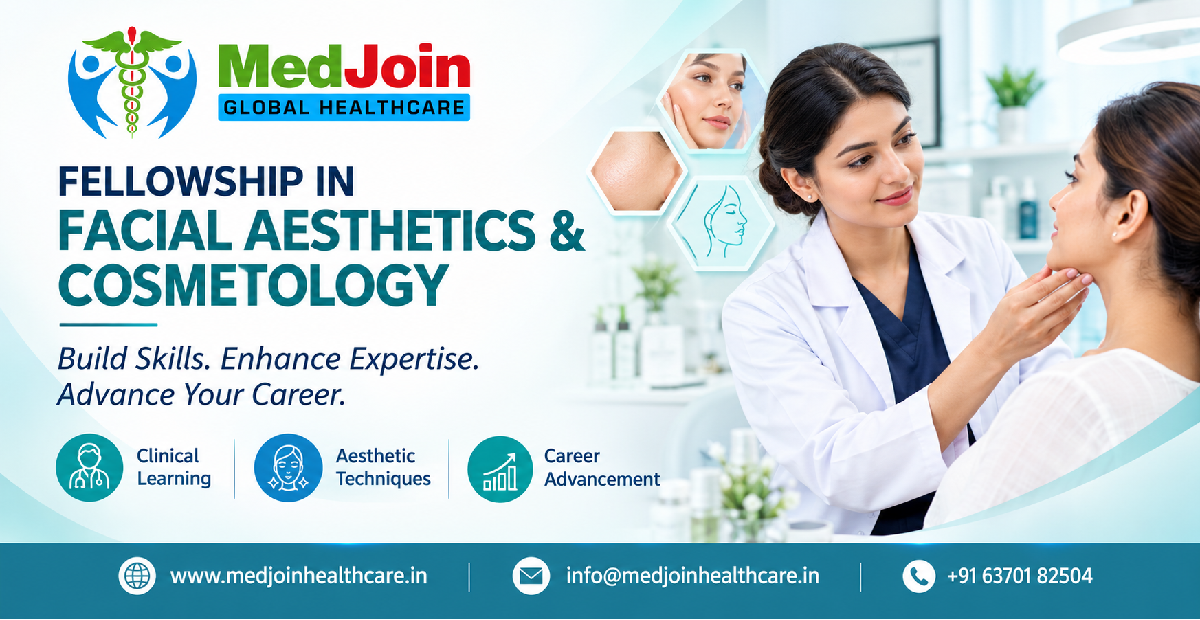
A Fellowship in Facial Aesthetics and Cosmetology is a structured educational program intended to introduce eligible medical professionals to the principles and practices of medical aesthetics and cosmetology.
The exact scope depends on the program's duration, curriculum, faculty, training facilities, and the learner's professional background. A program may emphasize theoretical learning, case-based discussions, practical demonstrations, supervised clinical observation, or hands-on training where permitted and available.
The objective is to help participants understand how to evaluate common aesthetic concerns, develop appropriate treatment plans within their competence, communicate realistic outcomes, and recognize situations that require referral or specialist intervention.
Facial Aesthetics
Facial aesthetics focuses on the appearance, proportions, symmetry, skin quality, and signs of ageing of the face. Medical professionals in this field may study:
- Facial anatomy and relevant neurovascular structures.
- Facial skin assessment and age-related changes.
- Facial proportions and aesthetic assessment.
- Skin texture, pigmentation, fine lines, and wrinkles.
- Non-surgical facial rejuvenation concepts.
- Patient expectations and individualized treatment planning.
- Safety considerations associated with aesthetic procedures.
- Recognition and management pathways for complications.
Cosmetology
Cosmetology is a broad field concerned with skin, hair, and cosmetic appearance. Medical cosmetology applies clinical knowledge to the assessment and management of selected skin and aesthetic concerns.
Relevant subjects may include:
- Skin anatomy and physiology.
- Skin types and common cosmetic concerns.
- Acne and post-acne marks.
- Hyperpigmentation and uneven skin tone.
- Photoageing and environmental skin damage.
- Hair and scalp concerns.
- Chemical peels and other selected skin procedures.
- Laser and light-based treatment principles.
- Skin rejuvenation technologies.
- Medical-grade skincare and patient counselling.
The inclusion of any procedure in a fellowship syllabus does not automatically authorize every participant to perform it. Eligibility, professional registration, applicable laws, facility requirements, and procedure-specific training must be considered.
Why Are Facial Aesthetics and Cosmetology Becoming Popular?
The aesthetic healthcare sector is evolving as patients increasingly seek personalized treatments, preventive skincare advice, and minimally invasive approaches to selected cosmetic concerns.
Several factors are contributing to interest in this field.
Increasing Awareness of Skin Health
People are becoming more aware of the relationship between skin health, sun exposure, ageing, lifestyle, and environmental factors. Patients may seek medical advice for pigmentation, acne scars, uneven texture, fine lines, and other concerns that affect their appearance or quality of life.
Qualified professionals with appropriate training can help distinguish cosmetic concerns from underlying medical conditions and recommend evidence-based care.
Demand for Non-Surgical Aesthetic Options
Some patients prefer non-surgical approaches to selected aesthetic concerns because they may involve less downtime than surgery. Examples include certain topical treatments, superficial chemical peels, and appropriately indicated energy-based procedures.
However, non-surgical does not mean risk-free. Treatment selection should be based on clinical assessment, patient suitability, realistic expectations, and an understanding of potential complications.
Growing Interest in Preventive Skin Care
Preventive skincare includes sun protection, appropriate cleansing and moisturization, evidence-based topical treatments, and early assessment of persistent skin concerns.
Doctors with relevant training can help patients develop practical skincare plans and understand the limitations of cosmetic products and procedures.
Expansion of Aesthetic Clinics
Dermatology practices, plastic surgery clinics, medical aesthetic centres, and some multispecialty facilities may offer aesthetic consultations and selected procedures. The services available at each facility depend on local regulations, staffing, equipment, and clinical governance.
This diversity of practice settings creates possible career pathways for appropriately qualified and trained professionals.
Increasing Preference for Personalized Treatment
Aesthetic medicine is not simply about performing a procedure. Appropriate care requires evaluating skin type, medical history, medications, previous treatments, expectations, and individual risk factors.
Training that emphasizes assessment and patient safety can help doctors develop a more systematic approach to aesthetic consultations.
What Is the Future of Facial Aesthetics and Cosmetology?
The future of facial aesthetics and cosmetology is likely to be shaped by technological developments, patient demand, safety standards, personalized treatment approaches, and increasing expectations for evidence-based care.
Although the sector presents opportunities, its growth should not be interpreted as a guarantee of employment, business success, or high income for every practitioner.
Growth of Non-Surgical Aesthetic Medicine
Non-surgical aesthetic treatments are an important part of contemporary aesthetic practice. Depending on their qualifications and local scope of practice, medical professionals may work with treatments aimed at improving skin texture, selected pigmentation concerns, fine lines, and other aesthetic issues.
Doctors entering the field need to understand that treatment suitability varies by patient. Appropriate indications, contraindications, consent, aftercare, and complication management are essential components of responsible practice.
Advances in Laser and Energy-Based Technologies
Laser, radiofrequency, and other energy-based technologies are used in selected aesthetic and dermatological applications.
Future developments may improve treatment precision, patient selection, and the ability to tailor certain treatments. Nevertheless, device selection, correct settings, operator competency, skin-type considerations, eye protection, and management of adverse effects remain critical.
A fellowship may introduce participants to the scientific principles of these technologies, but device-specific competency generally requires appropriate practical training and supervised experience.
Personalized Skin Rejuvenation
Aesthetic treatment is increasingly approached as an individualized process rather than a standard procedure for every patient.
A personalized plan may consider:
- Skin type and sensitivity.
- The nature and severity of the concern.
- Medical history and current medication.
- Previous treatments and response.
- Lifestyle and sun exposure.
- Patient preferences and available treatment options.
- Expected outcomes, costs, and possible risks.
This approach can help improve treatment selection and patient communication.
Integration of Digital Tools
Digital photography, standardized clinical documentation, imaging systems, and practice-management software can support consultations and follow-up.
Technology may also assist with patient education and monitoring, but digital images and automated assessments have limitations. They should not replace appropriate examination, clinical judgement, informed consent, or professional accountability.
Greater Emphasis on Patient Safety
As aesthetic services become more accessible, patient safety and ethical practice remain essential. A responsible practitioner must know when not to treat, when to seek specialist advice, and when urgent referral is needed.
Future-oriented aesthetic education should therefore include complication recognition, infection prevention, product safety, documentation, emergency preparedness, and clear referral pathways.
Opportunities in Medical Aesthetic Education
As more healthcare professionals explore aesthetic medicine, there may be opportunities for experienced clinicians to contribute to teaching, clinical mentoring, workshops, and professional education.
Such opportunities generally depend on demonstrated competence, relevant credentials, teaching experience, and the requirements of the organization involved.
Career Scope After a Fellowship in Facial Aesthetics and Cosmetology
The career scope after completing a fellowship depends on the participant's basic medical qualification, registration status, previous clinical experience, the quality and scope of the training, and applicable professional regulations.
A fellowship can support further learning, but it does not automatically confer specialist status or independent authority to perform every aesthetic procedure.
Medical Aesthetic Clinics
Qualified doctors with appropriate training may explore opportunities in medical aesthetic clinics that provide consultations and selected aesthetic services.
Potential responsibilities may include skin assessment, patient counselling, treatment planning within the practitioner's competence, follow-up, and coordination with dermatologists or other specialists.
Employers may require additional qualifications, documented procedural competency, prior experience, or specialist registration depending on the role.
Dermatology and Skin-Care Practices
Doctors with relevant qualifications and training may seek suitable roles in dermatology or skin-care practices.
Potential areas of involvement include:
- Skin-health consultations.
- Assessment of selected cosmetic concerns.
- Patient education about sun protection and skincare.
- Support for suitable aesthetic treatment plans.
- Follow-up and outcome documentation.
- Coordination with qualified dermatology specialists.
The ability to diagnose and treat medical skin disorders depends on the doctor's underlying qualification, competence, and scope of practice.
Plastic Surgery and Facial Rejuvenation Centres
Plastic surgery practices may offer a range of surgical and non-surgical facial rejuvenation services.
Depending on the position and the doctor's qualifications, career opportunities may involve patient education, consultation support, pre-treatment assessment, follow-up, or other appropriately authorized clinical responsibilities.
A fellowship in aesthetics does not qualify a doctor to undertake plastic surgery or other specialist surgical procedures without the required training and credentials.
Independent Medical Aesthetic Practice
Some experienced doctors may consider establishing a medical aesthetic practice after obtaining the necessary qualifications, clinical competence, registrations, infrastructure, and permissions.
Before starting, a practitioner should evaluate:
- Local clinical establishment requirements.
- Professional registration and scope-of-practice rules.
- Equipment and facility standards.
- Infection-control systems.
- Emergency preparedness.
- Product sourcing and storage.
- Staffing and supervision requirements.
- Patient records, privacy, and informed consent.
- Insurance and financial sustainability.
Business ownership is distinct from clinical competence. A clinic should offer only those services that its practitioners are qualified, authorized, and adequately equipped to provide.
Consultation and Patient Education
Patient education is an important part of aesthetic medicine. Doctors may help patients understand skin conditions, treatment choices, expected results, maintenance, risks, and limitations.
Effective communication can help patients make informed decisions and reduce unrealistic expectations.
Clinical Research and Academic Activities
Professionals with suitable academic preparation and experience may explore research assistance, clinical documentation, educational content development, or teaching opportunities in relevant settings.
Research participation requires adherence to applicable ethical standards, institutional policies, and research regulations.
Medical Aesthetic Product and Device Industry
The aesthetic industry includes skincare products, clinical devices, laser systems, consumables, and patient-management technologies.
Some doctors may explore medical education, product training, clinical support, scientific communication, or advisory roles. Requirements vary by employer and position, and clinical claims must be communicated accurately.
Professional Development and Further Specialization
A fellowship can be one stage in a longer learning pathway. Depending on the doctor's existing qualification and career objectives, further development may involve recognized specialty training, supervised clinical experience, device-specific education, workshops, or additional accredited programs.
The best pathway is one that builds demonstrable competence rather than relying solely on a certificate title.
Who Should Consider a Fellowship in Facial Aesthetics and Cosmetology?
The program may be relevant to eligible healthcare professionals who wish to expand their understanding of aesthetic medicine.
Potential applicants may include:
- MBBS-qualified doctors interested in aesthetic medicine.
- Registered medical practitioners seeking structured continuing education.
- Dermatologists interested in updating their knowledge of selected aesthetic treatments.
- Plastic surgeons exploring additional non-surgical aesthetic education.
- Other specialists seeking relevant knowledge within their professional scope.
- Healthcare professionals who meet the program's specific eligibility criteria.
Eligibility is program-specific. Applicants should confirm whether the course accepts their qualification and whether the intended clinical activities are permitted under the rules governing their profession.
Beauty therapists, salon professionals, and non-medical cosmetology practitioners should distinguish general cosmetic education from medical training. A medical fellowship is not a substitute for a required medical degree or professional registration.
Educational Objectives of a Facial Aesthetics and Cosmetology Fellowship
A well-designed program should help learners develop a structured understanding of aesthetic assessment, skin science, treatment selection, patient communication, and safety.
By the end of the program, participants should aim to:
- Explain the structure and function of the skin and relevant facial anatomy.
- Identify common aesthetic concerns and understand their differential assessment.
- Recognize appropriate and inappropriate treatment indications.
- Understand the principles, benefits, and limitations of selected aesthetic procedures.
- Identify important contraindications and risk factors.
- Discuss informed consent and realistic treatment outcomes.
- Recognize early signs of complications and understand referral or emergency pathways.
- Develop appropriate documentation and follow-up practices.
- Understand professional ethics and the limits of their competence.
- Identify further training needed before undertaking particular procedures.
The extent to which these objectives are achieved depends on the curriculum, assessment method, faculty, clinical opportunities, and the participant's engagement.
Online, Offline, and Hybrid Training Options
Different training modes suit different professional circumstances. The appropriate option depends on the learner's schedule, prior experience, learning objectives, and the practical competencies required.
Online Fellowship
Online education may include recorded lectures, digital learning resources, live academic sessions, case discussions, reading materials, and assessments.
Potential advantages include:
- Flexibility for working doctors.
- Access to structured educational material.
- Reduced travel requirements.
- Opportunities to revisit recorded content.
- Compatibility with clinical or professional schedules.
However, online learning alone may not provide supervised procedural experience. Doctors planning to undertake practical aesthetic procedures should establish what additional hands-on training and competency assessment they need.
Offline Fellowship
Offline training may provide access to in-person teaching, clinical observation, demonstrations, supervised practice where authorized, and interaction with experienced faculty.
Before enrolling, prospective learners should clarify:
- The exact training location.
- Duration of clinical exposure.
- Faculty qualifications.
- Whether the program includes observation or hands-on practice.
- Which procedures are included.
- Supervision and assessment arrangements.
- Patient-consent and safety procedures.
- Any additional costs for travel, accommodation, or equipment.
The term "offline" should not be interpreted as a guarantee of independent procedural competency.
Hybrid Fellowship
A hybrid program combines online theoretical learning with a defined in-person component.
It may suit doctors who need flexibility but also want opportunities for supervised clinical exposure. The balance between online and offline learning varies by provider.
Applicants should obtain written confirmation of the duration, location, learning activities, assessment process, and practical competencies covered.
Importance of Supervised Clinical Training
Aesthetic medicine involves decisions that may affect a patient's appearance, physical health, and psychological well-being. For this reason, structured clinical learning is important.
Supervised training can help participants connect theoretical knowledge with real clinical situations and understand how to evaluate suitability, explain alternatives, recognize complications, and document treatment decisions.
A meaningful clinical learning environment should include:
- Appropriate patient selection.
- Faculty oversight.
- Clear learning objectives.
- Patient consent for educational activities.
- Infection-control measures.
- Safe equipment and product handling.
- Defined supervision levels.
- Feedback and competency assessment.
- Clear escalation and referral procedures.
Clinical observation, simulation, and supervised practice are distinct educational activities. Learners should ask the provider exactly which activities are included and whether any procedure is performed by the learner or only demonstrated by faculty.
A certificate of attendance or course completion should not be presented as proof of independent competence unless the assessment and credentialing process genuinely supports that claim.
Eligibility Criteria for a Fellowship in Facial Aesthetics and Cosmetology
Eligibility requirements differ among training providers.
A medical fellowship may be intended for MBBS-qualified doctors, registered medical practitioners, or other specifically eligible clinicians. Certain advanced modules may require specialist qualifications or prior procedural experience.
Before applying, candidates should verify:
- Accepted basic qualifications.
- Required professional registration.
- Whether postgraduate qualifications are necessary.
- Relevant clinical experience.
- Eligibility for practical sessions.
- Any prerequisites for injectable or device-based training.
- Examination and attendance requirements.
- Restrictions applicable to international applicants.
In India, the permitted scope of practice is determined by applicable laws, professional regulations, qualifications, and relevant state or national requirements. A private fellowship certificate does not automatically confer a recognized postgraduate specialty qualification or expand the legal scope of practice.
Duration and Learning Structure
There is no single standard duration for all facial aesthetics and cosmetology fellowships. Programs may differ in length and intensity according to their educational objectives.
A shorter program may emphasize introductory knowledge, while a longer program may provide more extensive case discussions or supervised clinical exposure.
When comparing courses, look beyond the duration and assess the actual learning hours, curriculum depth, faculty interaction, clinical opportunities, assessment methods, and post-course educational support.
A useful program should explain how learners progress from foundational knowledge to applied case analysis and, where relevant, supervised procedural learning.
Skills Doctors Can Develop Through Aesthetic Education
Depending on the curriculum and assessment, a fellowship may help doctors develop knowledge and skills in several areas.
Clinical Assessment
Learners may improve their ability to take a structured history, identify relevant risk factors, assess skin concerns, and determine when further investigation or referral is appropriate.
Treatment Planning
Education may support a more systematic understanding of treatment options, indications, contraindications, expected benefits, and limitations.
Patient Communication
Aesthetic consultations require clear communication about realistic outcomes, alternatives, risks, costs, aftercare, and the possibility that no treatment may be the best option.
Safety Awareness
Learners can develop a stronger understanding of infection prevention, adverse-event recognition, emergency escalation, and documentation.
Evidence-Based Decision-Making
Reviewing clinical guidelines and research helps practitioners evaluate claims about aesthetic products, devices, and procedures rather than relying solely on marketing.
Professional Development
A structured course may help doctors identify areas for further training and plan a professional development pathway aligned with their existing qualifications.
Earning Potential After a Fellowship in Facial Aesthetics and Cosmetology
One of the common questions doctors ask before entering aesthetic medicine concerns income potential. While aesthetic services can provide opportunities for professional growth, earnings vary considerably and cannot be guaranteed by completing a fellowship.
Income depends on qualifications, clinical experience, location, employer, patient demand, treatment mix, reputation, regulatory requirements, operating costs, and the practitioner's ability to deliver safe and appropriate care.
Factors That Influence Earning Potential
Professional qualifications and experience: Doctors with relevant specialist qualifications, established clinical experience, and demonstrable competence may be eligible for a wider range of roles than candidates with limited experience.
Location: Metropolitan areas may have a larger market for certain aesthetic services, but they can also have higher rents, stronger competition, and greater marketing expenses.
Range of services: The services a practitioner can lawfully offer depend on qualifications, training, clinical competence, and applicable regulations. Offering more services is not automatically more profitable.
Patient trust and retention: Ethical consultations, appropriate treatment selection, transparent pricing, and reliable follow-up can support long-term patient relationships.
Business management: Independent practitioners must consider equipment, consumables, staffing, insurance, maintenance, rent, taxes, marketing, and other operating costs.
Clinical quality: Safe practice, realistic treatment recommendations, and appropriate complication management should take priority over maximizing procedure volume.
Potential Employment and Business Models
| Career pathway | Potential source of income |
|---|---|
| Medical aesthetic clinic | Salary or agreed professional remuneration |
| Dermatology or plastic surgery practice | Compensation based on role and qualifications |
| Medical aesthetic consultation | Consultation fees where appropriate |
| Independent clinical practice | Revenue from legally permitted clinical services |
| Aesthetic industry | Salary for eligible education, clinical support, or scientific roles |
| Medical education | Compensation for eligible teaching and training activities |
These are possible career pathways rather than guaranteed outcomes. Actual remuneration depends on the role and local market.
Salary Expectations: What Should Doctors Know?
There is no reliable universal salary figure for someone who has completed a Fellowship in Facial Aesthetics and Cosmetology. A course certificate alone does not determine compensation.
Doctors researching employment should compare current vacancies in their intended city and verify the qualifications, experience, and procedural competencies employers require. They should also distinguish advertised clinic revenue from personal earnings after expenses.
For doctors considering independent practice, a financial plan should account for realistic patient volumes, consultation time, treatment costs, equipment, staffing, insurance, and the possibility of a slow initial period.
Starting a Medical Aesthetic Clinic: Opportunities and Responsibilities
Some doctors may eventually wish to establish their own medical aesthetic practice. This can offer professional independence, but it also creates clinical, legal, operational, and financial responsibilities.
Aesthetic clinic ownership should be approached as a healthcare business rather than simply a beauty business.
Selecting the Right Practice Model
Before establishing a clinic, a doctor should identify the services that fit their qualifications, experience, and professional scope.
Possible models include:
- A medical consultation practice focused on skin health and aesthetic assessment.
- A clinic offering selected non-invasive skin treatments.
- A multidisciplinary practice involving appropriately qualified dermatologists or plastic surgeons.
- A medical aesthetic centre with trained staff and suitable equipment.
- A partnership with an established healthcare facility.
Each model requires appropriate governance and compliance with relevant laws.
Infrastructure and Equipment
The required infrastructure depends on the services offered. A clinic providing consultations and skincare guidance will have different requirements from a facility performing laser treatments or injectable procedures.
Before purchasing equipment, consider its clinical indications, safety requirements, maintenance, operator training, consumable costs, and suitability for the intended patient population.
Avoid investing in expensive equipment based only on vendor marketing or projected revenue.
Legal and Regulatory Considerations in India
Doctors planning to operate an aesthetic clinic in India should verify the applicable requirements with the relevant authorities and professional bodies.
Depending on the services and location, requirements may concern:
- Medical registration and professional scope of practice.
- Clinical establishment registration, where applicable.
- Facility and infection-control standards.
- Biomedical waste management.
- Medical equipment and product compliance.
- Employment and staff qualifications.
- Patient records and data privacy.
- Advertising and professional conduct.
- Emergency preparedness and referral arrangements.
Requirements may differ according to the state, type of facility, and clinical procedures offered. A fellowship certificate does not replace required registrations, licences, or specialist qualifications.
Building Patient Trust
Patient trust is essential in aesthetic medicine because many treatments are elective and involve personal expectations about appearance.
Responsible practitioners should provide clear information about benefits, limitations, risks, alternatives, treatment costs, and expected recovery. They should avoid guaranteeing results or creating unnecessary anxiety about normal ageing or natural facial features.
Standardized photographs, appropriate consent, clear documentation, and planned follow-up can support professional accountability.
The Role of Ethics in Facial Aesthetics and Cosmetology
Ethics should be integrated into every stage of aesthetic practice.
Because many aesthetic treatments are elective, the clinician must balance patient preferences with medical suitability and professional judgement.
Informed Consent
Before a procedure, patients should receive understandable information about the proposed treatment, potential benefits, material risks, alternatives, costs, and expected recovery.
Consent should be voluntary and obtained without pressure. Patients should have an opportunity to ask questions and decline treatment.
Managing Expectations
Aesthetic outcomes vary from person to person. Doctors should explain what a treatment can realistically achieve and what it cannot.
Where the requested outcome is medically unsuitable or unrealistic, it may be appropriate to recommend an alternative, defer treatment, or decline the procedure.
Responsible Advertising
Marketing should not promise guaranteed results, misrepresent credentials, or imply that a private fellowship confers specialist status when it does not.
Before-and-after images should be authentic, appropriately consented, and presented without misleading editing or omitted context.
Recognizing Psychological Concerns
Some patients may experience substantial distress about perceived appearance defects. Aesthetic practitioners should recognize when further psychological assessment or referral may be appropriate.
The goal should be responsible patient care, not persuading every person who enquires to undergo a procedure.
Challenges in the Aesthetic Medicine Industry
Although facial aesthetics offers potential career opportunities, doctors should understand the challenges before investing in additional training.
Competition
Many clinics and professionals offer aesthetic services. A new practitioner must establish credibility through appropriate qualifications, clinical quality, transparent communication, and a clearly defined scope of services.
Rapidly Changing Technologies
New devices, products, and techniques are regularly promoted to the aesthetic market. Not every innovation has strong evidence supporting its safety or effectiveness.
Clinicians need to evaluate evidence critically and maintain appropriate training.
Complications and Patient Expectations
Even carefully selected procedures may produce adverse effects. Inadequate training or poor patient selection can increase risk.
A practitioner should understand the limits of their competence and maintain appropriate emergency and referral pathways.
Financial Investment
Equipment, premises, staff, insurance, consumables, and marketing can create substantial expenses. Revenue projections should be realistic and should not assume that a particular procedure will automatically attract a large patient base.
Regulatory Responsibilities
Medical aesthetic practice must comply with the applicable legal and professional framework. Practitioners should verify changes in rules and avoid relying on course advertisements as a substitute for authoritative guidance.
Need for Continuous Learning
Completing a course is not the end of professional development. Doctors should keep their knowledge current through evidence review, appropriate clinical education, case reflection, and additional training when required.
How to Choose the Best Fellowship in Facial Aesthetics and Cosmetology
Selecting a suitable program requires more than comparing course fees or duration. The curriculum, faculty, practical learning arrangements, assessment process, and relevance to the learner's goals are all important.
Review the Curriculum in Detail
A good curriculum should explain what the program teaches, how the content is delivered, and which competencies learners are expected to develop.
Look for meaningful coverage of skin science, facial anatomy, aesthetic assessment, treatment principles, contraindications, complications, patient communication, and professional ethics.
If the program advertises practical training, request a detailed list of the procedures and activities included.
Verify Faculty Credentials
Ask who teaches the course and what qualifications and experience they have in the relevant field.
A credible provider should be able to explain the faculty's educational and clinical roles without relying solely on promotional titles.
Understand the Practical Component
Clarify whether the program includes:
- Recorded demonstrations.
- Live online teaching.
- In-person demonstrations.
- Clinical observation.
- Simulation-based learning.
- Supervised hands-on activities.
- Formal competency assessment.
These activities are not interchangeable. Confirm which are actually available to your qualification group.
Check the Assessment Method
Assessment may include examinations, case discussions, assignments, attendance requirements, or practical evaluation.
Ask whether passing requires demonstrated knowledge or competence, and how the provider evaluates learner performance.
Verify the Certificate
Review the issuing organization's name, the exact qualification title, course requirements, and any claims of accreditation or external recognition.
If a provider claims formal recognition, independently confirm that claim with the organization said to grant it.
Evaluate Post-Course Support
Some programs may offer educational resources, recorded lectures, academic discussions, or access to additional learning activities.
Clarify what is included, how long access continues, and whether support relates to education or actual clinical supervision.
Compare Total Costs
The advertised tuition fee may not cover every expense. Ask about registration charges, examination fees, travel, accommodation, consumables, equipment use, and any separate clinical training costs.
Choose a program based on educational value and suitability, not simply on the largest advertised discount.
Why Consider MedJoin Global Healthcare?
MedJoin Global Healthcare provides medical education and fellowship learning opportunities for eligible healthcare professionals seeking to expand their clinical knowledge.
For doctors exploring facial aesthetics and cosmetology, the appropriate program should align with their existing qualifications, professional goals, and preferred learning format.
When evaluating a relevant MedJoin program, prospective applicants should request current details about:
- Course eligibility and entry requirements.
- Curriculum and learning objectives.
- Online, offline, or hybrid delivery options, where available.
- Faculty and academic support.
- Practical demonstrations and clinical exposure, if included.
- Assessment and certification requirements.
- Certificate issuer and any independently verifiable recognition.
- Program duration, fees, and payment terms.
The suitability of any particular course should be established from its current official documentation. Prospective students should not assume that every aesthetic procedure or hands-on activity is included in every program.
MedJoin Global Healthcare encourages prospective applicants to understand the program structure and professional requirements before making an enrolment decision.
Frequently Asked Questions About Fellowship in Facial Aesthetics and Cosmetology
What is a Fellowship in Facial Aesthetics and Cosmetology?
It is a structured educational program that may cover skin anatomy, facial aesthetics, cosmetic concerns, treatment principles, patient assessment, and procedural safety. The curriculum and practical component vary by provider.
Who can enrol in a facial aesthetics fellowship?
Eligibility depends on the course. Medical programs may accept MBBS-qualified doctors or other eligible registered practitioners. Applicants should confirm entry requirements before enrolment.
Is a medical degree necessary for medical aesthetic procedures?
Medical procedures must be performed by professionals who meet the relevant qualification, registration, and legal requirements. A short course or fellowship certificate does not substitute for a required medical qualification.
What is the duration of the fellowship?
Duration varies by provider and program format. Prospective students should check the current official schedule, total learning hours, clinical exposure, and assessment requirements.
Can I study facial aesthetics online?
Some programs offer online lectures, recorded learning resources, case discussions, and assessments. Online education may be useful for theoretical knowledge, but it does not automatically provide practical procedural competency.
Is offline training better than online training?
The best option depends on the learning objective. Online learning can support theoretical study, while in-person training may provide opportunities for demonstrations, observation, and supervised activities. The quality and content of the program matter more than the delivery label alone.
Does the fellowship include hands-on training?
Not necessarily. Practical training depends on the specific program. Ask the provider whether hands-on activities are included, which procedures are covered, how supervision works, and what eligibility requirements apply.
Can I perform Botox or dermal filler injections after completing the fellowship?
A fellowship certificate alone does not establish legal authority or competency to perform injectable procedures. Doctors must meet the relevant professional requirements, obtain procedure-specific training, demonstrate appropriate competence, and have suitable emergency arrangements.
Can an MBBS doctor pursue aesthetic medicine?
An MBBS-qualified doctor may explore relevant education, subject to the program's eligibility requirements. The procedures and clinical services the doctor may offer depend on applicable regulations, qualifications, and competence.
Can a dermatologist benefit from this fellowship?
A dermatologist may consider relevant education to update knowledge of aesthetic assessment, selected treatment technologies, patient communication, or other curriculum areas. The value depends on the dermatologist's existing expertise and the quality of the program.
Is the fellowship officially recognized?
Recognition depends on the issuing institution and any applicable external accreditation. Applicants should independently verify recognition claims and should not assume that a private fellowship is equivalent to a government-recognized postgraduate medical qualification.
What career opportunities are available after the fellowship?
Depending on the doctor's qualifications and competence, possible pathways may include medical aesthetic clinics, suitable dermatology practices, consultation roles, industry education, and further professional training. Employment is not guaranteed.
Can I open my own aesthetic clinic after the fellowship?
Clinic ownership may be possible for eligible professionals who satisfy applicable legal, registration, facility, and professional requirements. A fellowship certificate alone does not establish eligibility to provide every aesthetic service.
Is facial aesthetics a good long-term career option?
It may suit doctors interested in skin health, facial rejuvenation, patient communication, and aesthetic medicine. Long-term prospects depend on professional competence, ethical practice, patient demand, continuing education, and the ability to manage clinical and business responsibilities.
What subjects should a good fellowship cover?
A well-rounded curriculum may include skin anatomy, facial anatomy, ageing, pigmentation, acne, skincare, chemical peels, laser principles, treatment planning, complication recognition, informed consent, and clinical ethics. Actual course coverage should be verified.
How much can a doctor earn after completing the fellowship?
There is no fixed income associated with the certificate. Earnings depend on qualifications, experience, location, employer, permitted services, patient demand, and operating costs. Prospective applicants should research actual job opportunities and local business conditions.
Does the fellowship guarantee a job?
No. Unless a provider has a clearly documented and verifiable placement arrangement, students should not assume that completing the course guarantees employment, a particular salary, or an independent clinical practice.
How should I select the right program?
Compare the curriculum, eligibility, faculty, practical training, assessment, certificate issuer, recognition claims, fees, and post-course support. Select a course that meets your learning needs and is consistent with your professional scope of practice.
Conclusion: Building a Responsible Career in Facial Aesthetics and Cosmetology
Facial aesthetics and cosmetology represent an evolving area of healthcare education, combining skin science, facial anatomy, patient communication, treatment planning, and clinical safety.
For eligible doctors, a structured fellowship may provide an opportunity to explore this field, strengthen their understanding of aesthetic concerns, and identify further learning opportunities. Possible career pathways include medical aesthetic clinics, suitable dermatology and plastic surgery practices, aesthetic education, industry-related roles, and appropriately authorized independent practice.
However, long-term professional success requires more than a certificate. It depends on sound clinical judgement, relevant qualifications, supervised experience where needed, evidence-based decisions, ethical communication, and compliance with professional regulations.
Doctors considering a Fellowship in Facial Aesthetics and Cosmetology should carefully evaluate the program's curriculum, faculty, clinical exposure, assessment methods, and certificate status before enrolling.
Take the Next Step With MedJoin Global Healthcare
If you are a qualified doctor interested in developing your knowledge of facial aesthetics and cosmetology, explore relevant medical education opportunities and request the current program details.
Visit www.medjoinhealthcare.in to learn more about available courses, eligibility, training formats, and enrolment requirements.
Email: info@medjoinhealthcare.in
Phone: +91 63701 82504
Invest in structured learning, prioritize patient safety, and build your professional development around competence, ethical practice, and lifelong education.