
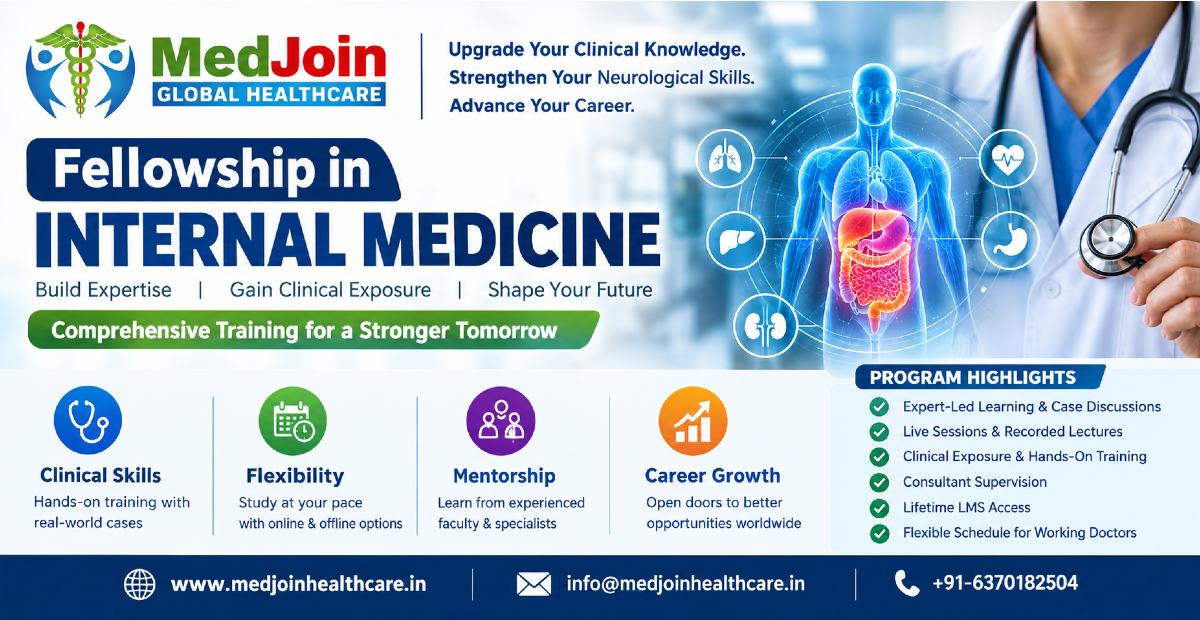
Internal Medicine is one of the most important and diverse branches of modern healthcare. It focuses on the prevention, diagnosis, evaluation, and medical management of diseases affecting adults, including disorders involving the heart, lungs, kidneys, liver, gastrointestinal tract, endocrine system, blood, and immune system. Internal Medicine physicians play a vital role in managing patients with complex medical conditions, multiple comorbidities, chronic illnesses, and undifferentiated symptoms that require careful clinical assessment.
With the growing burden of non-communicable diseases, an ageing population, changing lifestyles, and increasing demand for coordinated healthcare, the need for competent physicians with strong clinical reasoning skills continues to grow. Doctors who wish to strengthen their knowledge, improve their diagnostic approach, and develop greater confidence in managing common and complex medical presentations may consider a structured fellowship in Internal Medicine.
A Fellowship in Internal Medicine is a postgraduate learning opportunity designed to help eligible medical professionals deepen their understanding of adult medicine through structured academic learning, case-based discussions, clinical teaching, and, where included in the programme, supervised hospital-based exposure. Depending on the course structure, it may also provide opportunities to review clinical cases, discuss investigations, learn evidence-based treatment principles, and understand the long-term management of patients with chronic diseases.
For doctors who are already practising, a fellowship may provide a convenient way to update their knowledge while continuing their professional responsibilities. For eligible medical graduates seeking additional learning after their primary medical qualification, it can offer a structured introduction to selected areas of clinical practice, subject to the programme's entry requirements and applicable professional regulations.
MedJoin Global Healthcare offers healthcare education and fellowship learning opportunities for medical professionals interested in strengthening their clinical knowledge and exploring further professional development. Doctors considering a Fellowship in Internal Medicine should evaluate the curriculum, teaching format, clinical exposure, assessment methods, faculty support, certificate details, and recognition status before enrolling.
This comprehensive guide explains the scope of Internal Medicine, the benefits of fellowship learning, essential clinical competencies, career pathways, programme formats, and important considerations for selecting the right fellowship.
What Is a Fellowship in Internal Medicine?
A Fellowship in Internal Medicine is a structured educational programme intended to enhance a doctor's knowledge of adult medical conditions and the principles used to evaluate, diagnose, treat, and follow up patients.
The exact meaning of a fellowship varies across institutions and countries. Some fellowships are formal, regulated postgraduate clinical training programmes requiring a recognised specialist qualification and a competitive selection process. Others are continuing medical education programmes, clinical observerships, certificate courses, or professional development programmes designed to support ongoing learning.
Before choosing a course, doctors should establish which category the programme belongs to and what it actually provides.
A comprehensive Internal Medicine learning programme may cover:
-
Clinical history-taking and physical examination.
-
Differential diagnosis and clinical reasoning.
-
Interpretation of laboratory investigations.
-
Evaluation of common medical emergencies.
-
Management principles for chronic diseases.
-
Cardiovascular, respiratory, gastrointestinal, renal, and endocrine disorders.
-
Infectious diseases and antimicrobial stewardship.
-
Haematological and rheumatological conditions.
-
Geriatric medicine and multimorbidity.
-
Evidence-based medicine and clinical guidelines.
-
Patient communication, documentation, and continuity of care.
-
Clinical case discussions and structured assessments.
The depth of each subject depends on the duration, learning objectives, teaching resources, and academic design of the programme.
The central purpose of fellowship learning is to help doctors develop a more systematic approach to clinical problems. Instead of focusing only on individual diseases, learners explore how symptoms, examination findings, investigation results, risk factors, and patient history fit together to guide clinical decisions.
For example, a patient presenting with breathlessness may have a cardiac, respiratory, infectious, metabolic, or haematological condition. An Internal Medicine-oriented approach encourages the physician to assess the urgency of the presentation, identify warning signs, formulate a differential diagnosis, select appropriate investigations, and plan safe management or referral.
This systematic approach is one of the most valuable competencies that additional training in Internal Medicine can reinforce.
Why Is Internal Medicine Important in Modern Healthcare?
Internal Medicine serves as a foundation for the evaluation and management of a wide range of adult health conditions. Many patients do not present with a single, clearly identifiable disease. They may have several interacting medical problems, vague symptoms, abnormal laboratory results, medication-related complications, or chronic illnesses that require coordinated care.
Internal Medicine physicians are trained to consider the whole patient rather than treating each symptom in isolation.
The increasing burden of chronic diseases
Diabetes, hypertension, cardiovascular disease, chronic kidney disease, obesity, respiratory illnesses, and metabolic disorders contribute substantially to healthcare demand. These conditions frequently coexist and may require long-term monitoring, medication adjustment, lifestyle counselling, and prevention of complications.
A doctor with a strong foundation in Internal Medicine can better understand the relationships between these disorders and the importance of comprehensive patient assessment.
Complex and overlapping symptoms
Symptoms such as fever, fatigue, weight loss, chest discomfort, abdominal pain, dizziness, and breathlessness may have many possible causes. Their assessment requires careful history-taking, physical examination, risk stratification, and appropriate investigations.
Clinical reasoning is particularly important when the initial presentation does not immediately indicate a diagnosis.
An ageing population
Older adults often experience multiple chronic conditions, polypharmacy, frailty, mobility limitations, and increased vulnerability to adverse drug effects. Their care requires attention to functional status, treatment priorities, medication safety, and coordination between healthcare professionals.
Preventive and long-term care
Modern healthcare increasingly emphasises early diagnosis, risk-factor modification, preventive screening, vaccination, and structured follow-up. Internal Medicine learning helps doctors understand how these measures fit into the broader management of adult patients.
Multidisciplinary healthcare
Patients may require input from cardiologists, nephrologists, endocrinologists, pulmonologists, neurologists, surgeons, dietitians, physiotherapists, and other specialists. Physicians need to recognise when specialist consultation is appropriate and how to coordinate care effectively.
A well-designed fellowship can strengthen the clinical knowledge and communication skills needed for this multidisciplinary environment.
Who Should Consider a Fellowship in Internal Medicine?
The suitability of an Internal Medicine fellowship depends on its eligibility criteria and the doctor's career objectives.
MBBS-qualified doctors
Doctors with an MBBS qualification may consider suitable fellowship or continuing education programmes to reinforce their understanding of adult medicine, develop structured clinical reasoning, and support continuing professional development.
They should distinguish educational fellowships from recognised postgraduate specialist qualifications. An educational certificate does not automatically confer specialist status or independent specialist practice rights.
General practitioners and primary care physicians
Practitioners who routinely manage adult patients may benefit from revisiting common medical conditions, interpreting investigations, recognising red flags, and improving referral decisions.
A programme covering chronic disease management, common infections, cardiovascular risk factors, and common respiratory and gastrointestinal conditions may be especially relevant to their learning needs.
Doctors in emergency and acute care settings
Medical professionals working in emergency departments or acute care environments may value additional learning in the initial assessment of fever, chest pain, altered mental status, breathlessness, electrolyte abnormalities, and other potentially serious presentations.
A fellowship in Internal Medicine can complement their existing experience, although emergency and critical care responsibilities require appropriate training, institutional authorisation, and competency assessment.
Doctors interested in hospital medicine
Physicians seeking to strengthen their understanding of inpatient medical conditions may benefit from learning about diagnostic workups, fluid and electrolyte disorders, medication reconciliation, multidisciplinary discussions, and discharge planning.
The suitability of any practical component depends on whether the programme includes supervised clinical training or academic case discussions alone.
Medical professionals returning to clinical practice
Doctors who have taken a break from practice may use structured educational programmes to refresh their knowledge, review current clinical concepts, and identify areas that require further supervised training before resuming particular responsibilities.
A fellowship alone should not be assumed to restore professional registration, clinical privileges, or competence for every procedure.
Doctors planning further specialisation
Internal Medicine can provide a useful knowledge base for physicians who later pursue recognised training in cardiology, endocrinology, nephrology, gastroenterology, pulmonology, rheumatology, infectious diseases, or other medical specialties.
However, eligibility for these specialist pathways depends on the formal entry requirements established by the relevant regulatory and academic authorities.
Fellowship in Internal Medicine: Key Learning Areas
The quality of an Internal Medicine programme depends on how effectively its curriculum combines foundational knowledge, applied clinical reasoning, and appropriate assessment.
Clinical history-taking and examination
History-taking remains central to medical diagnosis. Learners should understand how to explore presenting complaints, symptom progression, past medical history, family history, medication use, allergies, lifestyle factors, and relevant social circumstances.
Physical examination helps identify important clinical signs and establish the urgency of a patient's condition.
A structured programme may reinforce:
-
Focused and comprehensive medical history-taking.
-
General physical examination.
-
Cardiovascular examination.
-
Respiratory system examination.
-
Abdominal examination.
-
Neurological screening.
-
Assessment of hydration and nutritional status.
-
Recognition of red-flag findings.
-
Clinical documentation and handover.
The goal is to encourage a consistent and patient-centred approach to assessment.
Clinical reasoning and differential diagnosis
Clinical reasoning involves interpreting information, considering alternative explanations, assessing the likelihood of different diagnoses, and deciding which investigations are appropriate.
Learners may discuss how to approach fever of uncertain origin, unexplained anaemia, persistent cough, oedema, abdominal discomfort, recurrent headaches, and unexplained weight loss.
Case-based learning can help doctors understand why a particular diagnosis is more likely than another and what additional information is required before treatment decisions are made.
Interpretation of laboratory investigations
Laboratory results must be interpreted in the context of the patient's history, examination, clinical condition, and the limitations of individual tests.
An Internal Medicine curriculum may include:
-
Complete blood count.
-
Renal function tests.
-
Liver function tests.
-
Blood glucose and glycated haemoglobin.
-
Electrolyte assessment.
-
Thyroid function tests.
-
Inflammatory markers.
-
Urinalysis.
-
Lipid profile.
-
Coagulation studies.
-
Arterial or venous blood gas interpretation, where appropriate to the learning objectives.
Learners should understand reference ranges, clinically significant abnormalities, possible sources of error, and the need for repeat testing or further investigation when indicated.
Evidence-based medical management
Evidence-based medicine combines current research, clinical expertise, and the individual patient's circumstances and preferences.
A structured fellowship may introduce learners to clinical guidelines, treatment algorithms, risk assessment tools, drug safety, and the critical appraisal of medical literature.
The objective is not simply to memorise protocols. It is to understand when guidance applies, when individual factors change management, and when specialist advice is required.
Patient safety and professional practice
Safe clinical practice includes accurate documentation, appropriate prescribing, informed consent, confidentiality, infection prevention, timely referral, and clear communication with patients and other healthcare professionals.
These areas should be integrated throughout the curriculum rather than treated as secondary topics.
Core Subjects Covered in a Fellowship in Internal Medicine
A broad Internal Medicine curriculum may include the following clinical domains.
Cardiovascular medicine
Cardiovascular disorders are a major component of adult medical practice. Relevant topics may include hypertension, coronary artery disease, heart failure, common arrhythmias, valvular heart disease, dyslipidaemia, and cardiovascular risk assessment.
Learners may review the interpretation of electrocardiograms, the appropriate use of cardiac biomarkers, and the principles of selecting investigations for suspected cardiac disease.
They may also discuss risk-factor modification, medication monitoring, secondary prevention, and indications for cardiology referral.
Recognition of acute coronary syndromes, severe arrhythmias, and decompensated heart failure is essential for safe clinical practice. Suspected emergencies require immediate assessment and management in an appropriately equipped setting.
Respiratory medicine
Respiratory topics may include asthma, chronic obstructive pulmonary disease, pneumonia, pulmonary tuberculosis, pleural disease, interstitial lung disease, and pulmonary embolism.
Learning may focus on symptom assessment, respiratory examination, oxygen saturation, chest imaging principles, pulmonary function testing, and the interpretation of relevant laboratory findings.
Doctors should understand the differences between stable chronic respiratory disease and acute deterioration, including when urgent escalation is necessary.
Endocrinology and metabolic medicine
Endocrine and metabolic conditions are commonly encountered in outpatient and inpatient practice.
Important topics may include:
-
Diabetes mellitus and its complications.
-
Thyroid disorders.
-
Obesity and metabolic syndrome.
-
Dyslipidaemia.
-
Adrenal disorders.
-
Calcium and bone metabolism.
-
Pituitary disorders.
-
Metabolic emergencies.
The curriculum may examine diagnosis, risk stratification, monitoring, medication safety, lifestyle counselling, and the prevention of long-term complications.
Diabetic emergencies and serious endocrine disturbances require prompt management according to appropriate emergency protocols and the clinician's authorised scope of practice.
Gastroenterology and hepatology
This area may cover gastro-oesophageal reflux disease, peptic ulcer disease, gastrointestinal bleeding, inflammatory bowel disease, malabsorption, pancreatitis, chronic liver disease, viral hepatitis, and common hepatobiliary disorders.
Learners can review the differential diagnosis of abdominal pain, the significance of gastrointestinal warning signs, the interpretation of liver function tests, and the principles of referral for endoscopy or advanced imaging.
A strong understanding of hydration, nutrition, medication effects, and the complications of liver disease is valuable in both inpatient and outpatient care.
Nephrology and electrolyte disorders
Renal medicine is important because kidney dysfunction can affect nearly every major organ system.
Possible subjects include acute kidney injury, chronic kidney disease, proteinuria, haematuria, nephrotic syndrome, nephritic syndromes, acid-base disturbances, and electrolyte imbalances.
Learners may study the interpretation of renal function, medication dose considerations, fluid balance, and the relationship between kidney disease, hypertension, and diabetes.
Severe electrolyte abnormalities and acute deterioration require prompt clinical assessment and appropriately supervised treatment.
Infectious diseases
Infectious disease education may cover common bacterial and viral infections, sepsis recognition, tuberculosis, urinary tract infections, respiratory infections, bloodstream infections, and selected travel-related infections.
Antimicrobial stewardship is an important learning objective. Doctors should understand appropriate antibiotic selection, the importance of microbiological testing when indicated, resistance patterns, adverse effects, and the need to avoid unnecessary antimicrobial use.
Infection prevention, vaccination, isolation precautions, and timely escalation of severe infection are also relevant.
Haematology
Haematological subjects may include iron-deficiency anaemia, megaloblastic anaemia, haemolytic disorders, thrombocytopenia, coagulation abnormalities, and common haematological malignancies.
Learners may explore the systematic evaluation of anaemia, interpretation of blood counts, the significance of peripheral blood film findings, and indications for specialist referral.
The curriculum should also address warning signs such as unexplained cytopenias, abnormal bleeding, persistent lymphadenopathy, and suspected malignancy.
Rheumatology and autoimmune disorders
Rheumatological learning may include rheumatoid arthritis, systemic lupus erythematosus, gout, vasculitis, connective tissue disorders, and inflammatory joint disease.
Doctors can learn to differentiate inflammatory from non-inflammatory symptoms, recognise systemic manifestations, and understand the risks associated with immunosuppressive treatment.
Early identification and referral are important when autoimmune disease affects major organs or when a serious infection must be excluded.
Neurological presentations in Internal Medicine
Although neurology is a distinct specialty, neurological symptoms frequently arise in general medical practice.
Relevant topics may include altered mental status, headache, dizziness, peripheral neuropathy, seizures, and the systemic causes of neurological symptoms.
Learners should understand how metabolic disturbances, medication effects, infection, vascular disease, and other medical conditions can present with neurological findings.
Sudden focal neurological deficits, suspected stroke, prolonged seizures, or rapidly declining consciousness require urgent emergency evaluation.
Geriatric medicine and multimorbidity
Older patients often have several simultaneous conditions that complicate diagnosis and treatment.
Relevant learning areas include frailty, falls, delirium, polypharmacy, nutrition, functional assessment, medication review, and the coordination of care across multiple specialties.
A patient-centred approach is especially important when balancing treatment benefits, adverse effects, quality of life, and the patient's goals.
Emergency assessment and acute medical presentations
An Internal Medicine programme may introduce the recognition and initial assessment of acute medical problems, including chest pain, respiratory distress, shock, severe infections, altered consciousness, gastrointestinal bleeding, and metabolic emergencies.
This academic preparation should not be confused with authorisation to independently manage emergencies. Practical emergency responsibilities require appropriate supervised training, workplace competency, institutional privileges, and adherence to applicable regulations.
Preventive medicine and chronic disease follow-up
Preventive care includes identifying risk factors, encouraging healthy lifestyle choices, applying evidence-based screening recommendations, supporting vaccination, and arranging suitable follow-up.
Learners may also explore patient adherence, health education, shared decision-making, and the coordination of care between hospitals and community-based services.
A fellowship that integrates prevention with diagnosis and treatment can help doctors understand the complete course of a patient's medical journey.
Clinical Case-Based Learning in Internal Medicine
Case-based learning is an important educational method for connecting theoretical medical knowledge with practical clinical reasoning. Instead of studying diseases only as separate textbook topics, learners explore realistic clinical scenarios and consider how different conditions may produce similar symptoms.
A well-structured fellowship may use case discussions to help participants develop a systematic approach to patient evaluation.
Understanding a patient with fever
A patient presenting with fever may have a self-limiting viral infection, a bacterial infection, tuberculosis, an inflammatory disorder, a medication-related reaction, or another underlying condition.
A case-based discussion may examine the duration of fever, associated symptoms, travel history, immune status, examination findings, laboratory investigations, and warning signs. Learners can discuss when investigations are appropriate, how to interpret findings, and when urgent hospital assessment is needed.
Evaluating chest pain
Chest pain may arise from cardiovascular, respiratory, gastrointestinal, musculoskeletal, or other causes. However, some presentations may represent immediately life-threatening conditions.
A learning scenario can examine risk factors, symptom characteristics, vital signs, electrocardiography, cardiac biomarkers, and the importance of prompt escalation when an acute coronary syndrome or another emergency is suspected.
Assessing unexplained fatigue
Fatigue is a common complaint with a broad differential diagnosis. Potential causes include anaemia, thyroid disorders, diabetes, sleep disturbances, chronic infection, depression, medication effects, and cardiopulmonary disease.
Learners can practise organising the differential diagnosis, identifying relevant clinical clues, and selecting investigations according to the history and examination rather than ordering an indiscriminate panel of tests.
Managing multiple chronic conditions
Consider a patient with diabetes, hypertension, chronic kidney disease, and cardiovascular risk factors. Each condition affects the management of the others.
A clinical discussion can explore medication reconciliation, renal function monitoring, cardiovascular risk reduction, lifestyle counselling, and the importance of coordinating care with relevant specialists.
These examples illustrate how case-based learning can improve the organisation of medical knowledge. Actual patient management must always follow current clinical guidance, local protocols, and the treating clinician's authorised responsibilities.
Benefits of Joining a Fellowship in Internal Medicine
The benefits of a fellowship depend on the quality of its academic structure, the learner's prior experience, and the extent to which the course provides supervised clinical exposure. A carefully selected programme can offer several educational and professional advantages.
Strengthening clinical knowledge
Medical science continually develops through new research, updated clinical guidelines, emerging diagnostic technologies, and changes in treatment recommendations.
A structured fellowship gives doctors an opportunity to revisit core medical concepts and explore topics in greater depth. Rather than relying only on informal reading, participants can follow a defined curriculum with learning objectives, educational resources, and assessments.
This structured approach may be particularly useful for physicians who want to identify gaps in their knowledge and organise their continuing education.
Improving diagnostic reasoning
One of the major challenges in clinical medicine is distinguishing between conditions that present with similar symptoms.
Additional learning in Internal Medicine may help doctors approach diagnostic problems more systematically by combining patient history, physical examination, investigation results, and the probability of different diagnoses.
Case discussions can encourage learners to ask important questions:
-
What are the most likely diagnoses?
-
Which dangerous conditions must be excluded first?
-
What additional information is needed?
-
Which investigations are likely to change management?
-
When should the patient be referred or admitted?
-
What findings would require urgent escalation?
The objective is to develop a disciplined diagnostic process rather than to memorise long lists of diseases.
Building confidence in common medical presentations
Doctors frequently encounter fever, cough, abdominal pain, fatigue, headache, dizziness, oedema, and abnormal laboratory results.
A comprehensive academic programme may help participants revisit the evaluation of these presentations and understand the principles behind common diagnostic and management pathways.
Confidence should be based on demonstrated competence and appropriate supervision, not simply on course completion. A fellowship can support learning, but it cannot replace the experience and practical assessment required for every clinical responsibility.
Developing a broader understanding of adult medicine
Internal Medicine brings together several connected clinical disciplines. A patient with diabetes may also have kidney disease, cardiovascular complications, neuropathy, or an infection.
By studying these relationships, doctors can develop a broader perspective on disease mechanisms, complications, medication interactions, and long-term patient care.
This integrated understanding is valuable in settings where physicians must evaluate multiple health problems rather than focus on a single organ system.
Learning through structured clinical cases
Case-based education helps learners understand how medical decisions are made under conditions of uncertainty.
A well-designed discussion should explain not only the likely diagnosis but also the reasoning behind the investigation plan, the interpretation of results, the choice of treatment, and the need for referral or follow-up.
For online learners, virtual case conferences may provide opportunities to discuss clinical scenarios with faculty and other participants. In programmes offering supervised hospital exposure, learners may also gain an opportunity to observe how clinical teams apply these principles in practice.
The exact experience depends on the programme's arrangements and the level of participation permitted by the host institution.
Updating knowledge of evidence-based medicine
Clinical practice evolves as research changes our understanding of disease prevention, diagnostic accuracy, drug effectiveness, and treatment safety.
Fellowship learning may help doctors become more familiar with evidence-based guidelines and the process of evaluating medical literature.
Participants may explore how to interpret study findings, recognise limitations in published evidence, and distinguish established recommendations from emerging approaches that require further evaluation.
These skills support lifelong learning beyond the duration of a formal course.
Improving patient communication
Good medical practice requires more than identifying a disease. Physicians must explain clinical findings, discuss investigation options, communicate uncertainty, provide medication instructions, and help patients understand the purpose of follow-up.
An Internal Medicine programme may address shared decision-making, health literacy, informed consent, adherence challenges, and communication with patients who have chronic or multiple conditions.
These skills can support more effective and patient-centred consultations.
Enhancing understanding of chronic disease management
Many adult medical conditions require sustained management rather than a single course of treatment.
Diabetes, hypertension, chronic kidney disease, asthma, chronic obstructive pulmonary disease, and cardiovascular disease often involve monitoring, risk-factor modification, medication review, and preventive interventions.
Fellowship learning can help doctors understand how to plan follow-up, assess treatment response, identify complications, and recognise when a patient's condition requires specialist review.
Supporting professional development
A fellowship can demonstrate that a doctor has undertaken additional structured learning in a defined subject area, provided the certificate accurately describes the programme completed.
This may be relevant when updating a professional CV, documenting continuing education, discussing academic interests, or applying for positions for which the course is considered relevant by the employer.
Its value depends on the programme's content, provider credibility, assessment standards, and relevance to the position. A certificate should never be represented as a recognised specialist qualification unless it genuinely holds that status.
Encouraging lifelong learning
Medical knowledge cannot remain current through initial qualification alone. Clinical guidelines, diagnostic technologies, pharmacological treatments, and public health recommendations change over time.
A fellowship may help establish a more organised learning routine through scheduled sessions, assignments, assessments, reading lists, and professional discussions.
Doctors can use this experience to build a long-term plan for continuing education in areas relevant to their practice.
Supporting flexible learning for working doctors
Many practising physicians cannot leave their jobs or relocate for a prolonged academic programme.
Where a fellowship offers online lectures, recorded educational materials, digital learning resources, and scheduled live sessions, participants may be able to organise study around professional commitments.
This flexibility can be helpful for doctors working in hospitals, clinics, primary care, or other healthcare environments.
However, flexible online learning is not equivalent to supervised bedside training. Doctors seeking practical competencies should verify that the course includes an appropriate clinical component and that its arrangements meet their objectives.
Online, Hybrid, and Offline Fellowship in Internal Medicine
The right programme format depends on the doctor's schedule, location, learning preferences, clinical objectives, and available budget.
Before enrolling, doctors should identify whether they primarily need academic knowledge, exposure to clinical cases, supervised hospital learning, or a combination of these elements.
Online Fellowship in Internal Medicine
An online fellowship is delivered primarily through digital educational resources.
Depending on the provider, the programme may include recorded lectures, live interactive sessions, reading materials, case presentations, online assessments, discussion forums, and learning management system access.
Key advantages of online learning
-
Study from a location convenient to the learner.
-
Reduced need for relocation during the academic component.
-
Greater flexibility for working professionals.
-
Opportunity to revisit recorded lessons where available.
-
Structured learning across multiple medical disciplines.
-
Access to digital study materials and assessments.
-
Potentially lower travel and accommodation expenses.
An online course may be suitable for doctors seeking to refresh their theoretical knowledge or organise their continuing education around a busy schedule.
However, online learning should not be described as hands-on clinical training unless the programme actually provides supervised practical experience.
Doctors should also check the duration of platform access, the schedule of live classes, the availability of faculty interaction, the assessment method, and the exact certificate awarded.
Hybrid Fellowship in Internal Medicine
A hybrid programme combines online academic learning with an in-person educational or clinical component.
For example, a provider may offer several months of online learning followed by a defined period of hospital-based observership or supervised clinical training. The actual schedule varies by programme.
Potential benefits of hybrid learning
-
Combines digital academic resources with in-person exposure.
-
Reduces the time required to be physically present at the training location compared with a fully onsite programme.
-
Offers an opportunity to discuss clinical cases in an institutional setting.
-
May provide exposure to hospital workflows and multidisciplinary teams.
-
Allows learners to prepare academically before the practical component.
-
Can support professional learning without requiring relocation for the entire course.
A hybrid fellowship may be attractive to doctors who want structured academic learning alongside a clearly defined period of clinical exposure.
The practical component must be assessed carefully. An observership generally involves observing clinical activities and may not permit independent patient management or procedures. Supervised clinical training can offer a different level of participation, depending on the host institution, the learner's qualifications, and the permissions granted.
Before enrolling, ask the provider to specify the number of clinical days, expected working hours, departments covered, supervision arrangements, assessment criteria, and permitted activities.
Offline Fellowship in Internal Medicine
An offline programme is delivered primarily at a physical training institution, such as a hospital or academic centre.
Depending on its structure and approvals, it may include academic teaching, case conferences, ward-based learning, outpatient observation, multidisciplinary meetings, and supervised clinical activities.
Potential benefits of offline learning
-
Direct interaction with faculty and clinical teams.
-
Greater opportunity to observe patient assessment and hospital workflows.
-
In-person case discussions.
-
Exposure to multidisciplinary decision-making.
-
Potential opportunities for supervised practical learning where authorised.
-
A more structured daily educational environment.
An offline programme may be appropriate for learners who benefit from regular in-person engagement or whose educational objectives require a hospital-based component.
Nevertheless, physical attendance alone does not guarantee hands-on experience. The provider should clarify whether the programme is an observership, clinical attachment, supervised training programme, or recognised postgraduate clinical qualification.
How to select the appropriate format
The best choice is the format that matches the doctor's educational goals and the actual learning opportunities offered.
An online programme may be sufficient for a knowledge update. A hybrid programme may suit a doctor who wants digital learning and a defined period of hospital exposure. An offline programme may be preferable when regular in-person teaching and a structured clinical environment are central priorities.
The decision should be based on the curriculum and the nature of the training rather than the programme title alone.
Career Scope After a Fellowship in Internal Medicine
Internal Medicine provides a broad foundation for adult healthcare. Additional education in this field may support a doctor's professional development in several clinical, academic, and healthcare-related settings.
However, the career outcome depends on the learner's primary medical qualification, postgraduate credentials, registration, work experience, employer requirements, and local regulations. A fellowship certificate does not automatically grant specialist recognition, independent practice rights, or eligibility for a consultant post.
General medical practice
Doctors working in general medical practice may use additional Internal Medicine education to strengthen their understanding of common adult health conditions.
Relevant learning areas include hypertension, diabetes, respiratory infections, gastrointestinal complaints, cardiovascular risk assessment, and the evaluation of common laboratory abnormalities.
A structured programme may also reinforce the importance of identifying warning signs and referring patients when a condition falls outside the clinician's competence or available facilities.
Employment eligibility and scope of practice remain governed by the doctor's existing qualifications and applicable professional rules.
Hospital-based medical services
Hospitals provide care for patients with acute illnesses, chronic conditions, and multiple medical problems.
Additional academic learning may be relevant to doctors working in general medical services, provided they meet the hospital's credentialing and recruitment criteria.
Potentially relevant work environments include:
-
General medical departments.
-
Outpatient medical clinics.
-
Inpatient medical services.
-
Medical assessment units.
-
Chronic disease clinics.
-
Multidisciplinary care teams.
-
Hospital-based preventive health services.
The precise duties available to a doctor depend on their recognised qualifications, clinical experience, registration, and institutional privileges.
Primary care and community healthcare
Primary care is an important part of healthcare delivery because it often provides the first point of contact for patients with undiagnosed symptoms and chronic diseases.
Doctors in community settings may need to assess common illnesses, identify risk factors, monitor long-term conditions, provide preventive advice, and determine when hospital referral is necessary.
Additional education in Internal Medicine may support these activities by strengthening clinical knowledge and encouraging a systematic approach to assessment.
Chronic disease management
The growing burden of non-communicable diseases creates a continuing need for coordinated medical care.
Doctors may work in settings that focus on diabetes, hypertension, cardiovascular risk, obesity-related conditions, respiratory disorders, or other chronic medical problems, subject to their qualifications and employer requirements.
A broad understanding of Internal Medicine is useful because these conditions frequently overlap.
For example, a patient attending a diabetes clinic may also require assessment of blood pressure, kidney function, lipid levels, cardiovascular risk, and medication safety.
Multispecialty hospitals and clinics
Multispecialty hospitals manage patients whose conditions involve several organ systems or require input from multiple departments.
Internal Medicine knowledge may be relevant to clinical coordination, the assessment of medical comorbidities, patient monitoring, and the management of common medical problems within the clinician's authorised role.
Doctors should not assume that completing a fellowship qualifies them for a specialist position. Employers generally assess the underlying medical degree, recognised postgraduate training where required, registration, experience, and relevant clinical competencies.
Preventive healthcare services
Preventive healthcare focuses on reducing disease risk, identifying problems early, and supporting long-term health.
Depending on their qualifications and role, doctors may contribute to preventive health programmes, screening services, vaccination initiatives, lifestyle counselling, and chronic disease monitoring.
Additional learning in Internal Medicine can provide a useful foundation for understanding risk factors, clinical warning signs, and the relationship between lifestyle, chronic disease, and long-term complications.
Academic and teaching activities
Doctors who enjoy education may use additional Internal Medicine learning to strengthen their subject knowledge for teaching, clinical discussions, or educational content development.
Possible activities include supporting case presentations, preparing teaching materials, contributing to medical education sessions, or participating in peer-learning initiatives, where permitted by their qualifications and institutional policies.
Formal faculty positions generally require specific academic credentials, teaching experience, and compliance with applicable institutional and regulatory requirements.
A short educational fellowship should not be assumed to meet all requirements for an academic appointment.
Medical research and evidence-based practice
Doctors interested in research may benefit from learning about clinical study design, critical appraisal, evidence-based guidelines, and the interpretation of published medical findings.
These skills can be useful in research support, academic collaborations, clinical audit, quality improvement, and the development of educational resources.
Research responsibilities depend on the nature of the project, institutional requirements, ethics approval, and the individual's relevant experience.
Healthcare administration and quality improvement
Internal Medicine knowledge can also be relevant to healthcare quality initiatives that aim to improve clinical documentation, medication safety, referral pathways, patient follow-up, and coordination between departments.
Doctors with appropriate additional management skills may contribute to clinical governance, quality improvement projects, or healthcare service development.
A fellowship in Internal Medicine alone does not qualify someone for every administrative or leadership role, but it may complement broader clinical and management experience.
International healthcare opportunities
Doctors exploring opportunities outside their home country must evaluate the destination's medical registration and employment requirements.
Each country has its own rules regarding acceptable primary qualifications, postgraduate specialist training, examinations, language proficiency, supervised practice, and recognition of overseas credentials.
An educational fellowship may contribute to a professional development portfolio, but it does not automatically provide international medical licensure or eligibility for specialist practice.
Before investing in a course for an international career objective, candidates should check the requirements of the relevant medical regulator and intended employer.
Further recognised postgraduate training
For doctors who want to pursue formal specialisation, Internal Medicine knowledge can provide a foundation for further academic study.
Depending on the country and pathway, doctors may consider recognised postgraduate programmes and specialty training in areas such as general medicine, cardiology, nephrology, endocrinology, gastroenterology, pulmonology, rheumatology, or infectious diseases.
Admission eligibility must be verified against the applicable regulations. A private or educational fellowship certificate does not replace the required recognised postgraduate qualifications unless the relevant authority explicitly accepts it for the stated purpose.
Career Opportunities in Related Medical Specialties
A broad understanding of Internal Medicine can be valuable when learning about diseases that overlap across multiple organ systems. Doctors may subsequently choose to develop their knowledge in a particular specialty through suitable, independently recognised training.
Cardiology
Cardiology focuses on diseases of the heart and circulatory system. Relevant conditions include coronary artery disease, heart failure, arrhythmias, hypertension, and valvular disorders.
Internal Medicine provides a useful foundation for understanding cardiovascular risk factors, systemic disease, medication safety, and the management of patients with multiple comorbidities.
Specialist cardiology practice requires the appropriate recognised qualifications, training, registration, and clinical privileges.
Endocrinology
Endocrinology focuses on hormonal and metabolic disorders, including diabetes, thyroid disease, adrenal disorders, and pituitary conditions.
Doctors may develop a particular interest in diabetes management or metabolic health after studying Internal Medicine. Further specialist practice requires appropriate recognised training and regulatory eligibility.
Gastroenterology
Gastroenterology deals with disorders of the digestive tract, pancreas, liver, and related organs.
A foundation in Internal Medicine can help doctors understand abdominal symptoms, liver function abnormalities, gastrointestinal bleeding, and systemic consequences of digestive disease.
Advanced procedures and independent specialist practice require relevant training, competency, and authorisation.
Nephrology
Nephrology focuses on kidney diseases, fluid and electrolyte disturbances, hypertension-related kidney damage, and the medical management of renal failure.
Internal Medicine learning can reinforce the principles of renal assessment and the interactions between kidney disease, cardiovascular health, and metabolic conditions.
Advanced nephrology responsibilities require the appropriate recognised specialist pathway.
Pulmonology
Pulmonology deals with diseases affecting the respiratory system, including asthma, chronic obstructive pulmonary disease, interstitial lung disease, and other pulmonary disorders.
Internal Medicine education can support the evaluation of breathlessness, cough, oxygenation abnormalities, and respiratory symptoms associated with systemic disease.
Specialist respiratory practice requires suitable qualifications and supervised competency development.
Infectious diseases
Infectious disease specialists manage complex infections, antimicrobial treatment, and selected conditions involving immunocompromised patients.
Additional Internal Medicine learning may provide a foundation in fever evaluation, common infections, sepsis recognition, and antimicrobial stewardship.
Specialist responsibilities require further appropriate training and eligibility.
Rheumatology
Rheumatology involves inflammatory joint diseases, autoimmune disorders, connective tissue conditions, and systemic inflammatory illnesses.
A broad medical foundation can help doctors recognise multisystem presentations and understand when specialist evaluation is needed.
Advanced diagnosis and treatment of complex rheumatological disease require suitable training and authorisation.
Geriatric medicine
Geriatric medicine focuses on the healthcare needs of older adults, including frailty, falls, cognitive changes, polypharmacy, and multiple chronic diseases.
Internal Medicine is particularly relevant because older patients often present with several interacting medical conditions.
Further specialist training may be necessary for designated geriatric medicine roles, depending on the country and employer.
These pathways illustrate the breadth of Internal Medicine. They should be understood as potential areas for further learning or recognised specialisation, not as specialist credentials automatically obtained by completing a general fellowship.
Essential Skills Developed Through Internal Medicine Learning
A comprehensive programme should aim to develop practical intellectual skills that are useful across many areas of adult medicine.
Analytical thinking
Doctors must interpret clinical findings rather than simply collect them. Analytical thinking involves identifying patterns, testing possible explanations, and adjusting a working diagnosis as new information becomes available.
Clinical prioritisation
Not every clinical problem has the same urgency. Learners should understand how to identify warning signs, recognise potentially life-threatening conditions, and prioritise assessment according to the patient's condition.
Investigation selection
Appropriate investigations should answer a clinical question and contribute to diagnosis or management. Additional learning can help doctors understand the indications, limitations, and potential consequences of different tests.
Medication safety
Many patients with Internal Medicine conditions take multiple medicines. Medication reconciliation, allergy review, awareness of adverse effects, renal dose considerations, and recognition of drug interactions are essential elements of safe care.
Patient counselling
Patients benefit from clear explanations of their diagnosis, treatment plan, follow-up needs, and warning signs. Communication should be respectful, understandable, and adapted to the patient's circumstances.
Teamwork
Clinical care often involves nurses, pharmacists, laboratory professionals, physiotherapists, specialists, and other healthcare workers. Effective teamwork requires clear communication, appropriate documentation, and respect for professional responsibilities.
Reflective practice
Reflective practice involves reviewing decisions, identifying knowledge gaps, learning from feedback, and making improvements. A fellowship can encourage this approach through assessments, case reviews, and structured learning activities.
Evidence evaluation
Doctors should understand how to assess the quality of medical evidence, recognise limitations, and apply guidelines thoughtfully to individual patients.
These competencies can contribute to professional growth, but their development must be assessed in context. Practical skills require appropriate observation, supervised practice, and competency evaluation where relevant.
Duration of a Fellowship in Internal Medicine
There is no single duration that applies to every fellowship in Internal Medicine. Course length depends on the provider, curriculum, training category, academic workload, and clinical requirements.
Programmes may be offered over several months or a year, while formal postgraduate specialist training may take substantially longer.
Short-duration educational programmes
Shorter programmes may focus on selected subjects, knowledge updates, or a defined collection of clinical topics. They may be appropriate for doctors seeking focused continuing education.
However, shorter duration should not be confused with specialist competency or comprehensive postgraduate training.
Six-month programmes
A six-month educational programme may provide a structured overview of selected Internal Medicine subjects, depending on the breadth and intensity of the curriculum.
Prospective learners should review the contact hours, assessment requirements, faculty interaction, and the extent of any practical component rather than evaluating the course solely by its duration.
Twelve-month programmes
A twelve-month educational fellowship may allow more time for a broad curriculum, repeated case discussions, scheduled assessments, and sustained engagement with learning materials.
Where the course includes an in-person component, the exact duration and nature of that component should be documented separately.
A twelve-month certificate course is not automatically equivalent to a twelve-month recognised specialist training post.
Longer clinical training pathways
Formal postgraduate medical education and specialty training may require several years, depending on the country and discipline.
Such pathways have their own admission requirements, clinical supervision, assessments, and recognition arrangements. Doctors seeking specialist status should verify the appropriate recognised route rather than assuming that a private fellowship can substitute for it.
What to Look for in an Internal Medicine Fellowship Curriculum
A good curriculum should explain what the learner is expected to know and do by the end of the programme.
Clearly defined learning objectives
The provider should specify the clinical topics, intended knowledge outcomes, expected level of understanding, and assessment method.
For example, a module on cardiovascular medicine might focus on understanding hypertension, evaluating cardiovascular risk, recognising warning signs, and interpreting basic diagnostic information.
Learning objectives should be realistic for the duration and educational level of the programme.
A balanced curriculum
A comprehensive programme should provide suitable coverage of the major systems of adult medicine while giving sufficient attention to clinical reasoning, patient safety, prevention, and chronic disease management.
The balance will depend on the course's purpose. A general Internal Medicine fellowship should not be advertised as comprehensive if it covers only a narrow selection of topics.
Updated educational resources
Learners should have access to accurate educational materials that reflect accepted medical knowledge and relevant current guidance.
Providers should explain how materials are reviewed and updated, especially in areas where treatment recommendations change frequently.
Experienced faculty
Faculty expertise is an important consideration. Prospective participants should review the instructors' relevant qualifications, clinical experience, teaching responsibilities, and roles in the programme.
Where faculty supervision is advertised, the provider should explain how and when learners can interact with the teaching team.
Meaningful assessments
Assessment helps learners and providers determine whether learning objectives have been met.
Possible methods include multiple-choice questions, written assignments, case presentations, oral discussions, and practical assessments where appropriate.
The provider should explain the passing criteria, retake policy, feedback arrangements, and the relationship between assessment results and certificate eligibility.
Appropriate clinical exposure
If a course advertises hospital-based training, candidates should ask for details about the host institution, training schedule, supervisors, learning activities, and permitted level of participation.
They should distinguish among:
-
Clinical observership, which generally emphasises observation.
-
Clinical attachment, whose activities depend on the host institution and agreed permissions.
-
Supervised clinical training, which may include specified practical learning under appropriate oversight.
-
Recognised postgraduate specialist training, which follows a formal regulatory and academic framework.
These terms should not be used interchangeably.
The Role of a Learning Management System in Fellowship Education
A learning management system, or LMS, can provide a central platform for organising educational materials, lectures, assignments, assessments, and progress tracking.
For working doctors, digital learning systems can make it easier to study systematically and return to topics when needed.
Recorded lectures and learning modules
Recorded lessons can help learners revisit difficult concepts, review important clinical principles, and study at a suitable time.
Well-organised modules should include clear learning objectives, relevant teaching content, and opportunities to check understanding.
Reading materials and reference resources
Digital notes and study materials can help learners organise information across the different systems of Internal Medicine.
Resources should be accurate, appropriately referenced, and consistent with the educational objectives. Learners should also be encouraged to consult current clinical guidance and authoritative sources when practising medicine.
Live academic sessions
Live sessions may provide opportunities for faculty interaction, question-and-answer discussions, case presentations, and clarification of difficult concepts.
Prospective learners should verify the frequency of sessions, the timetable, attendance requirements, and whether recordings are made available afterwards.
Online assessments
Quizzes and examinations can help reinforce important concepts and identify knowledge gaps.
The provider should clarify the number of attempts allowed, any completion deadlines, the passing score, and whether assessments are formative or required for successful completion.
Progress monitoring
Where supported, the LMS may allow learners to track completed modules, review assessment performance, and identify outstanding activities.
A well-managed digital learning environment can support consistency and accountability, but access to an LMS does not itself establish the quality, recognition, or clinical effectiveness of a programme.
Clinical Training and Hospital Exposure in Internal Medicine
For doctors who want to connect academic learning with the hospital environment, the nature of the clinical component deserves particular attention.
Internal Medicine involves evaluating patients with complex and sometimes rapidly changing conditions. Learning in a clinical setting can help participants understand how medical teams gather information, discuss diagnoses, interpret investigations, plan care, and coordinate treatment.
The educational value depends on the design of the placement and the level of access permitted.
Observing patient assessment
A permitted clinical observership may allow learners to observe how clinicians take medical histories, perform examinations, present cases, and document relevant findings.
This can help connect theoretical knowledge with the organisation of actual clinical encounters.
Observation should be conducted with appropriate patient consent, privacy safeguards, and institutional authorisation.
Understanding ward-based care
Hospital learning may expose participants to the processes involved in inpatient medical care, including admission assessment, daily review, investigation planning, medication reconciliation, multidisciplinary discussions, and discharge planning.
The precise activities available depend on the institution, the learner's status, and the training agreement.
Attending clinical case discussions
Case co