
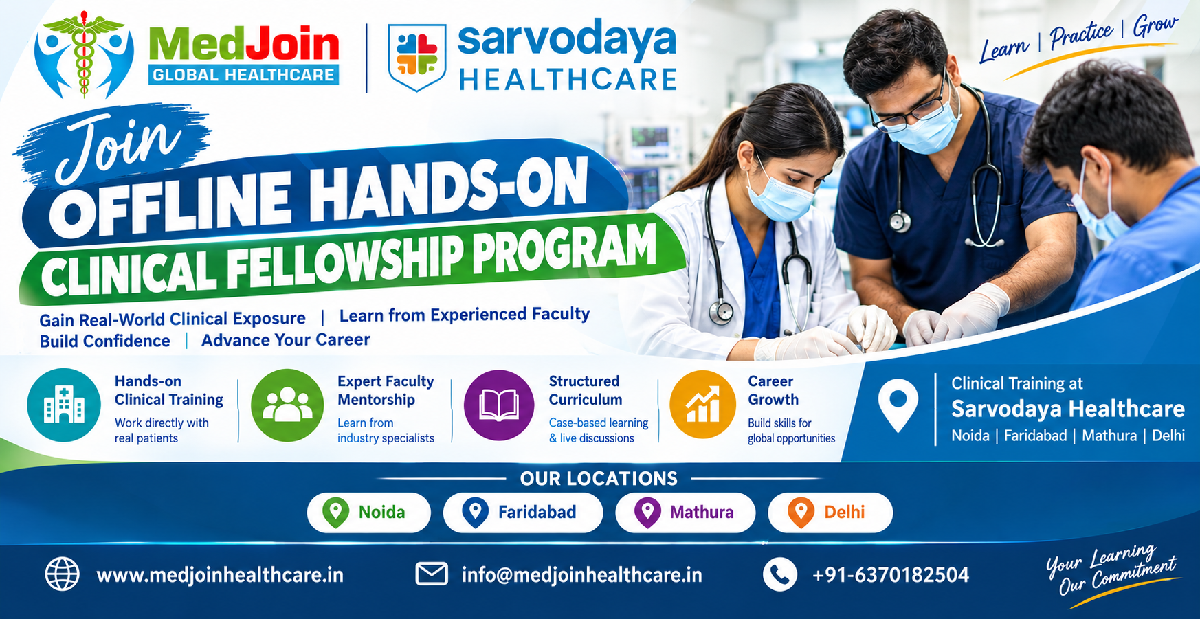
Medical education is an ongoing journey. For MBBS graduates, postgraduate doctors, and healthcare professionals who want to strengthen their clinical knowledge, developing practical skills and gaining exposure to real-world hospital environments can be an important step toward professional growth.
MedJoin Global Healthcare offers offline and hybrid fellowship training pathways designed to help eligible medical professionals deepen their understanding of clinical practice, explore specialised areas of medicine, and develop greater confidence in clinical decision-making.
Through its fellowship programs, MedJoin Global aims to bridge the gap between theoretical medical knowledge and practical clinical learning. Depending on the selected specialty, program structure, hospital availability, and eligibility requirements, participants may have opportunities for supervised clinical exposure, case-based discussions, observation of clinical workflows, and interaction with experienced medical professionals.
For doctors seeking hospital-based learning, MedJoin Global offers clinical training opportunities associated with Sarvodaya Hospital in Faridabad and other designated training locations, subject to program availability and confirmation. Doctors may also explore available options in Noida, Delhi, and Mathura, depending on the specialty and current training arrangements.
If you want to enhance your clinical knowledge and take a structured approach to professional development, discover how an offline hands-on fellowship with MedJoin Global may support your goals.
Why Choose an Offline Hands-On Fellowship Program?
Online medical education is valuable for theoretical learning, recorded lectures, assessments, and flexible study. However, doctors who want exposure to hospital environments may benefit from a structured offline component alongside their academic preparation.
An offline fellowship can provide opportunities to observe clinical workflows, understand how multidisciplinary teams collaborate, discuss cases with supervising professionals, and connect theoretical concepts with practical situations.
Learn in a Hospital Environment
Hospital-based learning allows participants to understand the day-to-day functioning of clinical departments. Depending on the specialty and permitted activities, this may include observing patient assessment processes, diagnostic pathways, treatment planning, clinical documentation, and follow-up procedures.
The purpose is to help doctors connect academic concepts with the realities of clinical practice.
Develop Clinical Reasoning
Clinical reasoning involves interpreting patient histories, understanding examination findings, reviewing investigations, considering differential diagnoses, and evaluating management options.
Through structured case discussions and supervised learning, participants can strengthen their approach to clinical problem-solving. The precise learning activities depend on the department, program curriculum, and level of supervision.
Gain Exposure to Specialist Departments
A fellowship focused on a particular medical specialty can help doctors develop a more organised understanding of its common presentations, investigations, management principles, and complications.
The departments available for training depend on the fellowship selected and the participating hospital's capacity.
Learn Through Mentorship and Case Discussions
Learning from experienced clinicians can help participants understand how clinical decisions are made in different circumstances. Mentorship and case-based discussions can also encourage reflective learning, professional communication, and a systematic approach to patient care.
Build a Foundation for Continued Professional Development
An offline fellowship can complement previous medical education and help doctors identify areas for further study, supervised experience, or formal postgraduate training.
It should be viewed as a professional-development pathway rather than an automatic substitute for a recognised postgraduate qualification, specialist registration, or independent clinical competence.
Explore MedJoin Global’s Hospital-Based Training Opportunities
MedJoin Global's clinical training arrangements may include selected partner hospitals and other approved training locations, depending on the program.
Sarvodaya Hospital, Faridabad
Sarvodaya Hospital in Faridabad is one of the hospital locations associated with MedJoin Global's clinical training arrangements.
Subject to confirmation of the department, available placement, and training schedule, eligible participants may explore a hospital-based learning experience that connects specialty-focused academic study with exposure to clinical practice.
Potential learning activities, where authorised and available, may include:
- Observing patient assessment and clinical workflows.
- Understanding how clinical histories and examination findings contribute to diagnostic reasoning.
- Participating in educational case discussions under appropriate supervision.
- Learning about diagnostic investigations and treatment-planning principles.
- Understanding multidisciplinary coordination and continuity of care.
- Developing familiarity with clinical documentation and professional standards.
The specific activities and degree of participation depend on the fellowship curriculum, hospital policies, patient consent, and the participant's professional registration and scope of practice.
Noida, Uttar Pradesh
Noida is another important location for MedJoin Global's hospital-based training arrangements.
Doctors interested in an offline or hybrid fellowship can enquire about available departments, placement options, training duration, and eligibility. Noida-based opportunities may be suitable for participants seeking a structured clinical learning experience in the National Capital Region.
The hospital and department should be confirmed before enrolment, as placements may vary across specialties and batches.
Delhi, National Capital Region
Doctors who prefer training in or around Delhi can enquire about current clinical placement options associated with MedJoin Global.
Availability depends on the specialty, participating institution, clinical capacity, and the applicable training schedule. Applicants should obtain written confirmation of the hospital location before making travel or accommodation arrangements.
Mathura, Uttar Pradesh
Mathura may also be considered by doctors exploring available training locations. Prospective participants should contact MedJoin Global to verify whether the selected fellowship is offered there and whether a suitable hospital placement is available for their batch.
Important: Sarvodaya Hospital, Faridabad, and all other placements should be confirmed directly with MedJoin Global before payment or enrolment.
Which Doctors Can Consider an Offline Fellowship?
Eligibility depends on the requirements of the individual fellowship. Potential applicants may include:
- MBBS graduates seeking additional specialty-focused learning.
- Medical practitioners interested in strengthening their existing clinical knowledge.
- Doctors exploring a particular field before pursuing further formal training.
- Postgraduate doctors who want structured continuing professional development.
- International medical graduates who meet the program's eligibility and documentation requirements.
- Healthcare professionals who satisfy the entry criteria for a particular course.
Applicants should review the specific admission requirements, permitted clinical activities, and recognition status of the fellowship before enrolling.
Explore Fellowship Specialties with MedJoin Global
The most suitable fellowship depends on your existing qualifications, clinical interests, career plans, and preferred learning format.
MedJoin Global offers or promotes fellowship learning pathways across selected medical specialties. Depending on the current academic catalogue and clinical placement availability, doctors may enquire about areas such as:
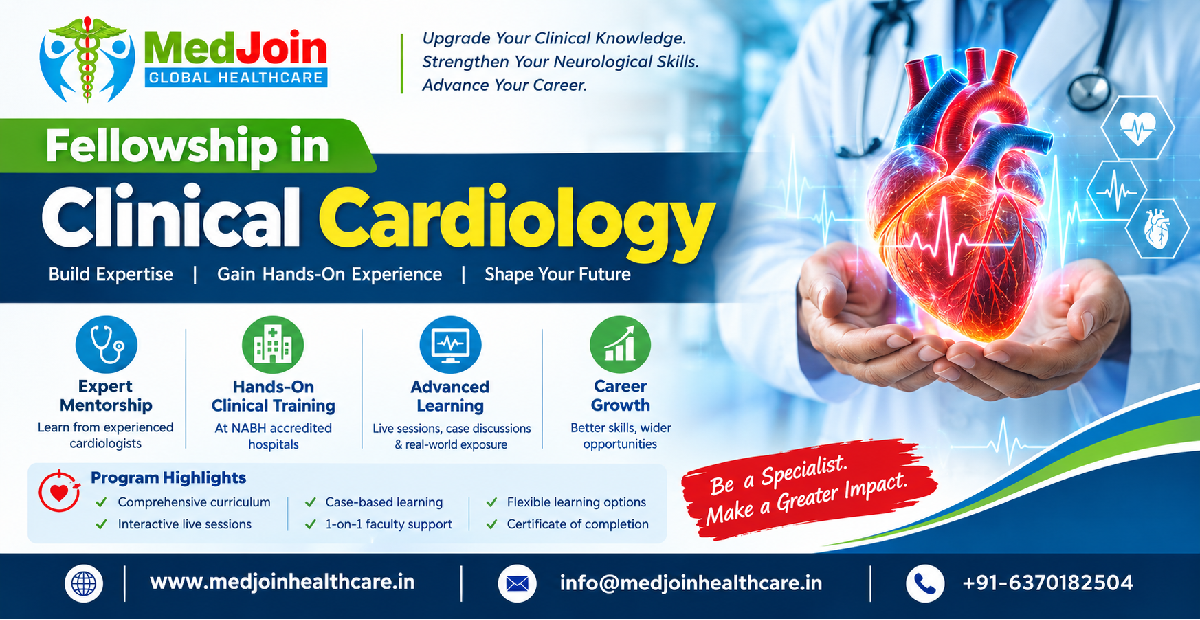
Clinical Cardiology: Strengthen understanding of cardiovascular assessment, common cardiac conditions, investigations, and management principles.
Critical Care Medicine: Explore the principles of critically ill patient assessment, physiological monitoring, emergency stabilisation, and multidisciplinary intensive care.
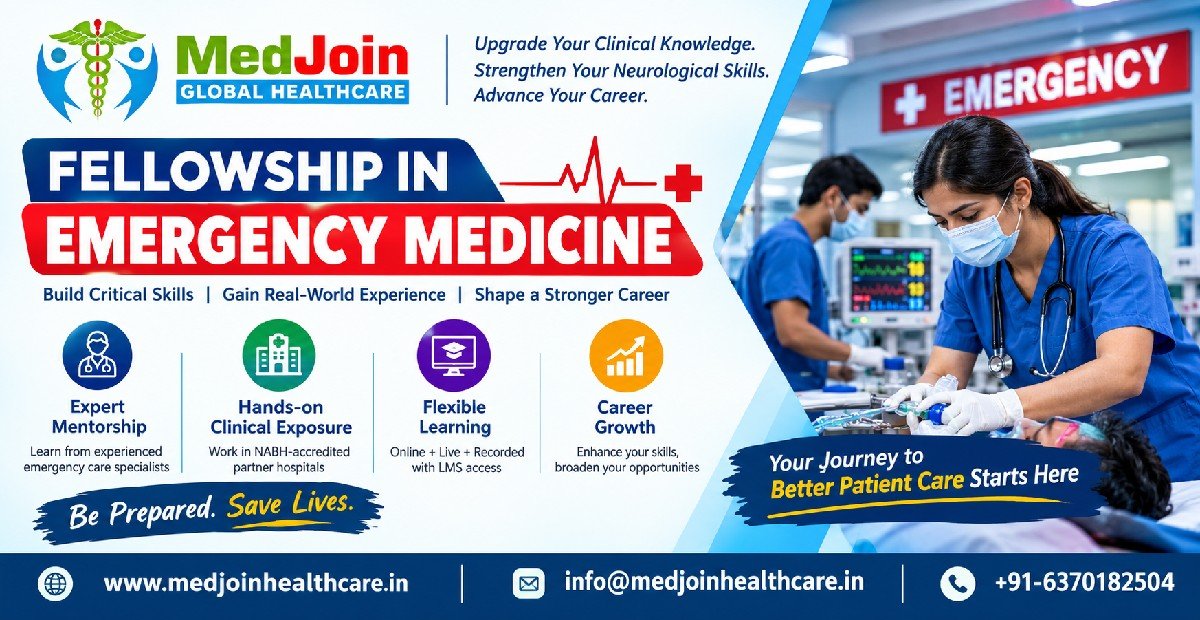
Emergency Medicine: Develop a structured understanding of emergency assessment, triage, initial stabilisation, and the evaluation of acute medical presentations.
Endocrinology and Diabetes: Study endocrine disorders, diabetes assessment, metabolic complications, laboratory interpretation, and long-term management principles.
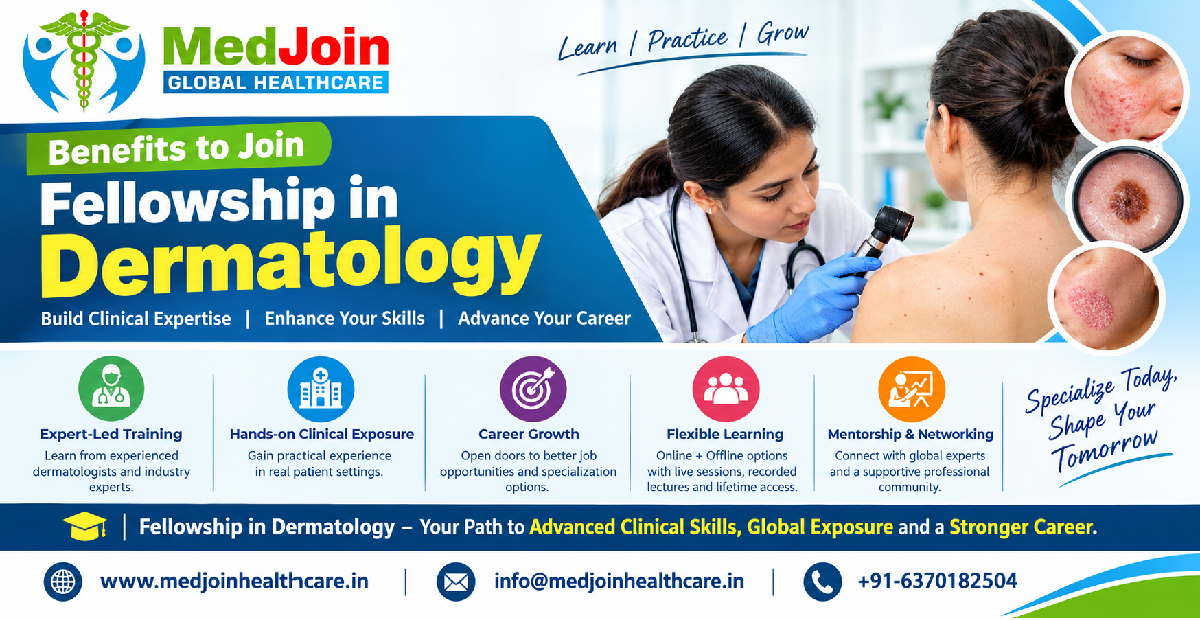
Dermatology: Explore common dermatological presentations, clinical assessment, diagnostic approaches, and evidence-based treatment principles.
Paediatrics: Develop knowledge of child health, growth and development, common paediatric conditions, and age-appropriate clinical assessment.
Obstetrics and Gynaecology: Study women's health, common gynaecological conditions, reproductive health, and principles of obstetric care.
Family Medicine: Strengthen knowledge of common outpatient presentations, preventive care, chronic disease management, and continuity of care.
Other Specialty Areas: Doctors can enquire about additional programs listed in MedJoin Global's current catalogue.
Not every specialty necessarily has an offline placement at every hospital. Confirm the curriculum, duration, hospital, clinical activities, and fee structure for your chosen fellowship before registration.
How the Hybrid Fellowship Model Works
For doctors who need flexibility, a hybrid format may combine online academic study with an offline clinical training component.
MedJoin Global's current hybrid structure may involve approximately 10 months of online learning followed by 2 months of offline clinical training, subject to the specific program and written confirmation at enrolment.
Online Academic Learning
The online component may provide access to learning materials through a Learning Management System (LMS), including recorded lectures, study resources, assessments, and scheduled live academic sessions where included.
This format helps participants study alongside their existing professional responsibilities.
Offline Clinical Training
Following the required academic preparation, eligible participants may attend a designated hospital for the clinical component. The location, duration, department, and scope of activities should be confirmed before the training begins.
The offline component is intended to complement the theoretical curriculum through appropriate clinical exposure and supervised learning.
Assessment and Course Completion
Assessment requirements depend on the selected program. Participants should follow the course's academic requirements, complete the assigned assessments, and obtain written information about the completion criteria and certificate issued.
Where the program includes an LMS-based assessment, its format, attempts, passing criteria, and completion process should be explained at enrolment.
What Can You Learn During Hospital-Based Training?
The learning experience varies by specialty, but a structured hospital placement may help participants explore several important areas.
Patient assessment and clinical history-taking: Understand how clinicians gather relevant information, identify symptoms, review medical history, and organise clinical findings.
Diagnostic reasoning: Explore how clinical findings and investigations contribute to differential diagnosis and further evaluation.
Clinical case discussions: Review educational cases to understand alternative diagnoses, potential complications, and management considerations.
Hospital workflows: Learn how clinical teams coordinate consultations, investigations, documentation, referrals, and follow-up.
Evidence-based medicine: Understand the importance of current clinical guidance, published evidence, and appropriate individualised decision-making.
Professional communication: Observe how healthcare professionals communicate with colleagues, patients, and families while maintaining confidentiality and professional boundaries.
Patient safety and ethics: Develop awareness of informed consent, infection prevention, privacy, clinical governance, and the limitations of one's authorised role.
All patient-related activities must follow hospital protocols, applicable laws, consent requirements, supervision arrangements, and professional scope-of-practice rules.
Why Choose MedJoin Global for Fellowship Learning?
Choosing a fellowship is an important decision. Beyond the course title, doctors should assess the curriculum, learning support, practical exposure, faculty arrangements, hospital placement, assessment method, and certificate details.
MedJoin Global aims to provide a structured learning pathway that brings together academic resources and available clinical training opportunities.
Flexible Learning Options
Depending on the specialty, applicants may enquire about online, hybrid, and offline formats. This allows doctors to consider how much clinical exposure they want and how the course fits around their current responsibilities.
Structured Academic Resources
The LMS-based learning component may include study materials, recorded sessions, assessments, and access to course resources as specified in the selected program.
Clinical Exposure Opportunities
Where an offline placement is available, participants can explore opportunities for hospital-based learning in a relevant clinical environment.
Specialty-Focused Education
A defined specialty curriculum can help doctors organise their learning around selected conditions, diagnostic approaches, investigations, and management principles.
Clearer Training Planning
Prospective participants can discuss course duration, fees, training location, accommodation, attendance, assessment, and certification before making a commitment.
Before enrolling, ask for the latest written program brochure and verify the specific hospital placement, supervising arrangements, and the nature of the practical training being offered.
Offline Fellowship vs Online Fellowship: Which Is Right for You?
An online fellowship may suit doctors who primarily need academic flexibility and structured access to study materials. An offline fellowship may be more appropriate for those who specifically want to learn in a hospital environment.
A hybrid fellowship can be a middle ground, combining remote academic preparation with a defined period of clinical exposure.
The right choice depends on your objectives, schedule, budget, and the availability of a suitable placement. Neither format should be assumed to guarantee independent clinical competence or specialist recognition.
Career Development After an Offline Fellowship
A specialty-focused fellowship may support continued learning and help doctors build a clearer understanding of their clinical interests.
Depending on their underlying qualifications, registration, experience, and local regulations, participants may use their learning to:
- Strengthen their existing clinical knowledge.
- Identify further training needs in a chosen specialty.
- Improve their understanding of relevant investigations and clinical pathways.
- Prepare for additional eligible academic or professional-development opportunities.
- Make more informed decisions about longer-term career planning.
- Demonstrate completion of the particular educational program, where applicable.
Career outcomes depend on individual circumstances and employer requirements. Completion of a fellowship does not automatically confer a specialist title, guarantee employment, authorise independent specialist practice, or replace mandatory qualifications and registration.
Frequently Asked Questions
What is an offline hands-on fellowship?
It is a specialty-focused educational program that includes a hospital-based component. Depending on the program, this may involve supervised learning, observation, clinical case discussions, and other authorised educational activities.
Can I join the fellowship at Sarvodaya Hospital, Faridabad?
You can enquire about placement availability through MedJoin Global. The hospital, specialty, dates, duration, eligibility, and permitted activities must be confirmed before registration.
Are training options available in Noida, Delhi, and Mathura?
Availability varies by specialty and batch. Contact MedJoin Global for the current list of participating hospitals and confirmed placement locations.
How long does the fellowship take?
Duration depends on the selected program. A hybrid option may follow a 10-month online plus 2-month offline structure, while other programs may have different durations. Confirm the current course schedule before enrolment.
Can I continue working while completing the fellowship?
The online component may offer flexibility, but attendance requirements for offline training can require dedicated time away from regular duties. Check the academic calendar and hospital attendance policy before enrolling.
Will I receive a certificate?
Certificate eligibility, the issuing organisation, and the certificate's exact title depend on the selected program. Request a sample certificate and written details before paying fees.
Does completing a fellowship guarantee a specialist position?
No. Employment and specialist-practice eligibility depend on your qualifications, experience, registration, applicable regulations, and employer requirements.
Is accommodation provided?
Accommodation and travel arrangements depend on the placement and the program's terms. Confirm these details with MedJoin Global before travelling.
How to Enrol in a MedJoin Global Fellowship
The admission process generally involves selecting a specialty, discussing eligibility, reviewing the program structure, and confirming the placement.
Step 1: Select your specialty. Identify the clinical area most relevant to your background and professional goals.
Step 2: Discuss eligibility. Share your qualifications and ask about the entry requirements for your chosen program.
Step 3: Confirm the training location. Verify whether Sarvodaya Hospital, Faridabad, or another hospital in Noida, Delhi, Mathura, or elsewhere is available for your specific specialty.
Step 4: Review the complete program details. Obtain written confirmation of the duration, online and offline components, clinical activities, fees, payment schedule, assessment, and certification.
Step 5: Complete registration. Proceed after reviewing the terms and receiving confirmation of your admission and, where applicable, clinical placement.
Step 6: Begin your learning journey. Complete the academic requirements and attend the designated clinical training in accordance with the program schedule and hospital policies.
Take the Next Step with MedJoin Global Healthcare
If you are a doctor looking to complement your medical knowledge with structured clinical exposure, an offline or hybrid fellowship programs may be worth exploring.
MedJoin Global Healthcare invites eligible medical professionals to enquire about its specialty-focused fellowship pathways and available hospital-based training opportunities.
Whether your preference is Sarvodaya Hospital in Faridabad or a confirmed training location in Noida, Delhi, Mathura, or another city, start by identifying the program that best matches your professional goals.
Build your knowledge. Explore clinical practice. Plan your next step in medical education with MedJoin Global Healthcare.
Contact MedJoin Global Healthcare
Website: https://www.medjoinhealthcare.in
Email: info@medjoinhealthcare.in
Phone: +91-6370182504
Contact the MedJoin Global team to request the latest fellowship brochure, available specialties, hospital placement details, eligibility criteria, fees, and upcoming batch schedule.