
Healthcare is evolving rapidly, and the expectations from medical professionals continue to rise. Patients today seek physicians who possess advanced clinical expertise, evidence-based decision-making skills, and the ability to manage complex medical conditions with confidence. While an MBBS degree provides the essential foundation for medical practice, pursuing a specialized fellowship has become an excellent way to strengthen clinical competence and expand career opportunities.
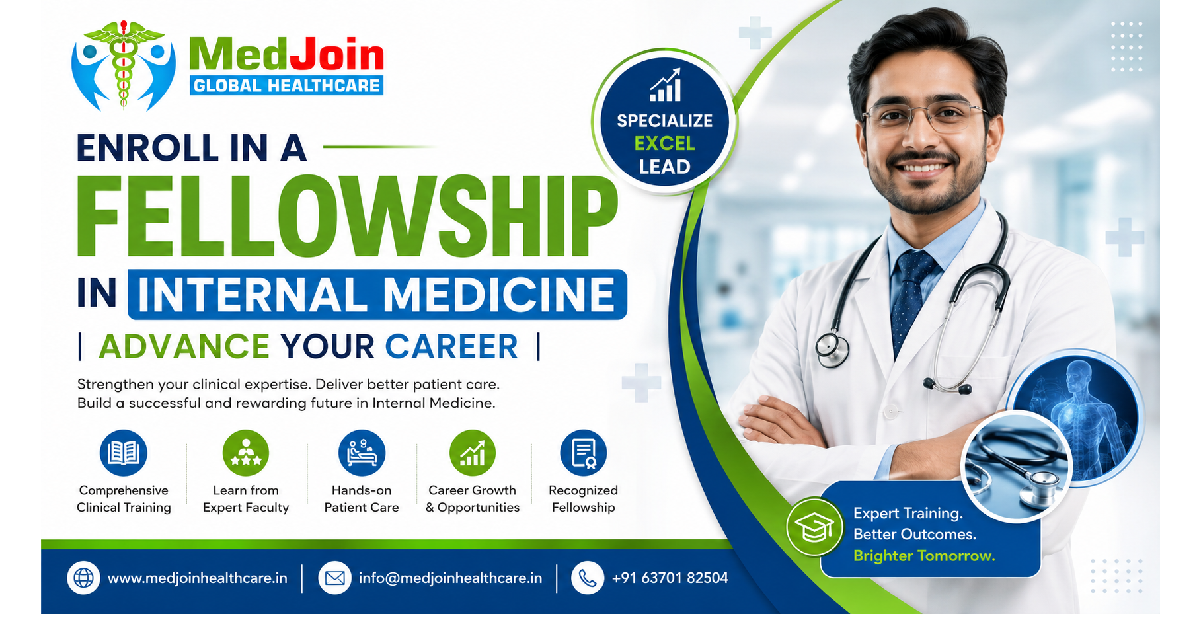
Among the many postgraduate training options available, a Fellowship in Internal Medicine stands out as one of the most valuable programs for MBBS doctors who want to build expertise in adult patient care. Internal medicine is often referred to as the backbone of modern healthcare because internists diagnose, treat, and manage a broad spectrum of acute and chronic illnesses affecting multiple organ systems.
As hospitals continue to witness increasing patient loads, the demand for physicians with advanced internal medicine training is growing steadily. Whether your goal is to work in multispecialty hospitals, corporate healthcare organizations, community clinics, or academic institutions, an Internal Medicine Fellowship equips you with the knowledge and practical skills required to excel in today's competitive healthcare environment.
This comprehensive guide explores everything you need to know about pursuing a Fellowship in Internal Medicine, including career benefits, curriculum, skills, job opportunities, salary prospects, eligibility, and why it can be a transformative step in your medical journey.
What Is a Fellowship in Internal Medicine?
A Fellowship in Internal Medicine is an advanced clinical training program designed primarily for MBBS graduates who wish to enhance their expertise in diagnosing, treating, and managing diseases affecting adults. The program bridges the gap between undergraduate medical education and real-world clinical practice by providing structured academic learning alongside supervised hands-on clinical experience.
Unlike short certification courses that focus on theoretical knowledge, a fellowship emphasizes practical learning through exposure to outpatient departments (OPDs), inpatient wards, emergency care, intensive care units, diagnostic procedures, and multidisciplinary patient management.
The program enables doctors to gain confidence in handling diverse medical conditions while developing critical thinking and evidence-based clinical decision-making skills.
Why Internal Medicine Is the Backbone of Modern Healthcare
Internal medicine covers a vast range of diseases involving almost every organ system of the human body. Physicians trained in internal medicine often become the first point of contact for adults presenting with complex or multiple health problems.
They manage conditions involving:
- Cardiovascular diseases
- Respiratory disorders
- Gastrointestinal diseases
- Endocrine disorders
- Kidney diseases
- Infectious diseases
- Neurological disorders
- Rheumatological conditions
- Hematological disorders
- Metabolic diseases
Unlike specialists who focus on a single organ system, internists develop comprehensive expertise across multiple specialties, allowing them to coordinate holistic patient care.
This broad knowledge makes them invaluable in hospitals where patients often present with multiple coexisting diseases such as diabetes, hypertension, kidney disease, and heart failure.
Why MBBS Doctors Should Pursue a Fellowship in Internal Medicine
Many MBBS graduates begin their careers in hospitals or clinics immediately after graduation. While this provides practical exposure, many soon realize that managing complicated cases requires deeper clinical knowledge and structured training.
A fellowship helps bridge this gap by providing advanced education and supervised clinical experience.
Some major reasons include:
1. Improve Diagnostic Accuracy
One of the biggest challenges for young physicians is differentiating between diseases with similar symptoms.
The fellowship develops diagnostic reasoning through:
- Clinical history taking
- Systematic physical examination
- Interpretation of laboratory findings
- Imaging analysis
- Differential diagnosis
- Case-based discussions
This structured approach significantly improves diagnostic confidence.
2. Strengthen Clinical Decision-Making
Modern medicine requires more than textbook knowledge.
Doctors must decide:
- Which investigations are necessary?
- Which medications are most appropriate?
- When should patients be referred?
- How should complications be managed?
- When is ICU admission required?
The fellowship develops these essential clinical judgment skills through real patient interactions.
3. Gain Hands-on Clinical Experience
Practical exposure is one of the strongest advantages of fellowship training.
Doctors receive experience in:
- Hospital wards
- Intensive care units
- Emergency departments
- Specialty clinics
- Bedside teaching
- Grand rounds
- Clinical audits
This exposure builds confidence in managing patients independently.
4. Better Career Opportunities
Healthcare organizations increasingly prefer physicians who possess additional clinical qualifications.
Completing a Fellowship in Internal Medicine enhances your profile for roles in:
- Multispecialty hospitals
- Corporate hospitals
- Medical colleges
- Specialty clinics
- Diagnostic centers
- Telemedicine organizations
- Healthcare startups
- Medical research institutions
The Growing Demand for Internal Medicine Specialists
India's healthcare system is undergoing tremendous transformation.
Several factors contribute to the increasing demand for internal medicine physicians:
Rising Burden of Chronic Diseases
Lifestyle-related diseases are increasing rapidly.
These include:
- Diabetes
- Hypertension
- Obesity
- Heart disease
- Stroke
- Chronic kidney disease
- COPD
- Thyroid disorders
These patients require continuous medical supervision by physicians trained in internal medicine.
Aging Population
Life expectancy continues to increase.
Older adults often suffer from multiple chronic illnesses requiring coordinated management.
Internal medicine physicians are uniquely trained to provide comprehensive care for elderly patients with complex medical conditions.
Expansion of Corporate Healthcare
India has witnessed rapid growth in:
- Corporate hospitals
- Day-care hospitals
- Specialty clinics
- Preventive healthcare centers
These institutions actively recruit physicians with advanced clinical training.
Increasing Patient Expectations
Patients today expect:
- Accurate diagnosis
- Personalized treatment
- Evidence-based care
- Better communication
- Preventive healthcare advice
A fellowship prepares physicians to meet these expectations effectively.
Key Objectives of a Fellowship in Internal Medicine
The program aims to produce clinicians capable of delivering safe, ethical, and comprehensive patient care.
Primary objectives include:
- Strengthening clinical knowledge
- Improving diagnostic skills
- Enhancing patient management
- Developing evidence-based practice
- Promoting ethical medical care
- Improving communication skills
- Encouraging lifelong learning
- Preparing doctors for leadership roles
Core Clinical Skills Developed During the Fellowship
Graduates develop expertise in numerous competencies.
Clinical Assessment
- Comprehensive history taking
- Physical examination
- Risk assessment
- Preventive screening
Diagnostic Skills
Participants learn to interpret:
- Blood investigations
- ECG
- Chest X-ray
- CT Scan
- MRI
- Ultrasound
- Pulmonary function tests
- Echocardiography reports
Emergency Management
Doctors gain confidence in managing:
- Acute coronary syndrome
- Stroke
- Septic shock
- Diabetic emergencies
- Respiratory failure
- Electrolyte imbalance
- Hypertensive crisis
Chronic Disease Management
The fellowship emphasizes long-term care for:
- Diabetes mellitus
- Hypertension
- Asthma
- COPD
- Chronic kidney disease
- Heart failure
- Thyroid disorders
Benefits of Choosing a Fellowship in Internal Medicine
Advanced Clinical Expertise
The fellowship significantly enhances clinical competence through supervised patient care.
Better Employability
Additional qualifications improve job prospects across hospitals and healthcare organizations.
Increased Confidence
Doctors become more comfortable handling complicated medical cases independently.
Improved Patient Outcomes
Better diagnostic accuracy and treatment planning contribute to improved patient care.
Career Growth
The fellowship serves as a stepping stone toward leadership positions and further specialization.
Professional Recognition
Advanced clinical training demonstrates commitment to excellence and continuous learning.
Who Should Enroll?
A Fellowship in Internal Medicine is ideal for:
- MBBS graduates
- Early-career doctors
- Hospital medical officers
- General practitioners
- Doctors preparing for higher clinical responsibilities
- Physicians seeking career advancement
- Doctors interested in evidence-based clinical practice
A Fellowship in Internal Medicine is more than an additional qualification—it is an investment in your professional growth. As the demand for skilled physicians continues to rise, advanced clinical training can help you stand out in a competitive healthcare landscape.
By strengthening your diagnostic abilities, enhancing patient management skills, and providing valuable hands-on clinical exposure, this fellowship prepares you to deliver high-quality, evidence-based care while opening doors to diverse career opportunities in hospitals, clinics, academic institutions, and beyond.
Whether you aspire to become a confident clinician, pursue leadership roles, or build a successful long-term medical career, enrolling in a Fellowship in Internal Medicine is a significant step toward achieving those goals.