
Emergency medicine is one of the most dynamic and essential specialties in modern healthcare. It focuses on the immediate assessment, stabilization, diagnosis, and initial management of patients experiencing acute illnesses, traumatic injuries, and life-threatening medical conditions. From road traffic accidents and cardiac emergencies to strokes, respiratory failure, poisoning, and severe infections, emergency medicine professionals play a crucial role in delivering timely medical care.
In a hospital, the emergency department is often the first point of contact for patients requiring urgent medical attention. The ability to recognize critical conditions, prioritize treatment, make timely clinical decisions, and coordinate with multidisciplinary healthcare teams is essential for delivering effective emergency care.
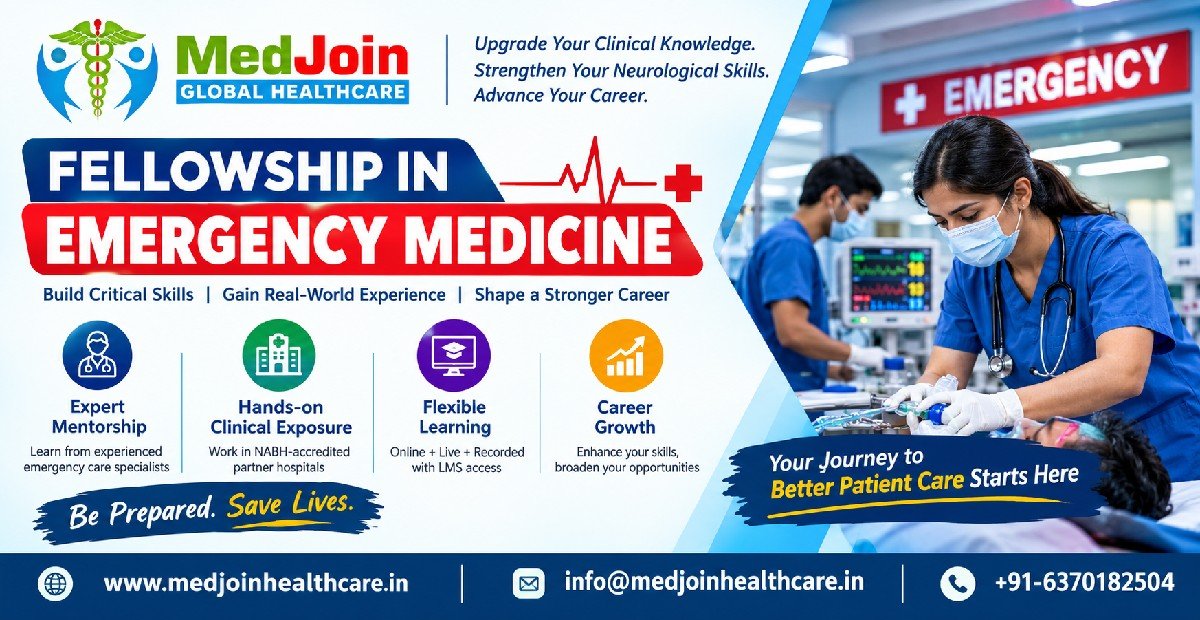
For MBBS graduates and practicing doctors who want to strengthen their clinical knowledge, improve emergency management skills, and explore new career opportunities, a Fellowship in Emergency Medicine can be a valuable professional development pathway.
A structured fellowship can help doctors deepen their understanding of emergency protocols, trauma management, resuscitation, critical patient assessment, and acute care decision-making. Depending on the program format, it may also offer supervised clinical exposure, case-based discussions, academic mentoring, and practical learning opportunities.
As healthcare systems continue to focus on rapid diagnosis, patient safety, and emergency preparedness, specialized training in emergency medicine can support doctors seeking to advance their professional capabilities.
What Is a Fellowship in Emergency Medicine?
A Fellowship in Emergency Medicine is a structured postgraduate-level educational or professional training program designed to enhance a doctor's knowledge and competencies in the assessment and initial management of medical emergencies.
The curriculum may cover the recognition of life-threatening conditions, emergency stabilization, resuscitation principles, trauma assessment, cardiovascular emergencies, neurological emergencies, respiratory distress, acute abdominal conditions, toxicology, and disaster preparedness.
The precise curriculum, duration, clinical exposure, assessment process, and certificate awarded depend on the institution and program.
Unlike general medical education, which covers a broad range of diseases and specialties, emergency medicine training emphasizes time-sensitive clinical decision-making, systematic patient evaluation, prioritization of care, and coordination among healthcare professionals.
A fellowship may be particularly relevant for MBBS graduates, general practitioners, medical officers, and doctors working in hospitals or healthcare facilities where emergency cases are frequently encountered.
Doctors should evaluate the program's academic standards, clinical training arrangements, faculty qualifications, assessment methods, and recognition status before enrolling. A fellowship certificate does not automatically confer specialist status or independent practice privileges beyond the doctor's existing qualifications and applicable regulations.
Why Is Emergency Medicine Becoming Increasingly Important?
Modern healthcare facilities manage a wide variety of acute medical conditions that require rapid intervention. An emergency department must be prepared to handle patients with chest pain, breathing difficulties, neurological deficits, severe infections, injuries, allergic reactions, and other potentially life-threatening conditions.
The importance of emergency medicine is driven by several factors.
Growing demand for emergency services: Hospitals require healthcare professionals who can identify deteriorating patients and initiate appropriate emergency management without unnecessary delays.
Increasing complexity of acute conditions: Patients may arrive with multiple medical problems, complicated injuries, or overlapping symptoms. Doctors need a systematic approach to assessment and stabilization.
Expansion of hospital infrastructure: Multispecialty hospitals, emergency departments, trauma units, and critical care services depend on coordinated emergency response systems.
Greater emphasis on patient safety: Early recognition of clinical deterioration, effective communication, accurate documentation, and standardized protocols are essential components of safe emergency care.
Need for emergency preparedness: Hospitals and communities require professionals who understand mass-casualty incidents, disaster response, and the coordination of urgent medical services.
These developments make emergency medicine knowledge valuable for doctors across a variety of clinical environments.
Advantages of Joining a Fellowship in Emergency Medicine
Enhanced Clinical Knowledge and Decision-Making
One of the major advantages of a Fellowship in Emergency Medicine is the opportunity to develop a structured approach to evaluating acutely ill patients.
Emergency care often requires doctors to make decisions before a definitive diagnosis is available. Training can help doctors recognize warning signs, identify unstable patients, prioritize investigations, and determine when urgent intervention or specialist consultation is necessary.
A fellowship may strengthen understanding of systematic assessment approaches, including airway, breathing, circulation, disability, and exposure, alongside focused history-taking and physical examination.
Doctors can also improve their ability to distinguish between relatively stable presentations and conditions that require immediate escalation.
Improved Emergency Assessment Skills
Accurate and timely patient assessment is central to emergency medicine. Doctors need to identify the most urgent clinical problem, evaluate vital signs, recognize red flags, and determine the appropriate level of care.
A well-designed fellowship can cover initial patient triage, primary and secondary surveys, focused examinations, clinical risk assessment, and reassessment following initial treatment.
These competencies can help doctors develop a more organized approach to managing patients in emergency departments, urgent care facilities, and other acute clinical settings.
Better Understanding of Life-Saving Interventions
Emergency medicine involves the early recognition and management of conditions that can rapidly become fatal.
Depending on the curriculum and training facilities, a fellowship may introduce or reinforce essential concepts related to cardiopulmonary resuscitation, basic and advanced life support principles, airway management, oxygen therapy, shock recognition, and emergency stabilization.
Practical competency should be developed through appropriate simulation, supervised clinical training, and recognized certification courses where applicable. Completing an academic fellowship alone should not be assumed to authorize every procedure or substitute for a separate required life-support certification.
Knowledge of Trauma and Injury Management
Trauma cases form an important part of emergency department practice. Doctors may encounter road traffic injuries, falls, workplace accidents, head injuries, fractures, burns, and multiple-trauma patients.
A fellowship may provide structured learning in trauma assessment, identification of life-threatening injuries, initial stabilization, hemorrhage recognition, cervical spine precautions, and appropriate referral or transfer.
Understanding trauma protocols can help doctors identify immediate threats and coordinate timely treatment with surgical, orthopedic, neurosurgical, and critical care teams.
Stronger Clinical Confidence
Doctors working in busy hospitals may encounter situations that require rapid prioritization, effective communication, and immediate escalation.
Structured academic learning, case-based discussions, simulation exercises, and supervised exposure can help doctors become more familiar with emergency workflows and clinical protocols.
Clinical confidence should develop alongside competence, appropriate supervision, and recognition of professional limitations. The objective is not simply to make faster decisions but to make safe, systematic, and evidence-informed decisions.
Exposure to Multidisciplinary Healthcare
Emergency medicine involves collaboration among emergency physicians, nurses, anesthesiologists, intensivists, surgeons, radiologists, laboratory professionals, and ambulance personnel.
A fellowship can help doctors understand how these teams coordinate patient assessment, stabilization, diagnostic testing, definitive treatment, and transfer to specialized departments.
This understanding is particularly useful for doctors who work in multispecialty hospitals or intend to develop careers in acute care services.
Structured and Focused Professional Development
Doctors often need targeted learning opportunities to complement their existing medical education or clinical experience.
A fellowship provides a defined curriculum that may include lectures, clinical case discussions, assessments, reading materials, recorded sessions, and practical learning activities.
The structure can make it easier to identify knowledge gaps and pursue focused professional development without having to independently organize every aspect of learning.
Opportunities for Flexible Learning
Some fellowship programs offer online, hybrid, or hospital-based formats.
Online learning can be useful for doctors who need to balance professional responsibilities with academic development. Hybrid programs may combine online learning with scheduled clinical exposure, while hospital-based programs may provide a more immersive learning environment.
The suitability of each format depends on the doctor's experience, learning objectives, location, available time, and need for practical competency development.
Doctors should confirm whether advertised clinical training involves observation, simulation, supervised participation, or independent hands-on practice. These activities are not equivalent and should be clearly described before enrollment.
Important Subjects Covered in Emergency Medicine Training
A comprehensive emergency medicine curriculum may include the following clinical areas.
Emergency Assessment and Triage
Doctors learn the principles of identifying high-risk patients, prioritizing care according to clinical urgency, evaluating vital signs, and recognizing early signs of deterioration.
Topics may include emergency history-taking, primary assessment, focused examination, patient monitoring, and the safe transfer of patients between departments.
Cardiovascular Emergencies
Cardiovascular conditions can require immediate assessment and treatment. Training may cover acute coronary syndromes, chest pain evaluation, cardiac arrhythmias, acute heart failure, hypertensive emergencies, cardiac arrest, and cardiogenic shock.
Doctors may study ECG interpretation, emergency risk assessment, initial stabilization, and indications for urgent cardiology consultation.
Respiratory Emergencies
Respiratory presentations include acute asthma, exacerbations of chronic obstructive pulmonary disease, pneumonia, pulmonary embolism, respiratory failure, and severe allergic reactions.
A fellowship may address respiratory assessment, oxygen delivery, pulse oximetry, blood gas interpretation, non-invasive ventilation principles, and indications for advanced airway support.
Neurological Emergencies
Neurological emergencies require rapid assessment because delays can result in significant disability or death.
Relevant subjects may include acute stroke, seizures, status epilepticus, altered consciousness, head injury, meningitis, and spinal cord emergencies.
Doctors can develop a better understanding of neurological examination, recognition of red flags, time-sensitive treatment pathways, and referral protocols.
Trauma and Emergency Surgery
Trauma education may address primary and secondary surveys, hemorrhage control, wound assessment, burns, fractures, abdominal trauma, chest trauma, and head injuries.
The curriculum may also explore emergency surgical conditions, acute abdominal pain, gastrointestinal bleeding, and the importance of timely surgical consultation.
Shock, Sepsis, and Critical Illness
Sepsis and shock are important causes of clinical deterioration in emergency settings.
Training may cover early recognition of sepsis, fluid assessment, hemodynamic monitoring, shock classification, laboratory evaluation, and the principles of timely antimicrobial treatment where indicated.
Doctors may also study the initial management of anaphylaxis, severe dehydration, metabolic emergencies, and multiorgan dysfunction.
Poisoning and Toxicology
Emergency departments may receive patients with medication overdoses, chemical exposure, envenomation, and other toxicological emergencies.
Relevant topics include initial stabilization, exposure history, toxidromes, appropriate investigations, antidote principles, and consultation with toxicology or poison information services.
Pediatric and Geriatric Emergencies
Children and older adults may present differently from the general adult population.
Training may address pediatric fever, respiratory distress, dehydration, seizures, neonatal emergencies, falls in older adults, polypharmacy, altered mental status, and the recognition of atypical presentations.
Obstetric and Gynecological Emergencies
Depending on the curriculum, doctors may study initial assessment and referral for ectopic pregnancy, severe pregnancy-related hypertension, postpartum hemorrhage, acute pelvic pain, and other urgent obstetric or gynecological presentations.
Management should follow appropriate protocols and involve specialist support whenever required.
Emergency Procedures and Patient Monitoring
Emergency medicine education may introduce the indications, contraindications, risks, and principles of procedures such as intravenous access, wound management, splinting, airway support, and emergency monitoring.
Actual procedural competency requires appropriate practical training, supervision, and assessment. The procedures included in a fellowship depend on its facilities, scope, and clinical governance arrangements.
Disaster Medicine and Mass-Casualty Management
Emergency preparedness extends beyond individual patient care.
Doctors may learn about mass-casualty triage, disaster response planning, hospital emergency protocols, resource allocation, interdepartmental communication, and coordination with ambulance and public safety services.
This knowledge may be relevant to hospitals, trauma facilities, industrial healthcare units, and emergency response organizations.
Career Scope After a Fellowship in Emergency Medicine
A Fellowship in Emergency Medicine can support professional development across several healthcare settings. Career opportunities depend on a doctor's underlying qualification, registration, clinical experience, employer requirements, and the nature of the fellowship.
Emergency Department Medical Officer
Doctors with the appropriate qualifications and experience may pursue medical officer roles in hospital emergency departments.
Responsibilities may include initial patient evaluation, recognizing clinical instability, initiating permitted emergency measures, coordinating investigations, documenting findings, and arranging referrals under institutional protocols.
A fellowship may strengthen relevant knowledge, but recruitment and scope of practice are determined by the employer and applicable regulations.
Casualty Medical Officer
Casualty departments manage patients requiring urgent medical evaluation, including those with injuries, acute illnesses, and sudden deterioration.
Doctors may seek casualty medical officer positions in hospitals, nursing homes, and multispecialty healthcare facilities, subject to eligibility requirements.
Emergency medicine training may help candidates demonstrate focused knowledge of acute patient assessment and emergency workflows.
Emergency and Urgent Care Services
Some healthcare organizations operate urgent care units that evaluate patients who need prompt attention but may not require the full resources of a major emergency department.
Doctors with relevant experience may explore opportunities in these facilities, depending on the services offered and the complexity of patients managed.
Trauma Care Facilities
Trauma centers manage patients with serious injuries and require coordinated assessment, stabilization, imaging, surgery, and critical care.
Doctors may pursue suitable roles in trauma-related services if they meet the relevant qualification and experience requirements. Emergency medicine education can strengthen their understanding of trauma protocols and multidisciplinary coordination.
Multispecialty and Corporate Hospitals
Large hospitals require medical professionals who can contribute to emergency assessment, initial treatment, patient monitoring, and coordination with specialty teams.
A fellowship may be relevant to doctors applying for appropriate emergency care positions in corporate hospitals and multispecialty institutions.
However, individual hospitals may require additional experience, specific postgraduate qualifications, recognized certifications, or other credentials.
Rural and Community Healthcare
In rural and underserved areas, healthcare professionals may need to recognize serious conditions and arrange timely stabilization or referral.
Doctors working in community hospitals and smaller healthcare facilities can benefit from stronger emergency assessment skills, especially where access to specialist services is limited.
Training may help improve readiness to recognize high-risk presentations, initiate appropriate care within one's competence, and arrange safe transfer to a higher-level facility.
Industrial and Occupational Healthcare
Factories, manufacturing facilities, construction sites, and other industrial environments may require medical personnel to respond to workplace injuries and sudden illnesses.
Doctors with relevant experience may explore suitable occupational health or emergency response roles. Requirements vary according to the employer, industrial risks, applicable regulations, and the level of care provided.
Ambulance and Prehospital Emergency Services
Prehospital care involves the initial assessment and management of patients before they reach a hospital.
Depending on eligibility and organizational requirements, doctors may explore opportunities involving ambulance services, medical transport, emergency coordination, or prehospital clinical support.
Additional training in prehospital protocols, life support, trauma response, and emergency transport may be required.
Medical Education and Clinical Training
Experienced doctors may become involved in academic activities such as case discussions, clinical teaching, simulation-based learning, and emergency care training.
Formal faculty appointments generally require qualifications and experience specified by the institution and applicable regulations. A fellowship alone does not guarantee eligibility for a teaching position.
Future Opportunities in Emergency Medicine
Increasing Focus on Emergency Preparedness
Hospitals and healthcare networks increasingly need systems that can respond to sudden surges in patient demand, infectious disease outbreaks, accidents, and disasters.
Emergency preparedness includes staff training, triage protocols, simulation exercises, communication systems, and coordination across departments.
Doctors with emergency medicine knowledge may be better equipped to contribute to these activities within their professional roles.
Development of Dedicated Emergency Departments
As healthcare facilities expand their emergency and trauma services, the need for trained personnel who understand acute patient assessment and stabilization remains important.
The availability of positions varies by region, facility size, healthcare investment, and staffing requirements. Nevertheless, emergency care remains a clinically important service within hospital operations.
Integration of Emergency and Critical Care
Emergency medicine and critical care frequently intersect when patients present with respiratory failure, shock, severe infection, major trauma, or cardiac emergencies.
Doctors who understand initial stabilization and escalation pathways can contribute to smoother transitions between emergency departments, intensive care units, operating theatres, and specialist services.
Further qualifications may be necessary for advanced or specialist critical care roles.
Digital Health and Emergency Care Technology
Digital health technologies are increasingly used in patient monitoring, electronic medical records, teleconsultation, ambulance coordination, and clinical decision support.
Doctors with knowledge of emergency workflows may find opportunities to contribute to clinical quality improvement, digital health implementation, emergency care coordination, or medical technology initiatives.
The exact opportunities depend on experience, technical knowledge, and the requirements of the organization.
Simulation-Based Education
Simulation training allows doctors to practice emergency scenarios in a controlled environment without exposing real patients to unnecessary risk.
Common scenarios include cardiac arrest, difficult airway management, shock, major trauma, and acute neurological deterioration.
Doctors interested in medical education may explore additional training in simulation, life support instruction, or emergency preparedness, provided they meet the relevant certification and faculty requirements.
Quality Improvement and Patient Safety
Emergency departments depend on efficient workflows, accurate documentation, appropriate triage, timely escalation, and systematic review of clinical outcomes.
Doctors may develop an interest in clinical audits, patient safety, protocol implementation, and quality improvement initiatives.
Additional education in healthcare quality, patient safety, or clinical governance can complement emergency medicine knowledge.
Online, Hybrid, and Offline Fellowship in Emergency Medicine
Selecting the appropriate training format is an important part of a doctor's professional development plan.
Online Fellowship in Emergency Medicine
An online fellowship may suit doctors who want to strengthen their theoretical knowledge while continuing their current professional responsibilities.
Depending on the program, learning resources may include recorded lectures, digital study materials, live academic sessions, case discussions, assessments, and access to a learning management system.
Key advantages include:
- Flexible access to educational resources.
- Ability to study alongside existing clinical responsibilities.
- Reduced need for relocation.
- Opportunities to review recorded academic sessions.
- Structured learning in emergency medicine principles.
An online program cannot, by itself, replace supervised clinical experience, procedural assessment, or practical competency training when these are necessary for the intended role.
Hybrid Fellowship in Emergency Medicine
A hybrid fellowship combines online academic learning with a defined period of in-person clinical exposure or practical training, depending on the program.
This format may be appropriate for doctors who want both structured theoretical learning and opportunities to observe or participate in supervised clinical activities.
Potential advantages include:
- A combination of academic and clinical learning.
- Exposure to hospital workflows.
- Opportunities for case-based discussion with clinical faculty.
- Better understanding of emergency department organization.
- The ability to complete part of the curriculum remotely.
Before enrolling, doctors should confirm the duration and location of clinical training, the degree of hands-on participation, supervision arrangements, assessment requirements, and any additional travel or accommodation expenses.
Offline Fellowship in Emergency Medicine
An offline or hospital-based fellowship may provide a more immersive learning environment when it includes structured clinical rotations and appropriate supervision.
Depending on the hospital and program, learning may involve emergency department observation, supervised patient assessment, clinical case reviews, simulation, and participation in approved activities.
Potential benefits include:
- Regular interaction with clinical teams.
- Familiarity with hospital emergency workflows.
- Opportunities to learn through real clinical cases.
- Greater exposure to multidisciplinary coordination.
- Structured feedback from supervisors, where provided.
Doctors should confirm that the clinical setting, faculty, learning objectives, and supervision are appropriate for the intended competencies. Hospital attendance alone does not establish procedural competence.
Who Should Consider a Fellowship in Emergency Medicine?
A fellowship may be relevant to a range of medical professionals seeking additional education in acute care.
MBBS Graduates
MBBS graduates interested in hospital-based clinical work may benefit from structured learning in emergency assessment, stabilization, and patient management.
A fellowship may help them explore suitable entry-level opportunities, subject to employer requirements and applicable registration rules.
General Practitioners
General practitioners may encounter acute illnesses and injuries in outpatient clinics, community facilities, or primary care settings.
Emergency medicine education can help them strengthen their understanding of red-flag symptoms, initial stabilization, and timely referral.
Medical Officers
Medical officers working in hospitals, casualty departments, or community healthcare settings may benefit from focused learning in emergency protocols and acute patient assessment.
Doctors Working in Multispecialty Hospitals
Doctors seeking to improve their understanding of emergency department workflows, acute clinical presentations, and multidisciplinary coordination may find the curriculum relevant to their professional development.
Doctors Planning a Career Transition
Doctors interested in exploring emergency care may use a fellowship to assess their interest in the specialty and strengthen their foundational knowledge.
However, career transitions depend on eligibility criteria, recognized qualifications, relevant experience, and available positions.
Skills Doctors Can Develop Through Emergency Medicine Training
A structured fellowship may support the development of several professional competencies.
Clinical assessment: Systematic evaluation of symptoms, vital signs, physical findings, and potential clinical deterioration.
Prioritization: Understanding how to identify patients requiring immediate assessment and escalation.
Clinical reasoning: Developing a structured approach to differential diagnosis, investigation selection, and initial management.
Communication: Sharing clinical information effectively with patients, families, colleagues, and receiving teams.
Teamwork: Understanding the roles of nurses, specialists, ambulance personnel, and other healthcare professionals in emergency care.
Patient safety: Recognizing the importance of documentation, infection prevention, medication safety, monitoring, and escalation protocols.
Professional judgment: Knowing when to seek senior assistance, consult specialists, or transfer patients to facilities with appropriate resources.
These competencies are valuable because emergency medicine requires not only medical knowledge but also organization, communication, situational awareness, and safe decision-making.
Does a Fellowship in Emergency Medicine Improve Career Prospects?
A fellowship may strengthen a doctor's professional profile by demonstrating additional study in a focused clinical area.
It can provide evidence of continued learning and may help doctors discuss relevant knowledge and competencies during interviews or professional development reviews.
However, improved career prospects are not guaranteed. Employers may prioritize postgraduate medical qualifications, clinical experience, recognized life-support certifications, registration status, and demonstrated practical competency.
Doctors should therefore view a fellowship as one component of professional development rather than a substitute for required qualifications or a guaranteed route to employment.
For candidates considering emergency medicine positions, it is advisable to review actual job advertisements and confirm the eligibility criteria of hospitals and healthcare organizations in their preferred location.
Common Challenges in Emergency Medicine and How Training Can Help
Emergency medicine can be demanding because doctors must assess multiple patients, manage uncertainty, recognize time-sensitive conditions, and coordinate care under pressure.
Managing Time-Sensitive Decisions
Patients with suspected stroke, cardiac emergencies, severe trauma, or sepsis may require rapid evaluation.
Structured learning can help doctors understand assessment priorities, time-sensitive pathways, and the importance of escalation.
Handling Uncertain Presentations
Early symptoms may be nonspecific, and the initial diagnosis may not be obvious.
Case-based education can help doctors develop systematic differential diagnoses, identify warning signs, and recognize when further investigations or specialist review are necessary.
Coordinating With Multiple Teams
Emergency care often requires simultaneous communication with nurses, diagnostic departments, specialists, and transport teams.
Training can reinforce the importance of concise handovers, accurate documentation, and clear escalation procedures.
Maintaining Patient Safety Under Pressure
High workload and interruptions can increase the risk of communication errors and missed clinical findings.
Doctors can benefit from learning about structured assessment, checklists, reassessment, teamwork, and safety-focused protocols.
A fellowship provides educational preparation, but safe clinical performance also requires appropriate supervision, adequate staffing, institutional support, and continued practice.
Why Consider MedJoin Global Healthcare for Emergency Medicine Education?
MedJoin Global Healthcare provides medical education and professional development opportunities for doctors interested in expanding their clinical knowledge.
Doctors considering an Emergency Medicine fellowship through MedJoin Global Healthcare should review the current program structure, curriculum, eligibility requirements, faculty arrangements, assessment process, and available training formats before making an enrollment decision.
Depending on the program offered, the learning experience may include online academic resources, recorded lectures, live sessions, clinical case discussions, assessments, and opportunities for clinical exposure.
Doctors should confirm the specific features included in their selected program rather than assuming that every course offers the same clinical facilities or practical training arrangements.
The right program should align with the doctor's learning objectives, professional responsibilities, available time, and need for clinical experience.
To learn more about current courses and program availability, visit the official website or contact the MedJoin Global Healthcare team.
Website: https://www.medjoinhealthcare.in/
Email: info@medjoinhealthcare.in
Phone: +91-6370182504
Conclusion: Build a Stronger Foundation in Emergency Medicine
Emergency medicine is a clinically important field that requires rapid assessment, structured decision-making, effective communication, and a commitment to patient safety. Doctors who want to strengthen their understanding of acute medical conditions may find a Fellowship in Emergency Medicine a useful professional development opportunity.
Potential benefits include improved knowledge of emergency protocols, greater familiarity with trauma and resuscitation principles, exposure to multidisciplinary care, and preparation for suitable clinical roles.
Future opportunities may extend across hospital emergency departments, casualty services, trauma facilities, community healthcare, occupational medicine, prehospital services, and clinical education, depending on the doctor's qualifications and experience.
Choosing the right fellowship requires careful consideration of the curriculum, training format, supervision, assessment methods, certificate status, and professional goals.
For doctors seeking to expand their knowledge and prepare for the demands of acute care, the next step is to identify a program that provides a clear educational structure and accurately describes its clinical training and outcomes.
Explore Emergency Medicine education with MedJoin Global Healthcare.