
Explore Online Learning and Offline Hands-On Clinical Training Opportunities for Doctors
Critical Care Medicine is one of the most demanding and dynamic areas of modern healthcare. It focuses on the assessment, stabilization, monitoring, and management of critically ill patients who require intensive medical attention. From managing respiratory failure and sepsis to understanding ventilatory support, hemodynamic instability, and multiorgan dysfunction, critical care demands a combination of clinical knowledge, rapid decision-making, and coordinated teamwork.
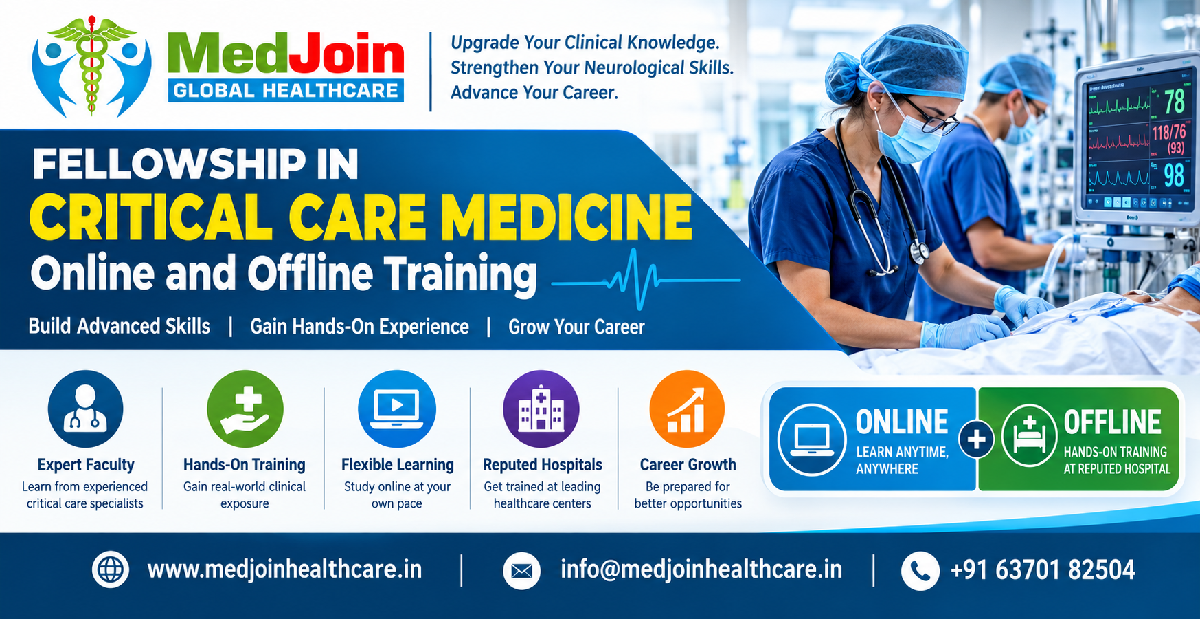
For doctors who wish to strengthen their understanding of intensive care and emergency stabilization, a Fellowship in Critical Care Medicine can offer a structured learning pathway. Depending on the program, doctors may choose online academic training, offline hospital-based clinical training, or a hybrid format combining online education with supervised clinical exposure.
MedJoin Global Healthcare offers fellowship-oriented learning opportunities designed to help eligible medical professionals expand their clinical knowledge, explore critical care concepts, and build a stronger foundation for professional development. Doctors can explore the format that best matches their existing experience, professional commitments, and learning objectives.
Whether you are a medical graduate seeking additional academic exposure, a general practitioner interested in managing critically ill patients, or a practicing physician looking to strengthen your understanding of intensive care, selecting an appropriate educational program is an important step toward your professional goals.
Understanding Critical Care Medicine
Critical Care Medicine, also known as intensive care medicine, is the medical specialty concerned with patients who have life-threatening illnesses, severe injuries, or acute organ dysfunction. These patients often require continuous monitoring, advanced investigations, organ-support interventions, and coordinated treatment by a multidisciplinary team.
Critical care services are delivered in intensive care units, high-dependency units, emergency departments, specialized cardiac care units, and other hospital settings equipped to manage severe illness.
The field requires doctors to recognize deterioration early, interpret clinical findings, prioritize interventions, understand the limitations of available treatments, and communicate effectively with nurses, respiratory therapists, specialists, patients, and families.
Common clinical situations encountered in critical care include:
- Acute respiratory failure and severe pneumonia
- Sepsis and septic shock
- Cardiac arrest and post-resuscitation care
- Acute kidney injury and electrolyte disturbances
- Neurological emergencies and altered consciousness
- Severe metabolic abnormalities
- Polytrauma and major injuries
- Poisoning and selected toxicological emergencies
- Postoperative complications
- Multiple organ dysfunction syndrome
The management of critically ill patients requires more than theoretical knowledge. It involves understanding the patient's overall condition, recognizing changes in vital signs, interpreting investigations, evaluating treatment response, and escalating care appropriately.
A structured fellowship-oriented educational program can help doctors develop a systematic approach to these topics. However, independent clinical competence requires appropriate foundational qualifications, supervised experience, institutional authorization, and compliance with applicable professional regulations.
What Is a Fellowship in Critical Care Medicine?
A Fellowship in Critical Care Medicine is a structured educational program intended to deepen a doctor's knowledge of critical illness, intensive care principles, emergency stabilization, and organ-support management.
The exact scope depends on the institution, duration, curriculum, assessment system, and whether the program includes supervised hospital-based training.
Online programs generally emphasize academic learning through recorded lectures, live teaching sessions, clinical case discussions, digital learning materials, and assessments. Offline programs may add clinical observership, supervised bedside teaching, exposure to intensive care workflows, and discussions with hospital-based clinicians, subject to the training site's facilities and permissions.
Hybrid programs combine online learning with a defined period of clinical exposure at a participating hospital or another approved training site.
The objective is to provide a structured educational experience that helps doctors consolidate knowledge and understand how critical care principles are applied in clinical settings.
Before enrolling, doctors should verify the awarding institution, faculty credentials, training-site arrangements, clinical responsibilities, assessment requirements, and the precise recognition or professional value of the certificate. A private fellowship certificate should not automatically be interpreted as a recognized postgraduate specialty qualification or independent specialist registration.
Why Is Critical Care Medicine an Important Field?
Hospitals increasingly need organized systems for identifying and managing patients whose conditions may deteriorate rapidly. Critical care plays an essential role in supporting these systems.
The importance of critical care extends beyond the intensive care unit. Emergency departments, general medical wards, surgical units, and smaller hospitals all need clinicians who can recognize warning signs, initiate appropriate stabilization within their competence, and arrange timely escalation.
Early Recognition of Clinical Deterioration
A critically ill patient may initially present with subtle abnormalities, including increasing respiratory rate, altered mental status, falling blood pressure, reduced urine output, or changing oxygen requirements.
Doctors must understand how to assess these findings in context and recognize when urgent intervention or senior review is necessary.
Management of Complex Medical Conditions
Patients with severe infections, respiratory disorders, cardiovascular instability, metabolic emergencies, or multiple comorbidities may require coordinated treatment involving several specialties.
Critical care education helps doctors understand the principles behind such coordinated management.
Appropriate Use of Monitoring and Organ Support
Monitoring devices, oxygen-delivery systems, ventilatory support, infusion therapies, and laboratory investigations can provide important information about a patient's condition.
Doctors need to understand the indications, limitations, risks, and interpretation of these interventions rather than relying on equipment alone.
Multidisciplinary Teamwork
Critical care outcomes depend on communication among doctors, nurses, respiratory therapists, pharmacists, physiotherapists, and other healthcare professionals.
Training in intensive care principles can help doctors understand team responsibilities, escalation pathways, documentation, and structured handovers.
Patient Safety and Ethical Decision-Making
Critical care frequently involves difficult decisions concerning treatment priorities, prognosis, informed consent, patient preferences, and communication with families.
Education in patient safety, ethical practice, and appropriate escalation is therefore an important component of critical care learning.
Who Should Consider a Fellowship in Critical Care Medicine?
The appropriate audience depends on the admission criteria and scope of the individual program. A fellowship-oriented course may be relevant to eligible doctors who want to strengthen their academic understanding of critical illness.
Potential applicants may include:
MBBS-qualified doctors: Medical graduates who want additional structured education in acute illness, emergency stabilization, and intensive care concepts may find a suitable program useful, subject to the course's admission requirements.
General practitioners: Doctors working in outpatient or general medical settings may benefit from learning to identify high-risk patients, recognize warning signs, and arrange timely referral.
Physicians working in hospital settings: Medical officers and physicians involved in inpatient care may wish to improve their understanding of respiratory failure, shock, sepsis, monitoring, and organ dysfunction.
Emergency medicine practitioners: Eligible doctors involved in emergency assessment and stabilization may use critical care education to strengthen their understanding of patients who require escalation to intensive care.
Doctors with previous intensive care exposure: Clinicians who already work around critical care teams may seek a more organized academic framework for reviewing intensive care principles and discussing complex cases.
Doctors planning further postgraduate education: Those considering a longer-term clinical pathway can use a short educational fellowship to explore the subject before deciding on further formal training.
Eligibility must be confirmed directly against the program's written requirements. A course designed for qualified doctors should not be advertised as an unrestricted qualification for nurses, students, or other healthcare workers unless its stated admission policy expressly permits those applicants.
Online Fellowship in Critical Care Medicine
Online learning offers flexibility for doctors who want to pursue structured academic education while continuing their clinical practice or other professional responsibilities.
An online Fellowship in Critical Care Medicine may include digital study modules, recorded teaching sessions, live webinars, clinical case discussions, reading materials, and online assessments.
This format is particularly suitable for doctors who cannot relocate to another city or commit to an extended period of hospital attendance.
Flexible Learning for Working Doctors
Doctors frequently work rotating shifts, night duties, emergency calls, and extended clinical schedules. A digital learning platform can make it easier to study at a convenient time.
Recorded sessions allow learners to revisit complex subjects, while scheduled live classes provide opportunities to clarify doubts and discuss important clinical concepts with faculty, where included in the program.
Recorded Lectures and Digital Study Materials
An online learning platform may provide educational modules, downloadable PDFs, presentations, reading materials, and recorded lectures.
These resources allow doctors to revise important topics at their own pace and return to difficult concepts when necessary.
Topics such as ventilator principles, shock physiology, acid-base interpretation, sepsis management, and hemodynamic assessment often require repeated study. Structured digital materials can support this revision.
Live Academic Sessions and Case Discussions
Interactive sessions can help bridge the gap between reading a topic and understanding its clinical application.
Depending on the program schedule, live sessions may cover clinical scenarios, differential diagnosis, treatment priorities, interpretation of investigations, and common errors in critical care.
Case discussions should be educational and should use appropriately anonymized information. Patient-specific clinical decisions must remain under the responsibility of the treating clinical team.
Online Assessments
Quizzes, assignments, case-based questions, and multiple-choice examinations can help learners assess their understanding.
A structured assessment system should explain the passing criteria, permitted attempts, feedback process, and any completion requirements before enrollment.
Advantages of Online Critical Care Education
An online program may offer several practical advantages:
- No routine relocation for academic study
- Flexibility around clinical duties
- Access to recorded learning resources
- Opportunities to revisit complex subjects
- Digital case discussions and academic interaction
- Potentially lower travel and accommodation expenses
- A structured study plan for professional development
However, online learning does not provide the same experience as supervised bedside training. It cannot independently establish practical competence in procedures, ventilator management, invasive monitoring, or the management of unstable patients.
Doctors who require substantial clinical exposure should evaluate whether an offline or hybrid pathway is more appropriate.
Offline Hands-On Fellowship in Critical Care Medicine at a Reputed Hospital
Offline hospital-based training fellowship program offers an opportunity to learn within a clinical environment. Depending on the institution and training arrangement, it may include supervised teaching, clinical observership, discussions during ward or ICU rounds, exposure to monitoring systems, and case-based learning with hospital faculty.
A hospital's reputation is important, but the educational value of a fellowship depends on the actual training arrangement rather than the institution's name alone.
Doctors should confirm whether the program provides structured teaching, named supervisors, defined learning objectives, a training timetable, and a clear distinction between observation and hands-on responsibilities.
Clinical Exposure in an Intensive Care Environment
An intensive care unit is a specialized clinical area for patients who require close monitoring or advanced organ support.
During a properly organized educational placement, learners may be introduced to the workflow of the unit, patient monitoring, multidisciplinary communication, documentation standards, and the principles underlying intensive care decisions.
Actual participation depends on the learner's qualifications, institutional privileges, patient consent, supervisor authorization, and applicable rules.
Observership should not be represented as independent clinical practice or guaranteed procedural training.
Learning Under Experienced Faculty
Faculty-led discussions can help learners understand how clinicians assess complex cases and prioritize investigations and interventions.
Supervised teaching may address clinical reasoning, physiological interpretation, patient safety, and the rationale behind treatment decisions.
Doctors should ask about the faculty members' credentials, availability, teaching responsibilities, and experience in critical care.
Exposure to ICU Equipment and Monitoring
Depending on the training site, educational exposure may include:
- Multiparameter patient monitors
- Pulse oximetry and electrocardiographic monitoring
- Non-invasive and invasive blood pressure monitoring
- Oxygen-delivery systems
- Mechanical ventilation equipment
- Infusion pumps
- Blood gas analysis and laboratory interpretation
- Bedside ultrasound and selected hemodynamic assessment tools
The purpose is to understand the principles, indications, limitations, and safety considerations associated with these systems.
Practical use of equipment and performance of procedures must occur only when permitted, appropriately supervised, and within the learner's authorized scope of practice.
Case-Based Bedside Learning
Clinical case discussions can help learners connect textbook concepts with actual patient presentations.
For example, a supervised discussion of a patient with severe pneumonia may cover oxygenation, respiratory effort, hemodynamic status, relevant investigations, escalation criteria, and the indications for specialist or intensive care review.
A case involving suspected sepsis may explore early recognition, source identification, appropriate investigations, antimicrobial principles, fluid assessment, and monitoring of treatment response.
These discussions are most valuable when they explain not only what clinicians do, but also why they make particular decisions and how they assess the results.
Understanding ICU Teamwork
The intensive care environment depends on coordinated work between clinicians, nurses, respiratory therapists, and other healthcare professionals.
Learners may gain insight into shift handovers, daily goals, documentation, infection prevention, communication with families, and the importance of timely escalation.
This understanding is useful even for doctors whose future roles are not exclusively based in an intensive care unit.
Online vs Offline Fellowship in Critical Care Medicine
Choosing between online and offline training depends on the doctor's learning objectives, professional schedule, location, and need for clinical exposure.
| Feature | Online Fellowship | Offline Hospital-Based Fellowship |
|---|---|---|
| Primary learning environment | Digital learning platform | Hospital or designated clinical training site |
| Learning schedule | Generally more flexible | Depends on hospital duty and teaching schedules |
| Recorded lectures | May be included | May be supplemented by digital resources |
| Live academic sessions | Depending on the program | Depending on the faculty and timetable |
| Clinical case discussions | Virtual or academic cases | May include supervised hospital-based discussions |
| Bedside exposure | Not inherent to online learning | May be available under a defined training arrangement |
| Procedure exposure | Cannot be assumed | Depends on permissions, supervision, and program design |
| Travel requirements | Usually limited | May require travel and accommodation |
| Best suited for | Flexible academic learning | Learners seeking structured clinical exposure |
| Clinical competence | Cannot be established by online study alone | Requires appropriate supervised practice and assessment |
Which Format Should You Choose?
Choose an online format if your primary objective is to strengthen theoretical knowledge, revise core critical care concepts, and study around existing professional commitments.
Consider offline hospital-based training if you want structured exposure to ICU workflows, supervised clinical discussions, and an opportunity to understand how intensive care is delivered in a hospital.
A hybrid program may suit doctors who want the convenience of online academic learning together with a defined period of clinical exposure.
No format should be assumed to guarantee specialist status, independent ICU privileges, or procedural competence. These depend on recognized qualifications, appropriate training, formal assessment, and applicable professional requirements.
Hybrid Fellowship in Critical Care Medicine: Combining Online Education and Clinical Exposure
A hybrid fellowship in critical care medicine combines structured digital education with a period of hospital-based clinical exposure.
For example, a program may provide several months of online academic study followed by a shorter clinical placement. The exact duration, sequence, location, and requirements must be confirmed in the current program brochure.
A hybrid model can help learners prepare academically before entering the hospital environment.
Academic Preparation Before Clinical Training
Before attending a clinical placement, learners should understand foundational topics such as respiratory physiology, cardiovascular physiology, shock, sepsis, oxygen therapy, and patient monitoring.
Preparation can make supervised discussions more productive because learners are familiar with the relevant terminology and clinical principles.
Applying Theory in Clinical Discussions
During hospital exposure, faculty may connect academic concepts with clinical workflows and relevant cases.
For example, theoretical study of respiratory failure may be followed by discussion of oxygen-delivery options, ventilatory support principles, monitoring, and the criteria used to escalate care.
Such discussions must be distinguished from authorization to independently prescribe, perform procedures, or manage critically ill patients.
Balancing Work and Learning
A hybrid program may reduce the amount of time required at the training site compared with a fully offline course.
However, the learner should clarify attendance requirements, shift timings, assessment schedules, accommodation arrangements, travel expenses, and whether the clinical component is observational or involves permitted supervised practice.
The written program structure should clearly state what is included and what remains the learner's responsibility.
Detailed Curriculum for a Fellowship in Critical Care Medicine
The curriculum should be reviewed before enrollment to ensure that it provides a coherent progression from foundational knowledge to complex critical care concepts.
The following is an illustrative academic framework. The actual modules, duration, teaching hours, practical requirements, and assessments must match the institution's published syllabus.
Foundations of Critical Care Medicine
This module introduces the principles of intensive care, the organization of an ICU, the role of the multidisciplinary team, and the initial approach to a deteriorating patient.
Key topics may include:
- Principles and scope of critical care
- ICU organization and patient flow
- Assessment of vital signs
- Recognition of clinical deterioration
- Structured clinical handover
- Documentation and communication
- Patient safety and escalation pathways
- Principles of evidence-based practice
Learners should understand how to recognize when a patient requires urgent senior assessment or transfer to a higher level of care.
Respiratory Failure and Oxygen Therapy
Respiratory failure is a major reason for critical care admission. This module focuses on the physiology of gas exchange, oxygen delivery, respiratory assessment, and the principles of respiratory support.
Topics may include:
- Respiratory anatomy and physiology
- Hypoxemic and hypercapnic respiratory failure
- Assessment of respiratory distress
- Oxygen delivery systems
- Pulse oximetry and its limitations
- Arterial blood gas interpretation
- Non-invasive ventilation principles
- Mechanical ventilation fundamentals
- Ventilator-associated complications
- Acute respiratory distress syndrome
- Weaning and liberation from ventilatory support
The curriculum should emphasize that respiratory support decisions depend on the patient's condition, the clinical environment, available resources, and qualified supervision.
Mechanical Ventilation Principles
Mechanical ventilation is an important component of modern intensive care. Doctors need to understand the relationship between respiratory physiology, ventilator settings, gas exchange, and patient safety.
Academic content may include:
- Basic modes of mechanical ventilation
- Volume-controlled and pressure-controlled ventilation
- Tidal volume and respiratory rate
- Positive end-expiratory pressure
- Fraction of inspired oxygen
- Peak and plateau pressure concepts
- Lung-protective ventilation principles
- Ventilator alarms and common causes
- Patient-ventilator interaction
- Basic weaning concepts
Teaching should focus on understanding the rationale for ventilatory strategies, the risks of inappropriate settings, and the need for individualized assessment by qualified clinicians.
Sepsis and Septic Shock
Sepsis is a life-threatening condition associated with organ dysfunction caused by a dysregulated response to infection.
A dedicated module may cover:
- Recognition of suspected sepsis
- Clinical assessment and warning signs
- Infection sources and diagnostic evaluation
- Cultures and relevant investigations
- Antimicrobial stewardship principles
- Fluid assessment and resuscitation concepts
- Hemodynamic monitoring
- Vasopressor principles
- Organ dysfunction assessment
- Source control
- Monitoring response to treatment
- Antimicrobial resistance and infection prevention
The course should teach learners to recognize urgency and follow current evidence-based institutional protocols. Clinical decisions must be made by appropriately qualified treating teams.
Shock and Hemodynamic Assessment
Shock occurs when the circulatory system fails to deliver sufficient oxygen and nutrients to tissues. It may result from several different mechanisms, and identifying the underlying cause is essential.
Topics may include:
- Hypovolemic shock
- Cardiogenic shock
- Distributive shock
- Obstructive shock
- Initial assessment of unstable patients
- Blood pressure and perfusion indicators
- Lactate interpretation
- Urine output monitoring
- Fluid responsiveness concepts
- Vasoactive medication principles
- Bedside ultrasound concepts
- Response-to-treatment assessment
Learners should understand why no single measurement can fully describe a patient's hemodynamic status and why serial assessment is important.
Cardiovascular Emergencies
This module explores the recognition and initial management principles of cardiovascular instability in critically ill patients.
Possible topics include:
- Acute coronary syndromes
- Cardiac rhythm disturbances
- Bradyarrhythmias and tachyarrhythmias
- Acute heart failure
- Cardiogenic pulmonary edema
- Cardiac arrest principles
- Post-resuscitation care
- Hemodynamic instability
- Monitoring and ECG interpretation
- Cardiovascular medication principles
Advanced procedures and interventions should be taught according to the learner's professional scope, program design, and level of supervision.
Acute Kidney Injury and Renal Support
Kidney dysfunction frequently develops in patients with sepsis, shock, major surgery, and multiple organ failure.
This module may cover:
- Recognition and classification of acute kidney injury
- Urine output and renal function monitoring
- Electrolyte abnormalities
- Acid-base disturbances
- Fluid balance
- Medication considerations in renal dysfunction
- Indications for specialist nephrology review
- Principles of renal replacement therapy
- Continuous renal replacement therapy concepts
- Prevention of avoidable kidney injury
- The curriculum should explain the need for individualized fluid management and appropriate specialist involvement.
Neurological Emergencies
Neurological deterioration may occur in patients with stroke, seizures, infection, metabolic disturbances, trauma, or hypoxic injury.
Topics may include:
- Assessment of altered consciousness
- Glasgow Coma Scale principles
- Acute stroke recognition
- Status epilepticus
- Intracranial pressure concepts
- Neurocritical care monitoring
- Sedation and neurological assessment
- Hypoxic brain injury
- Brain death determination principles and applicable legal requirements
- Communication with families
Learners should understand the need for timely neurological assessment and specialist consultation when indicated.
Acid-Base and Electrolyte Disorders
Acid-base abnormalities can reflect severe underlying disease and may affect respiratory, cardiovascular, and neurological function.
Possible topics include:
- Interpretation of arterial blood gases
- Metabolic acidosis and alkalosis
- Respiratory acidosis and alkalosis
- Compensation principles
- Anion gap interpretation
- Sodium disorders
- Potassium abnormalities
- Calcium and magnesium disturbances
- Lactate interpretation
- Clinical significance of electrolyte changes
The aim is to help learners interpret investigations systematically and understand when urgent assessment or specialist management is required.
Acute Liver Dysfunction and Multiorgan Failure
Severe liver dysfunction and multiorgan failure require complex, coordinated management.
A module may cover:
- Acute liver injury and liver failure
- Hepatic encephalopathy
- Coagulation abnormalities
- Hypoglycemia in severe illness
- Metabolic complications
- Multiorgan dysfunction
- Prognostic assessment principles
- Supportive care
- Referral and transplant-center considerations, where relevant
Teaching should emphasize early recognition, supportive management principles, and timely involvement of appropriate specialists.
Trauma and Emergency Stabilization
Critical care overlaps with emergency medicine, particularly when patients have major trauma or acute physiological instability.
Academic topics may include:
- Initial trauma assessment
- Airway, breathing, and circulation principles
- Hemorrhage recognition
- Traumatic brain injury
- Chest trauma
- Shock in trauma
- Hypothermia prevention
- Trauma-related coagulopathy
- Referral and transfer coordination
- Postoperative deterioration
Practical skills must be taught and assessed in appropriate settings with qualified supervision.
Toxicology and Poisoning
Selected poisoning cases may require intensive monitoring, respiratory support, cardiovascular stabilization, or specialized treatment.
This module may address:
- Initial assessment of poisoning
- Common toxidromes
- Medication overdose principles
- Toxic alcohols and selected chemical exposures
- Decontamination principles and limitations
- Antidote concepts
- Seizures associated with poisoning
- Poison information services
- Monitoring for delayed toxicity
- Safe transfer and escalation
The emphasis should be on early recognition, supportive care principles, and specialist toxicology advice where available.
Critical Care Pharmacology
Medication use in critically ill patients requires attention to dosing, organ dysfunction, adverse effects, drug interactions, and continuous reassessment.
Potential topics include:
- Sedatives and analgesics
- Vasopressors and inotropes
- Antimicrobial therapy
- Anticoagulation principles
- Insulin and glucose management
- Electrolyte replacement
- Medication dosing in kidney dysfunction
- Medication safety and reconciliation
- Adverse drug reaction recognition
- Antimicrobial stewardship
A theoretical module does not authorize independent prescribing beyond the doctor's existing professional scope.
Infection Prevention and ICU Safety
Infection prevention is essential for patients who may have invasive devices, impaired immunity, prolonged hospital stays, or exposure to resistant organisms.
Topics may include:
- Hand hygiene
- Standard and transmission-based precautions
- Device-associated infection prevention
- Ventilator-associated pneumonia prevention
- Catheter-related infection prevention
- Environmental hygiene
- Antimicrobial stewardship
- Safe device handling
- Occupational safety
- Incident reporting and quality improvement
The curriculum should align with the training institution's current infection prevention policies and relevant clinical guidance.
Nutrition, Rehabilitation, and Recovery
Critical care does not end when immediate physiological instability improves. Nutrition, mobility, delirium prevention, psychological support, and rehabilitation may influence longer-term recovery.
Topics may include:
- Nutritional assessment
- Enteral and parenteral nutrition principles
- Glycemic monitoring
- Early mobilization
- ICU-acquired weakness
- Delirium recognition and prevention
- Sleep and orientation measures
- Post-intensive care syndrome
- Rehabilitation planning
- Discharge and continuity of care
This module helps learners understand recovery as a multidisciplinary process.
Ethics, Communication, and End-of-Life Care
Critical care may involve uncertainty, serious prognoses, and complex decisions about life-sustaining treatments.
Academic discussions may include:
- Informed consent
- Decision-making capacity
- Shared decision-making
- Communication with families
- Advance care planning
- Goals of care
- Treatment limitation decisions
- Palliative care involvement
- Confidentiality
- Documentation and professional accountability
The curriculum should reflect applicable law, institutional policy, patient rights, and professional ethical standards.
Research, Evidence-Based Medicine, and Quality Improvement
Critical care practice evolves as new evidence becomes available. Doctors should be able to evaluate clinical recommendations and understand the limitations of research findings.
This module may include:
- Reading clinical research
- Study design fundamentals
- Critical appraisal
- Evidence-based guidelines
- Clinical audit
- Quality indicators
- Patient safety initiatives
- Basic biostatistics
- Research ethics
- Case presentation skills
Learners may be asked to prepare a case-based assignment, literature review, or quality-improvement proposal, depending on the course requirements.
Clinical Training at a Reputed Hospital: What Should Doctors Expect?
The quality of hospital-based training depends on how the placement is organized and supervised.
A well-defined clinical placement should identify the hospital or training center, duration, supervisor, attendance requirements, learning objectives, and scope of permitted activities.
Doctors should not rely only on promotional phrases such as “reputed hospital,” “hands-on training,” or “advanced ICU exposure.” They should obtain specific details before paying fees.
Orientation to the Hospital and ICU
An initial orientation may introduce the learner to the hospital's clinical structure, infection prevention rules, patient confidentiality requirements, emergency response procedures, and professional conduct expectations.
The orientation should clarify the difference between observation, supervised educational participation, and clinical duties authorized by the institution.
Supervised ICU Rounds and Case Reviews
Where included in the training arrangement, learners may observe or participate in academic discussions during rounds under the responsible clinical team's supervision.
These discussions can cover diagnosis, clinical progress, relevant investigations, organ-support requirements, treatment goals, and plans for reassessment.
Participation depends on the hospital's policy, patient privacy safeguards, and the learner's approved role.
Skills Demonstration and Simulation
Simulation-based education can help learners understand structured approaches to emergencies without exposing patients to unnecessary risk.
Depending on availability, teaching may include airway assessment, basic resuscitation concepts, ventilator demonstrations, monitoring interpretation, and emergency team communication.
Simulation attendance should not be represented as proof of independent procedural competence unless a suitable competency assessment supports that claim.
Documentation and Clinical Handover
Accurate documentation and effective handovers are essential for continuity of care.
Learners may study structured handover formats, medication reconciliation, monitoring records, clinical summaries, escalation documentation, and the importance of communicating changes in a patient's condition.
Assessment of Learning
A clinical training component should explain how participation and learning are evaluated.
Possible methods include supervisor feedback, reflective logs, case presentations, observed educational activities, written assessments, and documented completion of learning objectives.
The program should distinguish attendance certificates from competency-based certification and clearly state any practical skills assessment that is actually provided.
How to Choose a Reputed Hospital for Critical Care Fellowship Training
Selecting an appropriate hospital is one of the most important steps when considering an offline or hybrid fellowship.
The best training environment is not necessarily the largest hospital. It is the institution that can provide a suitable clinical setting, qualified supervisors, clear learning objectives, appropriate patient-safety safeguards, and transparent documentation.
Evaluate the Hospital's Clinical Facilities
Ask whether the institution has a functioning intensive care unit, appropriate monitoring equipment, trained nursing staff, access to relevant investigations, and established escalation procedures.
Facilities should be suitable for the program's actual learning objectives.
Verify Faculty Qualifications
Find out who will supervise the training, their qualifications, their critical care experience, and how often they will be available for teaching.
A written faculty list and a defined teaching schedule are more useful than a general claim of expert mentorship.
Confirm the Training Structure
Request details about the clinical placement, including:
- Total duration and attendance requirements
- Hospital and city of training
- ICU or department allocation
- Clinical supervisor details
- Observership versus supervised practical participation
- Teaching timetable and case discussions
- Assessment and feedback process
- Certificate issuer and completion criteria
Review Hospital Accreditation and Recognition Claims
If a provider advertises a hospital as accredited, ask for the exact accreditation body, the applicable facility, and the validity of the accreditation.
Similarly, verify any claims of university affiliation, academic recognition, or professional accreditation directly with the relevant organization.
Hospital accreditation and course recognition are separate matters. A hospital's accreditation does not, by itself, establish that an independently offered fellowship is a recognized postgraduate medical qualification.
Understand Patient Safety and Professional Boundaries
The hospital should explain patient confidentiality, informed consent where applicable, infection prevention, supervision, and the activities permitted to visiting learners.
A fellowship must not place learners in clinical roles for which they are not qualified or authorized.
Speak to the Program Coordinator
Before registration, ask the coordinator to explain the curriculum, faculty, schedule, fee structure, refund policy, hospital allocation, and completion requirements.
Obtain written confirmation of any promised clinical exposure, training location, certificate, or assessment.
Admission Eligibility for Fellowship in Critical Care Medicine
Eligibility varies by provider, program level, and training format.
For a medical fellowship intended for doctors, the usual starting point is a recognized primary medical qualification, subject to the provider's admission policy and any applicable registration requirements.
Applicants should review the following considerations.
Educational qualification: Confirm whether the program accepts MBBS-qualified doctors or requires additional postgraduate qualifications or previous clinical experience.
Professional registration: Check whether current medical registration is required and which authority's registration is acceptable.
Clinical experience: Some programs may prefer experience in emergency medicine, general medicine, anesthesia, respiratory medicine, or intensive care. Such preferences should not be assumed to be universal.
Language proficiency: Applicants should be able to understand the language used for teaching, assessments, and clinical communication.
Training availability: Offline applicants must be able to attend the assigned training location for the required period.
Documents: The provider may request degree certificates, registration documents, identity proof, photographs, a CV, and other application materials.
International applicants should independently confirm applicable qualification recognition, visa conditions, temporary registration requirements where relevant, and the legal limits on clinical participation in India.
Documents Required for Admission
A typical application may require the following documents, subject to the program's actual policy:
- MBBS or other qualifying degree certificate
- Academic transcripts or marksheets, where required
- Medical registration certificate, if applicable
- Government-issued identity document
- Updated curriculum vitae
- Recent passport-size photograph
- Valid passport and relevant visa documents for international applicants
- Previous experience certificates, if required
- Completed admission form
Applicants should submit documents through the provider's designated secure process and avoid sending unnecessary sensitive information through public channels.
Admission should be confirmed only after the institution has reviewed the documents and communicated the applicable fees, conditions, and course structure.
Duration and Learning Structure
The duration of a Fellowship in Critical Care Medicine varies according to the course design.
Programs may offer shorter academic certificates, longer online fellowships, hospital-based training pathways, or hybrid formats. These offerings are not automatically equivalent in scope or recognition.
Before enrolling, check:
- Total course duration
- Number of online teaching hours
- Availability of recorded content
- Frequency of live sessions
- Required academic assignments
- Duration of hospital exposure
- Attendance requirements
- Examination format
- Number of permitted attempts
- Certificate eligibility and completion conditions
The provider should explain whether clinical training is included in the stated duration or must be completed separately.
Fees and Payment Options
The fee for a critical care fellowship depends on the program's duration, academic resources, faculty involvement, hospital placement, supervision, assessments, and administrative arrangements.
Online academic programs may have a different fee structure from hybrid and offline hospital-based programs. Offline programs can also involve travel, accommodation, meals, local transport, and other personal expenses.
MedJoin Global Healthcare applicants should request the current written fee schedule rather than relying on an older advertisement or an unconfirmed discount.
The fee quotation should clarify:
- Total tuition and registration fees
- Applicable taxes, if any
- Installment dates and amounts
- Whether hospital training is included
- Travel and accommodation costs
- Examination or certificate charges
- Refund and cancellation conditions
- Any additional charges for extensions or repeat assessments
A transparent fee structure allows doctors to compare programs on the basis of total cost and educational value rather than tuition alone.
Online Learning Management System for Critical Care Education
A learning management system can organize the academic component of a fellowship and help learners follow a structured study plan.
Depending on the provider's offering, an LMS may include:
Learning modules: Topics organized into manageable units, allowing learners to progress systematically through critical care concepts.
Recorded lectures: Sessions that can be reviewed for revision and clarification.
Study materials: PDFs, presentations, reading lists, and other resources supporting each module.
Assignments and assessments: Quizzes, multiple-choice questions, and case-based tasks that help evaluate understanding.
Live-session updates: Announcements about scheduled lectures, webinars, and faculty discussions.
Progress tracking: Where supported, learners can review their completion status and identify areas that require further study.
Assessment records: The platform may maintain assignment results and examination attempts according to the program's rules.
Learners should confirm the length of LMS access, whether content remains available after course completion, and how technical support is provided.
Examination and Certification
The assessment process should be explained clearly before enrollment.
A fellowship may use multiple-choice questions, written assignments, case presentations, module tests, or other academic evaluations. The specific format depends on the institution.
A transparent assessment policy should state the passing threshold, number of attempts, retake procedure, deadlines, and any requirement to complete clinical attendance before receiving a certificate.
The certificate should accurately identify the awarding organization, course title, duration, and completion status.
Doctors should also understand the difference between:
- A certificate of attendance
- A certificate of course completion
- A certificate based on academic assessment
- A competency-based clinical certificate
- A formally recognized postgraduate medical qualification
These categories are not interchangeable. An educational fellowship certificate should not be described as equivalent to a recognized MD, DM, DrNB, or other regulated postgraduate medical qualification unless the relevant authority expressly recognizes it as such.
Career Scope After a Fellowship in Critical Care Medicine
Critical care education can support professional development by improving familiarity with acute illness, monitoring, organ dysfunction, and the principles of intensive care.
However, career outcomes depend on the doctor's existing qualifications, experience, clinical skills, employer requirements, local regulations, and the recognition of the particular course.
Potential areas in which relevant knowledge may be useful include:
Hospital-Based Medical Practice
Doctors working in hospitals may use additional critical care education to strengthen their understanding of deteriorating patients, monitoring, clinical escalation, and coordination with intensive care teams.
The fellowship does not automatically authorize appointment as an independent intensivist or ICU specialist.
Emergency and Acute Care Settings
Knowledge of respiratory distress, shock, altered consciousness, and severe infection can be relevant to emergency assessment and stabilization.
Actual responsibilities depend on the doctor's qualifications, role, hospital privileges, and supervision arrangements.
General Medicine and Inpatient Care
Doctors involved in inpatient medicine may benefit from improved understanding of early warning signs, acute organ dysfunction, treatment monitoring, and referral decisions.
Academic and Teaching Activities
Depending on their existing credentials and experience, doctors may use fellowship learning as a foundation for presentations, case discussions, continuing education, and other permitted teaching activities.
Formal faculty appointments remain subject to the institution's qualification requirements.
Further Professional Education
A fellowship can help doctors identify topics they want to study in greater depth and consider suitable additional courses or formally recognized training pathways.
It should be viewed as one component of continuing professional development rather than a substitute for required postgraduate qualifications.
Skills and Knowledge Doctors May Develop
The educational value of a fellowship depends on its curriculum, teaching quality, and assessment methods. A structured program may help learners develop the following areas of understanding.
Clinical assessment: A systematic approach to reviewing vital signs, symptoms, examination findings, and relevant investigations.
Recognition of deterioration: Better familiarity with signs that may indicate respiratory failure, shock, sepsis, or acute neurological change.
Diagnostic reasoning: A structured approach to generating differential diagnoses and interpreting laboratory and physiological findings.
Monitoring principles: Understanding the purpose and limitations of common ICU monitoring systems.
Respiratory support concepts: Familiarity with oxygen therapy, non-invasive ventilation, and mechanical ventilation principles.
Hemodynamic concepts: Understanding shock physiology, perfusion assessment, and the rationale for circulatory support.
Team communication: Better understanding of structured handovers, documentation, escalation, and multidisciplinary coordination.
Patient safety: Awareness of infection prevention, medication safety, ethical responsibilities, and the importance of supervision.
These outcomes should be described as learning objectives unless the program includes valid assessments demonstrating specific competencies.
Benefits of Joining an Online Fellowship in Critical Care Medicine
Online study may be particularly useful for doctors who want academic development without extended travel.
The principal advantages include flexibility, access to structured resources, opportunities for revision, and the ability to fit study around existing professional responsibilities.
A well-designed online course can introduce complex topics progressively and provide opportunities to revisit difficult material before assessments.
It may also help learners develop a study routine, identify knowledge gaps, and prepare for further supervised clinical learning.
However, online education should be selected for the outcomes it can genuinely deliver. It is not a substitute for practical training when the objective is to learn procedures or manage critically ill patients independently.
Benefits of Joining an Offline Hospital-Based Fellowship
Offline learning can provide context that is difficult to reproduce through recorded lectures alone.
When a program offers a properly supervised clinical placement, learners may observe hospital workflows, discuss real clinical problems, understand how monitoring information is used, and learn how multidisciplinary teams coordinate care.
Hospital-based exposure can also help learners understand the practical constraints involved in clinical decision-making, including staffing, equipment availability, infection control, patient communication, and escalation procedures.
The quality of these benefits depends on the amount of meaningful teaching, access to appropriate clinical settings, supervisor availability, and the learner's permitted role.
Applicants should prioritize verified learning arrangements over promotional claims of guaranteed expertise.
Challenges in Critical Care and How Structured Education Can Help
Critical care is complex because patients may deteriorate rapidly, present with several simultaneous problems, and respond unpredictably to treatment.
Doctors must interpret changing clinical information while balancing potential benefits and risks.
Rapid Clinical Deterioration
A patient who initially appears stable may develop respiratory distress, hypotension, confusion, or other signs of worsening illness.
Structured education can reinforce the importance of repeated assessment, early warning signs, escalation, and prompt senior involvement.
Multiple Organ Dysfunction
Severe illness may affect respiratory, cardiovascular, renal, neurological, and other systems at the same time.
Learning about organ interactions can help doctors understand why treatment decisions need to consider the whole patient rather than an isolated laboratory value.
Complex Treatment Decisions
Critical care often requires decisions about monitoring, organ support, antimicrobial treatment, fluid balance, and referral.
Academic case discussions can help learners understand the evidence and reasoning behind these decisions, while recognizing that real clinical management must be individualized.
Communication Under Pressure
Critical care teams need clear, timely communication.
Training in handovers, documentation, structured communication, and family discussions can help doctors understand how communication contributes to safe patient care.
Emotional and Ethical Complexity
Severe illness can create difficult conversations about prognosis, uncertainty, treatment preferences, and end-of-life care.
Educational exposure to ethics and communication can help doctors approach these situations more thoughtfully and professionally.
The Role of Simulation and Case-Based Learning
Simulation and case-based learning are useful methods for teaching complex clinical concepts.
A case discussion can begin with a patient's presenting symptoms, vital signs, examination findings, and initial investigations. Learners can then consider possible diagnoses, identify immediate priorities, and explain when senior review or escalation is required.
Simulation can provide a controlled environment in which learners practise communication, structured assessment, and team responses to emergencies.
For example, an educational scenario involving acute respiratory distress may examine the initial assessment, recognition of hypoxemia, appropriate escalation, and the principles of respiratory support.
A scenario involving shock may explore possible causes, perfusion assessment, relevant investigations, and the need for timely specialist-led treatment.
These exercises support learning, but performance in a simulation or case discussion does not automatically establish independent clinical competence.
Importance of Evidence-Based Critical Care Practice
Critical care recommendations change as new research becomes available. Doctors should understand how to evaluate guidelines and interpret evidence in the context of an individual patient's condition.
Evidence-based practice combines research findings, clinical expertise, and patient circumstances.
A useful educational program should encourage learners to distinguish established recommendations from areas of uncertainty, recognize limitations in research, and understand when specialist advice is needed.
It should also address antimicrobial stewardship, patient safety, quality improvement, and the importance of reviewing local protocols.
Doctors should consult current professional guidance and institutional policies when making clinical decisions. A fellowship curriculum should not be treated as a substitute for current clinical guidance.
Why Choose MedJoin Global Healthcare for Critical Care Fellowship Learning?
MedJoin Global Healthcare provides a platform for doctors to explore fellowship-oriented educational opportunities and compare learning formats according to their professional goals.
Doctors interested in Critical Care Medicine Fellowship can enquire about available academic modules, digital learning resources, teaching sessions, assessment arrangements, and clinical training options.
Depending on the currently available program, learners may explore online study or a pathway that combines academic learning with hospital-based clinical exposure.
Before confirming admission, applicants should request the current course brochure and verify the exact structure of the selected program.
Flexible Academic Learning
An online learning pathway may help working doctors organize their study around clinical duties and personal commitments.
Structured Learning Resources
Where included, the learning platform can provide recorded lectures, study materials, assessments, and academic updates.
Case-Based Academic Discussions
Scheduled sessions may help learners discuss clinical concepts and strengthen their understanding of critical care principles.
Clinical Exposure Options
Applicants interested in offline or hybrid learning should confirm the participating hospital, training dates, supervisor, and exact scope of clinical exposure.
Clear Program Information
Doctors should receive written information on eligibility, duration, fees, examination requirements, certificate issuance, and any additional expenses before registration.
MedJoin Global Healthcare should be contacted directly for current availability, as program schedules, training locations, and fee offers may change.
How to Enrol in a Fellowship in Critical Care Medicine
The admission process generally involves several stages. The precise steps depend on the program and the provider's current admission policy.
Explore the Available Programs
Review the online, offline, and hybrid options. Compare duration, curriculum, clinical exposure, assessment methods, and eligibility requirements.
Submit an Enquiry
Contact the program team to request the current brochure, fee structure, admission dates, and available training locations.
Check Eligibility
Confirm that your educational qualifications, professional registration, and experience meet the stated admission criteria.
Review the Clinical Training Arrangement
If you are considering offline or hybrid training, obtain written details of the hospital, duration, attendance requirements, supervision, and activities permitted during the placement.
Complete Registration
Submit the required documents and registration form through the official admission channel.
Confirm Fees and Payment Terms
Review the total fee, payment deadlines, refund conditions, taxes, and any additional costs before making payment.
Begin Academic Learning
After admission confirmation, use the provided learning resources and follow the course timetable.
Complete Assessments
Submit the required assignments, examinations, attendance records, or other completion requirements.
Receive the Appropriate Certificate
Certification should follow successful completion of the stated requirements. Confirm the exact certificate title and awarding institution before enrolling.
Frequently Asked Questions About Fellowship in Critical Care Medicine
What is a Fellowship in Critical Care Medicine?
It is a structured educational program intended to strengthen knowledge of critical illness, intensive care principles, monitoring, organ dysfunction, and emergency stabilization. Its scope depends on the institution, curriculum, duration, and clinical training included.
Can I pursue a Fellowship in Critical Care Medicine online?
Online programs may be available for eligible doctors seeking structured academic education through digital modules, recorded lectures, live sessions, and assessments. Online learning alone does not provide bedside clinical training.