
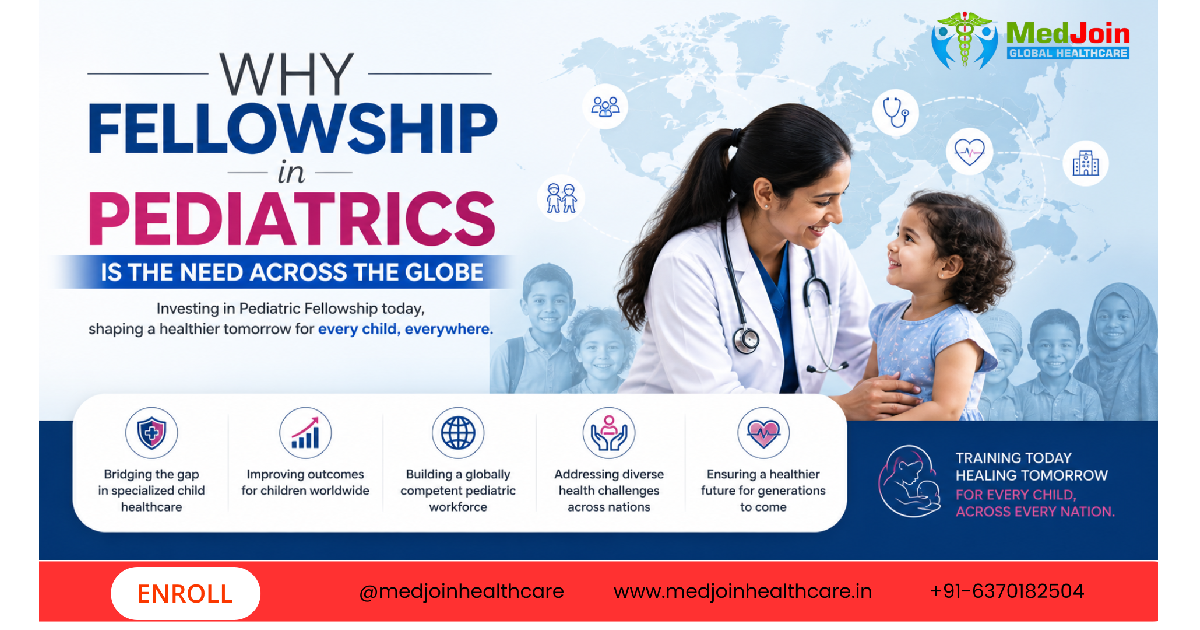
Why Fellowship in Pediatrics Is the Need Across the Globe
Global Imperative for Specialized Child Healthcare
Children are not just “small adults.” Their physiology, developmental needs, disease patterns, and psychological requirements are fundamentally different. Yet, across the globe, healthcare systems often struggle to provide specialized, consistent, and high-quality pediatric care.
In this context, Fellowship in Pediatrics has emerged as a crucial step in bridging the gap between basic medical training and advanced child healthcare expertise. With increasing complexities in childhood diseases, rising neonatal challenges, and global disparities in healthcare access, fellowship-trained pediatricians are no longer a luxury—they are a necessity.
This blog explores why pediatric fellowships are becoming essential worldwide, how they are shaping the future of healthcare, and why every modern healthcare system must prioritize them.
1. Understanding Fellowship in Pediatrics
A Fellowship in Pediatrics is an advanced training program undertaken after basic medical education (such as MBBS or MD Pediatrics). It focuses on:
- Specialized pediatric care
- Advanced diagnostic and treatment techniques
- Subspecialty training (e.g., neonatology, pediatric cardiology)
- Research and evidence-based medicine
These programs emphasize real-world clinical exposure, case-based learning, and mentorship, helping doctors transition from generalists to specialists.
2. The Unique Nature of Pediatric Medicine
2.1 Children Are Biologically Different
Children differ from adults in:
- Organ development
- Immune response
- Drug metabolism
- Disease progression
A treatment effective for adults may be ineffective—or even harmful—for children.
2.2 Developmental Considerations
Pediatric care involves:
- Physical growth monitoring
- Cognitive and behavioral development
- Emotional and psychological health
Doctors must understand developmental milestones and identify early signs of disorders.
2.3 Communication Challenges
Treating children requires:
- Communicating with both child and parents
- Building trust
- Managing anxiety and fear
These skills are rarely mastered without specialized training.
3. Rising Global Challenges in Child Health
3.1 Increasing Burden of Neonatal Conditions
Premature births, low birth weight, and birth complications remain major concerns worldwide.
Organizations like the World Health Organization highlight that neonatal conditions are among the leading causes of death in children under five.
Fellowship-trained pediatricians, especially in neonatology, are critical in reducing infant mortality.
3.2 Growth of Chronic Diseases in Children
Children today face conditions once considered adult-only, such as:
- Type 2 diabetes
- Obesity
- Hypertension
Managing these requires long-term, specialized care strategies.
3.3 Infectious Diseases and Emerging Threats
Despite medical advancements, infectious diseases remain a challenge, especially in developing nations.
Global events like the COVID-19 pandemic exposed gaps in pediatric preparedness and highlighted the need for trained specialists.
3.4 Mental Health Crisis Among Children
Child and adolescent mental health issues are rising globally, including:
- Anxiety disorders
- Depression
- Behavioral conditions
Pediatric fellowships increasingly incorporate mental health training, making doctors better equipped to handle these challenges.
4. Global Shortage of Pediatric Specialists
4.1 Uneven Distribution of Expertise
Many countries, particularly in low- and middle-income regions, face:
- Shortage of pediatric specialists
- Overburdened healthcare systems
- Limited access to advanced care
4.2 Urban-Rural Divide
Specialized pediatric care is often concentrated in cities, leaving rural populations underserved.
Fellowship-trained pediatricians can help:
- Expand outreach programs
- Strengthen regional healthcare systems
- Improve access to quality care
4.3 Need for Subspecialists
Modern pediatrics includes subspecialties such as:
- Neonatology
- Pediatric cardiology
- Pediatric neurology
- Pediatric oncology
Fellowships are the primary pathway to these fields.
5. How Fellowship in Pediatrics Enhances Clinical Skills
5.1 Advanced Diagnostic Expertise
Fellowships train doctors to:
- Identify rare and complex conditions
- Use advanced diagnostic tools
- Interpret pediatric-specific investigations
5.2 Evidence-Based Practice
Doctors learn to:
- Analyze clinical research
- Apply global treatment guidelines
- Stay updated with evolving medical knowledge
5.3 Critical Care Management
Pediatric emergencies require:
- Rapid decision-making
- Specialized interventions
- Multidisciplinary coordination
Fellowship programs provide hands-on training in critical care settings.
5.4 Holistic Care Approach
Pediatricians are trained to consider:
- Family dynamics
- Social determinants of health
- Long-term developmental outcomes
6. Impact on Global Healthcare Systems
6.1 Reduction in Child Mortality
Fellowship-trained pediatricians contribute to:
- Better neonatal care
- Early disease detection
- Improved treatment outcomes
6.2 Strengthening Public Health Initiatives
Programs like vaccination drives and nutrition campaigns rely heavily on skilled pediatricians.
Global organizations such as UNICEF emphasize the importance of trained professionals in improving child health indicators.
6.3 Improving Quality of Care
Specialized training leads to:
- Standardized treatment protocols
- Better patient outcomes
- Increased patient trust
7. Technological Advancements and Pediatric Fellowships
7.1 Integration of Digital Health
Modern pediatric care includes:
- Telemedicine
- Electronic health records
- Remote monitoring
Fellowships prepare doctors to use these tools effectively.
7.2 Role of Artificial Intelligence
AI is transforming pediatrics by enabling:
- Early disease detection
- Predictive analytics
- Personalized treatment plans
Fellowship-trained doctors are better equipped to integrate AI into clinical practice.
7.3 Advanced Medical Equipment
Handling neonatal ventilators, pediatric imaging tools, and ICU technologies requires specialized training.
8. Career Advantages for Doctors
8.1 Enhanced Professional Credibility
A fellowship demonstrates:
- Commitment to excellence
- Advanced expertise
- Specialized skills
8.2 Global Opportunities
Fellowship-trained pediatricians can work in:
- International hospitals
- Global health organizations
- Research institutions
8.3 Higher Earning Potential
Specialization often leads to:
- Better compensation
- Career stability
- Leadership roles
8.4 Academic and Research Pathways
Fellowships open doors to:
- Teaching positions
- Clinical research
- Policy-making roles
9. Role in Addressing Health Inequalities
9.1 Bridging Healthcare Gaps
Fellowship-trained doctors can:
- Serve underserved populations
- Improve access to care
- Reduce disparities
9.2 Community Health Impact
Pediatricians play a key role in:
- Nutrition programs
- School health initiatives
- Preventive care
9.3 Global Health Missions
Many pediatric specialists work with organizations like Doctors Without Borders, providing care in crisis zones.
10. The Future of Pediatrics
10.1 Personalized Medicine
Future pediatric care will focus on:
- Genetic profiling
- Individualized treatment plans
10.2 Preventive Healthcare
Early intervention will become central to:
- Reducing disease burden
- Improving quality of life
10.3 Interdisciplinary Collaboration
Pediatricians will increasingly collaborate with:
- Psychologists
- Nutritionists
- Social workers
10.4 Global Standardization of Care
Fellowship programs can help create:
- Uniform training standards
- Consistent quality of care worldwide
11. Challenges in Expanding Pediatric Fellowships
11.1 Limited Training Infrastructure
Many regions lack:
- Accredited programs
- Qualified mentors
- Clinical resources
11.2 Financial Barriers
Fellowships can be expensive, limiting access for many doctors.
11.3 Workload and Burnout
Balancing training with clinical duties can be demanding.
12. Why the World Cannot Ignore Pediatric Fellowships
Without specialized pediatric training:
- Child mortality rates may remain high
- Complex diseases may go untreated
- Healthcare inequalities may widen
Fellowships are not just educational programs—they are essential tools for global health improvement.
Investing in the Future of Humanity
Children represent the future of every nation. Ensuring their health is not just a medical responsibility—it is a societal priority.
Fellowship in Pediatrics equips doctors with:
- Advanced knowledge
- Critical skills
- Global perspective
As healthcare continues to evolve, the demand for highly trained pediatricians will only increase.
In a world facing complex health challenges, pediatric fellowships stand as a cornerstone of progress—saving lives, improving outcomes, and shaping a healthier future for generations to come.