
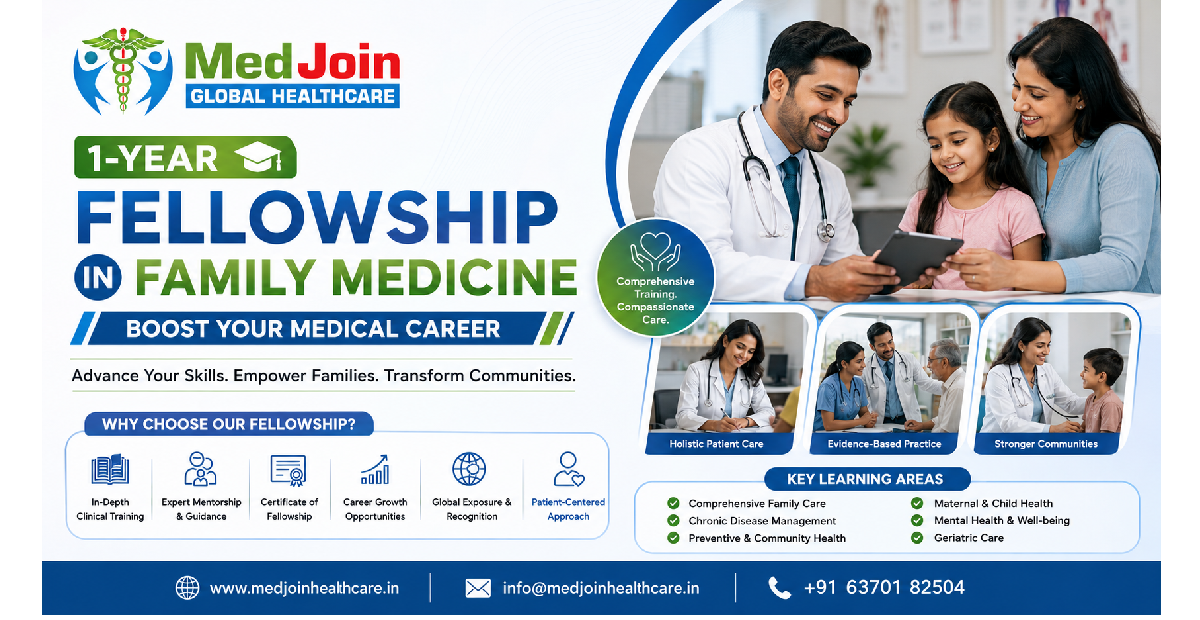
Healthcare systems across the world are evolving rapidly, creating an increasing demand for skilled physicians who can provide comprehensive, patient-centered, and continuous care. Family Medicine has emerged as one of the most important medical specialties, bridging the gap between preventive healthcare, primary care, chronic disease management, and community health.
For doctors seeking to expand their clinical expertise, improve patient outcomes, and advance their professional careers, a 1-Year Fellowship in Family Medicine offers an excellent opportunity. This specialized training program equips medical professionals with advanced knowledge, practical skills, and evidence-based approaches required to manage patients across all age groups and a wide spectrum of medical conditions.
Whether you are a recent MBBS graduate, a general practitioner, a medical officer, or a healthcare professional looking to strengthen your clinical capabilities, a Fellowship in Family Medicine can help you unlock new career opportunities and establish yourself as a trusted healthcare provider.
What is Family Medicine?
Family Medicine is a medical specialty dedicated to providing comprehensive healthcare services to individuals and families throughout their lives. Unlike specialists who focus on a specific organ system or disease, family physicians manage a broad range of health concerns affecting patients of all ages, genders, and backgrounds.
Family Medicine integrates:
- Preventive healthcare
- Acute care management
- Chronic disease treatment
- Health promotion
- Mental health support
- Geriatric care
- Pediatric care
- Women's health
- Lifestyle medicine
Family physicians serve as the first point of contact for patients and play a critical role in coordinating care among specialists when necessary.
Growing Demand for Family Medicine Professionals
The healthcare landscape is changing due to:
- Increasing chronic diseases
- Aging populations
- Rising healthcare costs
- Greater emphasis on preventive care
- Need for community-based healthcare
Healthcare organizations worldwide are actively seeking doctors trained in Family Medicine because they can provide holistic and cost-effective care.
The demand is particularly strong in:
- India
- United Kingdom
- UAE
- Saudi Arabia
- Qatar
- Oman
- Canada
- Australia
- New Zealand
Family physicians are becoming essential members of healthcare systems focused on improving accessibility and continuity of care.
Why Pursue a 1-Year Fellowship in Family Medicine?
A Fellowship in Family Medicine provides structured training that helps doctors develop expertise beyond basic medical education.
Key Benefits Include:
1. Enhanced Clinical Knowledge
Participants gain in-depth understanding of:
- Internal Medicine
- Pediatrics
- Obstetrics and Gynecology
- Geriatrics
- Psychiatry
- Emergency Medicine
- Preventive Healthcare
This broad knowledge base enables physicians to confidently manage diverse patient populations.
2. Improved Diagnostic Skills
Family physicians encounter patients presenting with undifferentiated symptoms.
The fellowship enhances abilities to:
- Identify underlying conditions
- Formulate differential diagnoses
- Order appropriate investigations
- Develop treatment plans
Strong diagnostic skills improve patient outcomes and clinical confidence.
3. Better Career Opportunities
Doctors with specialized training often enjoy:
- Increased employability
- Better salary prospects
- Leadership opportunities
- Career advancement
- Enhanced professional recognition
Employers highly value clinicians trained in Family Medicine due to their versatility.
4. Comprehensive Patient Management
Participants learn how to manage:
- Hypertension
- Diabetes
- Thyroid disorders
- Asthma
- COPD
- Heart disease
- Infectious diseases
- Mental health conditions
This enables physicians to provide continuity of care and reduce unnecessary referrals.
Objectives of a Family Medicine Fellowship
The fellowship aims to prepare physicians to:
- Deliver comprehensive healthcare
- Promote preventive medicine
- Manage chronic illnesses
- Address community health needs
- Improve healthcare accessibility
- Practice evidence-based medicine
- Enhance patient communication
- Coordinate multidisciplinary care
Graduates emerge as competent, confident, and patient-centered healthcare professionals.
Who Should Join the Program?
The fellowship is ideal for:
MBBS Graduates
Fresh graduates can strengthen their clinical foundation and improve career prospects.
General Practitioners
GPs can update their knowledge and gain advanced skills in patient management.
Medical Officers
Doctors working in hospitals, clinics, and healthcare organizations can broaden their expertise.
Primary Care Physicians
Physicians seeking career advancement in community healthcare benefit significantly.
International Medical Graduates
Doctors planning global healthcare careers can enhance their qualifications.
Core Curriculum of a 1-Year Fellowship in Family Medicine
A comprehensive fellowship covers various disciplines essential to primary care practice.
Internal Medicine
Topics include:
- Hypertension
- Diabetes Mellitus
- Cardiovascular diseases
- Respiratory disorders
- Gastrointestinal diseases
- Endocrine disorders
- Renal diseases
Participants learn evidence-based approaches for diagnosis and management.
Pediatrics
Training includes:
- Growth and development
- Immunization schedules
- Pediatric infections
- Nutritional disorders
- Childhood illnesses
- Neonatal care
Family physicians frequently care for children and adolescents, making pediatric expertise essential.
Women's Health
Modules cover:
- Antenatal care
- Postnatal care
- Menstrual disorders
- Family planning
- Menopause management
- Breast health
These skills allow physicians to provide comprehensive care to female patients.
Geriatric Medicine
As populations age, geriatric expertise becomes increasingly valuable.
Topics include:
- Age-related disorders
- Dementia
- Polypharmacy
- Fall prevention
- Osteoporosis
- Elderly patient care
Emergency Medicine
Participants develop skills in:
- Initial emergency assessment
- Basic life support
- Advanced cardiac life support concepts
- Trauma management
- Acute medical emergencies
Prompt recognition and stabilization of emergencies save lives.
Psychiatry and Mental Health
Mental health disorders are increasingly common.
Training includes:
- Depression
- Anxiety disorders
- Stress management
- Substance abuse
- Counseling techniques
Family physicians often serve as the first point of contact for mental health concerns.
Preventive Medicine
Prevention is a cornerstone of Family Medicine.
Topics include:
- Health screening
- Vaccination programs
- Lifestyle modification
- Nutrition counseling
- Tobacco cessation
- Public health interventions
Practical Clinical Training
A high-quality fellowship emphasizes hands-on clinical learning.
Participants gain experience through:
- Case discussions
- Clinical simulations
- Patient consultations
- Skill workshops
- Interactive learning sessions
Practical exposure strengthens real-world clinical competence.
Evidence-Based Medicine in Family Practice
Modern healthcare requires physicians to make informed decisions using current scientific evidence.
The fellowship teaches:
- Critical appraisal of literature
- Clinical guidelines
- Research interpretation
- Evidence-based decision making
This ensures high-quality patient care.
Chronic Disease Management
Chronic illnesses represent a major healthcare burden.
Family physicians play a central role in managing:
Diabetes
Skills include:
- Screening
- Diagnosis
- Medication management
- Lifestyle interventions
- Monitoring complications
Hypertension
Participants learn:
- Risk assessment
- Blood pressure control
- Patient education
- Long-term follow-up
Cardiovascular Disease
Training focuses on:
- Prevention
- Early detection
- Risk reduction
- Ongoing management
Lifestyle Medicine and Preventive Care
Lifestyle-related diseases continue to rise globally.
Family physicians learn strategies for:
- Weight management
- Exercise counseling
- Nutritional guidance
- Smoking cessation
- Stress reduction
These interventions significantly improve long-term health outcomes.
Communication Skills Development
Excellent communication improves:
- Patient satisfaction
- Treatment adherence
- Clinical outcomes
The fellowship develops skills in:
- Patient interviewing
- Shared decision making
- Counseling
- Conflict resolution
- Empathy-based communication
Telemedicine and Digital Healthcare
Technology is transforming healthcare delivery.
Participants learn:
- Virtual consultations
- Remote patient monitoring
- Electronic health records
- Digital health tools
These competencies are increasingly valuable in modern practice.
Leadership and Practice Management
Many physicians eventually assume leadership roles.
The fellowship includes:
- Clinical leadership
- Healthcare administration
- Quality improvement
- Team management
- Ethical decision-making
These skills support long-term career growth.
Research and Academic Development
Participants may engage in:
- Clinical audits
- Research projects
- Case reports
- Scientific writing
Research experience enhances professional credibility and academic opportunities.
Benefits for Patients
Doctors trained in Family Medicine provide:
Holistic Care
Patients receive comprehensive management rather than fragmented treatment.
Continuity of Care
Long-term doctor-patient relationships improve outcomes.
Preventive Focus
Early detection reduces complications and healthcare costs.
Better Coordination
Family physicians coordinate specialist referrals and follow-up care effectively.
Career Opportunities After Completing the Fellowship
Graduates can pursue various roles:
Family Physician
Provide comprehensive primary care services in clinics and hospitals.
General Practitioner
Deliver frontline healthcare in community settings.
Medical Officer
Work in government or private healthcare institutions.
Primary Care Consultant
Lead patient-centered care initiatives.
Corporate Healthcare Physician
Support employee health and wellness programs.
Telemedicine Physician
Provide remote healthcare services through digital platforms.
Academic Faculty
Contribute to medical education and training.
Global Career Prospects
Family Medicine qualifications are increasingly recognized internationally.
Opportunities exist in:
- India
- UAE
- Saudi Arabia
- Qatar
- Oman
- Bahrain
- United Kingdom
- Australia
- Canada
- Africa
Many healthcare systems prioritize strong primary care networks, increasing demand for trained family physicians.
Salary and Professional Growth
Family physicians often enjoy:
- Competitive compensation
- Stable employment
- Diverse practice settings
- Professional recognition
- Career flexibility
Additional qualifications can significantly improve earning potential.
Why Employers Prefer Family Medicine Trained Doctors
Healthcare organizations value physicians who can:
- Manage multiple conditions
- Reduce unnecessary referrals
- Improve patient satisfaction
- Enhance continuity of care
- Support preventive healthcare
These capabilities contribute to better healthcare outcomes and organizational efficiency.
Key Skills Gained Through the Fellowship
Graduates develop expertise in:
- Clinical assessment
- Diagnostic reasoning
- Preventive medicine
- Chronic disease management
- Emergency care
- Patient communication
- Leadership
- Evidence-based practice
These skills remain valuable throughout a physician's career.
Building Patient Trust and Long-Term Relationships
Family physicians often care for patients across multiple generations.
This continuity enables:
- Better understanding of family history
- Personalized healthcare plans
- Strong therapeutic relationships
- Improved adherence to treatment
Trust remains one of the most important components of successful medical practice.
The Future of Family Medicine
Healthcare systems worldwide increasingly recognize the value of Family Medicine.
Future trends include:
- Expanded primary care services
- Greater use of telemedicine
- Integrated healthcare delivery
- Preventive health initiatives
- Population health management
Doctors trained in Family Medicine will continue to play a critical role in these developments.
Why Choose a 1-Year Fellowship Instead of Short-Term Courses?
While short-term courses provide limited exposure, a structured fellowship offers:
- Comprehensive curriculum
- Extensive clinical learning
- Mentorship opportunities
- Advanced patient management skills
- Greater professional credibility
The depth of training makes a meaningful difference in clinical practice.
Success Factors for Fellowship Participants
To maximize benefits, participants should:
- Engage actively in learning
- Participate in case discussions
- Apply evidence-based practices
- Seek mentorship
- Focus on patient-centered care
Commitment to continuous improvement leads to professional excellence.
A 1-Year Fellowship in Family Medicine is one of the most valuable investments a doctor can make in their professional journey. It provides comprehensive clinical training, strengthens diagnostic capabilities, enhances patient management skills, and prepares physicians to meet the growing healthcare needs of modern society.
As healthcare systems increasingly prioritize preventive care, chronic disease management, and community-based services, the demand for highly trained family physicians continues to rise. Completing a Fellowship in Family Medicine can open doors to rewarding career opportunities in hospitals, clinics, corporate healthcare, telemedicine, academic institutions, and international healthcare settings.
Whether you are an MBBS graduate seeking specialization, a practicing physician aiming to upgrade your skills, or a healthcare professional looking to advance your career, a 1-Year Fellowship in Family Medicine can help you achieve your goals, improve patient outcomes, and establish yourself as a trusted leader in primary healthcare.
Join a 1-Year Fellowship in Family Medicine today and take the next step toward clinical excellence, professional growth, and a successful medical career.