
The globalization of healthcare has created an increasing demand for advanced clinical training programs that transcend geographical boundaries. Among the countries emerging as a hub for medical education and skill enhancement, India stands out due to its diverse patient population, high clinical exposure, cost-effective training models, and rapidly evolving healthcare infrastructure. A fellowship program in India designed for doctors across the globe offers a unique blend of academic excellence, hands-on clinical exposure, and cross-cultural medical practice.
This document outlines a comprehensive framework for developing and implementing a fellowship program in India that integrates hands-on training, research opportunities, and global collaboration for physicians from different parts of the world.
Rationale for Fellowship Programs in India
1. High Patient Volume and Clinical Diversity
India’s healthcare system caters to a vast and diverse population, providing exposure to a wide spectrum of diseases—ranging from common conditions to rare and complex cases. This diversity is invaluable for doctors seeking practical, real-world experience.
2. Cost-Effective Training
Compared to Western countries, medical training in India is significantly more affordable while maintaining high standards. This makes it accessible to doctors from low- and middle-income countries.
3. Skilled Faculty and Centers of Excellence
India hosts numerous tertiary care hospitals and academic institutions with highly experienced faculty, many of whom are internationally trained.
4. Growing Medical Tourism
India is a leading destination for medical tourism, which ensures exposure to international patients and global healthcare expectations.
Objectives of the Fellowship Program
- To provide advanced clinical training in specialized fields.
- To enhance procedural and surgical skills through hands-on exposure.
- To foster research and evidence-based medical practice.
- To promote global collaboration and knowledge exchange.
- To develop leadership and decision-making skills in clinical settings.
Target Audience
The fellowship program is designed for:
- MBBS/MD/MS or equivalent qualified doctors
- Specialists seeking sub-specialization
- International medical graduates (IMGs)
- Practicing physicians looking to upgrade clinical skills
- Doctors from developing countries seeking exposure to high-volume clinical settings
Program Structure
Duration
- Short-term: 3–6 months
- Medium-term: 6–12 months
- Long-term: 1–2 years
Modes of Training
- Full-time on-site training
- Hybrid (online + clinical immersion)
- Modular training (skill-based modules)
Specializations Offered
The fellowship program may include but is not limited to:
- Fellowship in Urology
- Fellowship in 2D Echocardiography
- Fellowship in Neurology
- Fellowship in Internal Medicine
- Fellowship in Obstetrics and Gynaecology
- Fellowship in Advanced Nursing Care
- Fellowship in Intensive Care Medicine
- Fellowship in Family Medicine
- Fellowship in Emergency Medicine
- Fellowship in Clinical Oncology
- Fellowship in Haematology
- Fellowship in Clinical Pharmacology
- Fellowship in Gastroenterology
- Fellowship in Anaesthesiology
- Fellowship in Nephrology
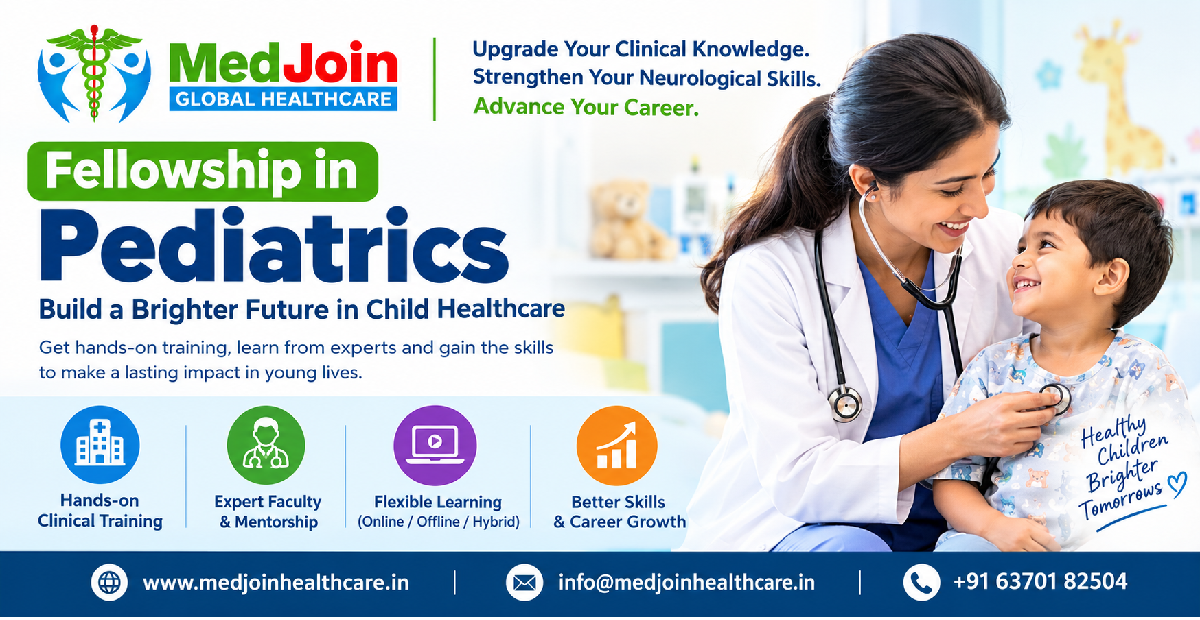
- Fellowship in Pediatrics
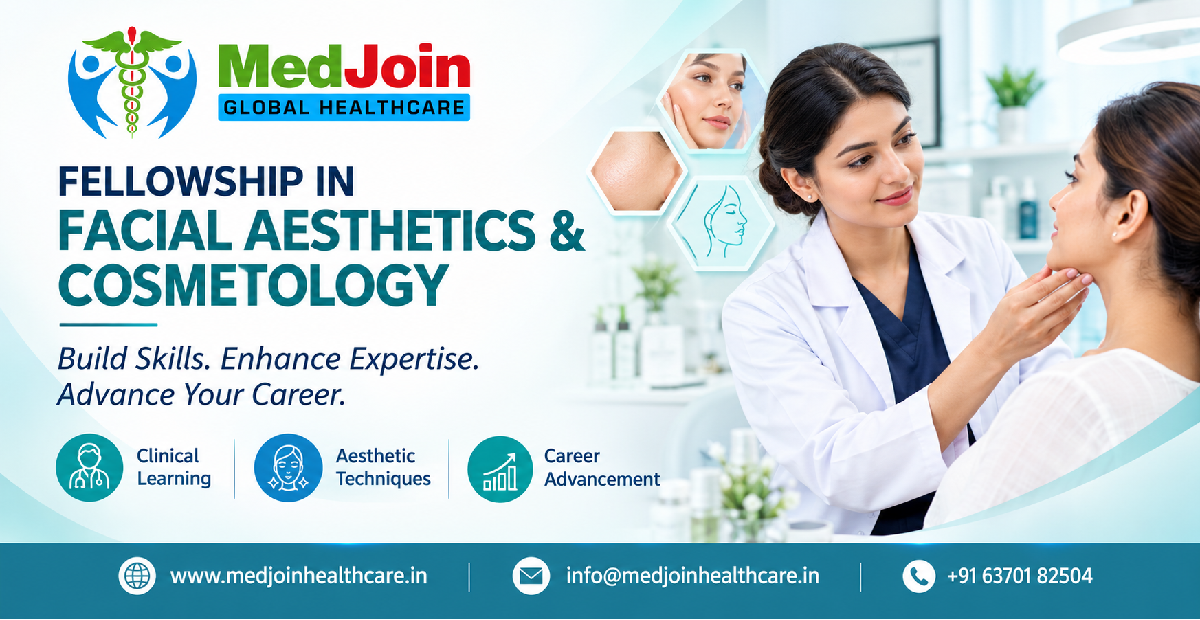
- Fellowship in Facial Aesthetic and Cosmetology
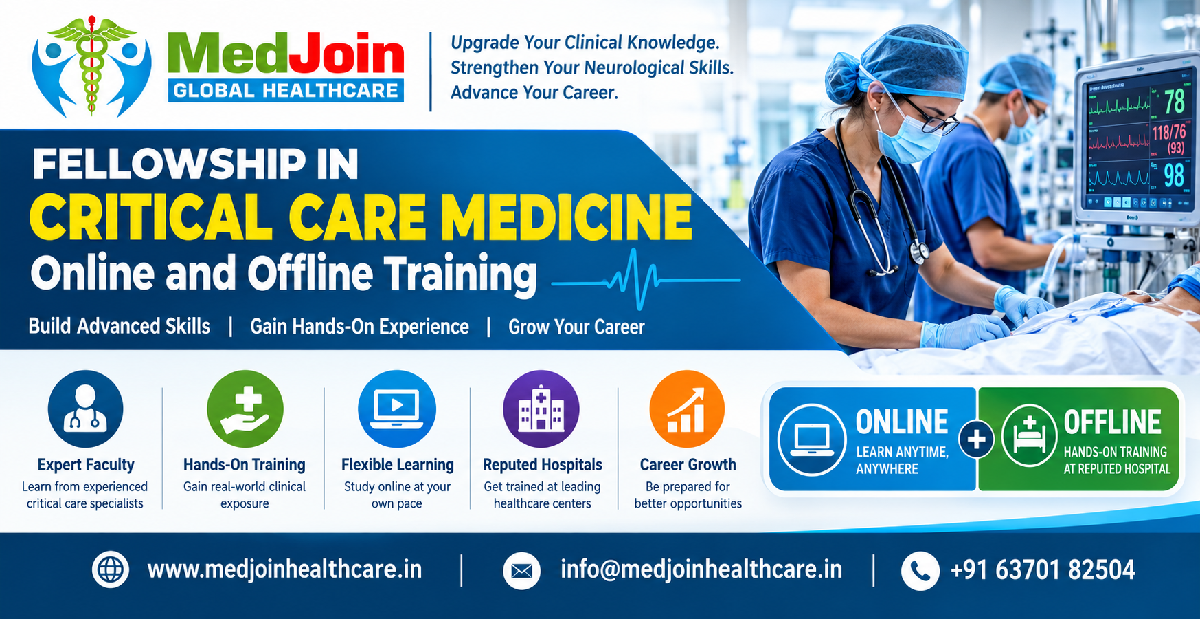
- Fellowship in Critical Care Medicine
- Fellowship in Dermatology
- Fellowship in Clinical Cardiology
- Fellowship in Interventional Cardiology
- Fellowship in Rheumatology
- Fellowship in Neonatology
- Fellowship in Orthopedics
- Fellowship in Diabetes Mellitus
- Fellowship in Fertility
- Fellowship in IVF
Curriculum Design
1. Clinical Training
- Ward rounds with consultants
- Case-based discussions
- OPD (Outpatient Department) exposure
- ICU rotations
- Emergency care exposure
2. Hands-on Procedures
Fellows will actively participate in procedures under supervision, including:
- Diagnostic procedures
- Minor and major surgeries
- Interventional techniques
- Use of advanced medical equipment
3. Simulation-Based Training
- Skill labs with mannequins and simulators
- Emergency response training
- Surgical simulation modules
4. Academic Activities
- Weekly seminars and lectures
- Journal clubs
- Case presentations
- Grand rounds
5. Research and Publications
- Mandatory research projects
- Guidance on publishing in peer-reviewed journals
- Training in research methodology and biostatistics
Teaching Methodology
- Problem-based learning (PBL)
- Evidence-based medicine (EBM)
- Interactive workshops
- Multidisciplinary team discussions
- Mentorship-based training
Hands-on Training Component
The defining feature of this fellowship is its strong emphasis on hands-on training.
Key Elements:
- Supervised Clinical Practice
Fellows are allowed to perform procedures under expert supervision, gradually increasing independence. - Skill Progression Model
- Observation
- Assisted performance
- Independent execution (under supervision)
- Logbook Maintenance
Fellows must maintain a detailed record of procedures performed. - Competency-Based Assessment
Evaluation based on demonstrated skills rather than just theoretical knowledge.
Infrastructure Requirements
1. Hospital Facilities
- Multi-specialty hospital with high patient load
- ICU, OT complexes, emergency departments
2. Training Facilities
- Lecture halls
- Simulation labs
- Digital learning platforms
3. Accommodation
- On-campus or nearby housing for international fellows
Faculty and Mentorship
Faculty Roles:
- Clinical supervision
- Academic teaching
- Research guidance
Mentorship Model:
Each fellow is assigned a mentor responsible for:
- Academic progress
- Clinical skill development
- Career guidance
Accreditation and Certification
To ensure global recognition:
- Accreditation by national medical councils
- Collaboration with international medical bodies
- Certification upon completion based on competency and assessment
Admission Process
Eligibility Criteria:
- Recognized medical degree
- Valid license to practice
- English proficiency (for international candidates)
Selection Process:
- Application review
- Statement of purpose
- Interview (online/offline)
- Credential verification
Evaluation and Assessment
Continuous Assessment:
- Clinical performance
- Participation in academic activities
- Skill competency
Final Assessment:
- Practical examination
- Viva voce
- Research project evaluation
Benefits of the Fellowship Program
For Doctors:
- Enhanced clinical skills
- International exposure
- Career advancement
- Networking opportunities
For Institutions:
- Global collaboration
- Knowledge exchange
- Increased reputation
For Healthcare Systems:
- Improved quality of care
- Skill transfer to underserved regions
Challenges and Solutions
1. Licensing and Legal Issues
Solution: Structured observership-to-hands-on transition with regulatory compliance.
2. Cultural and Language Barriers
Solution: Orientation programs and language support.
3. Standardization of Training
Solution: Competency-based curriculum and regular audits.
Role of Technology
- Telemedicine integration
- Online learning platforms
- Virtual simulations
- AI-based diagnostics training
International Collaboration
- Partnerships with global universities
- Exchange programs
- Joint research initiatives
Ethical Considerations
- Patient consent for trainee involvement
- Data confidentiality
- Adherence to global medical ethics standards
Future Scope
- Expansion into niche specialties
- Integration with global certification programs
- Development of digital fellowship platforms
Case Study Model (Illustrative)
A cardiology fellowship program in a tertiary care hospital in India demonstrates:
- Exposure to 20–30 patients daily
- Participation in angiographies and angioplasties
- Research publication opportunities
- Hands-on ICU management
Implementation Roadmap
- Needs assessment
- Curriculum development
- Faculty training
- Infrastructure setup
- Accreditation
- Marketing and outreach
- Program launch
- Continuous evaluation
Why MedJoin Global Healthcare?
Choosing the right fellowship platform is critical for any doctor. What makes MedJoin Global Healthcare stand out is that it doesn’t just offer courses—it creates a complete career pathway combining training, clinical exposure, and job placement.
1. 100% Placement Assurance (Biggest Differentiator)
Unlike traditional fellowships where outcomes are uncertain, MedJoin guarantees placement after training.
- Immediate hospital deployment from Day 1
- Transition from trainee → full-time doctor
- Reduced career uncertainty
This “learn → practice → earn → get placed” model directly bridges the gap between education and employment.
2. Real Hands-on Clinical Training
Most programs remain theoretical—but MedJoin focuses heavily on practical exposure:
- Live hospital environment
- Direct patient interaction
- Diagnostic & procedural training
- Supervision by senior consultants
This ensures doctors gain confidence in real-world clinical decision-making, not just textbook knowledge.
3. Earn While You Learn (Stipend-Based Training)
A major concern for doctors is unpaid training. MedJoin addresses this by offering:
- Stipend during initial training period
- Financial support while learning
- No career gap or income loss
This makes the program sustainable and accessible, especially for early-career doctors.
4. Strong Hospital Network
Training is conducted in real multi-specialty hospitals, not just classrooms.
- Exposure to high patient volume
- Experience with diverse clinical cases
- Work alongside experienced specialists
This environment accelerates skill development significantly.
5. Industry-Driven Curriculum
The curriculum is designed based on actual hospital needs, not academic theory alone:
- Case-based learning
- Clinical reasoning focus
- Procedure-oriented modules
- Skill-based assessments
This ensures doctors become job-ready from day one.
6. Global Recognition & Career Opportunities
MedJoin offers certifications that:
- Add international value to your profile
- Improve chances for global opportunities
- Support further specialization
This is especially useful for doctors aiming for international careers or exposure.
7. Flexible + Hybrid Learning Model
The platform combines:
- Online learning (lectures, case studies)
- Offline hospital training
- Self-paced modules
This allows working doctors to upgrade skills without stopping practice.
8. Wide Range of Specializations
Doctors can choose from multiple high-demand fields:
- Cardiology
- Critical Care
- Emergency Medicine
- Diabetology
- Dermatology
- Pediatrics
- Neurology
- Urology...etc
This flexibility helps tailor training to individual career goals.
9. Mentorship by Experienced Doctors
- One-on-one guidance
- Clinical supervision
- Career mentoring
This ensures structured growth rather than random exposure.
10. Career-Focused Ecosystem (Not Just a Course)
MedJoin is not just an education provider—it’s an end-to-end career platform:
- Training + Certification
- Clinical exposure
- Placement support
- Long-term career growth
It’s designed to convert medical graduates into confident, independent clinicians.
Summary
- ✔ Hands-on training in real hospitals
- ✔ Stipend during training
- ✔ 100% placement assurance
- ✔ Industry-oriented curriculum
- ✔ Global certification
- ✔ Flexible learning model
If traditional fellowships are education-focused, MedJoin is career-focused.
It solves the biggest problems doctors face:
- Lack of clinical exposure
- No structured mentorship
- Uncertain job prospects
By combining all three—training, earning, and placement—MedJoin creates a complete pathway from learning to employment.
MedJoin Global in India offers a uniquely positioned ecosystem for fellowship programs that combine academic rigor with extensive hands-on clinical exposure. By developing structured, internationally accessible fellowship programs, India can become a global hub for advanced medical training. Such initiatives not only benefit individual doctors but also contribute to strengthening healthcare systems worldwide.