
The field of medicine is evolving rapidly as healthcare systems across the world face increasing patient loads, complex medical emergencies, and the need for specialized care. Among all medical specialties, Emergency Medicine (EM) has emerged as one of the most dynamic and essential disciplines. Emergency departments are the first point of care for patients suffering from trauma, cardiac arrest, stroke, poisoning, accidents, and life-threatening conditions. As a result, hospitals require highly skilled physicians who can make rapid clinical decisions and provide life-saving treatment in critical moments.
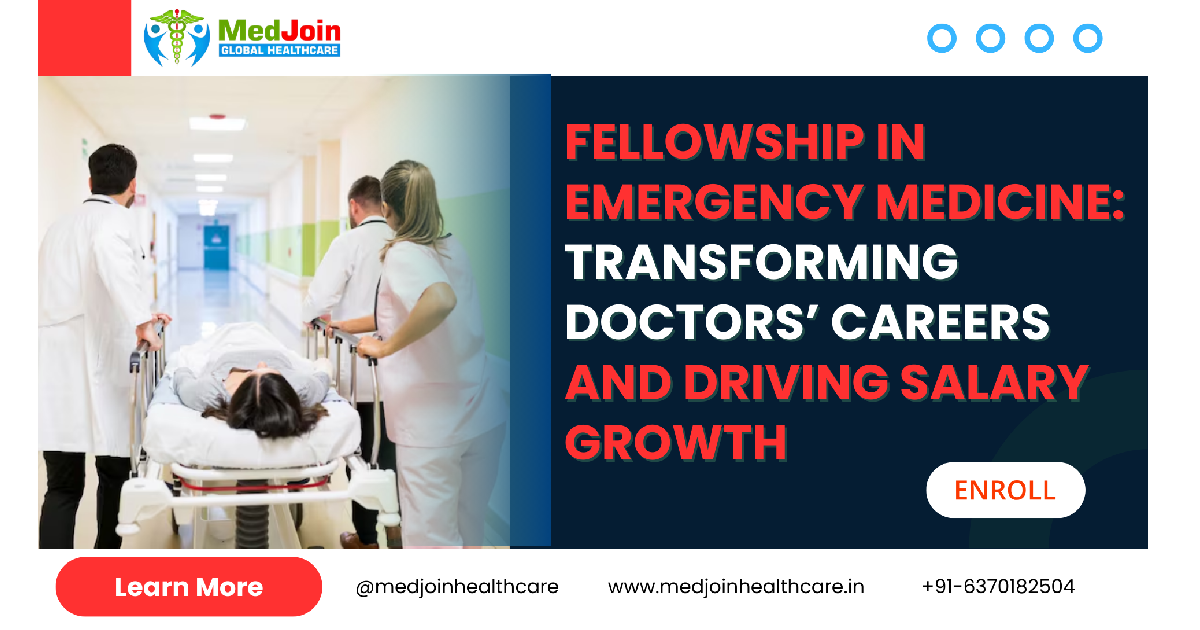
In recent years, Fellowship in Emergency Medicine (FEM) programs have gained immense popularity among medical graduates and practicing doctors. These fellowships provide specialized training in managing acute medical conditions, trauma cases, and emergency procedures. They are designed to enhance the clinical skills, confidence, and professional competence of physicians working in emergency departments.
For many doctors, pursuing a fellowship in emergency medicine is not only about gaining expertise but also about accelerating career growth, improving employment opportunities, and increasing income potential. With growing demand for emergency care specialists worldwide, hospitals are actively recruiting doctors with specialized emergency medicine training.
According to industry estimates, professionals completing a Fellowship in Emergency Medicine in India can expect starting salaries ranging from ₹10–15 lakhs per year, depending on their experience, skills, and institutional affiliation.
Beyond the immediate salary benefits, emergency medicine fellowships also open doors to leadership roles, hospital administration positions, research opportunities, and international career pathways.
This article explores in depth:
- What a Fellowship in Emergency Medicine is
- How it enhances doctors’ career prospects
- The impact on salary growth
- Opportunities available after the fellowship
- Future demand for emergency medicine specialists
By the end of this comprehensive discussion, it becomes clear that a fellowship in emergency medicine is not just an academic qualification but a strategic career investment for physicians seeking professional growth and financial advancement.
Understanding Fellowship in Emergency Medicine
What is Emergency Medicine?
Emergency medicine is a medical specialty focused on diagnosis and treatment of acute illnesses and injuries that require immediate medical attention. Emergency physicians are responsible for stabilizing patients, managing life-threatening conditions, and coordinating care with other specialties.
Typical cases handled in emergency departments include:
- Trauma and accident cases
- Cardiac emergencies
- Stroke and neurological emergencies
- Poisoning and drug overdose
- Severe infections and sepsis
- Respiratory failure
- Obstetric emergencies
Because emergencies require rapid decision-making and advanced clinical skills, hospitals prefer doctors with specialized training in emergency medicine.
What is a Fellowship in Emergency Medicine?
A Fellowship in Emergency Medicine (FEM) is a specialized training program designed for doctors who want to develop expertise in emergency care.
These programs typically last 1–2 years, depending on the institution and training structure.
They are often offered by:
- Teaching hospitals
- Medical universities
- Healthcare organizations
- Professional medical associations
The fellowship focuses on both clinical training and academic development, ensuring that physicians gain practical experience in emergency departments while learning advanced theoretical concepts.
Eligibility Criteria
To pursue a fellowship in emergency medicine, candidates usually need:
- MBBS degree
- Medical registration with the national medical council
- Internship completion
- Clinical experience (sometimes preferred)
In some cases, doctors with postgraduate qualifications such as MD or DNB may also pursue advanced fellowships.
Duration and Structure
Most fellowship programs include:
- Clinical Training
- Emergency Department Rotations
- Simulation Training
- Workshops and Skill Labs
- Research and Case Studies
- Assessments and Certification
The training emphasizes hands-on learning, enabling doctors to handle real-life emergency situations effectively.
Why Emergency Medicine is Becoming a High-Demand Specialty
The demand for emergency medicine specialists has increased significantly due to multiple factors.
Rising Medical Emergencies
Millions of people require emergency medical care every year due to:
- Road accidents
- Cardiac diseases
- Stroke
- Industrial injuries
- Natural disasters
For example, India alone reports hundreds of daily deaths from road accidents, highlighting the urgent need for trained emergency physicians.
Shortage of Emergency Specialists
Many hospitals still rely on general physicians to manage emergency departments. However, emergency medicine requires specialized training.
Because of this gap, doctors with fellowship training are highly valued.
Expansion of Healthcare Infrastructure
Healthcare infrastructure is expanding rapidly, with:
- New hospitals
- Trauma centers
- Emergency response systems
- Air ambulance services
All these developments require qualified emergency medicine professionals.
Career Benefits of Fellowship in Emergency Medicine
1. Enhanced Clinical Skills
One of the most significant benefits of pursuing a fellowship is the development of advanced clinical skills.
Doctors learn to manage:
- Cardiac arrest
- Polytrauma
- Respiratory emergencies
- Shock
- Toxicology cases
They also become proficient in procedures such as:
- Intubation
- Defibrillation
- Central line insertion
- Ultrasound-guided interventions
These skills make them valuable assets to hospitals.
2. Professional Recognition
A fellowship certification demonstrates that a doctor has received advanced training and expertise in emergency care.
This improves credibility among:
- Hospitals
- Medical institutions
- Patients
- Healthcare organizations
Many institutions recognize fellowship training as a mark of professional excellence.
3. Better Job Opportunities
Doctors with emergency medicine fellowships can work in:
- Emergency departments
- Trauma centers
- Intensive care units
- Ambulance services
- Disaster management teams
They may also work as:
- Emergency consultants
- Hospital administrators
- Medical educators
4. Global Career Opportunities
Emergency medicine is a recognized specialty in many countries including:
- United States
- United Kingdom
- Australia
- Canada
- Middle East nations
Doctors with fellowship training often have better chances of securing international positions.
Salary Growth After Fellowship in Emergency Medicine
Entry-Level Salary
Doctors who complete a fellowship in emergency medicine typically start with salaries between ₹10 lakh and ₹15 lakh annually in India.
This range may vary based on:
- Location
- Hospital reputation
- Doctor’s experience
- Additional certifications
Salary Growth With Experience
Emergency medicine physicians can expect significant salary growth over time.
Typical salary progression:
| Experience Level | Monthly Salary |
|---|---|
| Entry level | ₹80,000 – ₹1,20,000 |
| 3–5 years | ₹1,50,000 – ₹2,50,000 |
| 6–10 years | ₹2,50,000 – ₹5,00,000 |
| Senior consultants | ₹5,00,000+ |
Senior specialists with extensive experience can earn ₹2.5 lakh to ₹12 lakh per month in high-end hospitals, depending on their role and expertise.
Salary Comparison: With vs Without Fellowship
Without Fellowship
General physicians working in emergency departments often earn lower salaries because they lack specialized training.
With Fellowship
Emergency medicine specialists are more likely to receive:
- Higher salaries
- Leadership roles
- Specialized positions
Some doctors have reported significant income increases after completing emergency medicine fellowships, as specialized training improves their career positioning.
Leadership and Career Advancement
A fellowship can also lead to leadership positions.
Examples include:
- Emergency Department Head
- Trauma Center Director
- Hospital Quality Manager
- Medical Educator
Doctors in these roles often receive higher compensation and professional recognition.
Academic and Research Opportunities
Emergency medicine fellowships also provide opportunities in:
- Clinical research
- Medical education
- Public health initiatives
Doctors may publish research papers and participate in international conferences.
Entrepreneurship Opportunities
Some doctors leverage their emergency medicine expertise to start:
- Emergency clinics
- Training centers
- Medical simulation labs
- Telemedicine services
These ventures can significantly increase income.
Future of Emergency Medicine
Emergency medicine is expected to grow rapidly due to:
- Increasing population
- Urbanization
- Rising trauma cases
- Aging population
- Technological advancements
Healthcare systems worldwide are investing heavily in emergency care infrastructure.
This trend will continue to increase demand for emergency medicine specialists.
Challenges in Emergency Medicine
Despite its advantages, emergency medicine also presents challenges:
- High stress levels
- Long shifts
- Night duties
- Burnout risk
However, doctors who are passionate about acute care often find the specialty highly rewarding.
A Fellowship in Emergency Medicine is becoming an increasingly valuable qualification for doctors seeking career advancement in modern healthcare systems.
The fellowship provides:
- Advanced clinical expertise
- Improved employment opportunities
- Higher salary potential
- Global career prospects
- Leadership and research opportunities
Although the training requires dedication and hard work, the long-term benefits can be substantial.
As healthcare systems continue to expand and the demand for emergency care grows, doctors with specialized emergency medicine training will play a crucial role in saving lives and improving patient outcomes.
For ambitious physicians looking to build a dynamic and financially rewarding career, pursuing a fellowship in emergency medicine can be a transformative step toward professional success.