
Why Echocardiography Is Becoming an Essential Skill in Modern Healthcare
Cardiovascular diseases represent one of the most significant healthcare challenges worldwide. With increasing cases of coronary artery disease, hypertension, heart failure, valvular heart disease, cardiomyopathies, and congenital cardiac disorders, healthcare professionals need advanced diagnostic knowledge to identify cardiovascular abnormalities and support appropriate patient management.
Among the various diagnostic techniques used in cardiovascular medicine, two-dimensional echocardiography (2D Echo) has become an indispensable tool.
Echocardiography uses ultrasound waves to generate images of the heart, enabling clinicians to assess cardiac structures, chamber dimensions, ventricular function, valvular abnormalities, and blood flow patterns.
Unlike many other cardiac imaging modalities, standard transthoracic echocardiography is non-invasive, does not involve ionizing radiation, and can often be performed at the patient's bedside.
These advantages make echocardiography particularly valuable in hospitals, cardiac centers, emergency departments, intensive care units, and outpatient clinics.
As healthcare delivery continues to evolve, doctors increasingly seek structured education in echocardiography to strengthen their understanding of cardiovascular diagnosis.
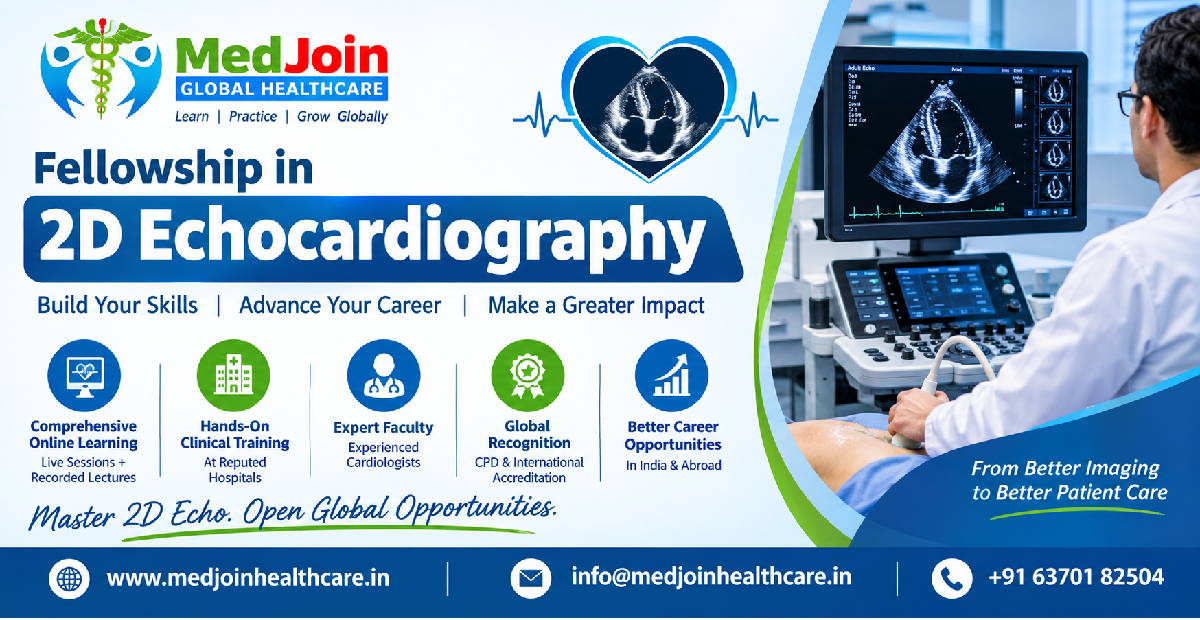
A Fellowship in 2D Echocardiography Course in India can provide doctors with an opportunity to develop theoretical knowledge, improve image interpretation skills, understand cardiac ultrasound techniques, and gain supervised clinical experience where available.
For MBBS doctors, general physicians, internal medicine specialists, emergency medicine practitioners, and other eligible medical professionals, echocardiography education can be a valuable addition to their existing clinical expertise.
However, the professional scope of performing, interpreting, and independently reporting echocardiograms depends on qualifications, competence, institutional privileges, and applicable regulatory requirements. A fellowship certificate alone does not automatically confer specialist status or independent practice rights.
This comprehensive guide explores the importance of echocardiography, fellowship eligibility, course curriculum, training methodology, clinical applications, career opportunities, and factors doctors should consider before choosing a program.
It also explains how structured fellowship education through MedJoin Global Healthcare can support continuous professional development in cardiovascular imaging.
Understanding 2D Echocardiography: The Foundation of Modern Cardiac Imaging
What Is 2D Echocardiography?
Two-dimensional echocardiography is a diagnostic ultrasound technique that produces real-time, cross-sectional images of the heart.
It allows healthcare professionals to visualize cardiac structures and evaluate their movements throughout the cardiac cycle.
A conventional 2D echocardiography examination provides information about the heart's anatomy and mechanical function.
During the examination, a transducer is positioned over specific areas of the patient's chest. The transducer emits high-frequency ultrasound waves that travel through tissues and reflect from cardiac structures.
The reflected ultrasound signals are processed into moving images that appear on the echocardiography machine's monitor.
These images help trained clinicians assess:
- Left and right ventricular size and function.
- Cardiac chamber dimensions.
- Ventricular wall thickness.
- Regional wall motion abnormalities.
- Heart valve structure and movement.
- Pericardial fluid accumulation.
- Selected congenital cardiac abnormalities.
- Aortic root and proximal ascending aortic dimensions.
- Global and regional myocardial function.
Although commonly called a 2D Echo examination, comprehensive echocardiography frequently incorporates additional techniques such as M-mode, color Doppler, pulsed-wave Doppler, continuous-wave Doppler, and tissue Doppler imaging.
These techniques provide complementary information about blood flow, pressure gradients, diastolic function, and hemodynamics.
Understanding how these methods work together is fundamental to comprehensive echocardiography education.
Why Is 2D Echocardiography Important?
The human heart is a complex muscular organ responsible for maintaining blood circulation throughout the body.
Many cardiovascular disorders affect its structure, pumping ability, relaxation, or valve function.
Physical examination, medical history, electrocardiography, and laboratory investigations provide valuable clinical information. However, they may not adequately characterize the structural or functional abnormalities underlying a patient's symptoms.
Echocardiography helps bridge this diagnostic gap.
For example, a patient presenting with breathlessness may have heart failure, valvular disease, pulmonary hypertension, or a non-cardiac condition.
An appropriately indicated echocardiogram can help determine whether cardiac structural or functional abnormalities are present.
Similarly, patients with chest pain, cardiac murmurs, unexplained edema, or suspected cardiomyopathy may require echocardiographic evaluation as part of a broader diagnostic workup.
Echocardiography also plays an important role in monitoring patients with established cardiovascular diseases.
Its clinical usefulness extends across multiple specialties, making echocardiography education relevant to doctors working in different healthcare environments.
Why Should Doctors Pursue a Fellowship in 2D Echocardiography in India?
Medical education does not end with completing an undergraduate or postgraduate degree.
Clinical practice continuously evolves with advances in diagnostic technologies, treatment guidelines, and patient management strategies.
For doctors involved in cardiovascular care, developing a sound understanding of echocardiography can improve their ability to interpret diagnostic findings and communicate effectively with specialists.
Growing Importance of Cardiovascular Diagnostics
Cardiovascular diseases place a substantial burden on India's healthcare system.
Conditions such as hypertension, ischemic heart disease, diabetes-associated cardiovascular complications, and heart failure require timely evaluation and ongoing management.
Echocardiography supports this process by providing information about cardiac anatomy and function.
Doctors with relevant echocardiography training may be better prepared to recognize important findings, understand their clinical significance, and determine when specialist consultation or additional investigations are required.
Integration of Echocardiography into Clinical Decision-Making
Modern cardiovascular care increasingly relies on integrating clinical findings with imaging and laboratory data.
For example, an echocardiogram may reveal reduced left ventricular ejection fraction in a patient with suspected heart failure.
This information can influence further evaluation, risk assessment, and treatment planning.
Similarly, detecting severe valvular abnormalities may prompt referral for specialist assessment and possible intervention.
A fellowship program can help doctors understand how echocardiographic findings relate to clinical symptoms and treatment decisions.
Opportunity for Structured Learning
Doctors often encounter echocardiography reports during routine clinical practice without having received extensive formal instruction in cardiac ultrasound.
A structured fellowship can address this educational gap.
Depending on its curriculum, the program may introduce cardiac anatomy, ultrasound physics, imaging windows, Doppler principles, cardiac measurements, common abnormalities, and systematic report interpretation.
Supervised practical training can further help eligible doctors connect theoretical concepts with real clinical examinations.
Professional Development and Clinical Confidence
Echocardiography education can strengthen a doctor's clinical reasoning and ability to interpret cardiovascular investigations.
It may also support professional development in settings where cardiovascular assessment forms an important part of everyday practice.
Nevertheless, confidence must be accompanied by demonstrated competence, appropriate supervision, and an understanding of professional limitations.
The primary objective of echocardiography training should be improved patient care, not simply obtaining an additional certificate.
Fellowship in 2D Echocardiography: Course Overview
A Fellowship in 2D Echocardiography is a focused medical education program designed to develop knowledge of cardiac ultrasound and its clinical applications.
The program may combine academic learning, recorded lectures, interactive discussions, case-based teaching, image interpretation exercises, and supervised practical training.
Course duration, eligibility, faculty, clinical exposure, assessment standards, and certification vary between institutions.
Key Features of a 2D Echocardiography Fellowship
| Course Component | Description |
|---|---|
| Course Name | Fellowship in 2D Echocardiography |
| Medical Specialty | Cardiology and Cardiac Imaging |
| Learning Focus | Cardiac anatomy, ultrasound principles, imaging, Doppler and clinical interpretation |
| Potential Candidates | MBBS doctors, physicians and specialists meeting provider eligibility criteria |
| Course Duration | Varies by institution; some programs offer 6–12 months |
| Learning Modes | Online, hybrid or hospital-based training |
| Practical Training | Supervised scanning and clinical exposure where included |
| Assessment | Theory examinations, case discussions, image interpretation and practical competency assessments |
| Certification | Institution-specific fellowship or course-completion certificate |
| Career Relevance | Cardiovascular clinical practice, diagnostic imaging education, hospital services and research |
| Professional Recognition | Depends on awarding body, regulatory recognition and employer requirements |
Who Is Eligible for a Fellowship in 2D Echocardiography?
Eligibility is one of the most important factors doctors should evaluate before enrolling in an echocardiography course.
Different institutions may have different academic requirements and clinical training prerequisites.
MBBS Graduates
MBBS graduates are a potential audience for introductory and selected advanced echocardiography education programs.
Doctors who regularly encounter patients with hypertension, chest discomfort, breathlessness, heart failure, or suspected cardiovascular disease may benefit from a stronger understanding of cardiac imaging.
A fellowship can help MBBS doctors develop knowledge of common echocardiographic findings and their clinical implications.
However, an MBBS qualification combined with a private fellowship does not automatically authorize a doctor to practise as a cardiologist or independently provide specialist echocardiography services.
MD or DNB Internal Medicine Doctors
Internal medicine specialists frequently manage patients with cardiovascular complications.
They may encounter patients with diabetes, hypertension, chronic kidney disease, heart failure, arrhythmias, and multisystem illnesses.
Echocardiography education can complement their existing expertise by improving their understanding of cardiac structure and function.
For physicians working in hospitals, knowledge of echocardiography can support more informed discussions with cardiologists and diagnostic imaging teams.
Cardiologists
Cardiologists may pursue advanced echocardiography education to strengthen particular areas of practice.
These may include:
- Advanced Doppler echocardiography.
- Diastolic function assessment.
- Right ventricular function.
- Strain imaging.
- Three-dimensional echocardiography.
- Stress echocardiography.
- Valvular heart disease assessment.
- Echocardiography in structural heart interventions.
For cardiologists, a fellowship's value depends substantially on the depth of training, supervised clinical exposure, and opportunities to demonstrate competence.
Emergency Medicine Doctors
Emergency medicine practitioners frequently manage patients with acute breathlessness, chest pain, shock, cardiac arrest, and other critical conditions.
Focused cardiac ultrasound can be useful in selected emergency situations.
However, focused cardiac ultrasound and comprehensive diagnostic echocardiography are not interchangeable.
Emergency physicians require training appropriate to the specific examination they perform, including recognition of its limitations and indications for comprehensive echocardiography.
Critical Care and Intensive Care Physicians
Cardiac ultrasound is increasingly integrated into the assessment of critically ill patients.
Critical care physicians may use focused echocardiographic techniques to evaluate ventricular function, identify pericardial effusion, and assess selected causes of circulatory instability.
Echocardiography education can strengthen the integration of ultrasound findings with hemodynamic monitoring and clinical examination.
Advanced hemodynamic assessment requires additional training and careful interpretation.
Anesthesiologists
Anesthesiologists involved in perioperative medicine, cardiac anesthesia, and intensive care may benefit from echocardiography education.
Transthoracic and transesophageal echocardiography can provide valuable information in selected perioperative situations.
Transesophageal echocardiography requires separate procedural training, competency assessment, and institutional authorization.
Other Healthcare Professionals
Some institutions offer echocardiography education for cardiac sonographers, cardiac technologists, and allied healthcare professionals.
These courses may have different entry requirements and professional objectives from physician fellowship programs.
Applicants should ensure that the course is appropriate for their professional qualifications and permitted scope of practice.
Detailed Curriculum of a Fellowship in 2D Echocardiography
The quality of an echocardiography fellowship depends heavily on its curriculum.
A well-designed program should move beyond memorizing cardiac measurements and help learners understand the relationship between anatomy, physiology, ultrasound physics, image quality, and clinical diagnosis. To know more about the curriculam visit at Fellowship in 2D Echocardiography page.
Importance of Hands-On Clinical Training in 2D Echocardiography
One of the most important considerations when selecting an echocardiography fellowship is the availability and quality of supervised practical training.
Echocardiography is an operator-dependent imaging technique.
Image quality depends on the examiner's understanding of anatomy, transducer positioning, patient positioning, equipment settings, and systematic acquisition protocols.
The ability to interpret stored images does not necessarily demonstrate the ability to acquire them.
Why Theoretical Knowledge Alone Is Insufficient
Online lectures can explain cardiac anatomy, ultrasound physics, Doppler principles, and disease-specific imaging findings.
Recorded examinations can also provide valuable opportunities for interpretation practice.
However, practical scanning requires psychomotor skills that develop through repeated supervised experience.
Learners must become familiar with the relationship between hand movement, transducer orientation, and the resulting ultrasound image.
They must also learn to adapt when standard windows are difficult to obtain.
Developing Image Acquisition Skills
Supervised training allows learners to practise standard transthoracic imaging views.
A supervisor can identify technical errors and provide immediate feedback.
For example, an inexperienced learner may obtain an apical four-chamber image that appears satisfactory but is actually foreshortened.
This can lead to inaccurate ventricular volume measurements.
Supervised instruction helps learners recognize and correct such problems.
Exposure to Different Clinical Conditions
Clinical training may expose learners to patients with normal cardiac anatomy and various cardiovascular abnormalities.
Exposure to a range of cases is important because real-world examinations are often more challenging than textbook examples.
Patients may have obesity, lung disease, limited mobility, chest wall abnormalities, or difficulty maintaining the required position.
These factors can affect imaging quality and examination completeness.
Importance of a Clinical Logbook
A structured clinical logbook can document supervised examinations, types of pathology encountered, and feedback from trainers.
The British Society of Echocardiography uses logbook and practical assessment requirements as part of its accreditation process, illustrating the importance of documented experience and demonstrated practical competence. BSEcho
A private fellowship logbook does not itself constitute BSE accreditation, but the educational principle of documenting supervised experience is valuable.
Competency-Based Assessment
A strong practical training program should assess more than attendance.
Competency evaluation may include:
- Identification of cardiac structures.
- Acquisition of standard imaging views.
- Appropriate adjustment of ultrasound settings.
- Accurate basic measurements.
- Recognition of common abnormalities.
- Interpretation of Doppler findings.
- Understanding of examination limitations.
- Appropriate documentation and reporting.
Competency should be evaluated by qualified supervisors using transparent standards.
Supervision and Patient Safety
During clinical training, patient examinations should occur only with appropriate consent, supervision, and institutional authorization.
The training institution should establish clear responsibilities for image acquisition, interpretation, and report validation.
Patient safety must remain the priority throughout the learning process.
Online vs Hybrid vs Hospital-Based Fellowship in 2D Echocardiography
Doctors often struggle to choose between online, hybrid, and hospital-based educational programs.
Each format has potential advantages and limitations.
| Feature | Online Fellowship | Hybrid Fellowship | Hospital-Based Fellowship |
|---|---|---|---|
| Theoretical Learning | Online | Online and/or in person | Primarily in person |
| Recorded Lectures | Common | Common | Varies |
| Live Faculty Interaction | Depends on program | Depends on program | Depends on program |
| Image Interpretation | Possible through digital cases | Online and clinical cases | Clinical cases |
| Hands-On Scanning | Usually not included | Included if specifically arranged | Usually central to the program |
| Clinical Exposure | Limited without separate placement | Depends on training placement | Depends on hospital case volume |
| Flexibility | High | Moderate to high | Generally lower |
| Travel Requirements | Usually minimal | Required for clinical component | Usually required |
| Practical Competency | Cannot be established by theory alone | Depends on supervision and assessment | Depends on supervision and assessment |
| Suitable For | Knowledge development | Combined theoretical and practical learning | Intensive supervised clinical learning |
Online Fellowship in 2D Echocardiography
Online learning may be suitable for doctors who want to strengthen their understanding of echocardiography while continuing clinical practice.
Potential benefits include flexible access to lectures, recorded demonstrations, digital case libraries, and online assessments.
Doctors working in remote locations may find this format particularly convenient.
However, online-only education cannot replace supervised scanning experience when the objective is independent practical competence.
Hybrid Fellowship in 2D Echocardiography
A hybrid fellowship combines online education with an in-person clinical training component.
This approach may help doctors complete theoretical modules before attending supervised hospital-based sessions.
The practical value of a hybrid program depends on the number and quality of supervised examinations, faculty availability, patient exposure, and competency assessment.
Hospital-Based Fellowship
A hospital-based program may provide more continuous exposure to echocardiography examinations.
Learners may observe experienced echocardiographers and gradually develop practical skills under supervision.
However, simply being present in a hospital does not guarantee meaningful hands-on experience.
Applicants should confirm the training schedule, expected case exposure, supervision arrangements, and assessment requirements.
Career Scope After Fellowship in 2D Echocardiography in India
Career scope is one of the main reasons doctors consider additional education in cardiac imaging.
Echocardiography knowledge can complement several medical specialties and healthcare roles.
However, the opportunities available to an individual depend on their primary medical qualification, professional registration, clinical experience, demonstrated competence, and employer requirements.
1. Career Development in Hospital-Based Clinical Practice
Hospitals frequently evaluate patients with cardiovascular symptoms and diseases.
Doctors working in internal medicine, emergency medicine, and critical care may benefit from understanding echocardiographic findings.
Additional education can help them interpret reports, recognize clinically significant abnormalities, and communicate effectively with cardiology teams.
For eligible doctors, supervised practical training may contribute toward competency development in specific ultrasound applications.
2. Opportunities in Cardiology Departments
Cardiology departments use echocardiography for diagnosing and monitoring structural and functional heart disease.
Doctors with relevant primary qualifications and appropriate training may find additional echocardiography education useful in their existing cardiology-related roles.
However, an echocardiography fellowship does not replace recognized specialist cardiology training.
Independent specialist responsibilities depend on formal qualifications, privileges, and applicable regulations.
3. Professional Development for General Physicians
General physicians frequently manage patients with hypertension, diabetes, obesity, dyslipidemia, and other cardiovascular risk factors.
Understanding echocardiography can help them recognize the significance of cardiac imaging findings.
For example, a physician managing a patient with diabetes and breathlessness may use an echocardiography report to better understand ventricular function and determine whether specialist referral is necessary.
This additional knowledge may support more coordinated patient care.
4. Opportunities in Emergency Medicine
Emergency departments require timely assessment of patients with acute cardiovascular conditions.
Doctors with appropriate focused cardiac ultrasound training may be better prepared to integrate bedside imaging into selected emergency assessments.
Nevertheless, emergency ultrasound competence is distinct from comprehensive echocardiography competence.
The appropriate scope of practice depends on training and institutional authorization.
5. Opportunities in Intensive Care Units
Critical care teams frequently manage patients with circulatory instability and complex cardiovascular conditions.
Echocardiography education can help critical care physicians understand ventricular dysfunction, selected causes of shock, and the cardiovascular effects of critical illness.
Advanced critical care echocardiography requires dedicated practical training.
6. Cardiac Diagnostic Services
Cardiac diagnostic centers provide investigations such as electrocardiography, echocardiography, ambulatory cardiac monitoring, and stress testing.
Doctors with appropriate credentials and demonstrated echocardiography competence may be considered for relevant roles according to institutional and regulatory requirements.
A short private fellowship should not be represented as sufficient authorization to establish an independent echocardiography reporting service.
7. Medical Education and Training
Experienced clinicians with suitable qualifications may contribute to teaching cardiovascular anatomy, cardiac physiology, and echocardiographic interpretation.
Potential activities include academic lectures, case discussions, simulation-based instruction, and clinical mentoring.
Teaching responsibilities should reflect the individual's expertise and institutional requirements.
8. Clinical Research
Echocardiography is widely used in cardiovascular research.
Doctors with relevant knowledge may participate in studies involving heart failure, cardiomyopathies, hypertension, valvular disease, and other cardiovascular conditions.
Research roles may involve study design, clinical assessment, image review, data analysis, and scientific writing.
9. Healthcare Technology and Medical Devices
Medical technology companies develop ultrasound equipment, cardiac imaging software, and related healthcare solutions.
Doctors with clinical imaging knowledge may contribute to medical education, product evaluation, clinical research, and technology development.
Such opportunities depend on the role's qualifications and experience requirements.
10. International Professional Development
Echocardiography knowledge may be useful for doctors considering international clinical or academic opportunities.
However, countries have different requirements for medical licensing, specialist recognition, and echocardiography accreditation.
A fellowship certificate issued in India does not automatically provide eligibility for clinical practice abroad.
Doctors should verify the requirements of the relevant licensing authority before making career decisions.
Career Opportunities for MBBS Doctors After a 2D Echo Fellowship
MBBS doctors often seek additional education to improve their clinical knowledge and career prospects.
A 2D Echocardiography fellowship can be relevant to doctors who encounter cardiovascular disease in their routine practice.
Strengthening Cardiovascular Knowledge
An MBBS doctor may gain a better understanding of cardiac anatomy, ventricular function, and common cardiovascular abnormalities.
This knowledge can improve the interpretation of echocardiography reports and support informed referral decisions.
Supporting Existing Clinical Responsibilities
Doctors working in hospitals may encounter patients with chest pain, breathlessness, edema, cardiac murmurs, and suspected heart failure.
Echocardiography education may help them understand the diagnostic process and communicate more effectively with specialists.
Preparing for Further Education
A fellowship may also help doctors explore their interest in cardiology and cardiovascular imaging.
It can provide an academic foundation for additional learning.
However, it does not replace recognized postgraduate training or provide an alternative route to specialist cardiologist status.
Building a Professional Learning Portfolio
Doctors may include relevant educational achievements, assessments, supervised clinical experience, and research activities in their professional portfolios.
Employers may consider these achievements alongside primary qualifications and demonstrated clinical competence.
Important Clarification
An MBBS doctor who completes a private Fellowship in 2D Echocardiography does not automatically become a cardiologist or acquire unrestricted authority to independently perform and report comprehensive echocardiography examinations.
This distinction is essential for responsible course selection and professional practice.
Fellowship in 2D Echocardiography: Career Scope for MD and DNB Doctors
Postgraduate physicians may have different educational objectives from MBBS graduates.
Doctors with MD or DNB qualifications in relevant specialties may already possess substantial knowledge of cardiovascular disease.
For these professionals, echocardiography education can support deeper understanding of cardiac imaging and its relationship to patient management.
Internal Medicine Specialists
Internal medicine specialists may encounter complex patients with multiple cardiovascular and metabolic conditions.
Echocardiography education can help them integrate cardiac imaging findings into broader clinical assessments.
Critical Care Specialists
Critical care physicians may pursue focused or advanced echocardiography education to strengthen hemodynamic assessment skills.
Practical competence requires appropriate supervised training and assessment.
Emergency Medicine Specialists
Emergency medicine doctors may benefit from focused cardiac ultrasound training that supports rapid assessment of selected emergency conditions.
A comprehensive echocardiography fellowship may provide additional theoretical knowledge, but it should not be confused with emergency ultrasound credentialing.
Anesthesiology Specialists
Anesthesiologists involved in perioperative and intensive care medicine may find echocardiography education relevant.
Those seeking transesophageal echocardiography expertise require specific procedural education beyond basic transthoracic imaging.
Employment Settings Where Echocardiography Knowledge May Be Valuable
Doctors with relevant echocardiography education may find that their knowledge complements work in various healthcare settings.
Multispecialty Hospitals
Multispecialty hospitals manage patients with cardiovascular disease across outpatient departments, emergency services, inpatient wards, and intensive care units.
Echocardiography knowledge may be useful for doctors working in these environments.
Cardiac Specialty Hospitals
Cardiac hospitals provide specialized services for coronary artery disease, heart failure, arrhythmias, and structural heart disease.
Relevant echocardiography education may support clinical development for appropriately qualified professionals.
Diagnostic Imaging Centers
Diagnostic centers provide cardiac investigations as part of broader healthcare services.
Employment eligibility depends on the specific position, professional qualifications, and institutional requirements.
Academic Medical Institutions
Medical colleges and teaching hospitals provide opportunities for education, research, and supervised clinical training.
Doctors with suitable academic qualifications may participate in cardiovascular education and research activities.
Critical Care Facilities
Intensive care facilities use cardiovascular imaging to support selected diagnostic and monitoring decisions.
Appropriately trained physicians may integrate focused echocardiographic findings into critical care practice.
Medical Technology Organizations
Healthcare technology companies may value professionals who understand the clinical applications of cardiac ultrasound.
Potential roles can include clinical education, research coordination, product development support, and medical affairs.
Salary and Earning Potential After Fellowship in 2D Echocardiography
Salary is an important consideration for doctors evaluating professional education.
However, there is no single reliable salary figure that applies to all doctors completing a 2D Echocardiography fellowship.
Compensation depends on multiple factors.
Primary Medical Qualification
An MBBS graduate, an MD Internal Medicine specialist, and a DM or DrNB cardiologist have different qualifications and professional responsibilities.
Their salaries cannot reasonably be compared based only on possession of an additional fellowship certificate.
Clinical Experience
Employers may value doctors with substantial clinical experience and demonstrated competence.
Experience in managing cardiovascular patients may be relevant to certain positions.
Hospital Type
Compensation may vary between public hospitals, private hospitals, academic institutions, diagnostic centers, and corporate healthcare organizations.
Geographic Location
Employment opportunities and compensation structures may differ across metropolitan cities, smaller cities, and rural healthcare settings.
Scope of Responsibilities
A doctor's salary reflects the responsibilities of the position, not simply the number of educational certificates held.
Additional Competencies
Demonstrated competence in relevant clinical skills may contribute to professional development and employability.
However, a fellowship does not guarantee a salary increase.
Does a 2D Echo Fellowship Guarantee a Higher Salary?
No.
A fellowship may strengthen a professional profile, but salary outcomes depend on qualifications, available positions, employer requirements, and individual performance.
Applicants should be cautious about courses advertising guaranteed salary increases or specialist appointments without verifiable evidence.
Demand for Echocardiography Skills in India
India's healthcare system serves a large and diverse population with substantial cardiovascular healthcare needs.
Echocardiography is widely used in the evaluation of heart failure, valvular disease, cardiomyopathies, and other cardiovascular conditions.
This creates an ongoing need for high-quality echocardiography services and appropriately trained healthcare professionals.
However, the clinical importance of echocardiography should not be confused with a verified shortage of particular professionals or a guaranteed number of vacancies.
Cardiovascular Disease Burden
Cardiovascular diseases are a major public health concern.
Risk factors such as hypertension, diabetes, tobacco exposure, dyslipidemia, obesity, and physical inactivity contribute to cardiovascular risk.
The growing need for prevention, diagnosis, and chronic disease management reinforces the importance of cardiovascular imaging within healthcare systems.
Expansion of Healthcare Services
Hospitals and diagnostic facilities increasingly incorporate ultrasound technologies into patient care.
Cardiac imaging may be available in specialized centers as well as broader hospital settings.
The availability of equipment creates opportunities for education and service development, but safe implementation requires qualified personnel and quality assurance.
Importance of Early Diagnosis
Early recognition of clinically significant cardiac abnormalities can support timely treatment and referral.
Echocardiography is valuable when used for appropriate indications.
Unnecessary or indiscriminate screening, however, can increase costs and produce incidental findings without improving outcomes.
Growing Emphasis on Clinical Competence
Healthcare institutions increasingly recognize the importance of standardized imaging protocols, documentation, and quality control.
For doctors pursuing echocardiography education, demonstrable competence may be more meaningful than course duration or certificate branding alone.
Future Scope of Echocardiography in India
Cardiac imaging is evolving through improvements in ultrasound technology, image-processing software, artificial intelligence, and portable devices.
These developments may influence how echocardiography is taught and delivered.
Portable Echocardiography Systems
Portable ultrasound devices make cardiac imaging more accessible in selected clinical environments.
Some systems are small enough to be transported between hospital departments or used at the bedside.
However, portability does not eliminate the need for operator training and clinical oversight.
Point-of-Care Cardiac Ultrasound
Point-of-care ultrasound is increasingly relevant to emergency medicine, critical care, and perioperative practice.
Focused cardiac examinations can address specific clinical questions.
They should not be presented as equivalent to comprehensive echocardiography.
AI-Assisted Image Interpretation
Artificial intelligence may assist with identifying imaging views, estimating measurements, and supporting workflow efficiency.
These technologies may reduce some repetitive tasks, but their performance depends on data quality, validation, and clinical context.
Human oversight remains necessary.
Remote Education and Tele-Echocardiography
Digital platforms can support remote teaching, image review, and selected telemedicine workflows.
Tele-echocardiography may facilitate expert consultation in settings where specialist availability is limited.
Its effectiveness depends on image acquisition quality, connectivity, data security, and clear clinical responsibility.
Advanced Quantitative Imaging
Three-dimensional imaging, strain analysis, and improved Doppler techniques continue to expand the information available from echocardiography.
These methods create opportunities for advanced professional education.
Quality Assurance and Standardization
Future echocardiography practice is likely to place continued emphasis on standardized acquisition, structured reporting, clinical audit, and competency assessment.
Doctors who remain familiar with professional guidelines and evidence-based practice will be better prepared to adapt to these developments.
How to Choose the Best Fellowship in 2D Echocardiography Course in India
Selecting an appropriate fellowship program is an important professional decision.
Doctors should evaluate the quality of education, practical exposure, faculty expertise, institutional credibility, and relevance to their career objectives.
Evaluate the Course Curriculum
A comprehensive curriculum should cover cardiac anatomy, ultrasound physics, standard imaging views, Doppler echocardiography, ventricular function, valvular disease, and clinical interpretation.
It should also address limitations of echocardiography and appropriate indications for additional investigations.
A course that focuses exclusively on identifying a few common abnormalities may not provide adequate preparation for comprehensive cardiac imaging.
Check Faculty Qualifications
Faculty experience is a major determinant of educational quality.
Applicants should examine the qualifications and clinical experience of the doctors responsible for teaching and supervising the program.
Experienced cardiologists, qualified echocardiographers, and relevant clinical specialists may contribute different perspectives.
Verify Practical Training Arrangements
For doctors seeking scanning skills, supervised practical training is particularly important.
Before enrolling, applicants should ask whether the program includes actual patient examinations, simulation training, supervised image acquisition, or observation alone.
They should also confirm the expected number of training sessions, available equipment, and competency assessment procedures.
Understand the Certificate's Recognition
The word fellowship is used by different educational institutions and professional organizations.
Not all fellowship certificates have equivalent academic or regulatory recognition.
A private educational fellowship should not be confused with a recognized postgraduate medical qualification or a National Board fellowship.
Applicants should verify the awarding institution and whether the qualification has any specific recognition relevant to their intended career.
Review Assessment Standards
A meaningful assessment process may include theoretical examinations, image interpretation, clinical case discussions, practical assessments, and a supervised logbook.
Attendance alone does not establish competence.
Consider Learning Flexibility
Working doctors may prefer courses that combine recorded lectures with scheduled interactive sessions.
However, flexibility should not come at the expense of meaningful learning or clinical training.
Examine Total Course Costs
Applicants should request a complete fee breakdown, including tuition, assessments, certification, clinical placement, travel, and accommodation where applicable.
They should also clarify refund policies and any additional charges.
Fellowship in 2D Echocardiography Course Fees in India
Course fees vary considerably depending on the institution, duration, teaching format, and clinical training arrangements.
Online theoretical programs may have different costs from programs offering supervised hospital-based training.
A longer course is not necessarily better, and a higher fee does not automatically indicate superior educational quality.
Factors Influencing Fellowship Fees
Course duration: Longer programs may require additional faculty time, learning resources, and administration.
Faculty involvement: Programs offering regular interaction with experienced clinicians may have different cost structures from entirely self-paced courses.
Clinical training: Supervised hospital-based education can involve equipment, clinical faculty, institutional coordination, and patient-care resources.
Technology and learning resources: Digital learning platforms, image libraries, simulations, and assessment systems may influence course costs.
Certification: Some providers include assessment and certification in the tuition fee, while others charge separately.
Accommodation and travel: These expenses may apply when clinical training requires attendance at a hospital away from the learner's residence.
What Is the Exact Fee for a Fellowship in 2D Echocardiography?
There is no universal fee applicable to every institution in India.
Doctors should obtain the latest written fee schedule directly from the education provider.
For information about MedJoin Global Healthcare's current course availability, fees, and learning options, interested doctors can contact its admissions team.
Fellowship in 2D Echocardiography Through MedJoin Global Healthcare
Advancing Medical Education Through Flexible Learning and Clinical Skill Development
MedJoin Global Healthcare is a medical education platform focused on supporting professional development among doctors and healthcare professionals through fellowship and advanced certificate programs.
Its educational approach emphasizes flexible learning, clinical knowledge development, and opportunities for practical exposure through relevant training arrangements.
For doctors interested in 2D Echocardiography, MedJoin Global can serve as a point of contact for information about relevant fellowship education and available training options.
The exact availability, curriculum, duration, fees, faculty, clinical training arrangements, and certification terms of any specific 2D Echocardiography program should be confirmed directly before enrollment.
Potential Advantages of MedJoin Global's Learning Approach
Flexible Medical Education
Doctors often face difficulties balancing clinical responsibilities with continuing education.
Online learning can help medical professionals access academic material without leaving their existing clinical roles.
Case-Based Learning
Clinical case discussions can help learners understand how theoretical concepts relate to actual cardiovascular conditions.
For echocardiography education, image interpretation exercises can be particularly valuable.
Faculty Interaction
Live academic discussions provide opportunities to clarify complex topics and ask clinically relevant questions.
The availability and frequency of live sessions should be verified for the specific program.
Hybrid Learning Opportunities
Hybrid education can combine theoretical study with supervised practical exposure.
Where a clinical training component is available, applicants should confirm the hospital, duration, supervision, and assessment arrangements.
Professional Development
Additional education may help doctors strengthen their clinical knowledge and explore relevant areas of professional interest.
However, educational certificates do not independently confer specialist status or unrestricted clinical privileges.
Suggested Fellowship in 2D Echocardiography Learning Pathway
For a 12-month fellowship using a nine-month online education component followed by an optional three-month supervised clinical component, the following structure could provide a useful curriculum framework.
This is a proposed educational model, not a verified description of an existing MedJoin Global 2D Echocardiography course.
| Month | Proposed Learning Focus |
|---|---|
| Month 1 | Cardiovascular anatomy, physiology and ultrasound physics |
| Month 2 | Echocardiography equipment and standard imaging windows |
| Month 3 | Cardiac chamber measurements and ventricular systolic function |
| Month 4 | Doppler echocardiography and hemodynamic principles |
| Month 5 | Diastolic function and right ventricular assessment |
| Month 6 | Valvular heart disease |
| Month 7 | Coronary artery disease, cardiomyopathies and heart failure |
| Month 8 | Congenital heart disease, pericardial disorders and emergency applications |
| Month 9 | Advanced imaging, case discussions, reporting and theoretical assessment |
| Month 10 | Supervised clinical orientation and standard image acquisition |
| Month 11 | Supervised scanning, measurements and pathology exposure |
| Month 12 | Clinical case review, logbook evaluation and practical competency assessment |
The actual duration required to achieve practical competence varies considerably between learners.
Completing three months of clinical exposure does not automatically establish independent scanning or reporting competence.
Why a Fellowship in 2D Echocardiography Can Be Valuable for Doctors
Improving Understanding of Cardiovascular Disease
Doctors frequently encounter patients whose symptoms may have a cardiac origin.
Understanding echocardiography can help them interpret relevant investigations and appreciate the significance of structural or functional abnormalities.
Supporting Evidence-Based Clinical Decisions
Echocardiography findings contribute to the assessment of many cardiovascular conditions.
Doctors who understand the strengths and limitations of the investigation may be better prepared to integrate its results into clinical decision-making.
Encouraging Multidisciplinary Collaboration
Modern cardiovascular care frequently involves cardiologists, physicians, radiologists, emergency specialists, intensivists, surgeons, and other healthcare professionals.
Shared understanding of cardiac imaging can improve communication between these teams.
Supporting Continuing Medical Education
Medical professionals need to update their knowledge throughout their careers.
A structured fellowship can provide a framework for learning and assessment.
Exploring Future Professional Interests
Doctors who develop an interest in cardiac imaging may pursue additional recognized training, accreditation, or research opportunities.
An introductory fellowship can be one component of this longer educational journey.
Challenges in Learning 2D Echocardiography
Although echocardiography is an established diagnostic technique, acquiring practical expertise can be challenging.
Operator Dependence
The quality of an echocardiographic examination depends significantly on the operator.
Different operators may obtain images of varying quality.
Training should therefore emphasize standardized techniques and reproducibility.
Complex Cardiac Anatomy
Cardiac structures appear differently depending on the imaging plane.
Learners must develop the ability to mentally reconstruct three-dimensional anatomy from two-dimensional images.
Technical Limitations
Some patients have limited acoustic windows because of body habitus, lung disease, chest wall anatomy, or other factors.
Doctors must learn to recognize when images are inadequate for reliable interpretation.
Measurement Variability
Echocardiographic measurements may vary because of technical factors, image quality, physiological changes, and observer differences.
Standardized methods help reduce variability.
Interpretation of Complex Conditions
Many cardiac diseases produce overlapping echocardiographic findings.
For example, ventricular dysfunction may occur in ischemic heart disease, cardiomyopathy, myocarditis, and other conditions.
Accurate interpretation requires clinical correlation.
Need for Continuous Practice
Practical ultrasound skills require maintenance.
Doctors who complete training but do not regularly practise under appropriate professional arrangements may lose proficiency.
Rapid Technological Development
New imaging methods and software tools require continuous learning.
Doctors should remain familiar with relevant guidelines and technological limitations.
Practical Tips for Doctors Learning Echocardiography
Successful learning requires a combination of theoretical knowledge, observation, supervised practice, and regular assessment.
Develop Strong Anatomical Knowledge
Understanding cardiac anatomy is essential for identifying structures correctly in different imaging views.
Study Ultrasound Physics
Knowledge of ultrasound physics helps learners optimize images and recognize artifacts.
Follow a Systematic Imaging Protocol
A consistent examination sequence reduces the risk of overlooking important structures.
Review Normal Studies
Understanding normal cardiac anatomy and function provides a foundation for recognizing abnormalities.
Learn Through Clinical Cases
Case-based learning helps connect imaging findings with clinical presentation and disease processes.
Seek Supervised Feedback
Qualified supervisors can identify technical errors that may not be obvious to beginners.
Maintain a Learning Logbook
Recording supervised cases, measurements, and feedback can help monitor progress.
Understand Diagnostic Limitations
A technically incomplete examination should not be interpreted as definitively normal.
Stay Updated With Professional Guidelines
Professional societies publish recommendations that support standardized image acquisition, measurement, and reporting.
Prioritize Patient Safety
Practical training should always occur within appropriate clinical supervision and professional boundaries.
Frequently Asked Questions About Fellowship in 2D Echocardiography in India
1. What is a Fellowship in 2D Echocardiography?
A Fellowship in 2D Echocardiography is an educational program focused on cardiac ultrasound imaging, interpretation, and related clinical applications.
Depending on the institution, it may include online lectures, clinical case discussions, practical demonstrations, and supervised hospital-based training.
2. Can an MBBS doctor pursue a Fellowship in 2D Echocardiography?
Yes, some educational providers accept MBBS doctors for echocardiography training.
However, eligibility varies between institutions.
Completing a fellowship does not automatically grant specialist status or independent echocardiography practice privileges.
3. What is the duration of a 2D Echocardiography fellowship in India?
Course duration varies by provider.
Some programs offer shorter focused courses, while others provide extended training lasting several months or longer.
Doctors should evaluate the actual curriculum and practical exposure rather than choosing a course based solely on duration.
4. Is a Fellowship in 2D Echocardiography available online?
Yes, online educational programs covering echocardiography theory and image interpretation are available.
However, online-only education does not substitute for supervised practical training when hands-on scanning competence is the objective.
5. What is a hybrid Fellowship in 2D Echocardiography?
A hybrid fellowship combines online education with an in-person training component.
The clinical component may include supervised scanning, case discussions, and practical assessments, depending on the institution.
6. Is hands-on clinical training important?
Yes.
Hands-on training is essential for developing practical image acquisition skills.
Echocardiography requires correct transducer positioning, image optimization, accurate measurements, and recognition of technical limitations.
7. What is the career scope after a Fellowship in 2D Echocardiography?
Echocardiography education may complement careers in internal medicine, cardiology, emergency medicine, critical care, medical education, and clinical research.
The professional opportunities available depend on the doctor's primary qualifications, clinical experience, and applicable practice requirements.
8. Can a doctor become a cardiologist after completing a 2D Echo fellowship?
No.
A private Fellowship in 2D Echocardiography is not equivalent to recognized specialist cardiology training.
Becoming a cardiologist requires the relevant recognized qualifications and training.
9. Can an MBBS doctor independently perform echocardiography after a fellowship?
A fellowship certificate alone does not establish the legal or professional authority to perform and independently report comprehensive echocardiography examinations.
Doctors must meet applicable requirements concerning professional registration, training, competence, and institutional authorization.
10. Is 2D Echocardiography useful for general physicians?
Yes.
Understanding echocardiography can help general physicians interpret cardiac imaging findings and recognize when specialist evaluation is necessary.
This knowledge may be especially relevant when managing patients with hypertension, diabetes, heart failure, and other cardiovascular conditions.
11. Is echocardiography training useful for emergency medicine doctors?
Yes.
Focused cardiac ultrasound is relevant to selected emergency assessments.
However, emergency cardiac ultrasound and comprehensive echocardiography require different levels of training and competence.
12. Is 2D Echocardiography useful in intensive care units?
Yes.
Cardiac ultrasound may support assessment of ventricular function and selected causes of circulatory instability.
Advanced critical care echocardiography requires specialized education and practical competency assessment.
13. What are the major subjects covered in a 2D Echo fellowship?
Common subjects include cardiovascular anatomy, ultrasound physics, standard imaging views, Doppler techniques, ventricular function, valvular heart disease, cardiomyopathies, pericardial disorders, and clinical interpretation.
14. What is the difference between ECG and 2D Echocardiography?
An electrocardiogram records the heart's electrical activity.
Echocardiography uses ultrasound to evaluate cardiac structure, movement, and function.
Both investigations provide different types of information and may complement each other.
15. What is the difference between 2D Echo and Doppler Echo?
Two-dimensional echocardiography primarily produces anatomical images.
Doppler echocardiography evaluates blood flow and tissue motion using frequency changes in reflected ultrasound signals.
Comprehensive echocardiography generally integrates both techniques.
16. Can echocardiography detect coronary artery blockages?
A standard transthoracic echocardiogram does not directly visualize most coronary artery blockages.
It may identify functional consequences of coronary artery disease, such as regional wall motion abnormalities.
Other investigations may be necessary to evaluate coronary anatomy or myocardial ischemia.
17. Can 2D Echo detect heart failure?
Echocardiography is an important investigation in evaluating suspected heart failure.
It provides information about ventricular function, chamber size, valve abnormalities, and other relevant findings.
However, heart failure is a clinical syndrome, and diagnosis requires integration of symptoms, signs, imaging, and other investigations.
18. Can echocardiography detect valvular heart disease?
Yes.
Echocardiography is a major imaging technique for evaluating valve structure, stenosis, regurgitation, and associated cardiac changes.
19. Can echocardiography detect congenital heart disease?
Echocardiography is widely used to evaluate congenital cardiac abnormalities.
Complex congenital conditions may require specialized imaging and expert interpretation.
20. Is 2D Echocardiography safe?
Standard transthoracic echocardiography is generally considered safe and does not use ionizing radiation.
However, appropriate clinical indications, patient consent, infection control, and professional standards remain important.
21. Does echocardiography involve radiation?
No.
Conventional echocardiography uses ultrasound waves rather than ionizing radiation.
22. What is the role of Doppler in echocardiography?
Doppler techniques provide information about blood flow velocities, direction, pressure gradients, and selected hemodynamic parameters.
They are important for evaluating valvular disease and cardiac function.
23. What is left ventricular ejection fraction?
Left ventricular ejection fraction is the percentage of end-diastolic ventricular volume ejected during systole.
It is one measure of left ventricular systolic function.
24. What is the role of echocardiography in hypertension?
Echocardiography may help evaluate cardiac changes associated with hypertension, including ventricular hypertrophy, chamber enlargement, and functional abnormalities.
Its use should be based on appropriate clinica