
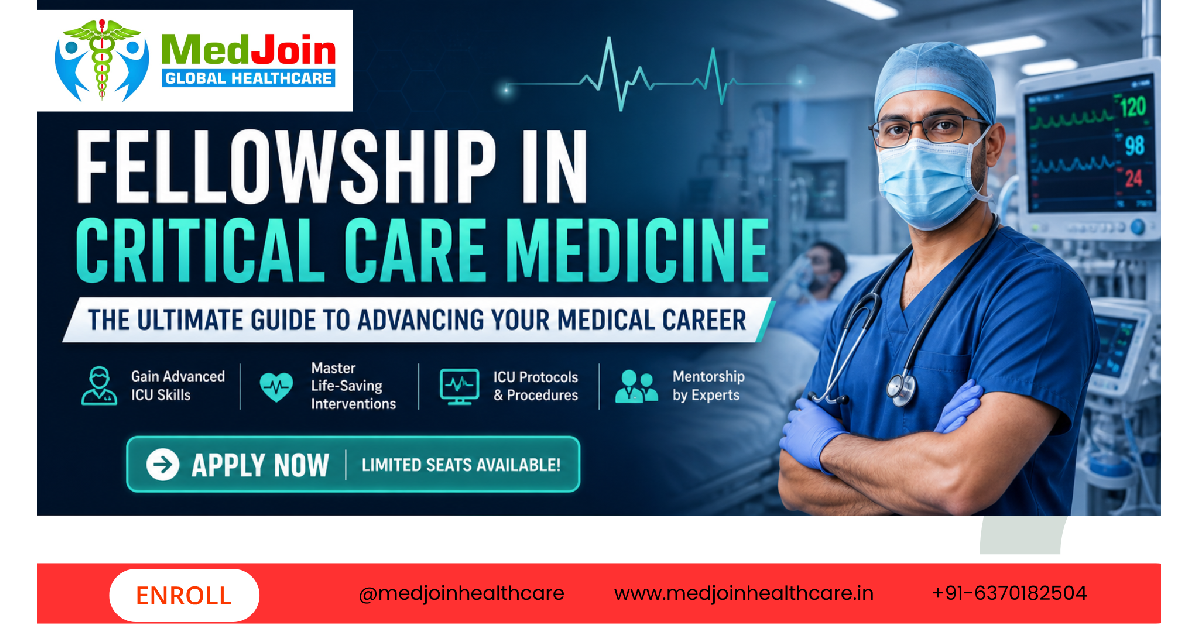
In today’s rapidly evolving healthcare ecosystem, Critical Care Medicine (CCM) stands at the forefront of life-saving interventions. From managing ventilators in intensive care units (ICUs) to stabilizing multi-organ failure patients, critical care specialists play a decisive role in patient survival.
For MBBS graduates and practicing doctors aiming to elevate their careers, a Fellowship in Critical Care Medicine offers a structured pathway to gain advanced clinical expertise, hands-on training, and global career opportunities.
This guide explores everything you need to know—from eligibility and curriculum to career scope, salary, and how to choose the right fellowship.
What is Critical Care Medicine?
Critical Care Medicine is a multidisciplinary specialty that deals with patients suffering from life-threatening conditions requiring comprehensive care and constant monitoring.
Key Areas Covered:
- Intensive Care Unit (ICU) management
- Mechanical ventilation
- Hemodynamic monitoring
- Sepsis and septic shock
- Trauma and emergency care
- Post-operative critical care
- Multi-organ dysfunction syndrome (MODS)
Critical care specialists work in high-pressure environments where rapid decision-making and clinical precision are essential.
What is a Fellowship in Critical Care Medicine?
A Fellowship in Critical Care Medicine is a specialized training program designed to equip doctors with advanced clinical skills and practical ICU experience.
Key Features:
- Duration: 6 months to 2 years
- Mode: Online + Hands-on training
- Certification: Recognized fellowship certification
- Focus: Practical, case-based learning
Unlike traditional postgraduate degrees, fellowships are skill-oriented, flexible, and career-focused.
Why Choose a Fellowship in Critical Care Medicine?
1. High Demand Specialty
The demand for critical care specialists has surged significantly post-pandemic, especially after the global impact of COVID-19.
2. Life-Saving Impact
You become a frontline doctor managing critically ill patients and saving lives daily.
3. Career Advancement
- Upgrade from general practitioner to ICU specialist
- Better job roles and leadership opportunities
4. Global Opportunities
Critical care skills are in demand worldwide, including:
- Middle East
- UK
- USA
- Australia
5. Higher Earning Potential
Specialized doctors earn significantly more than general practitioners.
Eligibility Criteria
Basic Requirements:
- MBBS or equivalent medical degree
- Registered medical practitioner
- Interest in acute and emergency care
Preferred:
- Clinical experience (1–2 years)
- Exposure to ICU or emergency settings
Fellowship Curriculum Overview
The curriculum is designed to provide comprehensive theoretical knowledge and hands-on clinical exposure.
1. ICU Basics
- ICU setup and protocols
- Infection control practices
- Patient monitoring systems
2. Respiratory Support
- Oxygen therapy
- Non-invasive ventilation (NIV)
- Mechanical ventilation
3. Cardiovascular Support
- Shock management
- Use of inotropes and vasopressors
- Advanced cardiac life support
4. Neurological Critical Care
- Stroke management
- Coma assessment
- Intracranial pressure monitoring
5. Renal and Metabolic Care
- Acute kidney injury (AKI)
- Dialysis basics
- Electrolyte management
6. Sepsis Management
- Early diagnosis
- Antibiotic protocols
- Septic shock treatment
7. Trauma & Emergency Care
- Polytrauma management
- Advanced trauma life support (ATLS)
Hands-On Training: The Core Advantage
One of the most valuable components of a fellowship is practical ICU training.
Skills You Will Learn:
- Intubation and airway management
- Central line insertion
- Arterial line placement
- Ventilator handling
- CPR and resuscitation
Clinical exposure ensures you are job-ready from day one.
Online vs Offline Fellowship Programs
Online Fellowship:
- Flexible learning
- Ideal for working doctors
- Recorded lectures + live sessions
Offline / Hybrid Fellowship:
- Hands-on ICU training
- Hospital-based exposure
- Direct mentorship
Best Option:
A hybrid model combining online theory with hospital training offers maximum benefit.
Duration and Fee Structure
Duration Options:
- 6 Months: Fast-track learning
- 1 Year: Balanced program
- 2 Years: Advanced specialization
Fee Range (India):
- ₹50,000 – ₹3,00,000
Fees vary depending on:
- Institute reputation
- Training facilities
- Certification value
Career Opportunities After Fellowship
After completing a fellowship in Critical Care Medicine, multiple career paths open up.
Job Roles:
- ICU Medical Officer
- Critical Care Specialist
- Emergency Physician
- Intensivist
Workplaces:
- Multispecialty hospitals
- Trauma centers
- ICU units
- Government hospitals
Salary After Fellowship
India:
- ₹8 LPA – ₹25 LPA
Abroad:
- ₹30 LPA – ₹1 Cr+
Salary depends on:
- Experience
- Location
- Hospital type
Fellowship vs MD/DNB in Critical Care
| Feature | Fellowship | MD/DNB |
|---|---|---|
| Duration | Short-term | 3 years |
| Focus | Practical skills | Academic + clinical |
| Flexibility | High | Low |
| Cost | Affordable | Expensive |
| Entry | Easy | Competitive |
A fellowship is ideal for quick career growth without long academic commitments.
Skills Required to Succeed in Critical Care
- Quick decision-making
- Strong clinical knowledge
- Emotional resilience
- Communication skills
- Team coordination
Challenges in Critical Care Medicine
- High stress environment
- Long working hours
- Emotional burnout
- Critical patient outcomes
However, the professional satisfaction outweighs the challenges.
Future Scope of Critical Care Medicine
The future of CCM is promising due to:
- Increasing ICU demand
- Aging population
- Rise in chronic diseases
- Technological advancements
Innovations like:
- AI in ICU monitoring
- Tele-ICU systems
- Advanced ventilators
are transforming the field.
How to Choose the Right Fellowship Program
Key Factors:
- Accreditation and recognition
- Hands-on training availability
- Experienced faculty
- Hospital tie-ups
- Placement support
Why Choose MedJoin Global Healthcare (Example Section)
If you’re considering enrolling in a fellowship, institutions like MedJoin Global Healthcare offer:
- Online + practical training
- International certification
- Placement assistance
- Affordable fees
Admission Process
- Fill application form
- Submit documents
- Pay registration fee
- Start online training
- Attend clinical training
Testimonials (Sample)
"This fellowship transformed my career. I gained ICU confidence and secured a job in a reputed hospital."
— Dr. Rahul Sharma
"Hands-on training was exceptional. Highly recommended for MBBS doctors."
— Dr. Neha Verma
FAQs
1. Can I do this fellowship after MBBS?
Yes, it is specifically designed for MBBS doctors.
2. Is it valid internationally?
Many fellowships are globally recognized—check accreditation.
3. Do I get hands-on training?
Yes, most hybrid programs include clinical exposure.
4. What is the duration?
6 months to 2 years depending on the program.
A Fellowship in Critical Care Medicine is one of the most impactful and career-transforming decisions for a doctor. It equips you with life-saving skills, global opportunities, and professional growth.
If you are passionate about emergency care, ICU management, and making a real difference in patient lives, this fellowship is your gateway to a rewarding medical career.
Call to Action
Upgrade your medical career today!
Enroll in a Fellowship in Critical Care Medicine and become a skilled ICU specialist.
- Limited seats available
- Certification + Hands-on Training
- Placement Assistance