
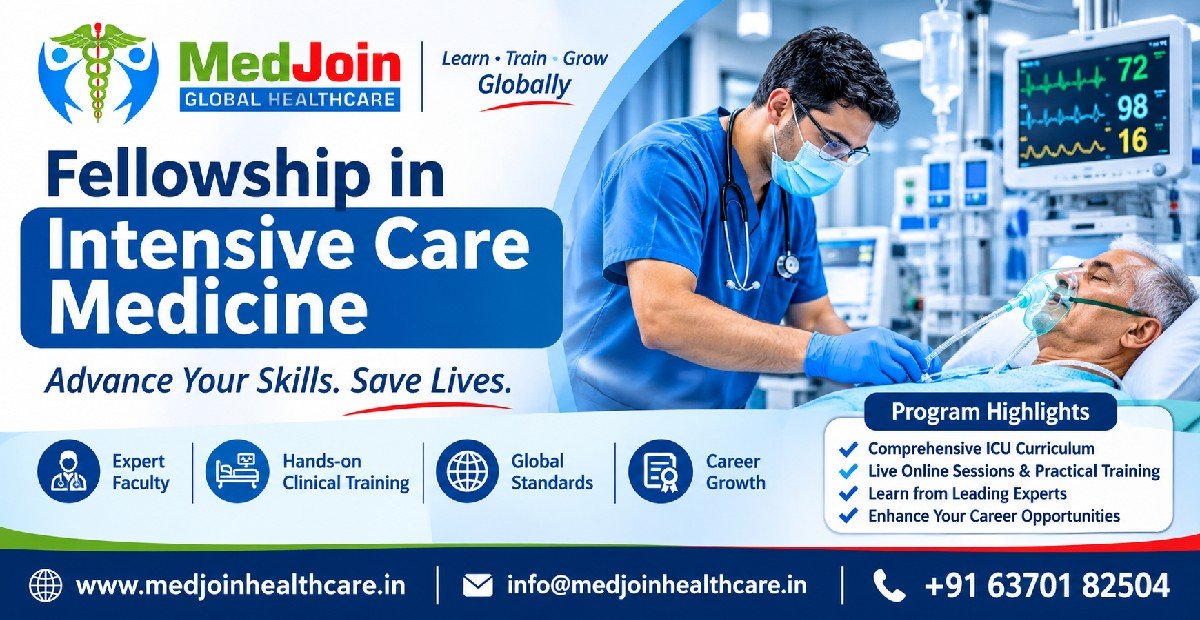
Intensive Care Medicine is one of the most important and rapidly evolving areas of modern healthcare. Every day, hospitals manage patients suffering from life-threatening medical conditions, severe infections, respiratory failure, cardiac emergencies, neurological complications, major trauma, and post-surgical complications. These patients require continuous monitoring, advanced medical interventions, multidisciplinary treatment, and specialized clinical expertise.
The increasing need for advanced critical care services has created significant opportunities for doctors interested in developing expertise in Intensive Care Medicine. Intensive Care Units (ICUs) have become essential components of multispecialty hospitals, corporate healthcare institutions, medical colleges, emergency centres, and tertiary care facilities.
A Fellowship in Intensive Care Medicine can help eligible medical professionals strengthen their clinical knowledge, understand critical care protocols, improve patient management skills, and develop the competencies required to work in intensive care environments.
For MBBS graduates and postgraduate doctors, understanding the available training pathways, eligibility requirements, career opportunities, and professional responsibilities is essential before choosing this specialization.
MedJoin Global Healthcare aims to support healthcare professionals in advancing their medical knowledge through structured academic learning, clinical education, mentorship, and professional development opportunities.
This comprehensive guide explains everything you need to know about pursuing a Fellowship in Intensive Care Medicine in India, including eligibility, course structure, duration, subjects, clinical exposure, career scope, salary considerations, and future opportunities.
A Complete Guide for MBBS, MD, MS, DNB and Other Eligible Medical Professionals
1. Introduction: Understanding Intensive Care Medicine
Intensive Care Medicine, also known as Critical Care Medicine, is a specialized branch of modern healthcare focused on the diagnosis, treatment, monitoring, and management of patients suffering from severe and potentially life-threatening medical conditions.
Patients admitted to an Intensive Care Unit (ICU) generally require continuous medical supervision, advanced monitoring, emergency interventions, and, in many cases, life-support systems. These patients may be experiencing respiratory failure, severe infections, cardiac complications, neurological emergencies, multiple organ dysfunction, major trauma, or complications following complex surgical procedures.
The role of an intensive care specialist is not limited to treating a particular disease. It involves managing the overall physiological condition of critically ill patients, supporting failing organs, preventing further complications, and coordinating treatment with specialists from different medical disciplines.
With the expansion of multispecialty hospitals, corporate healthcare networks, emergency medical services, and tertiary care centres, the demand for trained critical care professionals has become increasingly important.
Intensive Care Medicine is particularly relevant in the following situations:
- Patients requiring mechanical ventilation.
- Patients experiencing severe respiratory distress.
- Patients with septic shock and severe infections.
- Patients suffering from cardiac arrest or cardiovascular instability.
- Patients with acute kidney injury requiring renal support.
- Patients with neurological emergencies.
- Patients requiring intensive monitoring after major surgery.
- Patients suffering from multiple organ dysfunction syndrome.
- Patients with major burns, trauma, or poisoning.
- Patients requiring advanced life-support interventions.
A Fellowship in Intensive Care Medicine provides an opportunity for eligible medical professionals to develop specialized knowledge, strengthen their clinical understanding, and gain exposure to the principles of managing critically ill patients.
For doctors interested in emergency medicine, anaesthesiology, internal medicine, respiratory medicine, and hospital-based clinical practice, this field offers an opportunity to develop valuable additional competencies.
2. What Is a Fellowship in Intensive Care Medicine?
A Fellowship in Intensive Care Medicine is a structured medical education and professional training programme designed to enhance a doctor's knowledge and competencies in critical care.
The programme generally focuses on the assessment, stabilization, monitoring, and management of critically ill patients.
Depending on the institution, accreditation, and programme structure, training may include academic sessions, case-based discussions, clinical demonstrations, supervised hospital exposure, practical learning, and competency assessments.
The curriculum may cover several important areas:
- Critical care fundamentals.
- Emergency assessment and resuscitation.
- Respiratory failure management.
- Mechanical ventilation.
- Cardiovascular monitoring.
- Management of shock.
- Sepsis and septic shock.
- Renal replacement therapy principles.
- Neurological critical care.
- Critical care pharmacology.
- Infection prevention and control.
- Post-operative intensive care.
- Trauma and emergency management.
- Patient safety and clinical documentation.
The purpose of the programme is to help doctors understand how different organ systems function during critical illness and how appropriate clinical interventions can support patients during life-threatening conditions.
Difference Between Intensive Care Medicine and Critical Care Medicine
The terms Intensive Care Medicine and Critical Care Medicine are commonly used interchangeably.
Intensive Care Medicine generally refers to the clinical specialty concerned with patients who require intensive monitoring and organ support in an ICU.
Critical Care Medicine encompasses a broader range of responsibilities, including:
- Early recognition of critical illness.
- Emergency stabilization.
- Advanced organ support.
- Management of complex medical and surgical conditions.
- Coordination of multidisciplinary treatment.
- Infection prevention and patient safety.
- End-of-life discussions and appropriate palliative care.
- Rehabilitation and post-ICU follow-up.
Both terms describe a specialty requiring strong clinical judgment, timely decision-making, teamwork, and the ability to respond effectively to rapidly changing patient conditions.
Who Is an Intensivist?
An intensivist is a medical specialist trained in Intensive Care Medicine or Critical Care Medicine.
An intensivist is responsible for coordinating the management of critically ill patients, assessing their medical condition, planning treatment, monitoring organ function, and working with other specialists to improve patient outcomes.
An intensivist may work in:
- Medical Intensive Care Units.
- Surgical Intensive Care Units.
- Multidisciplinary ICUs.
- Trauma Intensive Care Units.
- Cardiac Critical Care Units.
- Neuro Intensive Care Units.
- Post-operative Critical Care Units.
- High Dependency Units.
- Emergency and resuscitation departments.
The exact responsibilities depend on the doctor's qualifications, experience, institutional privileges, and the level of the ICU.
3. Why Choose a Fellowship in Intensive Care Medicine?
Intensive Care Medicine is a demanding but professionally rewarding field. It offers opportunities for doctors who want to develop advanced clinical knowledge and work in an environment where medical decisions can have an immediate impact on patient care.
Here are some important reasons to consider this field.
3.1 Growing Importance of Critical Care Services
Hospitals increasingly require organized intensive care facilities to manage patients with severe medical conditions, complicated surgeries, trauma, and serious infections.
The development of modern ICUs has increased the importance of trained physicians who understand advanced monitoring, organ support, and critical care protocols.
3.2 Development of Advanced Clinical Knowledge
Critical care training exposes doctors to several important areas of medicine.
Doctors develop an understanding of:
- Respiratory and cardiovascular physiology.
- Emergency resuscitation.
- Mechanical ventilation.
- Haemodynamic assessment.
- Management of sepsis.
- Acute organ dysfunction.
- Critical care medications.
- Multiorgan support.
This knowledge can strengthen the clinical capabilities of doctors working in relevant medical specialties.
3.3 Multidisciplinary Clinical Exposure
Critical care is not an isolated medical discipline. It requires coordination between different specialties.
During relevant training, doctors may interact with:
- Internal medicine specialists.
- Anaesthesiologists.
- Pulmonologists.
- Cardiologists.
- Neurologists.
- Nephrologists.
- General and specialist surgeons.
- Emergency medicine specialists.
- Microbiologists.
- Critical care nurses and respiratory therapists.
This multidisciplinary approach helps doctors understand complex clinical situations from different perspectives.
3.4 Opportunities in Different Healthcare Settings
Critical care competencies are relevant across several healthcare environments, including corporate hospitals, multispecialty hospitals, medical colleges, tertiary care centres, trauma facilities, and emergency departments.
3.5 Professional Development
A structured fellowship can help doctors strengthen their clinical profiles, develop additional competencies, and prepare for further academic or clinical training.
However, the value of a fellowship depends on the awarding institution, recognition status, eligibility requirements, clinical exposure, assessment process, and the doctor's existing medical qualifications.
4. Eligibility for Fellowship in Intensive Care Medicine in India
Eligibility is one of the most important considerations before applying for a Fellowship in Intensive Care Medicine.
The admission criteria differ between academic institutions, professional societies, universities, hospital-based training programmes, and national-level qualifications.
It is important to distinguish between a general professional development fellowship and a formally recognized postgraduate or super-specialty medical qualification.
4.1 MBBS Graduates
MBBS graduates with valid medical registration may be eligible for certain structured post-MBBS critical care certificate or training programmes, depending on the specific programme's admission criteria.
Such programmes can help doctors understand:
- Basic ICU principles.
- Initial assessment of critically ill patients.
- Recognition of clinical deterioration.
- Basic emergency stabilization.
- Interpretation of common ICU investigations.
- Introduction to respiratory support.
- Monitoring of vital parameters.
- Infection prevention.
- ICU documentation and communication.
The Indian Society of Critical Care Medicine (ISCCM) lists separate post-MBBS certificate courses alongside its postgraduate-level critical care training pathways.
An MBBS graduate should carefully verify whether a programme is intended for post-MBBS doctors, whether clinical responsibilities are supervised, and what professional outcomes the certificate supports.
Important: An MBBS-level certificate or fellowship does not automatically make a doctor an independently qualified intensivist or confer the same status as an MD, DNB, DM, or DrNB qualification.
4.2 MD in General Medicine
Doctors holding an MD in General Medicine are among the relevant postgraduate professionals for advanced critical care training.
Their foundation in internal medicine is particularly useful when managing:
- Severe infections.
- Septic shock.
- Respiratory failure.
- Cardiovascular emergencies.
- Acute kidney injury.
- Metabolic emergencies.
- Multiorgan dysfunction.
- Complex medical conditions.
Additional training in Intensive Care Medicine can help such doctors develop focused expertise in managing critically ill medical patients.
4.3 DNB in General Medicine
Doctors holding a recognized DNB qualification in General Medicine may also be eligible for relevant critical care fellowship and super-specialty pathways, subject to the applicable admission requirements.
DNB-trained physicians can build upon their existing medical knowledge through structured ICU exposure and advanced critical care education.
4.4 MD or DNB in Anaesthesiology
Anaesthesiology is closely connected to Intensive Care Medicine.
Anaesthesiologists already have a strong foundation in:
- Airway management.
- Ventilation.
- Anaesthetic pharmacology.
- Haemodynamic monitoring.
- Resuscitation.
- Perioperative patient management.
- Pain management.
These competencies are highly relevant to the management of critically ill patients.
Additional critical care training can help anaesthesiologists expand their professional expertise into medical, surgical, and multidisciplinary ICU environments.
4.5 MD or DNB in Respiratory Medicine
Respiratory medicine specialists have an important role in critical care, particularly in patients suffering from severe respiratory disorders.
Relevant areas include:
- Acute respiratory distress syndrome.
- Severe pneumonia.
- Respiratory failure.
- Non-invasive ventilation.
- Invasive mechanical ventilation.
- Airway management.
- Pulmonary infections.
- Chronic respiratory disease exacerbations.
A critical care fellowship can provide additional exposure to advanced respiratory support and multiorgan management.
4.6 MD or DNB in Emergency Medicine
Emergency medicine specialists frequently manage patients requiring immediate resuscitation and stabilization.
Additional training in critical care can strengthen their understanding of:
- Emergency airway management.
- Cardiac arrest.
- Shock.
- Major trauma.
- Severe infections.
- Acute neurological emergencies.
- Respiratory emergencies.
- Critical patient transfer.
This training may support professional development in emergency and intensive care environments, subject to institutional requirements.
4.7 MD or DNB in Paediatrics
Doctors interested in the care of critically ill children may explore paediatric critical care as a specialized pathway.
Paediatric intensive care involves the management of children suffering from severe infections, respiratory failure, cardiac conditions, neurological emergencies, trauma, and other life-threatening illnesses.
However, adult and paediatric critical care are not interchangeable. Doctors must undertake appropriate specialty-specific training and work within their professional competence.
4.8 MD or DNB in General Surgery
General surgeons may encounter patients who require intensive care following major surgery, trauma, abdominal emergencies, and complex surgical procedures.
Relevant critical care knowledge includes:
- Post-operative monitoring.
- Management of surgical complications.
- Sepsis management.
- Fluid and electrolyte balance.
- Haemodynamic stabilization.
- Respiratory support.
- Post-operative organ dysfunction.
Eligibility for a particular fellowship or ICU leadership position must be checked against the relevant programme and applicable ICU guidelines.
4.9 Other Medical Qualifications
Doctors holding other postgraduate qualifications should review the official eligibility criteria of the institution or professional body before applying.
Eligibility may depend on the recognized feeder specialty, prior clinical experience, registration status, and the particular qualification being pursued.
4.10 General Eligibility Checklist
The following is a general reference and not a substitute for the admission requirements of an individual programme.
| Qualification | Possible training pathway |
|---|---|
| MBBS | Post-MBBS certificate or eligible introductory programme |
| MD General Medicine | Advanced critical care fellowship or super-specialty pathway |
| DNB General Medicine | Advanced critical care fellowship or super-specialty pathway |
| MD Anaesthesiology | Critical care fellowship or super-specialty pathway |
| DNB Anaesthesiology | Critical care fellowship or super-specialty pathway |
| MD Respiratory Medicine | Critical care fellowship or super-specialty pathway |
| DNB Respiratory Medicine | Critical care fellowship or super-specialty pathway |
| MD Emergency Medicine | Critical care fellowship or super-specialty pathway |
| DNB Emergency Medicine | Critical care fellowship or super-specialty pathway |
| MD Paediatrics | Paediatric critical care-related pathway, subject to eligibility |
| MS/DNB General Surgery | Relevant training pathway, subject to specific eligibility |
Admission reminder: The above table identifies possible academic backgrounds, not guaranteed admission. Always check the current prospectus, feeder qualification list, and recognition requirements before enrolling.
5. Recognized Critical Care Training Pathways in India
Doctors should understand the differences between professional society programmes, university fellowships, and nationally administered super-specialty qualifications.
The following pathways are particularly relevant.
5.1 DM in Critical Care Medicine
Doctor of Medicine (DM) in Critical Care Medicine is a super-specialty medical qualification.
It involves advanced clinical training in the diagnosis and management of critically ill patients.
The training focuses on:
- Advanced patient assessment.
- Mechanical ventilation.
- Cardiovascular support.
- Multiorgan dysfunction.
- Sepsis management.
- Advanced resuscitation.
- Critical care procedures.
- Clinical research.
- ICU leadership and administration.
Admission is subject to the applicable national entrance and counselling process and the prescribed feeder qualifications.
5.2 DrNB in Critical Care Medicine
The Doctorate of National Board (DrNB) in Critical Care Medicine is another formal super-specialty pathway administered by the National Board of Examinations in Medical Sciences (NBEMS).
The standard post-MD/MS/DNB super-specialty programme is three years, subject to the current regulations.
The programme involves structured clinical training, academic learning, practical competencies, and formal assessment.
NBEMS publishes a dedicated DrNB Critical Care Medicine curriculum covering programme objectives, clinical training, competencies, and logbook requirements.
5.3 Indian Diploma in Critical Care Medicine (IDCCM)
The Indian Society of Critical Care Medicine offers the Indian Diploma in Critical Care Medicine.
According to ISCCM, the IDCCM programme generally has:
- One-year duration for eligible MD/DNB candidates.
- Two-year duration for eligible DA/DTCD or equivalent candidates.
The exact feeder qualification and registration requirements should be confirmed with ISCCM and the relevant accredited training institution.
5.4 Indian Fellowship in Critical Care Medicine (IFCCM)
The Indian Fellowship in Critical Care Medicine is a further training pathway offered through ISCCM.
According to the society's published course information:
- IFCCM generally follows successful completion of IDCCM.
- The duration is one year after IDCCM.
- Direct registration arrangements are available for eligible post-MD candidates, subject to the requirement to pass IDCCM before the IFCCM exit examination.
- Eligible candidates holding FNB, DM Critical Care, or DrNB Critical Care may have a direct entry route to the IFCCM examination under ISCCM's rules.
These are specific professional society pathways and should not be confused with every other programme advertised under the generic title of Intensive Care Medicine fellowship.
5.5 Fellowship of National Board (FNB)
The FNB is a formal fellowship qualification administered by NBEMS in specified disciplines.
NBEMS states that its fellowship programmes are skill-enhancing courses conducted at accredited institutions. FNB courses generally have a two-year duration, and admission is based on prescribed eligibility and the relevant entrance and counselling process.
A candidate should verify the current list of available specialties and feeder qualifications. A generic hospital-based fellowship is not automatically an FNB qualification.
5.6 University-Based Fellowship or Post-Doctoral Certificate
Certain universities and medical institutions offer post-doctoral fellowships, certificates, or institutional programmes in critical care.
Their structure and eligibility may vary.
Before applying, candidates should verify:
- The awarding university or institution.
- The legal and academic status of the programme.
- Whether the programme is recognized for the stated professional purpose.
- The hospital's clinical training arrangements.
- The faculty's qualifications.
- The duration of training.
- The practical and procedural exposure.
- The examination and certification requirements.
5.7 Comparison of Major Training Pathways
| Programme | Typical duration | Nature |
|---|---|---|
| DM Critical Care Medicine | As prescribed by the applicable course | Super-specialty degree |
| DrNB Critical Care Medicine | 3 years | NBEMS super-specialty qualification |
| IDCCM | 1–2 years | ISCCM diploma pathway |
| IFCCM | 1 year after IDCCM | ISCCM fellowship pathway |
| FNB | Generally 2 years | NBEMS fellowship qualification |
| University fellowship/PDF | Institution-specific | Depends on awarding institution |
| Post-MBBS certificate | Institution-specific | Skill-enhancement programme |
These programmes are not interchangeable. Their eligibility, duration, recognition, clinical responsibilities, and career outcomes differ.
6. Course Duration and Learning Format
The duration of a Fellowship in Intensive Care Medicine depends on the institution and the type of qualification.
A programme may be structured around:
- Six-month academic training.
- Twelve-month fellowship training.
- One- or two-year professional society training.
- Two-year post-doctoral or FNB programmes.
- Three-year super-specialty programmes.
The actual duration must be confirmed through the official prospectus.
6.1 Online Learning
Online academic learning can provide flexibility for working doctors.
It may include:
- Recorded lectures.
- Live academic sessions.
- Digital study materials.
- Clinical case presentations.
- Interactive discussions.
- Assessments and quizzes.
- Reading assignments.
- Clinical protocol reviews.
Online learning is particularly useful for strengthening theoretical knowledge and understanding evidence-based approaches.
However, online education alone cannot replace the practical experience required for independent management of critically ill patients.
6.2 Hybrid Learning
A hybrid programme combines online academic learning with structured offline clinical exposure, where provided.
The academic component may cover theoretical subjects, while hospital-based learning may provide exposure to ICU equipment, monitoring systems, patient assessment, and supervised clinical discussions.
The exact practical responsibilities must be defined by the hospital and programme.
6.3 Hospital-Based Training
Hospital-based training provides opportunities to understand how intensive care services function in real clinical environments.
Under appropriate supervision and institutional permissions, doctors may learn through:
- ICU rounds.
- Bedside discussions.
- Case presentations.
- Clinical demonstrations.
- Emergency simulations.
- Ventilator demonstrations.
- Monitoring interpretation.
- Procedure observation or supervised practice.
- Morbidity and mortality meetings.
- Multidisciplinary discussions.
Practical involvement must always match the learner's existing qualifications, competence, supervision, and legal scope of practice.
7. Detailed Syllabus of Fellowship in Intensive Care Medicine
A comprehensive critical care curriculum covers the major physiological systems and clinical conditions encountered in intensive care settings. To know more visit at Fellowship in Intensive Care Medicine
8. Practical Clinical Skills Developed During Intensive Care Training
The practical component is one of the most important aspects of critical care education.
Intensive Care Medicine requires the ability to interpret clinical findings, recognize deterioration, understand organ-support technologies, and coordinate appropriate treatment.
Depending on the programme and the doctor's eligibility, clinical exposure may include the following areas.
8.1 Airway Management
Airway management is essential in patients who cannot maintain adequate oxygenation or ventilation.
Learning areas include:
-
Airway assessment.
-
Recognition of difficult airways.
-
Basic airway manoeuvres.
-
Bag-mask ventilation principles.
-
Supraglottic airway devices.
-
Endotracheal intubation principles.
-
Airway complications.
-
Post-intubation monitoring.
Advanced airway procedures must be undertaken only by appropriately trained and authorized practitioners under suitable supervision.
8.2 Arterial Blood Gas Analysis
Arterial blood gas analysis is an important investigation in ICU patients.
Doctors learn to interpret:
-
pH.
-
Partial pressure of oxygen.
-
Partial pressure of carbon dioxide.
-
Bicarbonate.
-
Oxygen saturation.
-
Base excess.
-
Lactate.
The ability to identify respiratory and metabolic acid-base disorders is particularly important in patients with respiratory failure, shock, and metabolic emergencies.
8.3 ECG Interpretation
Electrocardiography is commonly used to assess critically ill patients.
Learning areas include:
-
Normal ECG patterns.
-
Sinus tachycardia and bradycardia.
-
Atrial fibrillation.
-
Ventricular arrhythmias.
-
Heart blocks.
-
Myocardial ischaemia.
-
Acute coronary syndromes.
-
Electrolyte-related ECG changes.
8.4 Haemodynamic Monitoring
Haemodynamic monitoring helps clinicians assess the cardiovascular condition of critically ill patients.
Topics include:
-
Heart rate and blood pressure monitoring.
-
Mean arterial pressure.
-
Peripheral perfusion.
-
Fluid balance.
-
Central venous pressure and its limitations.
-
Arterial pressure monitoring.
-
Cardiac output concepts.
-
Bedside ultrasound.
-
Assessment of fluid responsiveness.
8.5 Bedside Ultrasound
Point-of-care ultrasound is increasingly useful in critical care.
Relevant applications include:
-
Lung ultrasound.
-
Basic cardiac assessment.
-
Assessment of volume status.
-
Pleural effusion identification.
-
Detection of pneumothorax.
-
Abdominal free-fluid assessment.
-
Ultrasound-guided procedure principles.
Competency requires structured training and supervised practical assessment.
8.6 Central Venous Access
Central venous access may be required for administration of certain medications, monitoring, and other clinical indications.
Learning areas include:
-
Indications.
-
Contraindications.
-
Equipment.
-
Sterile precautions.
-
Ultrasound guidance.
-
Potential complications.
-
Catheter care.
-
Infection prevention.
8.7 Renal Replacement Therapy
Critically ill patients with severe renal dysfunction may require renal replacement therapy.
Doctors learn about:
-
Indications for dialysis.
-
Intermittent haemodialysis.
-
Continuous renal replacement therapy.
-
Electrolyte management.
-
Fluid removal.
-
Anticoagulation principles.
-
Monitoring during renal support.
8.8 Cardiopulmonary Resuscitation
Resuscitation is a fundamental component of critical care.
Training may cover:
-
Basic life support.
-
Advanced cardiovascular life support principles.
-
Recognition of cardiac arrest.
-
Rhythm identification.
-
Defibrillation principles.
-
Post-cardiac arrest care.
-
Team-based resuscitation.
-
Emergency communication.
Specific certification in resuscitation courses may require separate training and assessment.
9. Importance of Clinical Training in an Intensive Care Fellowship
The quality of clinical training can significantly influence the educational value of a fellowship.
Critical care is a practical specialty in which theoretical knowledge must be connected to clinical reasoning and patient management.
A doctor may understand the principles of mechanical ventilation through lectures, but interpreting ventilator parameters in the context of a patient's condition requires practical exposure.
Similarly, knowledge of sepsis protocols must be supported by an understanding of clinical assessment, investigations, antimicrobial decisions, fluid management, and ongoing monitoring.
9.1 ICU Bedside Learning
Bedside learning helps doctors understand:
-
Patient assessment.
-
Clinical examination.
-
Monitoring equipment.
-
Treatment charts.
-
Fluid balance records.
-
Laboratory reports.
-
Imaging findings.
-
Medication administration systems.
-
Daily progress documentation.
9.2 Case-Based Discussions
Case-based learning encourages doctors to understand the clinical reasoning behind treatment decisions.
Typical cases may include:
-
Severe community-acquired pneumonia.
-
Septic shock.
-
Acute respiratory distress syndrome.
-
Acute kidney injury.
-
Acute myocardial infarction.
-
Severe pancreatitis.
-
Traumatic brain injury.
-
Post-operative complications.
9.3 ICU Rounds
Structured ICU rounds provide opportunities to understand how multidisciplinary teams review patients.
Discussions may include:
-
Current clinical status.
-
Organ function.
-
Investigations.
-
Medication plans.
-
Ventilator requirements.
-
Infection status.
-
Nutrition.
-
Fluid management.
-
Treatment response.
-
Discharge planning.
9.4 Simulation-Based Training
Simulation allows learners to practice emergency decision-making in a controlled environment.
Examples include:
-
Cardiac arrest scenarios.
-
Difficult airway scenarios.
-
Shock management.
-
Ventilator emergencies.
-
Emergency patient transfer.
-
Multidisciplinary communication.
9.5 Supervised Clinical Exposure
Clinical participation must be appropriate to the programme, the hospital's permissions, the learner's existing qualifications, and the level of supervision.
Students and doctors undertaking observerships should not assume that observing a procedure gives them authorization to independently perform it.
10. Career Scope After a Fellowship in Intensive Care Medicine
Intensive Care Medicine offers different professional opportunities depending on a doctor's foundational qualification, additional training, clinical experience, and institutional recognition requirements.
A fellowship can support professional development, but the career scope should be evaluated realistically.
10.1 Critical Care Physician
Doctors with appropriate postgraduate qualifications and relevant critical care training may pursue roles involving the management of critically ill patients.
Responsibilities may include:
-
Patient assessment.
-
Clinical monitoring.
-
Coordination of ICU treatment.
-
Management of medical emergencies.
-
Organ support planning.
-
Multidisciplinary communication.
-
Clinical documentation.
The designation and level of responsibility depend on the doctor's recognized qualifications and hospital credentialing.
10.2 ICU Medical Officer
Eligible doctors may work in ICU medical officer or duty doctor roles, subject to hospital recruitment criteria.
Responsibilities can include:
-
Monitoring patient condition.
-
Recording clinical observations.
-
Identifying deterioration.
-
Coordinating investigations.
-
Communicating with senior doctors.
-
Supporting emergency management.
-
Maintaining patient records.
An MBBS graduate with appropriate registration and relevant training may be considered for certain supervised ICU roles. This is different from independent specialist or intensivist practice.
10.3 Emergency and Critical Care Services
Emergency departments and critical care units are closely connected.
Doctors with relevant training may develop additional competencies in:
-
Emergency stabilization.
-
Trauma assessment.
-
Respiratory emergencies.
-
Cardiac emergencies.
-
Shock recognition.
-
Critical patient transfer.
-
Resuscitation support.
10.4 Multispecialty and Corporate Hospitals
Large hospitals require coordinated intensive care services for patients from different medical and surgical departments.
Potential employment settings include:
-
Corporate hospital networks.
-
Multispecialty hospitals.
-
Tertiary care centres.
-
Teaching hospitals.
-
Specialty hospitals.
-
Medical college hospitals.
Actual job eligibility depends on the post and the employer's requirements.
10.5 Medical Colleges and Academic Institutions
Doctors with appropriate higher qualifications and teaching eligibility may pursue academic roles.
Potential responsibilities include:
-
Undergraduate teaching.
-
Postgraduate teaching.
-
Clinical demonstrations.
-
Academic presentations.
-
Research.
-
Clinical audits.
-
Training junior medical professionals.
A short fellowship alone does not automatically confer eligibility for faculty appointments.
10.6 Trauma and Emergency Critical Care
Trauma centres require multidisciplinary teams to manage severe injuries and complications.
Critical care-trained professionals may contribute to the management of:
-
Road traffic injuries.
-
Polytrauma.
-
Severe head injuries.
-
Chest injuries.
-
Abdominal injuries.
-
Major burns.
-
Haemorrhagic shock.
-
Post-trauma complications.
10.7 Post-operative Intensive Care
Patients recovering from major operations may require intensive monitoring and organ support.
Relevant areas include:
-
General surgery.
-
Neurosurgery.
-
Cardiothoracic surgery.
-
Transplant surgery.
-
Major abdominal surgery.
-
Orthopaedic trauma surgery.
Doctors with suitable qualifications and training can pursue professional roles in post-operative critical care teams.
10.8 Cardiac Critical Care
Cardiac critical care focuses on patients with severe cardiovascular conditions.
These may include:
-
Acute myocardial infarction.
-
Cardiogenic shock.
-
Serious arrhythmias.
-
Acute heart failure.
-
Post-cardiac surgery complications.
-
Haemodynamic instability.
Cardiac critical care may be pursued as an area of clinical interest within the appropriate training and credentialing framework.
10.9 Neurocritical Care
Neurocritical care focuses on patients suffering from serious neurological and neurosurgical conditions.
Areas include:
-
Stroke.
-
Intracranial haemorrhage.
-
Traumatic brain injury.
-
Status epilepticus.
-
Brain swelling.
-
Post-neurosurgical complications.
-
Neuromuscular respiratory failure.
10.10 Paediatric Critical Care
Paediatric critical care involves the management of critically ill infants and children.
It is a specialized field requiring appropriate paediatric training and clinical competencies.
Potential areas include:
-
Paediatric respiratory failure.
-
Severe infections.
-
Paediatric trauma.
-
Neurological emergencies.
-
Cardiac emergencies.
-
Post-operative paediatric care.
10.11 ICU Administration and Management
Experienced medical professionals may also develop an interest in ICU administration.
Responsibilities can include:
-
ICU operational planning.
-
Clinical quality improvement.
-
Protocol implementation.
-
Patient safety.
-
Staffing coordination.
-
Resource utilization.
-
Infection control.
-
Clinical audit.
10.12 Medical Education and Research
Doctors interested in academic development can explore:
-
Critical care research.
-
Clinical trials.
-
Medical writing.
-
Research publications.
-
Teaching.
-
Medical conferences.
-
Professional society activities.
-
Evidence-based clinical education.
These opportunities depend on relevant academic experience and institutional requirements.
11. Career Opportunities in India
India's healthcare system includes government hospitals, private hospitals, corporate healthcare chains, medical colleges, charitable hospitals, and specialized emergency centres.
Intensive care services are important in each of these settings.
11.1 Government Hospitals
Government medical colleges and tertiary hospitals manage a wide range of complex medical and surgical emergencies.
Doctors with appropriate qualifications may pursue recruitment opportunities through:
-
State health departments.
-
Government medical colleges.
-
Public-sector hospitals.
-
Tertiary referral institutions.
-
Government recruitment examinations.
11.2 Private Hospitals
Private hospitals recruit doctors for various ICU-related positions.
Recruitment requirements differ according to:
-
ICU level.
-
Bed capacity.
-
Patient case mix.
-
Hospital policies.
-
Medical registration.
-
Academic qualifications.
-
Clinical experience.
11.3 Corporate Healthcare Networks
Corporate hospitals may provide opportunities in multidisciplinary critical care units, emergency services, and specialty ICUs.
11.4 Medical Colleges
Academic institutions provide opportunities for suitably qualified doctors interested in clinical practice, education, and research.
11.5 Smaller Cities and Regional Hospitals
Regional hospitals also require appropriate critical care services.
Doctors with relevant qualifications and experience may contribute to improving the delivery of critical care in smaller cities and underserved regions.
However, opportunities must be assessed in relation to infrastructure, clinical support, staffing, and local recruitment standards.
12. International Career Scope
Critical Care Medicine is an internationally important medical specialty.
Countries with advanced hospital systems employ intensivists and other appropriately trained doctors in medical, surgical, trauma, and specialty ICUs.
Possible international destinations include:
-
United Kingdom.
-
United States.
-
Australia.
-
New Zealand.
-
Canada.
-
United Arab Emirates.
-
Saudi Arabia.
-
Qatar.
-
Oman.
-
Other international healthcare markets.
However, completing a fellowship in India does not automatically provide permission to practise independently in another country.
International practice generally requires additional steps, which may include:
-
Verification of primary medical qualifications.
-
Registration with the relevant medical regulator.
-
Recognition of postgraduate qualifications.
-
Licensing examinations, where applicable.
-
Proof of clinical experience.
-
Language proficiency.
-
Specialty-specific credential assessment.
-
Employer and visa requirements.
Doctors should check the relevant regulator's rules before planning an international career.
13. Salary After Fellowship in Intensive Care Medicine
Salary is an important consideration when choosing a medical specialty or fellowship.
However, there is no single standard salary for every doctor completing a Fellowship in Intensive Care Medicine.
Compensation depends on:
-
MBBS or postgraduate qualification.
-
Type of fellowship.
-
Recognition of the awarding institution.
-
Clinical experience.
-
Hospital category.
-
Location.
-
ICU complexity.
-
Duty hours.
-
Employment arrangement.
-
Additional responsibilities.
13.1 Factors Influencing Salary
Educational qualification: Doctors with recognized postgraduate and super-specialty qualifications may be considered for different roles and compensation structures compared with MBBS-level ICU medical officers.
Clinical experience: Practical experience in managing critically ill patients can influence recruitment and salary negotiations.
Hospital location: Salaries vary between metropolitan cities, tier-two cities, and smaller regional healthcare markets.
Institutional reputation: Corporate hospitals and tertiary care institutions may have different compensation structures from smaller hospitals.
Professional responsibilities: Seniority, ICU leadership, on-call duties, and administrative responsibilities can affect compensation.
13.2 How to Evaluate Salary Opportunities
Rather than selecting a programme based on advertised salary claims, candidates should assess:
-
Actual employment opportunities.
-
Eligibility for the advertised position.
-
Clinical competencies.
-
Recognition of the qualification.
-
Hospital recruitment policies.
-
Work experience requirements.
-
Long-term career progression.
A fellowship should be selected primarily for its academic quality and professional relevance rather than an unsupported promise of a particular salary.
14. Skills Required to Become a Successful Critical Care Professional
Intensive Care Medicine demands a combination of clinical knowledge, technical skills, communication, and professional discipline.
14.1 Clinical Decision-Making
Doctors must be able to assess complex situations, identify priorities, and make appropriate clinical decisions.
14.2 Emergency Response
The ability to respond quickly and systematically to medical emergencies is essential.
14.3 Analytical Thinking
ICU patients may have multiple simultaneous abnormalities. Doctors must interpret laboratory reports, imaging, monitoring parameters, and clinical findings together.
14.4 Communication Skills
Communication with patients, relatives, nurses, and other specialists is an essential part of ICU care.
14.5 Teamwork
Critical care depends on coordination among multiple healthcare professionals.
14.6 Emotional Resilience
Doctors must remain professional and compassionate while managing stressful situations and difficult clinical outcomes.
14.7 Continuous Learning
Critical care practices evolve with medical research, technology, guidelines, and new treatment approaches.
Doctors must remain committed to ongoing professional development.
15. How to Choose the Right Fellowship in Intensive Care Medicine
Choosing an appropriate programme is a significant career decision.
Candidates should evaluate the following factors before applying.
15.1 Check the Awarding Institution
Understand whether the programme is offered by:
-
A recognized university.
-
NBEMS.
-
ISCCM.
-
A medical college.
-
A hospital.
-
A private educational organization.
The awarding body determines the nature and status of the qualification.
15.2 Verify Eligibility
Read the current admission guidelines carefully.
Confirm whether your MBBS, MD, MS, DNB, or other qualification meets the programme's feeder requirements.
15.3 Evaluate Clinical Exposure
Find out whether the programme provides:
-
Hospital-based clinical training.
-
ICU bedside exposure.
-
Supervised case discussions.
-
Clinical demonstrations.
-
Practical assessments.
-
Access to qualified faculty.
15.4 Review the Curriculum
A quality programme should have a well-defined academic structure covering major critical care subjects.
15.5 Understand the Assessment Process
Ask whether the programme includes:
-
Periodic assessments.
-
MCQ examinations.
-
Case presentations.
-
Practical evaluations.
-
Logbooks.
-
Final examinations.
15.6 Verify Faculty Qualifications
Understand the qualifications and clinical experience of the teaching faculty.
15.7 Check Certification Details
Before enrolling, confirm:
-
Certificate title.
-
Awarding authority.
-
Duration.
-
Recognition status.
-
Whether it is an academic qualification or professional certificate.
-
Any restrictions on its use.
15.8 Understand Fees and Payment Terms
Request a written fee structure covering:
-
Admission fee.
-
Tuition fee.
-
Examination fee.
-
Hospital training charges.
-
Additional expenses.
-
Refund policy.
-
Payment deadlines.
15.9 Confirm Employment Claims
If the institution advertises career opportunities, placement assistance, or employment benefits, ask for written details.
A fellowship certificate should never be treated as a guaranteed job offer.
16. Future of Intensive Care Medicine in India
The future of Intensive Care Medicine will be shaped by improvements in hospital infrastructure, medical technology, clinical research, and access to specialized healthcare.
Several developments are likely to influence the field.
16.1 Expansion of ICU Infrastructure
Hospitals continue to develop intensive care services to manage complex medical and surgical conditions.
Well-organized ICUs require trained professionals, appropriate infrastructure, advanced equipment, and quality management systems.
16.2 Increasing Importance of Early Critical Care Recognition
Early identification of deteriorating patients can support timely intervention.
Rapid response systems, emergency stabilization, and ICU outreach services are important areas of development.
16.3 Advanced Mechanical Ventilation
Newer ventilation technologies and monitoring approaches are creating opportunities for more sophisticated respiratory support.
16.4 Point-of-Care Ultrasound
Bedside ultrasound is increasingly relevant to the assessment of respiratory, cardiovascular, and other critical conditions.
16.5 Artificial Intelligence and Digital Monitoring
Digital health systems and artificial intelligence may support:
-
Clinical data analysis.
-
Early warning systems.
-
Patient monitoring.
-
Clinical documentation.
-
Decision support.
-
ICU workflow management.
These technologies support, rather than replace, qualified clinical judgment.
16.6 Infection Prevention and Antimicrobial Stewardship
The management of serious infections and antimicrobial resistance will remain important challenges in critical care.
16.7 Post-ICU Rehabilitation
Survival after critical illness is not the only measure of success.
Rehabilitation, nutritional recovery, psychological support, and follow-up care are increasingly important areas of patient management.
16.8 Research and Evidence-Based Medicine
Clinical research will continue to influence ICU protocols, organ support, infection management, and patient safety.
Doctors who develop research skills may contribute to improving clinical practices.
17. Why Study Intensive Care Medicine with MedJoin Global Healthcare?
MedJoin Global Healthcare focuses on professional medical education and skill development for healthcare professionals.
The objective is to help doctors strengthen their clinical knowledge through structured learning, academic discussions, mentorship, and relevant training opportunities.
A Fellowship in Intensive Care Medicine should provide a learning experience that connects theoretical concepts with the practical challenges of critical care.
17.1 Structured Academic Learning
A structured academic programme helps doctors systematically understand important critical care concepts.
17.2 Live Interactive Sessions
Interactive academic sessions provide opportunities to discuss clinical subjects, ask questions, and understand complex medical topics.
17.3 Recorded Learning Resources
Recorded educational content can help working doctors revise topics according to their schedules.
17.4 Clinical Case Discussions
Case-based discussions help learners understand how clinical findings, investigations, and treatment decisions are connected.
17.5 Mentorship and Academic Guidance
Academic guidance can support learners in understanding clinical concepts, professional development, and further educational opportunities.
17.6 Flexible Learning Opportunities
Online and hybrid educational formats may provide flexibility for working medical professionals, subject to the programme's requirements.
17.7 Professional Development
The objective is to strengthen clinical knowledge and support continued learning in an increasingly complex healthcare environment.
Important programme information: Candidates should confirm the specific awarding authority, eligibility, duration, clinical training arrangements, hospital permissions, assessment requirements, and recognition status of the particular MedJoin programme before registration. MedJoin educational programmes should not be confused with DM, DrNB, FNB, or other statutory qualifications unless the particular course is formally awarded under the relevant authority.
18. Admission Process for a Fellowship in Intensive Care Medicine
The admission process depends on the type of fellowship and the awarding institution.
For a professional development programme, the general process may include:
Step 1: Enquiry
Contact the academic admissions team to understand the course details.
Step 2: Eligibility Assessment
Submit your medical qualification details for verification.
Step 3: Programme Counselling
Discuss the curriculum, duration, learning format, fees, and clinical training arrangements.
Step 4: Document Submission
Provide the required documents, which may include:
-
MBBS degree.
-
MD/MS/DNB certificate, where applicable.
-
Internship completion certificate.
-
Medical registration certificate.
-
Identity proof.
-
Passport-size photograph.
-
Other documents requested by the institution.
Step 5: Registration
Complete the application and registration formalities after reviewing the written programme terms.
Step 6: Learning Access
Receive access to the applicable academic resources and learning platform.
Step 7: Academic Training
Participate in lectures, discussions, assessments, and other programme activities.
Step 8: Clinical Training
Where included, complete the designated hospital-based clinical exposure under the relevant institutional supervision and permissions.
Step 9: Final Assessment
Complete the prescribed examination or assessment.
Step 10: Certification
Receive the certificate or qualification awarded by the specified institution after meeting all requirements.
19. Challenges in Intensive Care Medicine
Although Intensive Care Medicine provides important professional opportunities, it is also a challenging specialty.
Doctors should understand the nature of the work before entering this field.
19.1 High-Pressure Environment
ICU patients can deteriorate rapidly. Doctors must remain alert and respond appropriately.
19.2 Long and Irregular Working Hours
Critical care services operate around the clock. Depending on the role, doctors may work night shifts, weekends, and emergency duties.
19.3 Complex Clinical Conditions
Patients often have multiple medical problems simultaneously, requiring coordinated management.
19.4 Emotional Challenges
Doctors may encounter severe illness, poor prognoses, and end-of-life situations.
19.5 Continuous Professional Development
New medical guidelines, medications, equipment, and treatment methods require regular learning.
19.6 Responsibility and Patient Safety
Errors in clinical assessment, medication administration, or monitoring can have serious consequences. Proper supervision, clinical protocols, teamwork, and professional accountability are essential.
20. Intensive Care Medicine vs Other Medical Specialties
Doctors sometimes compare Intensive Care Medicine with other clinical specialties before choosing a career pathway.
| Specialty | Primary focus |
|---|---|
| Internal Medicine | Diagnosis and treatment of adult medical conditions |
| Anaesthesiology | Anaesthesia, perioperative medicine, pain management and related critical care |
| Respiratory Medicine | Dis
CategoriesRecent Posts
Popular TagsSign up today and be the first to
|