
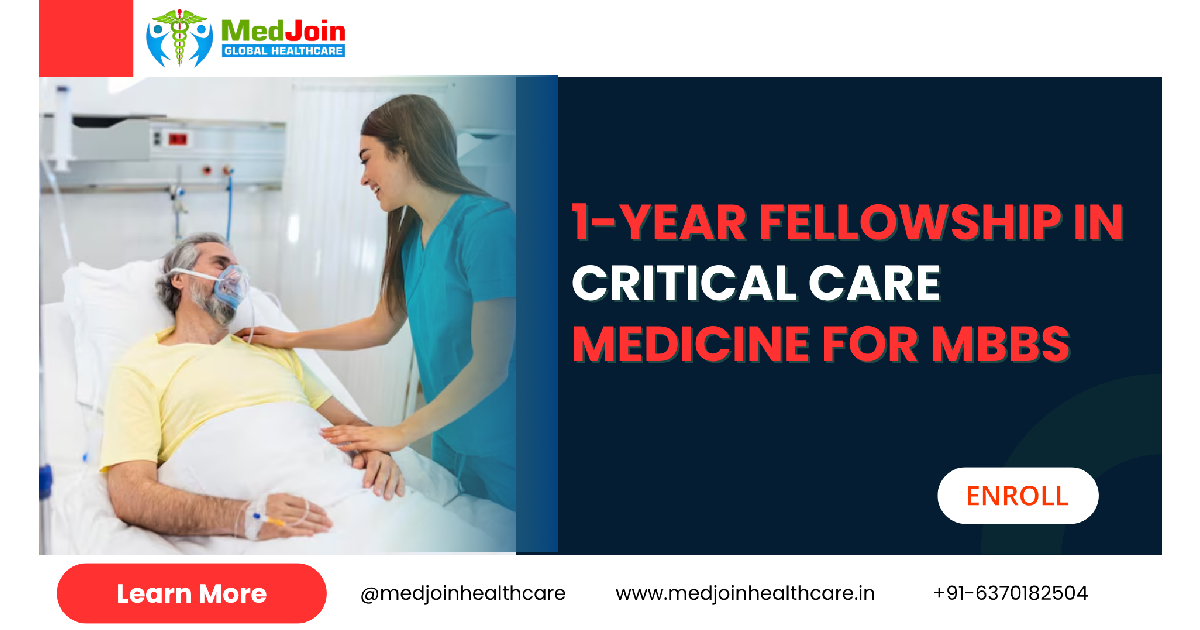
Critical Care Medicine : A 1-Year Comprehensive Program to Transform Your Medical Career
In today’s rapidly evolving healthcare ecosystem, Critical Care Medicine (CCM) has emerged as one of the most demanding, dynamic, and impactful medical specialties. With increasing incidences of complex diseases, pandemics, trauma cases, and life-threatening emergencies, the need for skilled critical care physicians has never been greater.
For MBBS doctors seeking to elevate their clinical expertise, expand career opportunities, and make a meaningful difference in patients' lives, a 1-year Fellowship in Critical Care Medicine offers the perfect pathway.
This comprehensive blog explores everything you need to know about pursuing a fellowship in critical care—from curriculum and skills to career prospects and future growth.
What is Critical Care Medicine?
Critical Care Medicine focuses on the diagnosis, monitoring, and treatment of patients with life-threatening conditions requiring intensive care. These patients are typically managed in Intensive Care Units (ICUs), where advanced technology and specialized medical expertise are crucial.
Critical care physicians deal with conditions such as:
- Acute respiratory failure
- Sepsis and septic shock
- Multi-organ dysfunction
- Cardiac emergencies
- Neurological crises
- Trauma and post-operative complications
This field demands quick decision-making, deep clinical knowledge, and the ability to work under pressure.
Why Choose a Fellowship in Critical Care After MBBS?
1. High Demand for Critical Care Specialists
The shortage of trained intensivists globally has created a strong demand for professionals trained in critical care. Hospitals, especially tertiary and super-specialty centers, are constantly seeking skilled ICU doctors.
2. Career Advancement
An MBBS degree provides foundational knowledge, but specialization significantly enhances career growth. A fellowship helps you:
- Stand out in competitive job markets
- Gain credibility and recognition
- Access higher-paying roles
3. Skill Enhancement
You will develop advanced clinical and procedural skills, including:
- Ventilator management
- Hemodynamic monitoring
- Emergency interventions
- ICU protocols
4. Exposure to Complex Cases
You’ll handle critically ill patients, gaining experience that is unmatched in general practice.
5. Pathway to Super-Specialization
A fellowship can serve as a stepping stone toward further specialization such as DM, DNB, or international certifications.
Overview of the 1-Year Fellowship Program
The 1-year comprehensive fellowship in Critical Care Medicine is designed to provide intensive, hands-on training combined with theoretical knowledge.
Key Features
- Duration: 12 months
- Mode: Full-time clinical training
- Setting: ICU-based hospital environment
- Focus: Practical + academic learning
Curriculum Structure
The fellowship is typically divided into structured modules covering all aspects of critical care.
1. Foundation Module
- Basics of ICU care
- Patient assessment
- Monitoring systems
- Infection control practices
2. Respiratory Critical Care
- Mechanical ventilation
- ARDS management
- Oxygen therapy
- Non-invasive ventilation
3. Cardiovascular Critical Care
- Shock management
- ECG interpretation
- Cardiac monitoring
- Use of vasopressors
4. Neurological Critical Care
- Stroke management
- Coma assessment
- Brain injury protocols
5. Renal and Metabolic Care
- Acute kidney injury
- Dialysis in ICU
- Electrolyte imbalance
6. Sepsis and Infectious Diseases
- Early diagnosis
- Antibiotic stewardship
- Sepsis bundles
7. Trauma and Emergency Care
- Polytrauma management
- Advanced life support
- Emergency procedures
Hands-On Training and Procedures
One of the biggest advantages of this fellowship is practical exposure.
Common Procedures You Will Learn
- Endotracheal intubation
- Central line insertion
- Arterial line placement
- Ventilator setup and adjustments
- Chest tube insertion
- CPR and advanced cardiac life support
Skills You Will Develop
Clinical Skills
- Rapid patient assessment
- Decision-making under pressure
- Multisystem disease management
Technical Skills
- Use of ICU equipment
- Ventilator handling
- Monitoring tools
Soft Skills
- Communication with patients’ families
- Team collaboration
- Stress management
Daily Life of a Critical Care Fellow
A typical day in the fellowship program includes:
- Morning ICU rounds
- Patient case discussions
- Performing procedures
- Monitoring critically ill patients
- Attending academic sessions
- Emergency response duties
This immersive environment ensures continuous learning and real-world exposure.
Eligibility Criteria
To enroll in the fellowship, candidates typically must:
- Hold an MBBS degree
- Have completed an internship
- Possess a valid medical license
Some programs may also require:
- Basic clinical experience
- Entrance interview or screening
Assessment and Certification
Evaluation is continuous and includes:
- Case presentations
- Practical assessments
- Logbook maintenance
- Final examination
Upon successful completion, candidates receive a fellowship certificate, enhancing their professional credentials.
Career Opportunities After Fellowship
Completing a fellowship in critical care opens numerous career pathways.
1. ICU Specialist
Work in hospitals managing critically ill patients.
2. Emergency Medicine Physician
Apply critical care skills in emergency departments.
3. Hospitalist
Handle inpatient care with a focus on complex cases.
4. Academic Roles
Teach and mentor future medical professionals.
5. International Opportunities
Many countries recognize critical care training, offering global career prospects.
Salary Expectations
While salaries vary based on location and experience, critical care specialists generally earn higher than general practitioners.
Approximate Salary Range (India)
- Entry-level: ₹8–15 LPA
- Mid-level: ₹15–30 LPA
- Experienced: ₹30+ LPA
Advantages of a 1-Year Fellowship
Fast-Track Specialization
Unlike long-term postgraduate degrees, this fellowship offers quick specialization.
Practical Focus
Hands-on training ensures real-world readiness.
Cost-Effective
More affordable compared to long-term programs.
Immediate Career Impact
Enhances employability right after completion.
Challenges in Critical Care Medicine
While rewarding, the field comes with challenges:
- High-stress environment
- Long working hours
- Emotional strain
- Critical decision-making
However, with proper training and resilience, these challenges can be effectively managed.
Future of Critical Care Medicine
The future of critical care is promising, driven by:
- Technological advancements
- AI in healthcare
- Tele-ICU systems
- Increasing healthcare infrastructure
Critical care specialists will continue to play a vital role in modern medicine.
How to Choose the Right Fellowship Program
When selecting a program, consider:
- Accreditation and recognition
- Hospital infrastructure
- Faculty expertise
- Hands-on exposure
- Alumni success
Tips for Success During Fellowship
- Stay curious and keep learning
- Be proactive in clinical duties
- Practice procedures regularly
- Maintain a strong work ethic
- Build good relationships with mentors
A Fellowship in Critical Care Medicine for MBBS doctors is more than just a certification—it’s a transformational journey. It equips you with life-saving skills, enhances your clinical confidence, and opens doors to a highly rewarding medical career.
In just one year, you can transition from a general practitioner to a specialized critical care professional capable of handling the most challenging medical situations.
If you are passionate about saving lives, thrive under pressure, and seek a fulfilling medical career, this fellowship could be your ideal next step.
Frequently Asked Questions (FAQs)
1. Is a fellowship enough to work in ICU?
Yes, many hospitals accept fellowship-trained doctors for ICU roles, especially with hands-on experience.
2. Can I pursue this after internship?
Yes, most programs allow enrollment after MBBS and internship completion.
3. Is it better than MD/DNB?
It depends on your goals. Fellowship offers faster entry into specialization, while MD/DNB provides deeper academic training.
4. Are there international opportunities?
Yes, with additional certifications, you can explore global roles.
Final Thoughts
The healthcare industry needs skilled critical care professionals now more than ever. By enrolling in a 1-year comprehensive fellowship, you are not just advancing your career—you are preparing to make a real difference where it matters most: saving lives.
Start your journey into Critical Care Medicine today and become the doctor patients depend on in their most critical moments.