
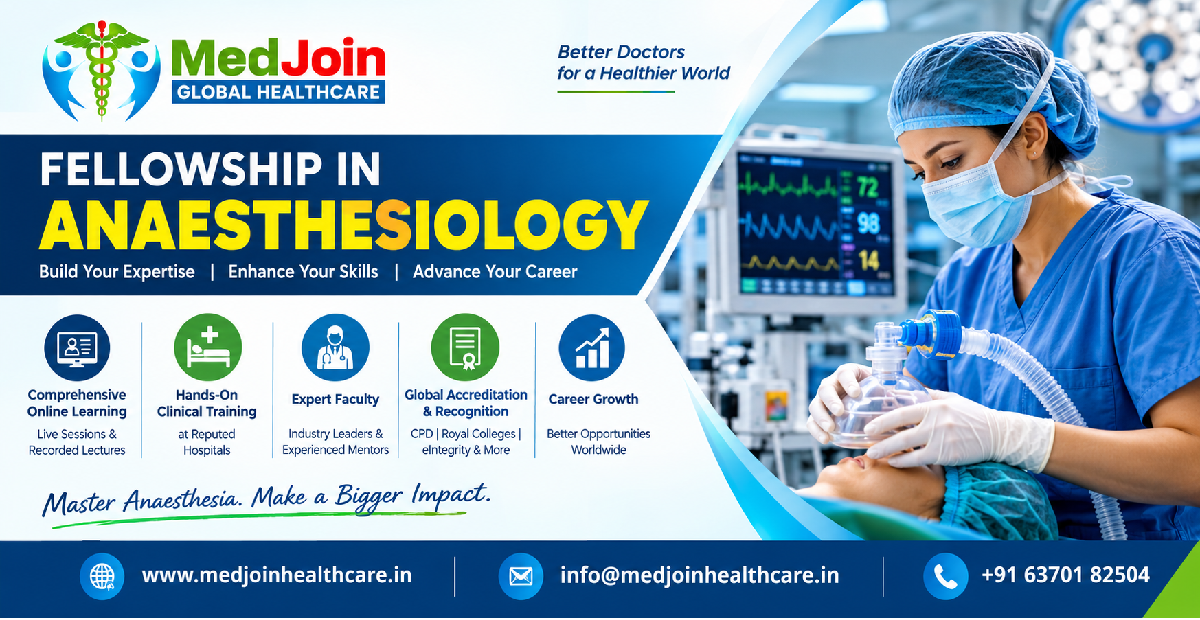
Introduction: Why Anaesthesiology Is an Essential Medical Specialty
Anaesthesiology is one of the most important specialties in modern healthcare. From routine surgical procedures to complex operations, emergency interventions, intensive care management, and pain relief, anaesthesiology plays a critical role in ensuring patient safety and improving clinical outcomes.
As healthcare systems continue to evolve, the demand for skilled medical professionals with knowledge of anaesthesia, perioperative medicine, critical care, airway management, and emergency resuscitation remains significant.
A Fellowship in Anaesthesiology is an educational program designed to enhance doctors' theoretical understanding and, where appropriate, practical competencies in anaesthesia-related medical care.
Depending on the institution, fellowship programs may provide specialized training in:
- General anaesthesia principles
- Regional anaesthesia techniques
- Local anaesthesia and procedural sedation
- Airway management and respiratory support
- Preoperative patient assessment
- Intraoperative patient monitoring
- Postoperative recovery and pain management
- Critical care and intensive care medicine
- Emergency resuscitation
- Anaesthesia pharmacology
- Perioperative patient safety
- Obstetric and pediatric anaesthesia
- Cardiovascular and neuroanaesthesia fundamentals
- Multidisciplinary clinical decision-making
For MBBS graduates, an appropriately designed educational fellowship may provide valuable exposure to anaesthesia-related concepts and support professional development.
For qualified anaesthesiologists, advanced fellowships may provide opportunities to develop subspecialty knowledge, improve procedural expertise, and participate in specialized clinical services.
However, it is essential to understand that a fellowship certificate does not automatically confer specialist recognition or independent authorization to administer anaesthesia. Clinical privileges depend on recognized qualifications, applicable regulations, professional registration, institutional credentialing, and demonstrated competence.
This comprehensive guide explains everything doctors should know about pursuing a Fellowship in Anaesthesiology in India, including eligibility, curriculum, duration, training opportunities, career scope, fees, and future prospects.
What Is a Fellowship in Anaesthesiology?
A Fellowship in Anaesthesiology is a structured educational or clinical training program focused on developing knowledge and skills related to anaesthesia, perioperative care, and associated medical disciplines.
The exact scope of a fellowship depends on its intended participants and the organization offering the program.
Some fellowships are designed specifically for doctors who already hold recognized postgraduate qualifications in anaesthesiology. These programs may provide advanced subspecialty training in areas such as cardiac anaesthesia, neuroanaesthesia, pediatric anaesthesia, or regional anaesthesia.
Other programs are educational fellowships intended to introduce MBBS graduates or general physicians to important principles of anaesthesia and perioperative medicine.
These programs may include online lectures, clinical case discussions, simulation-based learning, supervised observations, and hospital-based educational activities.
Key Objectives of a Fellowship in Anaesthesiology
The main objectives may include:
- Developing an understanding of fundamental anaesthesia principles.
- Improving knowledge of preoperative patient assessment.
- Learning the pharmacology of commonly used anaesthetic agents.
- Understanding airway anatomy and airway management principles.
- Learning about patient monitoring during surgical procedures.
- Developing awareness of anaesthesia-related complications.
- Understanding postoperative recovery and pain management.
- Improving emergency assessment and resuscitation knowledge.
- Learning about critical care and ventilatory support.
- Strengthening clinical reasoning and multidisciplinary communication.
A high-quality fellowship should clearly define its educational objectives, participant eligibility, teaching methodology, assessment standards, and the limits of the qualification awarded.
Why Is Anaesthesiology Important?
Anaesthesiology extends far beyond administering medications that produce unconsciousness.
Anaesthesiologists contribute to patient care before, during, and after medical procedures.
Their responsibilities may include evaluating patient fitness for surgery, developing individualized anaesthetic plans, managing physiological changes during operations, providing advanced airway support, and supporting postoperative recovery.
Anaesthesiologists also contribute to intensive care units, trauma management, pain medicine, emergency resuscitation, and specialized procedural services.
Modern anaesthesiology is therefore closely connected with several important clinical disciplines, including surgery, emergency medicine, critical care, cardiology, pulmonology, obstetrics, and pain management.
Why Choose a Fellowship in Anaesthesiology?
Healthcare professionals increasingly recognize the importance of structured continuing medical education and ongoing professional development.
Anaesthesiology is a particularly relevant area because it combines physiology, pharmacology, patient monitoring, emergency response, and complex clinical decision-making.
Develop Knowledge of Perioperative Medicine
Perioperative medicine involves the comprehensive management of patients before, during, and after surgical procedures.
A fellowship can introduce participants to the principles of evaluating surgical risk, optimizing medical conditions, monitoring patients, and recognizing postoperative complications.
These topics are relevant to many doctors involved in hospital-based patient care.
Strengthen Understanding of Emergency Care
Airway compromise, respiratory failure, shock, cardiac arrest, and other life-threatening emergencies require rapid assessment and coordinated management.
Anaesthesia-related education can improve a doctor's understanding of emergency physiology, resuscitation principles, and the importance of timely escalation.
Practical interventions must be performed only by appropriately trained and authorized clinicians.
Learn About Modern Anaesthesia Technology
Anaesthesiology involves the use of sophisticated medical equipment, including:
- Anaesthesia workstations
- Multiparameter patient monitors
- Ventilators
- Capnography systems
- Infusion pumps
- Ultrasound equipment
- Airway visualization devices
- Neuromuscular monitoring systems
Understanding the principles and limitations of these technologies can strengthen a doctor's appreciation of perioperative safety.
Improve Multidisciplinary Communication
Anaesthesiologists work closely with surgeons, nurses, intensivists, emergency physicians, and other healthcare professionals.
Structured anaesthesia education can help participants understand the importance of teamwork, communication, handover practices, and coordinated patient care.
Explore Future Specialization Opportunities
For medical graduates interested in anaesthesiology, an introductory educational fellowship may help clarify their long-term professional interests.
For qualified anaesthesiologists, an advanced fellowship may support further subspecialty development.
Understand Patient Safety and Risk Management
Anaesthesiology places considerable emphasis on identifying risks, preventing avoidable complications, and responding effectively when emergencies occur.
Fellowship curricula commonly cover patient identification, equipment safety, monitoring standards, medication safety, infection prevention, and clinical documentation.
Support Continuing Professional Development
Medical knowledge changes continuously.
Fellowship education may help doctors review emerging concepts, understand contemporary clinical practices, and identify areas requiring further training.
The value of a particular fellowship depends on its academic quality, faculty expertise, clinical exposure, and relevance to the doctor's existing qualifications.
Fellowship in Anaesthesiology Eligibility Criteria
Eligibility is one of the most important factors to consider before enrolling in any medical fellowship program.
The minimum educational qualifications depend on whether the fellowship is an introductory educational program or an advanced clinical subspecialty fellowship.
Eligibility for MBBS Doctors
MBBS graduates may be eligible for certain educational fellowship programs in anaesthesiology.
Typical admission considerations include:
- An MBBS degree from an appropriately recognized medical institution.
- Completion of compulsory rotating medical internship, where required.
- Valid medical registration where applicable.
- Interest in anaesthesia, perioperative medicine, emergency care, or critical care.
- Ability to participate in online or hospital-based learning activities.
Important: An MBBS graduate completing a non-recognized educational fellowship does not thereby become a qualified specialist anaesthesiologist. Independent specialist practice requires the qualifications, registration, privileges, and competence required under applicable rules.
4.2 Eligibility for MD Anaesthesiology Doctors
Doctors who have completed MD Anaesthesiology may pursue advanced fellowships to develop subspecialty expertise.
Depending on the fellowship, opportunities may include:
- Cardiac anaesthesia
- Neuroanaesthesia
- Pediatric anaesthesia
- Obstetric anaesthesia
- Regional anaesthesia
- Pain medicine
- Critical care medicine
- Transplant anaesthesia
- Perioperative medicine
Eligibility for each advanced program must be checked individually.
Eligibility for DNB Anaesthesiology Doctors
Doctors holding an appropriately recognized DNB qualification in Anaesthesiology may also qualify for various advanced fellowship programs.
Selection criteria may include previous clinical experience, postgraduate qualifications, entrance examinations, interviews, and institutional requirements.
Eligibility for Resident Doctors
Doctors undergoing postgraduate training in anaesthesiology may participate in supplementary educational courses, workshops, and selected fellowship-style learning activities, subject to their institution's rules.
Full-time advanced clinical fellowships commonly require completion of postgraduate specialty training.
Eligibility for General Physicians
General physicians may benefit from educational programs covering preoperative assessment, resuscitation principles, patient monitoring, and postoperative care.
However, general medical practice and specialist anaesthesia practice have different competency and credentialing requirements.
Eligibility for International Medical Graduates
International medical graduates may be considered for educational fellowships depending on institutional policies.
For clinical training in India, foreign doctors must comply with applicable registration, temporary permission, immigration, and hospital requirements.
International applicants should verify eligibility with the relevant authorities before making travel or enrollment arrangements.
Eligibility Comparison Table
| Medical Qualification | Potential Fellowship Opportunity | Important Consideration |
|---|---|---|
| MBBS | Introductory educational fellowship | Does not confer specialist anaesthesia privileges |
| MD Anaesthesiology | Advanced clinical or subspecialty fellowship | Subject to program-specific eligibility |
| DNB Anaesthesiology | Advanced clinical or subspecialty fellowship | Subject to program-specific eligibility |
| Recognized postgraduate anaesthesia diploma | Selected programs | Eligibility varies |
| Resident Doctor | Supplementary education or workshops | Institutional permission may be required |
| General Physician | Anaesthesia-related educational courses | No automatic expansion of clinical scope |
| International Medical Graduate | Educational or approved clinical program | Indian registration or permission may be necessary |
The National Medical Commission (NMC) regulates recognized medical qualifications and postgraduate medical education in India. MD Anaesthesiology is among the recognized postgraduate broad-specialty qualifications listed in the applicable regulatory framework. National Medical Commission
Fellowship in Anaesthesiology Course Duration
The duration of a Fellowship in Anaesthesiology varies depending on the course provider, educational objectives, participant qualifications, and type of training.
Programs may range from short professional-development courses to full-time advanced clinical fellowships.
Six-Month Educational Fellowship
A six-month program may focus on foundational anaesthesia knowledge and selected clinical topics.
It may include recorded lectures, live classes, assessments, case discussions, and simulation-based education.
Such programs are generally intended for knowledge development rather than specialist qualification.
One-Year Fellowship in Anaesthesiology
A one-year fellowship can provide a more comprehensive educational structure.
An example of a hybrid educational model is:
Total Duration: 12 Months
- Nine months of structured online learning.
- Three months of optional hospital-based observation or supervised educational exposure.
This is an illustrative course structure, not a universal standard or a confirmed offering of any particular institution.
Clinical components must be matched to the participant's qualifications, institutional authorization, and available supervision.
Full-Time Advanced Clinical Fellowship
Advanced clinical fellowships for qualified anaesthesiologists may require substantial hospital attendance, supervised patient care, procedural training, case logs, and competency assessments.
The duration may vary by subspecialty and institution.
Online Fellowship in Anaesthesiology
An online educational fellowship may include:
- Recorded video lectures
- Live interactive teaching sessions
- Clinical case discussions
- Digital study materials
- Online assessments
- Faculty-led question-and-answer sessions
- Evidence-based learning resources
Online education can support theoretical learning and continuing professional development.
However, online learning alone cannot establish competence in high-risk anaesthetic procedures or replace supervised clinical training.
Hybrid Fellowship in Anaesthesiology
Hybrid learning combines digital education with approved in-person educational activities.
For example, students may first complete online modules in anaesthesia fundamentals before attending hospital-based teaching sessions or observational activities.
Depending on eligibility and institutional policies, these activities may include:
- Operating theatre orientation
- Anaesthesia equipment demonstrations
- Preoperative assessment discussions
- Airway management simulation
- Recovery-room observation
- Critical care case discussions
- Patient monitoring demonstrations
- Multidisciplinary clinical meetings
For doctors already qualified to provide anaesthesia, advanced programs may include supervised procedural training and competency assessment.
Hospital-Based Clinical Training in Anaesthesiology
Hospital-based learning is an important component of anaesthesia education because it allows doctors to observe how theoretical knowledge is applied in real clinical environments.
Anaesthesiology involves continuous patient assessment, clinical decision-making, monitoring, teamwork, and emergency preparedness. These skills cannot be fully understood through textbooks and online lectures alone.
For appropriately qualified doctors, structured hospital-based clinical training can support the development of practical competencies.
For MBBS graduates enrolled in introductory programs, hospital exposure may primarily involve observation, demonstrations, simulation, and supervised educational discussions.
Operating Theatre Exposure
Operating theatres provide opportunities to understand the clinical environment in which anaesthesia professionals work.
Educational activities may include observing:
- Preoperative patient verification
- Anaesthesia workstation preparation
- Equipment safety checks
- Patient monitoring
- Communication between surgical and anaesthesia teams
- Perioperative documentation
- Patient transfer procedures
- Postoperative handover
This exposure helps learners appreciate the importance of planning, teamwork, and vigilance during surgical procedures.
Preoperative Assessment Training
Preoperative assessment is essential for identifying patients who may require additional evaluation or optimization before surgery.
During supervised educational sessions, learners may observe how anaesthesia teams review medical histories, assess comorbidities, evaluate airway risks, and communicate perioperative concerns.
Case-based discussions can help doctors understand how different medical conditions influence surgical risk.
Airway Management Simulation
Simulation-based training is particularly useful for learning airway management principles.
Training activities may involve mannequins, airway models, and simulated emergency scenarios.
These sessions can introduce participants to airway assessment, oxygenation concepts, equipment identification, and the importance of following established protocols.
Simulation provides a controlled learning environment without exposing patients to unnecessary risks.
Intensive Care Unit Exposure
Intensive care units provide opportunities to observe the management of critically ill patients.
Educational activities may focus on:
- Patient monitoring
- Respiratory support
- Mechanical ventilation concepts
- Hemodynamic assessment
- Multidisciplinary ward rounds
- Infection prevention
- Clinical documentation
- Communication with patients and families
Actual clinical responsibilities depend on the learner's qualifications and institutional authorization.
Post-Anaesthesia Care Unit Training
Post-anaesthesia care units are responsible for monitoring patients recovering from anaesthesia.
Observational learning may include understanding recovery assessments, pain evaluation, respiratory monitoring, and recognition of postoperative complications.
Clinical Case Discussions
Case discussions help connect medical knowledge with real-world clinical reasoning.
Faculty may discuss patients with:
- Cardiovascular disease
- Diabetes mellitus
- Chronic respiratory conditions
- Renal impairment
- Obesity
- Difficult airway risk
- Emergency surgical requirements
- Complex postoperative recovery
Such discussions can improve understanding of risk assessment and multidisciplinary decision-making.
Clinical Logbooks and Assessments
For advanced clinical fellowships, a structured logbook can help document educational progress.
Depending on the program, a logbook may include supervised activities, case discussions, simulations, faculty feedback, and competency assessments.
An observational logbook should not be represented as proof of independent procedural competence.
Why Hospital-Based Training Matters
Anaesthesiology requires more than theoretical knowledge.
Safe practice involves the integration of clinical judgment, technical competence, monitoring, teamwork, and the ability to respond to unexpected complications.
International anaesthesia safety standards emphasize appropriate training, continuous vigilance, equipment availability, monitoring, and safe transfer of patient care. WFSA Resource Library
For this reason, doctors should evaluate the quality and relevance of clinical training before choosing a fellowship.
Career Scope After Fellowship in Anaesthesiology in India
Anaesthesiology offers several professional development pathways within modern healthcare.
However, career opportunities depend primarily on the doctor's recognized medical qualifications, experience, clinical competence, registration, and hospital credentialing.
A fellowship may enhance relevant knowledge or supplement existing specialist expertise, but it does not independently establish eligibility for specialist appointments.
Career Opportunities in Multispecialty Hospitals
Multispecialty hospitals require anaesthesia services for surgical procedures across numerous departments.
Qualified anaesthesiologists may work with teams specializing in:
- General surgery
- Orthopedics
- Obstetrics and gynecology
- Neurosurgery
- Cardiothoracic surgery
- Urology
- Gastrointestinal surgery
- Plastic surgery
- Pediatric surgery
- Oncology
Anaesthesiologists contribute to preoperative planning, intraoperative management, postoperative recovery, and perioperative safety.
Doctors completing advanced fellowships may be better prepared for selected specialist responsibilities, depending on their prior qualifications and the competencies gained.
Career Opportunities in Intensive Care Units
Critical care medicine is closely associated with anaesthesiology.
Qualified anaesthesiologists may pursue further training and careers in intensive care medicine.
Their responsibilities can include respiratory support, hemodynamic stabilization, sedation management, and multidisciplinary management of critically ill patients.
Doctors interested in advanced critical care careers should explore recognized postgraduate and subspecialty training pathways.
Opportunities in Emergency and Trauma Care
Emergency and trauma departments frequently manage patients with life-threatening respiratory or cardiovascular conditions.
Anaesthesiologists may contribute to airway management, resuscitation, emergency surgery, and stabilization of critically ill patients.
Additional training in trauma anaesthesia, critical care, or emergency medicine may be beneficial for appropriately qualified clinicians.
Career Opportunities in Cardiac Hospitals
Cardiac hospitals require specialized perioperative services for patients undergoing complex cardiovascular procedures.
Cardiac anaesthesia is an advanced field involving sophisticated monitoring, cardiovascular physiology, and multidisciplinary care.
Doctors with recognized postgraduate anaesthesia qualifications may pursue eligible advanced cardiac anaesthesia training.
Career Opportunities in Neurosurgical Hospitals
Neurosurgical patients may require specialized management of cerebral physiology, ventilation, blood pressure, and postoperative neurological recovery.
Neuroanaesthesia is therefore an important subspecialty for qualified anaesthesiologists.
Advanced training may support careers in specialized neurosurgical hospitals and neurocritical care services.
Career Opportunities in Pain Management
Pain medicine is another potential career pathway for qualified anaesthesiologists.
Specialized pain services may manage patients experiencing:
- Chronic back pain
- Neuropathic pain
- Cancer-related pain
- Postoperative pain
- Musculoskeletal pain
- Complex chronic pain conditions
Pain medicine requires appropriate specialist training, careful assessment, and multidisciplinary management.
Opportunities in Medical Education
Experienced and appropriately qualified doctors may contribute to medical education.
Possible activities include:
- Teaching undergraduate medical students
- Participating in postgraduate education
- Delivering continuing medical education sessions
- Conducting simulation workshops
- Developing educational materials
- Supporting clinical skills training
Formal medical faculty appointments are subject to applicable qualification and experience requirements.
Career Opportunities in Medical Research
Anaesthesiology offers research opportunities in several important areas.
Examples include:
- Perioperative patient safety
- Postoperative pain management
- Airway management
- Critical care outcomes
- Anaesthesia pharmacology
- Regional anaesthesia
- Patient monitoring
- Enhanced recovery after surgery
- Clinical simulation
- Healthcare quality improvement
Doctors interested in research may participate in appropriately supervised projects and academic collaborations.
Opportunities in Healthcare Technology
Medical technology companies develop equipment and software used in anaesthesia and critical care.
Doctors with relevant clinical knowledge may contribute to:
- Medical device research
- Clinical education
- Product development
- Medical affairs
- Healthcare technology evaluation
- Clinical workflow design
- Patient safety initiatives
These opportunities may require additional experience in research, technology, education, or healthcare management.
International Career Opportunities
Qualified anaesthesiologists may explore international career opportunities, subject to country-specific licensing and credentialing requirements.
Potential destinations include:
- United Arab Emirates
- Saudi Arabia
- Qatar
- Oman
- United Kingdom
- Australia
- Canada
- United States
International employers and regulators generally assess recognized qualifications, specialist training, professional experience, examinations, and registration status.
A private fellowship certificate should not be assumed to provide eligibility for international specialist licensing.
Fellowship in Anaesthesiology After MBBS: Is It a Good Career Option?
Many MBBS graduates are interested in anaesthesiology because of its central role in surgery, emergency medicine, and critical care.
An introductory educational fellowship may be useful for doctors who want to explore the specialty before making long-term career decisions.
Benefits for MBBS Graduates
An appropriately designed program may help participants:
- Understand fundamental anaesthesia concepts.
- Explore the scope of perioperative medicine.
- Improve knowledge of respiratory and cardiovascular physiology.
- Understand the principles of patient monitoring.
- Learn about emergency recognition and escalation.
- Observe multidisciplinary hospital workflows.
- Develop an interest in postgraduate anaesthesiology.
- Strengthen theoretical knowledge relevant to hospital-based medicine.
Can an MBBS Doctor Become an Anaesthesiologist Through a Fellowship?
No. A short educational fellowship alone does not make an MBBS graduate a recognized specialist anaesthesiologist in India.
Doctors seeking recognized specialist qualifications should pursue an applicable postgraduate training pathway.
Common pathways include MD Anaesthesiology and DNB Anaesthesiology, subject to the prevailing admission and regulatory requirements.
The National Board of Examinations in Medical Sciences identifies NEET-PG as an admission examination for several recognized postgraduate medical pathways, including applicable DNB programs. NBE
How Can an MBBS Graduate Build a Career in Anaesthesiology?
A typical pathway is:
Step 1: Complete MBBS from an appropriately recognized institution.
Step 2: Complete the required medical internship.
Step 3: Obtain the necessary medical registration.
Step 4: Prepare for the relevant postgraduate entrance examination.
Step 5: Secure admission to a recognized anaesthesiology postgraduate program.
Step 6: Complete structured specialist training and required examinations.
Step 7: Obtain applicable specialist registration and institutional privileges.
Step 8: Consider advanced fellowship training in a subspecialty.
An introductory educational fellowship may support learning during this journey, but it is not a substitute for the recognized postgraduate qualification.
Fellowship in Anaesthesiology After MD or DNB
For doctors who have completed MD or DNB Anaesthesiology, advanced fellowship programs can provide opportunities for focused professional development.
Subspecialty training may be particularly useful for anaesthesiologists interested in complex surgical services, specialized patient populations, or advanced perioperative care.
Advanced Fellowship Options
| Fellowship Specialization | Major Area of Focus | Potential Career Setting |
|---|---|---|
| Cardiac Anaesthesia | Cardiovascular surgery and advanced monitoring | Cardiac hospitals |
| Neuroanaesthesia | Neurosurgical and neurological perioperative care | Neurosurgical centers |
| Pediatric Anaesthesia | Anaesthesia for infants and children | Pediatric hospitals |
| Obstetric Anaesthesia | Maternal and obstetric perioperative care | Maternity hospitals |
| Regional Anaesthesia | Nerve blocks and regional analgesia | Surgical hospitals |
| Pain Medicine | Acute and chronic pain management | Pain clinics and hospitals |
| Critical Care Medicine | Management of critically ill patients | Intensive care units |
| Transplant Anaesthesia | Anaesthesia for organ transplantation | Transplant centers |
| Perioperative Medicine | Comprehensive surgical patient management | Multispecialty hospitals |
Not every fellowship is recognized as a formal specialist or super-specialist qualification.
Doctors should verify the academic status, eligibility, duration, clinical exposure, and certification of individual programs.
Why Pursue Advanced Fellowship Training?
Advanced fellowship education may help qualified anaesthesiologists develop deeper knowledge in a particular clinical area.
It can also provide exposure to specialized patient populations, advanced monitoring systems, multidisciplinary teams, and complex clinical decision-making.
For doctors interested in academic careers, fellowships may offer opportunities to participate in clinical research, audits, teaching, and scientific presentations.
The professional value of advanced training depends on the quality of the institution and the competencies developed.
Fellowship in Anaesthesiology Fees in India
The fees for a Fellowship in Anaesthesiology vary considerably depending on the institution, duration, educational model, faculty, and clinical training arrangements.
There is no universal fee structure for all fellowship programs in India.
Factors Affecting Fellowship Fees
Course Duration: Longer programs may involve additional teaching, assessments, and administrative costs.
Training Format: Online educational courses and full-time hospital-based clinical fellowships have different resource requirements.
Faculty Expertise: Programs involving experienced specialists and subspecialty faculty may have different fee structures.
Clinical Training: Hospital-based learning may involve simulation facilities, supervision, administrative arrangements, and clinical infrastructure.
Learning Resources: Recorded lectures, learning management systems, study materials, and assessments may be included in the program fee.
Certification: Some programs include assessment and certification charges, while others charge separately.
Accommodation and Travel: Hospital-based training may require additional travel and living expenses.
Illustrative Fee Planning Table
The following table describes common cost components. It is not a quotation or a verified list of current fellowship prices.
| Fee Component | Online Educational Fellowship | Hybrid Educational Fellowship | Full-Time Clinical Fellowship |
|---|---|---|---|
| Academic tuition | Usually applicable | Usually applicable | Program-dependent |
| Online learning platform | May be included | May be included | Program-dependent |
| Live teaching sessions | May be included | May be included | Program-dependent |
| Hospital exposure | Usually not included | May be included | Central component |
| Simulation training | Program-dependent | Program-dependent | Program-dependent |
| Accommodation | Usually unnecessary | May be additional | May be additional |
| Assessment charges | Program-dependent | Program-dependent | Program-dependent |
| Certification charges | Program-dependent | Program-dependent | Program-dependent |
How to Compare Fellowship Fees
Doctors should request a written fee breakdown before enrollment.
It is important to establish whether the quoted fee includes teaching sessions, learning materials, examinations, hospital-based activities, certification, and applicable taxes.
Candidates should also confirm the refund policy and any conditions relating to optional clinical training.
Does a Higher Fee Guarantee Better Training?
No.
A higher fee does not automatically indicate better academic quality or stronger career outcomes.
Doctors should evaluate faculty qualifications, curriculum quality, supervision, assessment methods, clinical training arrangements, and the recognition status of the qualification.
Online vs Hybrid vs Hospital-Based Fellowship in Anaesthesiology
Choosing the right learning format is an important decision.
Different educational models serve different purposes.
| Feature | Online Fellowship | Hybrid Fellowship | Hospital-Based Clinical Fellowship |
|---|---|---|---|
| Learning format | Digital | Online and in-person | Primarily in-person |
| Theoretical education | Yes | Yes | Yes |
| Recorded lectures | Common | Common | Varies |
| Live faculty interaction | Program-dependent | Program-dependent | Common |
| Clinical observation | Usually unavailable | May be available | Common |
| Simulation | May be virtual | May include in-person sessions | Often available |
| Supervised procedural training | No | Only when explicitly authorized | Depends on qualifications and program |
| Flexibility | High | Moderate | Lower |
| Suitable for working doctors | Often | Depends on schedule | Depends on leave availability |
| Specialist qualification | Not automatic | Not automatic | Depends on formal recognition |
Benefits of Online Learning
Online programs can help working doctors access structured medical education without relocating.
Recorded lectures and digital resources allow participants to review complex topics at their own pace.
Live discussions may also provide opportunities to interact with faculty and clarify clinical concepts.
Benefits of Hybrid Learning
Hybrid learning combines flexibility with in-person educational exposure.
Participants can develop theoretical knowledge before attending hospital-based teaching activities.
This may be especially useful for understanding equipment, workflows, monitoring systems, and multidisciplinary communication.
Benefits of Hospital-Based Clinical Fellowships
Full-time clinical fellowships may provide deeper clinical exposure and structured supervision for doctors who already meet the necessary professional eligibility requirements.
Such programs are particularly relevant to qualified anaesthesiologists seeking advanced subspecialty training.
Which Format Is Best?
The most appropriate format depends on the doctor's qualifications and objectives.
An MBBS graduate interested in introductory learning may benefit from a structured educational program.
A qualified anaesthesiologist seeking advanced procedural competence should prioritize an appropriately supervised clinical fellowship with clearly defined competencies.
Career Opportunities in Different Anaesthesiology Subspecialties
Anaesthesiology is a broad specialty with several advanced areas of practice.
Understanding these subspecialties can help doctors identify their long-term professional interests.
Cardiac Anaesthesia
Cardiac anaesthesia focuses on the perioperative management of patients undergoing cardiac surgery and selected cardiovascular interventions.
The field requires knowledge of cardiovascular physiology, complex hemodynamic monitoring, cardiac medications, and specialized perioperative care.
Qualified anaesthesiologists may pursue advanced training to work in cardiac surgical centers.
Neuroanaesthesia
Neuroanaesthesia involves the care of patients undergoing neurosurgical procedures.
Important considerations include cerebral perfusion, intracranial pressure, neurological monitoring, and postoperative neurological assessment.
This subspecialty is relevant to hospitals offering advanced neurosurgical services.
Pediatric Anaesthesia
Pediatric anaesthesia focuses on infants, children, and adolescents.
Children require age-appropriate equipment, medication considerations, monitoring, and specialized clinical expertise.
Advanced training may support careers in pediatric surgical hospitals.
Obstetric Anaesthesia
Obstetric anaesthesia involves maternal care during labor, cesarean delivery, and obstetric emergencies.
The specialty requires understanding of pregnancy-related physiological changes and the unique risks associated with maternal and fetal care.
Regional Anaesthesia
Regional anaesthesia is an important field involving neuraxial and peripheral nerve block techniques.
Qualified specialists may pursue additional training in ultrasound-guided regional anaesthesia, perioperative analgesia, and related patient safety practices.
Pain Medicine
Pain medicine focuses on evaluating and managing acute and chronic pain.
It often requires collaboration with rehabilitation specialists, neurologists, oncologists, psychologists, and other healthcare professionals.
Critical Care Medicine
Critical care medicine involves the management of patients with life-threatening illnesses.
Anaesthesiologists with appropriate advanced qualifications may work in intensive care settings.
Transplant Anaesthesia
Transplant anaesthesia involves complex perioperative management during organ transplantation.
This area requires specialized knowledge of physiology, organ dysfunction, hemodynamics, and multidisciplinary coordination.
Skills Developed Through Anaesthesiology Education
A well-structured fellowship should identify specific educational outcomes.
Depending on the participant's existing qualifications and the course format, these outcomes may include improvements in theoretical knowledge, clinical reasoning, communication, and practical competence.
Clinical Knowledge
Participants may strengthen their understanding of:
- Perioperative physiology
- Anaesthesia pharmacology
- Patient assessment
- Airway management principles
- Respiratory support
- Hemodynamic monitoring
- Pain management
- Emergency recognition
- Critical care fundamentals
Clinical Reasoning
Case-based learning can help doctors understand how different medical conditions affect perioperative risk.
For example, a patient with diabetes, cardiovascular disease, and renal impairment may require careful multidisciplinary planning before surgery.
Educational discussions can improve the learner's understanding of these interactions.
Communication Skills
Effective communication is essential in operating theatres and intensive care units.
Anaesthesia education emphasizes clear handovers, escalation of concerns, patient communication, and multidisciplinary coordination.
Patient Safety Awareness
Participants should learn to recognize the importance of safety checklists, monitoring, documentation, equipment checks, and clinical protocols.
Research and Academic Skills
Research-oriented modules may help participants develop literature-search skills, critical appraisal abilities, and an understanding of medical research methodology.
Professional Development
Fellowship education may encourage reflective practice, continuing education, and identification of future learning needs.
Importance of Anaesthesiology in Modern Healthcare
Anaesthesiology is essential to the functioning of contemporary surgical and critical care services.
Its importance extends across multiple stages of patient management.
Before Surgery
Anaesthesia professionals evaluate patients, identify potential risks, and contribute to perioperative planning.
This may involve reviewing medical conditions, medications, previous anaesthesia experiences, and relevant investigations.
During Surgery
Qualified anaesthesia professionals maintain appropriate anaesthetic conditions and monitor vital physiological functions.
They respond to changes in respiratory status, circulation, temperature, and other clinical parameters.
After Surgery
Anaesthesia teams contribute to postoperative recovery, pain management, and recognition of complications.
During Emergencies
Anaesthesiologists may participate in resuscitation teams, emergency airway management, trauma care, and critical care services.
In Intensive Care Units
Qualified anaesthesiologists may provide care for critically ill patients, particularly where they have appropriate intensive care training and privileges.
In Pain Services
Anaesthesiologists with pain medicine expertise may help manage complex pain conditions through multidisciplinary treatment approaches.
The broad clinical role of anaesthesiology makes it an important area of medical education and specialization.
Future Scope of Anaesthesiology in India
The future of anaesthesiology is closely connected with developments in surgical care, medical technology, intensive care, and patient safety.
Several trends may influence the specialty over the coming years.
Expansion of Surgical Services
The development of hospitals and surgical facilities creates a continuing need for safe perioperative services.
As surgical care becomes more complex, specialist anaesthesia expertise remains essential.
Growth of Minimally Invasive Surgery
Laparoscopic, endoscopic, and robotic procedures may involve specialized positioning, ventilation, monitoring, and perioperative considerations.
Anaesthesiologists play an important role in adapting care to these procedural requirements.
Greater Emphasis on Patient Safety
Healthcare institutions increasingly focus on standardized protocols, quality improvement, and prevention of avoidable complications.
Anaesthesiology is closely associated with these objectives.
Advances in Patient Monitoring
New monitoring technologies may improve the availability and interpretation of physiological information.
Doctors will need to understand the benefits, limitations, and appropriate clinical use of emerging technologies.
Artificial Intelligence in Anaesthesiology
Artificial intelligence may support research and development in areas such as:
- Clinical risk prediction
- Perioperative decision support
- Physiological trend analysis
- Workflow optimization
- Documentation
- Quality improvement
- Clinical education
AI systems require appropriate validation, governance, and clinical oversight.
They should not be treated as substitutes for qualified anaesthesia professionals.
Development of Perioperative Medicine
Perioperative medicine increasingly emphasizes coordinated care throughout the surgical journey.
This approach includes preoperative optimization, intraoperative safety, postoperative recovery, and long-term patient outcomes.
Growth of Simulation-Based Medical Education
Simulation allows healthcare professionals to practice decision-making and teamwork in controlled environments.
It can be particularly useful for rare emergencies, crisis communication, and technical skills development.
Increasing Importance of Continuing Medical Education
Medical professionals must continuously update their knowledge.
Structured educational programs, workshops, conferences, and fellowships can contribute to lifelong learning.
Specialized Training Opportunities
Qualified anaesthesiologists may increasingly seek advanced education in complex clinical areas such as cardiac anaesthesia, neuroanaesthesia, pain medicine, and critical care.
The availability and value of these programs will depend on institutional resources, training standards, and regulatory requirements.
Fellowship in Anaesthesiology Salary and Earning Potential in India
Salary is an important consideration for doctors planning their careers.
However, earnings in anaesthesiology vary substantially.
Factors influencing compensation include:
- Recognized medical qualifications
- Postgraduate specialization
- Years of clinical experience
- Type of hospital
- Geographic location
- Employment arrangements
- Clinical responsibilities
- Subspecialty expertise
- Working hours
- Institutional privileges
Salary Expectations for MBBS Graduates
MBBS doctors who complete introductory anaesthesia education remain eligible only for roles consistent with their existing qualifications and registration.
An educational fellowship does not automatically qualify them for specialist anaesthesiologist salaries or appointments.
Salary Expectations for MD/DNB Anaesthesiologists
Qualified anaesthesiologists may pursue specialist employment in public or private hospitals.
Their compensation depends on experience, location, employer, responsibilities, and employment terms.
Salary Expectations After Advanced Fellowship
Advanced subspecialty training may improve eligibility for certain specialized roles.
However, completing a fellowship does not guarantee a salary increase, promotion, or employment offer.
Is Anaesthesiology a High-Paying Medical Specialty?
Anaesthesiology can provide financially rewarding career opportunities for appropriately qualified and experienced specialists.
Nevertheless, doctors should evaluate the profession based on clinical interests, patient-care responsibilities, training requirements, lifestyle considerations, and long-term professional goals rather than salary alone.
Salary information should be verified through current employer offers and reliable recruitment data. Broad national salary estimates can be misleading because compensation varies significantly across institutions and employment models.
Challenges in Anaesthesiology and How Education Can Help
Anaesthesiology is a demanding specialty that requires continuous attention and strong clinical judgment.
Understanding its challenges can help doctors make informed career decisions.
High Clinical Responsibility
Anaesthesia professionals are responsible for managing important physiological functions during medical procedures.
Unexpected complications can require immediate recognition and intervention.
Appropriate specialist training, supervision, and continuing education are essential.
Complex Clinical Decision-Making
Patients may have multiple medical conditions that influence anaesthesia planning.
Educational case discussions and structured training can improve understanding of these complexities.
Emergency Preparedness
Anaesthesia teams must be prepared for emergencies such as airway compromise, hemodynamic instability, and allergic reactions.
Simulation-based education and team training are valuable components of emergency preparedness.
Rapidly Changing Medical Technology
Anaesthesia equipment and monitoring technologies continue to evolve.
Doctors must remain familiar with relevant developments and understand how new tools fit into safe clinical practice.
Workplace Stress
Anaesthesiology may involve emergency duties, long working hours, and high-pressure situations.
Effective teamwork, appropriate staffing, professional support, and organizational safety systems are important.
Continuous Learning Requirements
Anaesthesiology requires ongoing professional development.
Clinical guidelines, medications, monitoring practices, and technologies change over time.
Structured education can help doctors maintain relevant knowledge.
How to Choose the Best Fellowship in Anaesthesiology in India
Selecting an appropriate fellowship requires careful evaluation.
Doctors should avoid choosing a program based only on advertisements, course duration, or discounted fees.
Verify Eligibility
Confirm whether the program is designed for MBBS graduates, postgraduate trainees, or qualified anaesthesiologists.
A fellowship intended for experienced specialists may not be appropriate for doctors without recognized anaesthesia training.
Verify Qualification Recognition
Ask whether the qualification is formally recognized by the relevant medical regulator or is an institutional educational certificate.
This distinction is especially important for doctors planning specialist careers.
Evaluate Faculty Qualifications
Review the qualifications and experience of the teaching faculty.
Programs should involve appropriately qualified clinicians with relevant expertise.
Review the Curriculum
A strong curriculum should have clearly defined learning objectives.
For introductory programs, important subjects may include physiology, pharmacology, patient assessment, monitoring, and perioperative safety.
Advanced programs should provide subspecialty-specific training.
Check Clinical Training Arrangements
Ask whether hospital-based training is included, optional, or unavailable.
Confirm the hospital, duration, supervision, permitted activities, and assessment methods.
Assess Teaching Methods
Effective educational programs may combine:
- Faculty-led lectures
- Case-based discussions
- Recorded learning materials
- Simulation
- Clinical observation
- Assessments
- Academic feedback
Understand Certification
Check the exact name of the certificate and the institution issuing it.
Do not assume that an institutional fellowship certificate is equivalent to a recognized postgraduate medical qualification.
Review Total Fees
Request a complete written breakdown of all costs.
Confirm whether hospital training, accommodation, travel, examinations, and certification are included.
Evaluate Learning Support
Doctors should consider whether the institution provides access to faculty, academic coordinators, digital learning materials, and clear assessment guidance.
Review Career Claims Carefully
Avoid relying on unsupported promises of guaranteed employment, specialist registration, international licensing, or salary increases.
A reputable institution should communicate the educational value and limitations of its program clearly.
Why Consider MedJoin Global for Fellowship Education?
Doctors exploring continuing medical education and fellowship opportunities may consider MedJoin Global Healthcare as part of their research into flexible medical learning.
MedJoin Global focuses on educational programs intended to support the professional development of doctors and healthcare professionals.
Its broader educational approach includes online learning, interactive academic sessions, and hybrid learning models.
The availability, eligibility, fee, accreditation status, and hospital-training arrangements of a specific Fellowship in Anaesthesiology must be confirmed directly with MedJoin Global before enrollment.
Flexible Medical Education
Online learning can help busy medical professionals participate in structured academic programs while continuing their existing professional responsibilities.
Recorded educational content and scheduled faculty interactions can provide opportunities for self-paced and interactive learning.
Focus on Professional Development
Fellowship-style education may help doctors strengthen subject knowledge and explore specialized areas of medical practice.
For anaesthesiology, relevant educational topics include perioperative medicine, patient monitoring, emergency care, and critical care principles.
Hybrid Learning Opportunities
Where a suitable program and hospital arrangement are available, hybrid education may combine theoretical learning with supervised observation or other authorized educational activities.
Doctors should verify the exact clinical component before enrollment.
Academic Support
A structured learning environment may include digital resources, assessments, faculty interactions, and academic guidance.
Applicants should request the detailed syllabus and teaching schedule for the particular program they are considering.
Learning for Different Career Stages
Medical education requirements differ according to a doctor's experience.
Introductory education may suit doctors exploring a specialty, while advanced clinical fellowships are generally intended for doctors who already possess the relevant specialist qualifications.
The curriculum and clinical responsibilities must be appropriate to each learner's professional status.
Important Questions to Ask Before Enrollment
Doctors considering a MedJoin Global anaesthesiology program should request written confirmation of:
- Current course availability
- Eligibility criteria
- Program duration
- Academic syllabus
- Faculty details
- Online teaching schedule
- Hospital-training arrangements
- Clinical supervision
- Assessment methods
- Certificate awarded
- Total course fees
- Refund and cancellation policies
- Regulatory recognition, if any
This helps applicants make informed decisions and understand the scope of the educational qualification.
Conclusion: Is a Fellowship in Anaesthesiology Worth Pursuing?
Anaesthesiology is an essential medical specialty that contributes significantly to surgical safety, perioperative care, emergency response, intensive care, and pain management.
As healthcare systems develop, the importance of appropriately trained anaesthesia professionals remains substantial.
A Fellowship in Anaesthesiology can be a valuable educational opportunity when its objectives match the doctor's qualifications and professional goals.
For MBBS graduates, introductory fellowship education may help develop an understanding of anaesthesia-related medical concepts and support exploration of future postgraduate training.
For doctors with recognized postgraduate qualifications in anaesthesiology, advanced clinical fellowships may provide opportunities to develop subspecialty knowledge and competencies.
The choice of program should be based on educational quality, eligibility, supervision, curriculum, clinical exposure, assessment, and qualification recognition.
The most important consideration is choosing a fellowship that strengthens professional knowledge and supports safe, ethical, and appropriately authorized clinical practice.
Doctors interested in anaesthesiology should view continuing education as part of a broader professional development journey involving recognized training, clinical experience, lifelong learning, and patient-centered care.
Explore Medical Fellowship Education With MedJoin Global Healthcare
Advance Your Medical Knowledge. Strengthen Your Clinical Understanding. Explore New Learning Opportunities.
Are you an MBBS doctor, postgraduate medical professional, or practicing physician interested in expanding your medical knowledge?
MedJoin Global Healthcare focuses on medical education and professional development through flexible learning opportunities for doctors.
Explore available fellowship and advanced educational programs designed to support ongoing learning and clinical knowledge development.
For enquiries about Anaesthesiology Fellowship availability, eligibility, duration, fees, and training arrangements, contact:
MedJoin Global Healthcare
???? Website: www.medjoinhealthcare.in
???? Email: info@medjoinhealthcare.in
???? Contact: +91 63701 82504
MedJoin Global Healthcare – Advancing Medical Education Through Knowledge, Innovation and Professional Development.
Course availability and specific training arrangements must be confirmed before