
Critical illnesses demand immediate, evidence-based, and multidisciplinary care. Patients admitted to an Intensive Care Unit (ICU) often face life-threatening conditions such as severe infections, respiratory failure, cardiac emergencies, trauma, neurological disorders, and multi-organ dysfunction. Managing these patients requires specialized knowledge, advanced clinical skills, and the confidence to make rapid decisions under pressure.
As healthcare systems continue to evolve, the demand for physicians trained in Intensive Care Medicine (ICM) has increased significantly. Hospitals across India and around the world are investing in state-of-the-art ICUs equipped with advanced ventilators, bedside ultrasound, hemodynamic monitoring systems, renal replacement therapies, and life-support technologies. Consequently, healthcare organizations seek doctors who possess both theoretical expertise and practical ICU experience.
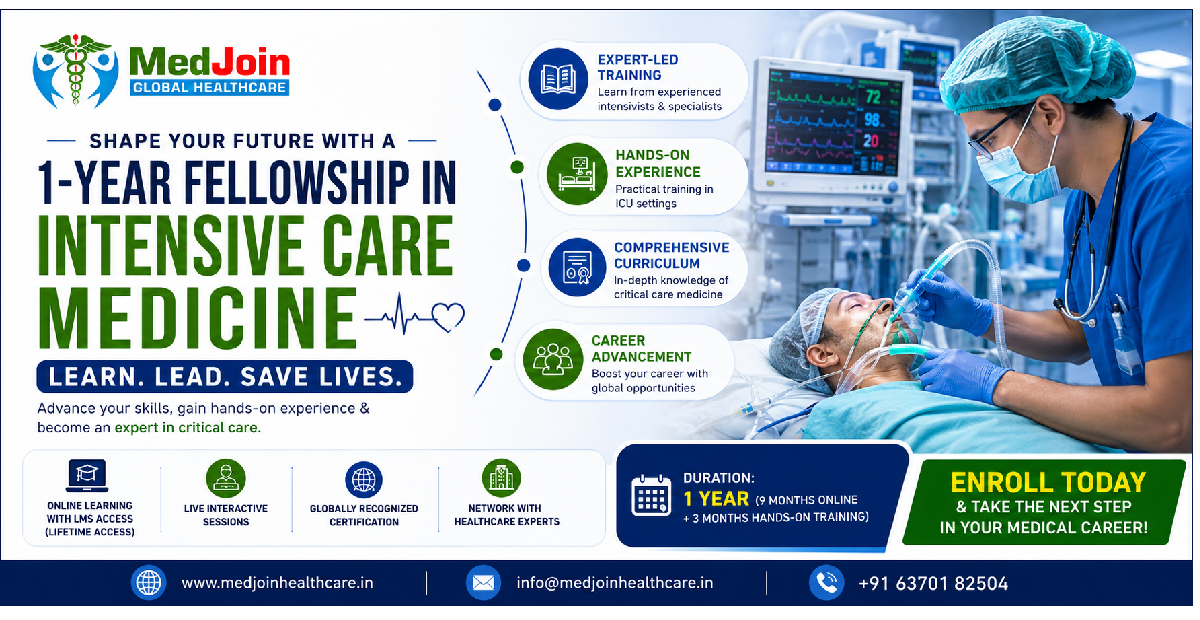
A 1-Year Fellowship in Intensive Care Medicine is designed to bridge the gap between medical education and real-world critical care practice. The program equips MBBS graduates and practicing doctors with comprehensive knowledge of critical care principles, emergency interventions, advanced monitoring techniques, mechanical ventilation, infection prevention, organ support, and multidisciplinary patient management.
Whether your goal is to build a career in critical care, emergency medicine, anesthesiology, pulmonology, internal medicine, or hospital medicine, this fellowship provides the clinical competence and confidence required to excel in modern intensive care settings.
What is Intensive Care Medicine?
Intensive Care Medicine (ICM), also known as Critical Care Medicine, is the medical specialty dedicated to diagnosing, monitoring, and treating patients with life-threatening illnesses or injuries. Intensive care specialists work in specialized hospital units where patients receive continuous observation, sophisticated monitoring, and advanced organ support.
Unlike general hospital wards, ICUs provide:
- Continuous cardiac monitoring
- Mechanical ventilation
- Hemodynamic monitoring
- Renal replacement therapy
- Vasopressor and inotropic support
- Advanced airway management
- Critical care ultrasound
- Sedation and analgesia
- Nutritional support
- Infection control
- Emergency interventions
Patients admitted to an ICU often require minute-to-minute assessment and rapid therapeutic interventions. Critical care physicians collaborate closely with anesthesiologists, surgeons, pulmonologists, nephrologists, cardiologists, neurologists, nurses, respiratory therapists, physiotherapists, pharmacists, and nutritionists to optimize patient outcomes.
Why Intensive Care Medicine is One of the Fastest Growing Medical Specialties
The landscape of healthcare has changed dramatically over the last decade. Several factors have contributed to the growing need for trained intensivists.
1. Increasing Burden of Critical Illness
The incidence of severe infections, trauma, cardiac diseases, stroke, poisoning, respiratory illnesses, and chronic diseases requiring ICU admission continues to rise.
Hospitals increasingly manage:
- Sepsis
- Septic shock
- COVID-19 complications
- Acute Respiratory Distress Syndrome (ARDS)
- Cardiac arrest
- Stroke
- Multi-organ failure
- Polytrauma
- Poisoning
- Severe pneumonia
Each condition demands specialized critical care expertise.
2. Expansion of ICU Facilities
Modern hospitals now include:
- Medical ICU (MICU)
- Surgical ICU (SICU)
- Cardiac ICU (CICU)
- Neuro ICU
- Pediatric ICU (PICU)
- Neonatal ICU (NICU)
- Trauma ICU
- Burn ICU
- Transplant ICU
This expansion has created a significant demand for trained critical care physicians.
3. Technological Advancements
Today's ICUs rely on sophisticated technologies, including:
- High-end ventilators
- Bedside ultrasound
- Echocardiography
- Continuous renal replacement therapy (CRRT)
- Extracorporeal Membrane Oxygenation (ECMO)
- Advanced hemodynamic monitoring
- Point-of-care diagnostics
- Smart infusion pumps
- Electronic ICU monitoring systems
Doctors trained in Intensive Care Medicine are expected to understand and utilize these technologies effectively.
4. Better Patient Survival
Advances in intensive care have significantly improved survival rates for critically ill patients. Early diagnosis, prompt interventions, and evidence-based protocols contribute to better outcomes.
Specialized ICU physicians play a pivotal role in reducing mortality and improving recovery.
Why Pursue a Fellowship in Intensive Care Medicine?
Many doctors complete their MBBS or postgraduate education but seek structured training to gain confidence in managing critically ill patients.
A fellowship offers focused education that combines theoretical learning with practical clinical exposure.
Benefits include:
- Advanced ICU knowledge
- Improved procedural skills
- Better emergency management
- Increased career opportunities
- Enhanced clinical confidence
- Exposure to modern ICU technologies
- Hands-on experience
- Improved patient outcomes
Who Should Enroll?
This fellowship is suitable for healthcare professionals who wish to enhance their expertise in critical care.
Ideal candidates include:
- MBBS doctors
- General practitioners
- Emergency physicians
- Medical officers
- ICU doctors
- Hospital physicians
- Family physicians
- Doctors preparing for postgraduate specialization
- Healthcare professionals interested in emergency and critical care
The fellowship is particularly valuable for physicians working in hospitals with emergency departments, ICUs, trauma centers, or critical care units.
Program Overview
A comprehensive 1-Year Fellowship in Intensive Care Medicine is designed to provide structured education through online learning and supervised clinical training.
A typical fellowship includes:
Duration
- 12 Months
Learning Format
- Online academic modules
- Recorded lectures
- Live interactive sessions
- Clinical case discussions
- Assignments
- Assessments
- Practical ICU exposure
- Hands-on clinical training (where applicable)
Key Learning Objectives
By the end of the fellowship, participants should be able to:
- Assess critically ill patients systematically.
- Recognize life-threatening emergencies early.
- Interpret ICU investigations accurately.
- Initiate evidence-based treatment protocols.
- Manage mechanical ventilation safely.
- Stabilize hemodynamically unstable patients.
- Perform bedside procedures with confidence.
- Manage sepsis and septic shock.
- Interpret arterial blood gases.
- Understand ICU pharmacology.
- Prevent ICU-acquired infections.
- Collaborate effectively within multidisciplinary teams.
- Apply ethical principles in critical care practice.
Core Principles of Critical Care
Critical care revolves around timely recognition, stabilization, diagnosis, treatment, and continuous reassessment.
The ABCDE approach remains fundamental:
Airway
A secure airway is essential for oxygen delivery.
Doctors learn to:
- Assess airway patency
- Recognize airway obstruction
- Perform airway maneuvers
- Assist with endotracheal intubation
- Manage difficult airways
Breathing
Respiratory assessment includes:
- Respiratory rate
- Oxygen saturation
- Chest examination
- Blood gas interpretation
- Ventilator settings
- Oxygen delivery systems
Circulation
Assessment involves:
- Blood pressure
- Heart rate
- Capillary refill
- Urine output
- Central venous pressure
- Lactate levels
- Cardiac output monitoring
Disability
Neurological evaluation includes:
- Glasgow Coma Scale (GCS)
- Pupillary examination
- Limb movements
- Sedation scoring
- Delirium assessment
Exposure
Complete patient examination identifies:
- Trauma
- Infection
- Skin lesions
- Bleeding
- Pressure injuries
- Surgical wounds
Modern Intensive Care Units
Modern ICUs are technologically advanced environments equipped to provide continuous monitoring and organ support.
Common ICU equipment includes:
- Multiparameter monitors
- Mechanical ventilators
- Infusion pumps
- Syringe pumps
- Defibrillators
- Portable ultrasound
- Blood gas analyzers
- Dialysis machines
- ECMO systems
- Portable X-ray units
Understanding the operation and interpretation of data from these devices is an essential component of fellowship training.
Importance of Early Recognition of Critical Illness
One of the greatest skills an intensivist develops is recognizing patient deterioration before irreversible organ damage occurs.
Early warning signs include:
- Altered mental status
- Persistent hypotension
- Tachycardia
- Tachypnea
- Low oxygen saturation
- Reduced urine output
- Rising lactate levels
- Metabolic acidosis
- High fever or hypothermia
Prompt intervention can significantly improve survival rates.
Multidisciplinary ICU Care
Successful intensive care depends on teamwork.
The ICU team may include:
- Intensivists
- Critical care nurses
- Respiratory therapists
- Clinical pharmacists
- Physiotherapists
- Dietitians
- Microbiologists
- Infection control specialists
- Surgeons
- Cardiologists
- Neurologists
- Nephrologists
Effective communication among team members ensures coordinated patient management and improved outcomes.
Skills Developed During the Fellowship
Participants progressively build competencies in:
- Critical patient assessment
- Airway management
- Ventilator management
- ECG interpretation
- ABG analysis
- Hemodynamic monitoring
- Fluid therapy
- Vasopressor use
- Sedation management
- Pain management
- ICU documentation
- Infection prevention
- Emergency response
- Communication with patients' families
- Ethical decision-making in critical care
Why Choose a Structured Fellowship?
Learning solely through clinical exposure may result in gaps in knowledge. A structured fellowship provides:
- Comprehensive curriculum
- Evidence-based practice
- Expert faculty guidance
- Standardized assessments
- Clinical mentorship
- Practical exposure
- Updated treatment guidelines
- Career-focused training
This combination helps physicians develop both competence and confidence in intensive care practice.
A 1-Year Fellowship in Intensive Care Medicine provides doctors with the specialized knowledge, practical skills, and clinical confidence required to care for critically ill patients in today's advanced healthcare environment. With growing demand for trained intensivists, this fellowship can significantly enhance career prospects while improving the quality of patient care.
The 1-Year Fellowship in Intensive Care Medicine provides an in-depth curriculum that equips physicians with advanced knowledge of critical illness, life-support technologies, ventilator management, hemodynamic monitoring, ICU pharmacology, infection control, and emergency interventions. By integrating structured academics with practical ICU exposure, the program prepares doctors to manage critically ill patients confidently and effectively.
Hands-on Clinical Training: Transforming Knowledge into Clinical Expertise
One of the most valuable aspects of a 1-Year Fellowship in Intensive Care Medicine is the opportunity to apply theoretical knowledge in real-world ICU settings. While textbooks and lectures build foundational understanding, supervised clinical exposure enables doctors to develop practical skills, clinical judgment, and confidence in managing critically ill patients.
Hands-on training familiarizes participants with the fast-paced ICU environment, multidisciplinary teamwork, and evidence-based protocols that guide modern critical care practice.
During clinical rotations, participants observe and assist in the management of patients with diverse medical and surgical emergencies under the guidance of experienced intensivists and specialists.
Exposure to Different Types of Intensive Care Units
Depending on the training institution, participants may gain experience in multiple ICU settings.
Medical Intensive Care Unit (MICU)
Focuses on medical emergencies such as:
- Severe pneumonia
- Sepsis
- Septic shock
- Diabetic ketoacidosis
- Poisoning
- Acute kidney injury
- Respiratory failure
- Acute liver failure
Learning Experience
Participants learn to:
- Stabilize critically ill medical patients.
- Manage organ dysfunction.
- Interpret laboratory trends.
- Optimize pharmacological therapy.
- Coordinate multidisciplinary care.
Surgical Intensive Care Unit (SICU)
Provides care for patients recovering from major surgical procedures or experiencing postoperative complications.
Common conditions include:
- Postoperative respiratory failure
- Major abdominal surgery
- Vascular surgery
- Gastrointestinal perforation
- Sepsis following surgery
- Massive blood loss
- Postoperative shock
Participants develop skills in perioperative critical care, fluid management, wound assessment, and postoperative monitoring.
Cardiac Intensive Care Unit (CICU)
The cardiac ICU manages patients with life-threatening cardiovascular diseases.
Common clinical scenarios include:
- Acute myocardial infarction
- Cardiogenic shock
- Acute heart failure
- Life-threatening arrhythmias
- Cardiac arrest
- Temporary pacemaker management
- Post-cardiac surgery monitoring
Participants gain valuable experience in ECG interpretation, vasoactive drug management, and advanced cardiac monitoring.
Neuro Intensive Care Unit (Neuro ICU)
Neurocritical care focuses on neurological emergencies.
Patients commonly present with:
- Ischemic stroke
- Intracranial hemorrhage
- Subarachnoid hemorrhage
- Status epilepticus
- Traumatic brain injury
- Brain tumors
- Raised intracranial pressure
Training emphasizes neurological assessment, airway protection, intracranial pressure management, and neuro-monitoring.
Trauma ICU
Trauma ICUs manage patients with severe injuries resulting from road traffic accidents, falls, industrial accidents, and violence.
Participants learn:
- Trauma assessment
- Damage control resuscitation
- Massive transfusion protocols
- Polytrauma management
- Emergency stabilization
- Shock management
- Ventilator support
Professional Competencies Developed During the Fellowship
Beyond technical skills, the fellowship focuses on developing competencies expected of modern critical care physicians.
These include:
Clinical Decision-Making
Participants learn to prioritize interventions, interpret evolving clinical data, and make evidence-based decisions.
Leadership
Doctors gain experience coordinating emergency responses, participating in ICU rounds, and supporting multidisciplinary care.
Teamwork
Working effectively with nurses, respiratory therapists, pharmacists, physiotherapists, surgeons, and specialists is an essential component of ICU practice.
Time Management
Critical care requires prioritizing multiple patients and responding promptly to emergencies.
Continuous Learning
Participants are encouraged to review current guidelines, research studies, and quality improvement initiatives throughout the fellowship.
Why Choose a Fellowship in Intensive Care Medicine?
Critical care medicine is one of the most rewarding and intellectually stimulating fields in modern healthcare. Every day, intensivists manage complex medical emergencies, make life-saving decisions, and collaborate with multidisciplinary teams to improve patient outcomes.
A structured 1-Year Fellowship in Intensive Care Medicine provides focused education that enhances both theoretical knowledge and clinical skills, preparing doctors for the challenges of contemporary ICU practice.
Key Benefits of Pursuing This Fellowship
- Develop Advanced Clinical Expertise
- Build Confidence in ICU Management
- Learn Evidence-Based Critical Care
- Gain Exposure to Modern ICU Technology
- Improve Career Opportunities
- Enhance Clinical Decision-Making
These skills are essential for safe and effective critical care practice.
The Future of Intensive Care Medicine
Intensive Care Medicine has evolved into one of the most dynamic and technology-driven specialties in healthcare. With increasing life expectancy, the growing burden of chronic diseases, advances in surgery, and the expansion of emergency and trauma services, the demand for skilled critical care physicians continues to rise.
Modern ICUs are no longer limited to providing life support. They are centers of innovation where advanced monitoring systems, artificial intelligence, bedside ultrasound, precision medicine, and multidisciplinary collaboration are transforming patient care.
Doctors who invest in structured critical care training today are preparing themselves for the future of medicine.
Frequently Asked Questions (FAQs)
1. What is a Fellowship in Intensive Care Medicine?
It is a structured advanced training program designed to enhance physicians' knowledge and skills in the management of critically ill patients.
2. What is the duration of the fellowship?
The fellowship is typically completed over 12 months.
3. Who is eligible to apply?
Generally, MBBS graduates and registered medical practitioners are eligible, subject to the admission criteria of the institution offering the program.
4. Is the fellowship suitable for general practitioners?
Yes. It can help general practitioners strengthen their critical care knowledge and emergency management skills.
5. Will I learn mechanical ventilation?
Yes. Ventilator principles, modes, monitoring, troubleshooting, and weaning are key components of most Intensive Care Medicine fellowships.
6. Does the program include sepsis management?
Yes. Early recognition, fluid resuscitation, antimicrobial therapy, and hemodynamic stabilization are typically covered.
7. Is arterial blood gas (ABG) interpretation included?
Yes. Participants learn systematic ABG interpretation and its application in managing critically ill patients.
8. Will I gain exposure to ICU technologies?
Yes. Participants are introduced to common ICU monitoring systems, ventilators, infusion devices, and point-of-care diagnostic tools.
9. Does the fellowship include hands-on clinical training?
Many programs include supervised clinical exposure or optional hands-on training, depending on the institution and program structure.
10. How will this fellowship help my career?
The fellowship can strengthen your clinical knowledge, enhance professional confidence, and improve your qualifications for roles involving emergency and critical care.
11. Is this fellowship useful before postgraduate specialization?
Yes. It provides focused exposure to critical care concepts and clinical practice that can complement future postgraduate training.
12. Will I receive a certificate after completion?
Participants who successfully complete the program requirements generally receive a fellowship certificate from the awarding institution or academic partner, subject to the program's terms.
13. What skills will I develop?
You will build competencies in patient assessment, ICU management, emergency stabilization, ventilator management, infection prevention, teamwork, communication, and evidence-based clinical decision-making.
14. Is online learning available?
Many fellowship programs offer online academic modules, recorded lectures, live sessions, and digital learning resources alongside practical components where applicable.
15. Why is Intensive Care Medicine an important specialty?
Critical care physicians manage life-threatening illnesses, support failing organs, coordinate multidisciplinary care, and play a vital role in improving survival and patient outcomes.
A 1-Year Fellowship in Intensive Care Medicine equips physicians with the knowledge, practical skills, and professional competencies required to manage critically ill patients with confidence. Through a structured curriculum, evidence-based learning, and opportunities for supervised clinical exposure, the fellowship supports both career advancement and improved patient care.
Why Now is the Right Time to Pursue a Fellowship in Intensive Care Medicine
Healthcare is changing rapidly, and hospitals require doctors who can confidently manage critically ill patients.
A 1-Year Fellowship in Intensive Care Medicine enables physicians to:
- Build specialized clinical expertise.
- Improve emergency decision-making.
- Gain confidence in ICU management.
- Understand modern life-support technologies.
- Strengthen their professional profile.
- Enhance career opportunities in hospitals and critical care settings.
- Deliver safer, evidence-based patient care.
Whether you are an early-career MBBS doctor or an experienced practitioner seeking structured upskilling, this fellowship can be a valuable step toward professional growth.
A 1-Year Fellowship in Intensive Care Medicine is more than an academic qualification—it is an opportunity to strengthen clinical knowledge, enhance practical skills, and build confidence in managing critically ill patients.
By combining structured education with clinical exposure and evidence-based learning, the fellowship prepares physicians to meet the challenges of modern critical care. As healthcare systems continue to evolve, doctors with advanced training in intensive care will remain essential members of multidisciplinary teams dedicated to improving patient outcomes.
Whether your goal is to enhance your current practice, prepare for future specialization, or broaden your expertise in emergency and critical care, investing in a structured fellowship can be an important milestone in your medical career.
Take the next step toward becoming a confident critical care professional.
Enroll in the 1-Year Fellowship in Intensive Care Medicine and advance your medical career with structured learning, expert guidance, and practical clinical exposure.