
Endocrinology is one of the most rapidly evolving areas of modern medicine. From diabetes and thyroid disorders to obesity, metabolic syndrome, adrenal disease, pituitary disorders, reproductive endocrinology and osteoporosis, endocrine conditions affect millions of people and require clinicians to combine strong foundational knowledge with continuous clinical learning.
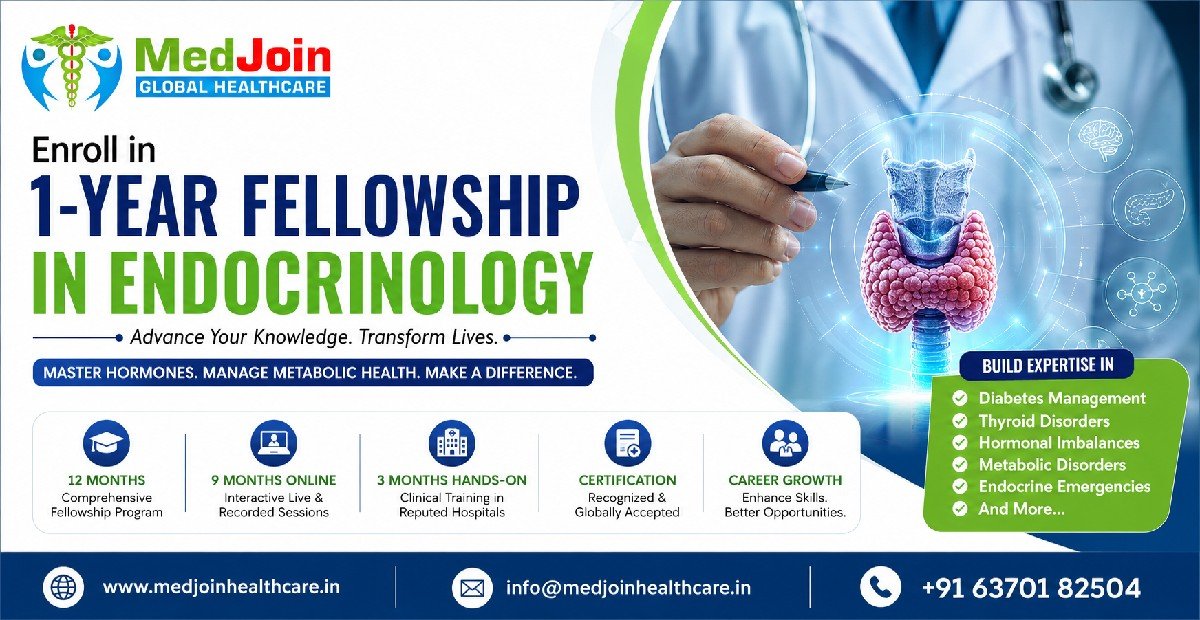
For doctors who want to strengthen their expertise in hormonal and metabolic disorders, enrolling in a 1-Year Fellowship in Endocrinology can provide a structured opportunity to deepen clinical knowledge, improve diagnostic reasoning and develop greater confidence in managing endocrine-related conditions.
Endocrinology is not limited to understanding hormones in isolation. It involves understanding how hormones interact with metabolism, cardiovascular health, kidney function, bone health, reproductive health, growth, nutrition and multiple other systems. Modern endocrine practice increasingly involves multidisciplinary decision-making, evidence-based medicine, laboratory interpretation, imaging, digital health technologies and individualized patient care.
A structured fellowship can help doctors move beyond textbook learning and develop a more systematic approach to real-world endocrine cases.
A 1-Year Fellowship in Endocrinology can therefore be considered an important professional-development pathway for doctors who want to build focused expertise while continuing to strengthen their broader clinical practice.
What Is a 1-Year Fellowship in Endocrinology?
A 1-Year Fellowship in Endocrinology is an advanced medical education program designed to provide structured learning in the diagnosis, evaluation and management of endocrine and metabolic disorders.
Depending on the institution and program structure, fellowship education may combine:
- Structured academic learning
- Online medical education
- Live interactive sessions
- Case-based discussions
- Recorded lectures
- Clinical case analysis
- Assignments and assessments
- Evidence-based medicine
- Practical or clinical exposure
- Exposure to common endocrine presentations
- Interpretation of laboratory investigations
- Understanding endocrine imaging
- Discussion of treatment strategies
- Professional and clinical skill development
The exact curriculum, clinical exposure, assessment system, faculty structure, certification and eligibility criteria vary between institutions. Doctors should therefore review the official program details carefully before enrollment.
The objective should not simply be to complete another certificate. The real objective of advanced endocrine education should be to develop a stronger clinical framework for approaching patients with endocrine and metabolic disorders.
Why Choose a Fellowship in Endocrinology?
Endocrinology has become increasingly important because endocrine and metabolic diseases frequently overlap with other areas of clinical medicine.
Consider a patient with type 2 diabetes.
The clinical problem may involve much more than elevated blood glucose. The patient may also have:
- Hypertension
- Dyslipidemia
- Obesity
- Chronic kidney disease
- Cardiovascular disease
- Fatty liver disease
- Neuropathy
- Retinopathy
- Peripheral vascular disease
- Sleep disorders
- Psychological and behavioral challenges
Similarly, a patient with thyroid disease may present with symptoms involving cardiovascular, neurological, reproductive or metabolic systems.
This complexity means that doctors need more than isolated disease knowledge. They need the ability to connect clinical findings, laboratory data, imaging, risk factors and patient characteristics.
A fellowship can help develop that integrated approach.
The Endocrine Society organizes its clinical guidance across areas including adrenal disease, bone health and osteoporosis, diabetes and glucose metabolism, endocrine cancer, reproductive endocrinology, hypoglycemia, neuroendocrine disorders, obesity and pediatric endocrinology.
Why Endocrinology Is an Important Area of Modern Medicine
Hormones regulate many fundamental processes in the human body.
They influence:
- Growth
- Development
- Metabolism
- Blood glucose
- Calcium balance
- Reproduction
- Sexual function
- Stress responses
- Blood pressure
- Bone remodeling
- Energy expenditure
- Appetite
- Fluid and electrolyte balance
Disruption of hormonal pathways can produce symptoms ranging from subtle fatigue and weight changes to severe metabolic or endocrine emergencies.
The clinical spectrum is therefore extremely broad.
A doctor with stronger endocrine knowledge may be better prepared to recognize when apparently nonspecific symptoms could have an endocrine basis.
For example:
- Unexplained weight gain may require assessment of lifestyle, medications and endocrine causes.
- Weight loss may reflect metabolic, gastrointestinal, malignant or endocrine conditions.
- Fatigue may be associated with thyroid, adrenal, metabolic, hematological or other causes.
- Menstrual irregularity can involve reproductive, thyroid, metabolic or hypothalamic-pituitary factors.
- Recurrent hypoglycemia requires careful evaluation of medications, endogenous insulin secretion and other possible causes.
- Electrolyte abnormalities may indicate adrenal, pituitary, renal or medication-related problems.
This makes endocrine reasoning highly valuable across multiple clinical settings.
1-Year Fellowship in Endocrinology: What Can You Learn?
A comprehensive endocrinology fellowship curriculum can cover multiple domains of clinical practice.
Foundations of Endocrinology
The program can begin with the fundamental principles of endocrine physiology and pathophysiology.
Key areas may include:
- Endocrine glands
- Hormone synthesis
- Hormone secretion
- Hormone receptors
- Feedback mechanisms
- Hypothalamic-pituitary axes
- Endocrine signaling
- Hormonal regulation of metabolism
- Hormonal regulation of growth
- Hormonal regulation of reproduction
- Calcium and phosphate metabolism
Understanding these foundations helps doctors interpret clinical disorders logically rather than memorizing isolated facts.
Diabetes Mellitus
Diabetes is one of the most important areas within endocrinology.
Modern diabetes care increasingly involves individualized treatment, cardiovascular and renal risk assessment, glucose monitoring technologies, lifestyle intervention and multiple pharmacological approaches.
The American Diabetes Association publishes updated Standards of Care annually. The 2026 Standards include evidence-based recommendations covering diagnosis, glycemic goals, diabetes technology, cardiovascular and kidney risk, hospital care and other aspects of diabetes management.
A fellowship may therefore provide structured learning in:
- Type 1 diabetes
- Type 2 diabetes
- Gestational diabetes
- Monogenic diabetes
- Secondary diabetes
- Prediabetes
- Diabetes diagnosis
- Glycemic monitoring
- Individualized treatment
- Hypoglycemia
- Hyperglycemic emergencies
- Diabetes complications
- Cardiovascular risk
- Kidney disease
- Neuropathy
- Retinopathy
- Diabetic foot care
- Lifestyle management
Understanding Modern Diabetes Technology
Diabetes technology has transformed clinical practice.
Modern endocrine education should introduce doctors to technologies such as:
- Continuous glucose monitoring
- Flash glucose monitoring
- Insulin pumps
- Automated insulin delivery systems
- Digital glucose platforms
- Connected glucose meters
- Remote monitoring
- Data-driven diabetes management
The ADA's 2026 Standards include a dedicated section on diabetes technology and describe technologies ranging from glucose monitoring systems to automated therapy-related tools.
Understanding the technology is only one component.
Doctors also need to understand:
- Patient selection
- Interpretation of glucose data
- Time in range
- Time below range
- Time above range
- Glucose management indicators
- Glycemic variability
- Device limitations
- Patient education
- Troubleshooting
- Safety considerations
This is one reason advanced endocrine education should continually evolve with clinical technology.
Thyroid Disorders
Thyroid disease represents another major area of endocrinology.
A structured fellowship can cover:
- Hypothyroidism
- Hyperthyroidism
- Thyroiditis
- Goiter
- Thyroid nodules
- Thyroid function testing
- Subclinical thyroid disease
- Thyroid disorders during pregnancy
- Graves' disease
- Thyroid cancer
- Post-treatment follow-up
Doctors should develop a systematic approach to thyroid function tests rather than interpreting individual laboratory values in isolation.
Important considerations can include:
- TSH
- Free T4
- T3 when appropriate
- Thyroid antibodies
- Clinical symptoms
- Medication history
- Pregnancy status
- Comorbidities
- Imaging findings
The American Thyroid Association maintains professional guidelines and has published updated guidance in areas including thyroid disease in pregnancy and differentiated thyroid cancer.
Obesity and Metabolic Health
Obesity is increasingly understood as a chronic, complex disease rather than simply a matter of personal lifestyle choice.
Endocrine practice may involve:
- Obesity assessment
- Metabolic risk assessment
- Lifestyle interventions
- Nutrition
- Physical activity
- Behavioral interventions
- Anti-obesity pharmacotherapy
- Diabetes-associated obesity
- Cardiometabolic risk
- Obesity-related complications
- Long-term weight management
The Endocrine Society emphasizes that lifestyle measures such as diet, physical activity and behavioral modification form part of comprehensive obesity management, with pharmacological and surgical options considered for appropriately selected patients.
A fellowship can help doctors understand the clinical reasoning involved in assessing obesity and selecting appropriate management strategies.
Metabolic Syndrome
Metabolic syndrome represents a cluster of cardiometabolic risk factors.
A doctor undertaking advanced endocrine education should understand the relationship between:
- Abdominal obesity
- Insulin resistance
- Dysglycemia
- Hypertension
- Dyslipidemia
- Cardiovascular risk
- Fatty liver disease
The modern endocrinologist increasingly needs to consider the patient as a whole rather than treating each abnormality independently.
This integrated perspective can be particularly useful in primary care and general clinical practice.
Adrenal Disorders
The adrenal glands are involved in several essential physiological processes, including stress response, blood pressure regulation and electrolyte balance.
Important topics may include:
- Adrenal insufficiency
- Cushing syndrome
- Primary hyperaldosteronism
- Adrenal incidentaloma
- Pheochromocytoma
- Congenital adrenal disorders
- Glucocorticoid therapy
- Steroid-related complications
Adrenal disorders can be diagnostically challenging because their symptoms may overlap with many common medical conditions.
For example, adrenal insufficiency can present with:
- Fatigue
- Weight loss
- Hypotension
- Nausea
- Abdominal symptoms
- Electrolyte abnormalities
- Weakness
Advanced training can help doctors understand when endocrine evaluation should be considered.
The Endocrine Society and European Society of Endocrinology also issued a joint 2024 guideline addressing glucocorticoid-induced adrenal insufficiency, highlighting the importance of safe assessment and management in patients exposed to glucocorticoids.
Pituitary Disorders
The pituitary gland is often described as a central regulator of multiple endocrine systems.
A fellowship can include:
- Pituitary anatomy
- Hypothalamic-pituitary relationships
- Hyperprolactinemia
- Pituitary adenomas
- Acromegaly
- Cushing disease
- Diabetes insipidus
- Hypopituitarism
- Growth hormone disorders
- Pituitary imaging
- Hormonal testing
Pituitary disorders frequently require interpretation of multiple hormones rather than one isolated laboratory result.
Clinical reasoning therefore becomes especially important.
Calcium and Bone Metabolism
Endocrinology also plays a major role in bone health.
Potential topics include:
- Calcium metabolism
- Vitamin D
- Parathyroid disorders
- Hypercalcemia
- Hypocalcemia
- Hyperparathyroidism
- Hypoparathyroidism
- Osteoporosis
- Fragility fractures
- Bone mineral density
- Secondary causes of osteoporosis
Understanding bone metabolism requires integration of endocrine physiology, nutrition, renal function, medication effects and age-related risk.
Doctors can benefit from learning how to evaluate patients with abnormal calcium levels systematically.
Reproductive Endocrinology
Hormonal disorders can affect both male and female reproductive health.
A comprehensive program may cover:
Female reproductive endocrinology
- Polycystic ovary syndrome
- Menstrual disorders
- Hyperandrogenism
- Infertility-related endocrine disorders
- Menopause
- Hormonal changes during pregnancy
- Thyroid disease in pregnancy
Male reproductive endocrinology
- Hypogonadism
- Testosterone disorders
- Erectile dysfunction with endocrine causes
- Hyperprolactinemia
- Male infertility-related endocrine factors
These topics demonstrate the broad clinical scope of endocrinology.
Pediatric Endocrinology
Depending on the fellowship curriculum, pediatric endocrine topics may include:
- Growth disorders
- Short stature
- Precocious puberty
- Delayed puberty
- Childhood obesity
- Pediatric diabetes
- Congenital endocrine disorders
- Thyroid disorders in children
- Adrenal disorders
Understanding age-specific physiology is essential because endocrine disorders can present differently in children compared with adults.
Endocrine Emergencies
Endocrine emergencies require rapid recognition and appropriate management.
A structured fellowship should introduce doctors to the principles behind:
- Diabetic ketoacidosis
- Hyperosmolar hyperglycemic state
- Severe hypoglycemia
- Thyroid storm
- Myxedema coma
- Adrenal crisis
- Severe hypercalcemia
- Severe electrolyte abnormalities
These conditions illustrate why endocrine knowledge is important beyond outpatient clinics.
Doctors need to understand:
- Recognition
- Initial assessment
- Laboratory evaluation
- Stabilization
- Identification of the underlying cause
- Appropriate treatment principles
- Monitoring
- Prevention of recurrence
Emergency management should always follow current institutional protocols and applicable clinical guidelines.
Endocrine Laboratory Interpretation
One of the most valuable skills in endocrinology is laboratory interpretation.
Hormonal investigations can be difficult because:
- Hormone concentrations vary throughout the day.
- Some hormones are pulsatile.
- Binding proteins influence measured concentrations.
- Medications can interfere with tests.
- Pregnancy changes reference ranges.
- Age affects hormone levels.
- Acute illness can alter endocrine measurements.
- Assay methods vary.
A fellowship should therefore emphasize clinical interpretation rather than simply memorizing reference ranges.
Doctors may learn to interpret:
- Thyroid function tests
- Cortisol-related testing
- ACTH
- Prolactin
- LH and FSH
- Estradiol
- Testosterone
- IGF-1
- Calcium
- Phosphate
- PTH
- Vitamin D
- Glucose
- HbA1c
- Ketones
- Electrolytes
The key question is always:
Does the laboratory result make sense in the clinical context?
Endocrine Imaging
Imaging is another important component of endocrine practice.
Depending on the condition, doctors may encounter:
- Thyroid ultrasound
- Thyroid nodule assessment
- Adrenal CT
- Adrenal MRI
- Pituitary MRI
- Bone density scanning
- Nuclear medicine studies
- Functional imaging
A fellowship can help doctors understand when imaging is appropriate and how imaging findings should be correlated with clinical and laboratory data.
Fellowship in Endocrinology for MBBS Doctors
MBBS doctors frequently encounter endocrine disorders in everyday clinical practice.
A doctor working in:
- General medicine
- Primary care
- Emergency medicine
- Hospital practice
- Family medicine
- Community medicine
- Outpatient clinics
may regularly encounter patients with diabetes, thyroid disease, obesity and metabolic abnormalities.
A focused fellowship can therefore complement an MBBS background by allowing deeper study of a particular clinical field.
However, doctors should always verify the eligibility requirements of the specific program and understand the distinction between a fellowship certificate and a regulated postgraduate specialist qualification.
A fellowship should not be marketed as automatically equivalent to a formal postgraduate specialty degree unless the awarding and regulatory framework explicitly establishes that equivalence.
Fellowship After MD or Other Postgraduate Training
Doctors with postgraduate medical training may also choose advanced fellowships to develop focused expertise.
For physicians already working in clinical practice, a fellowship can serve as:
- Continuing professional education
- A focused academic program
- Skill enhancement
- Exposure to evolving clinical concepts
- Structured revision
- Professional development
The value depends on curriculum quality, faculty expertise, clinical exposure and the doctor's ability to apply the learning appropriately.
Career Benefits of Endocrinology Training
Advanced training can potentially support professional development in several ways.
Better Clinical Confidence
Greater familiarity with endocrine disorders may help doctors approach cases more systematically.
Focused Knowledge
Instead of learning endocrine topics sporadically, a structured fellowship provides a defined curriculum.
Better Understanding of Modern Therapies
The field continues to evolve, particularly in diabetes technology and metabolic medicine.
Improved Patient Communication
Doctors with stronger disease knowledge may be better positioned to explain chronic endocrine conditions to patients.
Professional Development
A focused fellowship can demonstrate commitment to continued medical education.
However, no educational program should guarantee employment, income, patient volume or professional success. Career outcomes depend on multiple factors including qualifications, licensing, experience, local regulations and individual performance.
Why Continuous Learning Is Essential in Endocrinology
Endocrinology is not static.
New evidence can change:
- Diagnostic approaches
- Treatment recommendations
- Drug selection
- Monitoring strategies
- Technology use
- Screening approaches
- Risk-management strategies
For example, the ADA's 2026 Standards of Care include updated recommendations across diabetes diagnosis, prevention, glucose management, technology, kidney disease and hospital care.
Similarly, the Endocrine Society maintains clinical guidance across multiple endocrine domains and updates its recommendations as clinical science evolves.
This means the best endocrinology education should encourage lifelong learning.
How MedJoin Global's 1-Year Fellowship Can Support Your Learning Journey
For doctors considering a structured fellowship through MedJoin Global Healthcare, the objective can be to create a focused learning pathway around endocrinology and related metabolic disorders.
A 1-year program can provide a longer learning window compared with short-duration courses, allowing doctors to study concepts progressively and revisit complex topics.
The program can be positioned around three important pillars:
Learn
Build a stronger theoretical foundation through structured educational content.
Apply
Use clinical cases, discussions and practical learning opportunities to connect knowledge with clinical scenarios.
Advance
Continue developing professional knowledge and confidence in endocrine and metabolic medicine.
The exact delivery model, clinical exposure, faculty, assessment structure and certification should always be reviewed from the current official program information before enrollment.
How MedJoin Global's 1-Year Fellowship Can Support Your Learning Journey
For doctors considering a structured fellowship through MedJoin Global Healthcare, the objective can be to create a focused learning pathway around endocrinology and related metabolic disorders.
A 1-year program can provide a longer learning window compared with short-duration courses, allowing doctors to study concepts progressively and revisit complex topics.
The program can be positioned around three important pillars:
Learn
Build a stronger theoretical foundation through structured educational content.
Apply
Use clinical cases, discussions and practical learning opportunities to connect knowledge with clinical scenarios.
Advance
Continue developing professional knowledge and confidence in endocrine and metabolic medicine.
The exact delivery model, clinical exposure, faculty, assessment structure and certification should always be reviewed from the current official program information before enrollment.
The Future of Endocrinology
The future of endocrinology is likely to become increasingly:
- Personalized
- Technology-enabled
- Data-driven
- Preventive
- Multidisciplinary
- Patient-centered
Digital glucose monitoring, new metabolic therapies, advanced diagnostics, artificial intelligence and personalized treatment approaches are changing the field.
Doctors entering or expanding their role in endocrine medicine should therefore develop not only disease-specific knowledge but also the ability to evaluate new evidence critically.
Why Now Is a Good Time to Strengthen Your Endocrinology Knowledge
The endocrine landscape is changing rapidly.
Diabetes management is becoming increasingly technology-enabled. Obesity treatment is evolving. Thyroid care continues to develop. Endocrine disorders increasingly intersect with cardiovascular, renal, reproductive and metabolic medicine.
At the same time, clinical guidelines are being updated regularly.
The ADA's 2026 Standards demonstrate how rapidly diabetes recommendations continue to evolve, with updates spanning prevention, glycemic goals, technology, kidney disease and hospital care.
For doctors, this creates both a challenge and an opportunity.
The challenge is keeping up with rapidly changing knowledge.
The opportunity is to develop a focused area of expertise.
Enroll in a 1-Year Fellowship in Endocrinology
If you are a doctor looking to strengthen your knowledge of endocrine and metabolic disorders, a 1-Year Fellowship in Endocrinology can provide a structured pathway for focused professional development.
Rather than studying individual endocrine topics independently, a structured program can help you approach endocrinology as an integrated clinical discipline.
You can build knowledge across:
- Diabetes
- Thyroid disorders
- Obesity
- Adrenal disorders
- Pituitary disorders
- Calcium and bone metabolism
- Reproductive endocrinology
- Pediatric endocrinology
- Endocrine emergencies
- Modern diabetes technology
- Clinical case analysis
- Evidence-based practice
The goal is not simply to complete a course.
The goal is to learn, apply and continuously improve.
Take the Next Step in Your Medical Career
Your patients deserve clinicians who continue learning.
Your professional journey deserves continuous development.
And endocrinology offers a broad and clinically important field in which deeper knowledge can complement everyday medical practice.
If you are interested in developing focused expertise in endocrine and metabolic medicine, explore the 1-Year Fellowship in Endocrinology offered by MedJoin Global Healthcare and review the current curriculum, eligibility, learning format, clinical-training options, faculty, certification and enrollment terms before making your decision.
Enroll Today and Start Your Journey Toward Advanced Endocrinology Knowledge
1-Year Fellowship in Endocrinology
Learn. Apply. Advance.
Build stronger knowledge. Develop better clinical reasoning. Stay updated with modern endocrine medicine.
Take the next step toward advancing your professional knowledge in Endocrinology.
Endocrinology is no longer limited to traditional hormone disorders. It is deeply connected with diabetes, obesity, cardiovascular health, kidney disease, bone health, reproductive medicine, technology and preventive healthcare.
For doctors, developing competence in this field requires continuous learning and exposure to current evidence.
A structured 1-Year Fellowship in Endocrinology can provide a focused educational pathway for doctors who want to deepen their understanding of endocrine and metabolic disorders.
The most valuable outcome of any fellowship should not simply be the certificate.
It should be the knowledge, clinical reasoning, professional confidence and commitment to lifelong learning that the doctor carries forward into clinical practice.
If you are ready to expand your understanding of endocrinology, explore a structured fellowship, review the program details carefully and take the next step in your professional development.
Enroll in a 1-Year Fellowship in Endocrinology and begin your journey toward advanced clinical knowledge in endocrine and metabolic medicine.