
Introduction: The Growing Importance of Neonatology
The first few minutes, hours, and days of life are the most critical period in human existence. Advances in medical science have dramatically improved neonatal survival rates, but these advances demand highly trained specialists who understand the delicate physiology of newborns—especially premature and critically ill neonates. This is where Neonatology stands out as one of the most impactful and respected medical subspecialties.
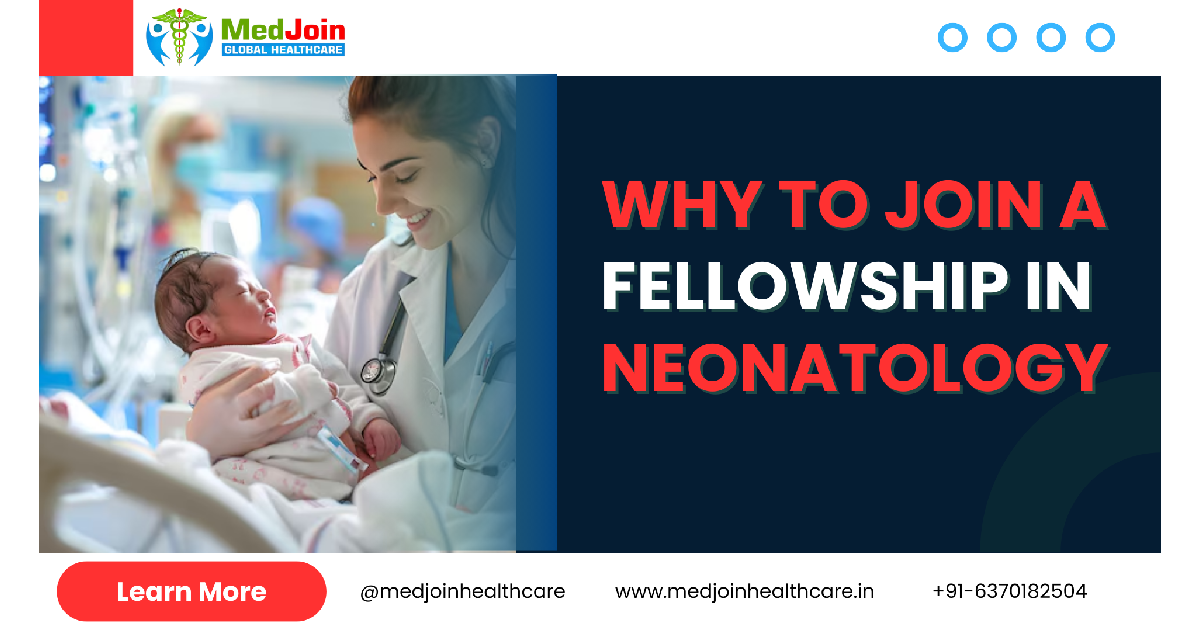
A Fellowship in Neonatology equips doctors with advanced clinical knowledge, hands-on skills, and decision-making expertise required to manage newborns in neonatal intensive care units (NICUs). With increasing preterm births, rising neonatal complications, and expanding NICU infrastructure globally, neonatologists are more in demand than ever before.
For MBBS doctors, pediatricians, and early-career physicians looking for specialization with purpose, prestige, and long-term career stability, joining a Fellowship in Neonatology can be a transformative decision.
What Is a Fellowship in Neonatology?
A Fellowship in Neonatology is an advanced postgraduate medical training program focused on the comprehensive care of newborn infants, particularly those who are:
- Premature or low birth weight
- Critically ill or requiring intensive care
- Born with congenital anomalies
- Experiencing respiratory, cardiac, neurological, or metabolic disorders
The fellowship bridges the gap between theoretical pediatrics and real-world neonatal critical care. It emphasizes evidence-based practice, modern NICU protocols, advanced life support, and family-centered neonatal care.
Why Neonatology Is One of the Most Rewarding Medical Specialties
1. Saving Lives at Their Most Vulnerable Stage
Neonatologists work at the very beginning of life. The opportunity to save a newborn, stabilize a premature baby, or guide parents through a difficult phase is deeply fulfilling—both professionally and emotionally.
Unlike many other specialties, outcomes in neonatology can be dramatic and immediate. Seeing a fragile neonate grow stronger under your care offers a sense of purpose that few medical fields can match.
2. Rising Demand for Neonatologists Worldwide
Several global healthcare trends have fueled the demand for trained neonatologists:
- Increase in preterm births
- Higher maternal age and high-risk pregnancies
- Improved survival of extremely low birth weight infants
- Rapid expansion of NICUs in urban and semi-urban areas
- Growing private hospital and corporate healthcare sectors
Countries across Asia, the Middle East, Africa, and Europe are actively recruiting neonatology specialists, making this fellowship an excellent choice for doctors seeking global career opportunities.
3. Strong Career Stability and Financial Growth
Neonatology is not only emotionally rewarding but also financially secure.
- High demand ensures job stability
- Competitive salaries in hospitals and NICUs
- Opportunities for private practice, consultations, and academic roles
- Scope for leadership roles such as NICU director or clinical head
Doctors with formal fellowship training often command higher professional credibility and compensation compared to general pediatric practitioners.
Who Should Join a Fellowship in Neonatology?
A Fellowship in Neonatology is ideal for:
- MBBS doctors aiming to specialize early
- MD/DNB Pediatrics graduates seeking subspecialty expertise
- Pediatricians looking to upgrade skills and transition into NICU care
- Doctors working in maternity hospitals or NICUs
- International medical graduates seeking globally relevant training
If you have patience, precision, compassion, and an interest in critical care medicine, neonatology can be a perfect fit.
Skills You Gain During a Fellowship in Neonatology
A structured fellowship program helps you develop both clinical excellence and professional confidence.
Core Clinical Skills
- Neonatal resuscitation and stabilization
- Ventilator and CPAP management
- Management of preterm and low birth weight infants
- Handling neonatal sepsis, jaundice, and respiratory distress
- Interpretation of neonatal investigations and imaging
- Nutrition, fluid, and electrolyte management
- Neonatal pharmacology
Advanced NICU Expertise
- Mechanical ventilation strategies
- Management of neonatal shock and cardiac issues
- Neurodevelopmental care
- Ethical decision-making in neonatal critical care
- Infection control and NICU protocols
Soft Skills and Professional Growth
- Parent counseling and communication
- Multidisciplinary team coordination
- Clinical documentation and audits
- Research literacy and evidence-based practice
Fellowship in Neonatology vs General Pediatrics
Many doctors wonder whether to continue in general pediatrics or pursue neonatology specialization.
| Aspect | General Pediatrics | Neonatology Fellowship |
|---|---|---|
| Scope | Broad child healthcare | Focused newborn care |
| Demand | Competitive | High demand |
| Work Setting | OPD & wards | NICU & maternity hospitals |
| Income Potential | Moderate | Higher |
| Specialization | General | Highly specialized |
| Global Opportunities | Limited | Extensive |
A fellowship allows doctors to move from general practice to specialized, high-impact neonatal care.
Why Online & Hybrid Neonatology Fellowships Are Gaining Popularity
Modern fellowship programs now offer online or blended learning models, making advanced training accessible without career interruption.
Benefits of Online/Hybrid Fellowships
- Learn while continuing clinical practice
- Flexible schedules for working doctors
- Access to expert faculty from leading institutions
- Case-based learning and live virtual sessions
- Cost-effective compared to full-time residency
Hands-on clinical training or observerships are often included to ensure real-world skill development.
Global Recognition and Career Mobility
A well-structured fellowship in neonatology provides internationally relevant training aligned with global NICU standards.
This opens doors to:
- Employment in private and corporate hospitals
- Overseas job opportunities
- Academic teaching positions
- Research and clinical trials
- Leadership roles in neonatal units
Doctors trained in neonatology are respected worldwide for their critical care expertise.
Career Opportunities After Fellowship in Neonatology
After completing a fellowship, doctors can explore multiple career paths:
- Consultant Neonatologist
- NICU Specialist
- Neonatal Intensivist
- Faculty in medical colleges
- Clinical educator and trainer
- Research associate
- Healthcare administrator
Some doctors also pursue further subspecialization or academic research in neonatal medicine.
Emotional Intelligence and Human Impact
Neonatology demands not only clinical excellence but emotional intelligence.
You support families during emotionally charged moments—premature deliveries, critical illnesses, and recovery journeys. Your ability to communicate compassionately and confidently makes a lasting difference in the lives of parents and families.
For doctors seeking a specialty that combines science, empathy, and human connection, neonatology stands unmatched.
Work-Life Balance in Neonatology
While NICU work can be intense, structured hospital systems and shift-based care models help maintain work-life balance. Many neonatologists find satisfaction in focused clinical responsibilities rather than OPD overload.
With experience, doctors can move into supervisory, academic, or administrative roles offering more predictable schedules.
Why Fellowship Training Matters in Neonatology
Neonatal care is highly protocol-driven and technology-dependent. Fellowship training ensures:
- Standardized clinical decision-making
- Patient safety and ethical care
- Confidence in emergency situations
- Reduced medical errors
- Professional credibility
Hospitals increasingly prefer fellowship-trained neonatologists over general pediatricians for NICU roles.
The Future of Neonatology: A Specialty with Long-Term Growth
The future of neonatology is promising:
- Expansion of advanced NICUs
- Integration of AI and neonatal monitoring technologies
- Improved survival rates for extremely premature infants
- Greater focus on neurodevelopmental outcomes
- Increased investment in maternal-child healthcare
Choosing neonatology today means aligning your career with a specialty that will remain essential for decades.
Key Reasons to Join a Fellowship in Neonatology (Quick Summary)
- High demand and job security
- Opportunity to save lives at birth
- Advanced clinical and critical care expertise
- Global career opportunities
- Financial stability and growth
- Emotional and professional fulfillment
- Leadership and academic potential
Conclusion: Is Fellowship in Neonatology Worth It?
A Fellowship in Neonatology is more than a qualification—it is a commitment to safeguarding the most fragile lives. It challenges you intellectually, strengthens you emotionally, and rewards you professionally.
For doctors who aspire to make a meaningful difference, achieve specialization, and build a respected medical career with global relevance, joining a Fellowship in Neonatology is one of the most impactful decisions you can make.