
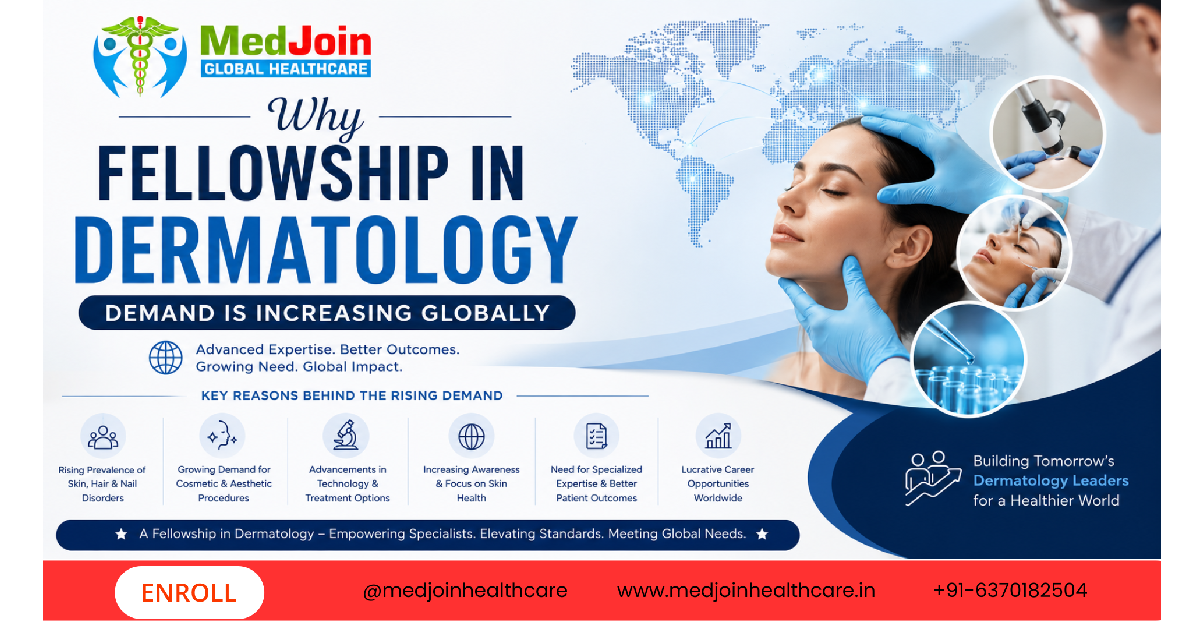
Dermatology has emerged as one of the fastest-growing and most sought-after medical specialties worldwide. Over the last decade, the demand for advanced dermatology education and fellowship programs has increased significantly across countries including India, the United States, the United Kingdom, the UAE, Australia, Canada, and many parts of Asia and Europe. Today, healthcare professionals are increasingly pursuing fellowships in dermatology to enhance their clinical expertise, improve career opportunities, expand into aesthetic medicine, and meet the growing healthcare needs of patients suffering from skin, hair, and nail disorders.
The global healthcare landscape is changing rapidly. Rising skin disorders, growing awareness about skin health, increasing demand for cosmetic and aesthetic procedures, technological advancements, teledermatology, AI-powered diagnosis, and an aging population are all contributing to the increased demand for trained dermatology professionals. Hospitals, clinics, cosmetic centers, medical colleges, and healthcare institutions worldwide are now actively seeking doctors with specialized dermatology training.
According to recent global research, skin diseases affect billions of people worldwide, while many countries still face a shortage of trained dermatologists and dermatology specialists. This gap between patient demand and specialist availability has accelerated the popularity of dermatology fellowship programs globally.
Explore the major reasons behind the growing global demand for dermatology fellowships, the career opportunities available after specialization, future industry trends, technological advancements, and why medical professionals are increasingly choosing dermatology as a long-term career path.
Understanding Fellowship in Dermatology
A fellowship in dermatology is an advanced training program designed for medical professionals who want to gain specialized knowledge and practical expertise in diagnosing and treating skin, hair, nail, and cosmetic conditions. These fellowship programs usually focus on clinical dermatology, aesthetic dermatology, dermatosurgery, trichology, cosmetology, pediatric dermatology, dermatopathology, laser treatments, and anti-aging medicine.
Dermatology fellowships are becoming increasingly popular among:
- MBBS doctors
- MD physicians
- General practitioners
- Cosmetic physicians
- Internal medicine doctors
- Pediatricians
- Plastic surgeons
- Medical graduates seeking specialization
The programs provide hands-on clinical exposure, procedural training, patient management experience, and knowledge of modern dermatological technologies.
Global Rise in Skin Disorders
One of the biggest reasons for the growing demand for dermatology fellowships is the sharp rise in skin-related diseases worldwide.
Skin conditions are among the most common health problems globally. Millions of people suffer from:
- Acne
- Psoriasis
- Eczema
- Dermatitis
- Skin allergies
- Fungal infections
- Vitiligo
- Hair loss
- Pigmentation disorders
- Skin cancer
- Autoimmune skin diseases
Research shows that skin diseases affect nearly half of the global population at some point in life.
Modern lifestyle factors are contributing significantly to the increase in skin problems, including:
- Pollution
- Stress
- Poor diet
- Hormonal imbalance
- Increased UV exposure
- Sedentary lifestyle
- Cosmetic product misuse
- Climate change
As the number of patients increases, healthcare systems worldwide require more trained dermatology professionals. This directly increases demand for fellowship-trained doctors.
Shortage of Dermatologists Worldwide
Many countries face a major shortage of dermatologists and skin specialists. Global studies reveal that dermatology access remains inadequate in numerous regions, especially in low- and middle-income countries.
Several countries have:
- Long patient waiting times
- Limited dermatology specialists
- Inadequate rural skin healthcare
- Insufficient dermatology training centers
- Lack of subspecialty expertise
Research indicates that many regions report extremely poor access to specialist dermatology care.
In countries like Australia, dermatologist shortages are increasing waiting periods for patients significantly.
This workforce gap has created enormous career opportunities for doctors pursuing fellowships in dermatology.
Increasing Popularity of Cosmetic Dermatology
The global beauty and aesthetic industry is growing at an unprecedented rate. Cosmetic dermatology has become one of the strongest drivers of dermatology fellowship demand worldwide.
Today’s patients are highly conscious about:
- Skin appearance
- Anti-aging treatments
- Hair restoration
- Skin rejuvenation
- Acne scar removal
- Pigmentation correction
- Laser procedures
- Botox and fillers
Social media, celebrity culture, and digital visibility have significantly increased awareness of cosmetic procedures.
People now seek treatments for:
- Wrinkles
- Fine lines
- Dark spots
- Hair thinning
- Skin tightening
- Facial contouring
- Pigmentation issues
- Acne scars
As demand for aesthetic medicine rises, clinics and hospitals increasingly prefer doctors with fellowship training in cosmetic dermatology and dermatosurgery.
Social Media and the “Skincare Boom”
The rise of social media platforms such as Instagram, YouTube, TikTok, and Facebook has transformed public awareness about skin health.
Online skincare influencers and dermatologists are educating millions about:
- Skin routines
- Cosmetic treatments
- Hair care
- Sunscreen awareness
- Acne management
- Anti-aging therapies
This “skincare revolution” has significantly increased public demand for dermatological consultation and cosmetic procedures.
Reports suggest that dermatology residency and fellowship interest has grown rapidly due to social media awareness and the popularity of skincare content online.
Young medical professionals now view dermatology as a modern, prestigious, and financially rewarding career option.
Rising Demand for Aesthetic Procedures
The global aesthetic medicine industry is expanding rapidly across developed and developing countries.
Non-surgical aesthetic procedures are becoming highly popular because they are:
- Minimally invasive
- Faster recovery
- More affordable
- Safer than surgery
- Convenient for patients
Popular procedures include:
- Botox
- Dermal fillers
- PRP therapy
- Chemical peels
- Microneedling
- Laser resurfacing
- Skin tightening
- Hair restoration
Doctors with fellowship training gain expertise in these procedures and become highly valuable in aesthetic clinics and cosmetic centers.
This rising patient demand directly increases the popularity of dermatology fellowships globally.
Better Career Opportunities for Doctors
Dermatology fellowships offer excellent career growth opportunities.
After completing fellowship training, doctors can work in:
- Multispecialty hospitals
- Dermatology clinics
- Cosmetic centers
- Medical colleges
- Skin laser clinics
- Telemedicine platforms
- Research organizations
- Pharmaceutical companies
Many fellowship-trained dermatologists also establish their own private practice.
Compared to several other medical specialties, dermatology often offers:
- Better work-life balance
- Flexible schedules
- High earning potential
- Outpatient-focused practice
- Lower emergency burden
Industry reports describe dermatology as one of the most desirable physician careers due to lifestyle flexibility and strong earning potential.
Increasing Awareness About Skin Cancer
Skin cancer awareness has increased dramatically worldwide.
Countries with high sun exposure such as Australia and the United States are witnessing rising skin cancer cases. Early diagnosis and treatment are critical for improving survival rates.
Dermatologists play a vital role in:
- Early detection
- Skin screening
- Biopsy procedures
- Dermoscopy
- Surgical management
The growing importance of skin cancer management has increased the need for advanced dermatology training programs and fellowships.
Growth of Teledermatology
Telemedicine has revolutionized healthcare delivery, especially after the COVID-19 pandemic.
Teledermatology allows doctors to diagnose and manage skin conditions remotely using digital images and online consultations.
Benefits include:
- Faster diagnosis
- Rural healthcare access
- Reduced waiting times
- Improved specialist access
- Convenient patient care
Because dermatology is highly visual, it adapts exceptionally well to telemedicine.
Doctors with specialized dermatology training are increasingly working in digital healthcare platforms, increasing the value of dermatology fellowships.
Technological Advancements in Dermatology
Modern dermatology has become highly technology-driven.
Advanced technologies include:
- AI-assisted diagnosis
- Dermoscopy
- Laser therapies
- Robotic imaging
- Digital pathology
- Molecular dermatology
- Advanced skin imaging
Artificial intelligence tools are improving skin disease detection and clinical efficiency.
Fellowship programs now provide training in modern dermatological technologies, making specialists more competitive globally.
Expansion of Dermatology Subspecialties
Dermatology is no longer limited to basic skin disease treatment.
Today, several subspecialties exist, including:
- Pediatric dermatology
- Cosmetic dermatology
- Trichology
- Dermatopathology
- Immunodermatology
- Mohs surgery
- Laser dermatology
- Aesthetic medicine
Global healthcare systems increasingly require experts in these specialized areas.
Fellowship programs help doctors gain focused expertise and improve their employability.
Increasing Disposable Income Worldwide
Economic growth in developing countries has increased disposable income among middle-class populations.
Patients are now spending more on:
- Skin care
- Cosmetic treatments
- Hair restoration
- Anti-aging procedures
- Preventive dermatology
The beauty and wellness industry has become a multi-billion-dollar global market.
This economic shift has increased demand for qualified cosmetic dermatologists and fellowship-trained doctors.
Aging Population and Anti-Aging Treatments
The global aging population is another major driver behind dermatology fellowship demand.
Older populations increasingly seek treatments for:
- Wrinkles
- Age spots
- Skin laxity
- Hair thinning
- Skin rejuvenation
Anti-aging medicine has become a major segment within dermatology.
Fellowship-trained doctors are better equipped to deliver advanced anti-aging therapies and aesthetic procedures.
Urbanization and Lifestyle Changes
Rapid urbanization has contributed significantly to skin disorders worldwide.
Factors include:
- Air pollution
- Stress
- Processed food consumption
- Increased cosmetic product usage
- Poor sleep habits
- Hormonal disorders
Urban populations are experiencing rising rates of acne, pigmentation, allergies, and hair disorders.
As awareness increases, patients actively seek dermatology specialists for treatment.
Increased Demand in Developing Countries
Countries such as India, UAE, Saudi Arabia, Singapore, Malaysia, and African nations are witnessing growing demand for dermatology services.
Several reasons contribute:
- Rising healthcare awareness
- Medical tourism
- Growing cosmetic industry
- Expanding healthcare infrastructure
- Increasing middle-class population
India, in particular, has become a major hub for dermatology education and cosmetic medicine.
International fellowship programs are attracting doctors from multiple countries.
Medical Tourism Boosting Dermatology
Medical tourism is playing an important role in increasing dermatology fellowship demand.
Countries offering affordable and advanced cosmetic treatments attract international patients.
Popular procedures include:
- Hair transplant
- Laser treatment
- Acne scar treatment
- Skin rejuvenation
- Cosmetic injectables
Doctors with advanced fellowship training are highly preferred in medical tourism hospitals and cosmetic centers.
Competitive Advantage for Doctors
In today’s competitive healthcare industry, additional specialization improves career prospects significantly.
Doctors pursuing dermatology fellowships gain:
- Specialized credentials
- Hands-on procedural expertise
- Better patient trust
- Stronger professional profile
- Improved earning opportunities
Hospitals increasingly prioritize fellowship-trained professionals for advanced dermatology departments.
Research and Innovation in Dermatology
Dermatology research is growing rapidly in areas such as:
- Biologics
- Autoimmune skin diseases
- AI diagnostics
- Skin microbiome
- Genetic dermatology
- Precision medicine
Doctors with fellowship training often participate in research projects, clinical trials, and academic activities.
This creates opportunities in:
- Teaching
- Research
- Pharmaceutical consulting
- International collaborations
Better Work-Life Balance
One major reason many doctors choose dermatology fellowships is lifestyle flexibility.
Compared to several high-stress specialties, dermatology generally offers:
- Regular clinic hours
- Fewer emergencies
- Outpatient practice
- Reduced night duties
- Better personal time
This attractive work-life balance increases interest among young medical graduates.
Rise of Preventive Dermatology
Modern healthcare is shifting toward preventive medicine.
Patients now focus more on:
- Skin maintenance
- Early diagnosis
- Preventive skincare
- Sun protection
- Healthy aging
Preventive dermatology has become a growing healthcare segment globally.
Fellowship-trained dermatologists are increasingly involved in preventive skin health programs.
Growing Demand for Hair Restoration Specialists
Hair disorders are increasing globally due to:
- Stress
- Hormonal imbalance
- Genetics
- Lifestyle changes
- Nutritional deficiencies
Hair transplant and trichology services are witnessing massive demand.
Doctors with fellowship training in dermatology and trichology are highly sought after in hair restoration clinics.
Increased Awareness About Mental Health and Skin
Skin disorders significantly affect mental health and self-confidence.
Conditions such as acne, vitiligo, psoriasis, and hair loss can lead to:
- Anxiety
- Depression
- Social withdrawal
- Low self-esteem
As awareness grows, patients increasingly seek professional dermatological treatment instead of ignoring symptoms.
Role of Artificial Intelligence in Dermatology
AI is becoming increasingly integrated into dermatology practice.
AI systems now assist in:
- Skin lesion analysis
- Melanoma detection
- Image recognition
- Diagnostic support
- Clinical documentation
Research shows AI-powered dermatology systems may help improve access to skin healthcare globally.
Fellowship programs incorporating AI and digital dermatology are becoming highly valuable.
Increasing Fellowship Opportunities Worldwide
Medical institutions worldwide are launching advanced dermatology fellowship programs.
These programs now offer:
- Hybrid learning
- Online modules
- International collaborations
- Clinical exposure
- Advanced procedural training
Doctors can now pursue specialized dermatology training more conveniently than before.
Demand for Dermatology Experts in Rural Areas
- Rural healthcare systems globally still lack adequate dermatology services.
- Many governments and healthcare organizations are working to improve specialist access in underserved areas.
- This creates strong career opportunities for dermatology-trained doctors.
Dermatology as a Future-Proof Career
Healthcare experts consider dermatology one of the most future-ready specialties because it combines:
- Clinical medicine
- Technology
- Cosmetics
- Preventive care
- AI integration
- Telemedicine
- Wellness industry growth
As global demand continues to rise, fellowship-trained dermatologists are expected to remain highly valuable.
Why Young Doctors Prefer Dermatology Fellowships
Young medical professionals increasingly choose dermatology because it offers:
- Clinical diversity
- High patient satisfaction
- Strong financial growth
- Flexible practice options
- Cosmetic opportunities
- Entrepreneurial potential
Many doctors now combine clinical dermatology with:
- Aesthetic medicine
- Social media education
- Skincare brands
- Research
- Telehealth
This versatility makes dermatology highly attractive.
Future Scope of Dermatology Fellowships
The future of dermatology fellowships looks exceptionally promising.
Key future trends include:
- AI-powered skin diagnosis
- Personalized skincare
- Digital dermatology
- Advanced laser medicine
- Regenerative aesthetics
- Genomic dermatology
- Teledermatology expansion
- Cosmetic innovation
Healthcare institutions globally will continue requiring skilled dermatology professionals with advanced fellowship training.
The demand for fellowship programs in dermatology is increasing globally due to a powerful combination of medical, technological, cosmetic, and economic factors. Rising skin diseases, global dermatologist shortages, increasing aesthetic awareness, technological innovation, telemedicine growth, and changing patient expectations are reshaping the future of dermatology worldwide.
Today, dermatology is no longer viewed as a niche specialty. It has become one of the most dynamic, innovative, and rewarding fields in modern healthcare. Fellowship-trained dermatologists are increasingly needed in hospitals, cosmetic clinics, research institutions, telemedicine platforms, and academic organizations across the world.
For medical professionals seeking career growth, financial stability, advanced procedural expertise, and global opportunities, pursuing a fellowship in dermatology offers a strong pathway toward long-term professional success.
As healthcare continues evolving, dermatology fellowships will remain at the center of modern skin health, cosmetic medicine, digital healthcare, and preventive wellness. The future of dermatology is bright, and the global demand for trained specialists is expected to grow even further in the coming years.