
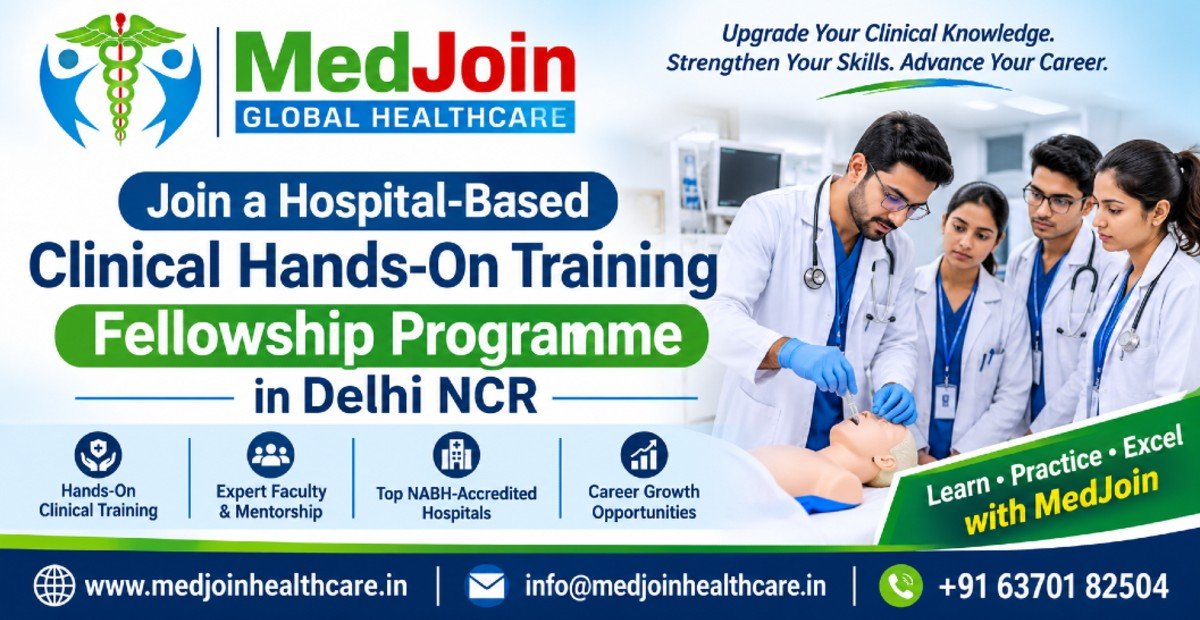
Advance Your Medical Career with Hospital-Based Clinical Training in India
The healthcare industry is continuously evolving, and medical professionals must regularly upgrade their clinical knowledge, practical skills and professional competencies to meet changing patient-care requirements. While theoretical knowledge and academic qualifications provide the foundation for a successful medical career, practical clinical exposure plays an equally important role in developing confidence, improving decision-making abilities and understanding real-world healthcare practices.
For doctors and healthcare professionals looking to strengthen their clinical expertise, joining a Hospital-Based Clinical Hands-On Training Fellowship Programme in Delhi NCR, India, can be a valuable opportunity to gain structured clinical exposure in a hospital environment.
Hospital-based clinical training allows eligible medical professionals to learn within an active healthcare setting under the guidance and supervision of experienced consultants and medical faculty. Depending on the specialty, hospital facilities, programme structure and individual eligibility, participants may get opportunities to observe clinical procedures, understand patient-management protocols, participate in academic discussions, review clinical cases and develop practical competencies within their permitted scope of practice.
Delhi NCR has emerged as an important destination for medical education, healthcare services and professional development. With its network of multispeciality hospitals, super-speciality centres, diagnostic facilities and experienced medical professionals, the region provides an environment where healthcare professionals can explore opportunities for clinical learning and professional advancement.
MedJoin Global Healthcare provides fellowship-oriented medical education and clinical training opportunities designed to help healthcare professionals enhance their knowledge and develop specialty-focused competencies. Through a combination of structured online education, academic mentorship and hospital-based clinical exposure, eligible participants can work towards improving their professional capabilities.
Whether you are an MBBS graduate, a postgraduate doctor or an eligible healthcare professional seeking additional specialty knowledge, a well-structured clinical fellowship may help you take the next step in your professional journey.
What Is a Hospital-Based Clinical Hands-On Training Fellowship Programme?
A hospital-based clinical hands-on training fellowship is a structured professional learning programme that combines specialty-specific academic education with supervised exposure to hospital-based clinical practices.
Unlike programmes that focus exclusively on online lectures or theoretical learning, hospital-based training introduces participants to the working environment of healthcare institutions.
The purpose is to help participants understand how clinical knowledge is applied in real healthcare situations.
Depending on the programme and hospital policies, the training experience may include:
- Clinical case discussions.
- Patient assessment demonstrations.
- Observation of clinical procedures.
- Understanding diagnostic investigations.
- Learning treatment protocols.
- Reviewing patient-management approaches.
- Participation in academic meetings.
- Consultant-led teaching sessions.
- Understanding hospital documentation.
- Learning infection prevention and patient-safety practices.
- Specialty-focused clinical demonstrations.
- Exposure to multidisciplinary healthcare teams.
The exact learning activities depend on the participant's qualifications, specialty, registration status, institutional permissions and the nature of the fellowship.
It is important to understand that hospital-based fellowship training is a professional educational programme. It does not automatically provide a medical degree, postgraduate qualification, specialist registration, independent clinical practice rights or a guaranteed hospital employment opportunity.
The primary objective is to strengthen clinical knowledge, improve professional understanding and provide structured exposure to specialty-specific healthcare practices.
Why Choose Hospital-Based Clinical Training?
Medical education involves more than understanding textbooks, attending lectures and passing examinations. Healthcare professionals must also develop the ability to interpret clinical information, understand patient presentations, recognise relevant investigations and appreciate the practical challenges involved in patient management.
Hospital-based training creates opportunities to connect theoretical knowledge with clinical practice.
1. Practical Clinical Exposure
One of the major advantages of hospital-based fellowship training is exposure to real healthcare environments.
Participants can observe how healthcare teams approach patient assessment, diagnosis, treatment planning and follow-up.
This exposure helps learners understand the practical application of medical concepts.
2. Learning Under Experienced Consultants
Consultant-led teaching is an important component of professional medical development.
Participants may benefit from academic interactions with experienced consultants, specialty faculty and healthcare professionals.
These interactions can help them understand clinical reasoning, treatment approaches and specialty-specific challenges.
3. Better Understanding of Patient Management
Clinical knowledge becomes more meaningful when learners understand how it is applied in patient-care settings.
Hospital-based exposure can help participants learn about:
- Patient history-taking approaches.
- Clinical examination principles.
- Differential diagnosis.
- Diagnostic planning.
- Treatment protocols.
- Patient monitoring.
- Clinical documentation.
- Follow-up planning.
All clinical activities must remain within the supervision and permissions established by the hospital.
4. Specialty-Specific Learning
A structured fellowship allows participants to concentrate on a particular medical specialty or area of clinical interest.
For example, a doctor interested in cardiology may explore cardiovascular assessment, ECG interpretation and cardiac case discussions, while a professional interested in critical care may focus on intensive-care concepts, patient monitoring and emergency-management principles.
5. Professional Confidence
Structured learning, academic discussions and clinical exposure can help participants develop greater confidence in understanding clinical situations.
Confidence should always be supported by appropriate qualifications, competence, supervision and professional registration.
6. Understanding Hospital Operations
Hospital-based exposure also helps participants understand how different departments coordinate to provide patient care.
They may gain insights into:
- Outpatient department operations.
- Inpatient patient-care processes.
- Emergency department workflows.
- Intensive care unit protocols.
- Diagnostic services.
- Nursing coordination.
- Medical records and documentation.
- Infection control.
- Patient safety and quality assurance.
This broader understanding can be useful for healthcare professionals planning to work in hospital environments.
Why Choose Delhi NCR, India, for Hospital-Based Fellowship Training?
Delhi NCR is one of India's major healthcare and medical services regions.
The National Capital Region includes Delhi and important neighbouring cities such as Noida, Greater Noida, Ghaziabad, Gurugram and Faridabad.
The region offers access to a wide range of healthcare institutions, including multispeciality hospitals, super-speciality centres, diagnostic facilities and specialty clinics.
For medical professionals seeking additional clinical exposure, Delhi NCR can provide several advantages.
1. Diverse Healthcare Infrastructure
Delhi NCR has a broad healthcare ecosystem covering multiple medical specialties.
Depending on the hospital and its available facilities, learners may encounter clinical environments associated with:
- Internal Medicine.
- General Medicine.
- Cardiology.
- Neurology.
- Nephrology.
- Endocrinology.
- Gastroenterology.
- Critical Care Medicine.
- Emergency Medicine.
- Paediatrics.
- Obstetrics and Gynaecology.
- Dermatology.
- Anaesthesiology.
- Orthopaedics.
- Pulmonology.
- Oncology.
- Urology.
- Radiology and Imaging.
The availability of these departments varies by institution. Participants should confirm the exact department and training facilities before enrolment.
2. Opportunities for Multispeciality Learning
Multispeciality hospitals bring different medical departments and healthcare professionals together.
This provides opportunities to understand how various specialties coordinate in the diagnosis and management of complex medical conditions.
For example, a patient with diabetes and cardiovascular complications may require coordinated care involving endocrinology, cardiology, nephrology and internal medicine.
Exposure to such multidisciplinary approaches can strengthen a learner's understanding of comprehensive patient management.
3. Academic Interaction
Delhi NCR has a substantial medical professional community.
Academic discussions, consultant interactions, clinical case presentations and specialty-focused teaching activities can contribute to a valuable learning experience.
4. Connectivity and Accessibility
Delhi NCR is connected through domestic and international air travel, railway networks, highways and metro services.
This connectivity can make the region accessible to doctors travelling from different parts of India and eligible international participants.
5. Multiple Hospital Locations
Depending on programme availability and institutional arrangements, clinical training opportunities may be offered at hospitals in Noida, Greater Noida, Faridabad, Delhi, Gurugram and other nearby locations.
Participants should verify their assigned hospital, training duration, reporting location and accommodation arrangements before travelling.
Why Choose MedJoin Global Healthcare?
MedJoin Global Healthcare focuses on medical education, professional development and specialty-oriented fellowship programmes for eligible healthcare professionals.
The objective is to provide structured learning opportunities that combine academic education with clinical exposure wherever the programme includes an approved hospital training component.
MedJoin's educational approach is built around four important pillars:
Clinical Skills
Develop a stronger understanding of specialty-specific clinical concepts through academic modules, clinical discussions, case-based learning and hospital exposure where available.
Flexibility
Access structured online learning resources and educational sessions designed to support doctors and healthcare professionals who have professional commitments.
Mentorship
Learn through interactions with experienced medical faculty and consultants, subject to programme availability and the relevant hospital's arrangements.
Career Growth
Strengthen your professional knowledge, explore specialty areas and develop a clearer understanding of advanced healthcare practices.
MedJoin Global Healthcare aims to connect academic learning with practical clinical exposure through structured fellowship pathways.
Hospital-Based Clinical Fellowship: Online Learning Plus Practical Exposure
An effective clinical fellowship should provide a structured academic foundation before participants enter a hospital training environment.
At MedJoin Global Healthcare, the hybrid learning approach combines online education with hospital-based clinical exposure.
The programme structure may include:
Online Academic Learning – 10 Months
Participants complete specialty-specific online learning modules covering essential concepts, clinical topics, recorded lectures, study materials and assessments.
Hospital-Based Clinical Training – 2 Months
Eligible participants undertake hospital-based clinical exposure for the designated period at an assigned or approved training institution, subject to availability and programme arrangements.
This model is designed to help participants develop their theoretical understanding before progressing to supervised clinical learning.
The precise duration, curriculum, hospital allocation and training activities should be confirmed for the selected fellowship.
What Will You Learn During Hospital-Based Clinical Training?
The curriculum depends on the selected specialty. However, the general learning framework can include the following areas.
1. Clinical Assessment
Understanding the principles of patient assessment is an essential part of medical practice.
Participants may study and observe:
- Patient history-taking.
- Presenting complaints.
- Clinical examination methods.
- Vital-sign assessment.
- Recognition of clinical warning signs.
- Initial clinical evaluation.
- Documentation of findings.
2. Diagnostic Evaluation
Accurate diagnosis requires an understanding of clinical findings and appropriate investigations.
Depending on the specialty, training may cover:
- Laboratory investigations.
- Imaging techniques.
- ECG interpretation.
- Clinical reports.
- Diagnostic criteria.
- Differential diagnosis.
- Interpretation of investigation findings.
3. Treatment Planning
Participants can learn about the principles behind treatment decisions.
Academic discussions may include:
- Evidence-based treatment approaches.
- Clinical guidelines.
- Medication principles.
- Patient monitoring.
- Treatment response.
- Complication management.
- Referral and escalation protocols.
4. Clinical Case Discussions
Case-based learning is an important part of specialty-oriented medical education.
Participants may discuss clinical scenarios with faculty and understand how healthcare professionals approach different patient presentations.
5. Patient Monitoring
Depending on the specialty and hospital, participants may observe monitoring protocols and learn about the importance of regular patient assessment.
6. Infection Prevention and Patient Safety
Patient safety is a fundamental responsibility of every healthcare institution.
Training may introduce learners to:
- Hand hygiene.
- Infection prevention.
- Biomedical waste management.
- Personal protective equipment.
- Safe clinical practices.
- Patient identification.
- Clinical documentation.
- Hospital safety protocols.
7. Multidisciplinary Coordination
Modern healthcare requires coordination between doctors, nurses, technicians, pharmacists, therapists and other healthcare professionals.
Understanding this coordination can improve awareness of hospital-based patient-care systems.
Fellowship Specialties Available for Clinical Learning
Hospital-based clinical fellowship opportunities may be available across different medical specialties, depending on faculty, hospital infrastructure, training capacity and current programme offerings.
Fellowship in Internal Medicine
Internal Medicine focuses on the diagnosis, treatment and management of adult medical conditions.
The academic curriculum may cover:
- Common medical disorders.
- Hypertension.
- Diabetes mellitus.
- Infectious diseases.
- Respiratory disorders.
- Gastrointestinal disorders.
- Cardiovascular conditions.
- Renal diseases.
- Clinical assessment.
- Diagnostic investigations.
- Long-term disease management.
Hospital exposure can help participants understand the evaluation and management of patients with complex medical presentations.
Fellowship in Clinical Cardiology
Cardiology is concerned with diseases affecting the heart and cardiovascular system.
The programme may cover:
- Cardiovascular anatomy and physiology.
- ECG interpretation.
- Hypertension.
- Coronary artery disease.
- Heart failure.
- Arrhythmias.
- Valvular heart disease.
- Cardiac investigations.
- Cardiovascular risk assessment.
- Clinical case discussions.
Depending on hospital facilities and permissions, participants may observe relevant cardiac diagnostic procedures.
Fellowship in Critical Care Medicine
Critical Care Medicine focuses on the management of critically ill patients requiring intensive monitoring and specialised medical support.
The curriculum may include:
- Intensive care principles.
- Critical patient assessment.
- Haemodynamic monitoring.
- Respiratory failure.
- Mechanical ventilation concepts.
- Sepsis management principles.
- Shock management.
- Multiorgan dysfunction.
- Emergency response.
- ICU protocols.
- Patient monitoring.
Clinical exposure may help learners understand the functioning of intensive care units and multidisciplinary critical-care teams.
Fellowship in Emergency Medicine
Emergency Medicine involves the initial evaluation and management of patients presenting with acute illnesses and injuries.
Important learning areas may include:
- Emergency patient assessment.
- Triage principles.
- Basic and advanced life-support concepts.
- Trauma management.
- Acute cardiac emergencies.
- Stroke recognition.
- Respiratory emergencies.
- Shock.
- Poisoning.
- Emergency protocols.
- Patient stabilisation principles.
Fellowship in Diabetes and Endocrinology
This specialty focuses on hormonal disorders and metabolic conditions.
Topics may include:
- Diabetes mellitus.
- Thyroid disorders.
- Obesity.
- Metabolic syndrome.
- Adrenal disorders.
- Pituitary disorders.
- Calcium and bone metabolism.
- Diabetic complications.
- Insulin therapy principles.
- Long-term disease management.
Fellowship in Nephrology
Nephrology deals with diseases affecting the kidneys and urinary system.
Academic learning may include:
- Acute kidney injury.
- Chronic kidney disease.
- Electrolyte disorders.
- Acid-base balance.
- Hypertension.
- Glomerular diseases.
- Dialysis principles.
- Renal replacement therapy.
- Fluid management.
- Kidney-related complications.
Fellowship in Neurology
Neurology focuses on disorders of the brain, spinal cord, peripheral nerves and muscles.
The curriculum may cover:
- Stroke.
- Epilepsy.
- Headache disorders.
- Movement disorders.
- Neuromuscular conditions.
- Dementia.
- Neuroinfections.
- Neurological examination.
- Diagnostic approaches.
- Neuroimaging concepts.
Fellowship in Gastroenterology
Gastroenterology covers disorders of the digestive system, liver, pancreas and biliary tract.
Potential learning areas include:
- Acid-peptic disorders.
- Gastroesophageal reflux disease.
- Liver diseases.
- Hepatitis.
- Pancreatitis.
- Inflammatory bowel disease.
- Gastrointestinal bleeding.
- Endoscopic principles.
- Digestive-system investigations.
Fellowship in Paediatrics
Paediatrics focuses on healthcare for infants, children and adolescents.
Academic topics may include:
- Child growth and development.
- Neonatal care principles.
- Childhood infections.
- Nutrition.
- Immunisation.
- Respiratory conditions.
- Paediatric emergencies.
- Developmental assessment.
- Common childhood disorders.
Fellowship in Obstetrics and Gynaecology
This specialty covers women's reproductive health, pregnancy and related medical conditions.
Learning may include:
- Antenatal care.
- Maternal health.
- High-risk pregnancy concepts.
- Gynaecological disorders.
- Reproductive health.
- Menstrual disorders.
- Infertility.
- Obstetric emergencies.
- Women's healthcare protocols.
Fellowship in Dermatology
Dermatology focuses on disorders of the skin, hair and nails.
Potential learning areas include:
- Common skin disorders.
- Acne.
- Eczema.
- Psoriasis.
- Pigmentation disorders.
- Hair and nail conditions.
- Dermatological assessment.
- Skin infections.
- Clinical treatment principles.
The actual list of available programmes and hospital training options should be confirmed with MedJoin Global Healthcare before admission.
Eligibility Criteria for Hospital-Based Clinical Fellowship Programmes
Eligibility varies according to the selected specialty, educational structure, hospital policies and the professional responsibilities involved.
Generally, the following categories may be considered for relevant educational programmes.
MBBS Graduates
Medical graduates holding an MBBS qualification may be eligible for selected fellowship programmes, subject to applicable admission requirements.
MD/MS/DNB Doctors
Postgraduate medical professionals may explore specialty-focused fellowships to expand their knowledge in particular areas of interest.
BAMS and BHMS Graduates
Some educational programmes may consider graduates from recognised AYUSH disciplines, subject to programme-specific eligibility and applicable professional regulations.
Eligibility for clinical activities must be assessed separately and cannot be assumed from enrolment.
BPT and MPT Professionals
Physiotherapy graduates may be eligible for relevant programmes designed for their professional background.
Other Healthcare Professionals
Certain programmes may be available to qualified healthcare professionals, depending on their academic credentials and the intended learning outcomes.
Important: Eligibility for admission does not automatically confer permission to perform medical procedures, prescribe medicines, independently diagnose patients or practise outside the participant's registered professional scope.
International medical graduates must also verify the applicable Indian registration, visa and institutional requirements before undertaking any patient-facing activity.
Who Should Join a Hospital-Based Clinical Fellowship?
A structured fellowship may be useful for:
- MBBS graduates seeking additional specialty knowledge.
- Doctors interested in developing focused clinical competencies.
- MD/MS/DNB doctors exploring further academic specialisation.
- Healthcare professionals seeking structured specialty-oriented education.
- Doctors interested in understanding modern hospital practices.
- Medical professionals planning to strengthen their clinical knowledge.
- Eligible international doctors seeking academic exposure in India.
The most suitable programme depends on the participant's qualification, clinical experience, professional goals and regulatory eligibility.
Understanding the Difference Between Online and Hospital-Based Fellowship Training
Both online and hospital-based learning have important roles in medical education.
Online education offers flexibility, while hospital-based training provides exposure to clinical environments.
Online Fellowship Training
- Structured academic modules.
- Recorded lectures.
- Study materials.
- Online assessments.
- Faculty-led virtual sessions.
- Flexible learning schedules.
- Case-based academic discussions.
Hospital-Based Clinical Training
- Exposure to hospital environments.
- Clinical demonstrations.
- Supervised observational learning.
- Specialty-related case discussions.
- Understanding hospital protocols.
- Interaction with clinical teams.
- Practical learning opportunities where permitted.
Hybrid Fellowship Training
A hybrid programme combines online academic learning with a designated period of hospital-based clinical exposure.
This approach allows participants to develop their theoretical foundation before undertaking the hospital component.
Continue with the Full Guide Below: Admission, Hospital Training and Career Planning
Programme Duration and Learning Structure
A fellowship programme should have a clearly defined academic structure, training schedule and learning objectives.
A typical MedJoin hybrid fellowship pathway may follow the structure below:
|
Programme component |
Duration |
|---|---|
|
Online academic learning |
10 months |
|
Hospital-based clinical training |
2 months |
|
Total programme duration |
12 months |
Online Academic Learning
The online component is designed to establish a strong theoretical foundation before the hospital training phase.
Participants may receive access to:
- Recorded specialty lectures.
- Detailed study modules.
- Downloadable PDF learning materials.
- Specialty-specific presentations.
- Clinical case discussions.
- Live online academic sessions.
- Learning assessments.
- Online academic support.
Participants can study according to the programme schedule while continuing their professional responsibilities.
Hospital-Based Clinical Training
After completing the required academic preparation and meeting the relevant programme conditions, eligible participants can proceed to the hospital-based training component.
The designated clinical training period is two months in the applicable hybrid pathway.
During this period, the focus is on specialty-specific clinical exposure, consultant-guided academic learning and understanding hospital-based healthcare practices.
The hospital and faculty determine the permitted activities, attendance requirements, supervision arrangements and learning opportunities.
Academic Assessment
Assessment is an important component of structured professional education.
Depending on the selected fellowship, participants may be evaluated through:
- Online MCQ assessments.
- Specialty-specific assignments.
- Clinical case discussions.
- Academic participation.
- Module-based evaluations.
- Final programme assessments.
The assessment structure and passing criteria should be communicated before admission.
Hospitals for Clinical Hands-On Training in Delhi NCR
The quality of a clinical training experience depends significantly on the hospital environment, availability of relevant departments, faculty participation and training arrangements.
Delhi NCR offers access to a diverse range of healthcare institutions.
MedJoin Global Healthcare facilitates hospital-based clinical training opportunities through its hospital training network, subject to programme availability and institutional arrangements.
Importance of Choosing a Quality Hospital for Clinical Training
A good hospital training environment should provide more than a certificate or a temporary association with a healthcare institution.
Participants should evaluate the quality of the educational experience.
1. Relevant Specialty Department
The hospital should have the department relevant to the selected fellowship.
For example, a fellowship in nephrology should have an appropriate nephrology-related clinical learning environment.
2. Experienced Faculty
Faculty involvement is essential for meaningful clinical education.
Participants should understand who will supervise or conduct their academic training.
3. Clinical Learning Opportunities
The hospital should have clearly defined learning activities rather than vague promises of practical exposure.
4. Patient Safety
Clinical learning must take place within a framework that respects patient rights, confidentiality, infection control and hospital policies.
5. Training Documentation
The hospital and educational provider should clarify attendance records, training completion requirements and certificate issuance arrangements.
6. Infrastructure and Accreditation
Participants may also examine the hospital's facilities, applicable registrations, relevant approvals and accreditation status.
NABH is India's healthcare accreditation body that evaluates hospital quality and patient-safety systems. Its hospital accreditation framework addresses areas such as patient care, medication management, infection control, patient rights and safety. Accreditation should be verified independently rather than assumed from promotional claims.
Understanding the Difference Between Clinical Observership and Hands-On Training
Before enrolling in any hospital-based fellowship, it is essential to understand the difference between observership and practical clinical training.
These terms should not be used interchangeably without explaining the actual activities involved.
Clinical Observership
An observership primarily involves observing clinical practices and learning from healthcare professionals.
Typical activities may include:
- Observing clinical consultations where permitted.
- Attending academic case discussions.
- Understanding patient-management processes.
- Observing diagnostic procedures.
- Learning hospital workflows.
- Attending consultant-led teaching sessions.
An observer does not automatically receive permission to examine or treat patients or perform procedures.
Supervised Clinical Training
Supervised clinical training may include structured practical learning activities, depending on the participant's qualifications, registration, competency and institutional permissions.
Possible activities may include:
- Supervised clinical demonstrations.
- Practice using simulation-based learning facilities.
- Clinical skills demonstrations.
- Participation in approved academic exercises.
- Supervised activities permitted by the hospital.
Any patient-facing activity must be specifically authorised and conducted within the applicable professional and regulatory framework.
Why This Distinction Matters
A programme may advertise hands-on training, but prospective participants should ask what hands-on actually means.
Does it involve observation, simulation, supervised skill development or authorised patient-facing responsibilities?
A transparent educational provider should explain the difference.
The purpose of clinical training is to develop competence safely, not to bypass professional registration or patient-safety requirements.
Can International Doctors Join Hospital-Based Fellowship Training in India?
India attracts medical professionals from several countries who are interested in academic learning, healthcare exposure and professional development.
Delhi NCR can be a suitable location for eligible international medical professionals exploring structured educational programmes.
However, international applicants must understand that admission to an academic fellowship and permission to participate in clinical activities are separate matters.
Foreign medical practitioners seeking fellowship, clinical training or observership in India may be required to obtain applicable temporary registration through the relevant National Medical Commission process, subject to the current regulations and eligibility conditions.
The NMC's published temporary-registration guidelines specifically address fellowship, clinical research, clinical training and observership for eligible foreign medical practitioners. They also describe supervision and sponsor-related responsibilities.
International applicants should therefore:
- Submit their educational and professional credentials.
- Provide evidence of medical registration in their home country, where applicable.
- Obtain sponsorship from the eligible institution where required.
- Follow the applicable NMC temporary-registration procedure.
- Obtain the appropriate visa.
- Follow the hospital's clinical training policies.
- Undertake only those activities permitted by their registration and institutional authorisation.
The sponsoring institution must verify the current requirements and process the relevant application where applicable.
A private educational provider's admission confirmation alone should not be treated as permission to practise medicine in India.
Career Scope After Completing a Hospital-Based Clinical Fellowship
One of the most common questions prospective participants ask is: What are the career opportunities after completing a hospital-based clinical fellowship?
The answer depends on the participant's original qualification, professional registration, experience, clinical competencies and the nature of the fellowship.
A clinical fellowship can be a useful additional learning experience, but it should not be confused with an MD, MS, DNB or other formally recognised postgraduate medical qualification.
The career value of a fellowship is best understood in terms of additional knowledge, specialty exposure and professional development.
1. Strengthening Existing Clinical Knowledge
Doctors who have completed their basic medical education may use specialty-oriented programmes to develop a deeper understanding of a particular area.
For example, an MBBS doctor interested in cardiology may wish to study ECG interpretation, cardiovascular diseases, heart failure and cardiac diagnostic approaches.
Similarly, a doctor interested in critical care may want to develop a stronger understanding of intensive-care concepts and patient-monitoring principles.
2. Developing Specialty-Oriented Competencies
Specialty-focused academic education can help professionals understand clinical protocols, diagnostic approaches and evidence-based treatment principles.
These competencies can support continuing professional development within the scope of their existing qualifications and registration.
3. Improving Hospital Environment Familiarity
Hospital-based learning helps participants understand departmental workflows, documentation systems, multidisciplinary communication and patient-care processes.
This familiarity may be useful when applying for suitable professional roles, although employment depends on the employer's requirements and the candidate's eligibility.
4. Exploring New Medical Specialties
A fellowship can provide an opportunity to explore an area of medical interest before making further academic or professional decisions.
For instance, a doctor with an interest in nephrology may explore renal disorders, dialysis concepts and chronic kidney disease management.
5. Supporting Professional Development
Doctors and healthcare professionals can use additional education to demonstrate their commitment to continuous learning.
A fellowship completion certificate may document participation in a specific educational programme. Its value depends on the issuing institution, programme quality, curriculum and the recognition applicable to the particular qualification.
6. Building Professional Networks
Academic interactions with faculty, consultants and other healthcare professionals can help participants develop professional relationships.
These interactions may create opportunities for future academic collaboration, knowledge sharing and professional networking.
Can a Hospital-Based Fellowship Help You Get a Hospital Job?
Hospital-based training can provide exposure to the clinical environment and help participants understand hospital operations.
However, completing a fellowship does not guarantee employment.
Hospitals recruit professionals based on several factors, including:
- Primary medical qualification.
- Recognised postgraduate qualifications, where required.
- Valid professional registration.
- Clinical experience.
- Relevant specialty competencies.
- Hospital-specific eligibility criteria.
- Interview and assessment performance.
- Availability of vacancies.
A fellowship may complement a candidate's existing qualifications, but it cannot replace mandatory degrees, registrations or experience requirements.
For example, a candidate applying for a specialist consultant position must meet the relevant professional and regulatory requirements for that position. A short-term fellowship certificate alone does not establish specialist eligibility.
The Importance of Clinical Mentorship in Medical Education
Medical knowledge develops through continuous learning and interaction with experienced professionals.
Clinical mentorship can help participants understand the reasoning behind different clinical decisions.
A good mentor does more than explain medical facts. Mentorship encourages learners to analyse clinical information, understand possible complications and appreciate the importance of patient safety.
Benefits of Consultant-Led Academic Learning
Understanding Clinical Reasoning
Participants can learn how consultants approach clinical presentations and evaluate diagnostic possibilities.
Exposure to Different Cases
Case discussions can introduce learners to a variety of clinical situations and management challenges.
Learning from Clinical Experience
Experienced faculty can explain the practical considerations involved in patient assessment and treatment planning.
Understanding Evidence-Based Medicine
Mentorship can encourage the use of appropriate clinical guidelines, published evidence and rational decision-making.
Developing Professional Communication
Medical education also involves understanding how doctors communicate with patients, families and other healthcare professionals.
The availability and frequency of faculty interactions should be confirmed for each fellowship programme.
Role of Case-Based Learning in Hospital-Based Fellowships
Case-based learning is an effective educational approach because it connects medical theory with practical clinical situations.
Instead of learning topics independently, participants discuss clinical scenarios and explore the factors that influence diagnosis and management.
For example, a case discussion in Internal Medicine may involve a patient presenting with fever, breathlessness and altered blood parameters.
The discussion may cover:
- Understanding the presenting symptoms.
- Reviewing relevant medical history.
- Identifying important clinical findings.
- Considering differential diagnoses.
- Selecting appropriate investigations.
- Discussing possible management approaches.
- Evaluating complications.
- Understanding follow-up and monitoring.
A cardiology case discussion may focus on chest pain, ECG findings and cardiovascular risk factors.
A critical-care case may involve sepsis, respiratory failure or haemodynamic instability.
The purpose is to develop structured clinical thinking rather than simply memorising disease definitions.
Where hospital-based discussions involve real patient information, confidentiality and institutional permissions must be maintained.
How Hospital-Based Training Supports Evidence-Based Medical Practice
Modern healthcare increasingly relies on evidence-based medicine.
Evidence-based medical practice involves integrating the best available scientific evidence with professional expertise and the patient's individual circumstances.
A well-structured fellowship can introduce participants to:
- Clinical practice guidelines.
- Medical literature.
- Research interpretation.
- Diagnostic criteria.
- Risk assessment.
- Treatment protocols.
- Clinical outcome evaluation.
- Patient-centred care.
For example, a doctor studying diabetes management should understand that treatment decisions may depend on the patient's age, comorbidities, renal function, cardiovascular risk and individual circumstances.
Similarly, critical-care education requires understanding how clinical evidence influences monitoring, treatment and escalation decisions.
Learning to evaluate evidence is an important professional competency.
Understanding NABH Accreditation and Hospital Quality
When selecting a hospital for clinical exposure, participants should understand the importance of healthcare quality and patient safety.
The National Accreditation Board for Hospitals and Healthcare Providers (NABH) evaluates healthcare organisations against defined quality and safety standards.
Its hospital accreditation framework addresses several important areas:
- Access, assessment and continuity of care.
- Care of patients.
- Management of medication.
- Patient rights and education.
- Hospital infection control.
- Patient safety and quality improvement.
- Management responsibilities.
- Facility management and safety.
- Human resource management.
- Information management systems.
These areas reflect the importance of a structured and safe healthcare environment.
NABH accreditation is a useful factor when evaluating a hospital, but it is not the only consideration when selecting a clinical training institution.
Participants should also assess the availability of the relevant specialty, faculty supervision, infrastructure, patient-care activities and institutional willingness to provide training.
Always verify the hospital's current accreditation status and validity independently.
Clinical Training in a Multispeciality Hospital: What Makes It Valuable?
Multispeciality hospitals provide healthcare services across different departments.
This environment can be particularly valuable for learners who want to understand how complex medical conditions are managed through multidisciplinary collaboration.
Consider a patient with diabetes, hypertension and chronic kidney disease.
Such a patient may require coordinated care involving:
- Internal Medicine.
- Endocrinology.
- Nephrology.
- Cardiology.
- Nutrition and dietetics.
- Nursing services.
- Diagnostic departments.
Understanding the interaction between these departments provides a broader perspective on comprehensive healthcare delivery.
Similarly, a patient admitted to an intensive care unit may require coordination between critical-care specialists, anaesthesiologists, pulmonologists, cardiologists, nurses and diagnostic teams.
Hospital-based education can help participants appreciate the importance of this collaboration.
Why Two Months of Hospital-Based Clinical Exposure Can Be Valuable
The duration of a clinical training programme should be evaluated in relation to its learning objectives.
A two-month hospital-based component, when combined with a longer academic curriculum, can provide a structured opportunity to connect theoretical knowledge with hospital-based learning.
It should not be viewed as a substitute for the extensive supervised training required for recognised postgraduate medical qualifications.
The value of a two-month training period depends on how effectively it is organised.
A Structured Training Schedule
A well-planned training period may include the following components.
Orientation Phase
Participants are introduced to hospital policies, department structure, infection prevention, patient confidentiality and safety requirements.
Departmental Familiarisation
Learners understand the functioning of the relevant specialty department and its coordination with other clinical services.
Clinical Learning Phase
Participants engage in permitted clinical observations, demonstrations, case discussions and supervised learning activities.
Academic Interaction
Consultant-led sessions can help learners review cases, discuss clinical concepts and understand specialty-related practices.
Assessment and Feedback
The training team may review attendance, learning progress, participation and completion of designated educational activities.
The actual schedule must be provided by the hospital or programme coordinator.
What Is the Difference Between a Fellowship, Observership, Internship and Residency?
These terms are frequently used in medical education, but they represent different forms of training.
Fellowship
A fellowship is generally a focused educational or professional development programme in a particular subject or specialty.
Its duration, curriculum, eligibility and recognition depend on the institution and applicable regulations.
A private educational fellowship certificate should not automatically be treated as a recognised postgraduate medical qualification.
Clinical Observership
An observership provides an opportunity to observe clinical practices, attend academic activities and understand hospital operations.
It generally does not authorise independent patient care or clinical practice.
Internship
An internship is a structured component of a qualifying educational pathway and is governed by the applicable educational and professional requirements.
It should not be confused with a short-term private fellowship.
Residency
Residency is a formal clinical training pathway associated with specified qualifications and regulatory or institutional requirements.
It generally involves defined responsibilities, supervision, assessments and training standards.
A short-term fellowship cannot be represented as equivalent to a recognised residency programme.
How to Prepare Before Starting Hospital-Based Training
Preparation can make the hospital training experience more productive.
Participants should begin preparing academically and professionally before their reporting date.
Academic Preparation
Review the fundamental concepts of your selected specialty.
For example:
- Cardiology participants can revise cardiovascular anatomy, ECG fundamentals and common cardiac conditions.
- Critical-care participants can revise respiratory physiology, shock, sepsis and haemodynamic concepts.
- Nephrology participants can revise renal physiology, electrolyte disorders and kidney function assessment.
- Neurology participants can revise neurological examination principles and common neurological disorders.
- Endocrinology participants can revise diabetes, thyroid function and hormonal regulation.
Professional Preparation
Carry the required academic and identity documents.
Ensure that your professional registration documents are current where applicable.
Read the hospital's code of conduct and understand its policies.
Practical Preparation
Before travelling, confirm:
- Hospital address.
- Reporting date and time.
- Department allocation.
- Training duration.
- Faculty or coordinator details.
- Attendance requirements.
- Dress code.
- Accommodation arrangements.
- Local transport options.
Personal Preparation
If travelling from another state or country, plan your accommodation, food and transportation in advance.
A clear understanding of the schedule will help you focus on the educational component.
The Role of Technology in Modern Medical Fellowship Education
Technology has transformed medical education.
Online learning platforms allow medical professionals to access educational content without being physically present in a classroom.
For doctors who have busy professional schedules, digital learning can provide greater flexibility.
Learning Management Systems
A Learning Management System (LMS) can provide a central platform for accessing:
- Recorded lectures.
- Learning modules.
- PDF notes.
- Presentations.
- Assessments.
- Academic announcements.
- Programme-related resources.
Participants can use the LMS to review important concepts before and during their hospital training.
Live Online Academic Sessions
Live sessions enable participants to interact with faculty, ask questions and participate in discussions.
These sessions may include:
- Specialty-specific lectures.
- Case-based discussions.
- Clinical topic reviews.
- Recent developments in medicine.
- Question-and-answer sessions.
Recorded Learning Resources
Recorded lectures allow learners to revisit important topics and revise their understanding.
This is particularly useful when participants need to balance professional responsibilities with academic commitments.
Combining Digital Learning with Hospital Exposure
The hybrid model connects digital education with practical learning.
Participants first build a theoretical foundation through online resources and then gain exposure to clinical environments during the designated hospital training phase.
This approach can make learning more structured and accessible.
The Future of Hospital-Based Medical Fellowship Education in India
India's healthcare sector continues to evolve with advancements in medical technology, diagnostics, treatment approaches and healthcare infrastructure.
Medical professionals increasingly need opportunities to update their knowledge and understand emerging clinical practices.
Several developments are influencing the future of medical education.
1. Specialised Medical Education
Healthcare is becoming increasingly specialised.
Medical professionals are exploring focused learning in areas such as interventional nephrology, critical care, clinical cardiology, diabetes management, oncology and advanced diagnostic disciplines.
2. Hybrid Learning Models
The combination of online education and hospital-based exposure can make specialty-oriented education more accessible.
3. Case-Based Academic Learning
Case-based learning encourages participants to understand the application of medical knowledge in real-world situations.
4. Greater Emphasis on Patient Safety
Modern clinical education increasingly recognises the importance of infection control, patient rights, documentation and quality improvement.
5. Multidisciplinary Healthcare
The growing complexity of medical conditions requires healthcare professionals to understand multidisciplinary approaches to patient management.
6. Continuous Professional Development
Medical professionals must remain committed to lifelong learning.
Additional academic programmes, conferences, workshops and clinical discussions can support continuous professional development.
Hospital-based fellowship education can contribute to this learning ecosystem when it is delivered with transparent academic objectives, appropriate supervision and regulatory compliance.
Frequently Asked Questions (FAQs)
1. What is a hospital-based clinical hands-on training fellowship?
A hospital-based clinical fellowship is a structured educational programme that combines specialty-specific academic learning with clinical exposure in a hospital environment. Depending on the programme and institutional permissions, it may include clinical observations, demonstrations, case discussions and supervised learning activities.
2. Can I join a hospital-based fellowship in Delhi NCR after MBBS?
MBBS graduates may be eligible for selected fellowship programmes, depending on the specialty and admission requirements. Any patient-facing clinical activity must comply with professional registration and hospital regulations.
3. What is the duration of a hospital-based clinical fellowship?
The duration varies according to the programme. MedJoin's applicable hybrid pathway is structured as 10 months of online academic learning followed by 2 months of hospital-based clinical training, making a total of 12 months.
4. Does MedJoin provide hospital-based training?
MedJoin Global Healthcare facilitates hospital-based clinical training opportunities through its hospital training arrangements, subject to the selected fellowship, availability, eligibility and institutional approval.
5. Where can I complete hospital-based training in Delhi NCR?
Depending on the selected programme and availability, training opportunities may be arranged at hospitals in Noida, Faridabad and other Delhi NCR locations. The exact hospital allocation should be confirmed before enrolment.
6. Can I select my preferred hospital?
The availability of hospital choice depends on the programme and current training arrangements. In certain pathways, participants may explore an independent hospital, subject to suitability and approval.
7. Is hospital-based training compulsory?
It depends on the selected programme. A hybrid fellowship includes its designated clinical training component. Participants choosing a purely online pathway should understand that it does not provide the same hospital exposure.
8. Will I receive a certificate after completing the fellowship?
Participants who fulfil the applicable academic, attendance and assessment requirements may receive the relevant programme completion certificate. Any separate hospital training certificate depends on the agreed institutional arrangement.
9. Is the fellowship recognised by NMC?
An institutional fellowship or certificate programme should not automatically be described as an NMC-recognised postgraduate medical qualification. Participants must verify the programme's actual regulatory status and understand the distinction between educational certification and statutory recognition.
10. Can foreign doctors join the programme?
Eligible international medical graduates may explore applicable academic programmes. However, foreign medical practitioners must comply with the relevant Indian temporary-registration, sponsorship, visa and institutional requirements before undertaking clinical activities.
11. Is accommodation provided during hospital training?
Accommodation arrangements vary by programme and hospital. Participants should confirm availability, cost and location before travelling.
12. Will I get a stipend during the hospital training?
A stipend should not be assumed. Participants must confirm the specific programme's financial terms in writing before enrolment.
13. Can I continue working while pursuing the fellowship?
The online academic component is designed to offer learning flexibility. However, participants must manage the hospital training period according to the prescribed attendance and reporting schedule.
14. What is the difference between an online fellowship and a hybrid fellowship?
An online fellowship focuses on digital academic education, while a hybrid fellowship combines online education with a designated period of hospital-based clinical exposure.
15. Can a BAMS or BHMS graduate join a clinical fellowship?
Some programmes may accept eligible BAMS or BHMS graduates, depending on the curriculum and admission criteria. Clinical activities must remain within the relevant professional scope and applicable regulations.
16. Can physiotherapists join fellowship programmes?
Eligible BPT and MPT professionals may explore programmes relevant to their professional qualifications. The learning activities and permitted scope of practice will depend on the programme and applicable professional requirements.
17. Does completing a fellowship make me a specialist?
No. An institutional fellowship certificate does not automatically confer specialist registration or the status of an MD, MS, DNB or other recognised specialist qualification.
18. Does the fellowship guarantee a hospital job?
No. The programme is intended for academic and professional development. Employment depends on the candidate's qualifications, registration, experience and the recruiting hospital's requirements.
19. What documents are required for admission?
Typically, applicants may need their educational certificates, academic mark sheets, professional registration documents where applicable, photograph and identity proof. Additional documents may be required for particular programmes.
20. How can I enquire about admission?
You can contact MedJoin Global Healthcare through its official website, email or admission helpline to check available specialties, eligibility, fees, training locations and upcoming batches.
Why Choose a Hybrid Fellowship Instead of Only Online Learning?
Online education has made medical learning more accessible. However, medical professionals who want exposure to hospital-based environments may prefer a hybrid learning structure.
A hybrid fellowship can offer several advantages.
Academic Flexibility: Online modules allow participants to access educational content according to the prescribed schedule.
Structured Learning: Recorded lectures and study materials support systematic subject preparation.
Clinical Exposure: The designated hospital component offers an opportunity to understand clinical workflows and specialty practices.
Faculty Interaction: Academic sessions and clinical discussions provide opportunities to interact with experienced professionals.
Professional Development: The combination of academic education and clinical exposure can help participants strengthen their understanding of their selected specialty.
The appropriate option depends on your learning objectives, professional background and ability to attend the offline training component.
Why Delhi NCR Is a Strategic Destination for Medical Career Development
Delhi NCR offers a combination of healthcare infrastructure, educational opportunities and professional connectivity.
For doctors who want to explore additional specialty education, the region provides access to different hospital environments and medical departments.
Noida and Faridabad are particularly relevant locations for participants looking for hospital-based learning opportunities in the NCR region.
The advantages include:
- Access to multispeciality healthcare facilities.
- Opportunities for specialty-focused academic learning.
- Exposure to multidisciplinary clinical teams.
- Access to experienced medical professionals.
- Connectivity with other major Indian cities.
- Opportunities to participate in professional academic activities.
However, the quality of training should always be evaluated based on the actual hospital, faculty, curriculum and supervision rather than the geographical location alone.
What Should You Expect from Your First Day at a Training Hospital?
Starting clinical training in a hospital can be an important milestone in a medical professional's educational journey.
Participants should exp