
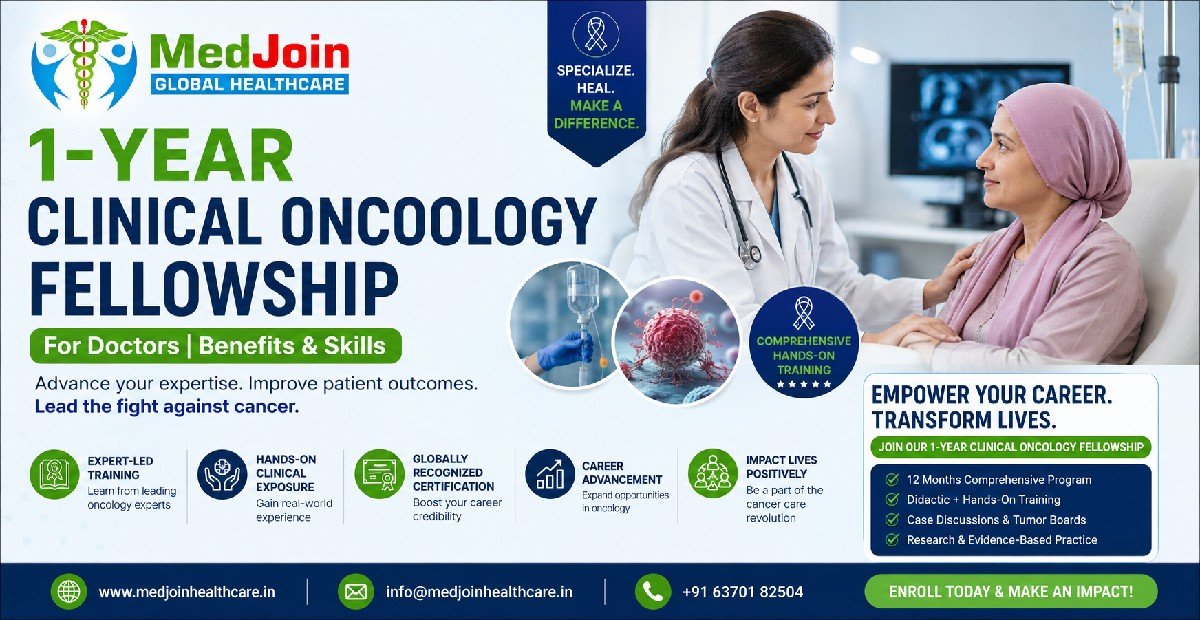
Cancer care is one of the most rapidly evolving areas of modern medicine. Advances in diagnostic imaging, pathology, molecular biology, systemic therapies, radiation techniques, immunotherapy, targeted treatment, and supportive care have transformed the way cancer patients are evaluated and managed. At the same time, the global burden of cancer continues to create a growing need for doctors who understand contemporary oncology practice and can contribute effectively to multidisciplinary cancer care.
For doctors who want to strengthen their knowledge and clinical exposure in oncology, a 1-Year Fellowship in Clinical Oncology can provide a structured pathway to develop specialized knowledge, understand treatment decision-making, and gain practical exposure to the realities of cancer care.
Clinical oncology is not limited to prescribing anticancer medicines. It involves understanding the complete patient journey—from prevention and screening to diagnosis, staging, treatment planning, response assessment, toxicity management, survivorship, and palliative care. Doctors working in this field must be able to interpret clinical information, understand pathology and imaging reports, communicate with multidisciplinary teams, and participate appropriately in individualized treatment planning.
A structured one-year fellowship can help doctors bridge the gap between theoretical medical knowledge and the practical application of oncology principles. It can also provide an opportunity to study important areas such as chemotherapy, immunotherapy, targeted therapy, hormonal therapy, radiation oncology concepts, precision medicine, cancer emergencies, supportive care, and multidisciplinary cancer management.
For MBBS doctors, general physicians, family physicians, medical practitioners, and other eligible healthcare professionals seeking additional exposure to oncology, a fellowship can be a valuable academic and professional development opportunity.
This article explains why doctors should consider enrolling in a 1-Year Fellowship in Clinical Oncology, what they can learn, how such training can support their professional development, and what factors they should evaluate before choosing a fellowship program.
Understanding Clinical Oncology
Clinical oncology is a multidisciplinary medical specialty focused on the diagnosis, treatment, monitoring, and supportive management of patients with cancer.
Cancer treatment frequently requires collaboration between multiple specialists. Depending on the cancer type and stage, the treatment team may include:
-
Medical oncologists
-
Radiation oncologists
-
Surgical oncologists
-
Pathologists
-
Radiologists
-
Nuclear medicine specialists
-
Genetic counselors
-
Palliative care specialists
-
Oncology nurses
-
Pharmacists
-
Nutritionists
-
Physiotherapists
-
Psycho-oncology professionals
-
Other allied healthcare professionals
The complexity of cancer care makes it essential for doctors to understand how different disciplines interact.
A Clinical Oncology fellowship can introduce doctors to this multidisciplinary approach and help them understand the clinical reasoning behind various cancer treatment strategies.
Why Oncology Knowledge Is Becoming Increasingly Important
Cancer is a major global health challenge. Improvements in diagnosis and treatment have increased survival for many cancer patients, but the complexity of cancer care has also increased.
Doctors increasingly encounter patients with:
-
Suspected malignancies
-
Abnormal imaging findings
-
Cancer-related symptoms
-
Treatment-related complications
-
Chemotherapy toxicity
-
Immunotherapy-related adverse effects
-
Cancer-associated emergencies
-
Treatment failure or recurrence
-
Long-term survivorship issues
A doctor may encounter oncology-related cases even when working primarily in general medicine, family medicine, emergency medicine, internal medicine, or another specialty.
Developing structured knowledge of oncology can therefore help doctors recognize concerning symptoms, understand diagnostic pathways, communicate effectively with oncology teams, and provide appropriate supportive care.
What Is a 1-Year Fellowship in Clinical Oncology?
A 1-Year Fellowship in Clinical Oncology is a structured educational and professional development program designed to provide doctors with advanced exposure to cancer medicine.
The exact curriculum, eligibility criteria, accreditation, clinical exposure, assessment methods, and certification depend on the institution offering the program.
A well-designed fellowship may combine:
-
Online theoretical learning
-
Recorded lectures
-
Live academic sessions
-
Case discussions
-
Assignments
-
Clinical case-based learning
-
Hospital-based exposure
-
Supervised clinical observation
-
Multidisciplinary discussions
-
Assessments
-
Academic projects
Some programs may provide a hybrid structure involving online academic education followed by clinical exposure, while others may offer longer periods of hospital-based training.
Doctors should carefully verify the exact structure and recognition status of any fellowship before enrollment.
Why Choose a One-Year Fellowship?
One year provides a meaningful period for structured learning without requiring doctors to commit to a much longer academic pathway.
A one-year program can provide sufficient time to move progressively through important oncology concepts.
The learning journey may include:
Phase 1: Foundation
Doctors revise fundamental concepts related to:
-
Cancer biology
-
Carcinogenesis
-
Tumor classification
-
Pathology
-
Genetics
-
Epidemiology
-
Screening
-
Diagnosis
Phase 2: Clinical Oncology
The curriculum can progress toward:
-
Cancer staging
-
Treatment planning
-
Chemotherapy
-
Immunotherapy
-
Targeted therapy
-
Hormonal therapy
-
Radiation therapy principles
-
Supportive care
Phase 3: Clinical Application
Case-based learning can help doctors connect theoretical concepts with clinical situations.
Phase 4: Advanced Concepts
Depending on the program, doctors may explore:
-
Precision oncology
-
Molecular diagnostics
-
Biomarkers
-
Personalized treatment
-
Cancer genetics
-
Clinical trials
-
New systemic therapies
This progressive approach can make a one-year fellowship more structured than independent learning.
Develop a Strong Foundation in Cancer Biology
Understanding cancer treatment requires understanding how cancer develops.
A Clinical Oncology fellowship can introduce doctors to fundamental concepts such as:
-
Cellular transformation
-
Genetic mutations
-
Oncogenes
-
Tumor suppressor genes
-
Angiogenesis
-
Tumor invasion
-
Metastasis
-
Tumor microenvironment
-
Cancer stem cells
-
Immune evasion
This foundation helps doctors understand why different therapies are used for different malignancies.
For example, targeted therapies are often developed around specific molecular abnormalities. Similarly, immunotherapy relies on understanding interactions between the immune system and tumor cells.
Learning the biology behind these treatments can make modern oncology concepts easier to understand.
Improve Understanding of Cancer Diagnosis
Accurate diagnosis is the foundation of cancer management.
Doctors need to understand how clinical presentation, laboratory investigations, imaging, pathology, and molecular testing contribute to diagnosis.
A fellowship may cover:
-
Clinical assessment
-
Tumor markers
-
Biopsy principles
-
Histopathology
-
Cytology
-
Immunohistochemistry
-
Molecular diagnostics
-
CT imaging
-
MRI
-
PET-CT
-
Ultrasound
-
Endoscopic evaluation
-
Genetic testing
Doctors can learn how different diagnostic tools contribute to the overall assessment of a cancer patient.
Learn the Principles of Cancer Staging
Cancer staging plays a major role in treatment planning.
Doctors need to understand concepts such as:
-
Primary tumor assessment
-
Regional lymph node involvement
-
Distant metastasis
-
TNM classification
-
Stage grouping
-
Resectability
-
Locally advanced disease
-
Metastatic disease
Staging helps clinicians understand disease extent and communicate consistently with multidisciplinary teams.
A fellowship can help doctors interpret staging information and understand its implications for treatment.
Understand Multidisciplinary Cancer Care
Modern oncology is rarely a one-specialist discipline.
Many cancer patients are discussed in multidisciplinary tumor boards involving:
-
Surgeons
-
Medical oncologists
-
Radiation oncologists
-
Radiologists
-
Pathologists
-
Physicians
-
Palliative care specialists
A doctor pursuing oncology education should understand how these professionals contribute to treatment planning.
For example, a patient with a localized solid tumor may require evaluation of:
-
Surgical options
-
Radiation therapy
-
Systemic therapy
-
Pathology
-
Imaging
-
Patient fitness
-
Comorbidities
-
Patient preferences
Multidisciplinary decision-making helps ensure that cancer management considers the complete clinical picture.
Gain Knowledge of Chemotherapy
Chemotherapy remains an important component of treatment for many cancers.
A Clinical Oncology fellowship can introduce doctors to:
-
Principles of chemotherapy
-
Cytotoxic agents
-
Drug classes
-
Mechanisms of action
-
Treatment cycles
-
Combination therapy
-
Dose considerations
-
Treatment response
-
Adverse effects
-
Supportive medications
Doctors can also learn about the importance of patient-specific considerations such as:
-
Age
-
Performance status
-
Organ function
-
Comorbidities
-
Previous treatments
-
Disease stage
-
Treatment intent
Importantly, doctors must understand that cancer treatment should be delivered according to appropriate clinical protocols and within their professional scope and supervision.
Understand Targeted Therapy
Cancer treatment has increasingly moved toward more individualized approaches.
Targeted therapies are designed to act against specific molecular pathways or abnormalities associated with cancer.
A fellowship may introduce doctors to:
-
Molecular biomarkers
-
Driver mutations
-
Receptor abnormalities
-
Gene amplification
-
Fusion genes
-
Companion diagnostics
-
Targeted drug classes
Doctors can learn why molecular testing may influence treatment selection in certain cancers.
This knowledge is particularly relevant as precision oncology continues to expand.
Learn About Immunotherapy
Immunotherapy has become an important part of modern cancer treatment.
It uses or modifies immune mechanisms to help the body recognize and respond to cancer.
A fellowship may cover:
-
Immune checkpoint inhibitors
-
Immune response
-
Biomarkers
-
Treatment indications
-
Response assessment
-
Immune-related adverse events
Doctors should understand that immunotherapy has a different toxicity profile from conventional chemotherapy.
Potential immune-mediated complications can involve:
-
Skin
-
Gastrointestinal system
-
Liver
-
Endocrine organs
-
Lungs
-
Kidneys
-
Other organs
Early recognition and appropriate management of treatment-related complications are important components of modern oncology practice.
Understand Hormonal Therapy
Hormonal therapy is important in several hormone-sensitive cancers.
Doctors may learn about:
-
Hormone receptors
-
Endocrine pathways
-
Hormone receptor testing
-
Anti-estrogen therapies
-
Androgen deprivation
-
Aromatase inhibition
-
Treatment resistance
This knowledge helps clinicians understand why hormonal therapy may be appropriate for selected patients.
Develop Awareness of Radiation Oncology
Clinical oncology education should not focus exclusively on systemic treatment.
Radiation therapy is a major component of cancer management.
A fellowship may provide an overview of:
-
Radiation therapy principles
-
External beam radiation
-
Brachytherapy
-
Treatment planning
-
Fractionation
-
Radiation indications
-
Palliative radiation
-
Radiation toxicity
Doctors do not necessarily need to become radiation specialists to benefit from understanding when radiation therapy may be considered.
Learn About Cancer Emergencies
Cancer patients can develop life-threatening complications requiring immediate recognition.
Important oncology emergencies include:
-
Febrile neutropenia
-
Tumor lysis syndrome
-
Spinal cord compression
-
Superior vena cava syndrome
-
Hypercalcemia of malignancy
-
Severe treatment-related reactions
-
Metabolic complications
-
Hemorrhage
-
Thromboembolic disease
-
Airway compromise
A fellowship can help doctors recognize these conditions and understand initial evaluation and referral pathways.
This knowledge can be particularly useful for doctors working in emergency departments, hospitals, primary care, and general medical practice.
Understand Supportive Oncology
Cancer treatment is not only about destroying tumor cells.
Supportive care plays a critical role in improving patient well-being and maintaining treatment continuity.
Doctors can learn about:
-
Pain management
-
Nausea and vomiting
-
Nutritional support
-
Fatigue
-
Anemia
-
Infection prevention
-
Neutropenia
-
Mucositis
-
Thrombosis
-
Psychosocial support
-
Palliative care
Supportive oncology helps address the patient's overall needs rather than focusing exclusively on the tumor.
Improve Knowledge of Palliative Care
Palliative care is an important component of comprehensive cancer care.
It focuses on symptom management, quality of life, communication, psychosocial needs, and support for patients and families.
Doctors can learn about:
-
Cancer pain
-
Breathlessness
-
Nausea
-
Delirium
-
Fatigue
-
End-of-life communication
-
Advance care planning
-
Family support
Understanding palliative principles can help doctors provide compassionate care across different stages of cancer.
Develop Skills in Clinical Decision-Making
One of the biggest advantages of structured oncology education is exposure to clinical decision-making.
Cancer management often requires consideration of multiple variables.
For example:
Diagnosis → Stage → Patient fitness → Molecular profile → Treatment intent → Available therapies → Risks → Patient preferences → Follow-up
Doctors can learn how these factors interact.
Case-based education can help develop a more systematic approach to complex cases.
Learn to Read Oncology Reports More Effectively
Doctors frequently encounter oncology reports that contain specialized terminology.
A fellowship can help improve familiarity with:
-
Histopathology reports
-
Immunohistochemistry
-
Molecular reports
-
CT reports
-
MRI reports
-
PET-CT reports
-
Tumor markers
-
Treatment response assessments
Better understanding of these reports can improve communication with patients and other specialists.
Understand Performance Status
Performance status is frequently used in oncology to assess a patient's functional ability.
Doctors may learn commonly used assessment systems such as:
-
ECOG Performance Status
-
Karnofsky Performance Status
These assessments can influence treatment decisions, particularly when considering systemic therapy.
Understanding functional status helps clinicians assess the overall condition of a cancer patient rather than focusing only on disease stage.
Learn About Treatment Intent
Cancer treatment may be given with different objectives.
Doctors should understand concepts such as:
-
Curative treatment
-
Adjuvant treatment
-
Neoadjuvant treatment
-
Definitive treatment
-
Consolidation
-
Maintenance
-
Palliative treatment
Understanding treatment intent is essential when communicating with patients and interpreting treatment plans.
Understand Adjuvant and Neoadjuvant Therapy
Systemic therapy may be given before or after surgery depending on the disease and treatment strategy.
Neoadjuvant Therapy
Treatment provided before definitive local therapy can be used in selected cancers to:
-
Reduce tumor burden
-
Improve resectability
-
Assess treatment response
-
Treat micrometastatic disease
Adjuvant Therapy
Treatment given after definitive local treatment may be used to reduce the risk of recurrence in appropriate patients.
Understanding these principles helps doctors appreciate how systemic and local treatments are integrated.
Develop Knowledge of Precision Oncology
Precision oncology aims to match treatment strategies to the biological characteristics of an individual patient's cancer.
This may involve:
-
Genomic profiling
-
Biomarker testing
-
Molecular classification
-
Companion diagnostics
-
Targeted therapies
-
Immunotherapy biomarkers
As molecular medicine continues to evolve, doctors with an understanding of precision oncology may be better prepared to interpret developments in cancer treatment.
Learn About Cancer Genetics
Some cancers have inherited components.
Doctors may encounter patients with:
-
Strong family histories
-
Multiple primary cancers
-
Early-onset cancers
-
Certain characteristic tumor patterns
A fellowship may introduce:
-
Hereditary cancer syndromes
-
Genetic risk assessment
-
Genetic testing
-
Family counseling principles
-
Risk-based screening
Recognizing possible hereditary cancer patterns can support appropriate referral to genetics professionals.
Understand Common Solid Tumors
A comprehensive Clinical Oncology fellowship should provide exposure to common solid tumors.
These may include:
-
Breast cancer
-
Lung cancer
-
Colorectal cancer
-
Gastric cancer
-
Esophageal cancer
-
Liver cancer
-
Pancreatic cancer
-
Prostate cancer
-
Kidney cancer
-
Bladder cancer
-
Ovarian cancer
-
Cervical cancer
-
Endometrial cancer
-
Head and neck cancers
-
Brain tumors
-
Sarcomas
-
Melanoma
Each cancer has different biological characteristics, staging systems, treatment approaches, and prognostic factors.
Develop Exposure to Hematological Malignancies
Doctors may also benefit from understanding the basic principles of hematological cancers.
These include:
-
Leukemias
-
Lymphomas
-
Multiple myeloma
-
Myelodysplastic syndromes
-
Myeloproliferative disorders
A fellowship may provide an overview of diagnosis, staging, treatment principles, complications, and referral pathways.
Learn About Cancer Screening
Cancer screening aims to identify disease at an earlier stage in appropriately selected populations.
Doctors should understand:
-
Screening principles
-
Risk assessment
-
Screening eligibility
-
Screening limitations
-
False-positive results
-
False-negative results
-
Follow-up of abnormal screening findings
Screening recommendations can vary according to country, organization, patient risk, age, and available resources, so doctors should use current evidence-based guidelines.
Understand Cancer Prevention
Oncology is not only about treatment.
Doctors can play an important role in prevention by addressing:
-
Tobacco use
-
Alcohol consumption
-
Obesity
-
Physical inactivity
-
Certain infections
-
Occupational exposures
-
Sun exposure
-
Vaccination where appropriate
Lifestyle counseling and risk reduction can form an important part of cancer prevention strategies.
Gain Case-Based Learning Experience
Case-based learning can be one of the most valuable components of a fellowship.
Instead of studying cancer as isolated facts, doctors can examine realistic scenarios.
For example:
Case: A patient presents with unexplained weight loss and persistent cough.
A structured approach might include:
-
History
-
Physical examination
-
Initial investigations
-
Imaging
-
Tissue diagnosis
-
Staging
-
Molecular evaluation where appropriate
-
Multidisciplinary discussion
-
Treatment planning
-
Follow-up
Case-based learning helps doctors connect multiple concepts.
Improve Patient Communication
Cancer diagnosis can be emotionally challenging for patients and families.
Doctors need more than technical knowledge.
They also need communication skills.
A fellowship can help doctors understand principles of:
-
Breaking difficult news
-
Explaining diagnosis
-
Discussing treatment options
-
Communicating uncertainty
-
Explaining treatment risks
-
Managing expectations
-
Discussing prognosis sensitively
-
Supporting family communication
Good communication can improve trust and shared decision-making.
Learn Shared Decision-Making
Cancer treatment decisions often involve benefits, risks, uncertainties, costs, logistics, and patient preferences.
Shared decision-making involves helping patients understand reasonable treatment options and participate in decisions.
Doctors can learn to discuss:
-
Treatment benefits
-
Potential adverse effects
-
Alternatives
-
Expected outcomes
-
Uncertainties
-
Patient priorities
This is especially important when more than one treatment pathway may be appropriate.
Understand Clinical Guidelines
Oncology treatment evolves rapidly.
Doctors need to understand how evidence-based guidelines are developed and used.
A fellowship can introduce clinicians to major guideline resources and help them learn how to evaluate recommendations.
However, treatment decisions should always be based on current guidelines, patient-specific factors, local protocols, and specialist judgment.
Develop Evidence-Based Medicine Skills
Modern oncology requires continuous engagement with medical literature.
Doctors can learn to:
-
Read research papers
-
Understand clinical trials
-
Evaluate treatment outcomes
-
Interpret survival data
-
Understand relative and absolute risk
-
Review adverse events
-
Assess evidence quality
These skills can help doctors remain updated throughout their careers.
Understand Clinical Trials
Clinical trials are central to advances in cancer treatment.
A fellowship can provide an introduction to:
-
Phase I trials
-
Phase II trials
-
Phase III trials
-
Randomized controlled trials
-
Inclusion criteria
-
Exclusion criteria
-
Endpoints
-
Overall survival
-
Progression-free survival
-
Response rates
-
Adverse events
Understanding clinical research can help doctors interpret emerging oncology treatments.
Learn About Tumor Markers
Tumor markers may play different roles depending on the cancer.
They may be used in selected settings for:
-
Supporting diagnosis
-
Prognostic assessment
-
Monitoring treatment
-
Detecting recurrence
Doctors should also understand the limitations of tumor markers and avoid interpreting them in isolation.
Understand Cancer Recurrence
Cancer can recur locally, regionally, or at distant sites.
Doctors can learn about:
-
Recurrence patterns
-
Surveillance
-
Follow-up imaging
-
Symptoms of recurrence
-
Treatment of recurrent disease
Understanding recurrence helps clinicians support long-term cancer care.
Learn About Metastatic Cancer
Metastatic disease presents unique challenges.
Doctors may study:
-
Common metastatic patterns
-
Bone metastases
-
Liver metastases
-
Lung metastases
-
Brain metastases
-
Treatment strategies
-
Symptom management
-
Palliative approaches
Management depends on cancer type, disease burden, molecular characteristics, previous therapy, patient condition, and treatment goals.
Develop Knowledge of Cancer Pain Management
Pain is a common concern among cancer patients.
Doctors can develop familiarity with:
-
Pain assessment
-
Analgesic strategies
-
Opioid principles
-
Non-opioid medications
-
Adjuvant analgesics
-
Bone pain
-
Neuropathic pain
-
Interventional approaches
-
Palliative care referral
Appropriate pain management can substantially improve quality of life.
Understand Treatment Toxicity
Cancer therapies can produce a wide range of adverse effects.
Doctors should understand common complications involving:
-
Bone marrow
-
Gastrointestinal system
-
Skin
-
Nervous system
-
Kidneys
-
Liver
-
Heart
-
Lungs
-
Endocrine system
Early recognition and appropriate escalation can be critical.
Learn About Cardio-Oncology
Some cancer therapies can affect cardiovascular health.
Cardio-oncology addresses the intersection between cardiovascular disease and cancer treatment.
Doctors may learn about:
-
Treatment-related cardiotoxicity
-
Baseline cardiovascular assessment
-
Monitoring
-
Risk factors
-
Management principles
This knowledge is increasingly relevant as cancer survival improves.
Understand Oncological Nutrition
Nutrition is an important component of comprehensive cancer care.
Patients may experience:
-
Weight loss
-
Appetite reduction
-
Dysphagia
-
Treatment-related nausea
-
Malnutrition
-
Cachexia
Doctors can learn when nutritional assessment and specialist support may be appropriate.
Develop Professional Confidence
Structured education can improve confidence in discussing oncology cases.
Doctors who regularly encounter cancer patients may feel better prepared to:
-
Recognize warning signs
-
Interpret reports
-
Ask appropriate questions
-
Communicate with specialists
-
Understand treatment plans
-
Monitor supportive care
-
Identify emergencies
Confidence should come from knowledge, supervised clinical experience, and appropriate professional boundaries—not from assuming independent specialist authority without the required qualifications.
Gain Hospital-Based Clinical Exposure
Where a fellowship includes supervised hospital exposure, doctors may have an opportunity to observe real-world cancer care.
Clinical exposure can include:
-
Oncology outpatient departments
-
Inpatient oncology care
-
Day-care chemotherapy units
-
Tumor boards
-
Radiation oncology departments
-
Surgical oncology services
-
Palliative care
-
Diagnostic departments
The exact level of hands-on participation depends on the institution, local regulations, credentialing, and supervising specialists.
Learn from Experienced Clinicians
Learning directly from experienced oncologists can provide perspectives that textbooks cannot fully reproduce.
Clinicians can discuss:
-
Real-world treatment decisions
-
Difficult cases
-
Complications
-
Communication challenges
-
Multidisciplinary coordination
-
Follow-up
-
Clinical uncertainty
Mentorship can be particularly valuable for doctors transitioning toward oncology-related practice.
Build a Professional Network
A fellowship can bring doctors into contact with:
-
Faculty members
-
Oncologists
-
Hospital teams
-
Fellow doctors
-
Medical educators
-
Researchers
-
Healthcare professionals
Professional networks can support:
-
Knowledge sharing
-
Academic collaboration
-
Research opportunities
-
Conferences
-
Continuing education
Networking should be viewed as an additional benefit rather than the primary reason for joining a clinical fellowship.
Strengthen Your Medical Career Profile
Additional structured education can demonstrate a doctor's commitment to professional development.
A fellowship may complement a doctor's existing qualifications and experience.
However, doctors should distinguish between:
-
A fellowship certificate
-
A postgraduate degree
-
A recognized specialist qualification
-
A short-term certificate course
These credentials are not necessarily equivalent.
Before enrolling, doctors should verify how the fellowship is recognized and what professional claims they may appropriately make after completion.
Who Should Consider a Clinical Oncology Fellowship?
Eligibility varies between institutions.
Potential candidates may include appropriately qualified:
-
MBBS doctors
-
General physicians
-
Family physicians
-
Medical practitioners
-
Doctors working in hospitals
-
Doctors interested in oncology
-
Doctors seeking structured continuing medical education
Applicants should check the specific eligibility requirements of the program.
Why MBBS Doctors May Benefit
MBBS doctors often encounter cancer-related problems across clinical settings.
A Clinical Oncology fellowship can help strengthen their understanding of:
-
Cancer recognition
-
Diagnostic pathways
-
Referral
-
Staging
-
Treatment principles
-
Supportive care
-
Cancer emergencies
For doctors working in general practice or hospital medicine, this additional knowledge can be highly relevant.
Why General Physicians May Consider It
General physicians frequently manage patients with complex comorbidities.
Cancer patients may simultaneously have:
-
Diabetes
-
Hypertension
-
Kidney disease
-
Heart disease
-
Infections
-
Nutritional problems
An oncology-focused fellowship can help physicians understand how cancer and its treatment interact with broader medical conditions.
Why Family Physicians May Benefit
Family physicians often serve as the first point of contact for patients.
They may identify:
-
Persistent unexplained symptoms
-
Suspicious masses
-
Abnormal screening results
-
Unexplained weight loss
-
Recurrent symptoms
Oncology education can improve recognition and timely referral.
Family physicians may also contribute to:
-
Survivorship care
-
Chronic disease management
-
Prevention
-
Supportive care
How a Fellowship Can Complement Existing Practice
A Clinical Oncology fellowship does not necessarily require a doctor to abandon their current specialty.
Instead, oncology knowledge can complement other areas.
For example:
Internal Medicine + Oncology
Useful for managing medical complications in cancer patients.
Emergency Medicine + Oncology
Useful for recognizing oncology emergencies.
Family Medicine + Oncology
Useful for prevention, early recognition, survivorship, and supportive care.
Surgery + Oncology
Useful for understanding multidisciplinary treatment planning.
Radiology + Oncology
Useful for interpreting imaging in the context of cancer care.
The Importance of Clinical Hands-On Training
Theoretical learning provides the foundation, but clinical exposure can help doctors understand how oncology works in practice.
Hospital-based training can expose doctors to:
-
Patient assessment
-
Case presentation
-
Treatment planning discussions
-
Clinical documentation
-
Multidisciplinary meetings
-
Follow-up
-
Treatment complications
Hands-on training should always occur under appropriate supervision and within applicable medical regulations.
Online Learning and Flexible Education
Many working doctors cannot leave their jobs for extended periods.
Hybrid fellowship models may provide:
-
Recorded lectures
-
Online modules
-
Live classes
-
Digital learning resources
-
Case discussions
-
Assignments
This can make structured education more accessible.
However, online education should complement rather than falsely substitute for clinical training when practical competence is required.
The Value of Case Discussions
Case discussions encourage doctors to think clinically rather than memorize information.
A typical discussion may ask:
What is the diagnosis?
What investigations are required?
What is the stage?
What additional pathology or molecular information is needed?
What treatment options should be considered?
What are the potential adverse effects?
What supportive care is required?
This format encourages structured reasoning.
Develop Skills in Treatment Response Assessment
Cancer treatment requires ongoing monitoring.
Doctors may learn about:
-
Clinical response
-
Imaging response
-
Biomarker response
-
Stable disease
-
Progressive disease
-
Complete response
-
Partial response
Standardized assessment frameworks may be introduced depending on the program.
Understanding response assessment helps doctors interpret follow-up findings.
Learn About Survivorship
Cancer care does not end when active treatment finishes.
Survivors may require:
-
Surveillance
-
Management of late treatment effects
-
Rehabilitation
-
Psychological support
-
Lifestyle counseling
-
Management of comorbidities
A fellowship can help doctors appreciate survivorship as an important stage of the cancer care continuum.
Understand Rehabilitation in Cancer Care
Cancer rehabilitation may involve:
-
Physical rehabilitation
-
Nutritional support
-
Speech and swallowing therapy
-
Occupational therapy
-
Pain management
-
Psychological support
Doctors can learn when to refer patients to appropriate rehabilitation professionals.
Improve Interdisciplinary Communication
Cancer care often involves multiple healthcare professionals.
Effective communication can reduce misunderstandings and improve coordination.
Doctors can develop skills in:
-
Case presentation
-
Referral communication
-
Clinical documentation
-
Tumor board presentation
-
Patient handover
These skills are valuable beyond oncology.
Learn Ethical Principles in Oncology
Cancer medicine can involve difficult ethical questions.
Doctors may encounter issues involving:
-
Informed consent
-
Treatment refusal
-
Capacity
-
End-of-life care
-
Experimental treatments
-
Cost considerations
-
Family requests
-
Confidentiality
A fellowship can introduce clinicians to ethical principles relevant to cancer care.
Understand the Role of Palliative and Hospice Services
When cancer cannot be cured, appropriate care remains essential.
Doctors can learn about:
-
Symptom control
-
Goals of care
-
Advance planning
-
Family communication
-
Hospice referral
-
Psychosocial support
This reinforces the principle that oncology is about the patient, not only the disease.
Develop Lifelong Learning Habits
Oncology changes rapidly.
New:
-
Drugs
-
Biomarkers
-
Treatment combinations
-
Clinical trials
-
Diagnostic technologies
-
Guidelines
continue to emerge.
A fellowship should therefore teach doctors how to continue learning rather than simply provide a static body of information.
Why Structured Learning Can Be Better Than Self-Study
Doctors can learn oncology through books, journals, conferences, and online resources.
However, self-study can be fragmented.
A structured fellowship can provide:
-
Curriculum
-
Learning objectives
-
Faculty guidance
-
Assessments
-
Case discussions
-
Clinical exposure
-
Academic deadlines
This structure can help maintain consistency.
Build a Systematic Approach to Cancer Cases
A useful framework is:
Step 1: Identify the clinical problem
What symptoms or signs suggest malignancy?
Step 2: Confirm diagnosis
What tissue or diagnostic evidence is required?
Step 3: Establish stage
How extensive is the disease?
Step 4: Characterize biology
Are biomarkers or molecular tests relevant?
Step 5: Assess the patient
What is the patient's functional status and comorbidity profile?
Step 6: Define treatment intent
Is the goal curative, disease control, or palliation?
Step 7: Develop a multidisciplinary plan
Which specialists should be involved?
Step 8: Monitor
How will response and toxicity be evaluated?
Step 9: Follow up
What surveillance and supportive care are needed?
This approach encourages comprehensive clinical thinking.
What Doctors Can Expect From a Good Fellowship
Before enrollment, doctors should look for a program that clearly explains:
-
Curriculum
-
Faculty
-
Clinical training
-
Hospital affiliation
-
Duration
-
Eligibility
-
Assessments
-
Certification
-
Accreditation or recognition
-
Fees
-
Learning format
-
Clinical supervision
Transparency is an important indicator of program quality.
Questions Doctors Should Ask Before Enrolling
Before paying a fellowship fee, ask:
-
Who is eligible?
-
Who teaches the program?
-
What is the curriculum?
-
Is clinical training included?
-
Where does clinical training occur?
-
How many hours of clinical exposure are provided?
-
Is supervision provided?
-
What certification is awarded?
-
Who recognizes the certificate?
-
Is the program accredited?
-
What assessments are conducted?
-
Is there a research component?
-
Are there live case discussions?
-
What are the payment terms?
-
What happens if clinical training is unavailable?
-
What professional scope does the certificate support?
These questions can help doctors make an informed decision.
Accreditation and Recognition Matter
Doctors should carefully investigate claims regarding accreditation.
Terms such as:
-
Accredited
-
Recognized
-
Certified
-
Affiliated
-
Internationally recognized
-
University affiliated
can have different meanings.
Doctors should ask for documentary evidence and verify claims independently.
A certificate should never be represented as equivalent to a recognized postgraduate specialist qualification unless it genuinely has that status.
Clinical Training: What to Verify
If clinical training is advertised, doctors should verify:
-
Hospital name
-
Hospital location
-
Department
-
Duration
-
Number of training days
-
Supervising faculty
-
Patient exposure
-
Scope of participation
-
Certification of clinical attendance
This is particularly important for programs advertising "hands-on" experience.
The Difference Between Observation and Independent Practice
Clinical exposure does not automatically authorize independent medical practice.
Doctors should understand the difference between:
Observation
Watching clinical activities under supervision.
Assisted Participation
Participating in selected activities under supervision.
Supervised Clinical Training
Performing permitted activities under appropriate supervision.
Independent Specialist Practice
Practicing independently within a recognized specialist scope.
A fellowship should clearly communicate these distinctions.
How a Fellowship Can Support Career Development
A fellowship may help doctors explore future opportunities in:
-
Oncology-focused clinical roles
-
Hospital medicine
-
Cancer screening programs
-
Supportive oncology
-
Clinical research
-
Medical education
-
Healthcare administration
-
Academic activities
Career outcomes depend on the doctor's underlying qualifications, experience, jurisdiction, and the recognition of the fellowship.
Clinical Oncology and Medical Research
Doctors interested in research can use fellowship training to develop familiarity with:
-
Research methodology
-
Clinical trial design
-
Literature review
-
Data interpretation
-
Research ethics
-
Scientific writing
Oncology is particularly research-intensive, making research literacy valuable.
Develop Academic Presentation Skills
Doctors may be required to present:
-
Clinical cases
-
Journal articles
-
Treatment approaches
-
Research findings
A fellowship can provide opportunities to develop presentation skills.
This can support future participation in:
-
Conferences
-
Seminars
-
Grand rounds
-
Academic meetings
Learn to Interpret Medical Literature
Oncology literature frequently includes complex statistics.
Doctors may encounter:
-
Hazard ratios
-
Confidence intervals
-
Kaplan-Meier curves
-
Median survival
-
Overall survival
-
Progression-free survival
-
Response rates
Understanding these concepts can help clinicians critically evaluate new evidence.
Understanding Evidence Quality
Not every published oncology study should immediately change clinical practice.
Doctors should consider:
-
Study design
-
Sample size
-
Patient population
-
Comparator
-
Endpoints
-
Follow-up
-
Statistical significance
-
Clinical significance
-
Limitations
Evidence-based decision-making is essential in a rapidly evolving field.
Develop Awareness of Drug Interactions
Cancer patients may take multiple medications.
Potential interactions can occur between:
-
Anticancer medicines
-
Antibiotics
-
Anticoagulants
-
Antiepileptic drugs
-
Antihypertensives
-
Diabetes medications
-
Herbal products
Doctors should develop an awareness of medication reconciliation and appropriate specialist/pharmacist consultation.
Learn About Infection Risk
Cancer and its treatments can increase infection risk.
Doctors may learn about:
-
Neutropenia
-
Febrile neutropenia
-
Opportunistic infections
-
Vaccination considerations
-
Infection prevention
-
Antimicrobial principles
Prompt recognition of infection is important in immunocompromised patients.
Understand Thromboembolic Complications
Cancer can increase the risk of venous thromboembolism.
Doctors may learn about:
-
Deep vein thrombosis
-
Pulmonary embolism
-
Risk assessment
-
Anticoagulation principles
-
Bleeding risk
Clinical decisions should be individualized and guided by current evidence.
Learn About Oncological Emergencies Through Cases
Case simulations can make emergency learning more practical.
For example:
Febrile Neutropenia
A patient undergoing systemic therapy presents with fever.
The doctor must recognize the potential urgency and initiate appropriate evaluation and escalation.
Spinal Cord Compression
A cancer patient develops back pain and neurological symptoms.
The doctor must recognize the possibility of a neurological emergency and facilitate urgent evaluation.
Hypercalcemia
A patient with advanced cancer presents with weakness, confusion, dehydration, and constipation.
Recognizing the possibility of malignancy-associated hypercalcemia can accelerate appropriate management.
These examples demonstrate why oncology education can be useful beyond oncology departments.
Improve Referral Decisions
A doctor does not need to manage every oncology case independently.
Knowing when to refer is a critical clinical skill.
Referral may be required for:
-
Suspicious malignancy
-
Confirmed cancer
-
Complex staging
-
Treatment planning
-
Rapidly progressive disease
-
Oncology emergencies
-
Severe treatment toxicity
-
Palliative care needs
A fellowship can strengthen clinical judgment regarding referral.
Develop Patient-Centered Oncology Skills
Modern cancer care increasingly emphasizes patient-centered decision-making.
Doctors should consider:
-
Patient values
-
Family context
-
Financial circumstances
-
Treatment access
-
Travel requirements
-
Work responsibilities
-
Cultural considerations
-
Treatment preferences
Clinical decisions should combine evidence with individual patient needs.
Understand Cost and Access Considerations
Cancer treatment can be expensive and complex.
Doctors should be aware that treatment decisions can be influenced by:
-
Availability
-
Cost
-
Insurance
-
Geographic access
-
Drug availability
-
Hospital infrastructure
Understanding these realities can help doctors communicate more effectively with patients and multidisciplinary teams.
Why a One-Year Fellowship Can Be a Strategic Investment
For a doctor considering additional education, a one-year fellowship can offer a balance between:
Time + Structured Education + Clinical Exposure + Professional Development
Compared with longer academic pathways, it may allow doctors to develop focused knowledge within a defined period.
However, the fellowship should be selected based on educational quality rather than duration alone.
Choosing the Right Fellowship Program
Not all fellowship programs are identical.
Compare programs based on:
Curriculum
Is it comprehensive and clinically relevant?
Faculty
Are experienced clinicians involved?
Clinical Training
Is supervised hospital exposure genuinely available?
Assessment
Are doctors evaluated?
Recognition
Is accreditation clearly documented?
Learning Format
Is the online/offline structure suitable?
Support
Is academic support available throughout the program?
Transparency
Are fees and policies clearly communicated?
Red Flags to Watch For
Doctors should be cautious about programs that:
-
Guarantee specialist jobs without qualification requirements
-
Claim a fellowship is equivalent to a postgraduate medical degree without evidence
-
Hide accreditation details
-
Promise unrestricted independent practice
-
Do not clearly identify faculty
-
Advertise clinical training without specifying the hospital
-
Make unrealistic salary guarantees
-
Provide unclear certification information
An informed doctor should verify claims before enrollment.
Building a Personal Learning Plan
During a one-year fellowship, doctors can maximize learning by maintaining a structured study plan.
Monthly Goals
Set specific objectives.
Case Log
Record important learning points from cases while maintaining patient confidentiality.
Reading
Review current guidelines and selected research articles.
Revision
Revisit difficult topics.
Discussion
Discuss challenging cases with faculty.
Assessment
Use quizzes and self-assessment to identify knowledge gaps.
Use Clinical Cases to Reinforce Theory
Whenever you learn a topic, connect it with a case.
For example:
Topic: Breast cancer biomarkers
Ask:
-
What does the pathology report show?
-
Which receptors are relevant?
-
Why might molecular testing matter?
-
How can results influence treatment?
This approach makes learning more clinically meaningful.
Build a Professional Oncology Portfolio
Doctors can maintain an academic portfolio containing:
-
Certificates
-
Case presentations
-
Assignments
-
Research work
-
CME participation
-
Conference participation
-
Learning reflections
This can demonstrate ongoing professional development.
Participate in Academic Discussions
Active participation improves learning.
Doctors should ask:
-
Why was this test selected?
-
Why is this treatment appropriate?
-
What are the alternatives?
-
What evidence supports this approach?
-
What complications should be monitored?
-
When should the patient be referred?
Curiosity is an important component of postgraduate medical learning.
Learn From Multidisciplinary Tumor Boards
Tumor boards can provide insight into how complex cancer cases are managed.
A typical discussion may include:
-
Clinical history
-
Imaging
-
Pathology
-
Stage
-
Surgical options
-
Radiation options
-
Systemic therapy
-
Patien