
Build a High-Impact Career at the Frontline of Healthcare
Emergency Medicine is not just a medical specialty—it is a calling. It demands speed, precision, confidence, and the ability to make life-saving decisions under pressure. In today’s rapidly evolving healthcare ecosystem, hospitals and emergency departments are actively seeking skilled, trained, and placement-ready emergency physicians who can perform from day one.
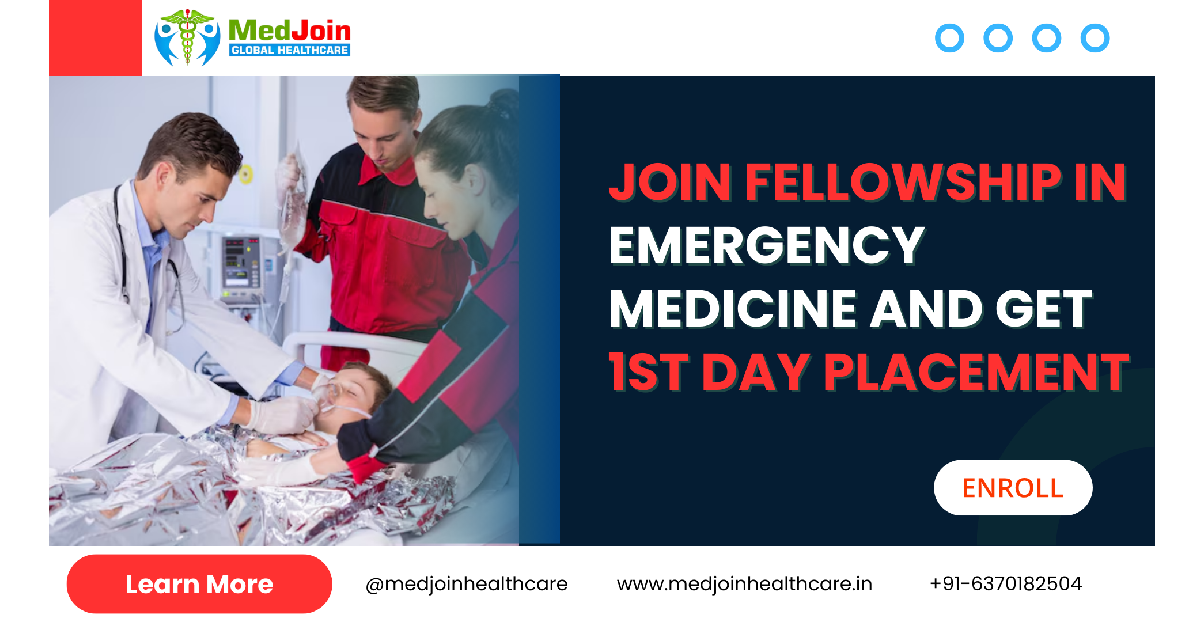
This is where a Fellowship in Emergency Medicine with 1st Day Placement becomes a game-changing career move.
If you are an MBBS doctor, medical graduate, or practicing physician looking to elevate your career, gain real-world emergency expertise, and secure immediate clinical opportunities, this blog will show you why joining a Fellowship in Emergency Medicine is one of the smartest decisions you can make today.
Understanding Emergency Medicine: The Backbone of Modern Healthcare
Emergency Medicine (EM) is a dynamic medical specialty focused on the rapid assessment, diagnosis, stabilization, and management of acute illnesses and injuries. Emergency physicians are trained to handle:
- Cardiac arrests and chest pain
- Trauma and polytrauma cases
- Stroke and neurological emergencies
- Respiratory distress and airway emergencies
- Sepsis and shock
- Poisoning and overdoses
- Pediatric and obstetric emergencies
- Disaster and mass casualty situations
Emergency departments operate 24/7, making emergency medicine professionals indispensable in both urban and rural healthcare settings.
The Growing Demand for Emergency Medicine Specialists
A Global and Indian Perspective
With increasing road traffic accidents, lifestyle-related illnesses, aging populations, and rising emergency admissions, the demand for trained emergency physicians has skyrocketed.
Key factors driving demand include:
- Expansion of emergency departments across hospitals
- Growth of trauma centers and critical care units
- Rising medico-legal awareness
- Increased focus on quality emergency care
- Shortage of formally trained emergency medicine doctors
Despite this demand, many hospitals struggle to find doctors who are clinically confident from day one. This gap between degree and practical readiness is exactly what a Fellowship in Emergency Medicine bridges.
Why MBBS Alone Is No Longer Enough in Emergency Care
An MBBS degree provides a broad medical foundation, but emergency medicine requires specialized, hands-on, protocol-driven training.
Challenges faced by MBBS doctors in emergency settings include:
- Limited exposure to real-time emergencies
- Lack of confidence in advanced procedures
- Difficulty managing critically ill patients independently
- Inadequate training in ACLS, ATLS, and trauma care
- High-pressure decision-making without mentorship
Hospitals today prefer doctors who are emergency-trained, skilled, and placement-ready—not just academically qualified.
What Is a Fellowship in Emergency Medicine?
A Fellowship in Emergency Medicine is a structured, clinically oriented training program designed to equip doctors with:
- Core emergency medicine knowledge
- Hands-on procedural skills
- Confidence to manage emergencies independently
- Exposure to real hospital emergency departments
- Understanding of protocols and guidelines
Unlike traditional degrees, fellowships are practical, job-focused, and outcome-driven.
What Does “1st Day Placement” Mean?
Placement from Day One: A Career Advantage
A Fellowship in Emergency Medicine with 1st Day Placement ensures that doctors:
- Are placed in a hospital emergency department from the start of the program
- Begin real clinical work alongside learning
- Gain hands-on exposure immediately
- Start earning and building experience while studying
This model transforms learning from theory-based to experience-based.
Why 1st Day Placement Matters More Than Ever
1. Learn by Doing, Not Just Watching
Emergency medicine cannot be mastered through lectures alone. First-day placement allows doctors to:
- See real emergencies
- Participate in patient management
- Perform supervised procedures
- Understand workflow and triage systems
2. Faster Skill Development
Continuous clinical exposure accelerates:
- Decision-making abilities
- Procedural confidence
- Patient communication skills
- Team coordination
3. Stronger Career Profile
Hospitals value experience over certificates. First-day placement ensures:
- Continuous experience throughout the fellowship
- Stronger CV and job prospects
- Better salary negotiation power
Who Should Join a Fellowship in Emergency Medicine?
This program is ideal for:
- MBBS doctors
- Medical officers
- Fresh medical graduates
- Doctors working in casualty or ER
- Doctors seeking specialization without long MD/MS routes
- Physicians wanting immediate placement and income
No prior emergency specialization is required—only commitment and passion.
Core Curriculum of Fellowship in Emergency Medicine
1. Emergency Department Operations & Triage
- Emergency room workflow
- Patient prioritization and triage systems
- Documentation and medico-legal aspects
- Communication with patients and families
2. Airway, Breathing & Circulation (ABC)
- Airway assessment and management
- Oxygen therapy and ventilatory support
- Endotracheal intubation
- Shock recognition and management
3. Cardiovascular Emergencies
- Acute coronary syndrome
- Cardiac arrhythmias
- Cardiac arrest management
- Advanced Cardiac Life Support (ACLS)
4. Trauma & Polytrauma Care
- Primary and secondary trauma survey
- Head, chest, abdominal, and orthopedic trauma
- Advanced Trauma Life Support (ATLS) principles
- Road traffic accident management
5. Neurological Emergencies
- Stroke recognition and management
- Seizures and status epilepticus
- Altered sensorium and coma
6. Respiratory Emergencies
- Acute asthma and COPD
- Respiratory failure
- Pneumonia and ARDS
7. Medical Emergencies
- Diabetic emergencies
- Hypertensive crises
- Sepsis and septic shock
- Electrolyte imbalances
8. Pediatric & Obstetric Emergencies
- Pediatric resuscitation
- Neonatal emergencies
- Obstetric emergencies like eclampsia and PPH
9. Toxicology & Environmental Emergencies
- Poisoning and envenomation
- Drug overdose
- Heat stroke and hypothermia
10. Emergency Procedures
- Central and peripheral lines
- Chest tube insertion
- Suturing and wound management
- Defibrillation and cardioversion
Teaching Methodology
A high-quality fellowship focuses on blended learning, including:
- Live interactive online sessions
- Recorded expert lectures
- Case-based discussions
- Simulation-based training
- On-duty hospital exposure
- Continuous assessments and feedback
Benefits of Joining a Fellowship in Emergency Medicine
Clinical Benefits
- Real-world emergency exposure
- Independent patient management skills
- Strong procedural competence
- Confidence in critical decision-making
Career Benefits
- Immediate placement from day one
- High employability across hospitals
- Opportunities in India and abroad
- Pathway to senior ER roles
Financial Benefits
- Early earning while training
- Competitive emergency medicine salaries
- Shift-based flexibility
Career Opportunities After Fellowship
After completing a Fellowship in Emergency Medicine, doctors can work as:
- Emergency Medical Officer
- Emergency Physician
- Trauma Care Specialist
- ICU & ER Consultant
- Medical Officer in corporate hospitals
- Emergency physician in government hospitals
- International ER roles (subject to local regulations)
Salary Scope in Emergency Medicine
Emergency medicine offers attractive remuneration due to:
- Shift-based work
- High demand and low supply
- Critical skill requirement
Average salary ranges (approximate):
- Entry-level: ₹60,000 – ₹1,20,000 per month
- Experienced ER doctors: ₹1.5 – ₹3 lakhs per month
- Senior emergency physicians: Higher, based on experience and location
Why Choose a Fellowship Over MD Emergency Medicine?
| Fellowship | MD Emergency Medicine |
|---|---|
| Shorter duration | Long duration |
| Immediate placement | Delayed exposure |
| Practical & job-oriented | Exam-focused |
| Affordable | Expensive |
| Flexible learning | Rigid structure |
For doctors seeking quick career growth with hands-on skills, a fellowship is often the smarter choice.
Certification & Recognition
Upon successful completion, fellows receive a recognized Fellowship Certificate in Emergency Medicine, enhancing credibility and employability.
Why Choose the Right Institute Matters
When selecting a fellowship, look for:
- First-day placement assurance
- Strong hospital network
- Experienced emergency medicine faculty
- Structured curriculum
- Post-completion career support
A reputed institute ensures you are not just certified, but competent.
The Future of Emergency Medicine
Emergency medicine is evolving with:
- Advanced trauma systems
- AI-assisted triage
- Tele-emergency services
- Disaster management protocols
Doctors trained today will lead tomorrow’s emergency healthcare systems.
Final Thoughts: Your Career Starts on Day One
Joining a Fellowship in Emergency Medicine with 1st Day Placement is more than enrolling in a course—it is stepping into a career-defining journey.
- You don’t wait months or years to practice.
- You don’t stay confined to theory.
- You start working, learning, and growing from day one.
If you want:
- Immediate placement
- Real emergency exposure
- Strong career growth
- High-impact medical practice
Then emergency medicine is your calling—and a fellowship is your gateway.
Take the Next Step Today
Join the Fellowship in Emergency Medicine.
Get placed from the 1st day.
Become the doctor every emergency room needs.