
Pediatrics is one of the most rewarding and rapidly evolving branches of medicine, dedicated to the health and well-being of infants, children, and adolescents. As medical science continues to advance, the demand for doctors with specialized pediatric knowledge and practical clinical skills is steadily increasing. Hospitals, neonatal intensive care units (NICUs), pediatric intensive care units (PICUs), community healthcare centers, and private clinics all seek healthcare professionals who can confidently diagnose, manage, and treat pediatric conditions using evidence-based practices.
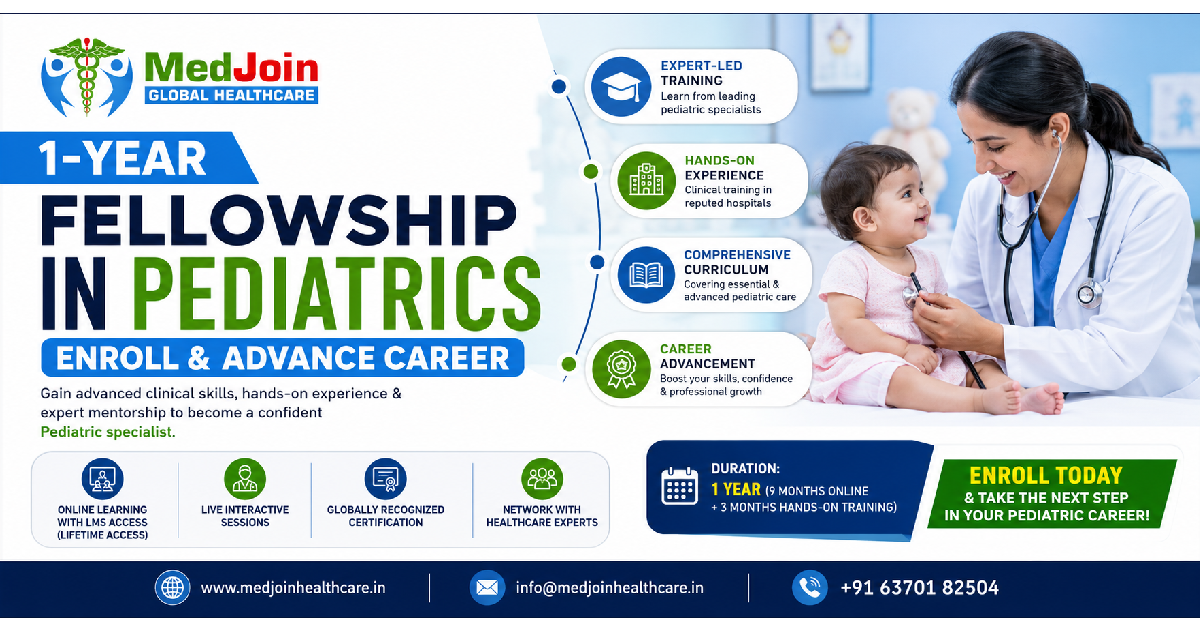
While an MBBS degree provides the essential foundation for medical practice, many doctors aspire to strengthen their expertise and improve their career prospects through structured postgraduate training. A 1-Year Fellowship in Pediatrics offers an excellent opportunity to deepen clinical knowledge, develop advanced diagnostic skills, and gain exposure to the latest developments in pediatric healthcare.
Whether your goal is to become a more confident clinician, expand your career opportunities, or enhance your ability to deliver quality healthcare to children, a fellowship program can help bridge the gap between undergraduate education and specialized clinical practice.
Although an MBBS degree provides a strong foundation in medicine, it often offers limited exposure to specialized pediatric practice. A 1-Year Fellowship in Pediatrics bridges this gap by providing structured learning, clinical case discussions, updated treatment guidelines, and opportunities to enhance diagnostic and patient management skills.
Whether you aspire to work in a multispecialty hospital, children's hospital, neonatal intensive care unit (NICU), pediatric intensive care unit (PICU), emergency department, community healthcare center, or establish your own pediatric practice, a fellowship can strengthen your professional profile and support your long-term career growth.
Why Pediatrics Is One of the Most Rewarding Medical Specialties
Pediatrics is much more than the diagnosis and treatment of childhood illnesses. It is a dynamic medical specialty dedicated to promoting the health, growth, and overall development of infants, children, and adolescents from birth until adulthood. Pediatricians play a pivotal role in ensuring that every child has the opportunity to achieve optimal physical, mental, and emotional well-being.
Unlike many other specialties, pediatric care extends beyond treating disease. It involves preventive healthcare, developmental monitoring, nutritional guidance, immunization, family education, and long-term follow-up. Pediatricians often build lasting relationships with children and their families, making this specialty professionally fulfilling and personally rewarding.
With advances in medical technology, neonatal intensive care, pediatric critical care, genetics, and preventive medicine, the field of pediatrics continues to evolve rapidly. This creates exciting opportunities for doctors who are committed to lifelong learning and delivering evidence-based care.
Why Choose Pediatrics as a Career?
Pediatrics is far more than treating childhood illnesses. It involves monitoring growth and development, preventing diseases through immunization, supporting families, managing chronic conditions, and responding to medical emergencies.
Choosing pediatrics means contributing to the lifelong health of future generations.
Key Reasons Doctors Choose Pediatrics
- Opportunity to improve children's quality of life
- High professional satisfaction
- Diverse clinical exposure
- Growing demand for pediatric specialists
- Opportunities in hospitals, academia, and research
- Long-term career stability
- Scope for subspecialization
- Continuous learning through advances in medicine
Unlike many other specialties, pediatricians often build long-term relationships with families, following a child's development from birth through adolescence.
Growing Demand for Pediatric Specialists
The healthcare industry is witnessing a continuous increase in demand for trained pediatric professionals.
Several factors contribute to this demand:
Increasing Birth Rates
Millions of babies are born every year, creating an ongoing need for qualified pediatric healthcare providers.
Rising Awareness Among Parents
Parents today seek early diagnosis, preventive care, developmental assessments, vaccination guidance, and nutritional counseling for their children.
Expansion of Pediatric Healthcare Services
Healthcare organizations continue to expand:
- Pediatric hospitals
- Children's specialty clinics
- NICUs
- PICUs
- Emergency departments
- Community health programs
- Telemedicine services
Each of these settings requires clinicians with specialized pediatric knowledge.
Why MBBS Doctors Should Pursue a Fellowship in Pediatrics
An MBBS qualification equips doctors with broad medical knowledge. However, managing pediatric patients requires specialized understanding because children are not simply "small adults." Their physiology, disease presentation, pharmacology, nutritional needs, and developmental stages differ significantly.
A fellowship program helps doctors strengthen these competencies through structured academic learning and clinical exposure.
Benefits Include
- Advanced pediatric clinical knowledge
- Improved diagnostic confidence
- Better treatment planning
- Evidence-based clinical practice
- Exposure to pediatric emergencies
- Enhanced communication with children and parents
- Professional development
- Improved career prospects
What Is a 1-Year Fellowship in Pediatrics?
A 1-Year Fellowship in Pediatrics is an advanced training program designed to provide doctors with in-depth knowledge and practical understanding of pediatric medicine.
The curriculum generally includes:
- Neonatology
- Pediatric emergency medicine
- Growth and development
- Nutrition
- Immunization
- Infectious diseases
- Respiratory disorders
- Gastrointestinal diseases
- Neurology
- Cardiology
- Endocrinology
- Nephrology
- Pediatric intensive care
- Clinical case discussions
- Evidence-based medicine
- Recent clinical guidelines
Many programs combine online academic modules with optional hands-on clinical training, allowing working doctors to continue learning while maintaining professional commitments.
Advantages of a Fellowship Compared with General Practice
Doctors who complete a structured pediatric fellowship often gain stronger confidence in evaluating and managing pediatric patients.
Some key advantages include:
Better Clinical Decision-Making
A fellowship strengthens the ability to recognize pediatric illnesses early and formulate appropriate management plans.
Stronger Diagnostic Skills
Participants learn to interpret laboratory investigations, imaging studies, developmental assessments, and pediatric clinical findings more effectively.
Improved Emergency Management
Training includes management of common pediatric emergencies such as:
- Seizures
- Respiratory distress
- Dehydration
- Septic shock
- Neonatal emergencies
- Trauma
- Poisoning
Enhanced Professional Credibility
Advanced training demonstrates commitment to continuous medical education and lifelong learning.
Scope of Pediatrics in India
India's healthcare system is expanding rapidly, increasing the demand for skilled pediatric professionals across urban and rural settings.
Employment opportunities include:
- Multispecialty hospitals
- Government hospitals
- Children's hospitals
- Medical colleges
- Community health centers
- Corporate hospitals
- NICUs
- PICUs
- Telemedicine services
- Private practice
Doctors with additional pediatric training are often better positioned for roles involving child healthcare services.
Global Opportunities in Pediatrics
Pediatric knowledge is valuable across many healthcare systems worldwide. Continuous professional development through fellowship training can support doctors seeking to broaden their clinical expertise and prepare for opportunities in diverse healthcare environments, subject to each country's licensing and regulatory requirements.
Essential Skills Developed During a Pediatrics Fellowship
A comprehensive fellowship emphasizes both clinical knowledge and practical competencies.
Participants typically strengthen skills in:
- Pediatric history taking
- Physical examination
- Growth monitoring
- Developmental assessment
- Immunization planning
- Interpretation of laboratory investigations
- Pediatric pharmacology
- Neonatal resuscitation principles
- Nutritional assessment
- Family counseling
- Emergency stabilization
- Clinical documentation
- Ethical decision-making
These competencies contribute to improved patient care and professional confidence.
The Importance of Early Diagnosis in Pediatric Care
Early diagnosis can significantly influence health outcomes for children.
Timely identification of conditions such as developmental delays, congenital disorders, nutritional deficiencies, infections, and chronic diseases enables earlier intervention and appropriate management.
A fellowship helps clinicians recognize warning signs, apply current clinical guidelines, and make informed referral decisions when necessary.
Preventive Pediatrics: Building Healthier Futures
Preventive care is a cornerstone of pediatric practice. Rather than focusing solely on treatment, pediatricians work to reduce the risk of disease and promote healthy growth.
Core areas include:
- Routine immunization
- Growth monitoring
- Nutrition counseling
- Breastfeeding support
- Developmental screening
- Injury prevention
- Adolescent health education
- Lifestyle counseling
Preventive pediatrics benefits not only individual children but also public health by reducing disease burden and supporting healthier communities.
Why Continuous Learning Matters
Medical knowledge evolves rapidly. New vaccines, updated treatment guidelines, emerging infectious diseases, and advances in neonatal and pediatric critical care make ongoing education essential.
A structured fellowship supports continuous learning through:
- Evidence-based lectures
- Clinical case discussions
- Updated guidelines
- Expert mentorship
- Self-paced learning resources
- Assessments and feedback
Doctors who actively update their knowledge are better equipped to provide safe, effective, and patient-centered care.
A 1-Year Fellowship in Pediatrics is an excellent option for MBBS doctors who wish to strengthen their clinical expertise, improve confidence in managing pediatric patients, and expand their professional opportunities. Through structured academic learning, exposure to current best practices, and opportunities for clinical skill development, such a program can help doctors deliver higher-quality care to infants, children, and adolescents.
As healthcare systems continue to emphasize specialized knowledge and evidence-based practice, investing in advanced pediatric education can be a valuable step toward long-term professional growth.