
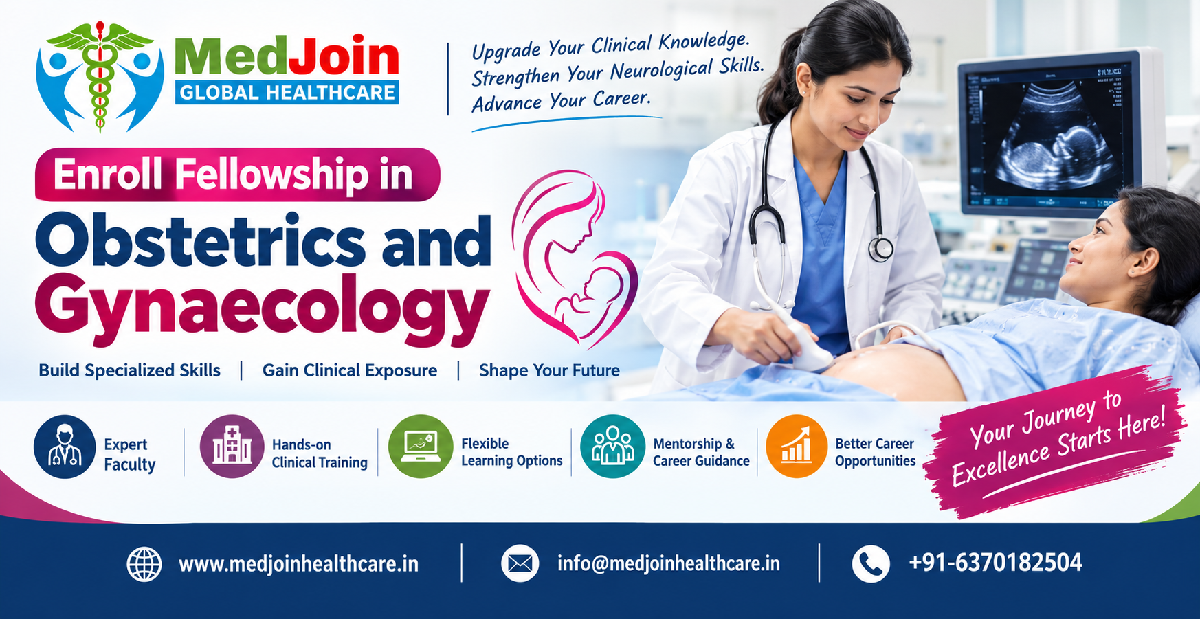
Obstetrics and Gynaecology is one of the most important and continuously evolving areas of healthcare. It combines maternal care, reproductive health, women’s health, preventive medicine, emergency care, diagnostics and clinical decision-making. For doctors interested in caring for women across different stages of life—from adolescence and reproductive years to pregnancy, childbirth and menopause—this field can provide a broad clinical learning pathway.
A Fellowship in Obstetrics and Gynaecology can be considered by MBBS doctors and other eligible medical professionals who want structured additional education and clinical exposure in women's healthcare. Depending on the institution and program design, fellowship education may include theoretical learning, case discussions, clinical demonstrations, supervised training, procedural exposure, assessments and interaction with experienced faculty.
It is important, however, to distinguish a fellowship or certificate-based continuing medical education program from a regulator-recognized postgraduate specialist qualification. In India, formal postgraduate medical education is regulated through the National Medical Commission (NMC) framework, and recognized postgraduate qualifications have specific training and recognition requirements. The NMC maintains official information on recognized colleges and courses and describes the role of its Post-Graduate Medical Education Board in setting postgraduate education standards.
Therefore, doctors should carefully evaluate the recognition, curriculum, faculty, hospital exposure, assessment methodology and scope of practice associated with any fellowship before enrolling.
This comprehensive guide explains the scope, career opportunities, benefits, curriculum, clinical skills, future opportunities and important considerations associated with a Fellowship in Obstetrics and Gynaecology.
What Is a Fellowship in Obstetrics and Gynaecology?
A Fellowship in Obstetrics and Gynaecology is an advanced educational program designed to provide doctors with additional knowledge and practical exposure in areas related to women's reproductive and maternal health.
The exact structure differs between institutions. Some programs are primarily academic, while others combine:
- Online learning
- Live interactive lectures
- Recorded lectures
- Case-based discussions
- Clinical demonstrations
- Hospital-based clinical exposure
- Skills training
- Assignments
- MCQ assessments
- Case presentations
- Faculty mentorship
- Research-oriented activities
A well-designed fellowship should ideally connect theoretical knowledge with real-world clinical decision-making.
The discipline itself covers two closely connected areas:
Obstetrics
Obstetrics focuses primarily on:
- Pregnancy
- Antenatal care
- Fetal wellbeing
- Labour
- Delivery
- Postpartum care
- Maternal complications
- Fetal complications
- High-risk pregnancy
- Obstetric emergencies
Gynaecology
Gynaecology focuses on women's reproductive health outside pregnancy, including:
- Menstrual disorders
- Infertility
- PCOS
- Endometriosis
- Uterine disorders
- Ovarian disorders
- Cervical disorders
- Vaginal conditions
- Menopausal health
- Reproductive health
- Preventive women's healthcare
Because these areas overlap significantly in clinical practice, training in both can provide a broader understanding of women's healthcare.
Why Study Obstetrics and Gynaecology?
Women's healthcare is a broad clinical field requiring doctors to understand physiological changes, chronic diseases, reproductive conditions and acute emergencies.
Pregnancy itself can involve multiple clinical disciplines. A pregnant woman may require assessment involving:
- Obstetrics
- Internal medicine
- Anaesthesia
- Radiology
- Neonatology
- Critical care
- Endocrinology
- Cardiology
- Emergency medicine
This multidisciplinary nature makes obstetrics an intellectually and clinically diverse field.
WHO continues to identify maternal and perinatal health as an important global healthcare priority, with emphasis on quality, respectful and person-centred care and strengthening healthcare capacity.
For doctors, additional education in this area can therefore help develop a more structured approach to common women's health presentations.
Scope of Obstetrics and Gynaecology
The scope of the field is extensive.
A doctor with appropriate education and legally permitted clinical responsibilities may encounter patients presenting with:
Obstetric conditions
- Normal pregnancy
- High-risk pregnancy
- Gestational diabetes
- Pregnancy-induced hypertension
- Preeclampsia
- Eclampsia
- Anaemia in pregnancy
- Antepartum haemorrhage
- Postpartum haemorrhage
- Preterm labour
- PROM
- Multiple pregnancy
- Fetal growth restriction
- Rh incompatibility
- Malpresentation
- Postpartum complications
Gynaecological conditions
- Abnormal uterine bleeding
- Dysmenorrhoea
- Amenorrhoea
- PCOS
- Endometriosis
- Uterine fibroids
- Ovarian cysts
- Pelvic inflammatory disease
- Vaginal infections
- Cervical disorders
- Menopausal symptoms
- Infertility
- Reproductive health problems
The scope also increasingly intersects with preventive medicine and women's wellness.
Career Scope After a Fellowship in Obstetrics and Gynaecology
A fellowship can add structured knowledge to a doctor's existing medical education and may support professional development depending on the doctor's qualifications, registration, local regulations and employer requirements.
Potential areas of professional activity include:
1. Primary Healthcare
Doctors working in primary-care environments frequently encounter women's health complaints.
Additional training can help physicians develop a structured approach to:
- Menstrual problems
- Pregnancy-related complaints
- Contraceptive counselling
- Common infections
- PCOS
- Menopause
- Antenatal assessment
- Referral decisions
2. General Practice
Women's health represents a significant component of general medical practice.
A doctor with additional training may integrate women's health assessment into a broader primary-care practice, within their permitted scope.
3. Hospitals
Hospitals require healthcare professionals capable of recognizing and initially managing common obstetric and gynaecological presentations.
Potential environments include:
- General hospitals
- Multispecialty hospitals
- Women's hospitals
- Maternity hospitals
- Community hospitals
- Emergency departments
- Primary-care-linked hospitals
4. Women's Health Clinics
Doctors may develop focused services around:
- Menstrual health
- PCOS
- Menopause
- Preventive women's health
- Reproductive counselling
- Antenatal support
Again, the services a doctor can independently provide depend on their underlying qualification, registration and applicable regulations.
Career Opportunities in Obstetrics
Obstetrics is particularly important because pregnancy requires continuous assessment from early pregnancy through the postpartum period.
Potential clinical areas include:
Antenatal Care
Doctors can develop knowledge related to:
- Pregnancy confirmation
- Pregnancy dating
- Risk assessment
- Routine antenatal investigations
- Maternal monitoring
- Fetal assessment
- Nutritional counselling
- Pregnancy-related complications
- Referral criteria
High-Risk Pregnancy
Advanced education can introduce doctors to risk factors such as:
- Hypertension
- Diabetes
- Multiple pregnancy
- Previous obstetric complications
- Advanced maternal age
- Maternal cardiac disease
- Maternal endocrine disorders
- Previous caesarean delivery
Recognizing high-risk patients early is an important clinical skill.
Career Opportunities in Gynaecology
Gynaecology provides a broad range of clinical opportunities.
A doctor may encounter:
Menstrual Disorders
Including:
- Heavy menstrual bleeding
- Irregular cycles
- Painful periods
- Amenorrhoea
- Intermenstrual bleeding
PCOS
Polycystic ovary syndrome is a common reproductive and metabolic condition.
Clinical education may cover:
- Clinical presentation
- Menstrual irregularity
- Hyperandrogenism
- Metabolic risk
- Lifestyle management
- Fertility considerations
- Appropriate investigations
- Referral
Menopause
Menopause care is another important area of women's health.
Relevant topics include:
- Menopausal symptoms
- Vasomotor symptoms
- Bone health
- Cardiovascular risk
- Sexual health
- Mental wellbeing
- Lifestyle interventions
- Hormone therapy considerations
Importance of Hands-On Clinical Training
One of the major differences between purely theoretical education and clinically oriented fellowship education is practical exposure.
A structured clinical component may allow doctors to observe:
- Outpatient consultations
- Antenatal clinics
- Labour rooms
- Gynaecology clinics
- Ultrasound services
- Emergency cases
- Postoperative care
- Postpartum care
However, the quality of hands-on exposure depends heavily on:
- Patient volume
- Faculty availability
- Hospital infrastructure
- Supervision
- Case mix
- Training duration
- Doctor's prior experience
Therefore, prospective students should ask the institution exactly what clinical activities are included rather than relying only on the phrase "hands-on training."
Online vs Hybrid Fellowship
Fellowship programs may be delivered through different formats.
Online Fellowship
An online model may include:
- LMS access
- Recorded lectures
- Live classes
- PDFs
- Clinical presentations
- Case discussions
- Assessments
- Faculty interaction
This format can be useful for doctors who are working full-time or cannot relocate.
Hybrid Fellowship
A hybrid program can combine:
Online academic learning + hospital-based clinical exposure.
For many doctors, this model provides a balance between flexibility and practical exposure.
Benefits of a Fellowship in Obstetrics and Gynaecology
Benefit 1: Structured Learning
Instead of learning individual topics randomly, a structured curriculum organizes knowledge into modules.
Benefit 2: Clinical Confidence
Case discussions and supervised exposure can help doctors approach common presentations more systematically.
Benefit 3: Flexible Education
Online components can allow working doctors to continue professional responsibilities while studying.
Benefit 4: Exposure to Current Clinical Practices
A well-designed program can introduce doctors to updated guidelines, diagnostic approaches and clinical protocols.
Benefit 5: Professional Development
Additional education can support a doctor's continuing professional development.
Benefit 6: Broader Women's Healthcare Knowledge
The field covers reproductive, maternal and preventive healthcare.
Benefit 7: Networking
Live sessions, workshops and hospital exposure may provide opportunities to interact with:
- Consultants
- Faculty
- Other doctors
- Hospital teams
- Healthcare professionals
Fellowship and Career Advancement
A fellowship should be viewed as an additional educational credential and learning experience, not automatically as a replacement for a recognized postgraduate specialist qualification.
Doctors planning long-term specialist careers should understand the differences among:
- Fellowship
- Certificate course
- Diploma
- MD
- MS
- DNB
- DrNB
- FNB
- Super-specialty training
The NMC maintains official information on medical colleges and recognized courses, making verification of the status of a formal medical qualification important before enrollment.
Fellowship vs MD/MS Obstetrics and Gynaecology
This is an important distinction.
| Fellowship | MD/MS/DNB Pathway |
|---|---|
| Additional professional education | Formal postgraduate specialist training |
| Duration varies | Regulated duration and requirements |
| Curriculum varies by institution | Regulated postgraduate framework |
| May be online/hybrid depending on program | Primarily structured clinical residency |
| May provide focused clinical exposure | Comprehensive specialist training |
| Recognition depends on issuing institution/program | Recognition follows applicable regulatory framework |
Therefore, a fellowship should not be marketed or interpreted as equivalent to an MD/MS/DNB unless such equivalence is specifically established under the applicable regulatory framework.
Career Opportunities in Hospitals
Hospitals represent one of the largest environments for women's health services.
Potential departments include:
- Obstetrics
- Gynaecology
- Emergency medicine
- Antenatal clinics
- Maternity services
- Women's health clinics
- Primary care
- Outpatient departments
A doctor with additional education may use fellowship learning to strengthen knowledge relevant to their existing professional role.
Opportunities in Private Practice
Women's health is also relevant to private medical practice.
Depending on qualifications and permitted scope, doctors may provide services involving:
- General women's health consultations
- Menstrual health
- PCOS counselling
- Menopause counselling
- Antenatal support
- Preventive health
- Reproductive health counselling
- Referral coordination
A fellowship may provide additional academic exposure, but independent clinical practice must remain within the doctor's recognized qualification, registration and applicable legal scope.
Academic and Teaching Opportunities
Doctors interested in education may use additional training to strengthen their understanding of women's healthcare.
Potential areas include:
- Medical education
- CME sessions
- Clinical workshops
- Case discussions
- Healthcare content development
- Medical writing
- Patient education
- Academic research
Formal teaching positions in recognized medical institutions generally have specific qualification and experience requirements. The NMC's published qualification framework demonstrates that formal academic appointments are tied to specified postgraduate qualifications and experience.
Research Opportunities
Obstetrics and gynaecology offer many research possibilities.
Potential research topics include:
Maternal Health
- Maternal mortality
- Maternal morbidity
- High-risk pregnancy
- Hypertensive disorders
- Anaemia
Reproductive Health
- PCOS
- Infertility
- Endometriosis
- Menopause
- Contraception
Obstetric Medicine
- Diabetes in pregnancy
- Hypertension
- Thyroid disease
- Maternal cardiac disease
Women's Preventive Health
- Cervical cancer screening
- Breast health
- HPV vaccination
- Menopausal health
WHO collaborates with research and academic institutions in reproductive health and maternal health, including institutions in India such as AIIMS, ICMR's National Institute for Research in Reproductive Health and PGIMER.
Future Opportunities in Obstetrics and Gynaecology
The future of women's healthcare is likely to involve increasing integration of:
- Digital health
- Artificial intelligence
- Telemedicine
- Advanced imaging
- Precision medicine
- Reproductive medicine
- Preventive healthcare
- Maternal-fetal medicine
- Minimally invasive surgery
- Genetic medicine
- Remote monitoring
Technology will not replace clinical judgment, but it can support doctors through improved information access, documentation, monitoring and decision-support systems.
Telemedicine and Digital Women's Health
Digital healthcare has expanded access to medical information and remote consultations.
Potential applications include:
- Follow-up consultations
- Menstrual health counselling
- Lifestyle counselling
- Medication follow-up
- Menopause counselling
- Postpartum follow-up
- Patient education
However, telemedicine practice must comply with applicable professional and regulatory requirements.
Artificial Intelligence in Women's Healthcare
Artificial intelligence is becoming increasingly relevant across healthcare.
Potential applications in obstetrics and gynaecology include:
- Medical imaging analysis
- Risk prediction
- Clinical documentation
- Patient monitoring
- Research
- Data analysis
- Decision-support systems
Doctors will increasingly need the ability to understand both the capabilities and limitations of AI-based tools.
International Career Opportunities
Women's healthcare is a global priority.
WHO's fellowship framework itself illustrates how structured training, professional development, research, observation and technical learning can be used to strengthen health-system capacity.
Doctors interested in international opportunities should remember that:
A fellowship certificate does not automatically provide a medical license in another country.
International practice generally requires:
- Recognition of primary medical qualification
- Registration
- Licensing examinations where applicable
- Language requirements
- Verification of credentials
- Local clinical requirements
Therefore, doctors should separately verify the licensing requirements of the country in which they intend to work.
Fellowship for Working Doctors
One major advantage of flexible fellowship education is its potential compatibility with professional responsibilities.
Working doctors may prefer:
- Evening live sessions
- Weekend classes
- Recorded lectures
- LMS access
- Case discussions
- Flexible assessments
- Periodic hospital training
This allows doctors to pursue additional education without necessarily leaving their existing professional role.
Professional Skills Developed Through the Fellowship
Clinical knowledge is only one part of becoming an effective healthcare professional.
Doctors can also develop:
Communication Skills
- Patient counselling
- Breaking difficult news
- Explaining investigations
- Discussing treatment options
Documentation
- Clinical notes
- Antenatal records
- Discharge summaries
- Referral letters
Teamwork
Obstetric care often involves:
- Nurses
- Midwives
- Anaesthetists
- Paediatricians
- Neonatologists
- Surgeons
- Radiologists
Decision-Making
Doctors must learn to distinguish between:
- Routine cases
- High-risk cases
- Emergency cases
- Cases requiring referral
Why Continuous Medical Education Matters
Medical knowledge changes continuously.
New:
- Guidelines
- Diagnostic technologies
- Treatment protocols
- Surgical techniques
- Digital tools
- Research findings
are regularly introduced.
WHO describes fellowships as one mechanism for developing professional capacity through structured training, technical learning, research and professional development.
For doctors, lifelong learning is therefore an important part of professional development.
Future of Obstetrics and Gynaecology
The future of the specialty is likely to be increasingly:
Technology-driven
AI, digital monitoring and advanced imaging will become more integrated into healthcare.
Preventive
Greater attention will be given to early diagnosis and prevention.
Personalized
Treatment will increasingly consider individual patient characteristics and reproductive goals.
Multidisciplinary
Complex patients will increasingly require collaboration between multiple specialties.
Evidence-based
Clinical decisions will increasingly rely on high-quality research and standardized guidelines.
Patient-centred
Communication, informed decision-making and respectful care will remain central.
WHO's maternal health program specifically emphasizes person-centred quality and respectful maternal and perinatal care.
42. Is a Fellowship in Obstetrics and Gynaecology Worth Considering After MBBS?
The answer depends on the doctor's career objectives.
A fellowship may be particularly relevant for an MBBS doctor who wants to:
- Expand knowledge of women's health
- Strengthen clinical reasoning
- Study obstetric and gynaecological conditions
- Develop additional clinical exposure
- Learn through structured case discussions
- Continue working while studying
- Explore women's healthcare as a professional interest
However, doctors seeking to become formally recognized specialist obstetricians and gynaecologists should evaluate the appropriate postgraduate pathways rather than treating a fellowship as a substitute.
Fellowship in Obstetrics and Gynaecology at MedJoin Global
Doctors researching fellowship options may consider programs that combine structured online education with practical clinical exposure.
A comprehensive fellowship model can include:
Online Academic Learning
- LMS access
- Recorded lectures
- Live interactive sessions
- Clinical presentations
- Study materials
- Assessments
Clinical Learning
Where applicable, hospital-based training can expose doctors to:
- Obstetric OPD
- Gynaecology OPD
- Antenatal clinics
- Labour and delivery services
- Emergency cases
- Postpartum care
- Clinical case discussions
Faculty Interaction
Doctors can benefit from interaction with experienced consultants and other healthcare professionals.
Case-Based Learning
Cases can help bridge the gap between theoretical knowledge and practical clinical decision-making.
Doctors should always verify the exact current curriculum, hospital arrangements, duration, eligibility, assessment and certification terms directly with the fellowship provider before enrollment.
Obstetrics and Gynaecology as a Long-Term Career Field
Women's health is not restricted to pregnancy.
A doctor may support patients through:
Adolescence → Reproductive Years → Pregnancy → Postpartum → Menopause → Healthy Ageing
This creates opportunities for longitudinal patient relationships.
The field also connects with:
- Endocrinology
- Oncology
- Cardiology
- Radiology
- Emergency medicine
- Neonatology
- Surgery
- Primary care
- Public health
Such interdisciplinary connections make the field clinically broad.
Role of Technology in Future Fellowship Education
Medical education itself is evolving.
Modern fellowship programs can use:
- Learning management systems
- Video lectures
- Virtual case conferences
- Digital assessments
- Online discussion forums
- Recorded demonstrations
- Digital clinical resources
- AI-assisted learning tools
However, digital education should complement rather than falsely substitute for clinical competency.
Clinical procedures require appropriate supervised training.
Public Health Opportunities
Obstetrics and gynaecology also intersect with public health.
Potential areas include:
- Maternal mortality reduction
- Reproductive health
- Family planning
- Adolescent health
- Cervical cancer prevention
- Maternal nutrition
- Safe motherhood
- Antenatal care
- Postnatal care
WHO identifies maternal and reproductive health as an important component of global health-system strengthening.
A Fellowship in Obstetrics and Gynaecology can provide doctors with structured additional education in one of the most clinically diverse areas of medicine.
The field encompasses:
- Antenatal care
- Normal pregnancy
- High-risk pregnancy
- Labour
- Delivery
- Postpartum care
- Obstetric emergencies
- Menstrual disorders
- PCOS
- Infertility
- Endometriosis
- Fibroids
- Menopause
- Reproductive health
- Women's preventive healthcare
The career scope can extend across hospitals, primary care, clinics, women's health services, education, research and further specialist training, depending on the doctor's underlying qualification and permitted scope of practice.
The future of the field is also evolving through reproductive medicine, maternal-fetal medicine, minimally invasive procedures, digital healthcare, artificial intelligence, advanced imaging, preventive medicine and personalized women's healthcare.
For doctors considering a fellowship, the most important factors should be the quality of curriculum, faculty expertise, practical exposure, hospital environment, assessment methodology, certification, recognition status and alignment with their long-term career objectives.
Most importantly, a fellowship should be viewed as an opportunity to learn, develop clinical knowledge and strengthen professional skills—not as an automatic substitute for a formally recognized postgraduate specialist qualification.