
Cardiovascular diseases remain one of the most important areas of healthcare, creating continuous demand for doctors with strong clinical knowledge and practical exposure in cardiovascular medicine. As the complexity of patient care increases, doctors are increasingly looking for structured learning opportunities that can help them strengthen their understanding of cardiovascular assessment, diagnosis, risk-factor management and evidence-based clinical decision-making.
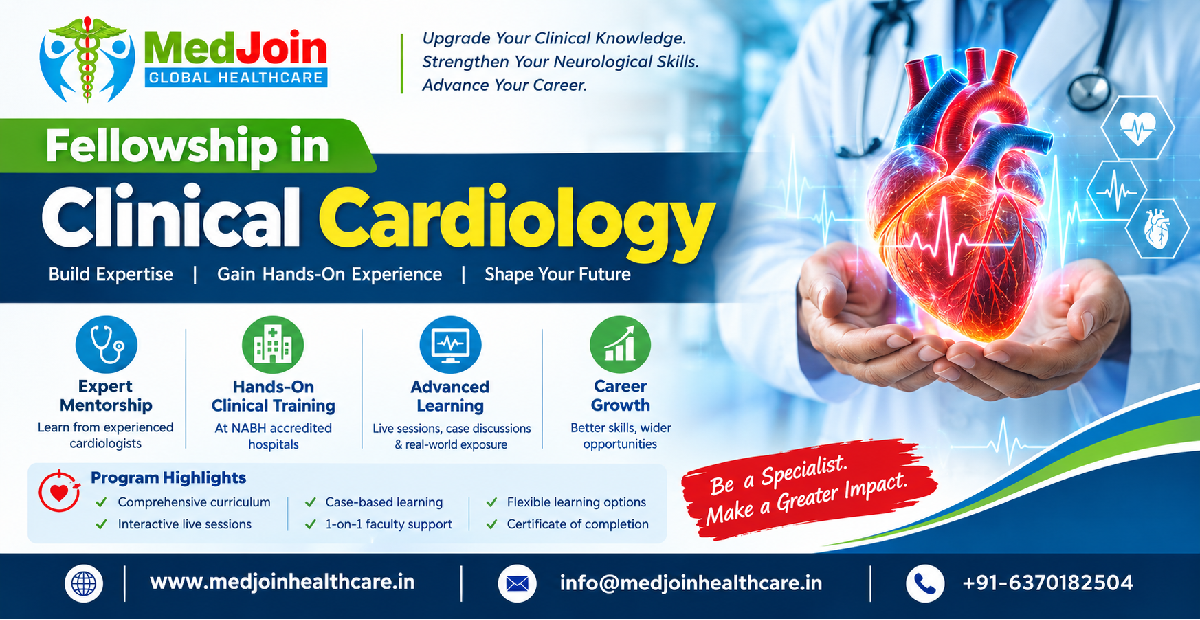
A Fellowship in Clinical Cardiology can provide an additional structured learning pathway for eligible medical professionals who want to develop focused knowledge and practical skills related to cardiovascular care.
Clinical cardiology covers a broad spectrum of patient presentations, from common cardiovascular risk factors and hypertension to ischemic heart disease, heart failure, arrhythmias and other cardiovascular conditions. A structured fellowship can help doctors develop a systematic approach to patient assessment, understand commonly used investigations and participate in supervised clinical learning, depending on the program design and applicable regulations.
For doctors who have already completed their primary medical qualification, continuing professional development can play an important role in staying current with evolving clinical practices. A fellowship may therefore be considered as part of a broader professional development plan.
This article explores the Fellowship in Clinical Cardiology, including its curriculum, learning objectives, clinical exposure, career scope, potential work environments, future opportunities, skills doctors can develop, and factors to consider before selecting a program.
What Is a Fellowship in Clinical Cardiology?
A Fellowship in Clinical Cardiology is a structured advanced-learning program focused on the clinical understanding of cardiovascular medicine.
Unlike a conventional undergraduate medical degree, the fellowship is generally designed for doctors who already possess a medical qualification and want to develop focused knowledge in a particular clinical area.
Depending on the institution, curriculum and regulatory framework, a Clinical Cardiology fellowship may cover areas such as:
- Cardiovascular anatomy and physiology
- Cardiovascular examination
- Hypertension
- Ischemic heart disease
- Acute coronary syndromes
- Heart failure
- Cardiac arrhythmias
- Valvular heart disease
- Cardiomyopathies
- Congenital heart disease
- Cardiovascular risk assessment
- ECG interpretation
- Echocardiography fundamentals
- Cardiac biomarkers
- Cardiovascular emergencies
- Preventive cardiology
- Lifestyle modification
- Diabetes and cardiovascular disease
- Dyslipidemia
- Antiplatelet and anticoagulant concepts
- Clinical decision-making
- Patient counselling
- Referral and multidisciplinary care
The exact curriculum differs between providers.
Therefore, doctors should review the program's eligibility requirements, learning outcomes, duration, assessment method, faculty profile, clinical exposure, certification and regulatory status before enrollment.
Why Is Clinical Cardiology an Important Area of Medical Education?
Cardiovascular medicine intersects with almost every major area of clinical practice.
Patients presenting to general practice, emergency departments, internal medicine departments, diabetes clinics, nephrology services and other specialties may have cardiovascular risk factors or cardiovascular disease.
Conditions such as:
- Hypertension
- Diabetes mellitus
- Obesity
- Dyslipidemia
- Smoking-related cardiovascular risk
- Chronic kidney disease
- Metabolic syndrome
can significantly influence cardiovascular health.
Doctors working in primary care and general clinical settings therefore frequently encounter patients who require cardiovascular assessment or risk evaluation.
Developing stronger cardiovascular knowledge can help doctors approach such patients more systematically.
A clinical cardiology fellowship can provide an organized learning pathway covering cardiovascular history-taking, examination, investigations and management principles.
Practical Clinical Exposure
One of the major considerations when selecting a Clinical Cardiology fellowship is the nature and extent of practical exposure.
A program may include:
- Hospital observation
- Clinical case discussions
- Supervised patient interaction
- Outpatient exposure
- Inpatient exposure
- ECG observation
- Echocardiography observation
- Case presentations
- Grand rounds
- Emergency case discussions
- Multidisciplinary discussions
The exact structure varies.
Doctors should verify whether the program offers:
- Hands-on clinical training
- Clinical observership
- Simulation-based training
- Case-based learning
- Live patient discussions
- Supervised procedures
- Diagnostic interpretation practice
These terms should not be treated as interchangeable.
Why Hands-On Clinical Training Can Be Valuable
Medicine is a practical discipline.
Reading textbooks and attending lectures can build theoretical knowledge, but clinical exposure allows doctors to observe how concepts are applied in real-world healthcare environments.
Clinical exposure may help doctors understand:
- Patient communication
- Clinical workflow
- Documentation
- Differential diagnosis
- Investigation selection
- Clinical reasoning
- Multidisciplinary coordination
- Patient counselling
- Follow-up planning
For doctors who are eligible for such training, supervised clinical exposure can complement online learning.
Online vs Hybrid Clinical Cardiology Fellowship
Doctors may encounter different fellowship formats.
Online Fellowship
An online fellowship generally focuses on:
- Recorded lectures
- Live classes
- Reading material
- Case discussions
- Online assessments
- Clinical webinars
- Faculty interaction
It may be useful for doctors who cannot relocate.
Hybrid Fellowship
A hybrid model combines online education with practical clinical exposure.
For example:
Online learning + hospital-based clinical training
This structure can provide flexibility while adding an in-person component.
The duration and structure depend on the institution.
Career Scope After a Fellowship in Clinical Cardiology
Career scope depends on the doctor's existing qualification, experience, skills, location, employer requirements and applicable regulations.
A Clinical Cardiology fellowship can complement existing medical training in several professional settings.
Potential areas include:
- Hospitals
- Clinics
- Primary care
- Internal medicine
- Emergency departments
- Preventive healthcare
- Corporate healthcare
- Diagnostic centers
- Telemedicine
- Medical education
- Clinical research
It is important to understand that completing a fellowship does not automatically make a doctor a cardiologist or confer specialist registration unless the qualification is specifically recognized for that purpose by the relevant authority.
Career Opportunity in Hospitals
Hospitals represent one of the most common environments for doctors interested in cardiovascular medicine.
Doctors may work in roles aligned with their underlying medical qualifications and experience while using their additional cardiovascular training to strengthen their clinical practice.
Potential responsibilities may involve:
- Cardiovascular assessment
- Patient monitoring
- Risk-factor management
- ECG-based assessment
- Case coordination
- Referral to specialists
- Follow-up care
The exact scope depends on institutional credentialing and applicable regulations.
Career Opportunity in Clinics
Doctors working in outpatient settings frequently encounter patients with:
- Hypertension
- Diabetes
- Dyslipidemia
- Obesity
- Chest discomfort
- Breathlessness
- Palpitations
- Cardiovascular risk factors
Additional cardiovascular education can support structured assessment and appropriate referral.
Career Opportunity in Primary Care
Primary-care physicians often serve as the first point of contact for patients.
A cardiovascular-focused fellowship may help doctors improve their understanding of:
- Cardiovascular prevention
- Hypertension
- Diabetes
- Dyslipidemia
- Risk assessment
- ECG basics
- Referral criteria
- Chronic disease monitoring
This can be particularly relevant in communities where access to specialists may be limited.
Career Opportunity in Emergency Medicine
Emergency settings require rapid recognition of potentially serious cardiovascular conditions.
Doctors with additional cardiovascular training may strengthen their knowledge of:
- Acute chest pain
- Acute coronary syndromes
- Arrhythmias
- Hypertensive emergencies
- Heart failure
- Cardiac arrest
- Shock
However, emergency practice requires comprehensive emergency medicine competence beyond cardiology alone.
Career Opportunity in Critical Care
Cardiovascular problems are common among critically ill patients.
Additional cardiology education may complement a doctor's existing critical-care training.
Potential learning areas include:
- Hemodynamic assessment
- Shock
- Acute heart failure
- Arrhythmias
- ECG interpretation
- Cardiovascular monitoring
A cardiology fellowship should not be represented as equivalent to formal critical-care specialist training.
Career Opportunity in Preventive Cardiology
Prevention is becoming increasingly important in cardiovascular healthcare.
Doctors may develop an interest in:
- Lifestyle medicine
- Weight management
- Hypertension control
- Lipid management
- Diabetes management
- Smoking cessation
- Cardiovascular risk reduction
Preventive cardiovascular care can be integrated into many medical practices.
Career Opportunity in Cardiac Diagnostic Services
Depending on qualifications and institutional authorization, doctors may work with diagnostic teams involving:
- ECG
- Holter monitoring
- Echocardiography
- Stress testing
- Cardiovascular laboratory investigations
Additional training can improve understanding of cardiovascular diagnostics.
Independent reporting or performance of investigations may require specific qualifications, credentialing or authorization.
Career Opportunity in Medical Education
Doctors with strong clinical experience may also become involved in:
- Medical teaching
- CME programs
- Workshops
- Case discussions
- Clinical webinars
- Training programs
- Academic content development
A fellowship can contribute to subject-focused knowledge that supports educational activities.
Career Opportunity in Clinical Research
Cardiology is an active area of clinical research.
Doctors interested in research may explore:
- Cardiovascular epidemiology
- Clinical trials
- Hypertension
- Heart failure
- Diabetes and cardiovascular disease
- Preventive cardiology
- Arrhythmias
- Cardiovascular imaging
- Digital health
Research participation can help doctors understand evidence-based medicine and emerging therapies.
Career Opportunities in Telemedicine
Digital healthcare has expanded access to medical consultation.
Cardiovascular follow-up may involve:
- Blood pressure monitoring
- Medication follow-up
- Lifestyle counselling
- Review of investigations
- Chronic disease management
- Risk-factor monitoring
Telemedicine has limitations, particularly where physical examination or emergency intervention is required.
Doctors should follow applicable telemedicine regulations and professional standards.
Future Opportunities in Clinical Cardiology
The future of cardiovascular medicine is likely to be shaped by several major developments.
1. Preventive Cardiology
Healthcare systems are increasingly focused on prevention.
Rather than waiting for cardiovascular events to occur, clinicians increasingly emphasize:
- Early risk detection
- Blood pressure control
- Lipid management
- Diabetes management
- Smoking cessation
- Weight management
- Exercise
- Healthy nutrition
This creates opportunities for doctors with strong preventive-care knowledge.
2. Digital Cardiology
Technology is becoming increasingly integrated into cardiovascular healthcare.
Examples include:
- Wearable devices
- Remote monitoring
- Digital ECG
- Remote blood pressure monitoring
- Telecardiology
- AI-assisted diagnostics
- Electronic health records
- Digital risk assessment
Doctors will increasingly need to understand how technology can support—but not replace—clinical decision-making.
3. Artificial Intelligence in Cardiology
Artificial intelligence is being explored in areas such as:
- ECG interpretation
- Medical imaging
- Risk prediction
- Clinical decision support
- Patient monitoring
- Research
- Workflow automation
Doctors who understand both clinical medicine and digital healthcare may increasingly interact with AI-assisted systems.
AI should be considered a clinical support technology rather than an automatic replacement for professional judgment.
4. Remote Cardiovascular Monitoring
Remote monitoring can allow clinicians to track certain patient parameters outside the hospital.
Depending on the clinical situation, monitoring may involve:
- Blood pressure
- Heart rate
- ECG
- Oxygen saturation
- Weight
- Other physiological parameters
Remote monitoring may be particularly useful in chronic cardiovascular disease management.
5. Personalized Cardiovascular Medicine
Future cardiovascular care is expected to increasingly consider individual patient characteristics.
These can include:
- Genetics
- Lifestyle
- Comorbidities
- Risk factors
- Treatment response
- Age
- Clinical history
Personalized approaches may help physicians make more individualized treatment decisions.
6. Growth of Preventive Healthcare
The healthcare industry is gradually placing greater emphasis on prevention and early detection.
This can increase the importance of doctors who understand:
- Cardiovascular risk
- Lifestyle medicine
- Metabolic health
- Hypertension
- Diabetes
- Dyslipidemia
7. Cardiovascular Care in Diabetes
The relationship between diabetes and cardiovascular disease creates an important area for future clinical practice.
Doctors increasingly need to understand cardiovascular risk when managing patients with metabolic disease.
This creates opportunities for professionals with combined knowledge of:
Diabetes + Cardiovascular Medicine + Preventive Healthcare
8. Cardiovascular Care for an Aging Population
As populations age, healthcare systems encounter increasing numbers of patients with multiple chronic conditions.
Older adults may present with combinations of:
- Hypertension
- Coronary artery disease
- Heart failure
- Arrhythmias
- Kidney disease
- Diabetes
Doctors need comprehensive clinical knowledge to manage complex patients and coordinate multidisciplinary care.
Skills Doctors Can Develop
A well-designed Clinical Cardiology fellowship may help doctors develop several categories of skills.
Clinical Skills
- Cardiovascular history-taking
- Physical examination
- Risk assessment
- Differential diagnosis
- Clinical reasoning
- Patient counselling
Diagnostic Skills
- ECG fundamentals
- Laboratory interpretation
- Echocardiography concepts
- Cardiovascular imaging principles
Management Skills
- Cardiovascular risk reduction
- Hypertension management principles
- Heart failure management principles
- Ischemic heart disease management principles
- Arrhythmia assessment
- Referral planning
Communication Skills
- Patient counselling
- Lifestyle counselling
- Risk communication
- Family communication
- Multidisciplinary communication
Why Doctors Choose Clinical Cardiology Fellowships
Different doctors have different reasons for pursuing focused medical education.
Common motivations include:
1. Special Interest
A doctor may have a strong interest in cardiovascular medicine.
2. Skill Development
The fellowship can provide structured exposure to cardiovascular topics.
3. Continuing Education
Doctors may want to keep their clinical knowledge updated.
4. Clinical Confidence
Structured case discussions and supervised exposure can help doctors develop greater familiarity with cardiovascular presentations.
5. Career Development
Additional education may complement a doctor's existing career pathway.
Fellowship in Clinical Cardiology and Professional Development
Professional development in medicine is continuous.
Medical knowledge changes rapidly because of:
- New research
- New clinical guidelines
- New medications
- New diagnostic technology
- Digital healthcare
- Artificial intelligence
- New cardiovascular devices
Doctors therefore need ongoing education throughout their careers.
A fellowship can be one component of continuing professional development.
Clinical Cardiology and Multidisciplinary Healthcare
Modern cardiovascular care often involves collaboration among:
- Cardiologists
- Physicians
- Emergency doctors
- Nurses
- Pharmacists
- Dietitians
- Physiotherapists
- Diabetes specialists
- Nephrologists
- Critical-care specialists
- Radiologists
Doctors with additional cardiology education can better understand how cardiovascular care fits within the broader healthcare system.
Role of Lifestyle Medicine in Cardiovascular Care
Lifestyle modification is an important component of cardiovascular prevention.
Areas include:
- Balanced nutrition
- Physical activity
- Weight management
- Smoking cessation
- Alcohol-related risk counselling
- Sleep
- Stress management
- Medication adherence
Doctors may use structured counselling approaches to help patients reduce cardiovascular risk.
Clinical Cardiology and Rural Healthcare
Cardiovascular disease is not restricted to major metropolitan areas.
Doctors working in smaller cities and rural communities may encounter:
- Hypertension
- Diabetes
- Chest pain
- Stroke risk
- Heart failure
- Arrhythmias
Additional cardiovascular training can help doctors identify patients who require escalation or specialist referral.
International Career Considerations
Doctors considering international opportunities should understand that fellowship recognition differs between countries.
A certificate obtained in one country does not automatically provide:
- Medical registration
- Specialist registration
- Independent practice rights
- Hospital privileges
International doctors should verify requirements with the relevant medical regulatory authority in the destination country.
Career Growth After Clinical Cardiology Fellowship
Career development can involve several stages.
Stage 1: Foundational Knowledge
Develop understanding of cardiovascular medicine.
Stage 2: Clinical Exposure
Observe and participate in appropriate supervised clinical activities.
Stage 3: Professional Application
Use cardiovascular knowledge within the scope of existing medical qualifications.
Stage 4: Advanced Education
Doctors may pursue additional recognized qualifications depending on their career goals.
Stage 5: Professional Specialization
Those seeking formal specialist careers should pursue the appropriate recognized specialist pathway.
Potential Professional Settings
After completing relevant training, doctors may use their cardiovascular knowledge in environments such as:
| Setting | Potential Application |
|---|---|
| Hospitals | Cardiovascular assessment and patient management within credentialed role |
| Clinics | Risk-factor evaluation and follow-up |
| Primary Care | Cardiovascular prevention |
| Emergency Departments | Cardiovascular assessment |
| Diagnostic Centers | Cardiovascular diagnostics where appropriately qualified |
| Telemedicine | Follow-up and chronic disease care |
| Corporate Healthcare | Preventive health programs |
| Medical Education | Teaching and CME |
| Research | Cardiovascular research |
| Public Health | Prevention programs |
The actual role depends on the doctor's underlying qualification, employer requirements and applicable regulations.
Future of Clinical Cardiology
The future of cardiovascular healthcare is likely to involve an increasingly integrated model.
A doctor may use:
Clinical examination + laboratory testing + ECG + imaging + digital monitoring + AI-supported tools + evidence-based guidelines
to develop a more comprehensive understanding of patients.
This does not eliminate the importance of clinical judgment.
Instead, doctors need to understand how to combine different sources of information appropriately.
Is Clinical Cardiology a Good Career Direction?
Rather than viewing a fellowship as a guaranteed career outcome, doctors should consider whether it fits their existing qualification and long-term professional objectives.
Questions to ask include:
- Do I want stronger cardiovascular knowledge?
- Do I work with patients at cardiovascular risk?
- Do I want additional clinical exposure?
- Does the curriculum match my goals?
- Is the fellowship appropriate for my existing qualification?
- What certification is awarded?
- What clinical privileges, if any, does it provide?
- Does it fit within my country's regulatory framework?
- Do I need a formal specialist qualification instead?
These questions can help doctors select an appropriate education pathway.
Clinical Cardiology Fellowship for Working Doctors
Working doctors often face challenges when pursuing additional education.
These can include:
- Limited time
- Patient responsibilities
- Hospital duties
- Family commitments
- Travel limitations
Flexible learning models can help doctors continue professional education while working.
Online lectures, recorded content, weekend sessions and case discussions may offer greater flexibility.
What Makes a Clinical Cardiology Fellowship Valuable?
The value of a fellowship depends on its educational quality rather than simply its title.
A strong program should ideally provide:
- Relevant curriculum
- Experienced faculty
- Case-based education
- Clinical exposure
- Assessments
- Updated learning resources
- Clear certification
- Transparent eligibility
- Clearly defined scope
Doctors should evaluate the actual program rather than relying solely on marketing claims.
How MedJoin Global Can Support Clinical Cardiology Learning
At MedJoin Global, a Clinical Cardiology fellowship can be structured around the needs of doctors seeking focused cardiovascular education and professional development.
The learning approach can combine:
- Structured online education
- Live expert sessions
- Recorded learning resources
- Clinical case discussions
- Assessments
- Cardiovascular-focused modules
- Practical clinical exposure where applicable
- Faculty interaction
- Professional learning support
The objective is to create a structured learning environment in which doctors can strengthen their understanding of clinical cardiology.
Doctors should review the current program details, eligibility criteria, duration, clinical-training arrangements, certification and applicable professional requirements before enrollment.
Key Learning Areas in a Clinical Cardiology Fellowship
A comprehensive program may cover:
Cardiovascular Fundamentals
Understanding cardiovascular anatomy, physiology and clinical examination.
ECG
Developing a systematic approach to ECG interpretation.
Hypertension
Understanding diagnosis, risk assessment and management principles.
Ischemic Heart Disease
Learning about coronary artery disease and acute coronary syndromes.
Heart Failure
Understanding clinical presentation, assessment and long-term management.
Arrhythmias
Recognizing common rhythm disorders.
Valvular Disease
Understanding common valve disorders and their clinical presentation.
Preventive Cardiology
Focusing on risk-factor management and prevention.
Cardiovascular Emergencies
Understanding the principles of acute cardiovascular assessment.
Clinical Case Discussions
Applying theoretical concepts to clinical scenarios.
A Fellowship in Clinical Cardiology can provide a structured opportunity for eligible doctors to strengthen their knowledge of cardiovascular medicine and develop focused clinical skills.
The field encompasses a wide range of areas, including:
- Hypertension
- Coronary artery disease
- Acute coronary syndromes
- ECG
- Heart failure
- Arrhythmias
- Valvular heart disease
- Cardiomyopathies
- Cardiovascular emergencies
- Preventive cardiology
- Cardiovascular risk management
The future of cardiovascular healthcare is also being influenced by digital health, remote monitoring, artificial intelligence, personalized medicine and preventive healthcare.
For doctors, the most important consideration is to choose a program that aligns with their existing qualification, professional goals and applicable regulatory requirements.
A fellowship can serve as an additional educational pathway, but it should be understood accurately: it does not automatically replace a formally recognized specialist qualification or confer specialist registration unless specifically recognized for that purpose by the relevant authority.
For doctors seeking to expand their cardiovascular knowledge, improve their understanding of clinical assessment and gain structured exposure to contemporary cardiovascular medicine, a carefully selected Clinical Cardiology fellowship can form part of a broader lifelong professional-development journey.