
Transforming Nursing Careers Through Advanced Clinical Education
Healthcare is evolving rapidly, creating new opportunities and responsibilities for nursing professionals across the world. Modern hospitals and healthcare institutions require nurses who possess not only fundamental nursing knowledge but also advanced clinical skills, critical thinking abilities, patient management expertise, and the confidence to work in complex healthcare environments.
Nurses are among the most important pillars of the healthcare delivery system. From emergency departments and intensive care units to operation theatres, cardiac care units, oncology departments, neonatal intensive care units, and specialised medical wards, nursing professionals play a significant role in patient assessment, treatment support, recovery, rehabilitation, and preventive healthcare.
As medical technology advances and patient expectations increase, the demand for professionally trained nurses with specialised clinical competencies continues to grow.
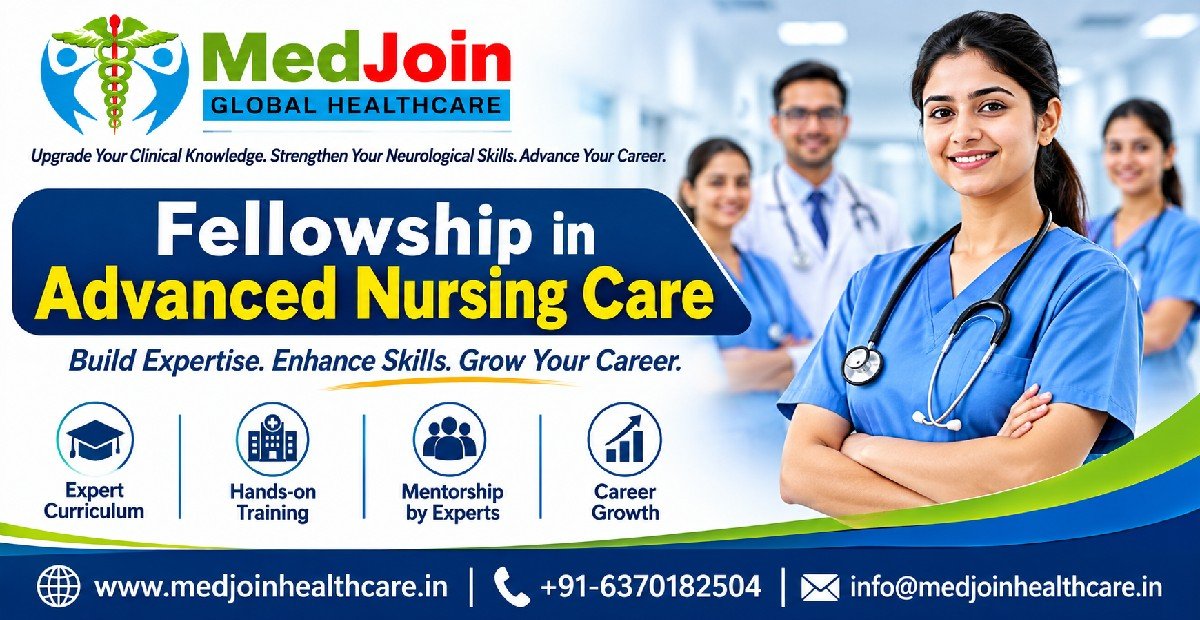
This is where a Fellowship in Advanced Nursing Care can play an important role in professional development.
A Fellowship in Advanced Nursing Care is a specialised educational pathway designed to strengthen nursing knowledge, improve clinical understanding, develop patient-care competencies, and prepare nursing professionals to manage different clinical situations with greater confidence.
The programme focuses on advanced nursing concepts, evidence-based practice, patient safety, clinical assessment, healthcare communication, critical thinking, infection prevention, and multidisciplinary coordination.
Whether you are a nursing graduate beginning your professional journey, a registered nurse working in a hospital, a clinical nursing supervisor, or an experienced nursing professional looking to upgrade your knowledge, advanced nursing education can help you build a stronger professional foundation.
Through structured learning, practical case discussions, clinical exposure where available, and continuous professional development, nurses can enhance their ability to contribute effectively to modern healthcare delivery.
In this comprehensive guide, we will explore everything you need to know about the Fellowship in Advanced Nursing Care, including its curriculum, eligibility, learning objectives, clinical competencies, career opportunities, scope, professional benefits, and future prospects.
1. What Is a Fellowship in Advanced Nursing Care?
A Fellowship in Advanced Nursing Care is a specialised professional development programme intended to enhance the clinical knowledge and practical competencies of nursing professionals.
Unlike basic nursing education, which introduces students to fundamental nursing principles, advanced nursing education focuses on developing deeper knowledge of patient assessment, clinical decision-making, specialised care procedures, healthcare management, and evidence-based nursing practice.
The programme may cover several areas of modern nursing, including:
-
Advanced patient assessment.
-
Critical care nursing.
-
Emergency nursing.
-
Intensive care management.
-
Medical-surgical nursing.
-
Cardiovascular nursing.
-
Respiratory care.
-
Neurological nursing.
-
Infection prevention and control.
-
Wound management.
-
Pain assessment and management.
-
Patient safety and quality assurance.
-
Medication administration and safety.
-
Geriatric nursing.
-
Rehabilitation nursing.
-
Clinical documentation.
-
Healthcare communication.
-
Nursing leadership and management.
The exact subjects and practical components depend on the institution, programme duration, delivery format, and curriculum.
The primary objective is to help nurses develop a more comprehensive understanding of clinical care and improve their ability to support patients across different healthcare settings.
Why Is Advanced Nursing Education Important?
Traditional nursing education provides the foundation for professional practice. However, clinical environments frequently introduce situations that require continuous learning and specialised knowledge.
For example:
-
An ICU nurse must understand patient monitoring, ventilator-associated care, and critical patient observation.
-
An emergency nurse must recognise warning signs and respond appropriately to time-sensitive clinical situations.
-
A cardiac care nurse must understand cardiovascular monitoring and recognise potential complications.
-
An oncology nurse must understand cancer-related symptoms, treatment support, and patient counselling.
-
A surgical nurse must understand perioperative care, infection prevention, and postoperative monitoring.
Advanced nursing education helps professionals strengthen the knowledge required in these clinical environments.
It also encourages nurses to remain updated with changing healthcare practices, clinical protocols, medical technologies, and patient-care standards.
2. Why Choose a Fellowship in Advanced Nursing Care?
The healthcare sector is becoming increasingly specialised. Hospitals are expanding their departments, adopting modern diagnostic technologies, and introducing more sophisticated treatment protocols.
Consequently, nurses need to continuously upgrade their knowledge.
A Fellowship in Advanced Nursing Care can offer several professional and educational advantages.
2.1 Strengthen Clinical Knowledge
The programme helps nurses understand advanced clinical concepts and their application in different patient-care situations.
It may include topics related to:
-
Human physiology and pathophysiology.
-
Clinical assessment.
-
Patient monitoring.
-
Disease progression.
-
Nursing interventions.
-
Treatment support.
-
Complication recognition.
-
Recovery and rehabilitation.
A deeper understanding of these subjects enables nurses to recognise patient needs and communicate relevant observations to the healthcare team.
2.2 Improve Patient-Care Competencies
Quality nursing care extends beyond completing routine clinical tasks.
It involves understanding patient conditions, identifying potential risks, monitoring treatment responses, maintaining patient comfort, and ensuring appropriate documentation.
Advanced training can help nurses improve their ability to:
-
Assess patient conditions systematically.
-
Monitor vital signs accurately.
-
Recognise changes in clinical status.
-
Maintain patient safety.
-
Support treatment plans.
-
Prevent avoidable complications.
-
Educate patients and families.
-
Coordinate with doctors and other healthcare professionals.
2.3 Develop Critical Thinking Skills
Clinical situations are not always predictable.
Patients may experience sudden changes in vital signs, unexpected complications, medication-related issues, or deterioration in their general condition.
Nurses must understand how to recognise these developments and follow appropriate escalation protocols.
Advanced nursing education promotes critical thinking through case-based learning, clinical discussions, problem-solving exercises, and evidence-based approaches.
2.4 Understand Modern Healthcare Technologies
Technology is transforming nursing practice.
Modern healthcare institutions increasingly use:
-
Electronic health records.
-
Digital patient monitoring systems.
-
Infusion pumps.
-
Ventilator systems.
-
Point-of-care diagnostic devices.
-
Advanced patient monitoring equipment.
-
Clinical decision-support systems.
-
Telehealth platforms.
Understanding these technologies is becoming increasingly important for nurses working in modern healthcare environments.
2.5 Improve Professional Confidence
Continuous education helps nurses become more confident in their knowledge and professional responsibilities.
Through structured learning and clinical case discussions, nursing professionals can develop a clearer understanding of patient-care procedures, clinical communication, and multidisciplinary coordination.
2.6 Support Long-Term Career Development
Advanced nursing education can support career progression by strengthening professional knowledge and demonstrating a commitment to lifelong learning.
Depending on experience, qualifications, institutional requirements, and applicable regulations, additional education may support opportunities in specialised nursing, clinical coordination, education, quality assurance, and nursing administration.
3. Who Should Enrol in a Fellowship in Advanced Nursing Care?
The programme may be suitable for nursing professionals who want to strengthen their clinical knowledge and develop specialised competencies.
Potential participants include:
3.1 Registered Nurses
Registered nurses working in hospitals, nursing homes, healthcare centres, and other clinical environments can benefit from advanced professional education.
The programme can help them update their knowledge and improve their understanding of modern nursing practices.
3.2 BSc Nursing Graduates
Graduates of Bachelor of Science in Nursing programmes may consider advanced nursing education to strengthen their clinical foundation.
It can help them understand specialised areas of patient care and prepare for professional responsibilities in different hospital departments.
3.3 GNM Qualified Nurses
General Nursing and Midwifery professionals seeking further academic and clinical development may benefit from specialised educational programmes, subject to the programme's eligibility requirements.
3.4 Post-Basic BSc Nursing Professionals
Nurses who have completed Post-Basic BSc Nursing may use fellowship education to expand their knowledge in advanced patient care, clinical management, and specialised nursing practices.
3.5 ICU and Critical Care Nurses
Nurses working in intensive care environments may benefit from advanced knowledge of:
-
Critical patient monitoring.
-
Respiratory support.
-
Hemodynamic monitoring.
-
Infection prevention.
-
Emergency response protocols.
-
Critical patient documentation.
3.6 Emergency Department Nurses
Emergency nursing professionals work in fast-paced environments where timely assessment and effective communication are essential.
Advanced education can help them strengthen their understanding of emergency assessment, triage principles, trauma care, and emergency response systems.
3.7 Nursing Supervisors and Clinical Coordinators
Professionals responsible for nursing teams, departmental coordination, and patient-care quality may benefit from learning about clinical leadership, healthcare management, and patient safety.
3.8 Nurses Planning International Careers
Nursing professionals interested in exploring international career opportunities can use advanced education to strengthen their clinical knowledge.
However, a fellowship alone does not guarantee international registration, professional licensing, employment, or migration eligibility. These requirements depend on the destination country's nursing regulatory authority.
4. Eligibility Criteria for Fellowship in Advanced Nursing Care
Eligibility requirements may differ between educational institutions.
Generally, candidates may be considered from the following educational backgrounds:
|
Qualification |
General suitability |
|---|---|
|
BSc Nursing |
Suitable, subject to programme criteria |
|
GNM |
May be eligible |
|
Post-Basic BSc Nursing |
Suitable |
|
MSc Nursing |
Suitable |
|
Registered Nursing Professionals |
Subject to eligibility |
|
Experienced Clinical Nurses |
Subject to qualification requirements |
General Admission Requirements
Applicants may be required to submit:
-
Nursing qualification certificate.
-
Academic transcripts or mark sheets.
-
Nursing registration certificate, where applicable.
-
Government-issued identity proof.
-
Recent passport-size photograph.
-
Professional experience certificate, if required.
Does Nursing Experience Matter?
Experience can be valuable, particularly for programmes that include advanced clinical discussions or specialised patient-care topics.
However, the experience requirement depends on the individual programme.
Fresh nursing graduates may be eligible for certain educational pathways, while advanced clinical or specialist programmes may require previous hospital experience.
Candidates should verify the exact admission requirements before enrolling.
5. Comprehensive Curriculum of Fellowship in Advanced Nursing Care
A well-structured Fellowship in Advanced Nursing Care should cover the major clinical, technical, professional, and ethical dimensions of modern nursing. To know more click here.
6. Practical Training and Clinical Exposure in Advanced Nursing Care
Clinical learning is an important part of professional nursing development.
While theoretical knowledge helps nurses understand medical conditions and treatment principles, practical learning helps them understand how these concepts are applied in real healthcare environments.
Depending on the programme structure, practical learning may involve simulation-based training, supervised clinical observation, case discussions, demonstrations, or hospital-based exposure.
Important Areas of Practical Learning
1. Patient Assessment
Nurses can develop their understanding of systematic patient assessment, including vital signs, general condition, and clinical observation.
2. Patient Monitoring
Training may cover the use and interpretation of common patient monitoring systems under appropriate supervision.
3. Infection Control
Participants learn about hand hygiene, personal protective equipment, isolation precautions, and infection prevention protocols.
4. Wound Care
Educational demonstrations can cover wound assessment, dressing principles, and pressure injury prevention.
5. Critical Care Observation
Where clinical exposure is available, participants may observe ICU workflows, patient monitoring, and multidisciplinary coordination.
6. Emergency Care Awareness
Case-based learning can help participants understand emergency assessment, prioritisation, and escalation procedures.
7. Clinical Documentation
Participants can learn about nursing notes, patient records, handover documentation, and incident reporting.
Why Is Supervised Clinical Exposure Important?
Clinical exposure helps bridge the gap between theoretical learning and real-world healthcare practice.
It provides opportunities to understand:
-
Hospital department workflows.
-
Patient-care coordination.
-
Clinical protocols.
-
Healthcare communication.
-
Patient safety systems.
-
Medical equipment.
-
Nursing documentation.
-
Professional responsibilities.
Clinical exposure must be conducted in accordance with applicable institutional policies, patient consent requirements, confidentiality rules, and professional scope of practice.
A fellowship certificate should not be interpreted as independent clinical authorisation or a substitute for statutory nursing registration.
7. Online, Hybrid and Offline Learning Models
Modern nursing professionals often have demanding work schedules.
Therefore, flexible educational formats can make advanced professional learning more accessible.
Depending on the institution, a Fellowship in Advanced Nursing Care may be offered through different learning models.
7.1 Online Fellowship Programme
Online education allows nursing professionals to study without regularly travelling to a physical training location.
Potential learning components include:
-
Recorded lectures.
-
Online learning modules.
-
Digital study materials.
-
Live interactive sessions.
-
Clinical case discussions.
-
Online assessments.
-
Knowledge-based assignments.
-
Learning management system access.
Benefits of online learning:
-
Flexible study schedules.
-
Accessibility from different locations.
-
Suitable for working professionals.
-
Opportunity to revisit recorded lectures.
-
Reduced travel requirements.
-
Continuous academic learning.
7.2 Hybrid Fellowship Programme
Hybrid learning combines online academic education with practical or hospital-based exposure.
A programme may include:
-
Online theoretical modules.
-
Recorded lectures.
-
Live expert sessions.
-
Case-based discussions.
-
Practical demonstrations.
-
Supervised clinical exposure, where included.
-
Final assessment.
This model can help nurses balance professional responsibilities with further education.
7.3 Offline Fellowship Programme
Offline learning involves in-person academic or practical training.
Depending on the programme, students may participate in:
-
Classroom sessions.
-
Clinical demonstrations.
-
Simulation exercises.
-
Hospital observation.
-
Case discussions.
-
Practical assessments.
-
Faculty interactions.
The availability of each format depends on the institution and its training partnerships.
8. Clinical Case-Based Learning in Advanced Nursing Care
Case-based learning is a valuable educational approach because it connects theoretical knowledge with realistic healthcare situations.
It encourages nurses to analyse patient information, identify relevant clinical concerns, understand nursing priorities, and communicate effectively.
Here are examples of educational case scenarios.
Case Study 1: Nursing Care of a Patient With Acute Respiratory Distress
A patient is admitted with breathing difficulty, increased respiratory rate, and reduced oxygen saturation.
Learning focus:
-
Initial patient assessment.
-
Respiratory monitoring.
-
Oxygen therapy principles.
-
Recognition of deterioration.
-
Timely escalation.
-
Communication with the treating team.
-
Clinical documentation.
Key learning: Nurses should understand the importance of early recognition of respiratory deterioration and following institutional escalation protocols.
Case Study 2: Nursing Care of a Patient With Stroke
An elderly patient presents with sudden weakness on one side of the body and difficulty speaking.
Learning focus:
-
Recognition of stroke warning signs.
-
Neurological assessment.
-
Glasgow Coma Scale.
-
Time-sensitive escalation.
-
Swallowing assessment awareness.
-
Aspiration prevention.
-
Rehabilitation support.
Key learning: Timely recognition and communication are essential in patients with suspected stroke.
Case Study 3: Nursing Care of a Postoperative Patient
A patient returns to the recovery area following abdominal surgery.
Learning focus:
-
Postoperative assessment.
-
Vital signs monitoring.
-
Pain assessment.
-
Wound observation.
-
Fluid balance.
-
Infection prevention.
-
Early complication recognition.
Key learning: Systematic postoperative observation helps identify complications and supports recovery.
Case Study 4: Nursing Care of a Patient With Diabetes
A patient with diabetes is admitted with an infected foot wound.
Learning focus:
-
Blood glucose monitoring.
-
Wound assessment.
-
Infection prevention.
-
Medication safety.
-
Nutritional education.
-
Foot care counselling.
-
Discharge education.
Key learning: Comprehensive nursing support is essential for patients with chronic diseases.
Case Study 5: Nursing Care of a Patient With Heart Failure
A patient presents with breathlessness, swelling in the lower limbs, and fatigue.
Learning focus:
-
Cardiovascular assessment.
-
Fluid balance monitoring.
-
Daily weight monitoring.
-
Medication administration safety.
-
Patient education.
-
Recognition of worsening symptoms.
Key learning: Nurses contribute significantly to monitoring, education, and continuity of care in patients with chronic cardiovascular conditions.
9. Essential Skills Developed Through Advanced Nursing Education
A comprehensive advanced nursing programme should focus on both clinical and professional competencies.
|
Skill |
Professional importance |
|---|---|
|
Patient assessment |
Helps identify patient needs |
|
Clinical observation |
Supports early recognition of changes |
|
Critical thinking |
Improves clinical reasoning |
|
Infection control |
Promotes patient safety |
|
Medication safety |
Reduces medication-related risks |
|
Clinical documentation |
Supports continuity of care |
|
Emergency awareness |
Strengthens emergency preparedness |
|
Communication |
Improves multidisciplinary coordination |
|
Patient education |
Supports informed healthcare decisions |
|
Leadership |
Helps coordinate nursing teams |
|
Ethical practice |
Protects patient rights and dignity |
|
Evidence-based practice |
Encourages scientifically informed care |
Clinical Assessment Skills
The ability to conduct structured patient assessments is fundamental to nursing practice.
Communication Skills
Nurses must communicate clearly with doctors, patients, family members, and other healthcare professionals.
Observation Skills
Recognising subtle changes in patient behaviour, vital signs, and general condition is important in preventing delayed clinical intervention.
Documentation Skills
Accurate documentation ensures that important patient information is available to the entire healthcare team.
Leadership Skills
Leadership knowledge helps experienced nurses coordinate staff, support junior colleagues, and contribute to patient-care quality.
10. Scope of Advanced Nursing Care in India
India's healthcare sector includes government hospitals, private multispeciality hospitals, super-speciality institutions, nursing homes, diagnostic centres, rehabilitation facilities, and community healthcare services.
As healthcare services expand, nursing professionals continue to play a central role in patient care.
Advanced nursing knowledge may be relevant across several clinical departments.
10.1 Intensive Care Units
ICUs provide care to patients with serious or life-threatening conditions.
Nursing responsibilities may include:
-
Continuous patient observation.
-
Monitoring vital signs.
-
Supporting prescribed treatment.
-
Infection prevention.
-
Maintaining patient records.
-
Coordinating with intensivists.
-
Supporting family communication.
10.2 Emergency Departments
Emergency departments manage patients requiring immediate medical assessment.
Nursing professionals support:
-
Initial patient assessment.
-
Triage workflows.
-
Emergency documentation.
-
Patient monitoring.
-
Trauma care coordination.
-
Emergency treatment support.
10.3 Cardiac Care Units
Cardiac care nursing involves supporting patients with cardiovascular diseases.
Important areas include:
-
ECG monitoring.
-
Vital signs observation.
-
Cardiac medication safety.
-
Post-procedure care.
-
Heart failure monitoring.
-
Patient education.
10.4 Oncology Departments
Oncology nurses support patients receiving cancer treatment.
Responsibilities may include:
-
Patient assessment.
-
Treatment coordination.
-
Symptom monitoring.
-
Infection prevention.
-
Patient counselling.
-
Nutritional support.
-
Palliative care coordination.
10.5 Operation Theatre and Surgical Departments
Operation theatre nursing requires knowledge of sterile techniques, surgical equipment, patient safety, and perioperative procedures.
10.6 Neonatal and Paediatric Departments
Paediatric and neonatal nursing focuses on the specific healthcare needs of newborns, infants, and children.
10.7 Rehabilitation and Long-Term Care
Rehabilitation nurses support patients recovering from illness, injury, surgery, and neurological conditions.
10.8 Community Healthcare
Community nursing focuses on preventive healthcare, health education, screening, and patient support outside traditional hospital environments.
11. Career Opportunities After Fellowship in Advanced Nursing Care
Advanced nursing education can help professionals strengthen their knowledge for different clinical and non-clinical responsibilities.
Actual job opportunities depend on the candidate's nursing qualification, registration, experience, employer requirements, and applicable professional regulations.
Potential career areas include:
|
Career area |
Typical responsibilities |
|---|---|
|
Staff Nurse |
General patient care and monitoring |
|
ICU Nurse |
Critical patient observation and care |
|
Emergency Nurse |
Emergency assessment and coordination |
|
Cardiac Care Nurse |
Cardiovascular patient monitoring |
|
Operation Theatre Nurse |
Perioperative nursing support |
|
Oncology Nurse |
Cancer patient support |
|
Paediatric Nurse |
Child healthcare support |
|
Geriatric Nurse |
Elderly patient care |
|
Rehabilitation Nurse |
Recovery and rehabilitation support |
|
Nursing Educator |
Nursing education and training |
|
Clinical Coordinator |
Coordination of clinical workflows |
|
Nursing Supervisor |
Nursing staff supervision |
|
Quality Assurance Nurse |
Patient safety and quality monitoring |
|
Infection Control Nurse |
Infection prevention activities |
11.1 Clinical Nursing Specialist
Experienced nurses with relevant qualifications and additional specialist preparation may pursue roles in specialised clinical departments.
11.2 ICU Nursing Professional
ICU nursing professionals support the treatment and monitoring of critically ill patients.
11.3 Emergency Nursing Professional
Emergency nurses contribute to rapid patient assessment, emergency department workflows, and treatment coordination.
11.4 Nursing Educator
Nursing professionals with appropriate academic qualifications and experience may explore educational positions in nursing colleges and training institutions.
11.5 Nursing Supervisor
Experienced nurses may progress towards supervisory responsibilities involving staff coordination, patient-care quality, and departmental management.
11.6 Clinical Quality Coordinator
Professionals with relevant training and experience may explore opportunities involving clinical audits, patient safety, documentation, and quality improvement.
11.7 Infection Control Professional
Infection prevention is an important component of hospital management.
Nurses with relevant additional training and institutional experience may pursue infection prevention responsibilities.
Important: A fellowship is an additional educational qualification. It does not automatically confer specialist registration, independent advanced practice authority, eligibility for a regulated post, or promotion.
12. International Career Opportunities for Nursing Professionals
Nursing is an internationally recognised healthcare profession.
Several countries recruit qualified nursing professionals to support hospitals, healthcare facilities, elderly care services, and community healthcare systems.
Countries frequently explored by Indian nursing professionals include:
-
United Kingdom.
-
United States.
-
Canada.
-
Australia.
-
New Zealand.
-
United Arab Emirates.
-
Saudi Arabia.
-
Qatar.
-
Germany.
-
Ireland.
However, international employment requires meeting country-specific requirements.
United Kingdom
Nurses intending to work in the UK generally need to satisfy Nursing and Midwifery Council registration requirements.
Depending on their circumstances, this may involve:
-
Qualification verification.
-
English language requirements.
-
Computer-based testing.
-
Clinical examination.
-
Registration procedures.
United States
Internationally educated nurses generally need to meet state board of nursing requirements.
These may include:
-
Credential evaluation.
-
English proficiency, where applicable.
-
NCLEX-RN examination.
-
State-specific licensing procedures.
Canada
Internationally educated nurses must follow the applicable provincial or territorial registration pathway.
Credential assessment and examination requirements may apply.
Australia
Nurses must satisfy the Nursing and Midwifery Board of Australia and relevant registration assessment requirements.
Middle Eastern Countries
Countries such as the UAE, Saudi Arabia, and Qatar have their own nursing licensing systems.
Applicants may need to fulfil qualification, experience, document verification, examination, and other regulatory requirements.
How Can Advanced Nursing Education Help?
A fellowship may help nurses strengthen their theoretical knowledge and professional development.
It can complement their existing nursing qualification and clinical experience.
However, it should not be considered a replacement for:
-
Nursing registration.
-
Professional licensing.
-
Required clinical experience.
-
English language examinations.
-
Country-specific competency assessments.
-
Immigration and employment requirements.
Nurses should always verify the latest requirements with the relevant regulatory authority.
13. Difference Between Basic Nursing Education and Advanced Nursing Fellowship
Understanding the difference between basic nursing education and additional advanced professional education can help candidates make informed decisions.
|
Parameter |
Basic Nursing Education |
Advanced Nursing Fellowship |
|---|---|---|
|
Primary objective |
Establish foundational nursing knowledge |
Develop additional specialised knowledge |
|
Curriculum |
Core nursing subjects |
Advanced and focused clinical topics |
|
Patient care |
Fundamental nursing concepts |
Advanced patient-care concepts |
|
Learning approach |
Academic and clinical education |
Specialised academic and clinical learning |
|
Assessment |
Academic examinations and practical assessments |
Programme-specific assessments |
|
Clinical focus |
General nursing |
Selected advanced nursing areas |
|
Professional development |
Entry-level foundation |
Continuing professional development |
A fellowship complements existing nursing education. It does not replace a recognised nursing degree, diploma, or statutory registration.
14. Advanced Nursing Care and Evidence-Based Practice
Evidence-based nursing is an important component of modern healthcare.
It involves combining the best available scientific evidence with clinical expertise, patient preferences, and the healthcare environment.
The objective is to improve the quality and safety of patient care.
Important Components
1. Research Awareness
Nurses should understand how clinical research contributes to changes in healthcare practices.
2. Clinical Guidelines
Healthcare professionals should remain updated with relevant clinical guidelines and institutional protocols.
3. Patient Preferences
Patient values, preferences, and individual circumstances must be considered when planning care.
4. Continuous Improvement
Nurses should identify opportunities to improve patient safety, clinical documentation, and care delivery.
5. Professional Development
Continuous education enables nursing professionals to remain informed about developments in healthcare.
15. Patient Safety and Quality Improvement in Nursing
Patient safety is one of the most important responsibilities of healthcare institutions.
Nursing professionals contribute to patient safety through systematic assessment, medication safety, infection prevention, accurate documentation, and effective communication.
Major Patient Safety Areas
Medication Safety: Ensuring correct patient identification and following medication administration protocols.
Infection Prevention: Maintaining hand hygiene, standard precautions, and appropriate isolation practices.
Fall Prevention: Identifying patients at risk of falls and implementing appropriate preventive measures.
Pressure Injury Prevention: Assessing patient mobility and skin condition.
Clinical Handover: Communicating important patient information during shift changes and transfers.
Incident Reporting: Reporting clinical incidents and near misses according to institutional policies.
Patient Identification: Using approved identification protocols before procedures and treatment.
Role of Nursing Professionals in Quality Improvement
Nurses can participate in:
-
Clinical audits.
-
Patient safety committees.
-
Infection control initiatives.
-
Nursing documentation audits.
-
Patient satisfaction improvement.
-
Healthcare process improvement.
-
Quality indicator monitoring.
Advanced nursing education can introduce these concepts and strengthen understanding of their practical importance.
16. Technology and the Future of Advanced Nursing Care
Digital healthcare is transforming the way medical services are delivered.
Nursing professionals are increasingly required to understand digital tools, patient monitoring systems, and electronic healthcare records.
16.1 Electronic Health Records
Electronic health records help healthcare institutions maintain patient information digitally.
Nurses need to understand accurate clinical documentation and information confidentiality.
16.2 Artificial Intelligence in Healthcare
Artificial intelligence is being explored for clinical decision support, workflow optimisation, risk identification, and healthcare administration.
Nurses should understand that AI systems support, rather than replace, professional clinical judgement.
16.3 Remote Patient Monitoring
Remote monitoring technologies allow healthcare teams to track selected patient health parameters outside traditional hospital settings.
This is particularly relevant for chronic disease management and selected post-discharge monitoring programmes.
16.4 Telehealth Nursing
Telehealth enables healthcare professionals to communicate with patients through digital platforms.
Nurses may contribute to patient education, follow-up coordination, remote monitoring, and healthcare navigation within their authorised scope.
16.5 Smart Medical Devices
Modern hospitals use advanced monitoring and treatment-support equipment.
Understanding device safety, documentation, and institutional operating protocols is important for nursing professionals.
16.6 Simulation-Based Nursing Education
Simulation-based training allows nursing students to practise selected clinical scenarios in controlled educational environments.
It can support learning in:
-
Emergency response.
-
Patient assessment.
-
Clinical communication.
-
Medication safety.
-
Critical care fundamentals.
-
Team coordination.
17. Role of Communication and Compassion in Advanced Nursing Care
Technical knowledge is important, but nursing is also a profession built around empathy, trust, communication, and human connection.
Patients may experience anxiety, pain, uncertainty, and emotional distress during hospitalisation.
Nursing professionals frequently serve as an important point of contact between patients, families, and medical teams.
Essential Communication Principles
-
Listen carefully to patients.
-
Explain procedures within professional responsibilities.
-
Respect patient preferences.
-
Maintain confidentiality.
-
Communicate clinical observations clearly.
-
Support family members appropriately.
-
Use respectful and culturally sensitive language.
-
Follow consent and patient-rights policies.
Emotional Support
Patients with chronic diseases, cancer, neurological conditions, or critical illnesses may require additional psychological and emotional support.
Nurses can contribute through compassionate communication, appropriate referral, patient education, and coordination with multidisciplinary teams.
18. Ethical and Legal Responsibilities in Advanced Nursing Practice
Nursing professionals must work within their qualifications, professional scope, institutional policies, and applicable regulations.
Advanced education should reinforce professional accountability rather than encourage practice beyond authorised responsibilities.
Important Ethical Principles
Patient Autonomy: Respecting a patient's right to participate in healthcare decisions.
Beneficence: Acting in the patient's best interests.
Non-Maleficence: Avoiding preventable harm.
Justice: Treating patients fairly and without discrimination.
Confidentiality: Protecting patient information.
Accountability: Taking responsibility for professional actions.
Professional Responsibilities
Nurses should:
-
Maintain valid professional registration.
-
Follow institutional clinical protocols.
-
Maintain accurate patient records.
-
Protect patient privacy.
-
Obtain appropriate consent through established processes.
-
Report clinical concerns.
-
Participate in continuing professional development.
-
Work within their authorised scope of practice.
19. How MedJoin Global Healthcare Supports Advanced Healthcare Education
MedJoin Global Healthcare focuses on healthcare education and professional development through specialised learning programmes designed for healthcare professionals.
The organisation's educational approach emphasises structured learning, professional knowledge enhancement, academic engagement, and flexible learning opportunities.
For nursing professionals interested in advanced healthcare education, the following learning features can be valuable considerations.
Structured Academic Learning
A structured curriculum helps learners understand important concepts systematically.
Relevant educational topics may include patient assessment, clinical fundamentals, patient safety, specialised nursing concepts, and healthcare management.
Flexible Learning Opportunities
Online learning can support working healthcare professionals who need flexibility alongside their professional commitments.
Recorded educational resources and live academic sessions can provide opportunities for continued learning.
Live Interactive Learning
Interactive sessions provide opportunities to discuss healthcare topics, clarify academic concepts, and learn from professional discussions.
Clinical Case Discussions
Clinical case discussions help learners connect theoretical concepts with realistic patient-care situations.
They encourage analytical thinking and understanding of different clinical scenarios.
Learning Management System
A digital learning platform can provide access to:
-
Recorded lectures.
-
Academic modules.
-
Learning materials.
-
Clinical case discussions.
-
Assignments.
-
Assessments.
-
Educational updates.
Professional Knowledge Development
The objective of specialised healthcare education is to help professionals strengthen their understanding of relevant clinical subjects and remain committed to continuous professional development.
Upgrade Your Nursing Knowledge and Strengthen Your Professional Future
Nursing is one of the most essential professions in healthcare. Nurses contribute to patient assessment, treatment support, emergency response, recovery, rehabilitation, preventive healthcare, and patient education.
As healthcare becomes more specialised and technology-driven, the need for continuous professional learning becomes increasingly important.
A Fellowship in Advanced Nursing Care offers an opportunity for nursing professionals to expand their understanding of modern patient care, develop additional clinical competencies, and strengthen their professional knowledge.
From critical care and emergency nursing to cardiovascular care, oncology, infection prevention, medical-surgical nursing, and healthcare management, advanced nursing education can help professionals understand the diverse responsibilities involved in modern healthcare delivery.
For working nurses, GNM professionals, BSc Nursing graduates, and experienced nursing practitioners, specialised educational programmes can become an important part of a lifelong professional development journey.
However, the real value of advanced nursing education lies not simply in obtaining a certificate but in developing knowledge, maintaining professional standards, improving patient-care practices, and remaining committed to continuous learning.
Your nursing journey does not end with your qualification. Every new skill, every clinical lesson, and every learning opportunity can help you become a more knowledgeable and confident healthcare professional.
Explore professional development opportunities with MedJoin Global Healthcare and take the next step towards strengthening your nursing knowledge.