
Cardiovascular diseases remain one of the greatest healthcare challenges worldwide. Every day, hospitals receive patients suffering from chest pain, heart attacks, hypertension, heart failure, arrhythmias, and other cardiovascular disorders that require timely diagnosis and effective management. With the increasing burden of lifestyle diseases, ageing populations, diabetes, obesity, and hypertension, the need for physicians trained in clinical cardiology has never been greater.
For MBBS doctors, graduation marks the beginning of a lifelong learning journey rather than the end of medical education. While undergraduate medical training provides a strong foundation in anatomy, physiology, pathology, pharmacology, and clinical medicine, it often offers limited exposure to advanced cardiovascular diagnostics, emergency cardiac care, evidence-based treatment protocols, and specialized patient management.
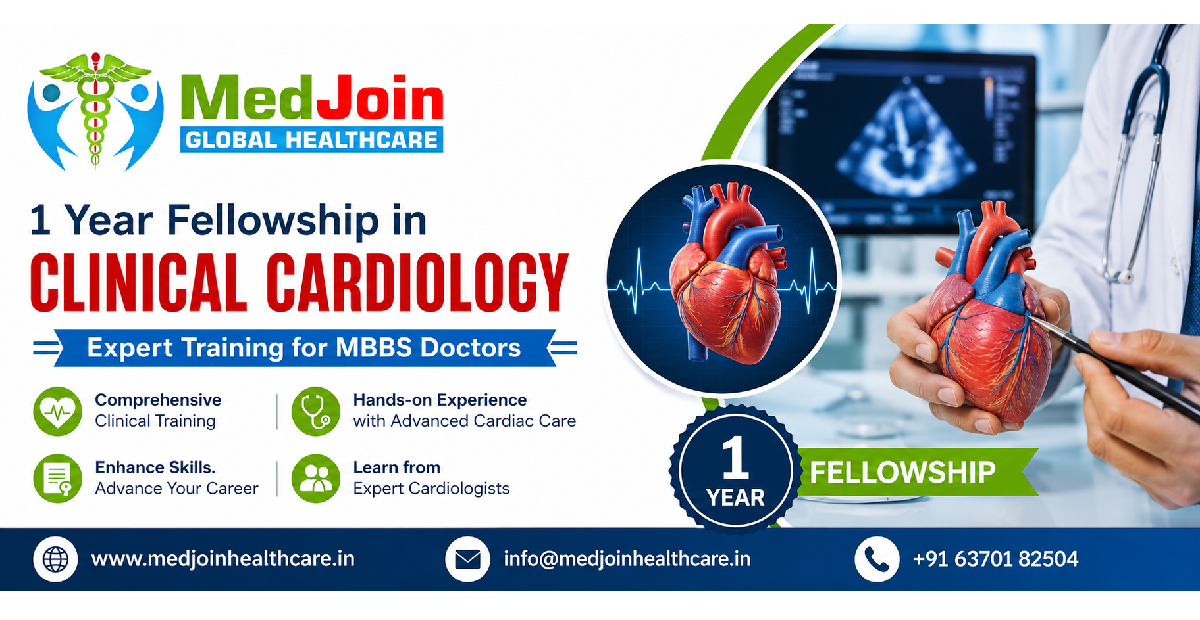
A 1-Year Fellowship in Clinical Cardiology is designed to bridge this gap. It provides structured academic learning, practical hospital-based exposure, case discussions, diagnostic training, and mentorship from experienced clinicians. The program equips MBBS doctors with the knowledge and confidence required to diagnose, manage, and prevent cardiovascular diseases in diverse healthcare settings.
Whether you aspire to work in multispecialty hospitals, cardiac care units, emergency departments, primary care, or establish your own clinical practice, this fellowship helps you develop the competencies needed to deliver high-quality cardiovascular care.
Why Clinical Cardiology Matters More Than Ever
Cardiovascular disease is no longer confined to older adults. Increasingly, younger individuals are presenting with hypertension, diabetes, obesity, and premature coronary artery disease due to sedentary lifestyles, unhealthy dietary habits, smoking, alcohol consumption, chronic stress, and inadequate physical activity.
Heart disease encompasses a broad spectrum of conditions, including:
- Coronary artery disease
- Acute coronary syndrome
- Hypertension
- Heart failure
- Cardiac arrhythmias
- Valvular heart disease
- Congenital heart disease
- Cardiomyopathies
- Pericardial diseases
- Pulmonary hypertension
- Peripheral vascular disease
Managing these conditions requires more than textbook knowledge. Physicians must recognize subtle clinical signs, interpret investigations accurately, prioritize treatment, communicate effectively with patients and families, and coordinate multidisciplinary care.
Clinical cardiology therefore plays a central role in improving patient outcomes, reducing complications, and promoting preventive healthcare.
Growing Burden of Cardiovascular Diseases in India
India is witnessing a rapid epidemiological transition. While infectious diseases remain important, non-communicable diseases now account for the majority of adult mortality. Cardiovascular disease contributes significantly to this burden and affects individuals across urban and rural populations.
Several factors contribute to this increasing prevalence:
- Rapid urbanization
- High prevalence of diabetes
- Rising obesity rates
- Tobacco consumption
- Physical inactivity
- High-salt diets
- Dyslipidemia
- Psychological stress
- Environmental pollution
- Genetic predisposition among South Asians
This growing disease burden has increased the demand for physicians who possess specialized skills in cardiac diagnosis, risk assessment, emergency stabilization, and long-term disease management.
Why MBBS Doctors Should Pursue a Fellowship Instead of Waiting
Many MBBS graduates aspire to specialize but face challenges such as limited postgraduate seats, competitive entrance examinations, or the desire to gain practical experience before pursuing higher studies.
A fellowship offers several advantages:
1. Early Skill Development
Instead of waiting years, doctors begin acquiring specialty-specific clinical competencies immediately after MBBS.
2. Better Clinical Confidence
Structured training improves decision-making, diagnostic reasoning, and patient management.
3. Enhanced Employability
Hospitals increasingly value physicians with focused training in high-demand specialties.
4. Career Differentiation
Specialized fellowships help doctors stand out in a competitive healthcare environment.
5. Better Patient Care
Advanced knowledge translates into improved diagnosis, evidence-based treatment, and better patient outcomes.
What Is Clinical Cardiology?
Clinical cardiology focuses on the diagnosis, treatment, prevention, and long-term management of cardiovascular diseases using medical rather than primarily procedural approaches.
A clinical cardiologist evaluates patients with symptoms such as:
- Chest pain
- Palpitations
- Breathlessness
- Syncope
- Edema
- Fatigue
- Hypertension
- Heart murmurs
Responsibilities include:
- Detailed clinical history taking
- Cardiovascular examination
- ECG interpretation
- Reviewing laboratory investigations
- Assessing imaging findings
- Risk stratification
- Initiating pharmacological treatment
- Lifestyle counseling
- Monitoring chronic cardiac conditions
- Coordinating referrals for interventional procedures when required
Clinical cardiology forms the backbone of cardiovascular healthcare and complements interventional cardiology and cardiac surgery.
Objectives of the Fellowship
The primary goal is to develop physicians capable of delivering evidence-based cardiovascular care.
Participants learn:
- Cardiac anatomy
- Cardiac physiology
- Cardiac pharmacology
- Clinical examination
- Cardiac emergencies
- Diagnostic cardiology
- Preventive cardiology
- Cardiac rehabilitation
The curriculum emphasizes practical patient management rather than theoretical learning alone.
Who Should Join?
This fellowship is ideal for:
MBBS Graduates
Doctors seeking specialization without waiting for postgraduate admissions.
General Physicians
Physicians wishing to strengthen their cardiac management skills.
Hospital Medical Officers
Doctors working in emergency departments and ICUs.
Family Physicians
Doctors managing chronic diseases in community settings.
Rural Healthcare Practitioners
Doctors frequently treating cardiovascular emergencies.
Eligibility
Typical eligibility includes:
- MBBS degree
- Medical registration
- Internship completion
- Passion for cardiovascular medicine
Some institutions may also consider equivalent qualifications recognized by the medical council.
Duration of the Fellowship
The fellowship typically lasts:
12 Months
The curriculum combines:
- Online academic learning
- Classroom sessions
- Clinical postings
- Hospital rotations
- Case discussions
- Live demonstrations
- Assessments
- Research activities
Curriculum Overview
The fellowship covers every major aspect of clinical cardiology.
Module 1: Cardiac Anatomy
Topics include:
- Cardiac chambers
- Coronary circulation
- Valves
- Conducting system
- Great vessels
Understanding anatomy forms the basis for accurate diagnosis.
Module 2: Cardiac Physiology
Students learn:
- Cardiac cycle
- Hemodynamics
- Blood pressure regulation
- Electrical conduction
- Cardiac output
- Oxygen delivery
Module 3: Cardiac Pharmacology
Important medications include:
- Antiplatelets
- Anticoagulants
- Beta blockers
- ACE inhibitors
- ARBs
- Calcium channel blockers
- Diuretics
- Statins
- Antiarrhythmics
Doctors learn evidence-based prescribing practices.
Module 4: Clinical Cardiac Examination
Hands-on training includes:
- Pulse examination
- Jugular venous pressure
- Heart sounds
- Murmurs
- Peripheral vascular examination
- Blood pressure assessment
Strong clinical examination skills remain invaluable despite technological advances.
Module 5: Electrocardiography (ECG)
One of the most important components of the fellowship.
Participants master:
- ECG fundamentals
- Rhythm analysis
- Axis deviation
- Chamber enlargement
- Bundle branch blocks
- Myocardial infarction patterns
- Electrolyte abnormalities
- Drug-induced ECG changes
Regular ECG interpretation significantly enhances diagnostic confidence.
Benefits of Pursuing the Fellowship
Graduates gain:
- Advanced cardiovascular knowledge
- Improved diagnostic accuracy
- Better patient outcomes
- Increased confidence in emergency situations
- Enhanced employability
- Career advancement opportunities
- Greater earning potential
- Recognition as a skilled clinician
A 1-Year Fellowship in Clinical Cardiology is an excellent career investment for MBBS doctors seeking to specialize in one of the most in-demand fields of medicine. With cardiovascular diseases continuing to rise globally, healthcare systems require physicians who can accurately diagnose, manage, and prevent heart-related conditions.
Through comprehensive academic instruction, practical clinical exposure, and mentorship from experienced cardiologists, this fellowship empowers doctors to deliver high-quality cardiac care while opening doors to rewarding career opportunities in hospitals, cardiac centers, emergency medicine, and primary care.
The field of cardiovascular medicine continues to evolve with advances in imaging, pharmacotherapy, digital health, artificial intelligence, and precision medicine. Physicians who invest in continuous education remain well-positioned to adapt to these changes and provide high-quality care.
A structured fellowship offers not only specialized knowledge but also the discipline of lifelong learning that defines successful medical professionals.