
Hepatology is one of the most rapidly evolving areas of modern medicine. With the growing burden of fatty liver disease, viral hepatitis, alcohol-associated liver disease, cirrhosis, portal hypertension, liver failure, and hepatobiliary disorders, healthcare systems increasingly need doctors who understand the diagnosis, evaluation, treatment, and long-term management of patients with liver diseases.
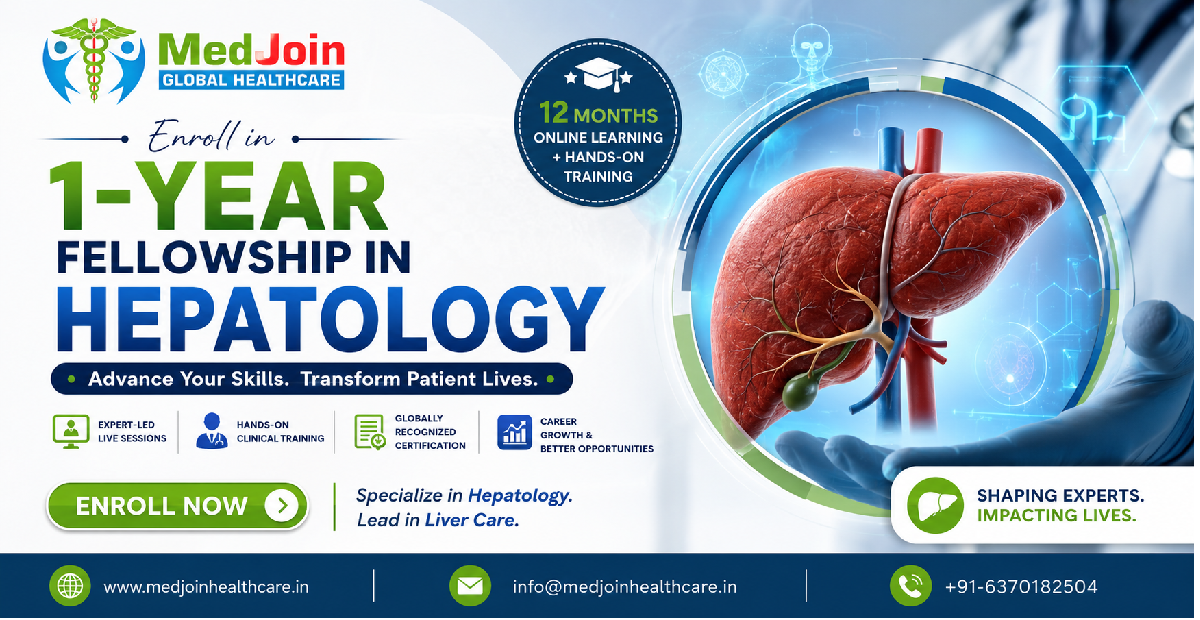
For MBBS doctors and other eligible medical professionals who want to expand their clinical knowledge, a structured 1-Year Fellowship in Hepatology can be an excellent opportunity to develop focused expertise in liver and hepatobiliary medicine.
A fellowship provides an opportunity to move beyond general medical knowledge and develop a deeper understanding of a specialized clinical area. Through structured academic learning, case-based education, clinical discussions, diagnostic interpretation, and practical exposure where applicable, learners can build confidence in approaching common and complex hepatology cases.
If you are looking to strengthen your medical profile, expand your clinical skill set, and develop specialized knowledge in liver medicine, it may be the right time to enroll in a 1-Year Fellowship in Hepatology and take the next step toward your professional goals.
Hepatology is the branch of medicine focused on the liver, biliary system, and related disorders. The liver performs hundreds of essential functions, including metabolism, detoxification, synthesis of proteins, regulation of glucose and lipids, bile production, storage of nutrients, and immune functions.
Because of the liver's central role in maintaining physiological balance, liver disorders can affect almost every organ system.
Hepatology therefore requires an integrated understanding of internal medicine, gastroenterology, infectious diseases, endocrinology, nutrition, oncology, radiology, pathology, critical care, and transplantation medicine.
A doctor who develops a focused understanding of hepatology can become better equipped to recognize early liver disease, interpret laboratory findings, identify patients at risk of complications, and understand when specialist referral or advanced intervention may be required.
A 1-Year Fellowship in Hepatology can provide a structured pathway for doctors who want to gain specialized knowledge without necessarily pursuing a lengthy conventional specialty training route.
Why Hepatology Is an Important Medical Specialty
Liver disease can remain silent for years. Many patients have few or no symptoms during the early stages of disease. By the time symptoms such as jaundice, abdominal swelling, gastrointestinal bleeding, confusion, or severe weakness appear, significant liver damage may already have occurred.
This makes early recognition particularly important.
Common conditions encountered in hepatology include:
- Fatty liver disease
- Viral hepatitis
- Alcohol-associated liver disease
- Cirrhosis
- Portal hypertension
- Ascites
- Hepatic encephalopathy
- Variceal bleeding
- Drug-induced liver injury
- Autoimmune liver disease
- Cholestatic disorders
- Liver tumors
- Acute liver failure
- Liver-related complications of systemic diseases
The increasing overlap between liver disease, obesity, diabetes, metabolic syndrome, cardiovascular disease, and other chronic conditions further emphasizes the importance of hepatology knowledge for modern physicians.
What Is a Fellowship in Hepatology?
A fellowship is a focused educational program designed to provide advanced knowledge and skills in a specific area of medicine.
A 1-Year Fellowship in Hepatology is designed to provide structured education in the evaluation and management of liver and hepatobiliary disorders.
Depending on the program structure, learning may include:
- Online or classroom-based academic sessions
- Recorded lectures
- Case-based learning
- Clinical discussions
- Reading assignments
- Diagnostic interpretation
- Live interactive sessions
- Practical exposure
- Hospital-based clinical training
- Assignments and assessments
- Expert-led discussions
The precise curriculum, clinical exposure, assessment system, eligibility criteria, certification, and accreditation should always be reviewed with the individual fellowship provider before enrollment.
The objective is not simply to memorize diseases. Instead, the goal is to develop a systematic clinical approach.
Why Choose a 1-Year Fellowship in Hepatology?
A focused one-year program can be attractive to doctors who want structured specialization within a manageable timeframe.
Develop specialized knowledge
A fellowship allows learners to focus specifically on liver medicine rather than studying a broad range of unrelated medical topics.
Improve clinical confidence
Repeated exposure to hepatology cases can help doctors develop a more organized approach to liver-related presentations.
Understand diagnostic investigations
Doctors can strengthen their ability to interpret liver function tests, viral markers, imaging, fibrosis assessments, and other investigations.
Learn complication management
Advanced liver disease can produce multiple complications. A structured fellowship can help learners understand the principles behind recognizing and managing these conditions.
Expand professional opportunities
Specialized knowledge may help doctors develop professional roles in hospitals, clinics, healthcare organizations, teaching, academic activities, and other appropriate settings, depending on their qualifications and local regulations.
Continue learning while working
Programs offering flexible or online components can make continuing education more practical for working doctors.
Fundamentals of Liver Anatomy and Physiology
Understanding liver disease begins with a strong foundation in anatomy and physiology.
The liver is divided anatomically into right and left lobes and has a complex vascular supply involving the hepatic artery and portal vein. Venous blood leaves the liver through the hepatic veins and enters the inferior vena cava.
The liver performs several major functions:
- Protein synthesis
- Bile production
- Carbohydrate metabolism
- Lipid metabolism
- Protein metabolism
- Drug metabolism
- Hormonal metabolism
- Detoxification
- Storage of vitamins and minerals
- Immune surveillance
The liver's regenerative capacity is remarkable, but chronic injury can lead to fibrosis and eventually cirrhosis.
Understanding these mechanisms helps physicians understand why liver disease produces abnormalities across multiple organ systems.
Understanding Liver Function Tests
Liver blood tests are among the most frequently used investigations in clinical practice.
Important parameters include:
- Alanine aminotransferase
- Aspartate aminotransferase
- Alkaline phosphatase
- Gamma-glutamyl transferase
- Bilirubin
- Albumin
- Prothrombin time/INR
A critical concept in hepatology is that abnormal liver enzymes do not always indicate impaired liver function.
For example, aminotransferases primarily reflect hepatocellular injury, while albumin and coagulation parameters provide information related to hepatic synthetic function.
A structured approach to liver tests can help physicians differentiate:
- Hepatocellular patterns
- Cholestatic patterns
- Mixed patterns
- Isolated bilirubin abnormalities
- Synthetic dysfunction
This is an essential component of hepatology practice.
Approach to Abnormal Liver Enzymes
When abnormal liver enzymes are identified, physicians should avoid interpreting a single laboratory value in isolation.
A systematic evaluation may include:
- Confirming the abnormality
- Reviewing previous results
- Assessing symptoms
- Reviewing medications
- Evaluating alcohol exposure
- Considering metabolic risk factors
- Screening for viral hepatitis
- Considering autoimmune disease
- Assessing iron and copper metabolism when appropriate
- Performing imaging when indicated
- Evaluating fibrosis risk
The patient's history and clinical context are essential.
A fellowship can help doctors develop structured diagnostic algorithms that can be applied consistently in clinical practice.
Viral Hepatitis
Viral hepatitis remains an important cause of acute and chronic liver disease worldwide.
Major hepatotropic viruses include:
- Hepatitis A virus
- Hepatitis B virus
- Hepatitis C virus
- Hepatitis D virus
- Hepatitis E virus
The clinical course varies considerably.
Some infections primarily produce acute hepatitis, while others may lead to chronic infection, fibrosis, cirrhosis, and hepatocellular carcinoma.
Doctors need to understand:
- Transmission
- Screening
- Serology
- Natural history
- Antiviral therapy
- Prevention
- Vaccination
- Monitoring
- Long-term complications
Hepatitis A
Hepatitis A is generally transmitted through the fecal-oral route.
It commonly produces an acute illness that may include:
- Fatigue
- Nausea
- Vomiting
- Abdominal discomfort
- Fever
- Dark urine
- Jaundice
Unlike hepatitis B and C, hepatitis A does not typically produce chronic infection.
Management is primarily supportive, with emphasis on prevention and vaccination where appropriate.
A hepatology curriculum should help physicians understand diagnosis, risk assessment, prevention, and recognition of severe disease.
Hepatitis B
Hepatitis B is a major global cause of chronic liver disease.
The clinical spectrum ranges from asymptomatic infection to:
- Acute hepatitis
- Chronic hepatitis
- Cirrhosis
- Liver failure
- Hepatocellular carcinoma
Evaluation requires understanding serological markers and viral replication.
Important markers include:
- HBsAg
- Anti-HBs
- Anti-HBc
- HBeAg
- Anti-HBe
- HBV DNA
Understanding the interpretation of hepatitis B serology is a key skill for clinicians.
Long-term management requires risk assessment and appropriate monitoring.
Hepatitis C
Hepatitis C can cause chronic infection and progressive liver damage.
Many patients may remain asymptomatic for years.
Modern direct-acting antiviral therapies have transformed hepatitis C treatment, making cure possible for most appropriately treated patients.
Doctors should understand:
- Screening
- Antibody testing
- Confirmatory viral RNA testing
- Disease staging
- Treatment principles
- Drug interactions
- Follow-up
- Management of patients with advanced liver disease
A fellowship can help doctors understand how hepatitis C fits into the broader spectrum of chronic liver disease.
Hepatitis D and E
Hepatitis D is associated with hepatitis B infection and can contribute to severe liver disease.
Hepatitis E is generally associated with acute hepatitis and is commonly transmitted through contaminated food or water, although transmission patterns vary.
Special populations may experience more severe disease.
Understanding epidemiology and risk factors helps physicians identify patients who require additional investigation and management.
Metabolic Dysfunction-Associated Steatotic Liver Disease
Metabolic dysfunction-associated steatotic liver disease, commonly abbreviated as MASLD, has become an increasingly important area of hepatology.
It is strongly associated with metabolic risk factors such as:
- Obesity
- Type 2 diabetes
- Dyslipidemia
- Hypertension
- Insulin resistance
The disease spectrum can range from hepatic steatosis to inflammatory liver injury and progressive fibrosis.
The major clinical challenge is identifying patients who are at increased risk of advanced fibrosis.
A modern hepatology fellowship should therefore cover:
- Metabolic risk assessment
- Liver enzymes
- Imaging
- Non-invasive fibrosis assessment
- Lifestyle management
- Weight management
- Diabetes management
- Cardiovascular risk
- Long-term monitoring
Alcohol-Associated Liver Disease
Alcohol-associated liver disease encompasses a broad clinical spectrum.
It may include:
- Alcohol-associated steatosis
- Alcohol-associated hepatitis
- Alcohol-associated cirrhosis
Assessment requires sensitivity and a non-judgmental approach.
Doctors should understand alcohol history, nutritional status, withdrawal risk, liver disease severity, and psychosocial factors.
Management may involve multidisciplinary care.
Drug-Induced Liver Injury
Drug-induced liver injury, or DILI, can occur because of medications, herbal products, supplements, or other substances.
Recognizing DILI can be challenging because its presentation may mimic other liver diseases.
A systematic approach includes:
- Detailed medication history
- Timing of exposure
- Pattern of liver injury
- Exclusion of competing diagnoses
- Assessment of severity
- Discontinuation of the suspected agent when appropriate
A fellowship provides an opportunity to study the diagnostic complexity of DILI.
Autoimmune Liver Diseases
Autoimmune liver diseases include conditions such as:
- Autoimmune hepatitis
- Primary biliary cholangitis
- Primary sclerosing cholangitis
These conditions require integration of clinical findings, laboratory tests, autoantibodies, imaging, and sometimes histology.
Understanding these diseases helps physicians differentiate autoimmune disorders from viral, metabolic, toxic, and obstructive causes of liver injury.
Hemochromatosis
Hemochromatosis is associated with excessive iron accumulation.
Potential consequences include:
- Liver fibrosis
- Cirrhosis
- Diabetes
- Cardiac disease
- Joint problems
- Endocrine abnormalities
Evaluation may include iron studies and genetic assessment in appropriate circumstances.
Early recognition can help prevent complications.
Wilson Disease
Wilson disease is a disorder of copper metabolism.
It can present with:
- Liver disease
- Neurological manifestations
- Psychiatric symptoms
- Hemolysis
Because it can affect younger individuals and mimic other liver disorders, awareness is important.
A structured fellowship can help doctors recognize clinical clues and understand the principles of diagnostic evaluation.
Alpha-1 Antitrypsin Deficiency
Alpha-1 antitrypsin deficiency can cause both pulmonary and hepatic disease.
Liver involvement can range from abnormal liver tests to cirrhosis and hepatocellular carcinoma in selected patients.
Understanding genetic and metabolic causes of liver disease broadens the physician's diagnostic approach.
Cirrhosis of the Liver
Cirrhosis represents advanced chronic liver disease characterized by fibrosis and architectural distortion.
It may result from:
- Viral hepatitis
- Metabolic liver disease
- Alcohol-associated liver disease
- Autoimmune disease
- Cholestatic disease
- Genetic/metabolic disorders
- Other chronic liver injuries
Cirrhosis can be compensated or decompensated.
Major complications include:
- Ascites
- Variceal bleeding
- Hepatic encephalopathy
- Spontaneous bacterial peritonitis
- Hepatorenal syndrome
- Hepatocellular carcinoma
- Coagulopathy
- Malnutrition
Understanding the transition from compensated to decompensated disease is fundamental to hepatology.
Portal Hypertension
Portal hypertension develops when resistance to portal blood flow increases.
Cirrhosis is a major cause.
Consequences can include:
- Esophageal varices
- Gastric varices
- Splenomegaly
- Thrombocytopenia
- Ascites
- Portosystemic collaterals
Doctors should understand the pathophysiology and clinical implications of portal hypertension.
Esophageal and Gastric Varices
Varices develop because of increased portal pressure and collateral blood flow.
Variceal bleeding is a potentially life-threatening complication of portal hypertension.
A hepatology fellowship should cover:
- Risk assessment
- Screening
- Primary prevention
- Recognition of bleeding
- Resuscitation principles
- Endoscopic management
- Pharmacological approaches
- Secondary prevention
Knowledge of emergency management is particularly important for clinicians working in hospital settings.
Ascites
Ascites is one of the most common complications of advanced cirrhosis.
Evaluation may involve:
- Physical examination
- Ultrasound
- Diagnostic paracentesis
- Ascitic fluid analysis
Management depends on severity and underlying cause.
Doctors should understand concepts such as:
- Sodium restriction
- Diuretics
- Therapeutic paracentesis
- Albumin use in selected situations
- Refractory ascites
- Infection assessment
Spontaneous Bacterial Peritonitis
Spontaneous bacterial peritonitis is an important complication of cirrhosis with ascites.
Patients may present with:
- Fever
- Abdominal pain
- Altered mental status
- Renal dysfunction
- Hypotension
However, symptoms can be subtle.
This makes appropriate clinical suspicion and timely diagnostic paracentesis essential in relevant patients.
Hepatic Encephalopathy
Hepatic encephalopathy refers to neurological dysfunction associated with liver disease and portosystemic shunting.
Clinical manifestations may range from subtle cognitive changes to severe altered consciousness.
Potential precipitating factors include:
- Infection
- Gastrointestinal bleeding
- Constipation
- Electrolyte abnormalities
- Dehydration
- Renal dysfunction
- Medication effects
A fellowship should teach doctors to identify precipitating factors and understand management principles.
Hepatorenal Syndrome
Hepatorenal syndrome is a serious complication of advanced liver disease characterized by renal dysfunction in the setting of severe circulatory abnormalities associated with liver failure.
Early recognition is important.
Management requires careful assessment of:
- Volume status
- Infection
- Kidney function
- Medications
- Circulatory status
Severe cases may require specialized therapies and consideration of transplantation.
Hepatopulmonary Syndrome
Hepatopulmonary syndrome involves pulmonary vascular abnormalities associated with liver disease and can lead to impaired oxygenation.
Patients may present with:
- Breathlessness
- Low oxygen saturation
- Exercise intolerance
Recognition requires awareness of the association between advanced liver disease and pulmonary complications.
Acute Liver Failure
Acute liver failure is a medical emergency.
It can result from:
- Drug toxicity
- Viral infections
- Autoimmune hepatitis
- Vascular causes
- Metabolic conditions
- Other causes
Patients may develop:
- Jaundice
- Coagulopathy
- Encephalopathy
- Hypoglycemia
- Cerebral edema
- Multiorgan dysfunction
Early identification and referral to an appropriate specialist or transplant center may be critical.
Acute-on-Chronic Liver Failure
Acute-on-chronic liver failure occurs when a patient with chronic liver disease develops an acute insult leading to rapid deterioration and potentially multiorgan failure.
Potential triggers include:
- Infection
- Alcohol-associated hepatitis
- Gastrointestinal bleeding
- Viral infections
- Drug toxicity
- Other acute insults
Management requires rapid identification of the precipitating event and coordinated multidisciplinary care.
Liver Fibrosis and Fibrosis Assessment
Fibrosis assessment is essential for determining the severity of chronic liver disease.
Traditional approaches include liver biopsy, while modern practice increasingly incorporates non-invasive methods.
These may include:
- Serum-based fibrosis scores
- Elastography
- Ultrasound-based techniques
- Other validated non-invasive assessments
The goal is to identify patients at low, intermediate, or high risk of advanced fibrosis and determine appropriate follow-up.
Liver Imaging
Imaging plays a major role in hepatology.
Common imaging modalities include:
- Ultrasound
- Doppler ultrasound
- Elastography
- CT
- MRI
Imaging can help evaluate:
- Steatosis
- Fibrosis
- Cirrhosis
- Portal hypertension
- Focal liver lesions
- Biliary abnormalities
- Vascular abnormalities
Doctors should understand the clinical indications and basic interpretation principles of these investigations.
Abdominal Ultrasound
Ultrasound is commonly used as an initial imaging modality for liver disease.
It can help evaluate:
- Liver size
- Liver echotexture
- Steatosis
- Focal lesions
- Biliary dilation
- Gallbladder pathology
- Portal vein
- Splenic enlargement
- Ascites
Its accessibility makes it particularly valuable in routine clinical practice.
Elastography and FibroScan
Liver stiffness measurement provides a non-invasive method for assessing fibrosis.
Elastography can be particularly useful in chronic liver disease because it can reduce reliance on invasive procedures in appropriately selected patients.
A fellowship may introduce doctors to:
- Indications
- Patient preparation
- Basic principles
- Interpretation
- Limitations
- Clinical integration
CT and MRI in Hepatology
CT and MRI offer more detailed anatomical assessment.
They can be used for evaluation of:
- Liver masses
- Vascular anatomy
- Portal hypertension
- Complications of cirrhosis
- Biliary disorders
- Hepatocellular carcinoma
- Preoperative and transplant assessment
Doctors should understand when advanced imaging is appropriate and how to correlate imaging findings with clinical data.
Endoscopy in Liver Disease
Endoscopy has an important role in advanced liver disease.
It can help diagnose and treat:
- Esophageal varices
- Gastric varices
- Upper gastrointestinal bleeding
- Other gastrointestinal pathology
Understanding the relationship between portal hypertension and endoscopic findings is important for hepatology practice.
Hepatocellular Carcinoma
Hepatocellular carcinoma is the most common primary malignant tumor of the liver.
Patients with cirrhosis and certain chronic liver diseases may be at increased risk.
Hepatology training should cover:
- Risk factors
- Surveillance principles
- Imaging
- Tumor staging
- Multidisciplinary management
- Locoregional therapies
- Surgical options
- Systemic treatment principles
- Transplant evaluation
Early detection can influence treatment options and outcomes.
Cholestatic Liver Diseases
Cholestasis refers to impaired bile formation or flow.
Patients may present with:
- Jaundice
- Pruritus
- Dark urine
- Pale stools
- Elevated alkaline phosphatase
- Elevated bilirubin
Evaluation involves distinguishing intrahepatic from extrahepatic causes.
Imaging and laboratory evaluation are important components of the diagnostic process.
Primary Biliary Cholangitis
Primary biliary cholangitis is a chronic autoimmune cholestatic liver disease that primarily affects the small intrahepatic bile ducts.
Patients may present with:
- Fatigue
- Pruritus
- Abnormal liver tests
Long-term disease can lead to fibrosis and cirrhosis.
Doctors should understand diagnosis, monitoring, treatment principles, and associated complications.
Primary Sclerosing Cholangitis
Primary sclerosing cholangitis is characterized by inflammation and fibrosis of the bile ducts.
It may involve both intrahepatic and extrahepatic bile ducts.
Clinical management often requires:
- Biochemical monitoring
- Imaging
- Assessment of strictures
- Evaluation of associated disease
- Cancer surveillance where appropriate
- Transplant assessment in advanced disease
Gallbladder and Biliary Disorders
Hepatology overlaps significantly with biliary medicine.
Important disorders include:
- Gallstones
- Cholecystitis
- Choledocholithiasis
- Biliary obstruction
- Cholangitis
- Biliary strictures
Understanding these conditions helps doctors recognize when hepatobiliary symptoms require urgent evaluation.
Pancreaticobiliary Disorders
The liver, gallbladder, bile ducts, and pancreas form an interconnected system.
Doctors working in hepatology benefit from understanding pancreaticobiliary diseases because clinical presentations can overlap.
Conditions may include:
- Pancreatitis
- Biliary obstruction
- Pancreaticobiliary malignancies
- Bile duct strictures
- Ampullary disorders
Advanced training may also introduce learners to procedures such as ERCP and endoscopic ultrasound within the appropriate clinical context.
Liver Biopsy
Liver biopsy remains useful in selected situations.
It can provide information about:
- Inflammation
- Fibrosis
- Steatohepatitis
- Autoimmune disease
- Infiltrative disease
- Uncertain diagnoses
However, biopsy is invasive and must be considered alongside non-invasive diagnostic options.
A fellowship can help physicians understand indications, contraindications, complications, and interpretation principles.
Nutritional Management in Liver Disease
Nutrition is an essential component of hepatology.
Patients with chronic liver disease may develop:
- Malnutrition
- Sarcopenia
- Micronutrient deficiencies
- Obesity
- Altered energy metabolism
Nutritional management must be individualized.
Doctors should understand:
- Protein requirements
- Energy requirements
- Sodium restriction when indicated
- Management of obesity
- Diabetes and metabolic risk
- Alcohol cessation
- Nutritional support in advanced disease
Pharmacology in Hepatology
The liver is central to drug metabolism.
Therefore, medication selection and dosing require careful consideration in patients with liver disease.
Doctors should understand:
- Hepatotoxic medications
- Drug interactions
- Dose adjustments
- Antiviral medications
- Diuretics
- Lactulose and other therapies used in hepatic encephalopathy
- Medications used in portal hypertension
- Immunosuppressive therapies
- Emerging liver-directed therapies
Medication review should be part of every comprehensive liver assessment.
Management of Complications of Cirrhosis
A major focus of hepatology is preventing and managing complications.
These include:
Ascites
Recognize severity and evaluate for infection.
Variceal bleeding
Requires urgent resuscitation and appropriate medical and endoscopic management.
Hepatic encephalopathy
Identify and treat precipitating factors.
Renal dysfunction
Assess volume status, medications, infection, and causes of kidney injury.
Hepatocellular carcinoma
Follow appropriate surveillance strategies for at-risk patients.
Malnutrition
Address dietary and nutritional needs.
Infections
Recognize the increased susceptibility of advanced liver disease patients.
Liver Transplantation
Liver transplantation is an important treatment option for selected patients with advanced liver disease and certain liver cancers.
A hepatology fellowship should introduce doctors to:
- Indications
- Referral criteria
- Pre-transplant evaluation
- Severity assessment
- Contraindications
- Donor considerations
- Post-transplant monitoring
- Immunosuppression
- Complications
Understanding when to refer a patient for transplant evaluation is an important clinical skill.
Pre- and Post-Transplant Care
Patients undergoing liver transplantation require multidisciplinary management.
Areas of care include:
- Infection prevention
- Immunosuppression
- Renal function
- Metabolic health
- Nutrition
- Cardiovascular risk
- Graft function
- Medication interactions
- Malignancy surveillance
Although transplantation is highly specialized, a hepatology fellowship can provide an important conceptual foundation.
Role of Technology in Modern Hepatology
Technology has transformed hepatology.
Modern clinical practice increasingly incorporates:
- Electronic medical records
- Digital imaging
- Elastography
- Telemedicine
- Clinical decision-support systems
- Digital patient monitoring
- Artificial intelligence
- Data analytics
Technology can support clinicians, but clinical judgment remains essential.
Doctors should understand both the benefits and limitations of technology-based healthcare.
Career Opportunities After Hepatology Training
Completing a fellowship may help doctors strengthen their professional profile and develop focused expertise.
Potential professional areas may include:
- Hospitals
- Clinics
- Primary care practices
- Liver-focused healthcare services
- Gastroenterology support services
- Academic activities
- Medical education
- Clinical research
- Healthcare organizations
- Patient counseling and preventive care
Career opportunities depend on the doctor's primary qualification, registration, experience, local regulations, employer requirements, and the recognition/status of the fellowship.
A fellowship should complement—not be misrepresented as replacing—specialist medical qualifications where specialist licensure is required.
Building a Professional Medical Profile
In today's competitive healthcare environment, continuous education can help doctors demonstrate commitment to professional development.
A structured fellowship may add value by providing:
- Focused academic learning
- Structured curriculum
- Assessments
- Case discussions
- Continuing education
- Specialized subject knowledge
Doctors should present qualifications accurately and transparently on professional profiles and resumes.
Why Choose a Structured 1-Year Program?
A structured one-year program can provide continuity.
Instead of studying isolated topics, learners can progress from:
Fundamentals → Diagnosis → Disease Management → Complications → Advanced Hepatology → Case-Based Learning
This progression can make learning more organized.
A year-long format also provides time to revisit difficult concepts and gradually build expertise.
Future of Hepatology
The future of hepatology is likely to be shaped by advances in:
- Precision medicine
- Non-invasive diagnostics
- Artificial intelligence
- Digital health
- New antiviral therapies
- Metabolic disease treatment
- Cancer therapeutics
- Transplant medicine
- Regenerative medicine
As liver disease becomes increasingly connected with metabolic health, endocrinology, oncology, and preventive medicine, multidisciplinary care will become even more important.
Doctors who develop focused hepatology knowledge can position themselves to participate in this evolving field.
Shine Your Career with Specialized Hepatology Knowledge
Your medical career does not stop after obtaining your primary medical qualification.
Medicine continues to evolve, and doctors who continue learning can remain better prepared to address changing patient needs.
Liver disease is no longer viewed as a narrow specialty concern. It intersects with diabetes, obesity, cardiovascular health, infectious disease, oncology, nutrition, critical care, and transplantation.
This makes hepatology an increasingly valuable area of focused medical education.
A 1-Year Fellowship in Hepatology can provide a structured learning pathway for doctors who want to understand the liver in greater depth.
From interpreting liver function tests to understanding advanced cirrhosis, from viral hepatitis to metabolic liver disease, from portal hypertension to liver cancer, the field offers an extensive and intellectually rewarding learning journey.
Take the Next Step Toward Your Professional Goals
If you are an eligible doctor seeking specialized knowledge in liver medicine, a 1-Year Fellowship in Hepatology can offer a structured educational pathway.
It can help you explore the complete spectrum of liver disease—from common abnormalities in liver enzymes to advanced cirrhosis and transplantation.
You can learn through a combination of:
- Structured modules
- Expert-led lectures
- Case-based learning
- Clinical discussions
- Diagnostic interpretation
- Practical exposure where available
- Assignments
- Assessments
- Continuous learning
The knowledge you gain can become a valuable part of your broader medical education and professional development.
Enroll in a 1-Year Fellowship in Hepatology
Your medical qualification is the foundation. Continuous learning is the journey. Specialized knowledge can help shape the next stage of your career.
If hepatology is an area you want to explore, now is an opportunity to take a focused step toward your professional development and:
- Build focused knowledge in liver medicine
- Understand common and complex hepatobiliary disorders
- Strengthen your clinical reasoning
- Learn modern approaches to liver disease assessment
- Explore cirrhosis and its complications
- Understand viral and metabolic liver diseases
- Study liver imaging and fibrosis assessment
- Learn about hepatocellular carcinoma
- Explore transplantation and advanced hepatology
- Enhance your continuing medical education
Start your learning journey today. Explore the 1-Year Fellowship in Hepatology and take a confident step toward a more specialized medical career.
The liver is one of the most complex and important organs in the human body, and diseases affecting it can have consequences throughout the entire body.
For doctors, developing a deeper understanding of hepatology can improve the ability to recognize liver disease, interpret investigations, assess disease severity, identify complications, counsel patients, and coordinate appropriate care.
A 1-Year Fellowship in Hepatology offers an opportunity to study these areas systematically.
Whether your interest lies in viral hepatitis, metabolic liver disease, cirrhosis, portal hypertension, liver cancer, transplantation, or preventive hepatology, structured education can help you build a stronger foundation in this evolving field.
The future of healthcare belongs to professionals who continue to learn, adapt, and expand their knowledge.
Enroll in a 1-Year Fellowship in Hepatology, strengthen your expertise, expand your professional horizons, and take the next step in your medical career.
Begin Your Hepatology Journey Today
Learn. Develop. Apply. Grow.
Enroll in the 1-Year Fellowship in Hepatology and move toward a more focused future in liver medicine.