

We Build Building and Great Constructive Homes.
We successfully cope with tasks of varying complexity, provide long-term guarantees and regularly master new technologies.
Course Description
Advance Your Expertise in Liver Diseases and Hepatobiliary Care
The Fellowship in Hepatology is a specialized advanced medical education program designed for doctors who want to develop comprehensive knowledge and clinical skills in the diagnosis, management, and prevention of liver and hepatobiliary disorders. The program provides structured learning in modern hepatology, covering common liver diseases as well as complex and critically ill patients with advanced hepatic conditions.
The fellowship focuses on the practical application of evidence-based approaches to liver disease management. Participants gain knowledge of viral hepatitis, metabolic dysfunction-associated steatotic liver disease (MASLD), alcohol-associated liver disease, autoimmune liver diseases, cholestatic disorders, cirrhosis, portal hypertension, liver failure, and hepatobiliary malignancies.
Practical and Clinical Learning
The fellowship emphasizes clinical reasoning and decision-making through case-based learning, clinical discussions, diagnostic interpretation, treatment protocols, and contemporary management strategies. Where applicable, practical or hands-on exposure can help participants understand the workflow of hepatology clinics, inpatient liver care, diagnostic procedures, and management of patients with advanced liver disease.
Build Your Career in Hepatology
With the increasing burden of chronic liver disease, metabolic liver disease, viral hepatitis, cirrhosis, and liver cancer, specialized knowledge of hepatology can strengthen a physician's ability to provide comprehensive liver care. The fellowship is designed to enhance clinical knowledge, improve diagnostic confidence, and develop a structured approach to managing patients across different stages of liver disease.
Enroll in the Fellowship in Hepatology and advance your knowledge in modern liver disease management with structured, clinically oriented learning.
Hightlights
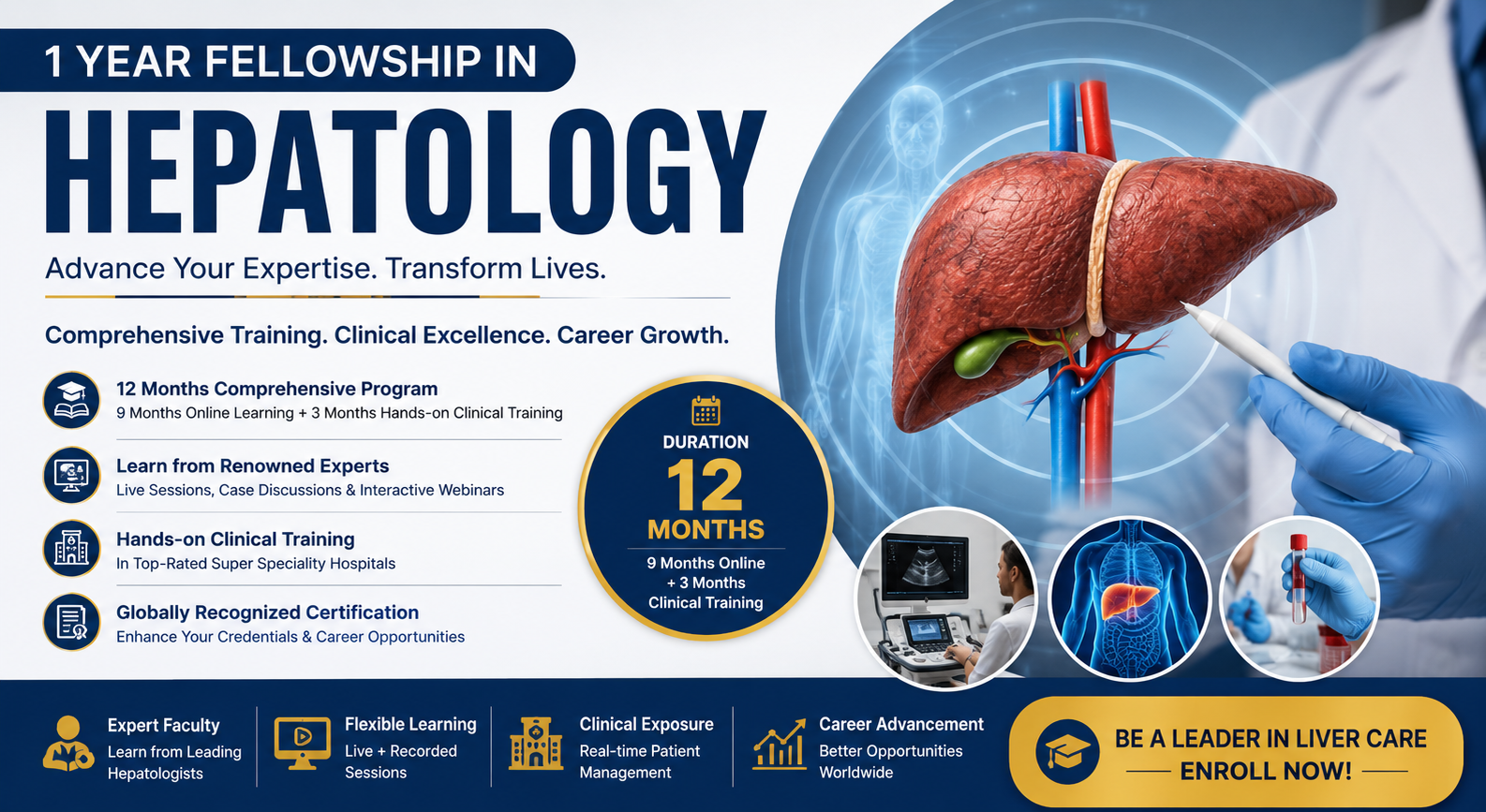
- 12 Months of online classes which includes 2-4 months of Clinical Observership in a leading hospital
- Classes by experienced faculties
- Flexible learning mode
- Live doubt clearing sessions
- Educator support through LMS
- Periodic Webinars
- Associated with UGC & GRADE NAAC A+ University
- Training with Reputed Hospital
What You’ll Learn
After completing a Fellowship in Hepatology, doctors can develop advanced knowledge and practical understanding of liver and hepatobiliary disorders. Key learning areas include:
- Comprehensive liver assessment – history taking, physical examination, laboratory interpretation, liver function tests, and risk assessment.
- Viral hepatitis – diagnosis and management of hepatitis A, B, C, D, and E, including treatment principles and monitoring.
- Chronic liver disease – evaluation and management of fatty liver disease, alcohol-associated liver disease, autoimmune liver diseases, and metabolic liver disorders.
- Cirrhosis and its complications – ascites, spontaneous bacterial peritonitis, hepatic encephalopathy, hepatorenal syndrome, and portal hypertension.
- Portal hypertension – assessment and management of esophageal and gastric varices, including principles of endoscopic and pharmacological therapy.
- Acute liver failure – recognition, initial stabilization, prognostic assessment, and principles of referral for liver transplantation.
- Hepatobiliary disorders – understanding diseases affecting the liver, gallbladder, bile ducts, and related structures.
- Liver imaging – interpretation of ultrasound, Doppler studies, CT, and MRI findings relevant to liver disease.
- Liver tumors – evaluation of hepatocellular carcinoma and other primary and metastatic liver malignancies.
- Liver transplantation – indications, pre-transplant evaluation, complications, post-transplant monitoring, and long-term care principles.
- Drug-induced liver injury – recognizing medication-related hepatotoxicity and evaluating abnormal liver enzymes.
- Nutritional management – nutritional assessment and dietary principles in cirrhosis, fatty liver disease, and other chronic liver disorders.
- Endoscopy in hepatology – understanding the role of upper GI endoscopy in variceal screening, diagnosis, and management.
- Liver biopsy – indications, basic interpretation, limitations, and clinical applications of histopathology.
- Non-invasive liver assessment – understanding fibrosis assessment using elastography and other non-invasive techniques.
- Hepatology emergencies – management principles for variceal bleeding, hepatic encephalopathy, acute-on-chronic liver failure, and severe liver injury.
- Clinical decision-making – developing evidence-based approaches to diagnosis, treatment planning, follow-up, and referral
Career-Oriented Learning
By the end of the fellowship, participants should have a stronger foundation to evaluate liver disease, interpret hepatology investigations, recognize complications early, formulate management plans, and coordinate multidisciplinary care.
Why Choose a Fellowship in Hepatology?
The program can help doctors strengthen their expertise in liver disease diagnosis, clinical assessment, treatment planning, complication management, and comprehensive hepatology care, supporting further professional development in this rapidly evolving field.
A Fellowship in Hepatology provides doctors with an opportunity to develop advanced knowledge of liver diseases and strengthen their clinical decision-making skills beyond basic medical education.
Course Highlight
Modules Comprehensive modules covering various aspects of nutrition & dietetics.
Assessments Quizzes, assignments to test your knowledge and skills.
Certification Certified Nutritionist credential upon completion.
Key Features
Advanced Hepatology Education
Comprehensive learning focused on liver, biliary, and hepatobiliary disorders.
Designed for MBBS Doctors
Builds advanced clinical knowledge after MBBS through structured fellowship-level education.
Comprehensive Liver Disease Curriculum
Covers hepatitis, fatty liver disease, cirrhosis, portal hypertension, liver failure, and hepatobiliary disorders.
Clinical Case-Based Learning
Learn through real-world clinical cases, diagnostic approaches, and treatment planning.
Liver Cancer
Learn the principles of screening, diagnosis, staging, and multidisciplinary management of hepatocellular carcinoma.
Liver Transplantation
Understanding indications, evaluation, complications, and post-transplant care.
Course Structure
1.1 Anatomy of the Liver
- Gross anatomy
- Hepatic lobules and acini
- Portal vein
- Hepatic artery
- Hepatic veins
- Biliary system
- Segmental anatomy
- Functional anatomy
1.2 Liver Physiology
- Carbohydrate metabolism
- Protein metabolism
- Lipid metabolism
- Bilirubin metabolism
- Bile formation
- Drug metabolism
- Detoxification
- Hormonal functions
- Immune functions
1.3 Hepatic Hemodynamics
- Portal circulation
- Portal pressure
- Hepatic vascular resistance
- Sinusoidal circulation
- Portosystemic collaterals
1.4 Pathophysiology
- Hepatocellular injury
- Cholestasis
- Inflammation
- Fibrogenesis
- Cirrhosis
- Regeneration
- Portal hypertension
2.1 History Taking
- Jaundice
- Fatigue
- Pruritus
- Abdominal distension
- Gastrointestinal bleeding
- Altered consciousness
- Weight loss
- Alcohol history
- Drug history
- Travel and exposure history
- Sexual and occupational risk assessment
- Family history
2.2 Physical Examination
- Jaundice
- Hepatomegaly
- Splenomegaly
- Ascites
- Peripheral edema
- Stigmata of chronic liver disease
- Encephalopathy
- Muscle wasting
- Signs of portal hypertension
2.3 Liver Biochemistry
- ALT
- AST
- ALP
- GGT
- Bilirubin
- Albumin
- Total protein
- PT/INR
2.4 Pattern Recognition
- Hepatocellular pattern
- Cholestatic pattern
- Mixed pattern
- Isolated hyperbilirubinemia
- 2.5 Disease Severity Scores
- Child–Pugh classification
- MELD
- MELD-Na
- Other validated prognostic tools
Hepatitis A
- Epidemiology
- Transmission
- Clinical manifestations
- Diagnosis
- Prevention
- Vaccination
- Management
Hepatitis B
- HBV structure and replication
- Transmission
- Serological markers
- Acute hepatitis B
- Chronic hepatitis B
- Inactive infection
- Immune-active disease
- Antiviral treatment principles
- Tenofovir-based therapy
- Entecavir
- Treatment monitoring
- Resistance
- HBV reactivation
- Hepatitis B vaccination
- Prevention of mother-to-child transmission
Hepatitis C
- HCV epidemiology
- Screening
- Anti-HCV antibody
- HCV RNA
- Genotype considerations
- Direct-acting antivirals
- Treatment principles
- Treatment monitoring
- SVR
- Reinfection
- Special populations
Hepatitis D
- HBV-HDV coinfection
- Superinfection
- Diagnosis
- Disease progression
- Current therapeutic approaches
Hepatitis E
- Epidemiology
- Transmission
- Clinical disease
- Pregnancy-associated disease
- Chronic HEV in immunosuppressed patients
- Diagnosis and management
4.1 MASLD
- Definition and terminology
- Epidemiology
- Metabolic risk factors
- Insulin resistance
- Hepatic steatosis
- MASH
- Fibrosis progression
- Cirrhosis
- HCC risk
4.2 Non-invasive Assessment
- FIB-4
- APRI
- Elastography
- Other validated fibrosis assessment tools
- Risk stratification
4.3 Management
- Weight management
- Physical activity
- Dietary interventions
- Diabetes management
- Dyslipidemia
- Cardiovascular risk reduction
- Pharmacological approaches where appropriate
- Bariatric/metabolic surgery considerations
4.4 Alcohol-Associated Liver Disease
- Alcohol-related steatosis
- Alcohol-associated hepatitis
- Alcohol-associated cirrhosis
- Severity assessment
- Abstinence interventions
- Nutritional management
- Pharmacological treatment considerations
- Liver transplantation considerations
Autoimmune Hepatitis
- Pathogenesis
- Clinical presentation
- Autoantibodies
- IgG
- Liver biopsy
- Diagnostic scoring
- Corticosteroids
- Steroid-sparing therapy
- Relapse
- Acute severe autoimmune hepatitis
Primary Biliary Cholangitis
- Epidemiology
- Diagnosis
- AMA
- Biochemistry
- Staging
- Ursodeoxycholic acid
- Second-line therapies
- Pruritus management
- Complications
Primary Sclerosing Cholangitis
- Pathogenesis
- Clinical presentation
- MRCP/ERCP
- Associated inflammatory bowel disease
- Dominant/relevant strictures
- Cholangitis
- Cholangiocarcinoma surveillance
- Transplantation
IgG4-Related Hepatobiliary Disease
- IgG4-related cholangitis
- Autoimmune pancreatitis association
- Diagnosis
- Differential diagnosis
- Treatment
Drug-Induced Liver Injury
- Intrinsic DILI
- Idiosyncratic DILI
- Hepatocellular injury
- Cholestatic injury
- Mixed injury
- Drug causality assessment
- Withdrawal of offending drug
- Monitoring
- Severe DILI
Common Causes
- Antibiotics
- Antitubercular drugs
- Antiepileptic drugs
- Herbal medications
- Supplements
- Chemotherapeutic agents
- Immune checkpoint inhibitors
Toxic Liver Injury
- Acetaminophen toxicity
- Mushroom poisoning
- Occupational toxins
- Herbal hepatotoxicity
Infectious Causes
- CMV
- EBV
- HSV
- HIV-associated liver disease
- Sepsis-associated liver dysfunction
7.1 Cirrhosis
- Etiology
- Compensated cirrhosis
- Decompensated cirrhosis
- Fibrosis progression
- Prognosis
- Clinical monitoring
7.2 Portal Hypertension
- Pathophysiology
- Clinically significant portal hypertension
- Esophageal varices
- Gastric varices
- Portal hypertensive gastropathy
- Splenomegaly
- Hypersplenism
7.3 Variceal Screening & Prevention
- Endoscopic screening
- Non-selective beta-blockers
- Carvedilol
- Endoscopic variceal ligation
- Primary prophylaxis
7.4 Advanced Portal Hypertension
- TIPS
- BRTO and related approaches
- Refractory portal hypertensive complications
- Interventional radiology collaboration
Ascites
- Pathophysiology
- Diagnostic paracentesis
- SAAG
- Ascitic fluid analysis
- Dietary sodium management
- Diuretics
- Large-volume paracentesis
- Albumin
- Refractory ascites
- TIPS
- Spontaneous Bacterial Peritonitis
- Diagnosis
- PMN count
- Microbiology
- Antibiotic therapy
- Albumin
- Primary and secondary prophylaxis
Hepatic Encephalopathy
- Precipitating factors
- Clinical grading
- Diagnosis
- Differential diagnosis
- Lactulose
- Rifaximin
- Nutritional management
- Recurrent encephalopathy
Hepatorenal Syndrome
- Pathophysiology
- Diagnostic criteria
- HRS-AKI
- Albumin
- Vasoconstrictor therapy
- Terlipressin where appropriate
- Transplantation
Variceal Hemorrhage
- Resuscitation
- Antibiotic prophylaxis
- Vasoactive drugs
- Emergency endoscopy
- Variceal ligation
- Rescue therapy
- Early/pre-emptive TIPS
- Secondary prevention
Other Complications
- Hepatopulmonary syndrome
- Portopulmonary hypertension
- Sarcopenia
- Osteoporosis
- Malnutrition
- Cirrhotic cardiomyopathy
Acute Liver Failure
- Etiology
- Acetaminophen toxicity
- Viral causes
- Autoimmune causes
- Drug-induced causes
- Wilson disease
- Ischemic hepatitis
- Cerebral edema
- Coagulopathy
- Hypoglycemia
- Acute kidney injury
- Infection
- ICU management
- Transplant assessment
Acute-on-Chronic Liver Failure
- Precipitants
- Organ failure assessment
- Infection
- Renal failure
- Respiratory failure
- Circulatory failure
- Encephalopathy
- Prognosis
- Critical care management
- Transplant considerations
Ultrasound
- Liver morphology
- Portal vein assessment
- Splenic size
- Ascites
- Biliary obstruction
- Focal liver lesions
Doppler Ultrasound
- Portal vein flow
- Hepatic artery
- Hepatic veins
- Portal vein thrombosis
- TIPS assessment
CT
- Liver lesions
- HCC characterization
- Portal hypertension
- Vascular anatomy
MRI
- Liver lesion characterization
- MRCP
- Cholangiopathies
- HCC assessment
Elastography
- Transient elastography
- 2D shear-wave elastography
- Liver stiffness
- Spleen stiffness
Liver Biopsy
- Indications
- Contraindications
- Percutaneous biopsy
- Transjugular biopsy
- Histopathological interpretation
- Complications
ERCP
- Indications
- Biliary obstruction
- Strictures
- Stones
- Cholangitis
- Therapeutic applications
HCC
- Risk factors
- Surveillance
- Ultrasound-based surveillance
- AFP
- Imaging diagnosis
- LI-RADS principles
- Staging
- Prognostic assessment
Treatment
- Surgical resection
- Liver transplantation
- Ablation
- Transarterial chemoembolization
- Transarterial radioembolization
- Systemic therapy
- Immunotherapy-based approaches
- Multidisciplinary tumor board
Other Liver Tumors
- Cholangiocarcinoma
- Combined hepatocellular-cholangiocarcinoma
- Hepatic adenoma
- Focal nodular hyperplasia
- Hemangioma
- Metastatic liver disease
Principles
- Indications
- Contraindications
- Referral timing
- MELD-based assessment
- Living donor transplantation
- Deceased donor transplantation
Pre-Transplant Evaluation
- Cardiovascular assessment
- Pulmonary assessment
- Renal assessment
- Infection screening
- Malignancy screening
- Nutritional assessment
- Psychosocial assessment
Post-Transplant Care
- Graft function
- Rejection
- Immunosuppression
- Infection
- Renal complications
- Metabolic complications
- Malignancy
- Recurrence of primary liver disease
Transplant Emergencies
- Primary graft dysfunction
- Vascular complications
- Biliary complications
- Acute rejection
- Severe infection
Pediatric Hepatology
- Neonatal cholestasis
- Biliary atresia
- Metabolic liver diseases
- Wilson disease
- Pediatric autoimmune liver disease
- Pediatric transplantation
Pregnancy
- Intrahepatic cholestasis of pregnancy
- HELLP-associated liver disease
- Acute fatty liver of pregnancy
- Viral hepatitis in pregnancy
- Medication considerations
Elderly Patients
- Polypharmacy
- DILI
- Frailty
- Sarcopenia
- Comorbidities
Immunocompromised Patients
- Viral hepatitis
- Opportunistic infections
- HBV reactivation
- Drug-related liver injury
- Nutrition in Chronic Liver Disease
- Energy requirements
- Protein requirements
- Micronutrients
- Sarcopenia
- Frailty
- Enteral nutrition
- Parenteral nutrition
Lifestyle Medicine
- Weight management
- Exercise
- Alcohol cessation
- Smoking cessation
- Diabetes control
- Cardiovascular risk management
Prevention
- Hepatitis vaccination
- Safe injection practices
- Blood safety
- Sexual health
- Occupational prevention
- HCC surveillance
- Prevention of cirrhosis complications
- Advanced Topics
- Non-invasive liver disease assessment
- Precision hepatology
- Artificial intelligence in liver imaging
- Digital hepatology
- Biomarkers
- Gut–liver axis
- Microbiome
- Regenerative medicine
- Cell-based therapies
- New antiviral therapies
- Emerging MASLD/MASH therapies
- Novel HCC therapies
- Immunotherapy
- Clinical trials in hepatology
Eligibility
- MD or DNB in General Medicine
- MBBS
- MS
Course Fee
Course Fee ₹180,000.00
Registration Fee ₹10,000.00
Total Fee ₹169,999.00
This course includes:
₹190,000.00
₹169,999.00
(including registration fees of 10,000.00)
Why Choose Us
Because your growth deserves nothing but the best in medical education.

Expert-Driven Curriculum
Our program is designed in collaboration with leading healthcare professionals to ensure you receive the most up-to-date and relevant education.

Flexible Learning Environment
Access course materials online anytime, allowing you to balance your studies with your professional and personal commitments.

Comprehensive Support
Benefit from continuous support from experienced tutors and academic advisors dedicated to your success

Interactive Learning
Engage with a variety of interactive learning tools, including real-life case studies, practical assignments, and virtual simulations.

Networking Opportunities
Connect with a diverse community of learners and professionals, providing valuable networking opportunities and peer support

Affordable Education
We offer competitive pricing with flexible payment plans and financial aid options to make your education more accessible.

Recognized Certification
Obtain a certification that is respected and recognized in the healthcare industry, enhancing your professional credentials and career prospects

Career Support
Beyond education, we provide comprehensive career guidance, job placement assistance guarantee, and ongoing professional development support.
What Our Alumni Are Saying
Discover How MedJoin Global Healthcare Is Transforming Careers Worldwide.
It is my honor to pursue the Fellowship in Diabetes Mellitus with Medjoin. The syllabus is well-structured and up-to-date with the latest advancements in the field. The live sessions with experts are particularly valuable and highly appreciated. This fellowship is an excellent opportunity for anyone looking to enhance their knowledge and skills in diabetes care.

Joining the Fellowship in Internal Medicine with Medjoin has been a truly enriching experience. The curriculum is comprehensive, covering both foundational concepts and the latest clinical practices. Live interactive sessions with experienced faculty provide practical insights that go beyond textbooks. I highly recommend this program.
Enrolling in the Advanced Certification in Emergency Medicine with Medjoin has been an incredibly rewarding journey. The program offers a well-rounded curriculum that blends core principles with the most recent advancements in clinical practice. I strongly recommend this certification to healthcare professionals aiming to enhance their knowledge.
Frequently Asked Questions
A Fellowship in Hepatology is a structured advanced educational program focused on the diagnosis, evaluation, treatment, and management of liver and hepatobiliary disorders.
Yes, programs specifically designed for MBBS doctors may be available. Candidates should verify the individual program's eligibility criteria before enrollment.
This depends on the program structure. Some fellowships offer online theoretical education combined with optional or mandatory hands-on clinical training, while others may be primarily academic. Candidates should review the specific training schedule before joining.
The duration varies by institution. A 12-month fellowship is commonly structured into academic modules and, where offered, clinical or practical training.
Yes. Hepatology fellowships commonly introduce the principles of liver transplantation, including indications, patient evaluation, complications, and post-transplant care.
Yes. Participants can learn about hepatocellular carcinoma, including risk assessment, screening principles, diagnosis, staging, and multidisciplinary management.
Yes. Cirrhosis is a major component of hepatology education. Topics may include ascites, variceal bleeding, hepatic encephalopathy, spontaneous bacterial peritonitis, portal hypertension, and hepatorenal syndrome.
Yes. The curriculum can include hepatitis A, B, C, D, and E, covering diagnosis, treatment principles, monitoring, prevention, and follow-up.
The program may introduce the clinical application and interpretation of ultrasound, Doppler, CT, MRI, and elastography in evaluating liver disease.
It can be useful for physicians who frequently manage patients with abnormal liver enzymes, fatty liver disease, hepatitis, cirrhosis, and other hepatobiliary conditions and want structured additional education in this field.
The fellowship can help strengthen clinical knowledge, diagnostic reasoning, evidence-based decision-making, and understanding of modern liver disease management, supporting professional development in hepatology-related clinical settings.
Participants who meet the program's academic and assessment requirements may receive a Fellowship in Hepatology certificate, subject to the policies of the awarding institution.
Sign up today and be the first to
access our exclusive offers
MedJoin Global Healthcare is an online learning platform designed to foster interaction and knowledge exchange among participants. Through discussion forums, live webinars, and virtual networking events, learners can connect with peers worldwide.
- SK 30, Sector 116, Noida, Uttar Pradesh 201301
- +91 63701 82504
- info@medjoinhealthcare.in
We Accept Payments Using: