
Skin is the largest organ of the human body and serves as the first line of defense against environmental hazards, infections, and physical injuries. With changing lifestyles, increasing pollution, rising stress levels, and greater awareness about personal appearance, the incidence of skin, hair, and nail disorders has increased significantly. As a result, dermatology has emerged as one of the fastest-growing medical specialties, offering exceptional career opportunities for healthcare professionals.
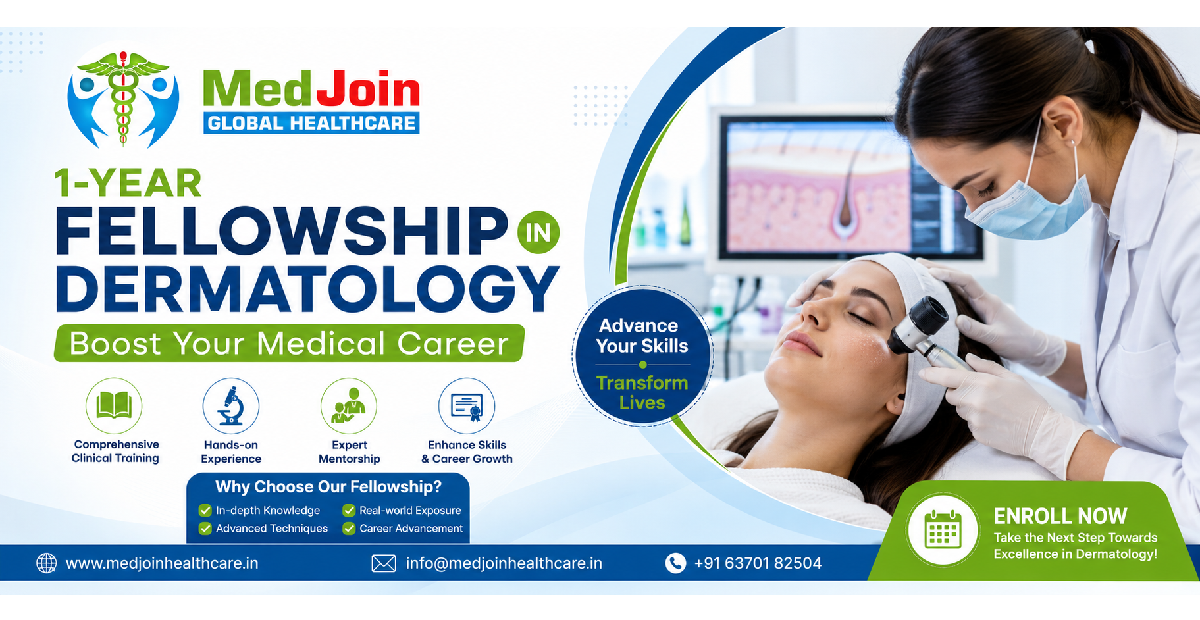
For MBBS doctors seeking specialization without committing to a lengthy postgraduate residency, a 1-Year Fellowship in Dermatology is an ideal career advancement program. This fellowship provides comprehensive knowledge of dermatological diseases, clinical diagnosis, evidence-based treatment protocols, cosmetic dermatology, and dermatosurgical procedures. It bridges the gap between undergraduate medical education and specialized dermatology practice.
Whether your goal is to establish a successful skin clinic, work in multispecialty hospitals, enhance your clinical expertise, or expand your practice with cosmetic procedures, enrolling in a one-year dermatology fellowship can significantly elevate your professional journey.
At MedJoin Global, the fellowship has been designed by experienced dermatologists and clinical experts to provide practical learning, case-based discussions, updated treatment guidelines, and hands-on clinical exposure. The curriculum focuses on developing confident clinicians capable of diagnosing and managing a broad spectrum of dermatological conditions.
Why Choose Dermatology as a Career?
Dermatology is among the most rewarding and rapidly expanding branches of medicine. Unlike many medical specialties, dermatology combines medical expertise with procedural skills, cosmetic science, preventive healthcare, and patient counseling.
Several factors contribute to the growing popularity of dermatology:
- Increasing incidence of skin diseases
- Rising awareness about skin health
- Growth of cosmetic medicine
- Expanding laser technologies
- Greater demand for hair restoration treatments
- Increasing cases of allergies and autoimmune skin disorders
- Better public awareness regarding skin cancer screening
- Growing demand for anti-aging treatments
Dermatologists often enjoy predictable working hours, excellent patient satisfaction, and diverse career options compared to many other specialties.
What is a 1-Year Fellowship in Dermatology?
A 1-Year Fellowship in Dermatology is an advanced clinical training program designed to enhance the diagnostic and therapeutic skills of medical practitioners in dermatology.
The fellowship focuses on:
- Clinical dermatology
- Pediatric dermatology
- Cosmetic dermatology
- Dermatosurgery
- Hair disorders
- Nail diseases
- Sexually transmitted infections
- Leprosy
- Skin infections
- Dermoscopy
- Procedural dermatology
- Laser basics
Rather than only emphasizing theoretical concepts, the fellowship integrates practical learning through clinical cases, patient discussions, procedural demonstrations, and evidence-based management strategies.
Why is Dermatology in High Demand?
The prevalence of dermatological disorders continues to increase globally. Every age group experiences skin-related conditions ranging from infections to autoimmune disorders.
Some of the common reasons include:
1. Pollution
Urban pollution damages skin barriers and increases:
- Acne
- Eczema
- Allergic dermatitis
- Pigmentation disorders
2. Lifestyle Changes
Modern lifestyles contribute to:
- Stress-related hair loss
- Psoriasis flare-ups
- Acne vulgaris
- Premature aging
3. Cosmetic Awareness
People increasingly seek treatments for:
- Acne scars
- Pigmentation
- Wrinkles
- Hair fall
- Skin rejuvenation
4. Aging Population
Older adults frequently require management of:
- Skin cancers
- Chronic ulcers
- Age-related skin disorders
- Xerosis
- Benign skin tumors
Why Should MBBS Doctors Pursue a Fellowship in Dermatology?
Many MBBS graduates aspire to specialize but may face challenges such as limited postgraduate seats, time constraints, or career interruptions. A fellowship in dermatology offers an excellent opportunity to gain focused expertise and broaden clinical practice.
Career Enhancement
A dermatology fellowship strengthens your clinical profile and increases your credibility among patients and employers.
Better Clinical Skills
Doctors learn systematic diagnosis and management of skin diseases.
Diversified Practice
You can integrate dermatology into your:
- General practice
- Family medicine clinic
- Hospital practice
- Telemedicine services
- Wellness center
Increased Patient Base
Skin disorders account for a significant percentage of outpatient consultations. Developing expertise in dermatology enables physicians to provide comprehensive care to a larger patient population.
Who Should Enroll?
The fellowship is suitable for healthcare professionals seeking advanced clinical skills in dermatology.
Ideal candidates include:
- MBBS doctors
- General physicians
- Primary care physicians
- Medical officers
- Family physicians
- Rural healthcare practitioners
- Doctors preparing for private practice
- Healthcare professionals interested in cosmetic dermatology
Objectives of the Fellowship
The program aims to develop competent clinicians capable of managing common and complex dermatological conditions.
Major objectives include:
- Strengthen clinical diagnostic abilities
- Improve treatment planning
- Understand evidence-based dermatology
- Enhance procedural knowledge
- Build confidence in dermatological examinations
- Learn cosmetic dermatology fundamentals
- Develop patient counseling skills
- Improve clinical decision-making
Importance of Dermatology in Primary Healthcare
Many patients initially consult general physicians rather than dermatologists. Accurate early diagnosis can significantly improve outcomes and prevent complications.
Primary care physicians frequently encounter:
- Acne
- Fungal infections
- Eczema
- Psoriasis
- Urticaria
- Drug eruptions
- Hair loss
- Nail disorders
- Pigmentation
- Scabies
Proper dermatology training enables physicians to manage these conditions effectively while recognizing cases that require specialist referral.
Scope of Dermatology
Dermatology extends far beyond treating skin rashes. It encompasses multiple subspecialties.
Clinical Dermatology
Diagnosis and management of skin disorders affecting children and adults.
Pediatric Dermatology
Management of:
- Atopic dermatitis
- Birthmarks
- Genetic skin diseases
- Pediatric infections
Cosmetic Dermatology
Includes:
- Chemical peels
- Botox basics
- Fillers overview
- Acne scar management
- Pigmentation treatments
- Skin rejuvenation
Dermatosurgery
Minor procedures such as:
- Skin biopsies
- Cyst removal
- Nail surgery
- Electrocautery
- Cryotherapy
Hair Disorders
Evaluation and management of:
- Alopecia
- Telogen effluvium
- Androgenetic alopecia
- Scalp infections
Nail Disorders
Diagnosis of:
- Fungal nail infections
- Nail psoriasis
- Ingrown toenails
- Nail dystrophies
Rising Burden of Skin Diseases
Millions of individuals suffer from dermatological disorders every year.
Common conditions include:
Acne Vulgaris
One of the most frequent skin conditions affecting adolescents and adults.
Management involves:
- Topical therapy
- Oral medications
- Hormonal therapy
- Lifestyle counseling
Psoriasis
A chronic inflammatory disease requiring long-term management.
Doctors learn:
- Disease severity assessment
- Topical treatment
- Systemic therapy
- Biologic therapy overview
Eczema
Includes various forms:
- Atopic dermatitis
- Contact dermatitis
- Seborrheic dermatitis
- Nummular eczema
Fungal Infections
Common infections include:
- Tinea corporis
- Tinea cruris
- Tinea capitis
- Candidiasis
- Onychomycosis
Doctors learn current antifungal treatment protocols and recurrence prevention strategies.
Bacterial Skin Infections
Management includes:
- Cellulitis
- Impetigo
- Folliculitis
- Furunculosis
- Carbuncles
Viral Skin Disorders
Training covers:
- Herpes simplex
- Herpes zoster
- Molluscum contagiosum
- Viral warts
Autoimmune Skin Disorders
Introduction to:
- Vitiligo
- Lupus erythematosus
- Pemphigus
- Bullous pemphigoid
- Dermatomyositis
Hair Disorders Covered During the Fellowship
Hair disorders are increasingly common in clinical practice.
Participants gain expertise in:
Hair Loss Evaluation
- Clinical history
- Examination
- Laboratory investigations
Alopecia
Types include:
- Androgenetic alopecia
- Alopecia areata
- Scarring alopecia
- Telogen effluvium
Medical Management
Treatment options include:
- Topical therapies
- Oral medications
- Nutritional management
- Counseling
Nail Disorders Covered
Doctors learn diagnosis and treatment of:
- Nail psoriasis
- Onychomycosis
- Nail trauma
- Nail pigmentation
- Nail dystrophy
- Ingrown nails
Sexually Transmitted Infections in Dermatology
Dermatology also encompasses sexually transmitted infections.
The fellowship introduces:
- Syphilis
- Gonorrhea
- Genital herpes
- Human papillomavirus
- Chancroid
- HIV-related skin manifestations
Doctors learn diagnostic approaches, counseling strategies, and current treatment recommendations.
Cosmetic Dermatology: A Rapidly Growing Field
The demand for aesthetic medicine has expanded dramatically over the past decade. Patients increasingly seek minimally invasive procedures that improve appearance with little downtime.
During the fellowship, participants gain an understanding of the principles of cosmetic dermatology, including patient selection, facial assessment, skin rejuvenation strategies, acne scar management, pigmentation treatments, and anti-aging approaches. They are introduced to procedures such as chemical peels, microneedling, platelet-rich plasma (PRP), laser therapies, botulinum toxin, and dermal fillers, along with their indications, contraindications, and safety considerations.
Understanding cosmetic dermatology enables physicians to diversify their clinical practice while meeting the growing expectations of patients seeking aesthetic care.
Why Clinical Training Matters
Textbook knowledge alone is insufficient in dermatology. Accurate diagnosis often depends on recognizing subtle differences in the appearance, distribution, and progression of skin lesions. Hands-on clinical exposure helps doctors correlate theory with real patient presentations, improving diagnostic confidence and treatment outcomes.
A structured fellowship emphasizes case discussions, differential diagnosis, patient communication, and evidence-based decision-making, ensuring participants are well prepared for independent clinical practice.
A well-designed dermatology fellowship should provide an ideal balance of theoretical knowledge, evidence-based medicine, clinical exposure, procedural skills, and practical patient management. The objective is to transform MBBS doctors into confident clinicians who can diagnose, treat, counsel, and appropriately refer patients with dermatological conditions.
Why is a 1-Year Fellowship in Dermatology Important for MBBS Doctors?
A 1-Year Fellowship in Dermatology is an excellent career-enhancing program for MBBS doctors who wish to strengthen their clinical skills, expand their scope of practice, and meet the growing demand for dermatological care. Skin diseases account for a significant proportion of outpatient consultations, making dermatology knowledge highly valuable in day-to-day medical practice.
1. Expand Clinical Expertise
MBBS training provides a strong foundation in medicine, but exposure to dermatology is often limited. A fellowship offers in-depth knowledge of diagnosing and managing common and complex disorders affecting the skin, hair, and nails. Doctors become more confident in recognizing clinical patterns, making accurate diagnoses, and formulating effective treatment plans.
2. Meet the Rising Demand for Skin Care
The incidence of dermatological conditions continues to increase due to factors such as:
- Pollution and environmental changes
- Sedentary lifestyles and stress
- Hormonal imbalances
- Aging populations
- Increased awareness of skin health
- Growing demand for cosmetic procedures
Patients frequently seek medical advice for conditions such as acne, eczema, fungal infections, psoriasis, pigmentation disorders, hair loss, and allergic skin diseases. A fellowship prepares MBBS doctors to manage these conditions effectively.
3. Improve Diagnostic Skills
Dermatology is a visual specialty where accurate diagnosis depends on careful clinical examination and recognition of lesion morphology. The fellowship helps doctors develop skills in:
- Skin examination
- Hair and scalp assessment
- Nail examination
- Differential diagnosis
- Dermoscopy basics
- Clinical decision-making
These skills improve diagnostic accuracy and patient outcomes.
4. Enhance Primary Care Practice
General practitioners are often the first healthcare professionals consulted for skin problems. With advanced dermatology training, MBBS doctors can confidently diagnose and treat many common conditions at the primary care level while identifying patients who require specialist referral.
This leads to:
- Better continuity of care
- Reduced unnecessary referrals
- Increased patient satisfaction
- Improved treatment outcomes
5. Broaden Career Opportunities
Completing a dermatology fellowship can open doors to a variety of professional roles, including:
- General Physician with Special Interest in Dermatology
- Dermatology Clinic Associate
- Hospital Medical Officer
- Clinical Consultant
- Telemedicine Physician
- Cosmetic and Aesthetic Practice (within applicable training and regulations)
- Academic and Clinical Research Roles
The additional qualification strengthens a doctor's professional profile and enhances career prospects.
6. Build Confidence in Managing Common Skin Disorders
The fellowship provides practical knowledge for managing conditions such as:
- Acne vulgaris
- Fungal infections
- Eczema
- Psoriasis
- Vitiligo
- Urticaria
- Hair loss
- Nail disorders
- Bacterial and viral skin infections
- Pigmentary disorders
This allows MBBS doctors to deliver evidence-based treatment with greater confidence.
7. Learn Cosmetic Dermatology Fundamentals
Cosmetic dermatology is a rapidly growing field. The fellowship introduces doctors to the principles of aesthetic medicine, including:
- Chemical peels
- Acne scar management
- Skin rejuvenation
- Pigmentation treatment
- Anti-aging approaches
- Basic concepts of PRP, lasers, botulinum toxin, and dermal fillers
This foundational knowledge helps doctors understand aesthetic dermatology and its role in modern practice.
8. Increase Practice Revenue
Dermatology services are among the most sought-after in outpatient settings. Adding dermatology consultations to an existing medical practice can help diversify services and attract a broader patient base, particularly in areas where access to dermatology specialists is limited.
9. Strengthen Patient Trust
Patients appreciate physicians who can provide comprehensive care under one roof. A doctor with advanced dermatology training can address common skin concerns promptly, improving patient confidence and fostering long-term relationships.
10. Prepare for Lifelong Learning
Dermatology continues to evolve with new medications, biologic therapies, diagnostic tools, and procedural techniques. A structured fellowship encourages evidence-based practice and continuous professional development, enabling MBBS doctors to stay updated with advances in the specialty.
A 1-Year Fellowship in Dermatology is a valuable investment for MBBS doctors seeking to expand their clinical expertise, improve diagnostic accuracy, and enhance career opportunities. By combining structured academic learning with practical clinical exposure, the program equips physicians to manage a wide range of skin, hair, and nail disorders while strengthening their overall medical practice. It is an excellent pathway for doctors who wish to deliver comprehensive patient care and build a successful career in one of the fastest-growing fields of medicine.