
Healthcare is evolving faster than ever before. Hospitals are embracing advanced medical technologies, evidence-based practices, digital health solutions, and multidisciplinary patient care models. As a result, the expectations from nursing professionals have expanded significantly. Today's nurses are not only expected to provide bedside care but also participate in clinical decision-making, patient education, healthcare management, quality improvement initiatives, infection prevention, and emergency response.
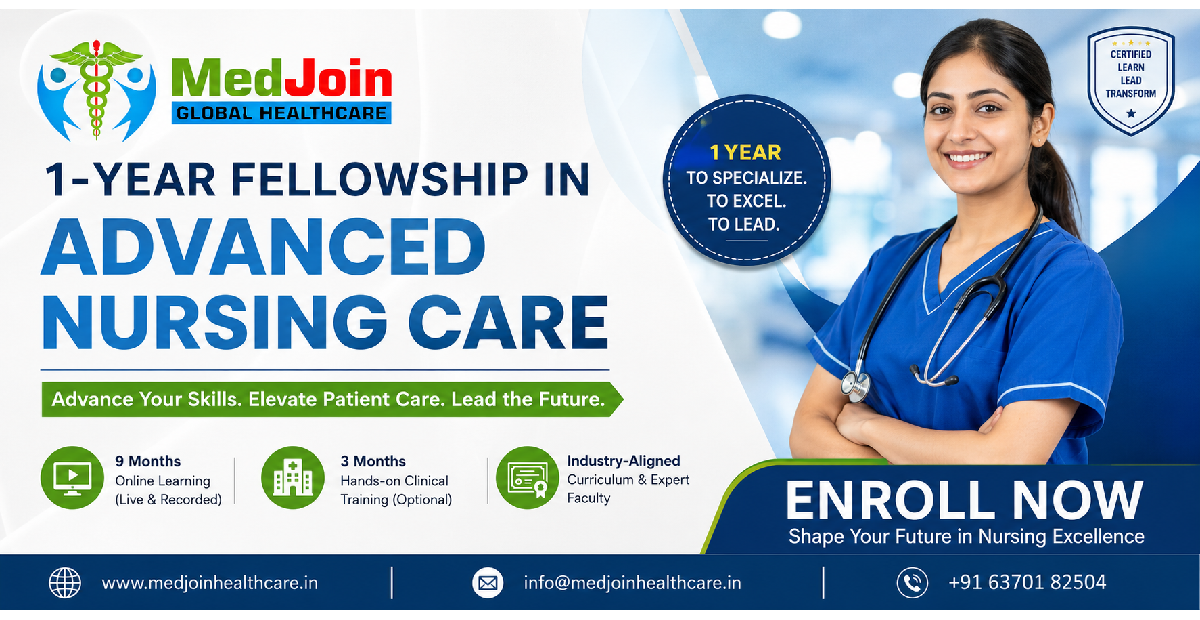
This transformation has created a growing demand for nurses with advanced clinical knowledge and specialized training. A 1-Year Fellowship in Advanced Nursing Care is designed to bridge the gap between traditional nursing education and the advanced competencies required in modern healthcare settings.
Whether you are a GNM, B.Sc. Nursing, Post Basic B.Sc. Nursing, or M.Sc. Nursing graduate, pursuing a nursing fellowship can significantly enhance your clinical expertise, confidence, employability, and career progression.
Table of Contents
- What is a Fellowship in Advanced Nursing Care?
- Why Advanced Nursing Care is Important
- The Changing Role of Nurses
- Why Choose a 1-Year Nursing Fellowship?
- Objectives of the Program
- Skills You Will Develop
- Clinical Competencies Covered
- Benefits of Advanced Nursing Education
- Healthcare Industry Demand
- Who Should Enroll?
- Future of Nursing in India
- Why Specialized Nursing Education Matters
What is a 1-Year Fellowship in Advanced Nursing Care?
A Fellowship in Advanced Nursing Care is a specialized postgraduate professional training program that equips nursing professionals with advanced theoretical knowledge, evidence-based clinical practice, leadership skills, patient management expertise, and specialized competencies required in modern healthcare systems.
Unlike conventional nursing education, fellowship programs emphasize practical learning, clinical reasoning, interdisciplinary collaboration, and real-world patient management.
The program focuses on developing expertise in:
- Advanced patient assessment
- Clinical decision making
- Critical care nursing
- Emergency nursing
- Infection prevention
- Evidence-based practice
- ICU patient management
- Cardiac monitoring
- Trauma care
- Ventilator management
- Medication safety
- Advanced pharmacology
- Communication and leadership
- Patient counseling
- Ethical nursing practice
The fellowship prepares nurses to manage complex clinical situations confidently while ensuring patient safety and quality care.
Why Advanced Nursing Care is More Important Than Ever
Healthcare today is dramatically different from what it was even a decade ago.
Patients are living longer with multiple chronic illnesses, hospitals are handling increasingly complex medical cases, and the demand for specialized nursing care continues to grow. Advances in medical technology, electronic health records, telemedicine, minimally invasive procedures, and precision medicine have transformed clinical practice.
These changes require nurses to possess:
- Strong clinical judgment
- Advanced assessment skills
- Critical thinking
- Technology proficiency
- Evidence-based practice
- Leadership abilities
- Crisis management skills
Advanced nursing education ensures that professionals remain competent in delivering high-quality, patient-centered care.
The Evolution of Nursing Practice
Traditionally, nurses focused primarily on assisting physicians and providing bedside care. Modern nursing, however, encompasses much broader responsibilities.
Today's nurses are expected to:
- Interpret patient assessment findings
- Monitor critically ill patients
- Recognize clinical deterioration early
- Coordinate multidisciplinary care
- Educate patients and families
- Implement infection control measures
- Participate in hospital quality improvement initiatives
- Use healthcare technology effectively
- Maintain accurate clinical documentation
- Support patient rehabilitation
Advanced nursing fellowships prepare professionals for these expanded roles.
Why Choose a 1-Year Fellowship in Advanced Nursing Care?
A one-year fellowship offers a structured and intensive learning experience, balancing theoretical education with practical application.
Key advantages include:
1. Specialized Clinical Knowledge
The fellowship provides in-depth education beyond undergraduate nursing programs, covering advanced patient care techniques, disease management, and specialized nursing interventions.
2. Better Career Opportunities
Hospitals increasingly prefer nurses with specialized training for roles in:
- Intensive Care Units (ICU)
- Emergency Departments
- Cardiac Care Units (CCU)
- Neonatal Intensive Care Units (NICU)
- Oncology
- Dialysis Units
- Operation Theatres
- Trauma Centers
Advanced qualifications enhance eligibility for these positions.
3. Higher Employability
Healthcare employers value professionals who can independently manage complex cases, adapt to evolving clinical environments, and contribute to patient safety initiatives.
A fellowship demonstrates commitment to professional development and lifelong learning.
4. Increased Clinical Confidence
Hands-on exposure and advanced training improve confidence in:
- Patient assessment
- Emergency response
- Clinical procedures
- Critical care management
- Communication with healthcare teams
This confidence translates into better patient outcomes.
5. Leadership Development
The program fosters leadership skills essential for:
- Nursing supervisors
- Clinical educators
- Nurse managers
- Quality coordinators
- Infection control nurses
Leadership training prepares nurses for administrative and managerial responsibilities.
Objectives of the Fellowship Program
The Fellowship in Advanced Nursing Care aims to:
- Strengthen advanced clinical competencies
- Promote evidence-based nursing practice
- Enhance patient safety
- Improve critical thinking
- Develop leadership capabilities
- Encourage interdisciplinary collaboration
- Prepare nurses for specialized clinical roles
- Improve healthcare quality
- Support professional growth
- Foster lifelong learning
Skills You Will Develop
By completing this fellowship, participants gain proficiency in several key areas.
Advanced Patient Assessment
Comprehensive assessment involves:
- History taking
- Physical examination
- Vital sign interpretation
- Pain assessment
- Neurological evaluation
- Respiratory assessment
- Cardiovascular assessment
- Fluid balance monitoring
- Nutritional evaluation
These skills enable early recognition of patient deterioration.
Clinical Decision Making
Participants learn to:
- Analyze patient data
- Prioritize nursing interventions
- Develop care plans
- Monitor treatment effectiveness
- Recognize emergencies
- Escalate care appropriately
Clinical reasoning is fundamental to advanced nursing practice.
Critical Care Nursing
Critical care training includes:
- ICU protocols
- Ventilator care
- Hemodynamic monitoring
- Arterial blood gas interpretation
- Sepsis management
- Shock management
- Organ failure
- Cardiac emergencies
- Neurological emergencies
Emergency Nursing
Emergency nursing modules focus on:
- Basic Life Support (BLS)
- Advanced Cardiac Life Support (ACLS) concepts
- Trauma management
- Stroke care
- Poisoning
- Burns
- Disaster response
- Emergency triage
- Mass casualty management
Medication Safety
Medication-related training includes:
- Safe drug administration
- High-alert medications
- Drug calculations
- Adverse drug reactions
- Medication reconciliation
- Pharmacovigilance
- Documentation
Medication safety significantly reduces preventable patient harm.
Clinical Competencies Covered
The fellowship develops expertise in multiple domains.
Cardiovascular Care
Participants learn:
- ECG interpretation
- Cardiac monitoring
- Hypertension management
- Heart failure care
- Arrhythmia recognition
- Post-cardiac surgery nursing
Respiratory Care
Topics include:
- Oxygen therapy
- Nebulization
- Mechanical ventilation
- Airway management
- COPD management
- Asthma care
- Pulmonary rehabilitation
Neurological Nursing
Training covers:
- Stroke assessment
- Glasgow Coma Scale
- Seizure management
- Brain injury care
- Neuro-monitoring
- Rehabilitation nursing
Renal Nursing
Participants study:
- Dialysis care
- Acute kidney injury
- Chronic kidney disease
- Fluid balance
- Electrolyte monitoring
- Renal medications
Oncology Nursing
Advanced topics include:
- Chemotherapy safety
- Radiation care
- Symptom management
- Palliative care
- Pain management
- Patient counseling
Infection Prevention
Modules include:
- Hospital-acquired infections
- Hand hygiene
- Sterilization
- Isolation precautions
- Antibiotic stewardship
- Biomedical waste management
Benefits of Advanced Nursing Education
Advanced nursing education benefits not only individual professionals but also healthcare organizations and patients.
For Nurses
- Better career growth
- Enhanced confidence
- Improved clinical competence
- Leadership opportunities
- Professional recognition
- Greater job satisfaction
- Increased earning potential
For Hospitals
Organizations benefit through:
- Better patient outcomes
- Reduced medical errors
- Improved patient satisfaction
- Enhanced quality indicators
- Lower infection rates
- Better compliance with accreditation standards
For Patients
Patients receive:
- Safer care
- Better communication
- Faster recovery
- Personalized treatment
- Reduced complications
- Improved healthcare experience
Growing Demand for Advanced Nursing Professionals
The global healthcare industry is experiencing an unprecedented demand for skilled nurses due to:
- Aging populations
- Increasing chronic diseases
- Expansion of intensive care services
- Growth of multispecialty hospitals
- Medical tourism
- Digital healthcare
- Home healthcare services
- Telemedicine
Countries across the Middle East, Europe, Australia, Canada, and parts of Asia continue to seek nurses with advanced clinical training and specialized expertise.
Who Should Enroll?
This fellowship is ideal for:
- GNM graduates
- B.Sc. Nursing graduates
- Post Basic B.Sc. Nursing graduates
- M.Sc. Nursing graduates
- Clinical nursing professionals
- ICU nurses
- Emergency nurses
- Operation Theatre nurses
- Community health nurses
- Nurses seeking leadership roles
- Healthcare educators
- Professionals aiming for international opportunities
The Future of Nursing in India
India's healthcare sector is undergoing rapid expansion with the development of new hospitals, specialty centers, digital health initiatives, and public health programs. This growth has increased the need for highly trained nursing professionals capable of managing complex clinical environments.
Emerging trends shaping the future include:
- Artificial Intelligence in healthcare
- Smart ICUs
- Tele-ICU services
- Electronic health records
- Precision medicine
- Remote patient monitoring
- Robotic-assisted procedures
- Personalized patient care
- Integrated multidisciplinary teams
Nurses who continually upgrade their knowledge through fellowship programs will be well-positioned to thrive in this evolving landscape.
Why Specialized Nursing Education Matters
Specialized nursing education equips professionals with the advanced skills needed to deliver safe, effective, and evidence-based care. It enhances clinical confidence, supports career advancement, and prepares nurses to meet the challenges of modern healthcare systems.
A 1-Year Fellowship in Advanced Nursing Care serves as a valuable pathway for nurses who aspire to expand their expertise, contribute to improved patient outcomes, and take on more advanced clinical and leadership responsibilities.
Comprehensive Curriculum of the Fellowship in Advanced Nursing Care
A well-designed 1-Year Fellowship in Advanced Nursing Care combines evidence-based theoretical learning with competency-based clinical training. The curriculum is aligned with modern hospital practices and prepares nurses to confidently manage patients across emergency, critical care, medical, surgical, and specialty departments.
The program focuses on developing three essential competencies:
- Clinical Excellence – Advanced patient assessment, diagnosis support, treatment planning, and nursing interventions.
- Professional Development – Communication, leadership, ethics, teamwork, and quality improvement.
- Technological Competence – Digital healthcare, electronic medical records, telehealth, patient monitoring systems, and AI-assisted healthcare.
The fellowship is generally structured into multiple modules that progressively build clinical expertise.
Teaching Methodology
The fellowship uses a blended learning approach to maximize flexibility and practical exposure.
Learning Components
- Self-paced online modules
- Recorded expert lectures
- Interactive live classes
- Clinical case discussions
- Skill demonstration videos
- Simulation-based learning
- Assignments and quizzes
- Reflective practice
- Hands-on clinical postings (where applicable)
Assessment & Evaluation
Learners are assessed through:
- Online quizzes
- Module-wise assignments
- Clinical case analyses
- Practical skill evaluations
- Viva voce
- Final theory examination
- Clinical competency assessment
- Attendance and participation
Successful candidates receive certification upon meeting the program requirements.
Career Opportunities After a 1-Year Fellowship in Advanced Nursing Care
The healthcare industry is witnessing unprecedented growth due to increasing patient populations, rising chronic diseases, expanding hospital infrastructure, technological advancements, and a greater focus on quality patient care. This has significantly increased the demand for nursing professionals with advanced clinical skills.
Completing a 1-Year Fellowship in Advanced Nursing Care equips nurses with specialized knowledge and practical competencies that can enhance their career prospects across various healthcare settings.
The fellowship prepares participants for roles in critical care, emergency services, medical-surgical nursing, specialty units, education, quality management, and leadership.
A 1-Year Fellowship in Advanced Nursing Care provides an opportunity for nursing professionals to expand their clinical knowledge, strengthen practical skills, and prepare for advanced roles within modern healthcare systems. By focusing on evidence-based practice, leadership, patient safety, and specialized clinical competencies, such programs can support professional growth and lifelong learning.
Whether your goal is to enhance your expertise in critical care, emergency nursing, medical-surgical practice, or leadership, advanced education can be an important step toward a rewarding nursing career.
Future Scope of Nursing (2026–2035): Emerging Trends, Career Opportunities & Industry Outlook
The nursing profession is entering a transformative era driven by rapid advancements in healthcare technology, an aging global population, increasing chronic diseases, and the growing need for patient-centered care. Between 2026 and 2035, nurses will play an even more strategic role in healthcare delivery, extending beyond traditional bedside care to become leaders in clinical decision-making, digital health, preventive medicine, and healthcare innovation.
For aspiring and practicing nurses, investing in advanced education through a 1-Year Fellowship in Advanced Nursing Care can help build the competencies needed to thrive in this evolving healthcare landscape.
Take the First Step Toward Professional Growth
Whether you are a recent nursing graduate or an experienced professional aiming to expand your expertise, the 1-Year Fellowship in Advanced Nursing Care can help you build advanced competencies and prepare for broader clinical responsibilities.
Apply today and continue your journey toward excellence in nursing practice.