
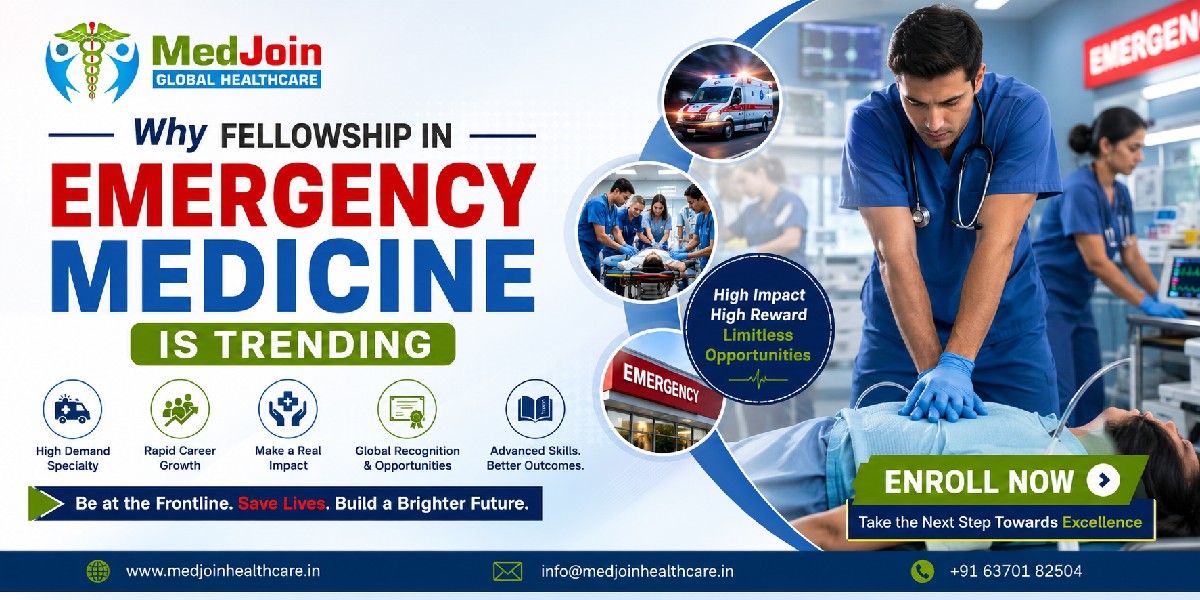
Emergency Medicine has emerged as one of the fastest-growing medical specialties worldwide. With increasing road traffic accidents, cardiovascular emergencies, infectious diseases, trauma cases, natural disasters, and an aging population, hospitals require doctors who can make rapid, evidence-based decisions during the most critical moments of patient care.
In India, the healthcare industry has witnessed a remarkable transformation over the last decade. Multi-specialty hospitals, trauma centers, corporate healthcare institutions, and government emergency departments are expanding rapidly. This growth has significantly increased the demand for doctors trained specifically in Emergency Medicine.
For MBBS graduates, choosing the right career path after graduation has become more challenging than ever. While many doctors prepare for postgraduate entrance examinations, competition remains extremely high, leaving thousands searching for alternative pathways that provide clinical exposure, career advancement, and financial stability.
A Fellowship in Emergency Medicine has emerged as one of the most practical and career-oriented choices for young doctors. Unlike conventional academic programs, fellowship training emphasizes hands-on patient management, procedural skills, critical thinking, and emergency decision-making.
Whether your goal is to work in a tertiary care hospital, trauma center, ICU, ambulance services, corporate hospitals, telemedicine, disaster response, or international healthcare systems, Emergency Medicine offers endless opportunities.
If you're looking to build a rewarding medical career with high demand and excellent growth potential, enrolling in a Fellowship in Emergency Medicine could be one of the best decisions you make.
What Is Emergency Medicine?
Emergency Medicine is a medical specialty dedicated to the immediate diagnosis, stabilization, treatment, and management of patients suffering from acute illnesses and life-threatening injuries.
Unlike other specialties that focus on a single organ system, Emergency Medicine physicians treat patients of all ages with a wide range of medical conditions.
An Emergency Medicine doctor may manage:
- Heart attacks
- Stroke
- Polytrauma
- Road traffic accidents
- Cardiac arrest
- Respiratory failure
- Poisoning
- Burns
- Sepsis
- Shock
- Snake bites
- Pediatric emergencies
- Obstetric emergencies
- Psychiatric crises
- Toxicology cases
- Disaster casualties
Emergency physicians are trained to think quickly, prioritize patient care, and coordinate multidisciplinary treatment, often within minutes of a patient's arrival.
Why Emergency Medicine Is One of the Fastest Growing Specialties
Healthcare systems around the world are evolving rapidly. Several factors have contributed to the rising importance of Emergency Medicine:
1. Rising Burden of Trauma
Road traffic accidents remain one of the leading causes of death, particularly among young adults. Immediate emergency intervention significantly improves survival rates.
Emergency physicians are the first responders responsible for:
- Airway stabilization
- Hemorrhage control
- Trauma assessment
- Resuscitation
- Emergency surgeries coordination
2. Increasing Lifestyle Diseases
Modern lifestyles have resulted in a dramatic increase in:
- Hypertension
- Diabetes
- Heart disease
- Stroke
- Kidney failure
- Obesity
These conditions frequently lead to medical emergencies requiring prompt diagnosis and treatment.
3. Growing Corporate Healthcare Sector
Corporate hospitals continue expanding across India, creating dedicated emergency departments equipped with:
- Trauma bays
- Cardiac emergency units
- Stroke centers
- Poison control services
- Observation units
- ICU backup
These facilities require skilled emergency physicians available 24×7.
4. Expansion of Ambulance and Prehospital Care
Advanced ambulance services now provide:
- Prehospital ECG
- Ventilator support
- Defibrillation
- Advanced Cardiac Life Support (ACLS)
- Pediatric Advanced Life Support (PALS)
Emergency Medicine doctors often supervise these life-saving services.
5. Public Awareness
Patients today seek immediate medical attention rather than waiting for outpatient consultations.
Emergency departments have become the first point of contact for:
- Chest pain
- Severe infections
- Injuries
- Acute abdomen
- Allergic reactions
- Poisoning
- Neurological emergencies
What Is a Fellowship in Emergency Medicine?
A Fellowship in Emergency Medicine is an advanced clinical training program designed for MBBS doctors who wish to specialize in managing emergency and critical patients.
Unlike traditional classroom education, fellowship programs combine:
- Online learning
- Clinical case discussions
- Hands-on procedural training
- Hospital-based rotations
- Simulation training
- Emergency protocols
- Evidence-based medicine
The objective is to develop competent doctors capable of independently handling emergency cases.
Why Fellowship in Emergency Medicine Is Trending in 2026
Several healthcare trends have contributed to the increasing popularity of Emergency Medicine fellowships.
1. Huge Demand for Skilled Emergency Doctors
Hospitals frequently struggle to recruit doctors with formal emergency training.
Emergency departments require physicians who can confidently manage:
- Cardiac arrests
- Trauma
- Sepsis
- Shock
- Ventilator patients
- Critical care referrals
Doctors with fellowship training are often preferred because they possess practical skills beyond basic MBBS education.
2. Clinical Skill Development
Many MBBS graduates feel that internship alone does not provide sufficient exposure to emergency procedures.
A fellowship bridges this gap by offering training in:
- Endotracheal intubation
- CPR
- Airway management
- Central venous catheterization
- Trauma stabilization
- Defibrillation
- Ventilator management
- Point-of-care ultrasound (POCUS)
These competencies enhance confidence and employability.
3. Better Career Opportunities
Emergency Medicine opens doors to diverse healthcare settings, including:
- Multi-specialty hospitals
- Trauma centers
- Emergency departments
- Intensive Care Units
- Air ambulance services
- Disaster management teams
- Military healthcare
- Telemedicine
- International hospitals
- Cruise ship medicine
- Medical education
4. Attractive Salary Packages
Doctors trained in Emergency Medicine are increasingly valued due to their ability to manage critical situations.
Compensation often reflects:
- Specialized skills
- Night shift responsibilities
- Procedural expertise
- Hospital demand
- Experience level
As healthcare institutions expand emergency services, career growth opportunities continue to improve.
5. Higher Employability
Recruiters increasingly prioritize candidates with demonstrable emergency care competencies.
Hospitals seek professionals who can:
- Make rapid decisions
- Perform emergency procedures
- Stabilize critically ill patients
- Coordinate multidisciplinary care
- Communicate effectively under pressure
A fellowship demonstrates commitment to acquiring these essential clinical skills.
Why MBBS Doctors Should Consider Emergency Medicine
Many young doctors wonder:
"Should I wait for postgraduate entrance examinations or pursue a fellowship?"
While postgraduate degrees remain valuable, fellowship programs offer several distinct advantages.
Immediate Clinical Exposure
Instead of spending years preparing for entrance examinations, fellowship candidates begin working with real emergency cases under expert supervision.
This accelerates clinical learning and practical competence.
Continuous Skill Enhancement
Emergency Medicine exposes doctors to a broad spectrum of specialties, including:
- Cardiology
- Neurology
- Orthopedics
- General Surgery
- Pediatrics
- Obstetrics & Gynecology
- Pulmonology
- Critical Care
- Toxicology
- Anesthesiology
This multidisciplinary experience strengthens overall clinical judgment.
Confidence in Decision-Making
Emergency physicians often make life-saving decisions within minutes.
Training focuses on:
- Prioritization
- Rapid assessment
- Risk stratification
- Team leadership
- Crisis management
These abilities are valuable across all medical specialties.
Who Is Eligible for a Fellowship in Emergency Medicine?
Eligibility criteria may vary by institution, but most programs are suitable for:
- MBBS graduates
- Medical officers
- Junior residents
- Doctors preparing for postgraduate studies
- Doctors working in emergency departments
- Rural medical practitioners seeking advanced emergency training
- Physicians aiming to strengthen acute care skills
Essential Skills Every Emergency Physician Must Develop
Success in Emergency Medicine requires a combination of medical knowledge, technical expertise, and interpersonal skills.
Key competencies include:
Clinical Assessment
Rapid identification of life-threatening conditions through focused history and physical examination.
Airway Management
Maintaining airway patency using basic and advanced techniques.
Resuscitation
Performing evidence-based CPR and managing cardiac arrest effectively.
Trauma Management
Assessing and stabilizing trauma patients using structured protocols.
Communication
Coordinating with patients, families, nurses, specialists, and prehospital teams.
Leadership
Directing multidisciplinary teams during critical situations.
Emotional Resilience
Maintaining composure during high-pressure clinical scenarios.
Benefits of Choosing a Fellowship Instead of Waiting
Thousands of MBBS graduates spend years preparing for postgraduate entrance examinations.
During this period, many experience:
- Limited clinical exposure
- Reduced procedural practice
- Career uncertainty
- Financial dependence
A Fellowship in Emergency Medicine enables doctors to continue building practical experience while advancing professionally.
It helps maintain clinical momentum and develop real-world competencies that are highly valued in healthcare settings.
What You Will Learn During the Fellowship
A well-designed Emergency Medicine fellowship typically covers:
- Basic Life Support (BLS)
- Advanced Cardiac Life Support (ACLS)
- Pediatric Advanced Life Support (PALS)
- Trauma Life Support
- Airway management
- Shock management
- ECG interpretation
- Mechanical ventilation
- Emergency pharmacology
- Point-of-care ultrasound
- Emergency radiology
- Critical care medicine
- Toxicology
- Disaster medicine
- Emergency procedures
- ICU fundamentals
- Clinical decision-making
These subjects prepare doctors to manage a wide variety of emergency presentations confidently.
The healthcare landscape is evolving rapidly, and Emergency Medicine has become one of the most sought-after specialties for MBBS doctors. Rising patient volumes, expanding emergency departments, increasing trauma cases, and the need for rapid, skilled intervention have made fellowship-trained emergency physicians highly valuable across hospitals and healthcare systems.
A Fellowship in Emergency Medicine not only enhances clinical competence but also opens doors to diverse career opportunities in emergency departments, trauma centers, critical care, telemedicine, disaster response, and international healthcare.