
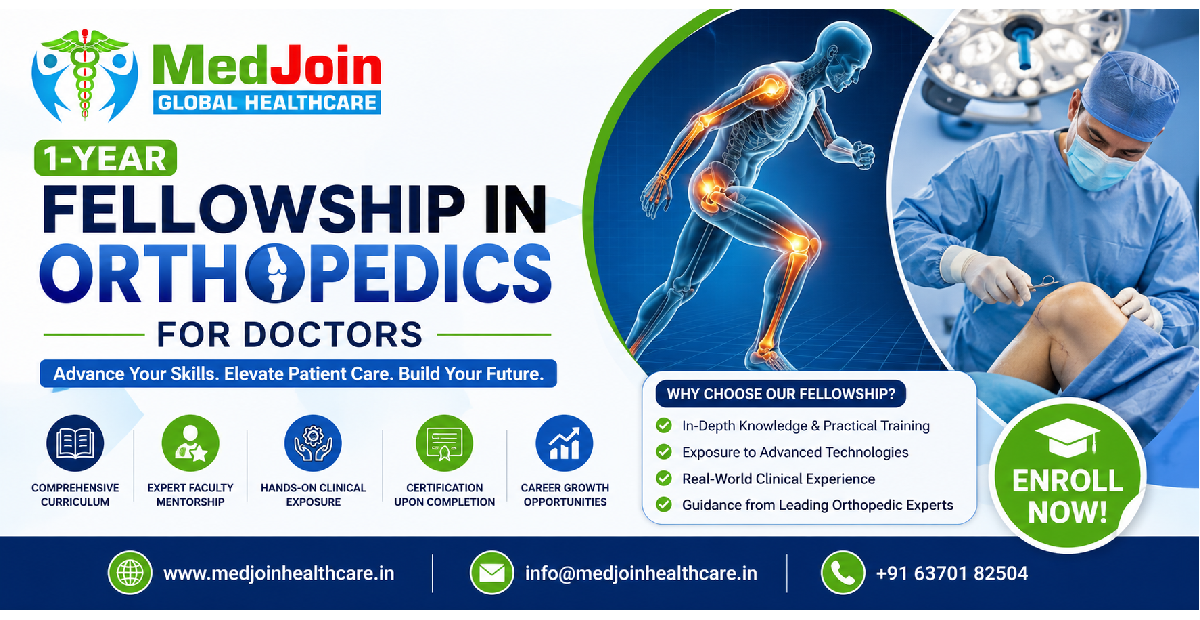
Orthopedics is one of the most dynamic and rapidly evolving specialties in modern medicine. With increasing incidences of musculoskeletal disorders, sports injuries, trauma cases, degenerative joint diseases, and age-related orthopedic conditions, the demand for skilled orthopedic professionals continues to grow worldwide.
For MBBS graduates, general practitioners, and healthcare professionals seeking to advance their clinical expertise, a 1-Year Orthopedics Fellowship Program offers a valuable opportunity to gain specialized knowledge, improve diagnostic and treatment capabilities, and strengthen career prospects.
This fellowship program is designed to bridge the gap between theoretical learning and practical clinical application. Participants gain in-depth exposure to orthopedic principles, patient assessment, fracture management, rehabilitation techniques, and the latest developments in orthopedic care.
Whether your goal is to enhance patient outcomes, pursue specialization, increase professional credibility, or expand career opportunities, a one-year fellowship in orthopedics can be a significant step toward achieving your objectives.
Understanding Orthopedics
Orthopedics is the branch of medicine focused on the diagnosis, treatment, prevention, and rehabilitation of disorders affecting the musculoskeletal system.
The musculoskeletal system includes:
- Bones
- Joints
- Muscles
- Tendons
- Ligaments
- Cartilage
- Nerves related to movement
Orthopedic specialists treat a wide range of conditions including:
Fractures
Broken bones resulting from trauma, accidents, falls, or sports injuries.
Arthritis
Inflammatory and degenerative conditions affecting joints.
Sports Injuries
Damage to muscles, ligaments, tendons, and bones caused during physical activities.
Spine Disorders
Conditions affecting the cervical, thoracic, and lumbar spine.
Joint Disorders
Problems involving mobility, pain, and structural abnormalities.
Congenital Conditions
Birth-related musculoskeletal abnormalities.
Osteoporosis
A disease characterized by reduced bone density and increased fracture risk.
Musculoskeletal Infections
Infections affecting bones and joints.
Why Orthopedics is a Growing Specialty
Several factors contribute to the increasing demand for orthopedic expertise.
Aging Population
The global elderly population continues to rise, leading to increased prevalence of:
- Osteoarthritis
- Osteoporosis
- Joint degeneration
- Hip fractures
Rise in Sports Activities
Growing participation in sports and fitness activities increases the occurrence of:
- ACL injuries
- Meniscal tears
- Shoulder injuries
- Stress fractures
Road Traffic Accidents
Trauma remains a significant healthcare challenge worldwide.
Orthopedic professionals play a crucial role in:
- Emergency fracture management
- Trauma stabilization
- Surgical intervention
- Rehabilitation
Technological Advancements
Innovations in:
- Arthroscopy
- Joint replacement
- Robotic surgery
- Minimally invasive procedures
have expanded the scope of orthopedic care.
What is a 1-Year Orthopedics Fellowship Program?
A 1-Year Orthopedics Fellowship Program is a structured advanced training course designed to enhance orthopedic knowledge and clinical competence.
The program focuses on:
- Comprehensive orthopedic education
- Clinical case discussions
- Evidence-based treatment approaches
- Diagnostic skills development
- Patient management strategies
- Rehabilitation principles
The fellowship provides participants with specialized learning opportunities beyond undergraduate medical education.
Objectives of the Fellowship Program
The primary objectives include:
Clinical Excellence
Develop strong clinical decision-making abilities.
Diagnostic Competence
Learn to identify and evaluate orthopedic disorders accurately.
Patient Management
Enhance skills in comprehensive treatment planning.
Professional Growth
Improve qualifications and career advancement opportunities.
Evidence-Based Practice
Apply current research findings to patient care.
Who Should Enroll?
The fellowship is suitable for:
MBBS Graduates
Doctors seeking specialization-oriented learning.
General Practitioners
Physicians managing musculoskeletal complaints in primary care settings.
Medical Officers
Healthcare professionals working in hospitals and clinics.
Emergency Medicine Physicians
Doctors frequently encountering trauma and fracture cases.
Healthcare Professionals
Individuals seeking advanced orthopedic knowledge.
Key Benefits of a 1-Year Orthopedics Fellowship
1. Specialized Knowledge
Participants gain comprehensive understanding of:
- Bone biology
- Joint mechanics
- Orthopedic pathology
- Trauma care
2. Enhanced Clinical Skills
The program strengthens:
- Physical examination techniques
- Diagnostic interpretation
- Treatment planning
3. Career Advancement
The fellowship can improve opportunities in:
- Hospitals
- Multispecialty clinics
- Orthopedic centers
- Academic institutions
4. Professional Recognition
Additional qualifications demonstrate commitment to continuing medical education.
5. Better Patient Outcomes
Improved knowledge translates into more effective patient care.
Curriculum Overview
A well-structured fellowship typically covers:
Fundamentals of Orthopedics
Topics include:
- Anatomy
- Physiology
- Biomechanics
- Musculoskeletal pathology
Orthopedic Examination
Participants learn:
- Joint examination
- Spine assessment
- Functional evaluation
Imaging in Orthopedics
Understanding:
- X-rays
- CT scans
- MRI
- Ultrasound applications
Trauma Management
Key concepts include:
- Fracture classification
- Initial stabilization
- Emergency care principles
Rehabilitation
Focus areas include:
- Physiotherapy principles
- Recovery planning
- Functional restoration
Musculoskeletal Anatomy
Anatomy forms the foundation of orthopedic practice.
Bone Structure
Understanding:
- Cortical bone
- Cancellous bone
- Bone remodeling
Joint Anatomy
Knowledge of:
- Synovial joints
- Cartilage
- Ligaments
Muscle Function
Assessment of:
- Strength
- Movement
- Coordination
Fracture Management
Fractures are among the most common orthopedic conditions.
Classification of Fractures
Closed Fracture
Skin remains intact.
Open Fracture
Bone communicates with the external environment.
Comminuted Fracture
Bone breaks into multiple fragments.
Greenstick Fracture
Common in pediatric patients.
Initial Assessment of Fractures
The fellowship teaches systematic evaluation:
History Taking
- Mechanism of injury
- Associated symptoms
Physical Examination
- Deformity
- Swelling
- Neurovascular status
Imaging
Radiological confirmation and planning.
Joint Disorders
Osteoarthritis
Most common degenerative joint disease.
Symptoms:
- Pain
- Stiffness
- Reduced mobility
Rheumatoid Arthritis
Autoimmune inflammatory condition.
Gout
Crystal-induced arthritis causing severe pain.
Sports Medicine
Sports injuries represent a rapidly growing field.
Common conditions include:
ACL Injury
Frequently seen in athletes.
Rotator Cuff Injury
Common shoulder disorder.
Meniscal Tears
Often associated with knee trauma.
Tennis Elbow
Overuse injury affecting the elbow.
Spine Disorders
Spinal conditions significantly impact quality of life.
Cervical Spondylosis
Degenerative neck disorder.
Lumbar Disc Disease
A common cause of lower back pain.
Sciatica
Nerve-related pain radiating down the leg.
Pediatric Orthopedics
Children present unique orthopedic challenges.
Topics include:
- Developmental dysplasia
- Clubfoot
- Growth plate injuries
- Pediatric fractures
Geriatric Orthopedics
The elderly population requires specialized care.
Focus areas include:
- Osteoporosis
- Hip fractures
- Fall prevention
- Rehabilitation strategies
Orthopedic Emergencies
Participants learn management principles for:
- Open fractures
- Compartment syndrome
- Septic arthritis
- Dislocations
Rehabilitation and Recovery
Rehabilitation is essential for successful outcomes.
Components include:
Physical Therapy
Restoring movement and strength.
Occupational Therapy
Improving daily function.
Pain Management
Optimizing patient comfort.
Evidence-Based Orthopedic Practice
Modern orthopedic care relies on:
- Clinical research
- Guidelines
- Outcome measurement
- Continuous learning
Participants learn to critically evaluate medical literature and apply evidence-based recommendations.
Career Opportunities After Fellowship
Graduates may pursue opportunities in:
Hospitals
Government and private institutions.
Orthopedic Clinics
Specialized musculoskeletal care centers.
Medical Education
Teaching and training roles.
Research
Clinical and academic research positions.
Healthcare Administration
Leadership roles in orthopedic services.
Advantages of Online Fellowship Programs
Many institutions now offer flexible online learning.
Benefits include:
- Learn from anywhere
- Flexible schedule
- Expert faculty access
- Recorded lectures
- Case-based learning
Why Continuing Medical Education Matters
Medicine evolves continuously.
Continuing education helps physicians:
- Stay updated
- Improve clinical competence
- Enhance patient safety
- Maintain professional excellence
Future of Orthopedics
Emerging trends include:
- Robotic-assisted procedures
- Artificial intelligence
- Regenerative medicine
- 3D printing
- Personalized treatment planning
Orthopedic professionals who embrace lifelong learning will be best positioned for future success.
A 1-Year Fellowship in Orthopedics Program is an excellent opportunity for healthcare professionals seeking to advance their expertise in musculoskeletal medicine. Through comprehensive training, clinical skill development, and evidence-based learning, participants gain the knowledge and confidence needed to manage a wide range of orthopedic conditions effectively.
The fellowship not only strengthens clinical competence but also opens doors to enhanced career opportunities, professional recognition, and improved patient outcomes. As the demand for orthopedic care continues to grow globally, investing in advanced orthopedic education can be a powerful step toward a successful and rewarding medical career.