
Neurological disorders are among the leading causes of disability and mortality worldwide. Conditions such as stroke, epilepsy, Parkinson's disease, Alzheimer's disease, multiple sclerosis, neuropathies, migraines, and other disorders of the central and peripheral nervous system are increasing rapidly due to aging populations, lifestyle changes, and improved diagnostic capabilities. As the burden of neurological diseases continues to grow, healthcare systems require well-trained physicians who can recognize, diagnose, and manage these complex conditions effectively.
For MBBS graduates, general physicians, family medicine practitioners, emergency physicians, and medical officers, acquiring specialized knowledge in neurology can significantly improve clinical competence and career prospects. A structured 1-Year Fellowship in Neurology bridges the gap between undergraduate medical education and advanced neurological practice by providing comprehensive theoretical knowledge, evidence-based clinical approaches, and practical skills essential for modern patient care.
Whether your goal is to enhance your expertise in neurological diagnosis, improve patient outcomes, work in multispecialty hospitals, or prepare for future career opportunities in neurology, this fellowship offers an excellent pathway toward professional growth.
Why Neurology is One of the Most Important Medical Specialties
The nervous system controls every organ and function of the human body. Even minor neurological abnormalities can profoundly affect a patient's mobility, cognition, speech, sensation, memory, and quality of life.
Neurology encompasses diseases involving:
- Brain
- Spinal cord
- Peripheral nerves
- Neuromuscular junction
- Muscles
Modern neurologists collaborate with specialists in emergency medicine, internal medicine, critical care, psychiatry, neurosurgery, rehabilitation medicine, pediatrics, geriatrics, and radiology to provide comprehensive patient care.
With increasing life expectancy, neurological diseases are expected to become even more prevalent over the next decade.
Why Neurological Disorders are Increasing Worldwide
Several factors contribute to the rising incidence of neurological diseases:
Aging Population
Longer life expectancy has led to increased cases of:
- Alzheimer's disease
- Parkinson's disease
- Dementia
- Stroke
Lifestyle Changes
Modern lifestyles contribute to:
- Hypertension
- Diabetes
- Obesity
- Smoking
- Sedentary habits
These significantly increase the risk of cerebrovascular diseases.
Better Diagnostic Technologies
Advanced imaging techniques such as:
- MRI
- CT Scan
- MR Angiography
- Functional MRI
- PET Scan
- EEG
- EMG
- Nerve Conduction Studies
have improved diagnosis, resulting in more identified neurological conditions.
Increased Awareness
Patients are seeking earlier medical attention for headaches, dizziness, memory loss, neuropathies, and movement disorders, increasing demand for physicians trained in neurology.
What is a 1-Year Fellowship in Neurology?
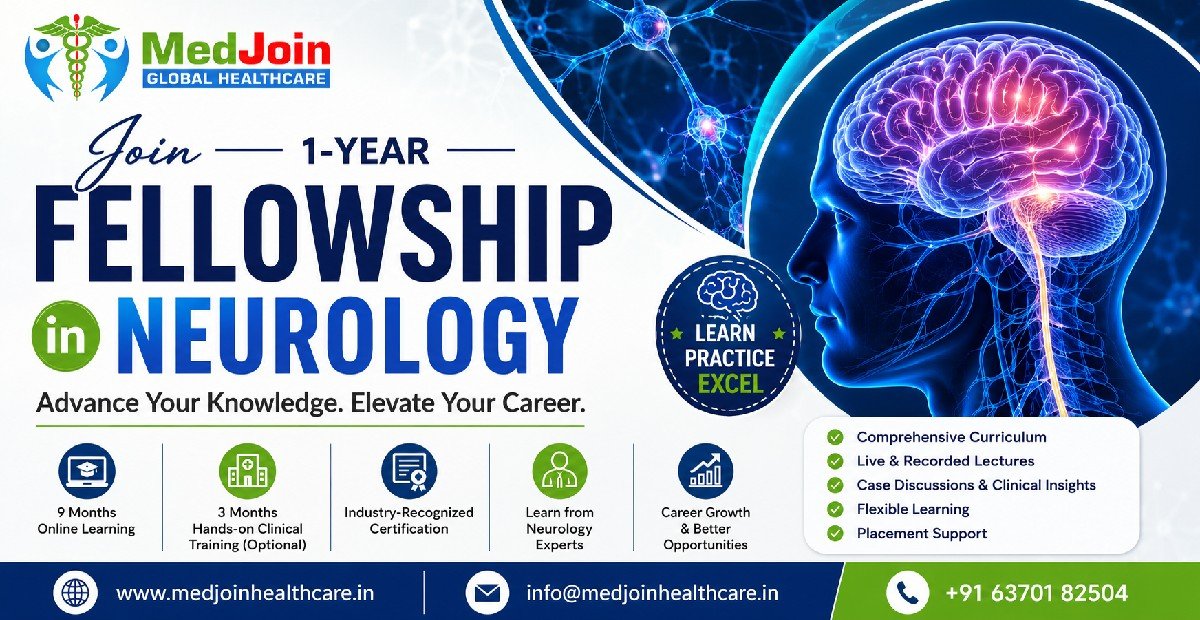
A 1-Year Fellowship in Neurology is an advanced professional training program designed to provide doctors with in-depth knowledge of neurological sciences, clinical diagnosis, disease management, neuroimaging interpretation, and emergency neurological care.
The curriculum combines:
- Online academic learning
- Clinical case discussions
- Recorded lectures
- Live interactive sessions
- Practical demonstrations
- Evidence-based guidelines
- Clinical exposure (where applicable)
The program prepares physicians to confidently manage common and complex neurological disorders in clinical practice.
Core Areas Covered During the Fellowship
The curriculum generally includes the following major domains.
Neuroanatomy
Participants develop a strong understanding of:
- Cerebral cortex
- Brainstem
- Cerebellum
- Cranial nerves
- Spinal cord
- Peripheral nervous system
- Autonomic nervous system
Understanding neuroanatomy is fundamental for lesion localization.
Neurophysiology
Topics include:
- Neuronal transmission
- Synaptic physiology
- Reflex pathways
- Motor systems
- Sensory systems
- Cortical function
- Autonomic physiology
Neurological Examination
Doctors learn systematic examination techniques including:
- Mental status assessment
- Cranial nerve examination
- Motor examination
- Sensory examination
- Reflex testing
- Coordination assessment
- Gait analysis
- Cerebellar examination
- Higher mental functions
A structured neurological examination remains the cornerstone of diagnosis.
Clinical Neurology
Major neurological disorders include:
- Stroke
- Epilepsy
- Headache disorders
- Parkinson's disease
- Dementia
- Neuropathies
- Multiple sclerosis
- Myopathies
- Movement disorders
- Sleep disorders
- Vertigo
- Neuromuscular diseases
Stroke Medicine
Stroke remains one of the leading causes of death worldwide.
Participants learn:
- Stroke classification
- Ischemic stroke
- Hemorrhagic stroke
- Acute stroke management
- Thrombolysis principles
- Secondary prevention
- Stroke rehabilitation
- Risk factor management
Epilepsy
Training covers:
- Seizure classification
- EEG interpretation
- Status epilepticus
- Anti-epileptic drugs
- Drug-resistant epilepsy
- Pregnancy and epilepsy
- Pediatric epilepsy
- Counseling
Headache Disorders
Participants study:
- Migraine
- Tension headache
- Cluster headache
- Secondary headaches
- Red flag symptoms
- Neuroimaging indications
- Preventive therapy
- Acute management
Movement Disorders
Topics include:
- Parkinson's disease
- Essential tremor
- Huntington's disease
- Dystonia
- Chorea
- Ataxia
- Drug-induced movement disorders
Dementia
The fellowship covers:
- Alzheimer's disease
- Vascular dementia
- Lewy body dementia
- Frontotemporal dementia
- Cognitive assessment
- Imaging
- Medical management
- Caregiver counseling
Peripheral Neuropathies
Doctors learn about:
- Diabetic neuropathy
- Guillain-Barré Syndrome
- CIDP
- Entrapment neuropathies
- Toxic neuropathies
- Hereditary neuropathies
Diagnosis includes clinical assessment and nerve conduction studies.
Neuromuscular Disorders
Topics include:
- Myasthenia gravis
- Muscular dystrophy
- Motor neuron disease
- Myopathies
- Neuromuscular junction disorders
Multiple Sclerosis
Participants understand:
- Demyelinating diseases
- Clinical presentation
- MRI findings
- CSF analysis
- Disease-modifying therapies
- Long-term follow-up
Neurocritical Care
Essential emergencies include:
- Raised intracranial pressure
- Coma
- Brain herniation
- Status epilepticus
- CNS infections
- Neurotrauma
- Acute spinal cord injury
Neuroimaging
Doctors gain familiarity with:
- CT Brain
- MRI Brain
- MR Angiography
- CT Angiography
- Diffusion MRI
- Functional MRI
- Spine MRI
- Contrast studies
Interpretation of imaging significantly improves clinical decision-making.
Neuropharmacology
Participants study medications including:
- Antiepileptic drugs
- Parkinson's medications
- Antiplatelet agents
- Anticoagulants
- Migraine therapies
- Immunomodulators
- Muscle relaxants
- Cognitive enhancers
Drug selection based on evidence and patient characteristics is emphasized.
Benefits of a Fellowship in Neurology
Doctors completing this fellowship enjoy several professional advantages:
- Advanced clinical knowledge
- Improved diagnostic confidence
- Better treatment planning
- Stronger CV
- Increased employability
- Career diversification
- Better patient satisfaction
- Opportunities in multispecialty hospitals
- Academic growth
- Lifelong learning
Neurology is one of the fastest-growing and most impactful medical specialties. With neurological disorders becoming increasingly common, physicians equipped with advanced neurological knowledge are in high demand across hospitals, emergency departments, intensive care units, rehabilitation centers, and specialty clinics.
A 1-Year Fellowship in Neurology provides an excellent opportunity to deepen your clinical expertise, improve diagnostic confidence, and advance your medical career. Whether you are an MBBS doctor, general physician, or practicing clinician seeking specialization, this fellowship can help you deliver better patient care while expanding your professional opportunities.
Why Choose a Fellowship in Neurology? Career Opportunities, Industry Demand & Future Scope (2026–2035)
Neurology has become one of the most dynamic and rapidly evolving medical specialties. Advances in neuroimaging, artificial intelligence (AI), neurogenetics, minimally invasive interventions, neurorehabilitation, and precision medicine are transforming the diagnosis and treatment of neurological disorders. At the same time, the global rise in stroke, dementia, Parkinson's disease, epilepsy, and neuropathies has created an urgent need for physicians with specialized neurological expertise.
A 1-Year Fellowship in Neurology equips medical professionals with advanced knowledge and practical skills to confidently manage neurological conditions, enhance patient outcomes, and unlock rewarding career opportunities.
Why Specialize in Neurology?
Every physician encounters neurological complaints in daily practice. Patients frequently present with symptoms such as:
- Headache
- Dizziness
- Weakness
- Numbness
- Tremors
- Seizures
- Memory loss
- Difficulty walking
- Speech problems
- Loss of consciousness
Many of these symptoms require prompt evaluation and timely intervention. Specialized neurological training enables doctors to identify serious conditions early and initiate appropriate management.
Essential Skills Developed During the Fellowship
Participants strengthen competencies in:
Clinical Skills
- Comprehensive neurological examination
- Cranial nerve assessment
- Motor and sensory examination
- Cerebellar evaluation
- Gait analysis
- Cognitive assessment
Diagnostic Skills
- CT interpretation
- MRI interpretation
- EEG basics
- EMG fundamentals
- Nerve conduction studies
- CSF interpretation
Clinical Management
- Stroke protocols
- Seizure management
- Headache treatment
- Parkinson's disease management
- Dementia care
- Neuromuscular disorders
Communication Skills
- Patient counseling
- Caregiver education
- Breaking difficult news
- Shared decision-making
- Long-term follow-up planning
Career Opportunities After a Fellowship in Neurology
A fellowship opens doors to diverse clinical and academic pathways.
1. Multispecialty Hospitals
Doctors can contribute to the diagnosis and management of neurological conditions alongside multidisciplinary teams.
2. Neurology Clinics
Opportunities include assisting neurologists or developing focused neurology services within broader clinical practice, depending on local regulations and credentials.
3. Stroke Centers
Specialized stroke units require physicians trained in:
- Acute stroke recognition
- Emergency management
- Secondary prevention
- Rehabilitation planning
4. Emergency Medicine
Neurological emergencies account for a significant proportion of emergency department visits, including:
- Stroke
- Status epilepticus
- Meningitis
- Encephalitis
- Coma
- Acute neuropathies
5. Intensive Care Units
Neurocritical care knowledge is valuable in managing:
- Raised intracranial pressure
- Brain injury
- Neuroinfections
- Ventilator management in neurological patients
6. Rehabilitation Medicine
Physicians play an important role in long-term care for patients recovering from:
- Stroke
- Spinal cord injuries
- Parkinson's disease
- Traumatic brain injury
7. Telemedicine
The rapid growth of telehealth has expanded access to neurological consultations, especially in underserved and rural regions.
8. Medical Education
Doctors with advanced training may contribute to teaching, mentoring, clinical training, and continuing medical education (CME) programs.
9. Clinical Research
Neurology remains an active area of research in:
- Stroke prevention
- Epilepsy
- Alzheimer's disease
- Parkinson's disease
- Multiple sclerosis
- Neurogenetics
- AI-assisted diagnosis
Growing Demand Across Healthcare Settings
Neurology-trained doctors are increasingly sought after in:
| Healthcare Setting | Role |
|---|---|
| Corporate Hospitals | Clinical management of neurological disorders |
| Medical Colleges | Teaching and academic support |
| Stroke Centers | Acute stroke evaluation and treatment |
| Critical Care Units | Neurocritical care collaboration |
| Rehabilitation Centers | Long-term neurological recovery |
| Telemedicine Services | Remote neurological consultations |
| Diagnostic Centers | Clinical interpretation and coordination |
| Research Institutes | Clinical trials and neurological research |
Technologies Transforming Neurology
Modern neurology increasingly relies on advanced technologies, including:
- Artificial Intelligence (AI)
- Machine Learning
- Deep Learning in Imaging
- Functional MRI
- Diffusion Tensor Imaging
- PET Imaging
- Neurogenetics
- Wearable Monitoring Devices
- Digital Biomarkers
- Brain-Computer Interfaces
- Robotic Rehabilitation
Doctors who understand these innovations are better prepared for the future of neurological care.
Future Scope of Neurology (2026–2035)
The coming decade is expected to bring major advancements in neurological diagnosis and treatment.
Artificial Intelligence
AI tools are expected to support faster detection of stroke, brain tumors, and neurodegenerative diseases through advanced imaging analysis.
Precision Medicine
Genetic profiling may enable more personalized treatment plans for conditions such as epilepsy and multiple sclerosis.
Neurogenetics
Genomic testing will play an increasingly important role in diagnosing inherited neurological disorders.
Robotic Neurorehabilitation
Robotic-assisted rehabilitation is expected to enhance recovery following stroke and spinal cord injury.
Brain–Computer Interfaces
Emerging technologies are exploring communication and mobility solutions for patients with severe neurological disabilities.
Digital Health
Wearable devices and remote monitoring are improving long-term management of neurological diseases through continuous data collection and telehealth integration.
Why Employers Value Fellowship-Trained Doctors
Healthcare organizations increasingly seek clinicians who demonstrate:
- Strong clinical reasoning
- Evidence-based practice
- Advanced diagnostic abilities
- Interdisciplinary collaboration
- Commitment to continuous learning
- Effective patient communication
- Confidence in managing complex neurological cases
A structured fellowship helps build these competencies and showcases dedication to professional development.
How This Fellowship Supports Long-Term Career Growth
A 1-Year Fellowship in Neurology can help you:
- Expand your clinical knowledge
- Improve patient care
- Strengthen your professional profile
- Build confidence in neurological diagnosis
- Stay updated with evolving medical practices
- Prepare for leadership and academic opportunities
- Enhance your lifelong learning journey
Neurology is no longer a niche specialty—it is a critical component of modern healthcare. As neurological diseases become more prevalent and medical technologies continue to advance, physicians with focused neurological training will remain in high demand.
A 1-Year Fellowship in Neurology provides a structured pathway to deepen your expertise, improve your diagnostic capabilities, and contribute meaningfully to patient care. Whether you aspire to work in hospitals, emergency medicine, rehabilitation, research, or medical education, specialized training in neurology can be a valuable step in your professional development.