
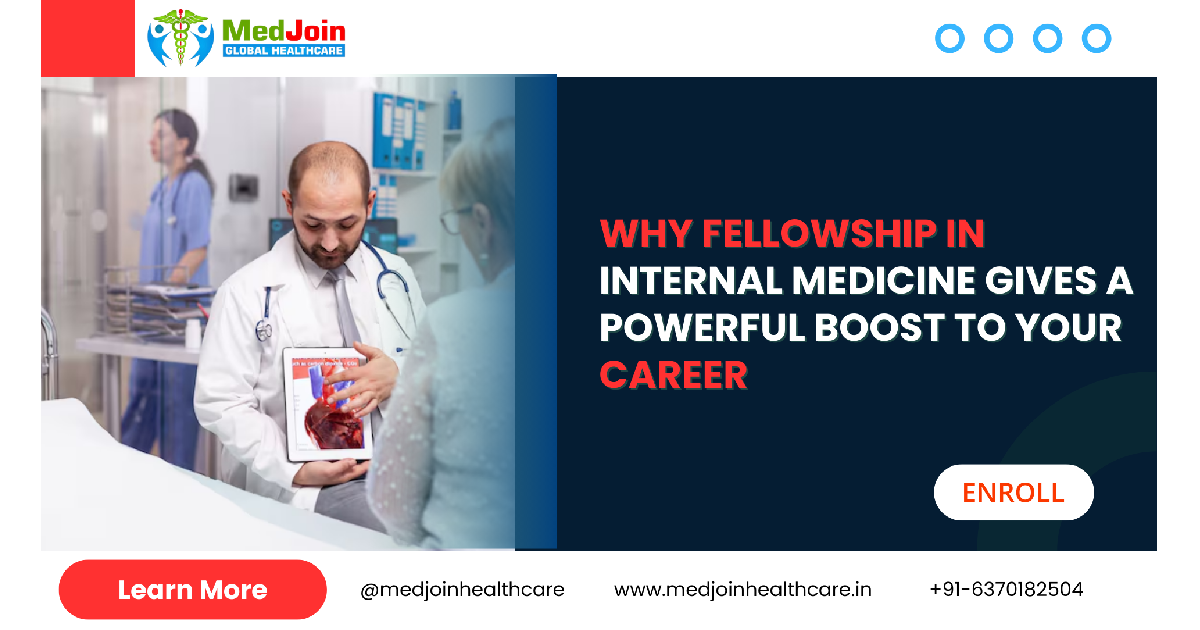
In today’s competitive and rapidly evolving healthcare landscape, specialization is more than a credential—it is a strategic career move. A fellowship in Internal Medicine represents one of the most impactful steps a physician can take after completing residency. Whether your goal is clinical excellence, academic leadership, global opportunities, or financial growth, subspecialty training can significantly elevate your professional trajectory.
Internal Medicine itself is a broad and intellectually rich discipline. However, pursuing a fellowship allows you to develop deep expertise in a focused area such as cardiology, gastroenterology, oncology, endocrinology, or infectious diseases. Institutions like American Board of Internal Medicine and Accreditation Council for Graduate Medical Education set rigorous standards for subspecialty training, ensuring fellows graduate with high-level competency and credibility.
This comprehensive guide explores why a fellowship in Internal Medicine can give your career a substantial boost—from professional growth and earning potential to leadership opportunities and global recognition.
1. Deep Clinical Expertise and Authority
Moving Beyond General Practice
Internal Medicine residency builds a strong foundation in diagnosing and managing complex adult diseases. However, a fellowship transforms that foundation into mastery. For example:
- A cardiology fellow becomes an expert in advanced heart failure management, cardiac imaging, and interventional procedures.
- A gastroenterology fellow gains expertise in endoscopy, colonoscopy, liver disease management, and inflammatory bowel disease.
- An infectious disease specialist develops in-depth knowledge of antimicrobial stewardship, tropical diseases, and hospital epidemiology.
This depth of knowledge positions you as a trusted authority in your field.
Managing Complex and Rare Conditions
Subspecialists often manage cases that general internists refer. These cases require advanced diagnostic reasoning and therapeutic decision-making. By handling high-acuity, complex patients, fellows develop a reputation for clinical excellence, which enhances long-term career prospects.
2. Increased Career Opportunities
Academic Medicine
If you aspire to teach or conduct research, a fellowship is often essential. Academic medical centers frequently require subspecialty training for faculty positions. Organizations such as Mayo Clinic, Cleveland Clinic, and Johns Hopkins Hospital prioritize fellowship-trained physicians for consultant and attending roles.
Fellowship-trained physicians are better positioned to:
- Lead clinical trials
- Publish in peer-reviewed journals
- Present at international conferences
- Mentor residents and medical students
Hospital Leadership Roles
Subspecialty training often opens doors to leadership positions such as:
- Department Head
- Clinical Director
- Program Director
- Quality Improvement Lead
Hospitals increasingly value physicians with advanced expertise to guide service lines and strategic initiatives.
3. Higher Earning Potential
While compensation varies by region and specialty, subspecialists generally earn more than general internists.
For example:
- Cardiologists and gastroenterologists often rank among the higher-earning internal medicine subspecialists.
- Pulmonologists and critical care specialists may command strong salaries due to procedural skills and ICU responsibilities.
- Hematology-oncology specialists are in high demand, particularly with the growing burden of cancer worldwide.
Although fellowship training delays full earning potential by a few years, the long-term financial benefits often outweigh the temporary reduction in income.
4. Greater Professional Recognition
Certification and Board Credentials
After completing fellowship, physicians typically obtain subspecialty board certification through bodies such as the American Board of Internal Medicine. This credential enhances professional credibility and patient trust.
Board-certified subspecialists are often preferred by:
- Hospitals
- Insurance networks
- Academic institutions
- Multidisciplinary teams
Reputation Among Peers
Being recognized as “the expert” in a particular field enhances your professional standing. Referrals from other physicians increase, strengthening your clinical network and reputation.
5. Expanded Research Opportunities
Subspecialty fellowships frequently include structured research training. Fellows learn:
- Study design
- Statistical analysis
- Clinical trial coordination
- Grant writing
This training enables you to contribute meaningfully to medical advancement.
Publishing and Conferences
Fellowship programs encourage scholarly output. Presenting at national and international meetings strengthens your CV and expands professional connections. Many fellows publish in reputable journals and become thought leaders in their area of expertise.
6. Global Career Mobility
Fellowship training increases international recognition. Many countries recognize subspecialty credentials from accredited programs, particularly those aligned with organizations such as the Royal College of Physicians or the European Society of Cardiology.
This opens opportunities for:
- International faculty appointments
- Global health initiatives
- Collaborative research projects
- Migration pathways in certain regions
Subspecialists are often prioritized for recruitment in countries facing workforce shortages.
7. Networking and Mentorship
Learning from Leaders
Fellowship programs provide direct mentorship from established experts. Training at globally recognized institutions—such as Harvard Medical School—exposes fellows to pioneering clinicians and researchers.
Mentorship during fellowship often evolves into lifelong professional relationships.
Building a Strong Professional Network
Fellowship connects you with:
- Faculty mentors
- Co-fellows
- Interdisciplinary collaborators
- Industry contacts
These networks are invaluable for future career transitions, research collaborations, and leadership opportunities.
8. Enhanced Confidence and Clinical Judgment
Subspecialty training fosters clinical maturity. Fellows manage high-risk procedures, complex cases, and multidisciplinary discussions.
This builds:
- Decision-making confidence
- Procedural competency
- Crisis management skills
- Ethical reasoning
Over time, this experience distinguishes subspecialists as leaders within clinical teams.
9. Contribution to Healthcare Innovation
Many breakthroughs in medicine emerge from subspecialty research and clinical innovation.
Examples include:
- Advances in interventional cardiology
- Novel biologic therapies in rheumatology
- Precision oncology treatments
- Antimicrobial stewardship programs in infectious diseases
Fellowship-trained physicians are often at the forefront of implementing and advancing these innovations.
10. Competitive Edge in a Saturated Job Market
Healthcare markets in many regions are becoming increasingly competitive. Fellowship training differentiates you from peers.
Hospitals and private practices may prioritize fellowship-trained candidates for:
- Subspecialty clinics
- Advanced procedural roles
- Academic appointments
- Tertiary care centers
In many urban areas, fellowship training is not just advantageous—it is expected.
11. Opportunities for Sub-Subspecialization
Some fellows pursue additional advanced training, such as:
- Interventional cardiology
- Electrophysiology
- Advanced endoscopy
- Transplant hepatology
- Critical care
Each additional layer of specialization further enhances professional distinction and earning potential.
12. Personal Fulfillment and Passion
Beyond financial and professional benefits, fellowship allows physicians to focus on what truly excites them.
If you are passionate about heart disease, autoimmune disorders, cancer care, or metabolic conditions, fellowship allows you to immerse yourself in that domain daily.
Professional satisfaction often increases when physicians practice in an area aligned with their interests.
13. Development of Teaching Skills
Many fellowship programs integrate teaching responsibilities. Fellows often:
- Supervise residents
- Conduct lectures
- Lead journal clubs
- Provide bedside teaching
These experiences refine communication and leadership skills essential for academic or leadership roles.
14. Exposure to Advanced Technology
Subspecialty training exposes physicians to cutting-edge technology such as:
- Cardiac catheterization labs
- Advanced imaging modalities
- Robotic-assisted procedures
- Molecular diagnostics
Experience with advanced tools increases employability and clinical capability.
15. Long-Term Career Stability
Specialists often experience sustained demand due to:
- Aging populations
- Chronic disease burden
- Technological advancements
- Evolving therapeutic options
Fields like cardiology, oncology, and endocrinology are expected to remain essential components of healthcare systems globally.
16. Leadership in Multidisciplinary Care
Subspecialists frequently lead multidisciplinary teams, coordinating care with:
- Surgeons
- Radiologists
- Pharmacists
- Nurses
- Rehabilitation specialists
Leadership in collaborative care models enhances both patient outcomes and professional recognition.
17. Increased Autonomy
Subspecialists often enjoy greater clinical independence. With recognized expertise, they may:
- Establish specialty clinics
- Lead service lines
- Influence institutional protocols
- Develop niche practice areas
This autonomy can be professionally empowering.
18. Enhanced Patient Trust
Patients seeking specialized care often research credentials. Fellowship training and board certification reassure patients about your expertise.
A subspecialist’s opinion is frequently sought for second opinions and complex case consultations.
19. Adaptability to Evolving Medicine
Medicine evolves rapidly. Subspecialty training positions physicians at the cutting edge of evidence-based practice.
Ongoing continuing medical education and conference participation keep specialists updated on emerging therapies and technologies.
20. Strong Foundation for Policy and Advocacy
Subspecialists often contribute to guideline development and healthcare policy through organizations such as the World Health Organization.
Expertise in a focused field strengthens your voice in policy discussions and healthcare reform initiatives.
Challenges to Consider
While the benefits are substantial, fellowship also requires:
- Additional years of training
- Temporary financial sacrifice
- Intense workload
- Competitive application process
However, for many physicians, the long-term professional and personal rewards justify these investments.
A fellowship in Internal Medicine is more than an academic extension—it is a transformative career decision. It enhances clinical expertise, increases earning potential, opens academic and leadership pathways, strengthens global mobility, and provides professional fulfillment.
In an era where healthcare demands specialization, advanced training sets you apart. Whether you envision leading a department, pioneering research, influencing policy, or delivering highly specialized patient care, fellowship training can serve as the catalyst that elevates your career to the next level.
For physicians committed to excellence, innovation, and long-term impact, a fellowship in Internal Medicine is not just an option—it is a strategic advantage.