
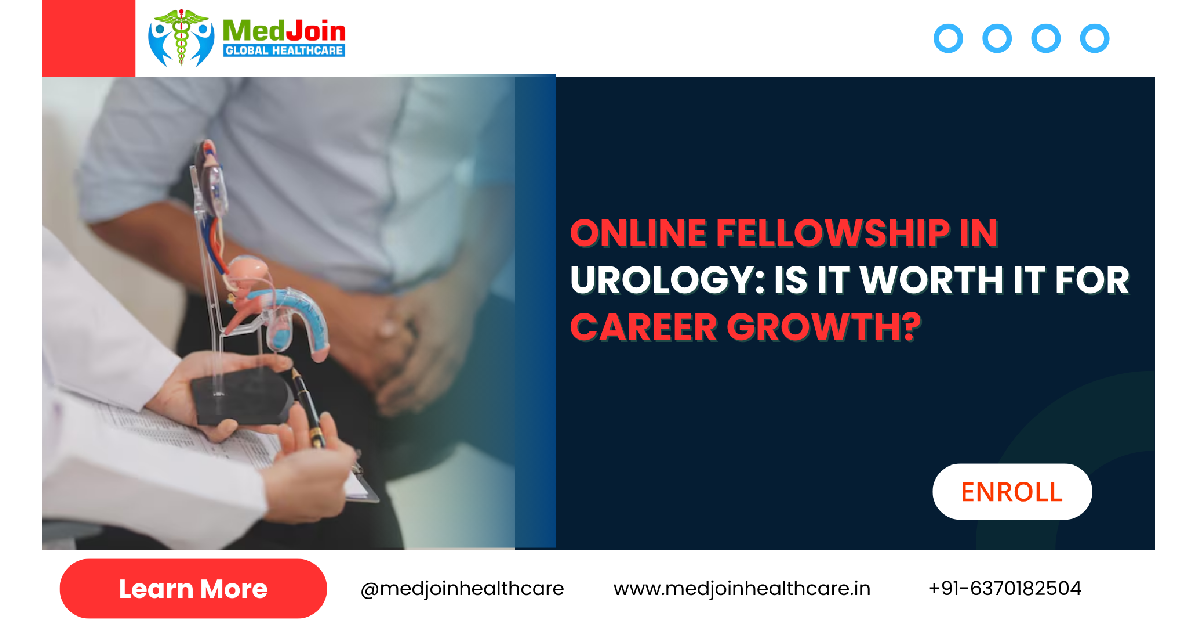
In the rapidly evolving landscape of medical education, online fellowships and certificates have emerged as attractive avenues for professional growth. Among these, online fellowships in subspecialties like urology are gaining traction. However, many clinicians and trainees ask: Is an online fellowship in urology genuinely beneficial for career advancement? This in-depth article explores this question from multiple angles — educational value, clinical relevance, recognition, career impact, advantages, limitations, and future outlook.
1. Understanding Fellowships and Online Education in Medicine
1.1 What is a Fellowship in Medicine?
A fellowship is a post-residency educational program that provides advanced training in a subspecialty. In urology, fellowships typically concentrate on areas such as:
- Endourology
- Oncology
- Reconstructive Urology
- Pediatric Urology
- Andrology and Male Infertility
- Female Pelvic Medicine (Urogynecology)
Fellowships are designed to deepen clinical skills, expand research experience, and prepare physicians for specialized practice or academic roles.
1.2 Rise of Online Education
Over the past decade, digital education platforms have expanded tremendously. Medical education is no exception — with online courses, webinars, certificates, and fellowships becoming widely available. These programs can range from brief modules to several months of structured online training.
Online medical education particularly gained momentum during and after the COVID-19 pandemic, with many institutions adapting curricula to virtual formats.
2. What is an Online Fellowship in Urology?
An online fellowship in urology typically consists of:
- Didactic lectures via video or live webinars
- Interactive sessions such as case discussions
- Research mentoring
- Assessments (quizzes, assignments)
- Virtual simulations or modules on techniques
- Capstone projects
Some programs may also offer optional short in-person workshops or clinical observerships.
2.1 Examples of Online Urology Fellowship Models
Although fully online urology fellowships are still relatively new, programs may be offered by:
- Universities with digital learning divisions
- Professional societies (e.g., national urological associations)
- Private medical education platforms
- Hybrid models combining online and in-person clinical exposure
3. Are Online Fellowships Recognized?
3.1 Accreditation and Certification
One of the critical questions for career growth is whether employers and regulatory bodies recognize online fellowship certificates:
- If the online fellowship is offered by a recognized medical institution or reputable professional body, it is more likely to carry weight in your CV.
- In some countries, pure online courses may not grant formal fellowship status recognized by medical councils.
- Hybrid fellowships with verified clinical components have better legitimacy.
3.2 Academic vs. Professional Recognition
- Academically, online fellowships are often acknowledged as additional education.
- Professionally, their value depends on institutional policies, employer perceptions, and regional accreditation norms.
4. Potential Career Benefits
An online urology fellowship can positively influence several aspects of your career:
4.1 Enhanced Clinical Knowledge
The primary benefit is deeper understanding of subspecialty concepts — from surgical techniques and patient management to evidence-based practices.
4.2 Career Differentiation
In a competitive job market, additional fellowship training — even online — can differentiate you from peers, showing initiative and commitment to specialization.
4.3 Research Exposure
Many online programs emphasize research methodology, critical appraisal skills, and publication support — which is valuable for careers in academia.
4.4 Academic Opportunities
- Teaching roles
- Invitations to speak at conferences
- Collaboration with researchers
- Eligibility for advanced higher degrees
4.5 Networking
Online fellowships often connect you with:
- International faculty
- Experts in subspecialties
- Fellows from diverse backgrounds
This expands your professional network, which can lead to collaborations, referrals, or job opportunities.
5. Practical Limitations to Consider
While there are benefits, online fellowships also have limitations:
5.1 Limited Hands-On Training
Urology is a surgical and hands-on specialty. Online programs can teach theory, videos, and discussions — but not replace access to real clinical cases or operative experience.
5.2 Variable Recognition
Not all certificates carry equal weight. Some employers and credentialing bodies may value traditional clinical fellowships more than online ones.
5.3 Lack of Mentorship in Practice
Mentorship and real-time supervision are important for surgical skills — something that online formats struggle to provide.
5.4 Time and Self-Discipline Requirements
Online learning demands strong self-motivation, discipline, and time management, especially when balancing clinical duties.
6. Comparing Online vs. Traditional Clinical Fellowships
| Criteria | Traditional Clinical Fellowships | Online Fellowships |
|---|---|---|
| Clinical Exposure | ✔️ Extensive | ❌ Minimal or none |
| Surgical Hands-On Training | ✔️ Yes | ❌ Rare |
| Accessibility | ❌ Limited | ✔️ High |
| Cost | High | Lower |
| Flexibility | ❌ Fixed schedule | ✔️ Flexible |
| Networking | ✔️ Strong in-person | ✔️ Virtual |
| Research Focus | Variable | Often emphasized |
| Global Access | ❌ Limited | ✔️ Wide |
Interpretation
Online fellowships excel in theoretical knowledge, flexibility, accessibility, and research foundations, while traditional ones lead in clinical and surgical competencies.
7. Who Should Consider an Online Fellowship in Urology?
7.1 Early Career Clinicians
Those exploring subspecialty interests before committing to a full clinical fellowship may benefit from gaining foundational knowledge online.
7.2 Practicing Urologists Seeking Continued Education
Online fellowships offer opportunities to update knowledge in areas like:
- Minimally invasive procedures
- Evidence-based practice
- Advanced diagnostic techniques
7.3 Physicians in Remote Areas
Clinicians in regions with limited access to subspecialty training can use online fellowships as a valuable resource.
7.4 Candidates Aiming for Research and Academic Growth
If your goals include publishing research, participating in clinical trials, or teaching, online programs with research components can contribute positively.
8. How to Evaluate an Online Urology Fellowship Program
Before enrolling, assess the program on these points:
8.1 Accreditation and Reputation
- Which institution offers it?
- Is it recognized by national medical councils?
- Does it have affiliations with universities or professional societies?
8.2 Curriculum Quality
Look for:
- Comprehensive modules
- Evidence-based content
- Assessments and feedback mechanisms
8.3 Faculty Expertise
Experienced faculty with strong clinical and academic backgrounds adds credibility.
8.4 Research and Mentorship Opportunities
Programs that integrate research projects, publications guidance, and mentorship are more valuable.
8.5 Networking and Alumni Outcomes
- Active professional communities
- Alumni testimonials
- Job or collaboration placements
9. How an Online Fellowship Can Be Leveraged for Career Growth
Simply completing a program doesn’t automatically translate into career advancement. Here’s how to strategically use your online fellowship:
9.1 Highlight it on Your CV and LinkedIn
Emphasize:
- Skills gained
- Research projects
- Faculty or institutional names
- Relevant assessments completed
9.2 Apply Knowledge in Clinical Practice
Even theoretical knowledge can improve:
- Diagnostic decision-making
- Treatment planning
- Patient counseling
- Integration of evidence-based methods
9.3 Publish Research or Case Reports
If your fellowship involved a project:
- Convert it into a peer-reviewed publication
- Present at conferences or webinars
- Use it as starter work for bigger research
9.4 Network Actively
Participate in alumni groups, discussion forums, and virtual symposia to build connections.
9.5 Use it as an Entry Ticket for Traditional Fellowship
Some clinicians use online fellowships as a stepping stone to more competitive clinical fellowships by demonstrating focused interest and foundational knowledge.
10. Real-World Career Trajectories After Online Fellowships
While traditional clinical fellowships remain the gold standard for surgical competence and academic posts, online fellowships have shown value in certain trajectories:
10.1 Clinical Practice with Enhanced Expertise
Physicians can offer higher-level consultations, adopt newer technologies, and better manage complex cases.
10.2 Academic and Teaching Roles
Online certifications plus publications can qualify you for:
- Lecturer positions
- Training responsibilities
- Curriculum contributions
10.3 Research Careers
Strong online fellowship programs often provide research mentorship, which helps:
- Secure research funding
- Publish in recognized journals
- Collaborate globally
10.4 Leadership and Administration Roles
Professionals with structured advanced training are more likely to be considered for:
- Departmental leadership
- Clinical governance roles
- Quality improvement initiatives
-
11. Challenges and Criticisms of Online Fellowships
Despite their benefits, online medical fellowships face valid criticism.
11.1 Perceived as “Less Rigorous”
Some traditionalists argue that online programs lack the rigor and immersion of in-person fellowships.
11.2 Not a Substitute for Clinical Competence
Theory without real patient interaction can leave gaps in practical abilities.
11.3 Variable Standards
Because online programs vary widely in quality, some certificates may not hold much value.
11.4 Overemphasis on Certificates
There’s a risk that employers may start to view certificates as check-boxes unless they’re backed by demonstrable skills and results.
12. Future Trends: Where Online Medical Fellowships Are Headed
The future holds promise for online medical education, especially in surgical specialties:
12.1 Hybrid Models
Blended programs with online theory and short clinical residencies can combine the best of both worlds.
12.2 Virtual Reality (VR) and Simulated Training
Advancements in simulation technology may enable virtual surgical training, narrowing the gap between theory and practice.
12.3 Global Collaborative Fellowships
Cross-institutional online programs with global faculty can offer diverse perspectives and international recognition.
12.4 Lifelong Learning Frameworks
Medicine demands continuous education. Online fellowships fit well into lifelong learning models where professionals continuously upskill.
13. Practical Tips for Candidates Considering an Online Urology Fellowship
Here’s a checklist to help you decide:
13.1 Define Your Career Goals
- Do you aim for clinical excellence,
- Academic roles,
- Research,
- Leadership?
Choose a program that aligns.
13.2 Check Eligibility and Workload
Understand:
- Time commitment
- Assessments
- Requirements for completion
13.3 Interview Alumni
They can provide insights into real outcomes.
13.4 Evaluate Cost-to-Benefit
Compare tuition vs. potential career impact.
13.5 Understand Recognition in Your Region
Check if your medical council or employers value such certifications.
14. Conclusion: Is an Online Fellowship in Urology Good for Career Growth?
Short answer: Yes — but with context.
An online fellowship in urology can be a valuable addition to your professional profile — especially for enhancing theoretical knowledge, research exposure, networking, and academic credibility. It is particularly beneficial for:
- Clinicians in remote areas
- Those seeking flexible learning
- Professionals aiming to strengthen research portfolios
- Individuals looking for foundational specialization before a traditional fellowship
However, it cannot fully replace the clinical training, hands-on experience, and surgical supervision that traditional in-person fellowships provide. Employers and academic institutions may value online fellowships differently based on accreditation, reputation, and evidentiary impact.
Bottom Line
An online fellowship in urology can boost career growth — particularly when chosen wisely, aligned with your goals, and supplemented by clinical experience, research outputs, and active professional engagement.