
Neurology has emerged as one of the most dynamic and rapidly advancing specialties in modern medicine. With the increasing global burden of neurological disorders such as stroke, epilepsy, Parkinson’s disease, migraine, dementia, neuropathies, and neurocritical illnesses, the demand for highly skilled healthcare professionals in neurology is growing significantly. Hospitals, healthcare institutions, research centers, and medical universities across the world are actively seeking doctors with advanced neurological expertise who can provide specialized patient care and contribute to improved healthcare outcomes.
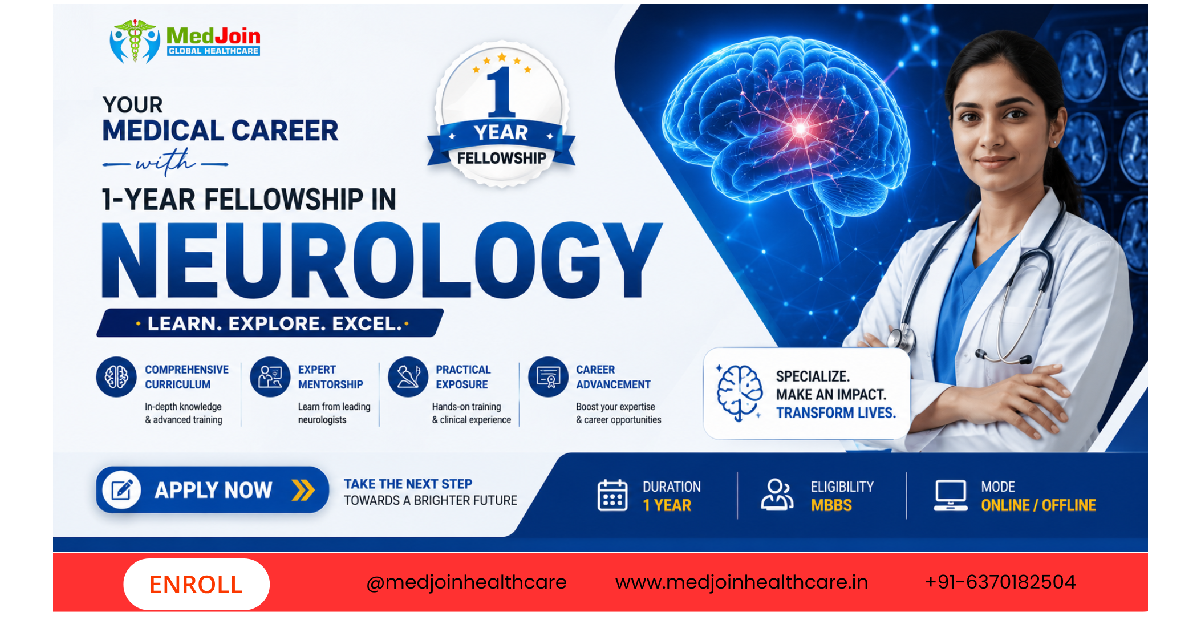
For MBBS doctors, MD physicians, DNB graduates, general practitioners, and healthcare professionals looking to advance their careers, enrolling in a 1-Year Fellowship in Neurology can be a transformative step. This specialized fellowship program provides in-depth theoretical knowledge, practical clinical exposure, hands-on training, and advanced neurological skill development that help medical professionals become future-ready specialists in neurological sciences.
A fellowship in neurology is not just an academic qualification; it is a gateway to professional growth, career advancement, international opportunities, enhanced clinical expertise, and greater confidence in handling neurological cases. Whether you aim to work in multispecialty hospitals, neurological centers, ICUs, emergency departments, research institutions, or private practice, a structured fellowship in neurology equips you with the latest medical knowledge and practical experience needed to excel in today’s competitive healthcare industry.
The healthcare landscape is evolving rapidly with the integration of advanced neurodiagnostic technologies, AI-powered healthcare systems, precision medicine, neuroimaging innovations, and evidence-based neurological care protocols. Therefore, doctors who upgrade their qualifications through specialized neurology fellowship programs gain a competitive advantage in both national and international healthcare sectors.
This comprehensive guide will help you understand everything about a 1-Year Fellowship in Neurology — including program benefits, curriculum, eligibility, career scope, clinical exposure, future opportunities, salary prospects, and why now is the perfect time to apply.
Why Neurology Is Becoming One of the Most Important Medical Specialties
Neurology focuses on diagnosing, managing, and treating disorders related to the nervous system, including the brain, spinal cord, nerves, and muscles. Neurological disorders affect millions of people worldwide and are becoming increasingly common due to aging populations, lifestyle changes, stress, diabetes, hypertension, and other chronic health conditions.
Growing Burden of Neurological Diseases
The prevalence of neurological disorders is rising globally due to several factors:
- Increased life expectancy
- Sedentary lifestyle
- Growing incidence of stroke
- Rise in neurodegenerative disorders
- Increased mental stress and neurological complications
- Higher prevalence of diabetes-related neuropathies
- Road traffic accidents causing neurological trauma
- Improved diagnosis and awareness
Conditions such as:
- Stroke
- Epilepsy
- Alzheimer’s disease
- Parkinson’s disease
- Migraine
- Multiple sclerosis
- Neuromuscular disorders
- Neuroinfections
- Brain tumors
- Peripheral neuropathies
require specialized neurological expertise for effective management.
As a result, healthcare institutions are actively searching for trained neurology professionals who can provide advanced neurological care.
What Is a 1-Year Fellowship in Neurology?
A 1-Year Fellowship in Neurology is an advanced medical training program designed to provide comprehensive knowledge and practical clinical exposure in neurological sciences. The fellowship aims to bridge the gap between theoretical medical education and real-world neurological practice.
The program typically includes:
- Advanced neurology theory
- Clinical rotations
- Neurological case discussions
- Hands-on patient management
- Neurodiagnostic training
- Emergency neurology management
- ICU neurology exposure
- Research and evidence-based learning
- Practical neurological assessment techniques
This fellowship is ideal for:
- MBBS doctors
- MD Medicine graduates
- DNB physicians
- General practitioners
- Internal medicine doctors
- Healthcare professionals interested in neuroscience
The program helps doctors build expertise in diagnosing and managing neurological disorders using modern clinical approaches and advanced medical technologies.
Why You Should Upgrade Your Medical Career with a Neurology Fellowship
1. High Demand for Neurology Specialists
The shortage of trained neurologists and neurology-trained physicians has created enormous career opportunities worldwide. Many hospitals struggle to meet the growing demand for neurological care due to a lack of qualified specialists.
A fellowship in neurology increases your employability and makes you a valuable asset in:
- Multispecialty hospitals
- Super-specialty centers
- Neuro ICUs
- Emergency departments
- Stroke units
- Rehabilitation centers
- Research institutions
- Academic medical colleges
Doctors with neurology expertise are increasingly preferred for higher clinical roles and leadership positions.
2. Career Advancement Opportunities
A fellowship in neurology can significantly accelerate your professional growth.
Career opportunities after completing the fellowship include:
- Clinical neurologist assistant
- Neuro physician
- Neuro ICU specialist
- Stroke care physician
- Emergency neurology consultant
- Academic faculty
- Research associate
- Neurorehabilitation physician
- Tele-neurology consultant
The fellowship strengthens your CV and improves your chances of securing better roles both nationally and internationally.
3. Specialized Clinical Expertise
General medical practice often provides limited exposure to advanced neurological disorders. A fellowship program offers focused and structured training in:
- Neurological examination
- Stroke management
- Epilepsy treatment
- Movement disorders
- Neurocritical care
- Neuroimaging interpretation
- EEG interpretation
- Neuromuscular disorders
- Dementia management
This specialized expertise helps doctors confidently manage complex neurological cases.
4. Better Salary and Professional Recognition
Doctors with fellowship qualifications often receive:
- Higher salary packages
- Better promotions
- Increased patient trust
- Leadership opportunities
- Enhanced professional recognition
Specialized neurology skills increase your market value in the healthcare industry.
5. International Career Opportunities
Neurology is a globally recognized specialty. Doctors with fellowship training can explore opportunities in:
- Gulf countries
- UK
- USA
- Canada
- Australia
- Singapore
- Europe
- Africa
International healthcare systems value doctors with advanced neurological training and clinical competency.
Key Highlights of the 1-Year Fellowship in Neurology
Comprehensive Curriculum
The program covers a broad range of neurological topics including:
- Neuroanatomy
- Neurophysiology
- Neuropharmacology
- Stroke medicine
- Epilepsy
- Neurocritical care
- Movement disorders
- Headache disorders
- Dementia
- Neuroinfections
- Neuromuscular diseases
- Pediatric neurology basics
- Neuro-oncology
Hands-On Clinical Training
Clinical exposure is one of the most valuable components of the fellowship.
Doctors gain practical experience in:
- Neurological examinations
- Patient history taking
- Neurological diagnosis
- ICU neurological care
- Emergency stroke management
- EEG procedures
- Lumbar puncture assistance
- Neuroimaging interpretation
- Patient counseling
Hands-on learning builds confidence and clinical efficiency.
Exposure to Advanced Technologies
Modern neurology relies heavily on advanced medical technologies. Fellowship programs expose doctors to:
- MRI
- CT scans
- EEG
- EMG
- NCV
- Neurosonology
- AI-based diagnostics
- Tele-neurology systems
Understanding these technologies improves diagnostic accuracy and treatment planning.
Learning from Experienced Neurologists
Participants get mentorship from senior neurologists, neuro physicians, and specialists who guide them through:
- Case management
- Clinical decision-making
- Diagnostic approaches
- Emergency protocols
- Research methodologies
This mentorship plays a critical role in professional development.
Curriculum of Fellowship in Neurology
Module 1: Basics of Neurology
- Neuroanatomy
- Neurophysiology
- Neurological examination
- Nervous system disorders
- Neurological symptom assessment
Module 2: Stroke Medicine
- Acute ischemic stroke
- Hemorrhagic stroke
- Thrombolysis principles
- Stroke ICU management
- Rehabilitation strategies
Module 3: Epilepsy and Seizure Disorders
- Types of seizures
- EEG interpretation
- Anti-epileptic drugs
- Emergency seizure management
- Status epilepticus
Module 4: Headache and Migraine Disorders
- Migraine diagnosis
- Tension headaches
- Cluster headaches
- Chronic headache management
- Preventive neurology
Module 5: Neurocritical Care
- ICU neurology
- Ventilator support
- Neurological emergencies
- Brain injury management
- Neuro-monitoring
Module 6: Movement Disorders
- Parkinson’s disease
- Tremors
- Huntington’s disease
- Dystonia
- Motor coordination disorders
Module 7: Dementia and Cognitive Disorders
- Alzheimer’s disease
- Memory disorders
- Cognitive assessment
- Neurodegenerative diseases
- Geriatric neurology
Module 8: Neuromuscular Disorders
- Peripheral neuropathy
- Myasthenia gravis
- Motor neuron disease
- Muscular dystrophy
- EMG basics
Module 9: Neuroimaging and Diagnostics
- MRI interpretation
- CT scan basics
- EEG
- EMG
- NCV
Module 10: Research and Evidence-Based Neurology
- Clinical research
- Case studies
- Medical publications
- Evidence-based medicine
- Neurology updates
Eligibility Criteria for Fellowship in Neurology
Eligibility may vary by institution, but generally includes:
- MBBS doctors
- MD Medicine
- DNB Medicine
- BAMS with relevant experience (in some programs)
- International medical graduates
- Registered medical practitioners
Doctors with an interest in neurological sciences and patient care are encouraged to apply.
Skills You Gain During the Fellowship
After completing the fellowship, doctors develop expertise in:
- Neurological diagnosis
- Clinical neurology
- Stroke management
- ICU neurological care
- Neuroimaging interpretation
- Emergency neurological response
- Patient communication
- Research skills
- Critical thinking
- Multidisciplinary coordination
These skills significantly enhance overall clinical competency.
Importance of Neurology Training in Modern Healthcare
Neurological diseases are among the leading causes of disability and mortality globally. Modern healthcare systems increasingly require physicians trained in neurological sciences because:
- Stroke cases are increasing rapidly
- Aging populations are growing
- Neurodegenerative diseases are becoming more common
- Emergency neurological management is critical
- Neuro ICU demand is rising
- AI and technology integration require specialized training
Healthcare systems need professionals who can deliver rapid, evidence-based neurological care.
Career Opportunities After Fellowship in Neurology
1. Multispecialty Hospitals
Doctors can work in:
- Neurology departments
- ICUs
- Stroke units
- Emergency medicine
- Neurorehabilitation units
2. Super-Specialty Neuro Centers
Advanced neurological hospitals prefer doctors with fellowship-level expertise for clinical support and patient management.
3. Academic Institutions
Doctors can pursue careers in:
- Teaching
- Clinical training
- Research
- Medical education
4. Research Opportunities
Neurology research is growing rapidly in areas such as:
- Neurodegenerative disorders
- AI in neurology
- Brain imaging
- Stroke therapies
- Neurogenetics
Doctors can participate in clinical trials and research programs.
5. International Healthcare Careers
Many countries face shortages of neurology-trained professionals. Fellowship-qualified doctors can apply for international roles in hospitals and healthcare systems.
Salary Prospects After Neurology Fellowship
Salary depends on:
- Experience
- Country
- Hospital
- Clinical expertise
- Location
However, doctors with neurology fellowships generally earn significantly more than general practitioners due to their specialized expertise.
Potential benefits include:
- Higher compensation
- Performance incentives
- Leadership opportunities
- Academic growth
- Better job security
Benefits of Pursuing a 1-Year Fellowship Instead of Long-Term Programs
Faster Career Advancement
Unlike multi-year superspecialty programs, a 1-year fellowship allows doctors to quickly upgrade their clinical profile.
Practical and Industry-Oriented Learning
The program focuses on practical clinical skills rather than only academic theory.
Affordable and Time-Efficient
Short-duration fellowships are cost-effective and ideal for working professionals.
Flexible Career Growth
Doctors can continue practice while upgrading skills in many fellowship models.
The Growing Global Demand for Neurology Professionals
Rising Stroke Cases
Stroke is one of the leading causes of death and disability worldwide.
Increase in Aging Population
Elderly populations face higher risks of:
- Dementia
- Parkinson’s disease
- Cognitive disorders
- Neurodegenerative conditions
Technology Expansion in Neurology
Advanced diagnostics and AI-powered healthcare systems require trained neurology professionals.
Expansion of Neurocritical Care
Hospitals are investing heavily in neuro ICU infrastructure, increasing demand for trained physicians.
Why Choose a Fellowship Program for Career Growth
A fellowship program provides:
- Specialized expertise
- Clinical confidence
- Professional recognition
- Better employability
- International opportunities
- Practical exposure
- Networking opportunities
It helps doctors stand out in the competitive healthcare industry.
How Neurology Fellowship Improves Patient Care
Doctors trained in neurology can:
- Diagnose neurological conditions earlier
- Provide better treatment planning
- Reduce complications
- Improve rehabilitation outcomes
- Enhance patient quality of life
- Deliver evidence-based care
This directly contributes to improved healthcare outcomes.
Role of Technology in Modern Neurology
Modern neurological practice increasingly depends on technology such as:
- Artificial intelligence
- Advanced MRI imaging
- Robotic rehabilitation
- Tele-neurology
- Wearable neurological monitoring devices
- Digital healthcare systems
Fellowship-trained doctors are better prepared to work with these technologies.
Importance of Clinical Hands-On Training
Clinical exposure is essential because neurological diagnosis requires:
- Observation
- Critical thinking
- Neurological examination skills
- Pattern recognition
- Emergency decision-making
Hands-on experience improves practical competency and patient management skills.
Why Hospitals Prefer Fellowship-Trained Doctors
Hospitals prioritize fellowship-trained professionals because they bring:
- Specialized knowledge
- Better patient outcomes
- Advanced clinical skills
- Multidisciplinary coordination abilities
- Improved diagnostic efficiency
These qualities improve healthcare delivery standards.
Future Scope of Neurology
The future of neurology is extremely promising due to:
- Advancements in neuroscience
- Expansion of neurotechnology
- Increased healthcare investment
- Global shortage of neurologists
- AI-driven healthcare innovations
- Personalized neurological medicine
Neurology will continue to be one of the most respected and high-demand specialties globally.
How Fellowship in Neurology Enhances Clinical Confidence
Many doctors hesitate when managing complex neurological cases due to limited exposure during standard medical education. A structured fellowship program changes this by offering extensive real-world clinical training.
Through regular patient interactions, case discussions, emergency management exposure, and neurological assessments, doctors gradually build strong clinical confidence. They learn how to approach complicated neurological symptoms systematically and develop the ability to make informed decisions under pressure.
Clinical confidence improves in areas such as:
- Diagnosing difficult neurological conditions
- Managing critically ill neuro patients
- Handling emergency stroke cases
- Interpreting neurodiagnostic reports
- Counseling patients and families
- Coordinating multidisciplinary neurological care
This confidence plays a crucial role in improving patient outcomes and professional growth.
Importance of Stroke Management Training
Stroke is one of the most time-sensitive medical emergencies. Immediate diagnosis and intervention can save lives and reduce long-term disability.
A fellowship in neurology provides dedicated training in:
- Early stroke recognition
- Acute stroke protocols
- Thrombolysis awareness
- Neuro ICU support
- Post-stroke rehabilitation
- Secondary stroke prevention
As stroke cases continue to rise worldwide, doctors trained in stroke medicine are becoming indispensable in emergency and critical care settings.
Neurology Fellowship and Emergency Medicine Integration
Neurological emergencies are common in emergency departments. Conditions such as seizures, strokes, traumatic brain injuries, altered consciousness, meningitis, and acute neuropathies require immediate intervention.
Doctors with neurology fellowship training become highly valuable in emergency medicine because they can rapidly:
- Assess neurological symptoms
- Stabilize patients
- Order appropriate investigations
- Coordinate ICU care
- Initiate early treatment protocols
This multidisciplinary integration enhances career opportunities significantly.
Role of Neurology in Critical Care
Neurocritical care is becoming a specialized branch within modern medicine. Critically ill neurological patients require continuous monitoring and advanced medical management.
Neurology fellowship programs expose doctors to:
- Ventilator management basics
- Intracranial pressure monitoring
- Neuro ICU protocols
- Coma assessment
- Brain injury management
- Neuroinfectious emergencies
Hospitals increasingly need doctors who understand both neurology and critical care medicine.
Tele-Neurology and Digital Healthcare Opportunities
Telemedicine has transformed neurological healthcare delivery. Many neurological consultations can now be provided remotely using tele-neurology platforms.
Doctors trained in neurology can work in:
- Teleconsultation services
- Remote stroke management programs
- Digital neurology platforms
- International telehealth companies
- AI-assisted neurology systems
Tele-neurology is especially important in rural and underserved regions where neurologists are limited.
Fellowship in Neurology for General Practitioners
General practitioners often encounter neurological complaints in routine clinical practice. Symptoms such as headaches, dizziness, neuropathy, seizures, tremors, and memory issues are increasingly common.
A neurology fellowship helps general practitioners:
- Improve diagnostic accuracy
- Manage neurological referrals effectively
- Provide early interventions
- Increase patient trust
- Expand practice scope
This added expertise can significantly improve professional reputation and patient satisfaction.
Importance of Evidence-Based Neurology
Modern neurology is heavily dependent on evidence-based medicine. Fellowship programs train doctors to:
- Analyze clinical studies
- Follow neurological guidelines
- Use updated treatment protocols
- Apply evidence-based therapeutic approaches
This ensures that patient care aligns with the latest global neurological standards.
Research Opportunities in Neurology
Neurology is one of the fastest-growing areas of medical research. Major research areas include:
- Brain-computer interfaces
- Neurogenetics
- Stem cell therapy
- Alzheimer’s research
- Parkinson’s disease therapies
- AI in neurological diagnosis
- Neuroimaging innovations
Doctors who complete fellowship training can participate in:
- Clinical trials
- Academic research
- Medical publications
- International conferences
- Neuroscience innovation projects
Research exposure enhances academic and professional credibility.
Importance of Neurology in Aging Populations
As life expectancy increases globally, neurological diseases associated with aging are becoming more prevalent.
Common age-related neurological disorders include:
- Dementia
- Alzheimer’s disease
- Parkinsonism
- Stroke
- Cognitive decline
- Neuropathy
Healthcare systems urgently require trained neurology professionals to manage geriatric neurological care effectively.
Advantages of Short-Term Specialized Fellowships
Many doctors prefer fellowship programs because they offer targeted specialization within a shorter timeframe compared to long superspecialty pathways.
Advantages include:
- Faster career growth
- Minimal career interruption
- Practical training focus
- Immediate skill enhancement
- Cost-effective learning
- Better work-life balance
A 1-year fellowship is ideal for doctors seeking rapid clinical advancement.
How Neurology Fellowship Helps Build a Strong Professional Network
During the fellowship, participants interact with:
- Neurologists
- Neuro surgeons
- ICU specialists
- Researchers
- Medical faculty
- Healthcare leaders
This networking can create future opportunities in:
- Hospital placements
- Academic collaborations
- International training
- Research projects
- Career mentorship
Professional networking is a valuable long-term career asset.
Fellowship Training and Multidisciplinary Healthcare
Neurological care often requires collaboration with multiple specialties including:
- Emergency medicine
- Internal medicine
- Neurosurgery
- Psychiatry
- Rehabilitation medicine
- Physiotherapy
- Radiology
Fellowship programs teach doctors how to work effectively within multidisciplinary healthcare teams.
Neurology Fellowship and AI in Healthcare
Artificial intelligence is revolutionizing neurology through:
- AI-based MRI interpretation
- Predictive stroke analysis
- Neurodiagnostic automation
- Smart monitoring systems
- Clinical decision-support tools
Doctors trained in modern neurology are better positioned to integrate AI technologies into clinical practice.
Why Early Specialization Matters in Modern Medicine
The healthcare industry is becoming increasingly competitive. Early specialization allows doctors to:
- Build niche expertise
- Gain career differentiation
- Access higher-paying opportunities
- Improve long-term professional growth
A fellowship in neurology helps doctors establish a strong specialized identity early in their careers.
The Emotional Reward of Neurology Practice
Neurology is not only intellectually rewarding but also emotionally fulfilling. Neurological care often transforms patients’ quality of life.
Doctors experience satisfaction from:
- Helping stroke patients recover
- Managing chronic neurological disorders
- Supporting families through difficult conditions
- Improving rehabilitation outcomes
- Enhancing long-term patient wellbeing
The specialty offers both professional respect and meaningful human impact.
Challenges in Neurology and How Fellowship Training Helps
Neurology can be complex due to:
- Challenging diagnoses
- Critical emergencies
- Chronic disease management
- Advanced technology integration
Fellowship programs prepare doctors to overcome these challenges through structured training, mentorship, and clinical exposure.
Global Healthcare Trends Supporting Neurology Careers
Several global trends are driving neurology career growth:
- Increasing neurological disease burden
- Expansion of stroke centers
- Growth of neuro ICU facilities
- Rising healthcare investments
- Digital health transformation
- Aging populations
These trends ensure long-term career stability for neurology-trained professionals.
Importance of Continuous Medical Education in Neurology
Neurology evolves rapidly due to ongoing scientific discoveries and technological advancements. Fellowship programs encourage continuous learning through:
- Seminars
- Workshops
- Conferences
- Research discussions
- Clinical updates
Continuous education helps doctors remain updated with global neurological standards.
Fellowship in Neurology and Private Practice Growth
Doctors planning to establish private practice can greatly benefit from neurology training because neurological complaints are highly prevalent in outpatient settings.
A fellowship helps practitioners:
- Expand patient services
- Improve diagnosis
- Increase referrals
- Build credibility
- Enhance patient retention
Specialized neurological expertise strengthens clinical reputation in the healthcare market.
The Future of Neuroscience and Neurology
The future of neuroscience is expected to witness major breakthroughs in:
- Brain mapping
- Neuroprosthetics
- Regenerative medicine
- Personalized neurological therapies
- AI-powered diagnostics
- Precision medicine
Doctors trained today will become future leaders in neurological healthcare innovation.
Why Now Is the Best Time to Apply for a Neurology Fellowship
The current healthcare environment offers tremendous opportunities for neurology professionals because:
- Demand is rising rapidly
- Hospitals are expanding neuro services
- Stroke centers are increasing
- Neurotechnology is advancing
- Global healthcare systems need specialists
Applying now allows doctors to stay ahead in an increasingly specialized healthcare industry.