
Critical care medicine stands at the center of modern healthcare. It is where urgent decisions save lives, advanced knowledge changes outcomes, and clinical excellence matters every minute. For doctors who want to strengthen their medical expertise, improve ICU decision-making, and build a rewarding future in acute and emergency patient care, pursuing a Fellowship in Critical Care Medicine can be a powerful next step.
Healthcare today demands more than basic clinical competence. With the rise in complex illnesses, multi-organ failure cases, respiratory emergencies, post-surgical intensive monitoring, sepsis, trauma, and critical infections, there is a growing need for highly trained doctors who can manage critically ill patients confidently and efficiently. A fellowship in critical care medicine bridges that gap between general medical training and advanced ICU-focused expertise.
Whether you are an MBBS doctor, general physician, emergency care practitioner, or hospital-based clinician looking to upgrade your skills, a Critical Care Medicine Fellowship provides specialized knowledge, practical clinical exposure, and career advancement opportunities.
Explores why a fellowship in critical care medicine is becoming increasingly important, what doctors learn during the program, how it benefits clinical practice, and why it can significantly elevate your medical career.
Understanding Critical Care Medicine
Critical Care Medicine is a specialized branch of medicine dedicated to diagnosing, monitoring, and treating patients with severe and life-threatening medical conditions.
These patients often require:
- Continuous monitoring
- Organ support
- Advanced airway management
- Mechanical ventilation
- Hemodynamic monitoring
- Emergency intervention
- Intensive medication management
- Multidisciplinary coordination
Critical care physicians commonly work in:
- Intensive Care Units (ICU)
- High Dependency Units (HDU)
- Emergency departments
- Trauma centers
- Post-operative critical care units
- Cardiac care units
- Respiratory ICUs
The specialty combines medicine, rapid decision-making, advanced procedures, and patient stabilization.
Why Doctors Are Choosing Fellowship in Critical Care Medicine
Across healthcare systems globally, demand for trained critical care professionals continues to rise.
Several factors contribute to this:
1. Growing ICU Demand
Hospitals are expanding intensive care facilities due to rising patient volume and complexity.
2. Increase in Lifestyle & Chronic Diseases
Conditions like:
- Diabetes
- Cardiac disease
- Stroke
- Sepsis
- Respiratory failure
- Kidney failure
often require ICU-based care.
3. Post-Pandemic Need for ICU Specialists
After COVID-19, healthcare institutions recognized the importance of advanced ICU-trained doctors.
4. Better Career Opportunities
Critical care skills increase employability across hospitals and healthcare institutions.
5. Higher Clinical Confidence
Doctors gain stronger practical skills and confidence handling emergencies.
Why Upgrade Clinical Skills Through a Fellowship?
Medical graduation provides foundational knowledge. But real-world critical care demands highly specialized practical expertise.
A Fellowship in Critical Care Medicine helps doctors strengthen their ability to:
- Interpret critical patient parameters
- Respond to emergencies rapidly
- Manage ventilators
- Handle ICU emergencies
- Understand advanced life support
- Manage organ failure
- Stabilize unstable patients
- Improve patient survival outcomes
This directly improves both clinical performance and career growth.
What You Learn in Fellowship in Critical Care Medicine
A structured fellowship usually offers comprehensive training in core ICU and emergency medicine principles.
Core Clinical Areas Include:
ICU Patient Assessment
Learning systematic assessment of critically ill patients.
Airway Management
- Endotracheal intubation
- Airway stabilization
- Difficult airway approach
Mechanical Ventilation
Mechanical Ventilation
Doctors gain expertise in:
- Ventilator settings
- Non-invasive ventilation
- Oxygen therapy
- Weaning protocols
Hemodynamic Monitoring
Understanding:
- Blood pressure monitoring
- Central venous pressure
- Shock management
- Fluid therapy
- Vasopressor support
Critical Care Pharmacology
Use of:
- Sedatives
- Antibiotics
- Inotropes
- Vasopressors
- Analgesics
- ICU medication protocols
Sepsis Management
Sepsis management is a key ICU competency.
Doctors learn:
- Early recognition
- Antibiotic protocols
- Organ support strategies
- Sepsis bundles
Emergency Resuscitation
Including:
- CPR
- ACLS principles
- Cardiac arrest management
- Rapid stabilization
Multiorgan Failure Management
Training includes management of:
- Respiratory failure
- Cardiac failure
- Renal failure
- Neurological deterioration
ICU Procedures
Hands-on procedural learning often includes:
- Central line insertion
- ABG interpretation
- Arterial cannulation
- Airway procedures
- Bedside ultrasound basics
Benefits of Fellowship in Critical Care Medicine
1. Stronger Clinical Decision-Making
Doctors develop rapid and confident decision-making skills in high-pressure settings.
2. Improved Patient Outcomes
Advanced knowledge leads to earlier diagnosis and timely intervention.
3. Greater Career Growth
A fellowship adds specialization to your profile.
This strengthens opportunities in:
- Multi-speciality hospitals
- Corporate hospitals
- Emergency departments
- ICU departments
- Medical colleges
- Healthcare institutions
4. Better Professional Recognition
Hospitals increasingly value doctors with specialized fellowship credentials.
5. Higher Confidence in ICU Practice
Managing critically ill patients becomes easier with structured learning and expert mentorship.
Who Should Enroll?
This fellowship is ideal for:
- MBBS doctors
- General physicians
- Emergency physicians
- Hospital practitioners
- Junior doctors working in ICU settings
- Medical officers
- Doctors preparing for specialty advancement
It especially benefits those who want more confidence in acute care practice.
Career Opportunities After Fellowship in Critical Care Medicine
Completing a fellowship can open doors to multiple roles:
ICU Medical Officer
Managing ICU patients and coordinating intensive treatment plans.
Critical Care Physician
Supporting critical patient care in hospitals.
Emergency Medicine Specialist
Applying ICU knowledge in emergency response settings.
Hospital Intensivist
Intensivist roles in intensive care units.
Academic Opportunities
Teaching and mentoring future healthcare professionals.
Private Practice Expansion
Doctors can also strengthen their own clinical credibility.
Why Hospitals Prefer Doctors with Critical Care Training
Healthcare institutions increasingly prioritize fellowship-trained doctors because they bring:
- Strong ICU exposure
- Advanced practical skills
- Better emergency handling
- Improved patient management
- Faster response capability
- Better interdisciplinary communication
This makes them valuable assets in hospital systems.
Why Critical Care Medicine Is the Future of Healthcare
Modern healthcare continues moving toward specialization.
Critical care remains one of the most respected and essential medical disciplines because it directly impacts:
- Patient survival
- Emergency stabilization
- Recovery outcomes
- ICU quality care
- Advanced hospital services
As healthcare becomes more complex, critical care expertise becomes even more important.
Online Fellowship in Critical Care Medicine – Flexible Learning for Doctors
Many doctors today prefer flexible learning options that fit their professional schedule.
Online fellowship programs provide:
- Flexible study schedule
- Expert-led sessions
- Updated curriculum
- Practical case-based discussions
- Career-oriented training
- Continued learning without career interruption
This allows doctors to learn while continuing practice.
Skills You Build During Fellowship
Doctors commonly gain stronger competency in:
- ICU patient monitoring
- Emergency assessment
- Rapid intervention
- Ventilator support
- Critical pharmacology
- Sepsis protocols
- Trauma stabilization
- Team coordination
- Communication in emergencies
- Evidence-based ICU practice
These skills remain valuable across multiple medical settings.
Professional Value of Fellowship Certification
A fellowship certificate demonstrates:
- commitment to advanced learning
- specialty training
- upgraded medical skills
- professional credibility
- dedication to quality patient care
It strengthens a doctor’s profile significantly in both academic and clinical environments.
Why MedJoin Global Fellowship in Critical Care Medicine
MedJoin Global offers fellowship programs designed specifically for doctors seeking advanced medical learning with practical career relevance.
Key advantages include:
- Comprehensive updated curriculum
- Flexible online learning
- Industry-recognized certification
- Expert faculty guidance
- Clinical case-based education
- Career-focused medical training
- Designed for working doctors
The program supports doctors in building stronger ICU and emergency care capabilities.
Take the Next Step in Your Medical Career
If you want to:
- improve ICU skills
- gain advanced critical care knowledge
- manage emergencies more confidently
- strengthen your doctor profile
- increase hospital career opportunities
- build expertise in life-saving medicine
then Fellowship in Critical Care Medicine can be the right next step.
Critical care medicine is more than a specialty—it is a responsibility that demands expertise, speed, judgment, and compassion.
Doctors trained in critical care become stronger clinicians, better decision-makers, and more confident healthcare professionals.
A Fellowship in Critical Care Medicine helps bridge the gap between general medical practice and advanced intensive care expertise.
It equips doctors with:
- advanced ICU knowledge
- practical clinical confidence
- stronger emergency management skills
- career advancement opportunities
- professional recognition
For any doctor ready to upgrade clinical skills and move toward advanced patient care excellence, this fellowship can be a valuable investment in both knowledge and future career growth.
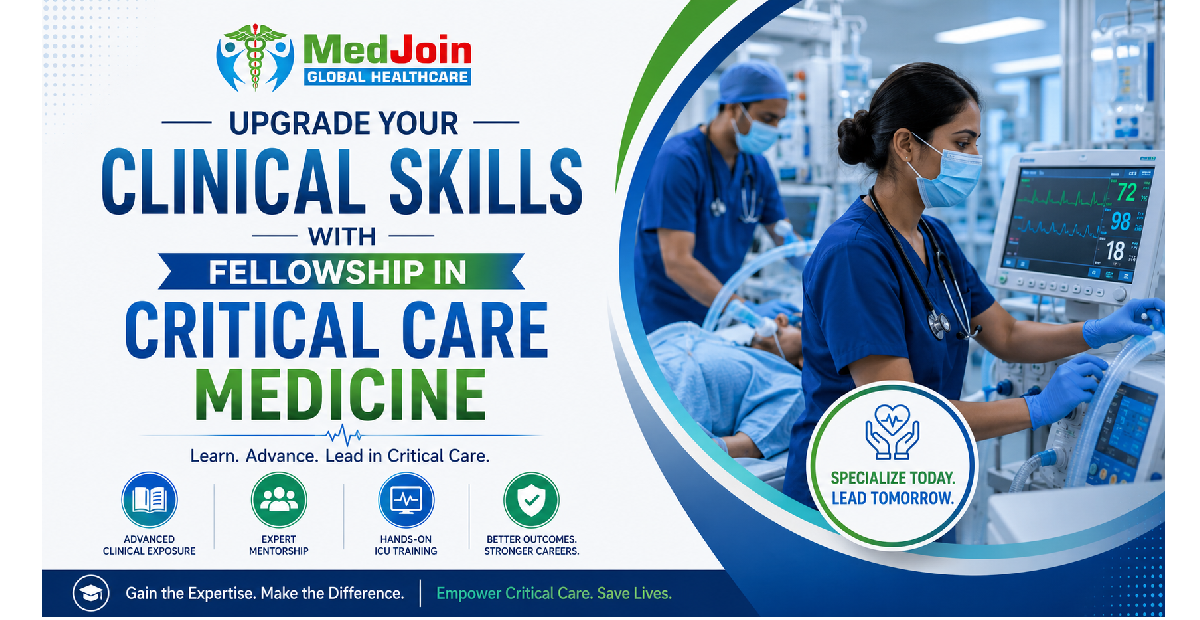
Upgrade Your Clinical Skills with Fellowship in Critical Care Medicine
Advance your expertise. Strengthen your ICU skills. Build your future in critical care medicine today.