
Emergency medicine is one of the most dynamic, demanding, and rewarding branches of modern healthcare. In today’s rapidly evolving medical landscape, hospitals and healthcare institutions around the world require highly trained emergency medicine professionals who can provide immediate, life-saving care under pressure. From trauma management and cardiac emergencies to acute respiratory distress and disaster response, emergency physicians are the backbone of emergency healthcare systems.
As patient volumes increase and healthcare systems become more advanced, the global demand for doctors trained in emergency medicine is growing significantly. Medical professionals who specialize in emergency care are now recognized as critical assets in hospitals, trauma centers, urgent care clinics, ambulance services, and critical care departments.
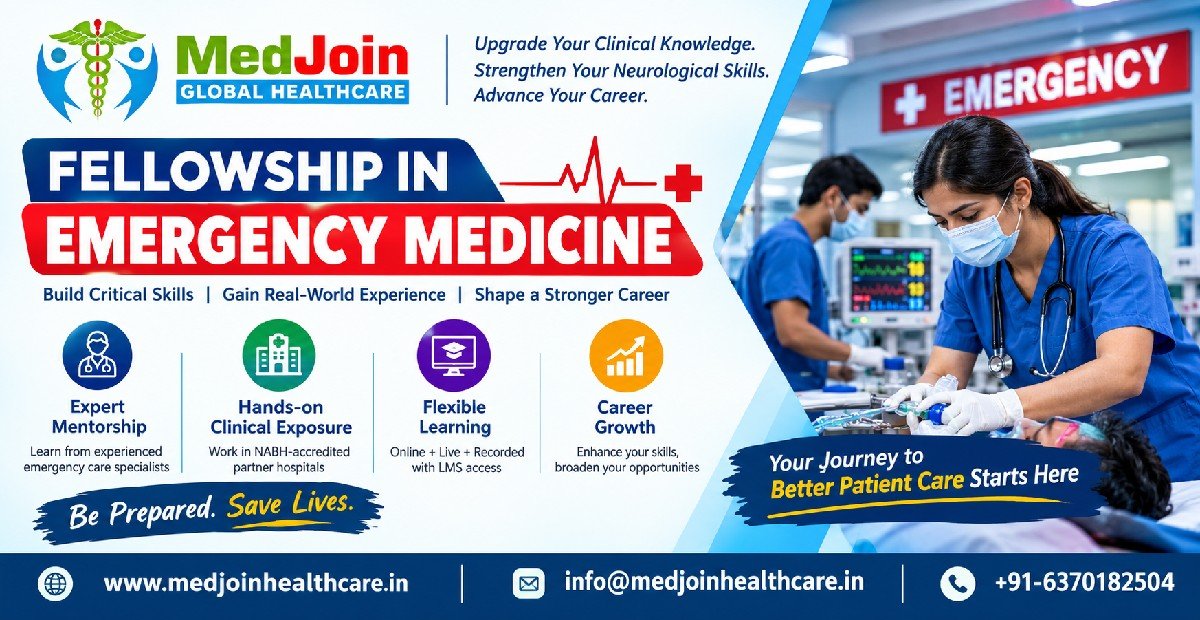
For MBBS graduates and practicing doctors looking to strengthen their clinical expertise, improve career opportunities, and gain hands-on emergency care experience, a 1-Year Fellowship in Emergency Medicine offers an ideal pathway. This advanced fellowship program is designed to provide practical clinical exposure, updated emergency protocols, advanced diagnostic skills, and confidence in handling critical medical situations.
A fellowship in emergency medicine not only enhances your medical knowledge but also prepares you for leadership roles in acute care settings. It helps doctors become competent in rapid assessment, emergency procedures, critical interventions, and multidisciplinary coordination.
Whether you are aiming to work in corporate hospitals, emergency departments, trauma centers, international healthcare systems, or critical care units, this fellowship can significantly elevate your medical career.
In this comprehensive guide, we will explore:
- Why emergency medicine is becoming one of the most sought-after specialties
- Benefits of pursuing a 1-year fellowship in emergency medicine
- Skills and competencies gained during the program
- Career opportunities after fellowship completion
- Global demand for emergency medicine specialists
- Importance of hands-on clinical training
- How the fellowship strengthens your professional profile
- Why now is the best time to apply
If you are passionate about acute patient care, quick decision-making, and saving lives during medical emergencies, this fellowship can become the turning point in your professional journey.
Understanding Emergency Medicine
Emergency medicine is a specialized field focused on the immediate diagnosis, stabilization, management, and treatment of patients suffering from acute illnesses, injuries, or life-threatening conditions.
Unlike many other medical specialties that deal with scheduled consultations or long-term treatment plans, emergency medicine requires doctors to make rapid clinical decisions under intense pressure. Every second matters in an emergency department.
Emergency physicians are trained to handle:
- Cardiac arrest
- Trauma injuries
- Stroke emergencies
- Respiratory distress
- Poisoning and toxicology cases
- Sepsis and infections
- Road traffic accidents
- Burns and fractures
- Pediatric emergencies
- Obstetric emergencies
- Surgical emergencies
- Critical care stabilization
Emergency medicine professionals are often the first point of contact for critically ill patients. Their ability to diagnose quickly, prioritize treatment, and coordinate multidisciplinary care can determine patient survival outcomes.
Because of this, healthcare institutions worldwide are investing heavily in strengthening emergency departments and recruiting trained emergency medicine specialists.
Why Emergency Medicine Is in High Demand Globally
Rising Patient Volumes
Population growth and urbanization have increased the number of emergency cases worldwide. Hospitals are experiencing a continuous rise in patient inflow, especially in emergency departments.
Increase in Trauma and Accident Cases
Road accidents, industrial injuries, sports injuries, and trauma-related emergencies are increasing globally. This has created a massive need for doctors trained in trauma management and emergency care.
Growing Lifestyle Diseases
Heart attacks, strokes, hypertension, diabetes complications, and respiratory emergencies are becoming more common due to changing lifestyles. Emergency medicine physicians are essential in managing these critical conditions.
Pandemic Preparedness and Public Health Emergencies
The COVID-19 pandemic highlighted the importance of emergency medicine professionals. Hospitals worldwide realized the need for highly trained emergency healthcare teams capable of handling infectious disease outbreaks and mass casualty situations.
Expansion of Corporate Hospitals
Corporate healthcare chains are expanding aggressively across India, the Middle East, Southeast Asia, Europe, and Africa. These hospitals require skilled emergency physicians to manage emergency departments effectively.
Better Awareness About Emergency Care
Patients today expect rapid, efficient, and advanced emergency treatment. Healthcare institutions are therefore prioritizing the recruitment of fellowship-trained emergency doctors.
Increasing Need in Rural and Semi-Urban Areas
Emergency care services are now expanding beyond metropolitan cities into smaller towns and rural regions, creating new employment opportunities for trained professionals.
What Is a 1-Year Fellowship in Emergency Medicine?
A 1-Year Fellowship in Emergency Medicine is an advanced medical training program designed to provide doctors with practical and theoretical expertise in managing medical emergencies and critical care situations.
The fellowship combines:
- Clinical rotations
- Hands-on emergency department training
- Case-based learning
- Simulation training
- Procedural skill development
- Advanced life support training
- Critical care exposure
- Trauma management education
The primary goal of the fellowship is to prepare doctors to confidently manage acute and life-threatening medical conditions.
This program is ideal for:
- MBBS graduates
- Junior doctors
- General practitioners
- Medical officers
- Physicians seeking career advancement
- Doctors aiming to enter emergency care practice
Key Objectives of the Fellowship Program
The fellowship is structured to help doctors achieve multiple professional goals.
Develop Emergency Assessment Skills
Participants learn how to rapidly evaluate patients presenting with emergencies.
Improve Clinical Decision-Making
Doctors are trained to make evidence-based treatment decisions under pressure.
Enhance Procedural Competency
The fellowship teaches life-saving procedures commonly performed in emergency settings.
Build Confidence in Critical Care
Participants gain exposure to critically ill patients and advanced emergency protocols.
Strengthen Communication Skills
Doctors learn to communicate effectively with patients, families, nurses, and multidisciplinary teams.
Train for Real-Time Emergency Scenarios
Simulation-based learning prepares doctors for real-world emergency situations.
Core Areas Covered in Emergency Medicine Fellowship
A comprehensive fellowship in emergency medicine includes exposure to multiple specialties and emergency care domains.
Trauma Management
Participants learn:
- Initial trauma assessment
- Airway stabilization
- Hemorrhage control
- Fracture management
- Spinal injury care
- Trauma resuscitation
Cardiac Emergencies
Doctors are trained in:
- ECG interpretation
- Acute coronary syndrome management
- Cardiac arrest protocols
- Defibrillation
- Advanced cardiac life support
Respiratory Emergencies
The program includes:
- Ventilator management
- Oxygen therapy
- Asthma and COPD emergencies
- Respiratory failure management
Neurological Emergencies
Participants learn:
- Stroke management
- Seizure control
- Head injury evaluation
- Neurological assessment
Pediatric Emergencies
Training includes:
- Pediatric resuscitation
- Fever management
- Respiratory emergencies in children
- Neonatal emergencies
Toxicology and Poisoning
Doctors learn:
- Poison identification
- Emergency antidote management
- Drug overdose treatment
Critical Care Skills
Exposure includes:
- ICU coordination
- Hemodynamic monitoring
- Emergency ventilation
- Sepsis management
Disaster and Mass Casualty Management
Participants gain understanding of:
- Emergency preparedness
- Disaster triage
- Crisis management
- Public health emergency response
Advantages of Pursuing a Fellowship in Emergency Medicine
Strong Career Growth
Emergency medicine offers excellent career growth opportunities due to increasing healthcare demands.
Better Employment Opportunities
Fellowship-trained emergency physicians are preferred by hospitals and healthcare institutions.
Hands-On Clinical Experience
Participants gain practical exposure that significantly enhances their confidence and competency.
Opportunity to Work in High-End Hospitals
Many corporate and multispecialty hospitals recruit fellowship-trained emergency doctors.
International Career Opportunities
Emergency medicine skills are valued globally, especially in the Middle East, UK, Australia, and Southeast Asia.
Improved Salary Potential
Specialized emergency medicine training often leads to better compensation packages.
Exposure to Advanced Medical Technologies
Doctors work with modern diagnostic and emergency care equipment.
Expanded Professional Network
Participants interact with experienced faculty, specialists, and healthcare professionals.
Greater Clinical Confidence
Continuous emergency department exposure helps doctors become decisive and clinically strong.
Why Emergency Medicine Is an Excellent Career Choice
Dynamic Work Environment
Every day in emergency medicine is different. Doctors encounter a wide range of clinical cases, making the specialty intellectually stimulating.
Ability to Save Lives
Emergency physicians often make immediate interventions that directly impact patient survival.
High Respect in Healthcare Systems
Emergency doctors are highly respected for their critical role in patient stabilization and emergency management.
Continuous Learning Opportunities
Emergency medicine constantly evolves with new treatment protocols, technologies, and clinical practices.