
Completing an MBBS degree is a major achievement, but for many doctors, it is only the beginning of a long-term professional journey. In 2026, healthcare delivery is becoming increasingly specialized, technology-driven, patient-centric, and focused on early diagnosis and chronic disease management. As a result, MBBS doctors are exploring additional clinical training opportunities that can help them develop focused skills, improve their confidence, and broaden their career options.
A fellowship program can be one pathway for doctors who want structured exposure to a particular clinical area without immediately committing to a conventional multi-year postgraduate pathway. Depending on the institution and program, fellowships may combine online academic learning, case discussions, assessments, clinical observation, procedural exposure, mentorship, and hands-on training.
For doctors considering a fellowship after MBBS, choosing the right specialty is important. The ideal program should match the doctor's clinical interests, existing experience, career goals, geographical preferences, and the type of patient population they want to serve.
In this comprehensive guide, we explore 10 high-demand fellowship areas for MBBS doctors in 2026, why these specialties are attracting attention, what doctors can learn, potential career applications, and important factors to consider before enrollment.
Important: A fellowship certificate is not automatically equivalent to an NMC-recognized MD/MS/DNB qualification. Doctors should independently verify the recognition, accreditation, scope of practice, admission eligibility, curriculum, faculty, clinical training site, and applicable regulatory requirements of any fellowship before enrolling. The National Medical Commission maintains current medical education regulations and notices on its official website.
Table of Contents
- Why Fellowships Are Becoming Important for MBBS Doctors in 2026
- How to Choose a Fellowship After MBBS
- Top 10 High-Demand Fellowship Programs
- Fellowship in Critical Care Medicine
- Fellowship in Clinical Cardiology
- Fellowship in Diabetes Mellitus
- Fellowship in Hepatology
- Fellowship in Gastroenterology
- Fellowship in Emergency Medicine
- Fellowship in Dermatology
- Fellowship in Family Medicine
- Fellowship in Geriatric Medicine
- Fellowship in Obstetrics & Gynaecology
- How to Compare Fellowship Programs
- Online vs Offline Fellowship Training
- Clinical Hands-On Training: Why It Matters
- Skills MBBS Doctors Should Develop
- Career Opportunities After Fellowship
- Fellowship vs MD/MS/DNB
- How Technology and AI Are Changing Medical Education
- Common Mistakes When Selecting a Fellowship
- Frequently Asked Questions
- Final Conclusion
Why Fellowships Are Becoming Important for MBBS Doctors in 2026
The healthcare environment is changing rapidly. India is expanding medical education capacity, specialist training infrastructure, and postgraduate opportunities. In August 2026, recent reporting indicated that India had 86,360 postgraduate medical seats, with a plan to add another 5,000 PG seats by 2028–29.
At the same time, the healthcare system continues to face demand for doctors with focused competencies in chronic disease management, emergency care, intensive care, cardiovascular medicine, metabolic disease, ageing-related care, women's health, and other clinical areas.
The growing burden of noncommunicable diseases is particularly important. The World Health Organization identifies cardiovascular diseases, cancer, diabetes and other chronic conditions as major components of India's NCD burden, with ageing, urbanization and lifestyle-related factors contributing to the challenge.
This creates an environment in which MBBS doctors may benefit from developing additional clinical expertise.
A fellowship course can potentially help a doctor:
- Develop focused knowledge in a selected specialty
- Strengthen clinical decision-making
- Improve interpretation of investigations
- Gain exposure to specialty-specific cases
- Understand modern treatment protocols
- Participate in case discussions
- Develop procedural awareness
- Build professional networks
- Improve confidence in specialty-oriented practice
- Explore a potential long-term career direction
However, the value of a fellowship depends heavily on its design and quality. A program consisting only of recorded videos and a certificate may offer a very different educational experience from one that includes structured mentorship and supervised clinical exposure.
What Makes a Fellowship High-Demand in 2026?
There is no single official ranking that declares the "top 10" fellowships for all MBBS doctors. Demand varies according to location, healthcare infrastructure, patient demographics, hospital requirements and individual career goals.
For this article, high-demand fellowship areas are selected based on factors such as:
1. Disease burden
Specialties associated with common or increasing disease conditions naturally create substantial clinical demand.
2. Patient volume
High patient volumes provide opportunities for doctors to encounter diverse clinical presentations.
3. Hospital requirements
Hospitals require doctors with focused competencies in emergency, critical care, chronic disease and specialty-oriented services.
4. Scope for skill development
A strong fellowship should offer meaningful learning beyond basic MBBS-level exposure.
5. Growing specialization
As healthcare becomes more specialized, doctors increasingly need focused knowledge to work effectively within multidisciplinary teams.
6. Long-term career relevance
A useful fellowship should develop competencies that remain clinically relevant as healthcare evolves.
How to Choose a Fellowship After MBBS
Before selecting a fellowship, doctors should avoid choosing a program merely because the specialty is popular.
Instead, evaluate the program using a structured framework.
1. Check Eligibility
Confirm whether the program is genuinely open to MBBS doctors and whether internship completion and registration are required.
2. Examine the Curriculum
A quality curriculum should clearly identify:
- Learning objectives
- Clinical modules
- Case-based learning
- Investigations
- Treatment principles
- Emergency management
- Procedural competencies
- Assessments
- Practical exposure
3. Evaluate Faculty
Look for qualified and experienced clinicians who actively participate in teaching.
4. Investigate Clinical Exposure
If hands-on training is advertised, ask:
- Where does training occur?
- How many clinical hours are provided?
- Is training supervised?
- What patient volume is available?
- Are procedures observed or actually performed under supervision?
- Is a logbook maintained?
5. Understand Certification
Do not assume that the term "fellowship" automatically means a statutory postgraduate medical qualification.
Ask the institution:
- Who awards the certificate?
- What is the accreditation status?
- Is the qualification recognized by the relevant regulator?
- Is it an academic certificate, institutional fellowship, or recognized postgraduate qualification?
6. Review Assessment
Good medical education requires evaluation.
Look for:
- MCQs
- Case discussions
- Assignments
- Clinical assessments
- Viva
- Logbooks
- Final examinations
7. Evaluate Total Cost
Consider:
- Tuition fee
- Examination fee
- Clinical training fee
- Travel
- Accommodation
- Equipment
- Additional certification charges
8. Consider Career Alignment
Ask yourself:
"Will this fellowship help me become better at the type of medicine I want to practice?"
That question is more important than simply asking whether a specialty is trending.
Top 10 High-Demand Fellowship Programs for MBBS Doctors in 2026
The following ten areas represent strong options for doctors looking to build focused clinical expertise.
- Fellowship in Critical Care Medicine
- Fellowship in Clinical Cardiology
- Fellowship in Diabetes Mellitus
- Fellowship in Hepatology
- Fellowship in Gastroenterology
- Fellowship in Emergency Medicine
- Fellowship in Dermatology
- Fellowship in Family Medicine
- Fellowship in Geriatric Medicine
- Fellowship in Obstetrics & Gynaecology
Let us examine each specialty in detail.
1. Fellowship in Critical Care Medicine
Why Critical Care Medicine Is in Demand
Critical care medicine has become an essential component of modern hospitals.
Critically ill patients may present with:
- Severe infections
- Respiratory failure
- Shock
- Acute kidney injury
- Cardiac emergencies
- Neurological emergencies
- Trauma
- Postoperative complications
- Multiorgan dysfunction
The management of these patients requires rapid assessment, continuous monitoring and multidisciplinary decision-making.
An MBBS doctor working in a hospital environment may frequently encounter acutely ill patients. Focused critical care education can therefore be highly valuable for doctors interested in hospital-based medicine.
What Does a Critical Care Fellowship Cover?
A structured fellowship may include:
Fundamentals
- Approach to the critically ill patient
- ABC assessment
- Hemodynamic monitoring
- Oxygen therapy
- Fluid management
- Electrolyte abnormalities
- Acid-base disorders
Respiratory Critical Care
Doctors may study:
- Acute respiratory failure
- Oxygen delivery systems
- Non-invasive ventilation
- Mechanical ventilation principles
- ARDS
- Ventilator-associated complications
Cardiovascular Critical Care
Topics may include:
- Shock
- Sepsis-related circulatory dysfunction
- Acute coronary syndromes
- Arrhythmias
- Hemodynamic instability
- Vasopressors and inotropes
Renal Critical Care
Training may cover:
- Acute kidney injury
- Electrolyte emergencies
- Acid-base disorders
- Indications for renal replacement therapy
Neurological Emergencies
Potential areas include:
- Altered consciousness
- Status epilepticus
- Stroke emergencies
- Raised intracranial pressure
- Neurological monitoring
Who Should Consider It?
A Critical Care Medicine fellowship may be particularly relevant to MBBS doctors interested in:
- ICU practice
- Emergency departments
- Hospital medicine
- Acute care
- Multispecialty hospitals
Skills to Develop
The major objective should not simply be memorizing protocols.
Doctors should develop:
- Rapid clinical assessment
- Recognition of deterioration
- Prioritization
- Interpretation of ABG
- ECG interpretation
- Ventilator basics
- Sepsis recognition
- Shock management principles
- Team communication
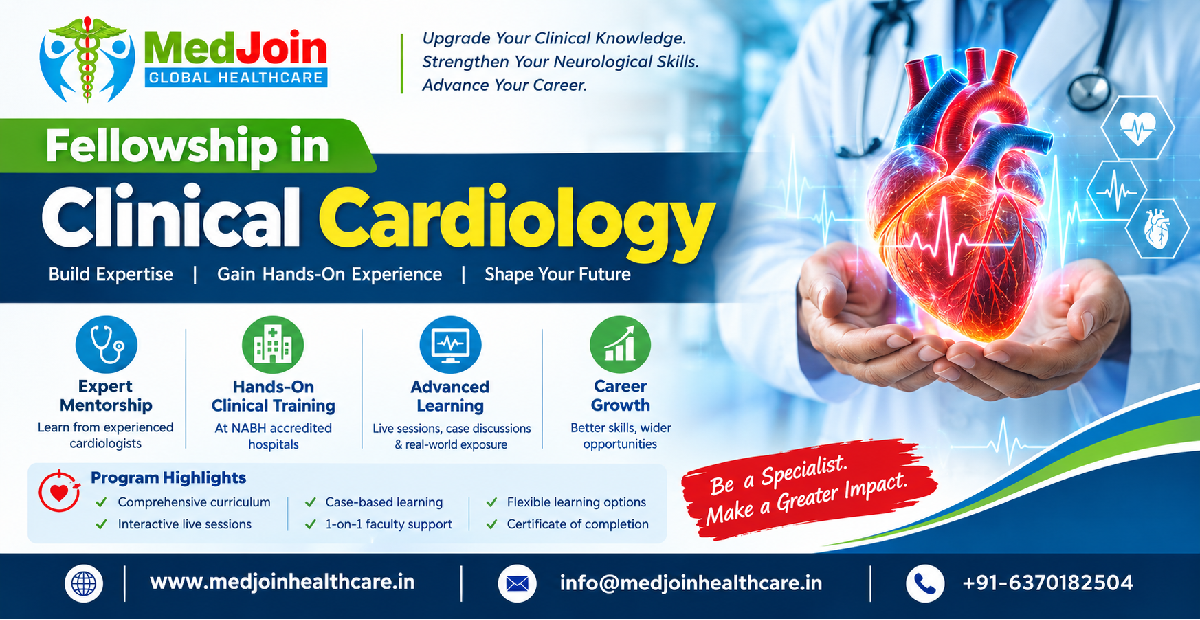
2. Fellowship in Clinical Cardiology
Why Cardiology Is a High-Interest Area
Cardiovascular disease remains one of the most important areas of healthcare.
Patients commonly present with:
- Chest pain
- Breathlessness
- Palpitations
- Hypertension
- Diabetes-related cardiovascular risk
- Heart failure
- Arrhythmias
- Coronary artery disease
For MBBS doctors, developing stronger cardiovascular assessment skills can be highly valuable.
What Can You Learn?
A Clinical Cardiology fellowship may include:
Clinical Assessment
- Cardiovascular history
- Risk-factor assessment
- Physical examination
- Heart sounds
- Peripheral vascular examination
ECG
Doctors can develop competency in:
- ECG fundamentals
- Rate and rhythm
- Axis
- Conduction abnormalities
- Ischemic changes
- Arrhythmias
- STEMI recognition
- Common ECG emergencies
Echocardiography
Depending on the specific program and scope of training, doctors may receive exposure to:
- Basic echocardiographic principles
- Cardiac chambers
- LV function
- Valvular assessment
- Pericardial effusion
- Basic Doppler concepts
Common Cardiovascular Conditions
A structured curriculum may include:
- Hypertension
- Ischemic heart disease
- Heart failure
- Arrhythmias
- Valvular heart disease
- Cardiomyopathies
- Pericardial diseases
Career Applications
Additional cardiology-focused training can be relevant for doctors working in:
- Hospitals
- Clinics
- Emergency departments
- Cardiac care settings
- General medical practice
A fellowship should be viewed as focused additional training rather than an automatic replacement for a recognized postgraduate specialty qualification.
3. Fellowship in Diabetes Mellitus
Why Diabetes Is a Major Clinical Opportunity
Diabetes is one of the most important chronic diseases facing healthcare systems.
Diabetes management increasingly involves more than prescribing medication.
Doctors need to understand:
- Glycemic targets
- Lifestyle modification
- Obesity
- Cardiovascular risk
- Kidney disease
- Neuropathy
- Retinopathy
- Foot disease
- Hypoglycemia
- Insulin therapy
- Technology-assisted monitoring
The WHO identifies diabetes among the major NCD areas requiring continued attention in India.
What Does a Diabetes Fellowship Cover?
Diabetes Fundamentals
- Type 1 diabetes
- Type 2 diabetes
- Gestational diabetes
- Secondary diabetes
- Prediabetes
Diagnosis
Doctors may learn:
- Fasting plasma glucose
- Postprandial glucose
- HbA1c
- Oral glucose tolerance testing
- Continuous glucose monitoring concepts
Pharmacological Management
Potential topics include:
- Metformin
- Sulfonylureas
- DPP-4 inhibitors
- SGLT2 inhibitors
- GLP-1 receptor agonists
- Insulin therapy
The choice of medication should always be individualized according to clinical guidelines, patient factors, comorbidities and applicable prescribing standards.
Diabetes Complications
A comprehensive fellowship should address:
- Diabetic nephropathy
- Retinopathy
- Neuropathy
- Diabetic foot
- Cardiovascular disease
- Hypoglycemia
- Hyperglycemic emergencies
Modern Diabetes Technology
Doctors may also explore:
- Continuous glucose monitoring
- Insulin pumps
- Digital diabetes platforms
- Glucose pattern interpretation
- Remote monitoring
Why It Can Be a Good Choice
Diabetes care is relevant across almost every clinical setting.
An MBBS doctor may encounter diabetes in:
- Primary care
- General practice
- Hospitals
- Emergency medicine
- Family medicine
- Internal medicine
- Community healthcare
This makes diabetes-focused education particularly transferable.
4. Fellowship in Hepatology
Why Hepatology Is Emerging as an Important Fellowship Area
The liver plays a central role in metabolism, detoxification, protein synthesis, bile production and immune regulation.
Liver disease can arise from:
- Viral hepatitis
- Alcohol-related liver disease
- Metabolic dysfunction-associated steatotic liver disease
- Drug-induced liver injury
- Autoimmune disease
- Cholestatic disorders
- Cirrhosis
- Hepatocellular carcinoma
The increasing intersection between obesity, diabetes and metabolic liver disease makes hepatology particularly relevant to general clinical practice.
What Can an MBBS Doctor Learn?
Liver History Taking
A fellowship may cover systematic assessment of:
- Jaundice
- Pruritus
- Abdominal distension
- Gastrointestinal bleeding
- Fatigue
- Weight loss
- Encephalopathy
- Alcohol and medication history
Physical Examination
Doctors may study:
- Icterus
- Hepatomegaly
- Splenomegaly
- Ascites
- Edema
- Stigmata of chronic liver disease
- Hepatic encephalopathy
Liver Biochemistry
Important areas include:
- Bilirubin
- AST
- ALT
- ALP
- GGT
- Albumin
- PT/INR
Pattern Recognition
Doctors can learn to differentiate:
- Hepatocellular injury
- Cholestatic patterns
- Mixed injury
- Isolated bilirubin abnormalities
Disease Severity Scores
A comprehensive hepatology program may introduce:
- Child-Pugh score
- MELD
- MELD-Na
- MELD 3.0
- FIB-4
- These tools help clinicians understand disease severity and risk stratification when applied appropriately.
Advanced Topics
Potential modules include:
- Cirrhosis
- Portal hypertension
- Variceal bleeding
- Ascites
- Hepatic encephalopathy
- Hepatorenal syndrome
- Hepatocellular carcinoma
- Liver transplantation principles
Career Relevance
Hepatology training can complement careers in:
- General practice
- Internal medicine support services
- Gastroenterology departments
- Hospitals
- Preventive medicine
- Diabetes/metabolic disease clinics
5. Fellowship in Gastroenterology
Why Gastroenterology Is Popular
Gastrointestinal disorders are extremely common.
Doctors regularly encounter:
- Dyspepsia
- GERD
- Peptic ulcer disease
- IBS
- GI bleeding
- Constipation
- Diarrhea
- Gallbladder disease
- Pancreatic disease
- Liver disease
A gastroenterology-focused fellowship can provide structured exposure to these conditions.
Core Curriculum
Upper GI Disorders
- GERD
- Gastritis
- Peptic ulcer disease
- Upper GI bleeding
- Dyspepsia
Lower GI Disorders
- IBS
- Inflammatory bowel disease
- Colorectal disorders
- Lower GI bleeding
- Chronic diarrhea
Hepatology
Many gastroenterology programs include:
- Viral hepatitis
- Fatty liver disease
- Cirrhosis
- Portal hypertension
Pancreaticobiliary Medicine
Potential subjects:
- Acute pancreatitis
- Chronic pancreatitis
- Gallstone disease
- Cholangitis
- Biliary obstruction
Endoscopy
Depending on the program, doctors may receive exposure to:
- Upper GI endoscopy
- Colonoscopy
- Biopsy principles
- Endoscopic indications
- Endoscopic complications
Clinical procedures should only be performed within appropriate training, supervision, institutional protocols and regulatory scope.
6. Fellowship in Emergency Medicine
Why Emergency Medicine Is High Demand
Emergency departments are the first point of contact for many acutely ill patients.
Emergency doctors need to manage patients with incomplete information and limited time.
Common presentations include:
- Chest pain
- Breathlessness
- Trauma
- Poisoning
- Stroke
- Seizures
- Shock
- Acute abdominal pain
- Severe infection
-
Allergic reactions
What Will You Learn?
Emergency Assessment
- Triage
- ABCDE assessment
- Primary survey
- Secondary survey
- Stabilization
Cardiovascular Emergencies
- Acute coronary syndrome
- Arrhythmias
- Hypertensive emergencies
- Cardiac arrest
Respiratory Emergencies
- Acute asthma
- COPD exacerbation
- Pneumonia
- Pulmonary edema
- Respiratory failure
Neurological Emergencies
- Stroke
- Seizure
- Altered sensorium
- Head injury
Trauma
- Primary trauma survey
- Airway management
- Hemorrhage control
- Shock
- Immobilization principles
Who Should Consider It?
Emergency Medicine may suit MBBS doctors who enjoy:
- Fast-paced clinical environments
- Acute patient care
- Hospital work
- Team-based medicine
- Procedural medicine
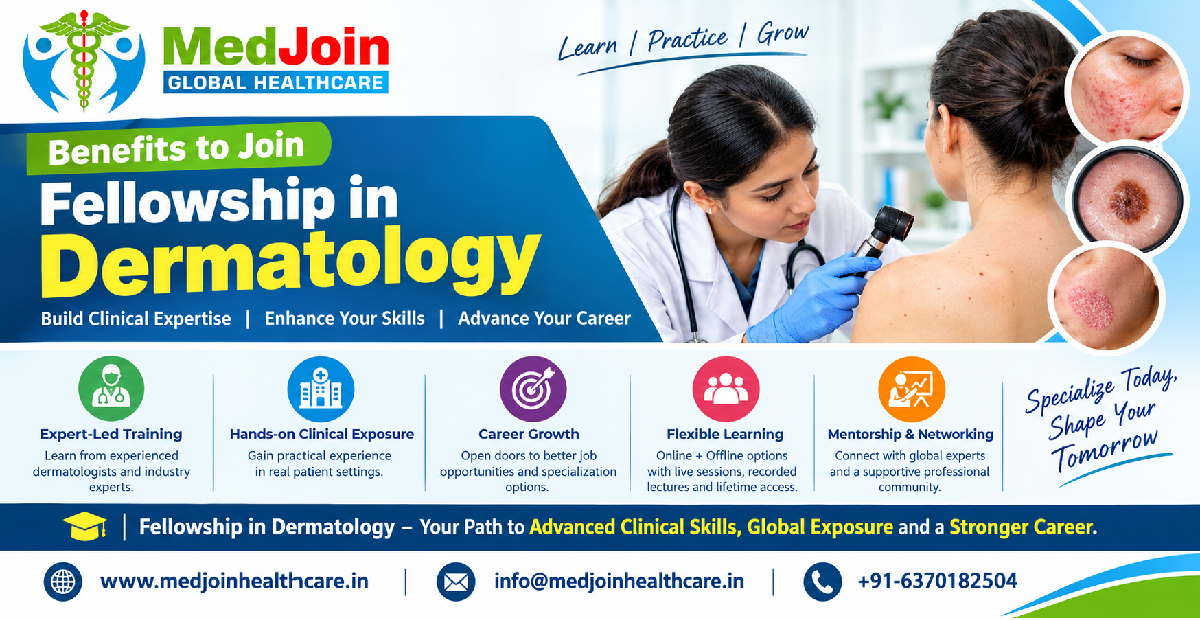
7. Fellowship in Dermatology
Why Dermatology Is Attractive to MBBS Doctors
Dermatology is a visually oriented specialty with a large outpatient patient base.
Common conditions include:
- Acne
- Eczema
- Psoriasis
- Fungal infections
- Urticaria
- Hair loss
- Pigmentary disorders
- Viral skin infections
- Bacterial skin infections
The specialty also intersects with aesthetic medicine and cosmetology.
Core Learning Areas
Dermatological Examination
Doctors can learn systematic examination of:
- Skin
- Hair
- Nails
- Mucosa
Common Disorders
A fellowship may cover:
- Acne vulgaris
- Atopic dermatitis
- Contact dermatitis
- Psoriasis
- Urticaria
- Tinea
- Scabies
Diagnostic Skills
Potential topics:
- Morphology
- Distribution
- Differential diagnosis
- Dermoscopy basics
- Laboratory investigations
Aesthetic Dermatology
Depending on the fellowship, additional exposure may include:
- Chemical peels
- Basic aesthetic procedures
- Acne scar management
- Skin rejuvenation
- Hair and scalp procedures
Doctors should ensure that any procedural training complies with applicable regulations and institutional standards.
8. Fellowship in Family Medicine
Why Family Medicine Is Increasingly Relevant
Modern healthcare needs doctors who can manage patients across age groups and clinical conditions.
Family medicine emphasizes:
- Prevention
- Primary care
- Continuity of care
- Chronic disease management
- Health promotion
- Early diagnosis
- Referral when necessary
It can therefore be a practical choice for doctors who want broad clinical exposure.
What Can You Learn?
Adult Medicine
- Hypertension
- Diabetes
- Respiratory disease
- Common infections
- Gastrointestinal disorders
Women's Health
- Preventive care
- Reproductive health
- Common gynecological complaints
Children's Health
- Common pediatric illnesses
- Growth and development
- Immunization principles
Elderly Care
- Polypharmacy
- Falls
- Chronic diseases
- Cognitive concerns
Preventive Medicine
- Screening
- Lifestyle counseling
- Vaccination
- Risk-factor modification
Career Applications
Family medicine training can be relevant to:
- Primary care clinics
- Community healthcare
- Corporate healthcare
- Rural healthcare
- Outpatient departments
- Family practices
9. Fellowship in Geriatric Medicine
Why Geriatric Medicine Is Growing
Population ageing is changing healthcare needs.
Older adults frequently present with multiple conditions rather than a single disease.
A typical elderly patient may have:
- Diabetes
- Hypertension
- Heart disease
- Arthritis
- Kidney disease
- Cognitive impairment
- Visual impairment
- Mobility problems
Managing these conditions requires an integrated approach.
Fellowship Curriculum
Comprehensive Geriatric Assessment
- Potential areas include:
- Functional status
- Cognitive status
- Nutritional status
- Mobility
- Fall risk
- Social support
Common Geriatric Conditions
- Dementia
- Delirium
- Falls
- Frailty
- Osteoporosis
- Incontinence
- Depression
- Polypharmacy
Medication Management
Doctors can learn to assess:
- Drug interactions
- Adverse effects
- Renal dosing
- Medication adherence
- Deprescribing principles
Why It Matters
Geriatric medicine is not simply "medicine for older people."
It requires understanding the interaction between:
Disease + Function + Cognition + Medication + Environment + Social Support
That makes it an increasingly important multidisciplinary field.
10. Fellowship in Obstetrics & Gynaecology
Why Women's Health Remains a High-Demand Area
Women's healthcare spans the entire life course.
Doctors encounter patients requiring care related to:
- Menstrual disorders
- Pregnancy
- Contraception
- Infertility
- Menopause
- Polycystic ovary syndrome
- Gynecological infections
- Antenatal care
Potential Fellowship Modules
Obstetrics
- Antenatal care
- Normal pregnancy
- High-risk pregnancy principles
- Hypertensive disorders
- Gestational diabetes
- Obstetric emergencies
Gynaecology
- Menstrual disorders
- PCOS
- Vaginal infections
- Pelvic pain
- Menopause
- Cervical screening
Reproductive Medicine
Depending on the fellowship:
- Infertility evaluation
- Ovulation
- Male-factor infertility
- Female-factor infertility
- Assisted reproductive technology principles
Emergency Obstetrics
Training may include recognition and initial management principles for:
- Postpartum hemorrhage
- Eclampsia
- Ectopic pregnancy
- Obstetric shock
Clinical procedures and obstetric interventions should be performed only under appropriate supervision and within the doctor's authorized scope of practice.
Comparing the 10 Fellowship Options
| Fellowship | Major Clinical Focus | Suitable For |
|---|---|---|
| Critical Care Medicine | ICU and critically ill patients | Hospital-oriented doctors |
| Clinical Cardiology | Cardiovascular disease | Doctors interested in cardiac care |
| Diabetes Mellitus | Metabolic disease | Chronic disease practitioners |
| Hepatology | Liver disease | Doctors interested in hepatology |
| Gastroenterology | GI and hepatobiliary disease | Hospital/OPD-focused doctors |
| Emergency Medicine | Acute emergencies | Fast-paced clinical practice |
| Dermatology | Skin, hair and nails | Outpatient-focused doctors |
| Family Medicine | Comprehensive primary care | General practitioners |
| Geriatric Medicine | Older adult care | Doctors interested in ageing |
| Obstetrics & Gynaecology | Women's health | Doctors interested in reproductive care |
Online Fellowship vs Offline Fellowship
One of the biggest questions doctors ask is:
Should I choose an online or offline fellowship?
The answer depends on the learning objective.
Online Fellowship
Online learning can be useful for:
- Theory
- Recorded lectures
- Case discussions
- Reading material
- Assignments
- MCQs
- Revision
- Flexible learning
It is particularly useful for doctors who are working simultaneously.
Offline Fellowship
Offline training can provide:
- Direct clinical exposure
- Bedside learning
- Patient interaction
- Procedure observation
- Team participation
- Real-time clinical decision-making
Hybrid Fellowship
A hybrid model combines both.
For example:
Online academic learning + supervised clinical training
This model can provide flexibility while retaining an element of practical exposure.
However, doctors should examine exactly how much clinical training is included rather than relying only on the word "hybrid."
Why Clinical Hands-On Training Matters
Medicine is a practical profession.
Reading about a procedure is not the same as performing or observing it in an appropriate clinical environment.
Hands-on training may help doctors develop:
- Patient communication
- Clinical examination
- History taking
- Procedural familiarity
- Emergency response
- Documentation
- Teamwork
- Clinical judgment
A well-designed fellowship should clearly distinguish between:
Observation → Assisted Practice → Supervised Practice → Independent Competency
These are not interchangeable.
A doctor should never assume that completing an online module automatically authorizes independent performance of a medical procedure.
What Skills Should an MBBS Doctor Develop Through a Fellowship?
Regardless of specialty, a strong fellowship should ideally strengthen five broad competency areas.
1. Clinical Knowledge
The doctor should understand:
Disease mechanisms
Clinical presentations
Diagnostic approaches
Treatment principles
Complications
2. Clinical Reasoning
The doctor should be able to:
- Identify important symptoms
- Generate differential diagnoses
- Select appropriate investigations
- Interpret results
- Recognize red flags
3. Communication
Medical expertise is incomplete without communication.
Doctors should learn:
- Patient counseling
- Informed communication
- Risk explanation
- Shared decision-making
- Breaking difficult news
4. Evidence-Based Practice
Doctors should understand:
- Clinical guidelines
- Research papers
- Evidence levels
- Risk-benefit analysis
- Appropriate investigation selection
5. Professionalism
Professional development includes:
- Ethics
- Confidentiality
- Documentation
- Teamwork
- Patient safety
- Referral
- Responsible use of technology
Fellowship and the Future of Medical Education
Medical education is evolving rapidly.
The National Medical Commission currently publishes regulations and updates covering undergraduate and postgraduate medical education, including the Post-Graduate Medical Education Regulations, 2023 and subsequent updates.
The expansion of medical education infrastructure also highlights the increasing scale of India's medical training ecosystem. NMC's 2026–27 processes include applications for new postgraduate courses, standalone PG institutions and increased PG seats.
This means doctors have more educational pathways to evaluate than ever before.
But greater choice also creates a responsibility:
Choose education based on quality, not marketing claims.
Fellowship vs MD/MS/DNB: What Is the Difference?
This is one of the most important questions for MBBS doctors.
MD/MS
MD and MS are recognized postgraduate medical degrees in their respective specialties, subject to applicable regulatory and institutional requirements.
DNB
DNB is a postgraduate qualification awarded through the National Board of Examinations in Medical Sciences pathway.
Fellowship
"Fellowship" is a broad term used by different institutions for specialized education and training programs.
Not every fellowship is equivalent to MD, MS or DNB.
Therefore:
If your objective is specialist qualification:
Explore recognized PG pathways such as MD/MS/DNB according to your eligibility and career goals.
If your objective is additional focused training:
A suitable fellowship may provide structured education in a selected clinical area.
The two should not automatically be treated as interchangeable.
Why Curriculum Quality Matters
A fellowship should not be judged simply by duration.
A 12-month course is not necessarily better than a six-month course.
What matters is:
Curriculum + Faculty + Clinical Exposure + Assessment + Mentorship + Outcomes
A high-quality curriculum should move from basic concepts to advanced clinical reasoning.
For example, a hepatology curriculum might progress from:
Liver anatomy → physiology → history → examination → biochemistry → imaging → disease diagnosis → severity scoring → complications → management principles
Similarly, a critical care curriculum may progress from:
Basic assessment → monitoring → respiratory failure → shock → mechanical ventilation → sepsis → organ failure
This progression helps create structured learning.
The Role of Case-Based Learning
Doctors learn medicine best when theory is connected to patients.
A fellowship should ideally incorporate case discussions such as:
Case 1: Chest Pain
A patient presents with acute chest pain.
The doctor should learn to consider:
- History
- Risk factors
- ECG
- Cardiac biomarkers
- Differential diagnosis
- Immediate stabilization
- Referral
Case 2: Jaundice
The doctor should consider:
- Direct vs indirect bilirubin
- AST/ALT
- ALP/GGT
- Imaging
- Viral markers
- Drug history
- Hemolysis
Case 3: Severe Breathlessness
The doctor should evaluate:
- Airway
- Breathing
- Oxygenation
- Circulation
- ECG
- Chest imaging
- ABG
- Differential diagnosis
Case-based education converts memorized information into clinical reasoning.
Assessment Should Be a Core Component
A fellowship should not simply provide a certificate after watching videos.
Assessment helps identify whether learning objectives have been achieved.
Useful methods include:
MCQs
Good for testing:
- Knowledge
- Guidelines
- Diagnostics
- Pharmacology
-
Case-Based Questions
Useful for evaluating:
- Clinical reasoning
- Differential diagnosis
- Management
Viva
Useful for:
- Communication
- Reasoning
- Clinical application
Logbook
Useful for documenting:
- Patient exposure
- Procedures
- Clinical activities
Practical Assessment
Useful for evaluating:
- Examination skills
- Procedural skills
- Interpretation skills
Career Opportunities After a Fellowship
A fellowship can potentially expand a doctor's clinical profile.
Depending on the specialty and applicable regulations, possible settings may include:
- Multispecialty hospitals
- Private hospitals
- Clinics
- Diagnostic centers
- Corporate healthcare
- Primary healthcare
- Emergency departments
- ICU settings
- Specialty outpatient departments
- Community healthcare
- Academic support roles
However, doctors should not interpret a fellowship certificate as an automatic guarantee of employment, promotion, specialist registration or independent specialist practice.
Career outcomes depend on:
- Qualification
- Clinical experience
- Registration
- Institutional requirements
- Specialty
- Location
- Communication skills
- Practical competence
- Employer expectations
How Fellowships Can Help Doctors Build a Specialty-Focused Profile
Suppose two MBBS doctors are applying for hospital positions.
Doctor A has:
MBBS + internship + general clinical experience
Doctor B has:
MBBS + internship + clinical experience + structured fellowship training in a relevant area
The second profile may demonstrate additional interest and training, particularly when the fellowship is relevant to the role.
However, employers will still evaluate actual competency and recognized qualifications.
Therefore, the objective should be:
Build skills first. Build the CV second.
Why Shortcuts Should Be Avoided
Medicine does not have a safe shortcut.
A doctor should be cautious of programs promising:
- Guaranteed specialist status
- Guaranteed government recognition
- Guaranteed employment
- Automatic registration
- Independent practice rights without regulatory basis
- Specialist designation solely because of a certificate
A credible educational provider should explain exactly what the program provides and what it does not provide.
2026 Trends Influencing Fellowship Selection
Several major trends are shaping medical education.
1. Chronic Disease Management
Diabetes, cardiovascular disease, obesity and metabolic disorders continue to require long-term management.
This supports continued interest in:
- Diabetes
- Cardiology
- Family Medicine
- Preventive Medicine
WHO identifies NCDs as a major health challenge in India.
2. Ageing Population
Ageing increases demand for:
- Geriatrics
- Chronic disease management
- Rehabilitation
- Dementia care
- Polypharmacy management
3. Hospital-Based Medicine
Modern hospitals require doctors who can recognize deterioration quickly.
This increases the importance of:
- Critical care
- Emergency medicine
- Acute medicine
4. Specialized Outpatient Care
Large outpatient volumes create demand for focused clinical services such as:
- Dermatology
- Gastroenterology
- Hepatology
- Cardiology
5. Digital Healthcare
Telemedicine, electronic health records, remote monitoring and AI-assisted clinical tools are increasingly becoming part of healthcare.
Doctors therefore need digital literacy alongside clinical skills.
AI and Medical Fellowships in 2026
Artificial intelligence is becoming increasingly relevant to healthcare.
Doctors may encounter AI in:
- Medical imaging
- Clinical decision support
- Documentation
- Patient monitoring
- Risk prediction
- Literature search
- Medical education
But AI should support—not replace—clinical judgment.
A fellowship curriculum can increasingly benefit from teaching doctors how to:
- Critically evaluate AI outputs
- Protect patient privacy
- Identify hallucinations and errors
- Verify medical information
- Use evidence-based digital tools
- Maintain human oversight
The future doctor will not necessarily compete with AI.
The future doctor will need to understand how to work responsibly with AI.
How to Select the Right Fellowship Based on Career Goal
If You Want ICU Practice
Consider:
Critical Care Medicine
If You Enjoy Cardiac Cases
Consider:
Clinical Cardiology
If You Prefer Chronic Disease Management
Consider:
Diabetes Mellitus
If You Like Liver Disease
Consider:
Hepatology
If You Enjoy GI Medicine
Consider:
Gastroenterology
If You Prefer Emergency Care
Consider:
Emergency Medicine
If You Prefer OPD-Based Practice
Consider:
Dermatology or Family Medicine
If You Want to Work With Older Adults
Consider:
Geriatric Medicine
If You Are Interested in Women's Health
Consider:
Obstetrics & Gynaecology
What Makes a Fellowship Program Strong?
A strong fellowship should ideally contain the following components.
Structured Curriculum
The entire program should be organized into logical modules.
Experienced Faculty
Faculty should have relevant clinical expertise.
Clinical Exposure
Where promised, practical training should be clearly documented.
Mentorship
Doctors should have opportunities to discuss cases with experienced clinicians.
Assessments
Learning should be evaluated regularly.
Learning Resources
Students should receive:
- Recorded lectures
- Study material
- Clinical protocols
- Case studies
- References
- Question banks
Certification
The certificate should clearly identify:
- Course title
- Duration
- Awarding institution
- Completion status
- Applicable accreditation information
12-Month Fellowship Model
Many doctors prefer a one-year structured program because it provides sufficient time to combine academic learning with clinical exposure.
A possible 12-month framework could be:
Months 1–3: Foundation
- Anatomy
- Physiology
- Pathophysiology
- History taking
- Physical examination
- Basic investigations
Months 4–6: Core Clinical Medicine
- Common diseases
- Diagnostic algorithms
- Pharmacology
- Clinical guidelines
- Case discussions
Months 7–9: Advanced Clinical Topics
- Complications
- Emergency management
- Advanced diagnostics
- Specialty-specific procedures
- Multidisciplinary care
Months 10–12: Consolidation
- Case presentations
- Clinical assessments
- Practical exposure
- Logbook
- Final examination
- Career preparation
The exact structure should be adapted to the specialty.
How to Make the Most of Your Fellowship
Enrolling is only the first step.
Read Every Day
Even 30–60 minutes of focused reading can make a difference.
Maintain a Case Diary
Record interesting cases and lessons learned while respecting patient confidentiality.
Create a Differential Diagnosis Notebook
For each major symptom, write:
- Common causes
- Dangerous causes
- Red flags
- Initial investigations
-
Practice Interpretation
Regularly interpret:
- ECGs
- Lab reports
- Imaging
- ABGs
- Clinical scoring systems
Ask Questions
Use faculty interactions actively.
Participate in Case Discussions
Do not remain a passive learner.
Review Guidelines
Medicine changes continuously.
Build a Professional Network
Connect with:
- Faculty
- Consultants
- Hospital teams
- Fellow doctors
- Professional organizations
The Importance of Regulatory Awareness
The National Medical Commission is India's statutory medical regulator, and its website publishes regulations relating to medical education. Current NMC material includes postgraduate education regulations and other regulatory updates.
Therefore, doctors should check official regulatory information rather than relying solely on an institute's marketing material.
This is particularly important if a program makes claims about:
- Specialist designation
- Registration
- Academic equivalence
- Faculty eligibility
- Postgraduate status
- Scope of practice
Is a Fellowship Worth It After MBBS?
The answer depends on the individual doctor.
A fellowship may be worthwhile if:
- You have a clear clinical interest.
- The curriculum is relevant.
- The faculty is credible.
- Clinical exposure is meaningful.
- The training is appropriately supervised.
- The certificate is transparent.
- The cost is reasonable.
- The program fits your career plan.
It may be less useful if:
- You are joining only because of marketing.
- The program has little clinical exposure.
- The curriculum is poorly defined.
- Recognition claims are unclear.
- There is no assessment.
- You expect the fellowship to automatically make you equivalent to an MD/MS/DNB specialist.
Frequently Asked Questions
1. Can MBBS doctors pursue fellowships?
Many institutional fellowship programs are designed for MBBS doctors, but eligibility varies by program. Doctors should verify the specific admission criteria before enrolling.
2. Which fellowship is best after MBBS?
There is no universally best fellowship.
The right choice depends on your interests, career goals and intended practice environment.
3. Which fellowship has the highest demand?
Demand varies by location and healthcare setting. Critical care, emergency medicine, cardiology, diabetes, gastroenterology, hepatology, dermatology, family medicine, geriatrics and women's health are among the areas that can offer strong clinical relevance.
4. Is a fellowship equivalent to MD?
Generally, an institutional fellowship should not automatically be treated as equivalent to an NMC-recognized MD/MS/DNB qualification.
Always verify the specific status of the qualification.
5. Can I do a fellowship while working?
Some programs offer flexible or online academic components. Whether you can combine the program with employment depends on the schedule and clinical requirements.
6. Is online fellowship enough?
Online learning can be useful for theoretical education, but clinical competency requires appropriate practical exposure where applicable.
7. Is hands-on training important?
Yes. For clinical and procedural skills, supervised patient exposure can complement theoretical learning.
8. How long should a fellowship be?
Duration varies. Six-month, nine-month, one-year and other formats exist. Duration alone does not determine quality.
9. Can a fellowship improve my CV?
A relevant and credible fellowship can demonstrate additional education and focused interest, but employers consider the complete profile.
10. Can fellowship guarantee a job?
No legitimate educational program should be assumed to guarantee employment unless the terms are explicit, enforceable and consistent with applicable laws and institutional policies.
11. Which fellowship is best for private practice?
This depends on the doctor's location, experience, regulatory scope, patient population and clinical interest. Family medicine, diabetes, dermatology and other outpatient-focused areas may be relevant depending on the intended practice model.
12. Which fellowship is best for hospital jobs?
Critical care, emergency medicine, cardiology, gastroenterology and other hospital-oriented areas may align with hospital roles, subject to employer requirements.
13. Can a fellowship replace postgraduate entrance preparation?
A fellowship and postgraduate qualification pathway serve different purposes. If your objective is MD/MS/DNB, fellowship training should not be considered a substitute for the required admission pathway.
14. What should I check before paying the fee?
Verify eligibility, awarding body, recognition/accreditation claims, curriculum, faculty, clinical training, assessment, fees, refund policy and certification.
15. Should I choose an international fellowship?
International branding does not automatically mean regulatory recognition in India. Verify exactly what the international credential represents and whether it has relevance to your intended practice.
10 High-Demand Fellowships: Quick Summary
1. Critical Care Medicine
Ideal for doctors interested in ICU and acute hospital medicine.
2. Clinical Cardiology
Useful for doctors interested in cardiovascular assessment and management.
3. Diabetes Mellitus
Strongly relevant to chronic disease and metabolic healthcare.
4. Hepatology
Focused on liver disease, cirrhosis, portal hypertension and hepatobiliary medicine.
5. Gastroenterology
Covers common and complex gastrointestinal and hepatobiliary disorders.
6. Emergency Medicine
Designed around rapid assessment and stabilization of acutely ill patients.
7. Dermatology
Suitable for doctors interested in outpatient skin, hair and nail disorders.
8. Family Medicine
Broad-based training for comprehensive primary care.
9. Geriatric Medicine
Focused on the increasingly important healthcare needs of older adults.
10. Obstetrics & Gynaecology
Provides focused learning in women's reproductive and maternal health.
Choosing the Right Fellowship in 2026
The medical profession is changing.
Patients expect faster diagnosis, better communication, evidence-based treatment and increasingly specialized care. Hospitals require doctors who can work effectively within multidisciplinary teams. Technology is transforming how doctors learn, diagnose and monitor patients.
For MBBS doctors, this creates an opportunity to develop focused clinical expertise.
A fellowship can be a useful component of that journey when it is:
Relevant + Structured + Clinically Meaningful + Supervised + Transparent
The most important decision is not simply choosing the most popular fellowship.
It is choosing the fellowship that aligns with your clinical interest, career direction and learning requirements.
If you enjoy acute care, explore Critical Care or Emergency Medicine.
If cardiovascular disease interests you, consider Clinical Cardiology.
If chronic metabolic disease is your focus, Diabetes Mellitus can be highly relevant.
If you are interested in liver and gastrointestinal medicine, Hepatology or Gastroenterology may be appropriate.
If you prefer outpatient care, Dermatology or Family Medicine may align with your goals.
If you want to work with older adults, consider Geriatric Medicine.
If women's health interests you, explore Obstetrics & Gynaecology.
Above all, remember that a fellowship should be viewed as additional focused education and clinical training, not as an automatic substitute for a recognized postgraduate medical qualification.
Before enrollment, verify every claim, understand the certification status, assess the clinical training environment and choose a program that prioritizes competency over marketing.
The right fellowship is not simply a certificate—it should be a structured learning experience that helps an MBBS doctor become more confident, knowledgeable and clinically capable within the appropriate scope of practice.
Advance Your Clinical Career After MBBS
Explore a structured fellowship program after mbbs aligned with your clinical interests and career goals. Compare the curriculum, faculty, clinical exposure, assessment, certification and training format before making your decision.
Research carefully. Learn continuously. Build focused clinical expertise. Shape your medical career for the future.