
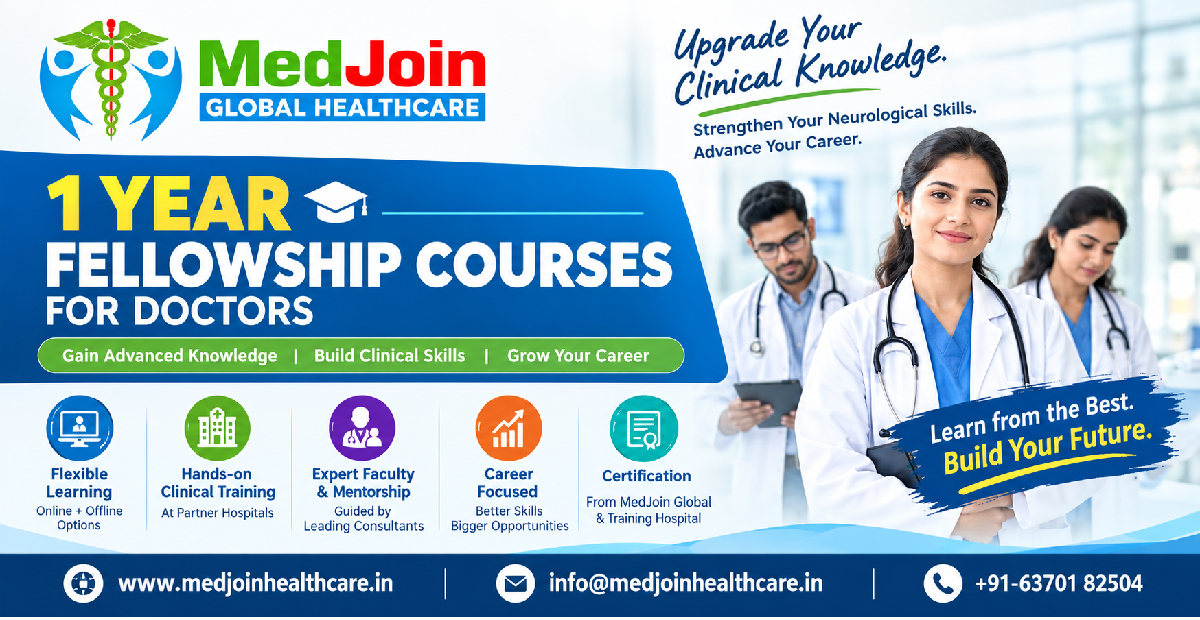
Doctors today are increasingly looking for structured learning opportunities that allow them to develop focused clinical knowledge, strengthen practical skills, and explore specific areas of medicine beyond their basic medical qualification. 1 year fellowship courses for doctors have therefore become an important option for medical professionals who want focused training in a particular clinical or healthcare discipline.
A well-designed fellowship can provide structured academic learning, case-based discussions, clinical exposure, mentorship, assessments, and certification. Depending on the program, doctors may choose from online, hybrid, or hospital-based fellowship training models.
For MBBS doctors and other eligible healthcare professionals, a fellowship program can provide an opportunity to study a focused subject while continuing professional responsibilities. Areas may include Emergency Medicine, Clinical Cardiology, Diabetes, Family Medicine, Critical Care, Obstetrics and Gynaecology, Paediatrics, Rheumatology, Dermatology, Radiology, Gastroenterology, Neurology, Internal Medicine, Orthopaedics, Aesthetic Medicine, and other specialised or emerging fields.
However, doctors should carefully understand the nature of any fellowship before enrolling. A fellowship offered as a continuing medical education or professional training program is not automatically equivalent to a postgraduate medical degree, residency, MD, MS, DNB, or any statutory specialist qualification. The recognition, accreditation, eligibility, curriculum, assessment process, clinical training, certification authority, and scope of each program should be verified independently.
This comprehensive guide explains 1 year fellowship courses for doctors, fellowship training for doctors, fellowship certification programs for doctors, and medical fellowship courses in India, including eligibility, formats, benefits, curriculum, clinical exposure, certification, career relevance, and how to select an appropriate program.
What Is a Fellowship Course for Doctors?
A medical fellowship is generally a focused educational or clinical training program designed to help eligible medical professionals develop knowledge and skills in a particular area of healthcare.
Unlike broad undergraduate medical education, a fellowship usually concentrates on a defined subject or clinical discipline.
For example, instead of studying medicine broadly, a doctor may choose a fellowship focused on:
- Emergency Medicine
- Clinical Cardiology
- Critical Care
- Diabetes
- Family Medicine
- Obstetrics and Gynaecology
- Paediatrics
- Rheumatology
- Dermatology
- Radiology
- Gastroenterology
- Neurology
- Internal Medicine
- Orthopaedics
- Aesthetic Medicine
- Pain Management
- Medical Imaging
- Preventive Medicine
- Healthcare Management
The exact structure varies considerably between institutions and providers.
A 1 year fellowship course for doctors commonly combines structured academic content with assessments and, depending on the program, practical or clinical exposure.
A program may include:
- Online learning modules
- Recorded lectures
- Live expert sessions
- Case-based discussions
- Clinical case presentations
- Assignments
- MCQ-based assessments
- Practical demonstrations
- Hospital-based clinical training
- Observership opportunities
- Mentorship
- Final assessment
- Fellowship certification
The value of a fellowship depends heavily on the quality and relevance of the curriculum, faculty, practical exposure, assessment standards, and certification framework.
Why Are 1 Year Fellowship Courses for Doctors Becoming Popular?
The healthcare sector is continuously evolving. Doctors encounter new diagnostic technologies, treatment protocols, clinical guidelines, digital healthcare systems, and increasingly specialised areas of practice.
After completing an MBBS or another eligible medical qualification, some doctors want additional focused education without immediately committing to a conventional multi-year postgraduate pathway.
This has contributed to growing interest in one-year fellowship courses for doctors.
Some common reasons include:
1. Focused learning
A fellowship allows doctors to concentrate on a particular medical discipline instead of studying a broad range of subjects.
2. Professional development
Doctors can use structured continuing education to update their knowledge and strengthen clinical understanding.
3. Flexible learning
Online and hybrid fellowship programs may allow working doctors to study alongside professional commitments.
4. Practical exposure
Some programs incorporate hospital-based training, clinical observerships, simulations, demonstrations, or supervised case discussions.
5. Career exploration
A fellowship may help a doctor explore a particular area before deciding on longer-term professional development.
6. Skill enhancement
Focused programs can provide structured exposure to clinical approaches, diagnostic reasoning, patient evaluation, and management principles.
7. Networking
Live sessions, case discussions, workshops, and clinical training may enable doctors to interact with faculty and other healthcare professionals.
1 Year Fellowship Courses for Doctors in India
India has a large and diverse healthcare education ecosystem. Doctors can find fellowship-style programs across many clinical and non-clinical disciplines.
The structure and recognition of these programs can differ significantly.
Some are:
- University-linked
- Hospital-based
- Professional-organisation based
- Academic continuing education programs
- Private healthcare education programs
- Online medical education programs
- Hybrid clinical training programs
Before enrolling, doctors should understand exactly what the institution is offering.
For example, a certificate issued after completing a private professional training program should not automatically be represented as an equivalent of an MD, MS, DNB, DM, MCh, or other statutory postgraduate qualification.
The terminology used by providers may include:
- Fellowship
- Clinical Fellowship
- Professional Fellowship
- Advanced Fellowship
- Certificate Fellowship
- Fellowship Program
- Fellowship Training Program
- Postgraduate Fellowship
- Online Fellowship
Doctors should verify the specific academic and professional status of the qualification.
Popular 1 Year Fellowship Courses for Doctors
There are numerous disciplines in which doctors may seek focused fellowship training.
Below are some commonly searched categories.
1. Fellowship in Emergency Medicine
Emergency Medicine is a high-demand clinical area involving the assessment and initial management of patients with acute illness and injury.
A fellowship curriculum may cover:
- Emergency assessment
- Triage
- Airway management
- Basic and advanced life support concepts
- Shock
- Trauma
- Acute cardiac emergencies
- Respiratory emergencies
- Neurological emergencies
- Poisoning
- Acute abdominal conditions
- Sepsis
- Emergency procedures
- Critical patient stabilisation
Emergency Medicine fellowship training can be particularly relevant to doctors working in emergency departments, urgent-care settings, hospitals, and healthcare facilities.
2. Fellowship in Clinical Cardiology
Cardiology-focused fellowship programs may introduce doctors to common cardiovascular conditions and clinical approaches.
Typical subjects can include:
- Hypertension
- Ischaemic heart disease
- Heart failure
- Arrhythmias
- Valvular heart disease
- Cardiomyopathies
- ECG interpretation
- Echocardiography fundamentals
- Cardiovascular risk assessment
- Acute coronary syndromes
- Preventive cardiology
Depending on the program, doctors may also receive exposure to ECG, echocardiography, cardiac imaging, and case-based cardiovascular discussions.
3. Fellowship in Diabetes
Diabetes is an important area of clinical practice because of the increasing burden of metabolic disease.
A diabetes fellowship may cover:
- Type 1 diabetes
- Type 2 diabetes
- Gestational diabetes
- Diabetes diagnosis
- Glycaemic monitoring
- Insulin therapy
- Oral antidiabetic medications
- Diabetes complications
- Diabetic neuropathy
- Diabetic nephropathy
- Diabetic retinopathy
- Diabetic foot
- Lifestyle modification
- Nutrition
- Obesity
- Cardiovascular risk
- Patient education
Doctors working in primary care, general practice, internal medicine, and outpatient healthcare may find diabetes-focused education particularly relevant.
4. Fellowship in Family Medicine
Family Medicine focuses on comprehensive healthcare across different age groups and common clinical conditions.
A fellowship curriculum may include:
- Primary care
- Preventive healthcare
- Common medical conditions
- Chronic disease management
- Women's health
- Children's health
- Geriatric care
- Mental health awareness
- Lifestyle disorders
- Health screening
- Vaccination
- Basic emergency management
- Patient counselling
- Continuity of care
Family Medicine training can help doctors strengthen their understanding of comprehensive primary healthcare.
5. Fellowship in Critical Care
Critical Care is an advanced clinical field involving the management of seriously ill patients.
A fellowship may introduce doctors to:
- ICU organisation
- Patient monitoring
- Shock
- Sepsis
- Respiratory failure
- Mechanical ventilation concepts
- Acute kidney injury
- Electrolyte abnormalities
- Acid-base disorders
- Neurological emergencies
- Cardiovascular emergencies
- Infection control
- Nutrition in critical illness
- Sedation and analgesia
- Organ support
Practical exposure and supervision are particularly important when a program involves critical-care procedures or patient management.
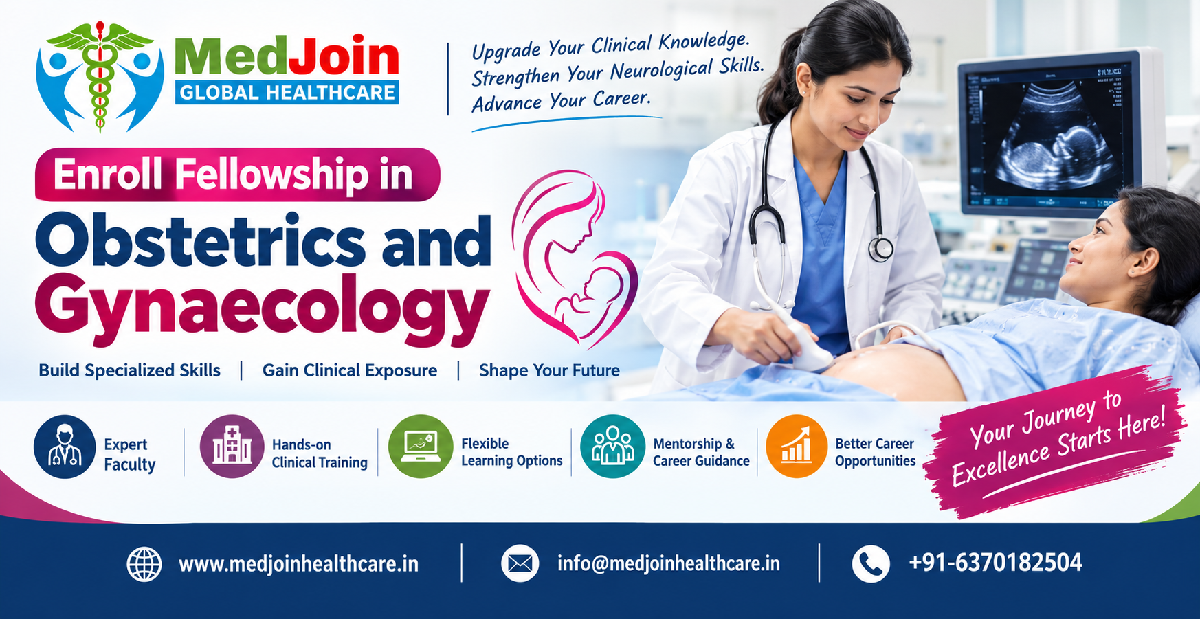
6. Fellowship in Obstetrics and Gynaecology
Doctors may pursue focused training in women's health and obstetric and gynaecological care.
Possible modules include:
- Antenatal care
- Normal pregnancy
- High-risk pregnancy
- Labour management
- Postpartum care
- Common gynaecological disorders
- Menstrual disorders
- Infertility basics
- Contraception
- Menopause
- Ultrasound fundamentals
- Obstetric emergencies
- Gynaecological emergencies
Some programs may also offer clinical exposure in obstetrics and gynaecology departments.
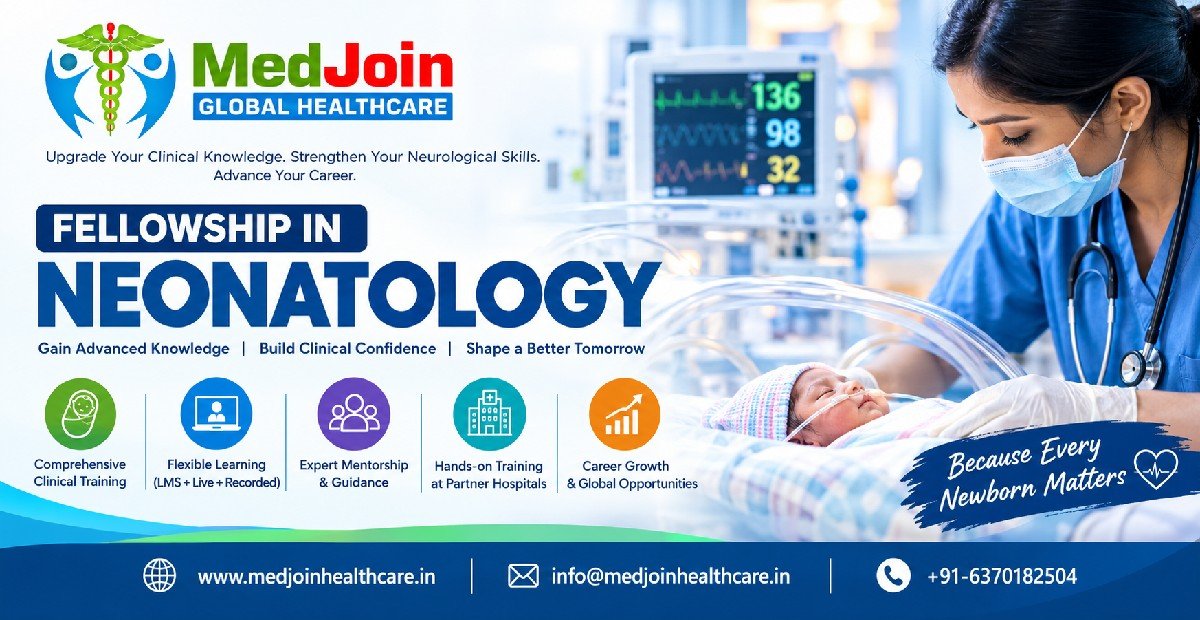
7. Fellowship in Paediatrics
Paediatric fellowship programs may provide focused education in the diagnosis and management of common childhood conditions.
Potential subjects include:
- Neonatal care
- Child growth and development
- Nutrition
- Childhood infections
- Respiratory disorders
- Gastrointestinal disorders
- Paediatric emergencies
- Vaccination
- Fever in children
- Dehydration
- Common neonatal problems
- Developmental assessment
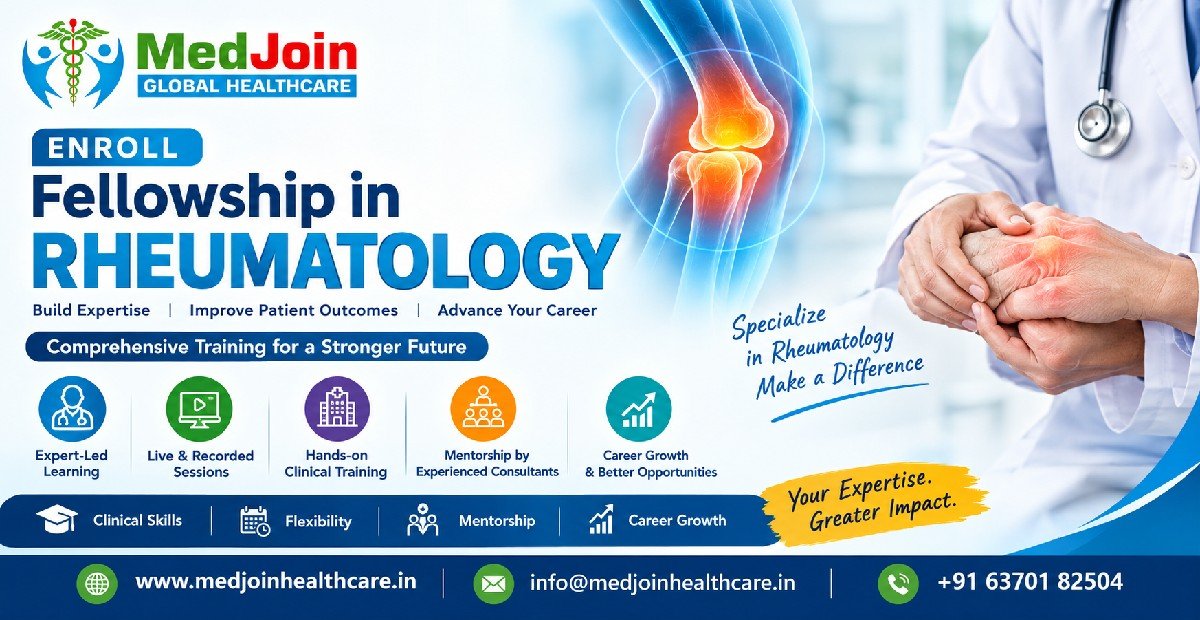
8. Fellowship in Rheumatology
Rheumatology is an increasingly important area for doctors interested in autoimmune, inflammatory, and musculoskeletal diseases.
Topics may include:
- Rheumatoid arthritis
- Osteoarthritis
- Spondyloarthritis
- Gout
- Lupus
- Vasculitis
- Connective tissue disorders
- Autoimmune diseases
- Joint examination
- Inflammatory markers
- Immunological investigations
- Long-term disease management
9. Fellowship in Dermatology
A dermatology-focused fellowship may cover common skin, hair, and nail disorders.
Possible topics include:
- Acne
- Eczema
- Psoriasis
- Fungal infections
- Bacterial skin infections
- Viral skin conditions
- Pigmentation disorders
- Hair disorders
- Nail disorders
- Allergic skin disease
- Common dermatological procedures
- Dermatological diagnosis
Programs involving aesthetic procedures should clearly specify which procedures are included and what level of supervision and hands-on training is provided.
10. Fellowship in Radiology
Radiology and medical imaging require specialised knowledge and appropriate supervision.
A fellowship-style training program may introduce doctors to:
- Principles of medical imaging
- X-ray interpretation
- Ultrasound basics
- CT fundamentals
- MRI fundamentals
- Common imaging findings
- Emergency radiology
- Abdominal imaging
- Chest imaging
- Musculoskeletal imaging
- Neuroimaging basics
Doctors should carefully distinguish educational training in radiology from formal specialist qualification in radiology.
11. Fellowship in Gastroenterology
A focused gastroenterology program may cover:
- Gastrointestinal anatomy
- Common GI disorders
- Acid-peptic disease
- GERD
- Liver disease
- Hepatitis
- Cirrhosis
- Inflammatory bowel disease
- Pancreatic disorders
- Gallbladder disease
- GI bleeding
- Gastrointestinal emergencies
- Nutrition and liver health
Advanced procedures such as endoscopy require appropriate clinical training, supervision, facilities, and competency assessment.
12. Fellowship in Neurology
Neurology-focused programs may cover:
- Stroke
- Epilepsy
- Headache
- Movement disorders
- Neuropathy
- Dementia
- Multiple sclerosis
- Neuromuscular disorders
- CNS infections
- Neuroimaging
- Neurological examination
- Acute neurological emergencies
13. Fellowship in Internal Medicine
Internal Medicine is broad and covers the diagnosis and management of adult medical conditions.
Potential modules include:
- Hypertension
- Diabetes
- Respiratory disorders
- Cardiovascular disease
- Gastrointestinal disorders
- Kidney disease
- Infectious diseases
- Endocrinology
- Neurology
- Rheumatology
- Geriatric medicine
- Preventive medicine
14. Fellowship in Orthopaedics
A fellowship-style orthopaedic program may introduce doctors to:
- Musculoskeletal examination
- Fracture management principles
- Joint disorders
- Arthritis
- Sports injuries
- Back pain
- Trauma
- Orthopaedic imaging
- Rehabilitation
- Common orthopaedic procedures
15. Fellowship in Aesthetic Medicine and Cosmetology
Aesthetic medicine is an emerging area of professional education.
Potential topics include:
- Facial anatomy
- Skin assessment
- Aesthetic consultation
- Chemical peels
- Basic cosmetic procedures
- Facial rejuvenation
- Skin health
- Hair concerns
- Cosmetic dermatology principles
- Patient selection
- Complication awareness
Hands-on training should be conducted under appropriate supervision with proper patient-safety protocols.
What Is Fellowship Training for Doctors?
Fellowship training for doctors refers to structured educational and/or clinical training focused on a particular discipline.
Depending on the provider, fellowship training can include theoretical education, practical demonstrations, clinical observation, supervised patient interaction, case discussions, assessments, and certification.
A strong fellowship training structure should ideally connect theoretical knowledge with clinical application.
For example:
Theory → Case Discussion → Demonstration → Supervised Practice/Observation → Assessment → Certification
This approach can help learners understand not only what a condition is, but also how doctors approach diagnosis, clinical reasoning, treatment planning, patient communication, and follow-up.
Online Fellowship Training for Doctors
Online medical education has become an important component of professional learning.
An online fellowship may provide:
- Learning management system access
- Recorded lectures
- Live online classes
- Reading material
- Clinical case discussions
- Assignments
- MCQ assessments
- Discussion forums
- Expert interaction
- Progress tracking
Online learning can be useful for doctors who are working full-time or cannot relocate for a complete hospital-based program.
However, online education cannot automatically substitute for supervised hands-on clinical competency where practical skills are required.
Therefore, doctors should determine whether their selected program is:
- Completely online
- Online with optional clinical observership
- Online with mandatory clinical training
- Hybrid
- Fully offline
Hybrid Fellowship Courses for Doctors
A hybrid fellowship combines online academic education with practical or clinical training.
A typical model might include:
Online Phase
- Recorded lectures
- Live sessions
- Reading material
- Case discussions
- Assignments
- Assessments
Clinical Phase
- Hospital-based exposure
- Departmental observation
- Patient-case discussions
- Practical demonstrations
- Supervised clinical learning
The exact duration of the clinical component varies by institution.
For example, a one-year fellowship may be structured around several months of online academic learning followed by a defined period of clinical exposure.
The specific clinical requirements should be clearly documented before enrolment.
Hospital-Based Fellowship Training
Hospital-based fellowship training provides exposure to real healthcare environments.
Depending on the discipline, hospital training may involve:
- OPD observation
- IPD exposure
- Emergency department exposure
- ICU exposure
- Ward rounds
- Case discussions
- Departmental meetings
- Procedure demonstrations
- Diagnostic interpretation
- Clinical documentation
- Patient counselling observation
The degree of hands-on participation must depend on the doctor's qualifications, institutional policies, supervision, applicable laws, and patient-safety requirements.
A responsible fellowship provider should clearly explain what students can and cannot perform during clinical training.
Fellowship Certification Programs for Doctors
One of the most important considerations when choosing a fellowship is the certificate awarded at completion.
A fellowship certification program for doctors may issue a certificate after the learner completes specified academic requirements.
The certificate should clearly mention:
- Doctor's name
- Program title
- Duration
- Discipline
- Institution/provider
- Completion date
- Assessment status
- Certificate number, where applicable
- Signatory
- Training component, if applicable
If clinical training is included, the documentation should clearly differentiate academic completion from clinical training.
For example, a provider may issue separate documentation for:
- Academic fellowship completion
- Hospital-based clinical training
This can make the learner's training record more transparent.
Is a Fellowship Certificate the Same as an MD or MS?
No.
A fellowship certificate should not automatically be represented as equivalent to an MD, MS, DNB, DM, MCh, or another recognised postgraduate medical qualification.
These qualifications have different regulatory, academic, admission, training, assessment, and recognition frameworks.
Doctors should carefully check:
- Who awards the qualification?
- Is the program university-affiliated?
- Is it a professional continuing education program?
- Is it a hospital training program?
- What regulatory framework applies?
- What exactly does the certificate state?
- Is the qualification recognised for any specific statutory purpose?
Transparent communication is essential.
Eligibility for 1 Year Fellowship Courses for Doctors
Eligibility varies by course.
Common eligibility requirements may include:
- MBBS or equivalent medical qualification
- Valid medical registration where required
- Relevant professional experience for selected programs
- Additional qualification for advanced disciplines
- Institutional eligibility criteria
Some fellowship programs may be specifically designed for MBBS doctors, while others may target postgraduate doctors or specialists.
Before admission, candidates should verify the eligibility requirements directly with the institution.
Can MBBS Doctors Do Fellowship Courses?
Many fellowship-style professional education programs are designed specifically for MBBS doctors.
The suitability depends on:
- Program subject
- Provider requirements
- Clinical component
- Eligibility criteria
- Local regulations
- Intended professional use
An MBBS doctor may consider fellowship training in areas such as:
- Emergency Medicine
- Diabetes
- Family Medicine
- Clinical Cardiology
- Critical Care
- Obstetrics and Gynaecology
- Paediatrics
- Dermatology
- Rheumatology
- Internal Medicine
- Gastroenterology
- Other focused clinical subjects
However, a fellowship should be considered as an additional educational or professional-development pathway rather than automatically as a substitute for a formal specialist postgraduate qualification.
Fellowship Courses After MBBS
After MBBS, doctors may explore multiple pathways depending on their career objectives.
These can include:
- Postgraduate degree programs
- Diploma programs
- Residency pathways
- Fellowship programs
- Certificate courses
- Continuing medical education
- Skill-based clinical training
- Research programs
- Healthcare management programs
A fellowship may be particularly relevant for doctors who want structured education in a focused field while continuing their professional activities.
1 Year Fellowship Courses After MBBS
The popularity of one-year fellowship programs is partly related to their focused duration.
Potential advantages include:
- Structured one-year learning journey
- Focused curriculum
- Flexible delivery options
- Professional development
- Subject-specific knowledge
- Clinical exposure where offered
- Assessment and certification
However, doctors should avoid choosing a fellowship solely because it is shorter.
The more important questions are:
- What will I learn?
- Who teaches the program?
- How is learning assessed?
- Is clinical training included?
- What is the quality of the hospital exposure?
- What certificate will I receive?
- What can I legitimately claim after completion?
Curriculum of a 1 Year Medical Fellowship
A well-structured one-year fellowship can be divided into several academic components.
Module 1: Fundamentals
The first stage establishes the basic principles of the selected discipline.
Module 2: Clinical Assessment
Doctors learn how to approach patients, take relevant histories, perform examinations, and identify clinical red flags.
Module 3: Diagnostics
This may include laboratory tests, imaging, ECG, ultrasound, or other discipline-specific investigations.
Module 4: Disease Management
The curriculum progresses into common and important clinical conditions.
Module 5: Emergency Management
Where relevant, the program covers acute presentations and emergency response.
Module 6: Case-Based Learning
Real or simulated clinical cases help connect theory with clinical reasoning.
Module 7: Practical Skills
Where applicable, demonstrations and supervised training can introduce practical procedures.
Module 8: Assessment
Students may complete:
- MCQs
- Assignments
- Case presentations
- Viva
- Practical assessments
- Final examinations
Module 9: Clinical Training
Where included, students receive hospital-based clinical exposure.
Module 10: Final Certification
Eligible students receive the relevant certificate after fulfilling program requirements.
Clinical Case-Based Learning in Fellowship Programs
Case-based learning is particularly valuable for doctors.
A typical case discussion can follow:
Patient presentation → History → Examination → Differential diagnosis → Investigations → Diagnosis → Treatment approach → Follow-up
Case discussions may cover common conditions as well as complicated presentations.
For example, a cardiology case might involve a patient presenting with chest pain.
Students may be asked to consider:
- Clinical history
- Risk factors
- Differential diagnosis
- ECG
- Biomarkers
- Imaging
- Risk stratification
- Initial management
- Referral requirements
- Follow-up
This encourages clinical reasoning rather than memorisation alone.
Importance of Expert Faculty
Faculty quality is a major consideration when selecting a fellowship.
Doctors should review:
- Faculty qualifications
- Clinical experience
- Teaching experience
- Institutional affiliation
- Subject expertise
- Availability for interaction
- Case-discussion experience
An experienced clinician can bring practical perspectives that may not be available from textbooks alone.
Live sessions can also allow participants to ask questions and discuss difficult cases.
Live Classes and Recorded Lectures
A blended fellowship may combine live and recorded learning.
Recorded learning
Advantages include:
- Flexible timing
- Repeat viewing
- Self-paced study
- Convenient revision
Live learning
Advantages include:
- Real-time interaction
- Questions and answers
- Case discussions
- Expert feedback
- Peer interaction
A combination can provide flexibility while maintaining interaction.
Learning Management System for Medical Fellowship Courses
A modern fellowship program may use a Learning Management System, commonly called an LMS.
An LMS can provide:
- Course modules
- Video lectures
- PDFs
- Quizzes
- Assessments
- Progress tracking
- Announcements
- Discussion forums
- Certificates
- Learning records
For working doctors, an LMS can make professional education more convenient.
Clinical Observership vs Hands-On Training
These terms should not be confused.
Clinical Observership
An observership generally allows a doctor to observe clinical practice and learn from experienced healthcare professionals.
Activities may include:
- Observing ward rounds
- Attending case discussions
- Observing procedures
- Observing patient consultations
- Attending departmental meetings
Hands-On Clinical Training
Hands-on training implies active participation in selected clinical activities under appropriate supervision.
The exact permitted activities depend on:
- Doctor's qualifications
- Hospital policy
- Supervising consultant
- Applicable regulations
- Patient consent
- Institutional protocols
A fellowship provider should clearly state whether a program offers observation, supervised practice, simulation, or hands-on clinical training.
How Long Is a Medical Fellowship Course?
Medical fellowship duration varies.
Common formats include:
- 3 months
- 6 months
- 9 months
- 12 months
- 18 months
- 24 months
A 1 year fellowship course typically provides approximately twelve months of structured academic or professional learning.
However, the exact number of teaching hours, clinical hours, and assessments can differ substantially.
Therefore, doctors should evaluate the actual curriculum rather than judging a course solely by its duration.
Online vs Hybrid vs Offline Fellowship Courses
Doctors often compare three major learning models.
| Feature | Online | Hybrid | Offline |
|---|---|---|---|
| Academic learning | Online | Online + offline | Mostly offline |
| Flexibility | High | Moderate to high | Lower |
| Hospital exposure | Usually limited/optional | Often included | Usually included |
| Relocation | Usually not required | May be required for clinical phase | Often required |
| Working alongside course | Easier | Possible | More difficult |
| Practical exposure | Limited | Higher | Generally higher |
| Learning convenience | High | High | Moderate |
| Clinical environment | Limited | Available where included | Usually central |
No single model is appropriate for every doctor.
The right choice depends on the learner's professional schedule, learning objectives, location, clinical requirements, and preferred educational format.
Benefits of 1 Year Fellowship Courses for Doctors
1. Focused professional education
A fellowship allows doctors to concentrate on one subject.
2. Flexible learning
Online and hybrid formats can accommodate working professionals.
3. Structured curriculum
The learning journey is organised around defined modules.
4. Case-based learning
Clinical cases help bridge theory and practice.
5. Expert interaction
Doctors may interact with experienced faculty.
6. Clinical exposure
Programs that include hospital training can provide exposure to real clinical environments.
7. Assessment
Examinations and assignments help evaluate learning.
8. Professional networking
Doctors can connect with peers and mentors.
9. Career exploration
Focused training can help doctors understand whether a specialty area matches their professional interests.
10. Continuing education
Fellowships can form part of a doctor's ongoing professional development.
Career Scope After a Medical Fellowship
A fellowship can contribute to professional development, but career outcomes depend on many factors.
These include:
- Primary medical qualification
- Registration
- Clinical experience
- Additional postgraduate qualifications
- Fellowship subject
- Practical skills
- Employer requirements
- Local regulations
- Professional reputation
- Communication skills
- Experience
A fellowship should therefore be viewed as one component of professional development rather than a guaranteed career outcome.
Medical Fellowship Courses in India: What Doctors Should Verify
India's medical education landscape includes multiple types of institutions and training providers.
When researching medical fellowship courses in India, verify:
Institution
Identify the legal and educational identity of the provider.
Program status
Determine whether it is:
- University program
- Hospital program
- Professional training program
- Continuing education program
- Private education program
Certification
Understand exactly what certificate is issued.
Clinical component
Verify whether clinical exposure is actually included.
Faculty
Review the faculty profile.
Assessment
Check whether completion requires examinations or other assessments.
Transparency
Look for a clearly published curriculum, fee structure, duration, eligibility, and policies.
Fellowship Courses for Doctors in India: Online Learning Advantages
Online fellowship programs can remove geographical barriers.
A doctor living in one Indian city may be able to attend academic sessions delivered by faculty located elsewhere.
Advantages include:
- No daily commute
- Flexible study schedule
- Recorded content
- Digital resources
- Online assessments
- Remote faculty interaction
However, doctors should confirm whether practical requirements require travel to a hospital.
Offline Medical Fellowship Courses
Offline programs are conducted primarily at physical training centres or hospitals.
Potential advantages include:
- Direct faculty interaction
- Clinical environment
- Face-to-face case discussions
- Practical demonstrations
- Hospital exposure
- Peer interaction
Potential challenges include:
- Relocation
- Accommodation costs
- Travel expenses
- Reduced flexibility
- Time away from existing practice
Fellowship vs Degree: Understanding the Difference
| Feature | Fellowship Program | Postgraduate Degree |
|---|---|---|
| Duration | Often shorter | Usually longer |
| Focus | Specific area | Formal specialty education |
| Format | Online/hybrid/offline depending on provider | Structured institutional training |
| Clinical exposure | Varies | Formal clinical training |
| Qualification status | Depends on provider | Defined by applicable regulatory framework |
| Purpose | Professional development/focused training | Formal postgraduate qualification |
| Recognition | Must be independently verified | Governed by applicable recognition framework |
This distinction is important when evaluating medical education options.
How MedJoin Global Can Support Doctors Through Fellowship Education
MedJoin Global Healthcare is positioned as a healthcare education platform offering structured professional learning opportunities for doctors and healthcare professionals.
Its fellowship-style programs can be designed around:
- Structured online education
- Learning management system access
- Live expert sessions
- Recorded lectures
- Clinical case discussions
- Assessments
- Professional mentorship
- Hospital-based clinical training where applicable
- Flexible learning models
Depending on the selected program, doctors may choose online or hybrid learning pathways.
The precise duration, clinical-training arrangement, eligibility, fee, assessment structure, and certification should always be checked for the individual program.
How AI May Influence Medical Fellowship Education
AI can support doctors' learning by helping them:
- Review complex concepts
- Generate practice questions
- Explore differential diagnoses
- Summarise research
- Create revision plans
- Practise clinical reasoning
- Analyse simulated cases
However, AI-generated information must be verified against reliable medical literature and clinical guidelines.
Doctors should not rely on AI as an independent substitute for clinical expertise or validated medical decision-making.
International Doctors and Medical Fellowship Courses in India
India can also be an attractive destination for doctors from other countries seeking professional education, subject to eligibility, registration, visa, institutional, and local requirements.
International doctors should verify:
- Whether their qualification is accepted
- Registration requirements
- Visa requirements
- Clinical training permissions
- Hospital requirements
- Language requirements
- Certification terms
- Travel and accommodation
- Applicable regulatory requirements
Clinical training arrangements for international doctors can involve additional administrative requirements.
Frequently Asked Questions About 1 Year Fellowship Courses for Doctors
What are 1 year fellowship courses for doctors?
They are structured professional education or clinical training programs generally lasting approximately twelve months and focusing on a specific medical discipline.
Can MBBS doctors pursue one-year fellowships?
Many programs are designed for MBBS doctors, but eligibility varies by course and institution.
Are online fellowships available for doctors?
Yes. Various providers offer online medical fellowship-style education with recorded lectures, live classes, digital learning material, case discussions, and assessments.
What is a hybrid fellowship?
A hybrid fellowship combines online academic learning with offline clinical or practical training where included.
Are fellowship courses equivalent to MD or MS?
Generally, a fellowship certificate should not automatically be treated as equivalent to a recognised postgraduate degree such as MD or MS. The status depends on the specific program and applicable framework.
Do all fellowships provide hospital training?
No. Some are fully online, while others provide optional or mandatory hospital-based training.
Is clinical training important?
For programs involving practical clinical skills, supervised clinical exposure can be particularly valuable. Its importance depends on the subject and intended learning outcomes.
How long is a medical fellowship?
Programs can vary from a few months to one or more years. One-year fellowships are a common format.
Which fellowship is best after MBBS?
There is no universally appropriate fellowship for every doctor. The suitable program depends on the doctor's interests, career objectives, eligibility, and desired clinical exposure.
Can working doctors join fellowship courses?
Many online and hybrid programs are designed with working professionals in mind. Doctors should check the weekly workload and clinical attendance requirements.
Are fellowship certificates useful?
A fellowship certificate can document completion of a particular educational or training program. Its professional significance depends on the issuing organisation, program structure, recognition, curriculum, and how the qualification is used.
Do fellowships guarantee a job?
No educational program should be considered a guaranteed route to employment.
Can doctors pursue more than one fellowship?
Depending on eligibility and professional objectives, doctors may pursue multiple educational programs over time.
Can international doctors join medical fellowship courses in India?
Some programs may accept international doctors, subject to eligibility, institutional requirements, clinical permissions, immigration requirements, and other applicable rules.
Why MedJoin Global Focuses on Career-Oriented Medical Education
Doctors need education that connects academic knowledge with clinical practice.
A modern medical fellowship platform can combine:
Education + Clinical Cases + Expert Faculty + Flexible Learning + Assessment + Practical Exposure
MedJoin Global's fellowship education model can be structured around these principles.
Depending on the selected course, doctors may access online learning, live sessions, recorded lectures, case-based discussions, assessments, and clinical training opportunities.
Doctors should review the individual course page for the current curriculum, eligibility, duration, fee, clinical-training arrangement, and certification details.
The demand for 1 year fellowship courses for doctors reflects the growing need for focused, flexible, and professionally relevant medical education.
For MBBS doctors and other eligible healthcare professionals, fellowship training can provide an opportunity to explore specialised areas such as Emergency Medicine, Clinical Cardiology, Diabetes, Family Medicine, Critical Care, Obstetrics and Gynaecology, Paediatrics, Rheumatology, Dermatology, Radiology, Gastroenterology, Neurology, Internal Medicine, Orthopaedics, and other disciplines.
The most important consideration is not simply the word "fellowship" or the duration of the program. Doctors should carefully evaluate the curriculum, faculty, clinical exposure, assessment, certification, institutional status, eligibility, cost, and professional purpose of the course.
A one-year fellowship can be particularly useful when it provides structured learning, relevant case-based education, expert interaction, appropriate clinical exposure, and a transparent assessment and certification process.
For doctors considering fellowship certification programs for doctors, fellowship training for doctors, or medical fellowship courses in India, the right approach is to compare programs carefully and select an educational pathway that matches their professional objectives.
Medical education is a continuous journey. A fellowship can be one component of that journey—helping doctors strengthen knowledge, explore new areas of medicine, and continue developing professionally while maintaining a commitment to patient safety and evidence-based healthcare.
Explore 1 Year Fellowship Courses for Doctors With MedJoin Global
MedJoin Global Healthcare offers professional medical education programs designed around structured learning, expert-led sessions, clinical case discussions, flexible digital education, assessment, and clinical exposure where applicable.
Doctors can explore fellowship programs in multiple clinical disciplines and select a learning model based on their professional requirements.
Explore medical fellowship programs:
Website: www.medjoinhealthcare.in
Email: info@medjoinhealthcare.in
Phone: +91 63701 82504