
We Build Building and Great Constructive Homes.
We successfully cope with tasks of varying complexity, provide long-term guarantees and regularly master new technologies.
Course Description
Diabetes mellitus is one of the most important chronic health challenges facing healthcare systems worldwide. The condition requires continuous monitoring, appropriate treatment, lifestyle modification, prevention of complications, and long-term patient education. According to the World Health Organization (WHO), diabetes can cause serious complications affecting the heart, blood vessels, eyes, kidneys and nerves, while early diagnosis and appropriate management can help prevent or delay many of these outcomes.
For healthcare professionals who want to strengthen their knowledge and clinical understanding of diabetes care, a Postgraduate Diploma in Diabetes Mellitus can provide structured education in the assessment, diagnosis, management and monitoring of patients with diabetes.
What is a PG Diploma in Diabetes Mellitus?
The Postgraduate Diploma in Diabetes Mellitus is a specialized postgraduate-level program focused on developing comprehensive knowledge of diabetes and its associated metabolic disorders. The program can help healthcare professionals understand different types of diabetes, risk factors, diagnostic approaches, treatment principles and strategies for preventing diabetes-related complications.
Diabetes management extends beyond controlling blood glucose. Healthcare professionals need to consider cardiovascular risk, blood pressure, lipid management, renal health, eye health, neurological complications, foot care, nutrition and lifestyle factors. WHO recommends combining appropriate medical treatment with healthy diet, physical activity and regular screening for complications.
A structured diploma program therefore provides an opportunity to develop a broader understanding of diabetes care and apply evidence-based concepts in appropriate clinical settings.
Why Study a Postgraduate Diploma in Diabetes Mellitus?
Diabetes represents a substantial healthcare burden in India. The ICMR-INDIAB national study, published in The Lancet Diabetes & Endocrinology, reported an overall weighted diabetes prevalence of 11.4% among the surveyed population, with diabetes and other metabolic disorders presenting significant public-health implications.
This growing burden creates a continuing need for healthcare professionals who understand diabetes prevention, diagnosis, treatment and long-term care.
A PG Diploma in Diabetes Mellitus can help healthcare professionals:
- Develop a structured understanding of diabetes mellitus
- Understand type 1, type 2 and other forms of diabetes
- Strengthen knowledge of diabetes diagnosis and monitoring
- Understand pharmacological and non-pharmacological management
- Learn about insulin therapy and glucose-lowering approaches
- Understand acute and chronic diabetes complications
- Develop knowledge of diabetic foot and neuropathy
- Understand diabetic kidney and eye complications
- Improve patient counselling and lifestyle-management skills
- Build confidence in managing diabetes-related clinical scenarios
Career After PG Diploma in Diabetes Mellitus
A career after PG Diploma in Diabetes Mellitus can involve multiple healthcare settings where diabetes screening, management, counselling and follow-up are required.
Diabetes is a long-term condition, and patients often require continuous monitoring and multidisciplinary care. This creates opportunities for healthcare professionals to apply their knowledge across hospitals, clinics and other healthcare environments.
Potential professional pathways include:
Diabetes Care Clinics
Healthcare professionals can use their additional knowledge in diabetes-focused clinical environments, subject to their underlying qualifications, registration and scope of practice.
Hospitals and Multispecialty Centres
Diabetes frequently intersects with cardiovascular, renal, neurological and other medical conditions. Additional diabetes knowledge can therefore be useful for professionals working in hospitals and multispecialty healthcare facilities.
Primary and Community Healthcare
Early identification, lifestyle counselling, risk assessment and follow-up are important components of diabetes care. Professionals working in primary-care environments can benefit from specialized diabetes education.
Chronic Disease Management
Diabetes is closely associated with other metabolic and cardiovascular risk factors. Training in diabetes can support professionals involved in broader chronic disease management.
Academic and Training Roles
Professionals with relevant qualifications and experience may also explore opportunities involving healthcare education, professional training and diabetes-awareness initiatives, depending on institutional requirements.
Clinical Research
Diabetes remains an active area of clinical and public-health research. Additional knowledge can support professionals interested in research projects involving diabetes, metabolic disorders, treatment outcomes and patient care.
Why Choose MedJoin Global for PG Diploma in Diabetes Mellitus?
Choosing the right education provider is an important decision for healthcare professionals. MedJoin Global Healthcare focuses on professional healthcare education and fellowship and diploma-oriented learning opportunities for healthcare professionals.
With MedJoin Global, learners can benefit from a structured learning approach designed to complement their existing professional knowledge.
Build Your Expertise in Diabetes Care
The increasing burden of diabetes highlights the importance of healthcare professionals who understand the disease throughout its clinical course. In India, national research has demonstrated a substantial prevalence of diabetes and prediabetes, reinforcing the need for prevention, early diagnosis, appropriate management and long-term care.
A Postgraduate Diploma in Diabetes Mellitus can be a valuable learning pathway for eligible healthcare professionals who want to strengthen their understanding of diabetes and metabolic health.
If you are looking to advance your professional knowledge, explore the PG Diploma in Diabetes Mellitus with MedJoin Global and develop a stronger foundation in modern diabetes care, patient management and complication prevention.
Take the next step toward specialized diabetes education with MedJoin Global Healthcare.
Course Highlight
Modules Comprehensive modules covering various aspects of nutrition & dietetics.
Assessments Quizzes, assignments to test your knowledge and skills.
Certification Certified Nutritionist credential upon completion.
Key Features
Structured Learning
The program can provide organized learning around important areas of diabetes diagnosis, treatment, complications and long-term management.
Flexible Learning Approach
A flexible learning model can make it easier for working healthcare professionals to pursue additional education alongside their professional responsibilities, subject to the specific program structure.
Clinically Relevant Knowledge
The curriculum is designed around practical areas of diabetes care so learners can develop knowledge that is relevant to real-world healthcare environments.
Comprehensive Diabetes Education
From diabetes fundamentals and diagnosis to complications and advanced management concepts, the program can provide broader exposure to the different dimensions of diabetes care.
Professional Skill Development
The program is intended to support continuous professional development by helping eligible healthcare professionals expand their knowledge in a specialized area.
Course Structure
- Introduction to Diabetes Mellitus
- Global & Indian Epidemiology
- Classification of Diabetes
- Type 1 Diabetes
- Type 2 Diabetes
- Gestational Diabetes
- Other specific types
- Genetics and Environmental Factors
- Pathophysiology of Diabetes
- Insulin Resistance
- β-Cell Dysfunction
- Glucose Metabolism
- Prediabetes and Prevention
- Metabolic Syndrome
- Diagnostic Criteria for Diabetes
- Fasting & Postprandial Plasma Glucose
- HbA1c
- Oral Glucose Tolerance Test
- Random Blood Glucose
- Screening for Prediabetes
- Diabetes Risk Assessment
- Comprehensive Patient History
- Physical Examination
- Baseline Laboratory Investigations
- Cardiovascular Risk Assessment
- Individualised Treatment Targets
- Principles of Medical Nutrition Therapy
- Macronutrients & Micronutrients
- Carbohydrate Management
- Glycaemic Index & Glycaemic Load
- Calorie Assessment
- Weight Management
- Exercise Prescription
- Physical Activity in Diabetes
- Behaviour Modification
- Smoking & Alcohol Considerations
- Fasting and Diabetes
- Travel and Diabetes
- Patient Counselling
Nutrition and lifestyle management are core components of several established diabetes curricula.
- Principles of Antidiabetic Pharmacotherapy
- Metformin
- Sulfonylureas
- DPP-4 Inhibitors
- SGLT2 Inhibitors
- GLP-1 Receptor Agonists
- Thiazolidinediones
- Alpha-Glucosidase Inhibitors
- Combination Therapy
- Treatment Selection Based on Patient Profile
- Drug Safety & Adverse Effects
- Renal & Hepatic Considerations
- Cardiovascular Risk Reduction
- Evidence-Based Treatment Algorithms
- Physiology of Insulin
- Types of Insulin
- Insulin Pharmacokinetics
- Basal Insulin
- Bolus/Prandial Insulin
- Basal-Bolus Regimens
- Premixed Insulin
- Insulin Initiation
- Insulin Titration
- Injection Techniques
- Insulin Storage
- Injection-Site Complications
- Insulin in Type 1 Diabetes
- Insulin in Type 2 Diabetes
- Insulin During Acute Illness
- Insulin in Pregnancy
- Self-Monitoring of Blood Glucose
- Continuous Glucose Monitoring (CGM)
- Flash Glucose Monitoring
- Glucose Sensors
- Time in Range
- Glucose Variability
- Insulin Pens
- Smart Insulin Pens
- Insulin Pumps
- Automated Insulin Delivery
- Hybrid Closed-Loop Systems
- Digital Diabetes Platforms
- Telemedicine
- Interpretation of CGM Reports
Modern postgraduate programmes increasingly include diabetes monitoring and technology as dedicated curriculum components.
Hypoglycaemia
- Recognition
- Classification
- Causes
- Treatment
- Prevention
Diabetic Ketoacidosis
- Pathophysiology
- Diagnosis
- Fluid management
- Insulin therapy
- Electrolyte management
- Resolution criteria
Hyperosmolar Hyperglycaemic State
- Clinical presentation
- Diagnosis
- Fluid and insulin therapy
- Complications
Other Acute Issues
- Sick-day management
- Severe hyperglycaemia
- Diabetes-related emergencies
Diabetic Retinopathy
- Screening
- Classification
- Prevention
- Referral
Diabetic Nephropathy
- Albuminuria
- eGFR assessment
- CKD staging
- Renoprotective strategies
- Referral criteria
Diabetic Neuropathy
- Peripheral neuropathy
- Autonomic neuropathy
- Screening
- Pain management
- Diabetic Foot Syndrome
- Foot Risk Assessment
- Peripheral Neuropathy
- Peripheral Arterial Disease
- Foot Ulcers
- Infection
- Classification of Foot Ulcers
- Wound Assessment
- Off-loading
- Antibiotic Principles
- Osteomyelitis
- Multidisciplinary Foot Care
- Prevention of Amputation
- Diabetes and Cardiovascular Disease
- Coronary Artery Disease
- Hypertension
- Dyslipidaemia
- Peripheral Arterial Disease
- Cerebrovascular Disease
- Heart Failure
- Obesity
- Metabolic Syndrome
- Cardiovascular Risk Stratification
- Cardiovascular Risk Reduction
- Integrated Cardiometabolic Management
Pregnancy
- Gestational diabetes
- Preconception counselling
- Diabetes during pregnancy
- Insulin management
- Maternal and fetal complications
Paediatric Diabetes
- Type 1 diabetes in children
- Adolescents with diabetes
- Insulin management
- Psychosocial issues
Elderly
- Individualised glycaemic targets
- Frailty
- Hypoglycaemia prevention
- Polypharmacy
Other Special Situations
- Diabetes and surgery
- Diabetes during infections
- Diabetes with renal disease
- Diabetes with liver disease
- Steroid-induced diabetes
Dedicated coverage of paediatric, pregnancy, primary-care and hospital diabetes is also seen in postgraduate diabetes education programmes.
- Diabetes and Obesity
- Diabetes and Thyroid Disorders
- Diabetes and PCOS
- Diabetes and NAFLD/MASLD
- Diabetes and Chronic Kidney Disease
- Diabetes and Heart Failure
- Diabetes and Hypertension
- Diabetes and Dyslipidaemia
- Diabetes and Infections
- Diabetes and Tuberculosis
- Diabetes and Sleep Disorders
- Diabetes and Mental Health
- Diabetes in Hospitalised Patients
- Inpatient Glycaemic Targets
- Insulin in Hospital
- Perioperative Diabetes Management
- Diabetes in ICU
- Enteral & Parenteral Nutrition
- Steroid-Induced Hyperglycaemia
- Infection-Associated Hyperglycaemia
- Transition from IV to Subcutaneous Insulin
- Discharge Planning
- Diabetes Self-Management Education
- Patient Counselling
- Motivational Interviewing
- Medication Adherence
- Lifestyle Modification
- Insulin Education
- Glucose Monitoring Education
- Hypoglycaemia Education
- Foot-Care Education
- Family Involvement
- Psychological Support
- Shared Decision-Making
Communication, counselling and patient education are recognised components of diabetes-focused postgraduate curricula.
Practical/Clinical Training
- Diabetes outpatient clinics
- New diabetes assessment
- Follow-up diabetes clinics
- Insulin initiation
- Glucose monitoring
- CGM interpretation
- Diabetes complication screening
- Diabetic foot assessment
- Hypertension and lipid management
- Obesity management
- Gestational diabetes
- Inpatient diabetes management
- DKA/HHS management
- Patient counselling
- Treatment-plan development
- Principles of Clinical Research
- Research Question Development
- Literature Review
- Study Designs
- Clinical Trials
- Biostatistics
- Critical Appraisal
- Evidence-Based Medicine
- Clinical Guidelines
- Research Ethics
- Scientific Writing
- Dissertation/Research Project
- Audit of diabetes control in a clinical population
- HbA1c improvement study
- Diabetes complication screening audit
- CGM-based glucose analysis
- Insulin adherence study
- Diabetic foot screening programme
- Gestational diabetes outcomes
- Diabetes education intervention
- Cardiovascular risk assessment in Type 2 Diabetes
Eligibility
- MD or DNB in General Medicine
- MBBS
- MS
Course Fee
Course Fee ₹275,000.00
Registration Fee ₹25,000.00
Total Fee ₹230,000.00
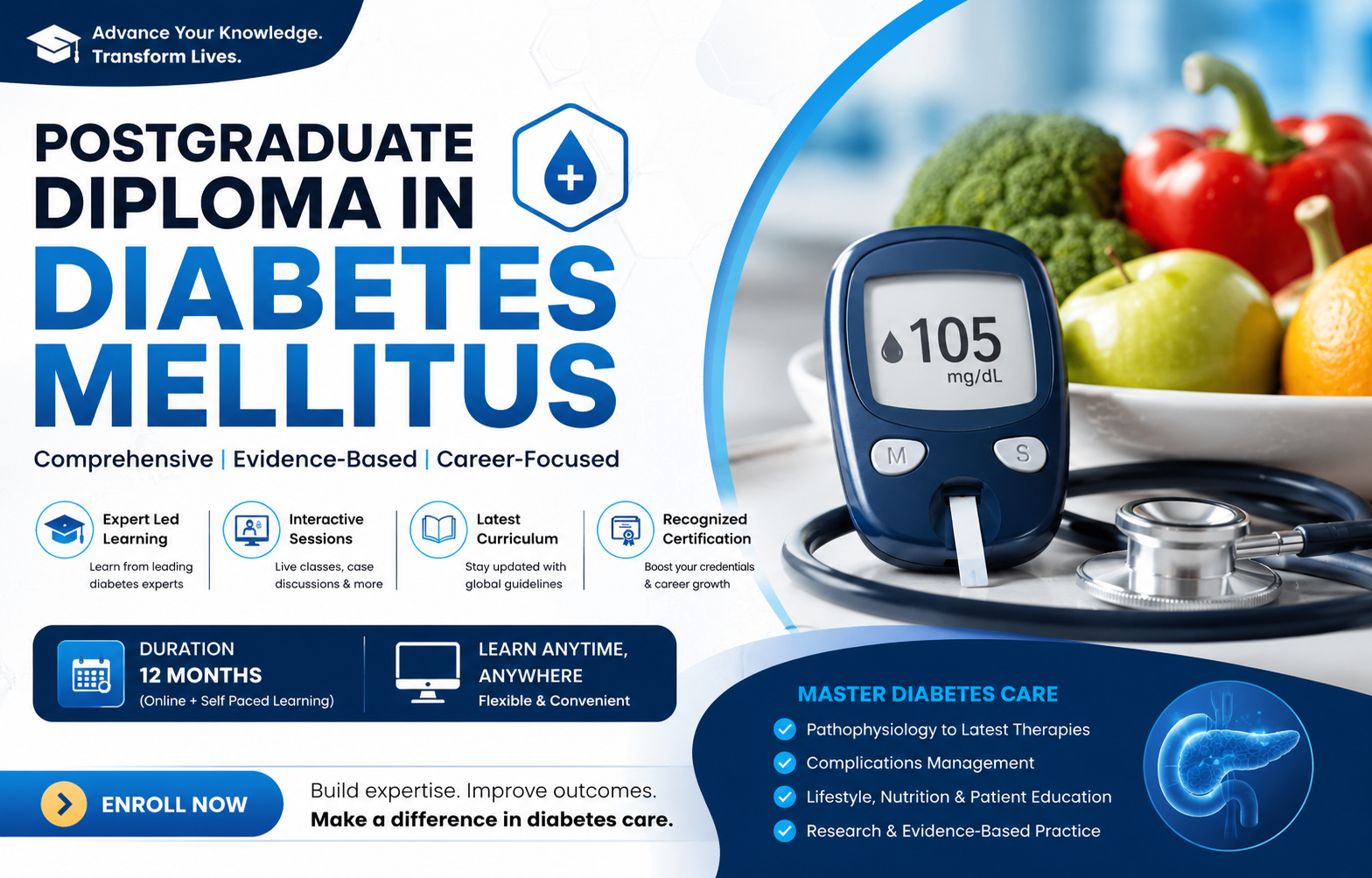
This course includes:
₹300,000.00
₹230,000.00
(including registration fees of 25,000.00)
Why Choose Us
Because your growth deserves nothing but the best in medical education.

Expert-Driven Curriculum
Our program is designed in collaboration with leading healthcare professionals to ensure you receive the most up-to-date and relevant education.

Flexible Learning Environment
Access course materials online anytime, allowing you to balance your studies with your professional and personal commitments.

Comprehensive Support
Benefit from continuous support from experienced tutors and academic advisors dedicated to your success

Interactive Learning
Engage with a variety of interactive learning tools, including real-life case studies, practical assignments, and virtual simulations.

Networking Opportunities
Connect with a diverse community of learners and professionals, providing valuable networking opportunities and peer support

Affordable Education
We offer competitive pricing with flexible payment plans and financial aid options to make your education more accessible.

Recognized Certification
Obtain a certification that is respected and recognized in the healthcare industry, enhancing your professional credentials and career prospects

Career Support
Beyond education, we provide comprehensive career guidance, job placement assistance guarantee, and ongoing professional development support.
What Our Alumni Are Saying
Discover How MedJoin Global Healthcare Is Transforming Careers Worldwide.
It is my honor to pursue the Fellowship in Diabetes Mellitus with Medjoin. The syllabus is well-structured and up-to-date with the latest advancements in the field. The live sessions with experts are particularly valuable and highly appreciated. This fellowship is an excellent opportunity for anyone looking to enhance their knowledge and skills in diabetes care.

Joining the Fellowship in Internal Medicine with Medjoin has been a truly enriching experience. The curriculum is comprehensive, covering both foundational concepts and the latest clinical practices. Live interactive sessions with experienced faculty provide practical insights that go beyond textbooks. I highly recommend this program.
Enrolling in the Advanced Certification in Emergency Medicine with Medjoin has been an incredibly rewarding journey. The program offers a well-rounded curriculum that blends core principles with the most recent advancements in clinical practice. I strongly recommend this certification to healthcare professionals aiming to enhance their knowledge.
Frequently Asked Questions
PG Diploma in Diabetes Mellitus is a specialized postgraduate-level program designed to provide healthcare professionals with comprehensive knowledge of diabetes diagnosis, monitoring, treatment, complications and long-term patient management.
The program may cover diabetes fundamentals, classification, diagnosis, blood glucose monitoring, lifestyle management, pharmacological treatment, insulin therapy, diabetes complications, diabetic foot care, cardiovascular risk, renal complications and other important aspects of diabetes management.
After completing the program, eligible healthcare professionals can explore opportunities in hospitals, diabetes clinics, multispecialty centres, primary healthcare, chronic disease management, clinical research and healthcare education, subject to their existing qualifications, registration and scope of practice.
Eligible MBBS doctors may pursue a PG Diploma in Diabetes Mellitus to enhance their knowledge of diabetes diagnosis and management. The diploma serves as additional professional education and should not be considered a replacement for a recognized medical specialty qualification.
Yes. Additional education in diabetes can help practicing doctors strengthen their understanding of diabetes screening, diagnosis, treatment principles, complication prevention, patient counselling and long-term disease management.
Yes. Diabetes-focused education generally includes important concepts related to insulin therapy, including indications, treatment principles, monitoring and considerations for different patient situations.
Yes. Key diabetes complications may include diabetic neuropathy, diabetic nephropathy, diabetic retinopathy, cardiovascular complications, diabetic foot problems and other acute or chronic complications.
Depending on the curriculum, learners may be introduced to modern diabetes-monitoring technologies such as Continuous Glucose Monitoring (CGM), glucose monitoring systems and other technology-enabled approaches to diabetes care.
Yes. Nutrition and lifestyle management are important components of comprehensive diabetes care. Learners can develop an understanding of dietary principles, weight management, physical activity and lifestyle modification for patients with diabetes.
The program is designed to strengthen professional knowledge and understanding of diabetes management. However, the level of clinical expertise gained depends on the learner's existing qualification, clinical experience, curriculum and practical exposure.
The availability of online or blended learning depends on the specific program structure offered by MedJoin Global. Prospective learners should check the current program details for the available learning format.
A PG Diploma and a fellowship can differ in academic structure, curriculum, duration, practical exposure and awarding framework. Prospective learners should evaluate the program's eligibility, curriculum, accreditation or recognition status and clinical training provisions before enrolling.
Sign up today and be the first to
access our exclusive offers
MedJoin Global Healthcare is an online learning platform designed to foster interaction and knowledge exchange among participants. Through discussion forums, live webinars, and virtual networking events, learners can connect with peers worldwide.
- SK 30, Sector 116, Noida, Uttar Pradesh 201301
- +91 63701 82504
- info@medjoinhealthcare.in
We Accept Payments Using: