
We Build Building and Great Constructive Homes.
We successfully cope with tasks of varying complexity, provide long-term guarantees and regularly master new technologies.
Course Description
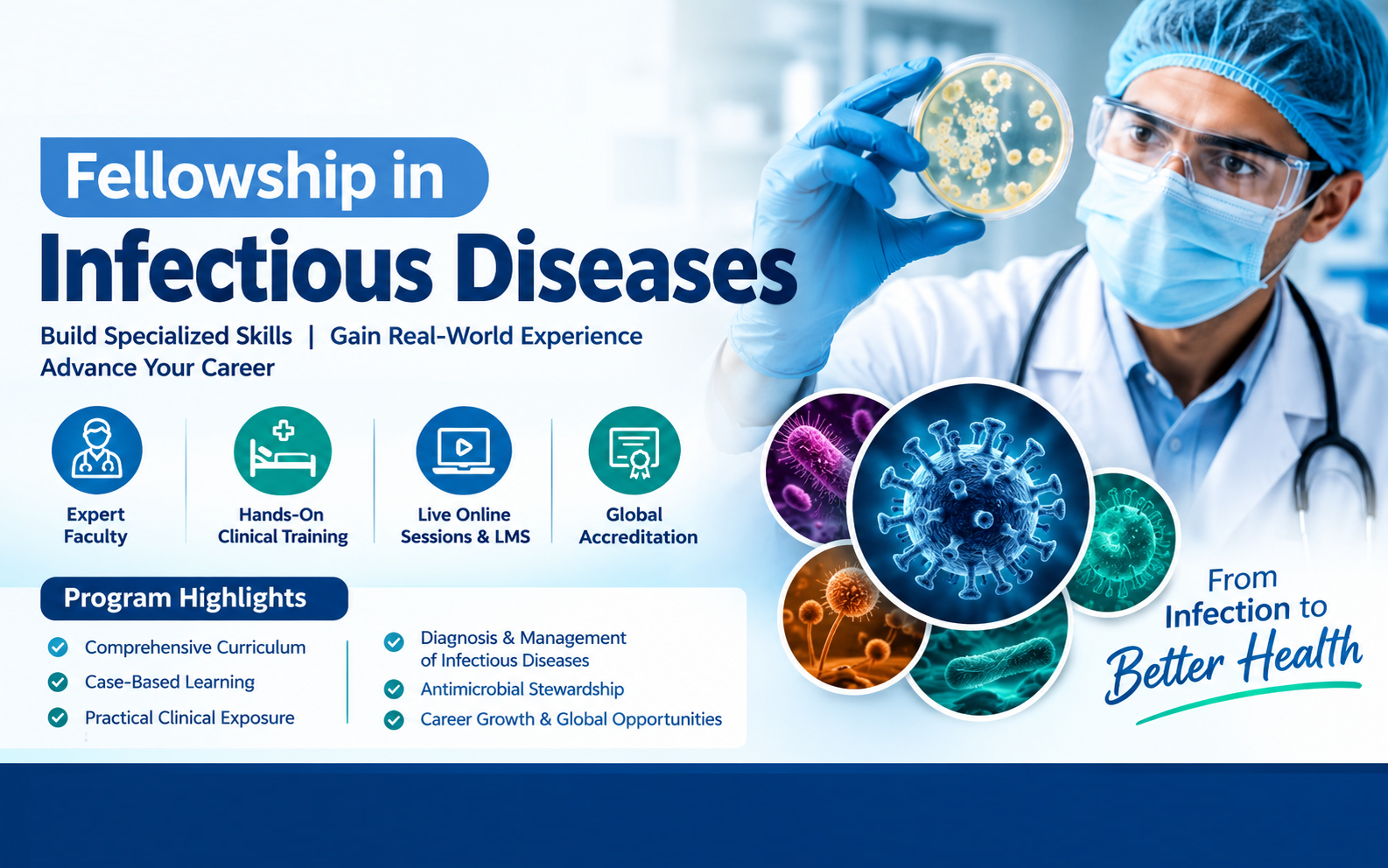
Infectious diseases continue to be an important area of modern healthcare, with doctors managing conditions ranging from common bacterial and viral infections to tuberculosis, HIV, tropical diseases, antimicrobial-resistant infections, sepsis, and emerging infections. A Fellowship in Infectious Diseases can help medical professionals strengthen their clinical knowledge and develop a structured approach to the diagnosis, investigation, treatment, and prevention of infectious conditions.
The fellowship is designed to provide comprehensive academic learning with a strong focus on clinical case discussions, infectious-disease diagnostics, antimicrobial therapy, infection prevention, antimicrobial resistance, and hospital-based infectious diseases.
For doctors looking to expand their clinical expertise after MBBS or build additional knowledge in infectious-disease management, a structured fellowship can provide an opportunity to learn through a combination of theoretical education, case-based learning, assessments, and clinical exposure, subject to the program pathway and institutional requirements.
Hightlights
- 12 Months of online classes which includes 3-4 months of Clinical Observership in a leading hospital
- Classes by experienced faculties
- Flexible learning mode
- Live doubt clearing sessions
- Educator support through LMS
- Periodic Webinars
- Associated with UGC & GRADE NAAC A+ University
- Training with Reputed Hospital
What You’ll Learn
A well-structured Fellowship in Infectious Diseases can help doctors develop practical knowledge and clinical skills in:
- Diagnosis of Infectious Diseases – Approach to fever, infections, laboratory investigations, cultures, imaging, and interpretation of diagnostic results.
- Bacterial Infections – Recognition, diagnosis, and management of common and serious bacterial infections.
- Viral Infections – Clinical approach to viral illnesses, including respiratory, gastrointestinal, hepatotropic, and other systemic viral infections.
- Fungal & Parasitic Infections – Identification and management of common fungal and parasitic diseases.
- Tuberculosis – Understanding diagnosis, treatment principles, drug resistance, and monitoring.
- HIV & Opportunistic Infections – Fundamentals of HIV care and recognition of infections occurring in immunocompromised patients.
- Dengue & Tropical Infections – Clinical evaluation, warning signs, complications, and supportive management.
- Sepsis & Severe Infections – Early recognition, assessment of severity, antimicrobial treatment principles, and supportive care.
- Antimicrobial Therapy – Rational selection, dosing principles, duration, de-escalation, and monitoring of antibiotics and other antimicrobials.
- Antimicrobial Stewardship – Strategies to reduce inappropriate antibiotic use and combat antimicrobial resistance.
- Hospital-Acquired Infections – Prevention, surveillance, infection-control practices, and management principles.
- Infection Prevention & Control – Hand hygiene, isolation precautions, sterilization, disinfection, and healthcare-associated infection prevention.
- Antimicrobial Resistance (AMR) – Understanding resistant organisms and principles of managing difficult-to-treat infections.
- Fever of Unknown Origin (FUO) – A systematic approach to evaluating prolonged or unexplained fever.
- Immunocompromised Patients – Recognition and management principles for infections in patients with altered immunity.
- Emerging & Re-emerging Infections – Understanding new infectious threats, outbreaks, and evolving pathogens.
- Clinical Case-Based Learning – Applying infectious-disease knowledge to real-world clinical scenarios and decision-making.
- Laboratory & Microbiology Interpretation – Understanding cultures, sensitivity reports, biomarkers, and other microbiological investigations.
- Public Health & Outbreak Management – Basic principles of surveillance, outbreak investigation, prevention, and control.
- Clinical Decision-Making – Developing a structured approach to evaluating, diagnosing, treating, and monitoring patients with suspected infections.
Why Choose a Fellowship in Infectious Diseases?
Growing Importance of Infectious-Disease Management
Infectious diseases affect patients across virtually every medical specialty. General physicians, emergency physicians, intensivists, pediatricians, surgeons, and other healthcare professionals frequently encounter patients with infectious conditions.
The emergence of antimicrobial resistance, hospital-acquired infections, new pathogens, and recurrent outbreaks has further increased the importance of appropriate infectious-disease assessment and management.
A fellowship provides structured learning around these challenges and helps participants develop a systematic approach to infectious-disease cases.
2. Develop a Structured Clinical Approach
Patients with infection may present with fever, cough, breathlessness, diarrhea, rash, altered consciousness, abdominal pain, urinary symptoms, or unexplained systemic illness.
3. Learn Antimicrobial Therapy
Antibiotic selection is an important component of infectious-disease practice. Inappropriate antibiotic use can contribute to antimicrobial resistance, treatment failure, adverse effects, and increased healthcare costs.
The fellowship introduces participants to concepts including empirical therapy, culture-directed therapy, antimicrobial susceptibility testing, antibiotic de-escalation, dose adjustment, treatment duration, drug interactions, and antimicrobial stewardship.
4. Understand Antimicrobial Resistance
Multidrug-resistant organisms are an important challenge in healthcare. Doctors need to understand how resistance affects clinical decision-making and infection-control practices.
The program covers organisms and concepts associated with antimicrobial resistance, including MRSA, ESBL-producing organisms, carbapenem-resistant organisms, multidrug-resistant Gram-negative bacteria, and other clinically relevant resistant pathogens.
5. Focus on Sepsis and Critical Infections
Sepsis and septic shock require rapid recognition and appropriate management. Infectious-disease education therefore includes the recognition of severe infection, assessment of organ dysfunction, microbiological investigations, empirical antimicrobial therapy, source control, fluid management, and escalation of care.
Case-based discussions can help participants understand how infectious diseases may progress from localized infection to systemic illness.
6. Exposure to Tropical and Common Infections
For doctors practicing in regions where tropical and infectious diseases are prevalent, knowledge of conditions such as malaria, dengue, enteric fever, tuberculosis, viral hepatitis, leptospirosis, rickettsial diseases, parasitic infections, and other febrile illnesses can be particularly valuable.
The fellowship provides structured academic learning around the diagnosis and management principles of these conditions.
Career Scope After Fellowship in Infectious Diseases
Knowledge of infectious diseases can complement a doctor's existing clinical practice and may be particularly relevant to professionals working in:
- General medicine
- Emergency medicine
- Intensive care
- Hospital medicine
- Internal medicine
- Infection control
- Clinical microbiology-related settings
- Public health
- Healthcare quality and patient safety
- Antimicrobial stewardship programs
The fellowship should be viewed as additional professional education and clinical skill development, rather than a substitute for a recognized postgraduate medical specialty qualification where such qualification is required.
Course Highlight
Modules Comprehensive modules covering various aspects of nutrition & dietetics.
Assessments Quizzes, assignments to test your knowledge and skills.
Certification Certified Nutritionist credential upon completion.
Key Features
Comprehensive Academic Curriculum
The program covers fundamental and advanced topics related to infectious diseases,
Case-Based Learning
Clinical cases can help doctors connect theoretical concepts with real-world clinical decision-making.
Microbiology & Diagnostic Understanding
Participants learn how different diagnostic investigations contribute to infectious-disease management.
Antimicrobial Stewardship
The fellowship emphasizes the importance of rational antimicrobial use.
Infection Prevention & Control
Infection control is an essential part of modern healthcare.
Clinical Training/Exposure
Clinical exposure is subject to institutional availability, eligibility, and applicable hospital policies.
Course Structure
- Introduction to Infectious Diseases
- Host–pathogen interaction
- Principles of infection and transmission
- Colonization vs infection
- Virulence and pathogenicity
- Innate and adaptive immune responses
- Common clinical syndromes
- Epidemiology of infectious diseases
- Routes and modes of transmission
- Chain of infection
- Principles of infectious-disease history and examination
- Rational use of diagnostic investigations
- Approach to acute fever
- Approach to prolonged fever
- Fever of unknown origin
- Fever with rash
- Fever with thrombocytopenia
- Fever with jaundice
- Fever with altered sensorium
- Fever with respiratory symptoms
- Fever with abdominal symptoms
- Fever in immunocompromised patients
- Interpretation of inflammatory markers
- CRP, ESR and procalcitonin
- Blood culture interpretation
- When to start empirical antibiotics
- Clinical microbiology principles
- Specimen collection
- Blood, urine, sputum and CSF sampling
- Culture and sensitivity
- Gram staining
- Acid-fast staining
- Bacterial identification
- Antimicrobial susceptibility testing
- Molecular diagnostics
- PCR and multiplex PCR
- Antigen testing
- Serology
- Rapid diagnostic tests
- Biomarkers
- Interpretation of microbiology reports
- Principles of antimicrobial therapy
- Antibiotic selection
- Empirical vs definitive therapy
- Bactericidal vs bacteriostatic agents
- Pharmacokinetics and pharmacodynamics
- Antibiotic dosing
- Renal and hepatic dose adjustment
- Drug interactions
- Antibiotic toxicity
- Combination antimicrobial therapy
- De-escalation
- IV-to-oral conversion
- Duration of therapy
- Antimicrobial resistance
- Multidrug-resistant organisms
- Antimicrobial stewardship
- Antibiotic stewardship programs in hospitals
- Staphylococcal infections
- Streptococcal infections
- Pneumococcal disease
- Enterococcal infections
- E. coli infections
- Klebsiella infections
- Pseudomonas infections
- Acinetobacter infections
- Salmonella infections
- Shigella infections
- Campylobacter infections
- Cholera
- Diphtheria
- Pertussis
- Tetanus
- Meningococcal disease
- Gonococcal infections
- Legionella
- Rickettsial infections
- Leptospirosis
- Principles of viral infections
- Influenza
- COVID-19 and respiratory viral infections
- RSV
- Adenovirus
- Measles
- Mumps
- Rubella
- Varicella-zoster
- Herpes simplex virus
- Epstein-Barr virus
- Cytomegalovirus
- Dengue
- Chikungunya
- Japanese encephalitis
- Viral hepatitis
- Rabies
- Emerging viral infections
- Malaria
- Falciparum malaria
- Vivax malaria
- Severe malaria
- Malaria complications
- Amoebiasis
- Giardiasis
- Helminthic infections
- Filariasis
- Strongyloidiasis
- Taeniasis
- Cysticercosis
- Toxoplasmosis
- Kala-azar
- Visceral leishmaniasis
- Hydatid disease
- Tropical fever syndromes
- Epidemiology of tuberculosis
- Pulmonary TB
- Extrapulmonary TB
- TB diagnosis
- Molecular testing
- Drug-sensitive TB
- Drug-resistant TB
- MDR-TB
- TB meningitis
- Abdominal TB
- TB lymphadenitis
- Bone and joint TB
- Latent TB infection
- Adverse effects of anti-TB therapy
- Treatment monitoring
- Nontuberculous mycobacterial infections
- HIV epidemiology
- HIV transmission
- HIV testing and diagnosis
- HIV staging
- CD4 count and viral load
- Antiretroviral therapy
- Treatment monitoring
- Drug resistance
- Opportunistic infections
- Pneumocystis jirovecii pneumonia
- Cryptococcosis
- Toxoplasmosis
- CMV infection
- TB-HIV co-infection
- Hepatitis-HIV co-infection
- HIV-associated malignancies
- Post-exposure prophylaxis
- Prevention strategies
- Superficial fungal infections
- Candidiasis
- Invasive candidiasis
- Aspergillosis
- Cryptococcosis
- Mucormycosis
- Histoplasmosis
- Pneumocystis infection
- Endemic mycoses
- Fungal infections in ICU
- Fungal infections in immunocompromised patients
- Antifungal therapy
- Antifungal resistance
- Acute meningitis
- Chronic meningitis
- Viral encephalitis
- Brain abscess
- Tuberculous meningitis
- Cryptococcal meningitis
- Neurocysticercosis
- Rabies
- Spinal infections
- CSF analysis
- Neuroimaging in CNS infections
- Empirical treatment principles
- Community-acquired pneumonia
- Hospital-acquired pneumonia
- Ventilator-associated pneumonia
- Aspiration pneumonia
- Influenza
- COVID-19
- Tuberculosis
- Fungal pneumonia
- Lung abscess
- Empyema
- Respiratory infections in immunocompromised patients
- Infectious diarrhea
- Acute gastroenteritis
- Dysentery
- Cholera
- Enteric fever
- Food-borne infections
- C. difficile infection
- Infectious hepatitis
- Liver abscess
- Amoebic liver abscess
- Cholangitis
- Intra-abdominal infections
- Antibiotic-associated diarrhea
- Urinary tract infections
- Complicated UTI
- Pyelonephritis
- Catheter-associated UTI
- Gonorrhea
- Syphilis
- Chlamydia
- Genital herpes
- Genital warts
- Pelvic inflammatory disease
- STIs and HIV
- STI screening
- Partner management
- Antimicrobial resistance in STIs
- Cellulitis
- Abscess
- Necrotizing soft-tissue infection
- Diabetic foot infection
- Surgical-site infection
- Osteomyelitis
- Septic arthritis
- Infective tenosynovitis
- Bite-related infections
- Wound infections
- MRSA skin infections
- Standard precautions
- Hand hygiene
- Personal protective equipment
- Transmission-based precautions
- Contact precautions
- Droplet precautions
- Airborne precautions
- Sterilization
- Disinfection
- Biomedical waste management
- Needle-stick injury management
- Occupational exposure
- Hospital outbreak investigation
- Infection-control committees
- Antimicrobial stewardship
Pediatric
- Neonatal infections
- Pediatric pneumonia
- Pediatric meningitis
- Pediatric diarrhea
- Pediatric TB
- Childhood viral infections
Geriatric
- Atypical presentation of infections
- Polypharmacy
- Renal impairment
- Frailty
- Delirium associated with infection
- Travel medicine
- Pre-travel assessment
- Vaccination for travelers
- Food and water safety
- Vector-borne diseases
- Emerging infectious diseases
- Re-emerging infections
- Zoonotic infections
- One Health concept
- Outbreak investigation
- Epidemic preparedness
- Pandemic preparedness
- Immunocompromised patients
- Cancer patients
- Transplant patients
- Patients receiving immunosuppressive therapy
- Diabetes and infection
- Chronic kidney disease
- Liver disease
- Pregnancy and infections
- Neonatal infections
- ICU infections
Eligibility
- MBBS Graduates.
- Applicants who are in their final year can also apply.
- MD/DNB/FNB & residents working in healthcare.
Course Fee
Course Fee ₹145,000.00
Registration Fee ₹10,000.00
Total Fee ₹100,000.00
This course includes:
₹155,000.00
₹100,000.00
(including registration fees of 10,000.00)
Why Choose Us
Because your growth deserves nothing but the best in medical education.

Expert-Driven Curriculum
Our program is designed in collaboration with leading healthcare professionals to ensure you receive the most up-to-date and relevant education.

Flexible Learning Environment
Access course materials online anytime, allowing you to balance your studies with your professional and personal commitments.

Comprehensive Support
Benefit from continuous support from experienced tutors and academic advisors dedicated to your success

Interactive Learning
Engage with a variety of interactive learning tools, including real-life case studies, practical assignments, and virtual simulations.

Networking Opportunities
Connect with a diverse community of learners and professionals, providing valuable networking opportunities and peer support

Affordable Education
We offer competitive pricing with flexible payment plans and financial aid options to make your education more accessible.

Recognized Certification
Obtain a certification that is respected and recognized in the healthcare industry, enhancing your professional credentials and career prospects

Career Support
Beyond education, we provide comprehensive career guidance, job placement assistance guarantee, and ongoing professional development support.
What Our Alumni Are Saying
Discover How MedJoin Global Healthcare Is Transforming Careers Worldwide.
It is my honor to pursue the Fellowship in Diabetes Mellitus with Medjoin. The syllabus is well-structured and up-to-date with the latest advancements in the field. The live sessions with experts are particularly valuable and highly appreciated. This fellowship is an excellent opportunity for anyone looking to enhance their knowledge and skills in diabetes care.

Joining the Fellowship in Internal Medicine with Medjoin has been a truly enriching experience. The curriculum is comprehensive, covering both foundational concepts and the latest clinical practices. Live interactive sessions with experienced faculty provide practical insights that go beyond textbooks. I highly recommend this program.
Enrolling in the Advanced Certification in Emergency Medicine with Medjoin has been an incredibly rewarding journey. The program offers a well-rounded curriculum that blends core principles with the most recent advancements in clinical practice. I strongly recommend this certification to healthcare professionals aiming to enhance their knowledge.
Frequently Asked Questions
Fellowship in Infectious Diseases is a structured educational program focused on the diagnosis, investigation, treatment, prevention, and clinical management of infectious diseases. It may include academic modules, case discussions, assessments, and clinical exposure depending on the selected pathway.
Eligibility depends on the specific program. Medical graduates such as MBBS doctors may be eligible subject to the institution's admission criteria and applicable requirements.
The curriculum covers bacterial, viral, fungal, parasitic, and tropical infections, tuberculosis, HIV, antimicrobial therapy, antimicrobial resistance, sepsis, hospital-acquired infections, infection prevention, microbiology, and emerging infections.
Depending on the selected pathway, clinical exposure or hands-on/observational training may be available. The duration, location, eligibility, and nature of clinical exposure should be confirmed before enrollment.
Yes. Antimicrobial resistance and antimicrobial stewardship are important components of the curriculum. Participants learn about resistant organisms, susceptibility testing, appropriate antibiotic selection, de-escalation, and responsible antimicrobial use
Yes. The curriculum includes tuberculosis, drug-resistant TB, extrapulmonary TB, HIV, opportunistic infections, HIV-associated TB, and principles of antiretroviral therapy and monitoring.
Yes. Participants learn about the recognition and initial management principles of sepsis and septic shock, microbiological investigations, antimicrobial therapy, source control, organ dysfunction, and escalation of care.
Yes. Tropical and parasitic infections may include malaria, dengue, enteric fever, leptospirosis, rickettsial infections, leishmaniasis, parasitic infections, and other regionally relevant infectious diseases.
Assessment may include module-based tests, MCQs, case discussions, assignments, clinical logbooks, final examinations, and/or viva depending on the program structure.
Sign up today and be the first to
access our exclusive offers
MedJoin Global Healthcare is an online learning platform designed to foster interaction and knowledge exchange among participants. Through discussion forums, live webinars, and virtual networking events, learners can connect with peers worldwide.
- SK 30, Sector 116, Noida, Uttar Pradesh 201301
- +91 63701 82504
- info@medjoinhealthcare.in
We Accept Payments Using: